Artisanal Bakery Products Market Size & Growth Forecast 2027–2036, By Segments (Type, Distribution Channel), Regional Demand Trends (North America, Asia Pacific, Europe), Key Country Insights (U.S., Japan, South Korea, Germany, France, Italy), and Competitive Landscape
Market Size and Growth Outlook
Artisanal Bakery Products Market size was estimated at USD 115.54 billion in 2026 and is projected to grow at a 5.42% CAGR from 2027 to 2036, crossing USD 195.87 billion by 2036. The industry revenue for 2027 is assessed at USD 120.81 billion.
Get more details on this report
Request Free Sample ReportArtisanal Bakery Products Market Intelligence Snapshot
Regional Market Dynamics
- Europe held a 32.40% market share in 2026, supported by a strong bakery tradition, widespread consumer preference for handcrafted products, and extensive networks of independent bakeries and organized retail.
- Asia Pacific is projected to expand at a 6.55% CAGR as urbanization, café culture, premium bakery demand, and broader availability through modern retail and foodservice continue to increase adoption.
Segment Momentum
- Bread & Rolls held a 53% share in 2026 because they are purchased frequently for everyday meals, benefiting from steady repeat demand, broad consumer familiarity, and strong retail shelf presence.
- Online is the fastest-growing distribution channel as consumers increasingly value convenient access to specialty bakery products, wider assortments, and direct purchasing from artisanal brands through digital platforms.
Market Expansion Drivers
- Growing consumer preference for premium, fresh, and authentic baked goods.
- Social media influence and local sourcing trends strengthening artisanal brand visibility.
- Rising demand for specialty bakery products in urban tourism and premium retail channels.
Leading Market Participants
- Prominent players in the artisanal bakery products market include Aryzta AG (Switzerland), Lantmännen Unibake International (Denmark), Flowers Foods, Inc. (United States), Yamazaki Baking Co., Ltd. (Japan), Grupo Bimbo, S.A.B. de C.V. (Mexico), Rich Products Corporation (United States), Finsbury Food Group plc (United Kingdom), Boulangerie Paul S.A. (France), GAIL's Bakery Ltd. (United Kingdom), Pain Poilâne SARL (France).
Global Market Forecast Snapshot
Market Outlook
- 2026 Market Size: USD 115.54 billion
- 2027 Estimated Market Size: USD 120.81 billion.
- Projected Market Size: USD 195.87 billion by 2036
- Growth Forecast: 5.42% CAGR (2027-2036)
Regional and Segment Outlook
- Leading Regional Market: Europe
- High-Growth Regional Hub: Asia Pacific
- Core Revenue Segment: Bread & Rolls (Type) | Hypermarkets & Supermarkets (Distribution Channel)
- Emerging Opportunity Segment: Cookies (Type) | Online (Distribution Channel)
Market Growth Drivers and Industry Trends
Growing consumer preference for premium, fresh, and authentic baked goods
Consumer preference for premium, fresh, and authentic products is supporting the artisanal bakery products market as buyers increasingly value distinctive qualities beyond basic bakery consumption. Artisanal offerings can respond to these preferences through their emphasis on freshness, perceived craftsmanship, and authentic product characteristics, encouraging demand among consumers seeking more differentiated bakery experiences.
Social media influence and local sourcing trends strengthening artisanal brand visibility
Social media is expanding visibility for the artisanal bakery products market by giving smaller and locally positioned bakery businesses greater opportunities to showcase distinctive products and engage consumers. At the same time, interest in local sourcing strengthens the connection between bakery offerings and local identity, helping artisanal products gain attention among consumers who value locally associated food experiences.
Rising demand for specialty bakery products in urban tourism and premium retail channels
Demand for specialty offerings is creating opportunities for the artisanal bakery products market across urban tourism and premium retail settings, where consumers are more receptive to distinctive bakery experiences. Tourism-related consumption can increase interest in locally characteristic products, while premium retail channels provide an environment suited to specialty baked goods with differentiated positioning and presentation.
| Growth Driver | Impact on CAGR | Regulatory Influence | Geographic Relevance | Adoption Rate | Impact Timeline |
|---|---|---|---|---|---|
| Rising Demand for Premium & Artisanal Bakery Products | 2.00% | Short term (≤ 2 yrs) | North America, Europe (spillover: Asia Pacific) | Medium | Fast |
| Technological Innovation in Baking & Packaging | 1.80% | Medium term (2–5 yrs) | Europe, North America (spillover: Asia Pacific) | Low | Moderate |
| Food Safety & Regulatory Compliance | 2.00% | Long term (5+ yrs) | North America, Europe (spillover: MEA) | High | Moderate |
| Growing consumer preference for premium, fresh, and authentic baked goods | 2.00% | Low | Europe, North America | High | Near Term |
| Social media influence and local sourcing trends strengthening artisanal brand visibility | 1.70% | Low | Global | High | Near Term |
| Rising demand for specialty bakery products in urban tourism and premium retail channels | 1.40% | Low | Europe, Middle East & Africa | Medium | Mid Term |
Explore Growth Opportunities
Request Free Sample ReportRegional Demand Dynamics
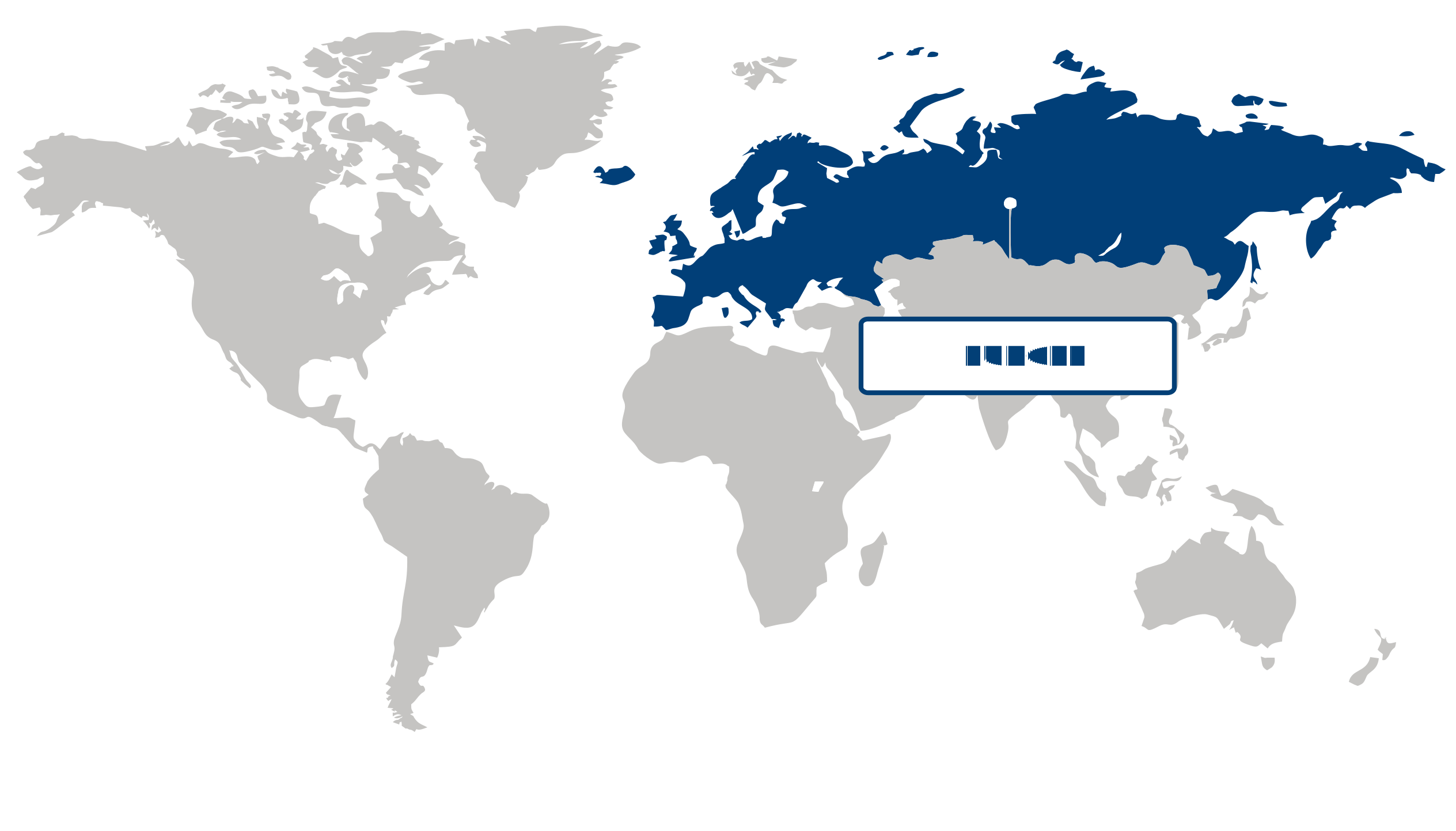
Europe (Largest Region)
Europe led the artisanal bakery products market with a 32.40% share in 2026, reflecting the region's strong bakery culture, established consumer preference for traditional food products, and sustained demand for premium, handcrafted offerings. Artisanal products benefit from perceptions of freshness, authenticity, craftsmanship, and high-quality ingredients, while established bakery establishments and specialty food channels provide a strong foundation for market penetration. Consumer interest in distinctive flavors and locally inspired bakery products further supports the region's established position.
Asia Pacific (Fastest-Growing Region)
Asia Pacific represents the fastest-growing regional market, supported by changing lifestyles, urbanization, and increasing consumer exposure to premium bakery formats. Rising demand for convenient yet differentiated food products is encouraging broader adoption of artisanal breads, pastries, and other specialty offerings. The expansion of modern retail, cafés, foodservice outlets, and premium food concepts is also improving product availability, while evolving consumer preferences are creating opportunities for bakery producers to introduce more sophisticated and diverse artisanal selections.
| Parameter | North America | Asia Pacific | Europe | Latin America | MEA |
|---|---|---|---|---|---|
| Innovation Hub i Scale Nascent Developing Advanced | |||||
| Cost-Sensitive Region i Scale Low Medium High | |||||
| Regulatory Environment i Scale Restrictive Neutral Supportive | |||||
| Demand Drivers i Scale Weak Moderate Strong | |||||
| Development Stage i Scale Emerging Developing Developed | |||||
| Adoption Rate i Scale Low Medium High | |||||
| New Entrants / Startups i Scale Sparse Moderate Dense | |||||
| Macro Indicators i Scale Weak Stable Strong |
Key Country Insights
Germany 🇩🇪
Bakery heritage premiumizationIn Germany, artisanal bakery products benefit from a strong bread culture that is being premiumized through organic ingredients and specialty sourdough offerings. Germany’s bakery sector combines traditional craftsmanship with modern health-oriented positioning, with consumers showing preference for long-fermentation breads and regional specialty baked goods across both retail and artisanal outlets.
France 🇫🇷
Traditional craft revivalIn France, artisanal bakery products reflect a revival of traditional baking methods, with strong emphasis on heritage breads and patisserie craftsmanship. France maintains deep cultural attachment to boulangeries, where consumers prioritize quality, technique, and regional authenticity in everyday bakery purchases across both neighborhood and specialty retail formats.
Italy 🇮🇹
Regional specialty focusIn Italy, artisanal bakery products are shaped by regional diversity, with strong demand for locally rooted breads and pastries. Italy’s artisanal bakery sector emphasizes traditional recipes and ingredients, while modern bakeries experiment with reinterpretations of classic regional baked goods for urban consumers seeking authentic yet evolving bakery experiences.
Japan 🇯🇵
Urban boutique bakeriesIn Japan, artisanal bakery products are driven by urban boutique bakeries that emphasize precision, presentation, and seasonal themes. Japan’s consumers value limited-edition items and refined textures, with strong influence from European baking styles adapted to local taste preferences and compact retail formats in metropolitan commercial districts and transit hubs.
South Korea 🇰🇷
Aesthetic bakery cultureIn South Korea, artisanal bakery products are closely tied to aesthetic-driven café culture, where visual presentation and social media appeal significantly shape demand. South Korea’s bakery market is characterized by premium cafés offering innovative pastries, often blending Western techniques with locally inspired flavors and seasonal ingredients in high-footfall urban areas.
United States 🇺🇸
Craft bakery expansionIn the United States, artisanal bakery products are expanding through independent bakeries and premium supermarket in-store bakeries. US consumers increasingly seek authenticity, small-batch production, and ingredient transparency, with strong demand concentrated in urban centers where craft bakery brands differentiate through sourdough, specialty pastries, and seasonal innovation across evolving food retail channels.
Segment Leadership and Growth Trends
Artisanal Bakery Products Market Share (%), by Type, 2026
Go beyond the chart, access full insights & data tables
Request Free Sample ReportType Segment Analysis: Bread & Rolls (Largest Segment) vs Cookies (Fastest-Growing Segment)
Bread & rolls dominated the artisanal bakery products market in 2026, accounting for a 53% share, supported by their broad role in everyday consumption and strong consumer familiarity. Artisanal breads and rolls benefit from demand for fresh products with distinctive textures, flavors, and handcrafted characteristics that differentiate them from mass-produced alternatives. Their versatility across breakfast, meals, and snacking occasions also provides a broad consumption base, while consumer interest in traditional preparation methods and premium bakery experiences continues to support the segment's leading position.
Cookies are the fastest-growing segment, driven by increasing consumer interest in premium baked snacks that combine convenience with artisanal quality. Artisanal cookies can offer distinctive ingredients, textures, and flavor combinations, appealing to consumers seeking alternatives to standardized packaged products. Their suitability for impulse purchases, gifting, and everyday snacking further broadens their appeal, while growing interest in small-batch and specialty bakery offerings is creating additional opportunities for this segment.
Distribution Channel Segment Analysis: Hypermarkets & Supermarkets (Largest Segment) vs Online (Fastest-Growing Segment)
Hypermarkets & supermarkets held the largest share of the artisanal bakery products market in 2026, supported by their extensive customer reach, convenient shopping environments, and ability to provide broad product assortments. These retail formats allow consumers to discover artisanal bakery products alongside regular grocery purchases, helping integrate premium baked goods into routine shopping behavior. Established retail infrastructure, product visibility, and the availability of both fresh and packaged artisanal offerings continue to reinforce the importance of hypermarkets and supermarkets as a distribution channel.
Online is the fastest-growing distribution channel, benefiting from increasing digital shopping adoption and the convenience of ordering specialty bakery products for home delivery. E-commerce platforms can provide access to a wider assortment of artisanal products, including offerings that may not be readily available through conventional grocery outlets. Digital discovery, product reviews, convenient ordering, and doorstep delivery are encouraging consumers to purchase premium bakery products online, while improved fulfillment capabilities are further supporting channel expansion.
| Segment | Sub-Segment | Largest Segment | Fastest Growing |
|---|---|---|---|
| Type | Bread & Rolls, Cakes & Pastries, Cookies, Tortillas, Others | Bread & Rolls | Cookies |
| Distribution Channel | Hypermarkets & Supermarkets, Convenience Stores, Specialty Stores, Departmental Stores, Traditional Grocery Stores, Airport Retail Stores, Online, Others | Hypermarkets & Supermarkets | Online |
Unlock insights tailored to your business with our bespoke market research solutions.
Click to get your customized report now.
Competitive Landscape and Market Positioning
Leading companies in the artisanal bakery products market:
1. Aryzta AG (Switzerland)
2. Lantmännen Unibake International (Denmark)
3. Flowers Foods Inc. (United States)
4. Yamazaki Baking Co. Ltd. (Japan)
5. Grupo Bimbo S.A.B. de C.V. (Mexico)
6. Rich Products Corporation (United States)
7. Finsbury Food Group plc (United Kingdom)
8. Boulangerie Paul S.A. (France)
9. GAIL's Bakery Ltd. (United Kingdom)
10. Pain Poilâne SARL (France)
The artisanal bakery products market is witnessing a shift driven by evolving consumer preference for healthier and more customized food experiences. Within the artisanal bakery products market, innovation in flavors and ingredient quality is becoming a key differentiator, supported by continuous experimentation in recipes and production methods. Supply chain coordination is also being refined to ensure freshness and responsiveness to localized demand. At the same time, collaborative arrangements across the value chain are helping improve consistency and product availability.
| Company | Market Share | Company Revenue | Revenue CAGR (%) | Product Portfolio | Geographic Presence | Innovation / R&D Focus | Strategic Developments |
|---|---|---|---|---|---|---|---|
| Aryzta AG (Switzerland) | |||||||
| Lantmännen Unibake International (Denmark) | |||||||
| Flowers Foods Inc. (United States) | |||||||
| Yamazaki Baking Co. Ltd. (Japan) | |||||||
| Grupo Bimbo S.A.B. de C.V. (Mexico) | |||||||
| Rich Products Corporation (United States) | |||||||
| Finsbury Food Group plc (United Kingdom) | |||||||
| Boulangerie Paul S.A. (France) | |||||||
| GAIL's Bakery Ltd. (United Kingdom) | |||||||
| Pain Poilâne SARL (France). |
Industry Development/News
| Company Name | Date | Key Development |
|---|---|---|
| Shiv Sagar | Jun-26 | Shiv Sagar expanded its retail footprint with the opening of its 17th outlet in Pune, incorporating an updated dining format while retaining its core brand identity. The expansion strengthens its presence in the casual dining and bakery-influenced foodservice segment, supporting network growth and reinforcing its position in branded artisanal bakery-aligned retail operations. |
| EL&N | Aug-24 | EL&N launched its first deli and bakery sub-brand concept in Covent Garden, expanding beyond its core café format into artisanal bakery retail offerings. The new concept introduces freshly prepared baked goods such as pastries and focaccia alongside dine-in services, strengthening its positioning in lifestyle-oriented bakery retail experiences and diversifying its product and service format. |
| Tom Cat Bakery Inc., Yamazaki Baking Co., Ltd., Dot Foods Inc. | Feb-23 | Tom Cat Bakery Inc., a subsidiary of Yamazaki Baking Co., Ltd., partnered with Dot Foods Inc. to expand distribution of its artisanal bakery products across North America. The collaboration strengthens supply chain reach and improves market penetration by leveraging Dot Foods’ redistribution network, enhancing accessibility of specialty bakery products in regional and national retail channels. |
| Tartine Bakery | Mar-22 | Tartine Bakery expanded its physical retail presence by opening a new bakery in Pasadena, aimed at increasing regional consumer reach. The expansion supports localized market growth and reinforces the company’s strategy of scaling artisanal bakery operations through new storefront development and proximity-based customer engagement in key urban markets. |
| Tartine Bakery | Mar-20 | Tartine Bakery opened a 100-seat café and bakery in Santa Monica, expanding its experiential retail footprint. The facility increases service capacity while enhancing in-store dining offerings, strengthening the company’s positioning in premium artisanal bakery retail through larger-format outlets designed to support higher customer throughput and experiential consumption models. |
Customize Your Report
Explore examples of how this report can be tailored to different research needs, including custom segments, additional topics or chapters, and related reports. Click a section of the wheel or its numbered marker to explore the available options.
Artisanal Bakery Products Market — Custom Segments
| Segment | Sub-Segment |
|---|---|
| Ingredient Profile | Traditional Grain-Based, Whole Grain & Multigrain, Gluten-Free, Specialty & Functional |
| Consumption Occasion | Breakfast, Snacking, Meals & Accompaniments, Celebrations & Special Occasions |
| Production Scale | Micro-Bakery, Small-Scale Bakery, Medium-Scale Bakery, Large-Scale Artisanal Bakery |
Artisanal Bakery Products Market — Custom TOC
| Custom Chapter | Chapter Details |
|---|---|
| Premium Bakery Consumer Insights |
|
| Retail Expansion Opportunity Mapping |
|
| Omnichannel Bakery Growth Strategies |
|
Need a different cut of the data?
Request Custom ResearchWhat is the current revenue of the artisanal bakery products market?
How much is the artisanal bakery products industry expected to grow by 2036?
How is evolving consumer preference for premium and authentic baked goods influencing purchasing patterns?
How are digital discovery and local sourcing trends shaping competitive positioning in the artisanal bakery products market?
Why do Bread & Rolls lead the artisanal bakery products market?
Which distribution channel is growing the fastest in the artisanal bakery products market?
Why does Europe lead the artisanal bakery products market?
What is fueling growth in the artisanal bakery products market across Asia Pacific?
Which companies are driving growth in the artisanal bakery products landscape?
Our Clients
"The report provided a thorough look at market trends, technological advancements, and the competitive landscape. The depth of insights was really valuable."
ITC Limited
"We would highly recommend Fundamental Business Insights & Consulting to anyone looking for reliable, detailed, and comprehensive market research in the Food industry."
Tyson Foods
"The clarity and presentation of the information were commendable. The report was delivered timely, which made the overall experience smooth and convenient."
Mondelēz International
Our Research Team & Methodology
Every Fundamental Business Insights report is built by a dedicated vertical research team, validated through a structured primary-and-secondary methodology, and reviewed for accuracy before it reaches you.
Research Team Overview
Prepared by the Food & Beverage Research Team
Delivery
Published
Demand
Available
Support
Trust & Compliance
Research Intelligence
| Source | Reference |
|---|---|
| Food and Agriculture Organization (FAO) | www.fao.org |
| World Health Organization (WHO) | www.who.int |
| U.S. Food & Drug Administration (FDA) | www.fda.gov |
| European Food Safety Authority (EFSA) | www.efsa.europa.eu |
| U.S. Department of Agriculture (USDA) | www.usda.gov |
| Codex Alimentarius Commission | www.fao.org/fao-who-codexalimentarius |
| International Organization for Standardization (ISO) | www.iso.org |
| AOAC INTERNATIONAL | www.aoac.org |
| Institute of Food Technologists (IFT) | www.ift.org |
| International Dairy Foods Association (IDFA) | www.idfa.org |
| International Sweeteners Association (ISA) | www.sweeteners.org |
| International Probiotics Association (IPA) | internationalprobiotics.org |
| Good Food Institute (GFI) | gfi.org |
| American Feed Industry Association (AFIA) | www.afia.org |
| International Feed Industry Federation (IFIF) | ifif.org |
| Specialty Food Association (SFA) | www.specialtyfood.com |
| Brewers Association | www.brewersassociation.org |
| International Bottled Water Association (IBWA) | bottledwater.org |
| International Alliance for Dietary/Food Supplement Associations (IADSA) | www.iadsa.org |
| OECD Agriculture & Food | www.oecd.org/agriculture |
Research Workflow & Quality Assurance
Data Collection
Verified information gathered through primary and secondary research.
Data Triangulation
Cross-validation using multiple independent data sources.
Forecast Modelling
Market estimates developed using historical trends and analytical models.
Analyst Validation
Findings reviewed by domain experts for accuracy and consistency.
Editorial & Quality Review
Final editorial, quality, and compliance checks before publication.
Final Publication
Released after successful completion of the internal review process.
Report Coverage
📊 Market Assessment
- Market Size & Forecast
- Market Segmentation
- Regional Analysis
- Growth Drivers & Challenges
- Market Dynamics
🏢 Competitive Intelligence
- Competitive Landscape
- Company Profiles
- Competitive Benchmarking
- Mergers & Acquisitions
- Market Share Analysis or Key Company Strategies
🔍 Strategic Analysis
- Value Chain Analysis
- Porter's Five Forces
- PESTLE Analysis
- Pricing Trends
- Supply-Demand Analysis
🚀 Future Outlook
- Technology Landscape
- Regulatory Landscape
- Investment & Funding Landscape
- Emerging Opportunities
- Future Market Outlook
Have a question about this report or need a custom scope?
Request Customization