



Barrier Systems Market Size & Growth Forecast 2027–2036, By Segments (Material Type, Type, Application), Regional Demand Trends (North America, Asia Pacific, Europe), Key Country Insights (U.S., Japan, South Korea, Germany, France, Italy), and Competitive Landscape
Market Size and Growth Outlook
Barrier Systems Market size was more than USD 22.71 Billion in 2026 and is set to grow at 3.78% CAGR between 2027 and 2036, reaching USD 32.91 Billion by 2036. The industry revenue for 2027 is calculated at USD 23.43 Billion.
Base Year Value (2026)
USD 22.71 Billion
CAGR (2027-2036)
3.78%
Forecast Year Value (2036)
USD 32.91 Billion

Historical Data Period
2022-2026

Largest Region
Europe

Forecast Period
2027-2036
Barrier Systems Market Intelligence Snapshot:
-
Regional Market Dynamics:
- Europe held the largest share in 2026, supported by established transportation infrastructure, stringent safety standards, and continued investment in road network modernization.
- Asia Pacific is the fastest-growing region, driven by urbanization, expanding road networks, rising traffic volumes, and substantial transportation infrastructure investment.
-
Segment Momentum:
- Metal barriers captured 43.2% of the market in 2026 due to their high strength, impact resistance, and durability, making them the preferred choice for highways, bridges, industrial facilities, and critical infrastructure.
- Plastic barriers are projected to grow the fastest as demand rises for lightweight, portable, and reusable traffic management solutions that reduce transportation and installation costs while supporting temporary and emergency applications.
-
Market Expansion Drivers:
- Increasing roadway infrastructure expansion driving barrier system installations
- Rising traffic safety regulations boosting protective barrier deployments
- Urban mobility expansion increasing demand for advanced crash protection systems
-
Leading Market Participants:
Major companies in the barrier systems market include Lindsay Corporation (United States), Trinity Industries, Inc. (United States), Valmont Industries, Inc. (United States), Hill & Smith PLC (United Kingdom), Tata Steel Europe Ltd. (United Kingdom), Bekaert SA (Belgium), A-SAFE Ltd. (United Kingdom), TrafFix Devices, Inc. (United States), Gibraltar Industries, Inc. (United States)
Global Market Forecast Snapshot:
-
Market Outlook:
- 2026 Market Size: USD 22.71 Billion
- 2027 Estimated Market Size: USD 23.43 Billion
- Projected Market Size: USD 32.91 Billion by 2036
- Growth Forecasts: 3.78% CAGR (2027-2036)
-
Regional and Segment Outlook:
- Leading Regional Market: Europe
- High-Growth Regional Hub: Asia Pacific
- Core Revenue Segment: Metal Barriers (Material Type) | Crash Barriers (Type) | Roadways (Application)
- Emerging Opportunity Segment: Plastic Barriers (Material Type) | Crash Barriers (Type) | Roadways (Application)
Market Growth Drivers and Industry Trends
Increasing roadway infrastructure expansion driving barrier system installations
Large-scale investments in highways, expressways, bridges, and urban transportation corridors are creating sustained demand for roadside safety infrastructure across both developed and emerging economies. As governments modernize transportation networks, the barrier systems market benefits from the growing installation of protective barriers that enhance traffic management and reduce the severity of roadway accidents. Infrastructure developers increasingly specify durable barrier solutions capable of withstanding varying traffic conditions while minimizing maintenance requirements over long operating lifecycles. The expansion of road construction projects also encourages the adoption of application-specific barriers designed for medians, work zones, bridges, and high-risk roadway sections.
Rising traffic safety regulations boosting protective barrier deployments
Strengthening road safety standards and stricter engineering guidelines are encouraging transportation authorities to prioritize protective infrastructure capable of reducing collision impacts. Regulatory initiatives supporting safer road design will propel the barrier systems market as public agencies and private infrastructure operators upgrade existing installations to comply with evolving safety requirements. Crash-tested barrier technologies, standardized installation practices, and improved performance specifications are becoming essential considerations during both new construction and roadway rehabilitation projects. Compliance efforts further encourage the replacement of outdated safety systems with modern solutions that provide enhanced vehicle containment and occupant protection under diverse traffic conditions.
Urban mobility expansion increasing demand for advanced crash protection systems
The rapid growth of urban transportation networks, combined with increasing traffic density and multimodal mobility initiatives, is creating greater demand for sophisticated crash protection infrastructure. Within this environment, the barrier systems market is supported by investments in advanced safety solutions that protect motorists, pedestrians, cyclists, and public transport corridors while accommodating evolving urban design requirements. Smart city developments frequently integrate protective barriers into intersections, transit hubs, parking facilities, and pedestrian zones where effective traffic separation is essential. Designers also emphasize modular and adaptable barrier configurations that can be deployed efficiently across changing urban landscapes without compromising roadway functionality.
| Growth Driver Assessment Framework | |||||
| Growth Driver | Impact On CAGR | Regulatory Influence | Geographic Relevance | Adoption Rate | Impact Timeline |
|---|---|---|---|---|---|
| Increasing roadway infrastructure expansion driving barrier system installations | 1.8% | Moderate | Asia Pacific, North America | High | Near Term |
| Rising traffic safety regulations boosting protective barrier deployments | 1.7% | High | Europe, North America | High | Near Term |
| Urban mobility expansion increasing demand for advanced crash protection systems | 1.5% | Moderate | Asia Pacific | Medium | Mid Term |
Unlock insights tailored to your business with our bespoke market research solutions - Click to get your customized report now!
Regional Demand Dynamics
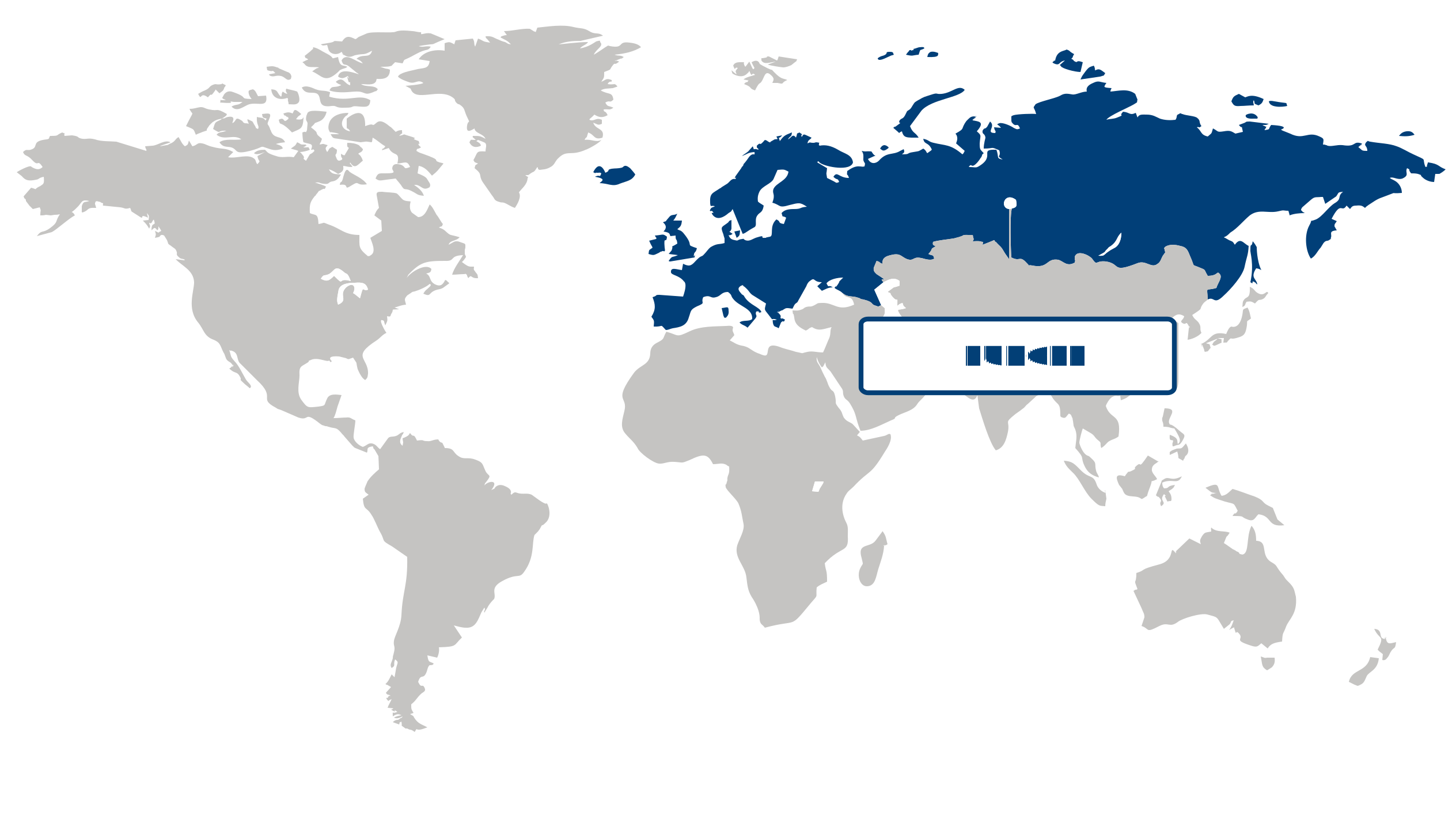
Largest Region
Europe
Largest Market Share in 2026
Europe (Largest Region) vs Asia Pacific (Fastest-Growing Region)
Europe held the largest share of the barrier systems market in 2026, supported by established transportation infrastructure, strong emphasis on road safety, and continued investment in highway and urban mobility systems. Demand for road barriers and related safety infrastructure is reinforced by stringent safety standards and efforts to improve protection for motorists and pedestrians. Ongoing maintenance and modernization of transportation networks, along with infrastructure upgrades aimed at improving traffic management and reducing accident severity, provide a stable foundation for regional market development.
Asia Pacific is positioned as the fastest-growing regional market, supported by rapid urbanization, expanding road networks, and substantial investment in transportation infrastructure. Growing vehicle ownership and increasing traffic volumes are strengthening the need for effective roadside safety systems across highways, bridges, tunnels, and urban corridors. Governments and infrastructure developers are also placing greater emphasis on improving road safety and modernizing transport networks, creating favorable conditions for the adoption of advanced barrier solutions.
No card data available for this language/report.
Segment Leadership and Growth Trends
Material Type Segment Analysis: Metal Barriers (Largest Segment) vs Plastic Barriers (Fastest-Growing Segment)
Metal barriers accounted for 43.2% of the barrier systems market in 2026, making them the largest material type segment. Their leadership is underpinned by superior structural strength, high impact resistance, and long-term durability, making them the preferred solution for highways, industrial facilities, bridges, and critical infrastructure where dependable vehicle containment is essential. Metal barriers are engineered to absorb and redistribute collision forces, reducing the severity of accidents while maintaining roadway safety. Continuous investments in transportation infrastructure modernization, coupled with increasingly stringent road safety regulations, continue to reinforce the widespread deployment of metal barrier systems across both developed and emerging markets.
The plastic barriers segment is expected to witness the fastest growth as infrastructure operators increasingly seek lightweight, portable, and rapidly deployable traffic management solutions. Plastic barriers provide operational flexibility for temporary construction zones, event management, emergency traffic diversion, and pedestrian protection while offering lower transportation and installation costs than traditional alternatives. Advancements in high-performance polymer materials and reusable modular barrier designs are expanding their suitability for diverse applications, accelerating adoption across municipalities, contractors, and infrastructure maintenance projects.
Type Segment Analysis: Crash Barriers (Largest & Fastest-Growing Segment)
The crash barriers segment held the largest position in the barrier systems market in 2026 while also emerging as the fastest-growing barrier type. Their continued market leadership is driven by the essential role they play in mitigating collision severity, preventing vehicles from leaving designated travel paths, and protecting motorists, pedestrians, and roadside infrastructure. Growing implementation of highway expansion projects, urban mobility initiatives, and intelligent transportation networks has increased the installation of advanced crash barrier systems capable of delivering enhanced energy absorption and improved safety performance. Ongoing innovation in barrier engineering, combined with heightened regulatory emphasis on reducing road fatalities, continues to strengthen demand for crash barriers worldwide.
Application Segment Analysis: Roadways (Largest & Fastest-Growing Segment)
Holding the largest share of the barrier systems market, the roadways application segment remained the dominant category in 2026 while also representing the fastest-growing application. Road safety authorities continue to prioritize the deployment of high-performance barrier systems along expressways, arterial roads, intersections, and construction zones to minimize accident severity and improve traffic management. Increasing investment in highway development, smart transportation infrastructure, and urban road expansion is creating sustained demand for durable roadside protection systems. Furthermore, the integration of modern safety standards into transportation planning and growing public-sector investment in accident prevention initiatives continue to reinforce the segment's long-term growth trajectory.
| Report Segmentation | |||
| Segment | Sub-Segment | Largest Segment | Fastest Growing Segment |
|---|---|---|---|
| Material Type | Metal Barriers, Plastic Barriers, Concrete Barriers, Others | Metal Barriers | Plastic Barriers |
| Type | Crash Barriers, Bollards, Fencing Systems, Jersey Barriers | Crash Barriers | Crash Barriers |
| Application | Roadways, Airports, Railways, Others | Roadways | Roadways |
 Read our Research Approach
Competitive Landscape and Market Positioning
Top players in the barrier systems market:
- Lindsay Corporation (United States)
- Trinity Industries, Inc. (United States)
- Valmont Industries, Inc. (United States)
- Hill & Smith PLC (United Kingdom)
- Tata Steel Europe Ltd. (United Kingdom)
- Bekaert SA (Belgium)
- A-SAFE Ltd. (United Kingdom)
- TrafFix Devices, Inc. (United States)
- Gibraltar Industries, Inc. (United States)
Infrastructure modernization and heightened safety expectations are reshaping competition in the barrier systems market, with manufacturers placing greater emphasis on solutions that balance protective performance, installation efficiency, and long-term durability. Product innovation increasingly focuses on modular designs, advanced materials, and application-specific configurations that address diverse transportation, industrial, and commercial environments. Suppliers are also strengthening their market position through engineering support and customization capabilities, enabling project-specific solutions that align with evolving design standards and operational requirements. As asset owners prioritize lifecycle reliability and reduced maintenance demands, the ability to deliver durable systems supported by technical expertise is becoming a defining competitive advantage.
Industry Development/News
| Company Name | Date | Key Development |
|---|---|---|
| Chicago Atlantic | May-26 | Chicago Atlantic provided a $35 million senior secured credit facility to Meridian Rapid Defense Group. The funding supports the barrier systems provider's strategic growth initiatives and operational expansion within the security and perimeter protection market. |
| Moeris | Mar-26 | Moeris acquired Richmond Traffic Control, a Virginia-based provider of work zone safety and traffic control services. The acquisition expands the company's roadway safety and traffic control platform into the Mid-Atlantic region, advancing its broader strategy of disciplined geographic growth and operational footprint expansion. |
| DIRICKX Systems | Jul-25 | DIRICKX Systems expanded its international operations and force protection engineering capabilities. The operational growth reinforces the company's strategic competitive positioning within the global perimeter security and barrier systems market. |
| AquaFence | May-25 | AquaFence expanded its U.S. operations by establishing a new office at Water Street Tampa. The geographic expansion strengthens its domestic presence and supports market growth for its specialized flood barrier and resilience solutions. |
| TekniPlex Healthcare | Apr-25 | TekniPlex Healthcare opened a new 200,000-square-foot manufacturing facility in Madison, Wisconsin. The facility expands the production of sterile barrier packaging, directly improving supply chain reliability for medical device and pharmaceutical customers. |
| Telstar | Apr-25 | Telstar expanded its manufacturing capacity in China by relocating to a modern 5,200-square-meter production facility. The capital investment enhances local production capabilities and strengthens regional support for cleanroom and barrier technology customers across the Asia-Pacific market. |
| Tema Sinergie | Apr-25 | Tema Sinergie commercialized ZEROC, an automatic integrity verification system for rapid transfer ports used in isolation technology. The solution enhances operational reliability and efficiency of barrier systems within pharmaceutical manufacturing environments. |
| ROCKWOOL | Apr-25 | ROCKWOOL introduced its SCB cavity barrier system, expanding its passive fire protection portfolio. The system was developed and tested to meet BS EN 1366-4:2021 standards, strengthening the company's competitive offering for building fire barrier applications. |
| Bekaert | Feb-22 | Bekaert acquired VisionTek Engineering Srl, a strategic transaction aimed at extending the company's service offerings to its customer base and strengthening its competitive positioning in the market ecosystem. |
Why Choose Us
Specialized Expertise: Our team comprises industry experts with a deep understanding of your market segment. We bring specialized knowledge and experience that ensures our research and consulting services are tailored to your unique needs.
Customized Solutions: We understand that every client is different. That's why we offer customized research and consulting solutions designed specifically to address your challenges and capitalize on opportunities within your industry.
Proven Results: With a track record of successful projects and satisfied clients, we have demonstrated our ability to deliver tangible results. Our case studies and testimonials speak to our effectiveness in helping clients achieve their goals.
Cutting-Edge Methodologies: We leverage the latest methodologies and technologies to gather insights and drive informed decision-making. Our innovative approach ensures that you stay ahead of the curve and gain a competitive edge in your market.
Client-Centric Approach: Your satisfaction is our top priority. We prioritize open communication, responsiveness, and transparency to ensure that we not only meet but exceed your expectations at every stage of the engagement.
Continuous Innovation: We are committed to continuous improvement and staying at the forefront of our industry. Through ongoing learning, professional development, and investment in new technologies, we ensure that our services are always evolving to meet your evolving needs.
Value for Money: Our competitive pricing and flexible engagement models ensure that you get maximum value for your investment. We are committed to delivering high-quality results that help you achieve a strong return on your investment.
Select Licence Type

