Array ( [0] => Applebot/0.1 [1] => facebookexternalhit/1.1 [2] => LinkedInBot/1.0 [3] => meta-externalagent/1.1 [4] => Amazonbot/0.1 [5] => BLEXBot/1.0 [6] => DotBot/1.2 [7] => Qwantbot/1.0_1997801 [8] => AhrefsBot/7.0 [9] => DataForSeoBot/1.0 [10] => MatchorySearch/1.3 [11] => WRTNBot/1.0 [12] => Sogou web spider/4.0 [13] => MojeekBot/0.11 [14] => Yeti/1.1 [15] => SeznamBot/4.0 [16] => SemrushBot-SI/0.97 [17] => MistralAI-User/1.0 [18] => Qwantbot/1.0 [19] => coccocbot-web/1.0 [20] => coccocbot-image/1.0 [21] => PlagAwareBot/3.2 [22] => Barkrowler/0.9 [23] => AwarioSmartBot/1.0 [24] => PetalBot [25] => archive.org_bot [26] => Iframely/1.3.1 [27] => LogRocket-AssetCacher [28] => Slackbot 1.0 [29] => node-fetch/1.0 [30] => MJ12bot/v1.4.8 [31] => MJ12bot/v2.0.0 [32] => Timpibot/0.9 [33] => AwarioBot/1.0 [34] => MJ12bot/v2.0.1 [35] => Qwantbot/1.0_2850318 [36] => SiteAuditBot/0.97 [37] => Scrapy/2.11.2 [38] => CCBot/2.0 [39] => MJ12bot/v2.0.2 [40] => Scrapy/2.13.3 [41] => WordPress/6.8.3 [42] => MJ12bot/v2.0.4 [43] => SemrushBot/7~bl [44] => Qwairy-Bot/1.0 [45] => Embedly/0.2 [46] => GeedoProductSearch [47] => SemrushBot [48] => vkShare [49] => inkrich [50] => Discordbot/2.0 [51] => IbouBot/1.0 [52] => trafilatura/1.6.3 [53] => AnsehnBot/1.0 [54] => WP-URLDetails/6.8.3 [55] => HubSpot Crawler [56] => ShapBot/0.1.0 [57] => udu/1.6.5 [58] => aiohttp/3.13.1 [59] => l9scan/2.0 [60] => Trident/5.0 [61] => SmartBotCrawler/1.0 [62] => ) The user agent is not in the allowed list.Array ( [0] => pingbot/2.0 [1] => Googlebot/2.1 [2] => ChatGPT-User/1.0 [3] => PerplexityBot/1.0 [4] => OAI-SearchBot/1.0 [5] => GPTBot/1.2 [6] => Perplexity-User/1.0 [7] => YandexBot/3.0 [8] => YandexFavicons/1.0 [9] => AdsBot-Google-Mobile [10] => AdsBot-Google [11] => Gemini-Deep-Research [12] => DuckAssistBot/1.1 [13] => DuckDuckBot/1.1 [14] => GoogleOther [15] => YandexRenderResourcesBot/1.0 [16] => YandexImages/3.0 [17] => DuckAssistBot/1.2 [18] => Baiduspider/2.0 [19] => Baiduspider-render/2.0 [20] => bingbot/2.0 [21] => YandexUserproxy [22] => Pingdom.com_bot_version_1.4_ [23] => GPTBot/1.3 [24] => PingdomPageSpeed/1.0 [25] => YandexMobileBot/3.0 [26] => OAI-SearchBot/1.3 [27] => ClaudeBot/1.0 [28] => OAI-SearchBot/1.3 [29] => ) The user agent is an allowed/known agent.




LDP Packaging Market Size & Forecasts 2026-2035, By Segments (Technology, Material, Product Type, Application), Growth Opportunities, Innovation Landscape, Regulatory Shifts, Strategic Regional Insights (U.S., Japan, China, South Korea, UK, Germany, France), and Competitive Dynamics (Amcor, Sealed Air, Mondi Group, Berry Global, Huhtamaki)
Market Size and Growth Outlook
Base Year Value (2025)
USD 10.91 billion
CAGR (2026-2035)
5.9%
Forecast Year Value (2035)
USD 19.35 billion

Historical Data Period
2022-2025

Largest Region
Asia Pacific

Forecast Period
2026-2035
Key Takeaways
- Asia Pacific region captured around 47% revenue share in 2025, driven by rising consumption of packaged food and beverages in APAC.
- Asia Pacific region will observe around 6.7% CAGR from 2026 to 2035, propelled by expanding retail and e-commerce packaging demand in APAC.
- In 2025, the manufacturing process segment accounted for majority share of the LDP packaging market, driven by continuous advancements in extrusion and film manufacturing technologies.
- The virgin LDP segment dominated the market in 2025, supported by higher strength and clarity requirements in food-grade packaging.
- In 2025, the bags segment contributed the largest share to the LDP packaging market, driven by widespread use of LDP bags in retail and food packaging applications.
- The food & beverages segment led the market in 2025, accelerated by increasing consumption of packaged and ready-to-eat food products.
- Major competitors in the LDP packaging market include Amcor (Australia), Sealed Air (USA), Mondi Group (UK), Berry Global (USA), Huhtamaki (Finland), Coveris (Austria), Sonoco Products (USA), ProAmpac (USA), DS Smith (UK), Winpak (Canada).
Market Growth Drivers and Industry Trends
Rising Demand for Flexible and Lightweight PackagingThe LDP packaging market is increasingly shaped by shifting consumer preferences towards convenience and sustainability, driving demand for flexible and lightweight packaging solutions. Consumers prioritize ease of use, product freshness, and waste reduction, prompting brands to adopt materials that reduce overall packaging weight and volume. For example, Amcor’s recent product launches emphasize lighter films that maintain durability while decreasing environmental impact, reflecting this shift. This trend enables companies to reduce transportation costs and carbon footprints, representing a critical competitive differentiator. Established players can leverage existing scale and R&D capabilities to innovate efficiently, while new entrants can focus on niche segments prioritizing eco-conscious flexibility. As resource efficiency remains a critical agenda for regulators and corporations alike, the LDP packaging market will continue evolving towards increasingly optimized, lightweight solutions aligned with global sustainability initiatives.
Growth of E-Commerce and Retail Packaging
The rapid expansion of e-commerce has intensified demand for robust yet lightweight LDP packaging, essential for protecting goods during last-mile delivery while minimizing shipping expenses. According to the U.S. Environmental Protection Agency’s 2023 data, packaging waste from e-commerce has surged, prompting retailers like Amazon to pioneer design guidelines for minimal, sustainable packaging. This shift pressures packaging manufacturers to innovate materials that balance protection with environmental responsibility. This creates strategic openings for LDP packaging producers to collaborate with online retailers and logistics companies, integrating smart packaging technologies and sustainable materials. New market entrants focusing on e-commerce-tailored solutions can capture early market share, while incumbents have opportunities to leverage scale and supply chain networks to satisfy evolving retail requirements. Continued growth in online commerce ensures that the LDP packaging market will prioritize multi-functional, consumer-friendly packaging systems.
Technological Innovation in Barrier and Compostable Films
Advancements in barrier and compostable film technologies are redefining the competitive landscape within the LDP packaging market by addressing critical demands for product preservation and environmental friendliness. Innovations such as biodegradable multilayer films, supported by research from organizations like the European Bioplastics Association, enable enhanced oxygen and moisture barriers without relying on traditional plastics. These developments help companies comply with stricter regulations, such as the EU’s Single-Use Plastics Directive, while meeting consumer expectations for eco-friendly packaging. For market leaders, this represents an opportunity to invest in proprietary technologies and form strategic partnerships with biotechnology firms. For startups, specializing in compostable or hybrid film solutions can differentiate offerings while accessing premium segments. Innovation in this area indicates a sustained trajectory toward circular packaging materials within the LDP packaging market, driven by regulatory frameworks and evolving consumer values.
Unlock insights tailored to your business with our bespoke market research solutions - Click to get your customized report now!
Stringent Environmental Regulations and Sustainability Mandates
Increasingly rigorous environmental policies significantly restrain the LDP packaging market by compelling manufacturers to reduce plastic waste and enhance recyclability. Agencies such as the European Chemicals Agency (ECHA) have implemented directives targeting single-use plastics and promoting circular economy principles, forcing companies to redesign packaging or seek alternative materials. This regulatory pressure elevates production costs and extends lead times due to the need for compliance testing and certification, posing strategic challenges—especially for smaller firms with limited R&D budgets. Major players like ExxonMobil and Dow have publicly acknowledged the complexities of aligning product portfolios with these mandates, highlighting operational recalibrations. Moving forward, regulatory compliance will remain a pivotal constraint, driving investments in sustainable innovation but simultaneously slowing widespread adoption of traditional LDP solutions until new compliance frameworks stabilize.
Volatility and Disruptions in Raw Material Supply Chains
The availability and pricing volatility of key polymers, notably polyethylene, act as a critical impediment to the LDP packaging market’s growth. Global supply chain disruptions caused by geopolitical tensions, pandemic-induced logistics bottlenecks, and fluctuating crude oil prices—as documented by the U.S. Energy Information Administration (EIA)—have led to inconsistent material inflows and pricing spikes. Such volatility hampers manufacturers’ ability to maintain stable production schedules and price competitiveness, disproportionately impacting agile startups lacking long-term supplier contracts. Industry leaders like SABIC have emphasized supply chain resilience as a priority investment area to mitigate these risks. This volatility is expected to persist due to ongoing geopolitical uncertainties and energy market fluctuations, compelling market participants to prioritize diversified sourcing and adaptive procurement strategies to sustain operations and market positioning effectively.
| Growth Driver Assessment Framework | |||||
| Growth Driver | Impact On CAGR | Regulatory Influence | Geographic Relevance | Adoption Rate | Impact Timeline |
|---|---|---|---|---|---|
| Rising demand for flexible and lightweight packaging | 2.00% | Short term (≤ 2 yrs) | North America, Europe; Spillover: Asia Pacific | Medium | Fast |
| Growth of e-commerce and retail packaging | 2.50% | Medium term (2–5 yrs) | Asia Pacific, North America | Low | Moderate |
| Technological innovation in barrier and compostable films | 1.00% | Long term (5+ yrs) | Europe, North America | High | Moderate |
Regional Demand Dynamics
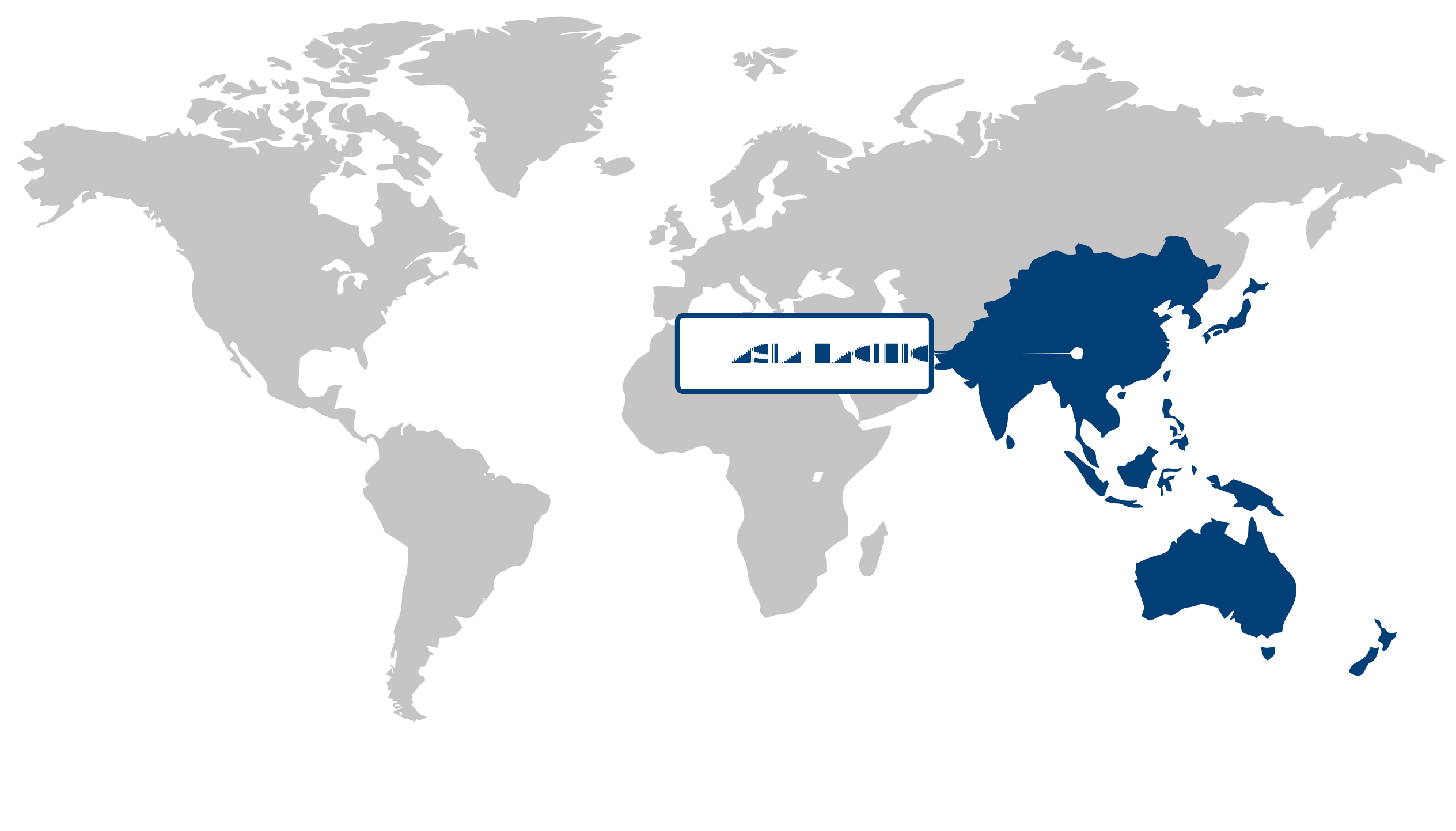
Largest Region
Asia Pacific
47% Market Share in 2025
Asia Pacific dominated the LDP packaging market, capturing over 47% of the global share in 2025 and leading as the fastest-growing region with a CAGR of 6.7%. This dominance is fueled by the rising consumption of packaged food and beverages across the region, reflecting evolving consumer lifestyles and increasing urbanization. For instance, the Food Industry Association of Japan reported a 12% year-on-year rise in packaged beverage sales in 2024, signaling a shift towards convenience and extended product shelf life. Additionally, regulatory frameworks in countries like South Korea have encouraged the adoption of advanced packaging materials to enhance food safety, while rapid digitalization and supply chain enhancements streamline distribution. China’s expansion in e-commerce platforms further amplifies demand for innovative, lightweight packaging solutions. These dynamics position Asia Pacific as a crucial hub for LDP packaging innovations, offering significant growth opportunities driven by changing consumption patterns and technological progress.
Japan is positioned as a pivotal hub in Asia Pacific’s LDP packaging market, propelled by its sophisticated consumer base and stringent quality regulations. Japanese consumers show a marked preference for sustainable and functional packaging, prompting companies like Mitsubishi Chemical Corporation to invest heavily in developing biodegradable LDP films tailored for food safety and environmental compliance. The Japanese Ministry of Economy, Trade and Industry’s policies promoting eco-friendly materials have accelerated market adoption, aligning with consumer expectations for green packaging. This blend of innovation and regulation reinforces Japan’s role in advancing the regional packaging industry, providing a blueprint for sustainable growth within Asia Pacific’s expanding market.
China anchors Asia Pacific’s LDP packaging market expansion through its vast manufacturing infrastructure and booming packaged food sector. The China National Packaging Federation highlights that urban middle-class growth and rising health awareness are increasing demand for hygienic and convenience-focused packaging solutions. Leading firms such as Jiangsu Hengrui Packaging leverage both domestic production and export capabilities to meet surging needs. Moreover, China’s rapid e-commerce evolution necessitates robust, lightweight, and cost-effective LDP packaging to optimize logistics and reduce damage, enhancing the end-user experience. These elements solidify China’s influence on the regional stage, underscoring Asia Pacific’s strategic market potential fueled by its largest economy’s dynamic consumption trends.
North America Market Analysis:
North America held a commanding share in the LDP packaging market, driven by the region’s established industrial base and high consumer spending on packaged goods. The demand for sustainable and lightweight packaging options has intensified, propelled by stringent environmental policies from the U.S. Environmental Protection Agency (EPA) and Canada’s Circular Economy initiatives. The rise of e-commerce and shifting consumer preferences toward convenient, protective packaging have further stimulated the uptake of LDP materials. Industry leaders like Amcor and Berry Global are investing heavily in sustainable innovation, leveraging advanced manufacturing technologies to enhance product performance and recyclability. Additionally, the robust logistics infrastructure in North America ensures efficient supply chain operations, reinforcing its strong market position. Looking ahead, the region’s focus on integrating digital transformation into packaging processes and expanding recycling capabilities presents ample opportunities for growth in the LDP packaging market.
The U.S. is a pivotal player in the North American LDP packaging market, driven by evolving consumer preferences favoring eco-friendly and high-performance packaging solutions. Regulatory frameworks such as the U.S. Plastics Pact encourage manufacturers to adopt recyclable LDP materials, influencing corporate strategies and product development. Brands like Sealed Air have pioneered flexible packaging innovations tailored to the food and healthcare sectors, reflecting consumer demand for safety and sustainability. The country’s advanced supply chain ecosystem supports rapid deployment of such innovations nationwide. This dynamic environment underscores the U.S.’ integral role within North America, bolstering the region’s leadership in the global LDP packaging market through sustained innovation and regulatory alignment.
Europe Market Trends:
Europe maintained a notable presence in the LDP packaging market, reflecting moderate growth driven by evolving consumer preferences and increasing regulatory emphasis on sustainability. The region’s mature economies, particularly its commitment to reducing plastic waste under EU directives, have accelerated demand for innovative, eco-friendly LDP packaging solutions. Key players such as Borealis AG have intensified efforts to develop recyclable and bio-based materials, responding to rising consumer environmental consciousness and stricter compliance mandates. Additionally, Europe's well-established supply chains and investments in digitalization enable enhanced operational efficiencies, facilitating faster product rollouts. The cultural inclination towards premium, convenience-oriented packaging paired with increasing e-commerce penetration further bolsters market expansion. Looking ahead, Europe's continued push for circular economy practices and advancements in polymer technology present significant growth avenues in the LDP packaging market, positioning the region as a leader in sustainable packaging innovation.
Germany commands a pivotal role in Europe’s LDP packaging market, underpinned by robust industrial capacity and progressive environmental policies. The nation’s packaging sector benefits from extensive R&D investments by firms like Covestro, fostering material innovations that align with Germany’s strict waste management regulations and the Verpackungsgesetz (Packaging Act). Consumer demand for high-quality, recyclable packaging is strong, amplified by growing awareness and government incentives supporting eco-friendly alternatives. Germany’s advanced manufacturing infrastructure and logistical capabilities contribute to efficient supply chain management, enabling rapid adoption of sustainable LDP solutions. This dynamic translates into a substantial competitive advantage for local producers and a blueprint for neighboring markets, reinforcing Germany’s strategic importance in expanding Europe’s LDP packaging market footprint.
France plays a strategic role in Europe's LDP packaging market, distinguished by its regulatory rigor and shifting consumer behaviors emphasizing sustainability. The implementation of the Anti-Waste Law and policies favoring circular packaging have catalyzed adoption of recyclable and compostable LDP materials, driving innovation among French manufacturers such as Carbios. French consumers increasingly prioritize packaging functionality and environmental impact, prompting market players to develop tailored solutions that address both performance and ecological requirements. The country’s investments in green technologies and digital supply networks support efficient packaging lifecycle management, enhancing overall market responsiveness. France’s regulatory-driven market evolution and consumer-led demand create a robust platform, enhancing Europe’s overall LDP packaging market growth prospects.
| Regional Market Attractiveness & Strategic Fit Matrix | |||||
| Parameter | North America | Asia Pacific | Europe | Latin America | MEA |
|---|---|---|---|---|---|
| Innovation Hub | Advanced | Developing | Advanced | Developing | Developing |
| Cost-Sensitive Region | Low | Medium | Low | High | High |
| Regulatory Environment | Supportive | Neutral | Supportive | Neutral | Neutral |
| Demand Drivers | Strong | Strong | Strong | Moderate | Moderate |
| Development Stage | Developed | Developing | Developed | Emerging | Emerging |
| Adoption Rate | High | Medium | High | Medium | Low |
| New Entrants / Startups | Dense | Moderate | Dense | Moderate | Sparse |
| Macro Indicators | Strong | Strong | Strong | Stable | Stable |
No card data available for this language/report.
Segment Leadership and Growth Trends
The manufacturing process segment held the largest share in the LDP packaging market in 2025, driven by continuous advancements in extrusion and film manufacturing technologies. These technological innovations enhance product quality and production efficiency, meeting stringent industry standards and boosting supply chain agility. Leading equipment manufacturers such as Reifenhäuser and Brückner emphasize automation and real-time monitoring to optimize output, responding to rising customer demands for consistency and sustainability. Regulatory bodies like the U.S. Food and Drug Administration (FDA) incentivize technology upgrades to ensure packaging safety and compliance. This segment offers strategic growth avenues for seasoned producers that invest in cutting-edge machinery and for new entrants focusing on niche, high-performance packaging solutions. With ongoing digital transformation and technological refinement, the manufacturing process segment is poised to maintain its dominance by enabling scalable, environmentally conscious production frameworks.
Analysis by Material
Virgin LDP represented the largest share of the LDP packaging market in 2025, fueled by the demand for higher strength and clarity in food-grade packaging. The segment’s ability to ensure superior barrier properties and visual appeal aligns with consumer preferences for freshness and transparency, which are critical in packaging perishables. Industry leaders such as ExxonMobil Chemical highlight their tailored virgin resins’ performance that supports safety regulations enforced by the European Food Safety Authority (EFSA). Additionally, the material’s predictability across global supply chains ensures consistent quality for multinational packaging firms. This segment’s robustness offers key opportunities for established suppliers to expand premium offerings, while startups can leverage innovation in bio-based virgin polymers. Given the ongoing emphasis on food safety and quality assurance, virgin LDP is expected to sustain its vital role in the market amid evolving regulatory and consumer landscapes.
Analysis by Product Type
LDP bags held the largest share in the LDP packaging market in 2025 owing to their widespread adoption in retail and food packaging applications. The segment caters to shifting consumer habits towards convenience, with retailers and food service providers favoring durable, lightweight, and recyclable bag solutions to enhance customer experience and comply with environmental mandates. Corporations like Amcor have invested heavily in developing recyclable and compostable bag variants, aligning with global sustainability goals advocated by the Ellen MacArthur Foundation. Supply chain efficiencies also benefit from the bags’ versatile format and ease of customization. For established players, this segment presents opportunities for differentiation through sustainable innovation, while emerging companies can capitalize on niche demands such as bespoke packaging designs. The enduring focus on sustainable retail packaging and increasing e-commerce penetration underpin the sustained relevance of LDP bags in the competitive landscape.
| Report Segmentation | |||
| Segment | Sub-Segment | Largest Segment | Fastest Growing Segment |
|---|---|---|---|
| Technology | Manufacturing Process, Printing Technology | ||
| Material | Virgin LDP, Recycled LDP, Blended | ||
| Product Type | Bags, Films, Sheets, Pouches, Tubes, Others | ||
| Application | Food & Beverages, Healthcare, Personal Care, Household Products, Industrial Packaging, Retail, Others | ||
 Read our Research Approach
Competitive Landscape and Market Positioning
Company Profile
Business Overview Financial Highlights Product Landscape SWOT Analysis Recent Developments Company Heat Map Analysis

The competitive environment in the LDP packaging sector is characterized by a series of collaborations, portfolio expansions, and continuous innovation efforts among these top players. Several firms have broadened their capabilities through strategic partnerships and acquisitions, extending market access and technological depth. Concurrently, substantial investments into advanced materials and automation have enabled enhanced product differentiation and operational efficiencies. Market leaders actively launch cutting-edge solutions aimed at sustainability and functionality, which solidifies their competitive positioning. This ongoing emphasis on research and development fosters innovation pipelines that meet evolving regulatory standards and customer preferences, heightening rivalry intensity. Collectively, these initiatives ensure sustained market relevance and challenge emerging entrants to keep pace with evolving industry benchmarks.
Strategic / Actionable Recommendations for Regional Players
North American participants should consider intensifying collaborations with technology providers and sustainability-focused entities to expand innovation capacities. Embracing automation and digital integration could optimize production efficiencies and differentiate offerings in a mature market.
In Asia Pacific, tapping into expanding packaging demand through partnerships with local manufacturers and leveraging advancements in biodegradable and flexible films would enhance market penetration. Focusing on rapidly growing sectors such as food and pharmaceuticals will create lucrative opportunities.
European firms can solidify positions by intensifying investments in sustainable materials and circular economy models. Aligning with regional regulatory initiatives and focusing on premium, eco-friendly packaging sub-segments will support brand loyalty and competitive advantage.
Frequently Asked Questions
What is the anticipated CAGR of the LDP packaging industry?
LDP Packaging Market size is projected to expand significantly, moving from USD 10.91 billion in 2025 to USD 19.35 billion by 2035, with a CAGR of 5.9% during the 2026-2035 forecast period.
Which part of the world represents the largest segment of the LDP packaging market?
Asia Pacific region captured around 47% revenue share in 2025, driven by rising consumption of packaged food and beverages in APAC.
Which region shows the most rapid acceleration in the LDP packaging sector?
Asia Pacific region will observe around 6.7% CAGR from 2026 to 2035, propelled by expanding retail and e-commerce packaging demand in APAC.
Why is the manufacturing process segment leading in the LDP packaging industry?
In 2025, the manufacturing process segment accounted for majority share of the LDP packaging market, driven by continuous advancements in extrusion and film manufacturing technologies.
Why does virgin LDP sub-segment dominate the material segment of LDP packaging sector?
The virgin LDP segment dominated the market in 2025, supported by higher strength and clarity requirements in food-grade packaging.
How much is the bags segment expected to grow in the LDP packaging industry beyond 2025?
In 2025, the bags segment contributed the largest share to the LDP packaging market, driven by widespread use of LDP bags in retail and food packaging applications.
What factors give food & beverages segment a competitive edge in the LDP packaging sector?
The food & beverages segment led the market in 2025, accelerated by increasing consumption of packaged and ready-to-eat food products.
Who holds a significant market share in the LDP packaging landscape?
Major competitors in the LDP packaging market include Amcor (Australia), Sealed Air (USA), Mondi Group (UK), Berry Global (USA), Huhtamaki (Finland), Coveris (Austria), Sonoco Products (USA), ProAmpac (USA), DS Smith (UK), Winpak (Canada).
Our Clients


Why Choose Us
Specialized Expertise: Our team comprises industry experts with a deep understanding of your market segment. We bring specialized knowledge and experience that ensures our research and consulting services are tailored to your unique needs.
Customized Solutions: We understand that every client is different. That's why we offer customized research and consulting solutions designed specifically to address your challenges and capitalize on opportunities within your industry.
Proven Results: With a track record of successful projects and satisfied clients, we have demonstrated our ability to deliver tangible results. Our case studies and testimonials speak to our effectiveness in helping clients achieve their goals.
Cutting-Edge Methodologies: We leverage the latest methodologies and technologies to gather insights and drive informed decision-making. Our innovative approach ensures that you stay ahead of the curve and gain a competitive edge in your market.
Client-Centric Approach: Your satisfaction is our top priority. We prioritize open communication, responsiveness, and transparency to ensure that we not only meet but exceed your expectations at every stage of the engagement.
Continuous Innovation: We are committed to continuous improvement and staying at the forefront of our industry. Through ongoing learning, professional development, and investment in new technologies, we ensure that our services are always evolving to meet your evolving needs.
Value for Money: Our competitive pricing and flexible engagement models ensure that you get maximum value for your investment. We are committed to delivering high-quality results that help you achieve a strong return on your investment.
Select Licence Type

