



N Butyl Acetate Market Size & Forecasts 2026-2035, By Segments (Grade, Application, End-use Industry), Growth Opportunities, Innovation Landscape, Regulatory Shifts, Strategic Regional Insights (U.S., Japan, China, South Korea, UK, Germany, France), and Competitive Dynamics (Eastman Chemical, BASF, ExxonMobil, LyondellBasell, LG Chem)
Market Size and Growth Outlook
Base Year Value (2025)
USD 1.83 billion
CAGR (2026-2035)
4.6%
Forecast Year Value (2035)
USD 2.87 billion

Historical Data Period
2022-2025

Largest Region
Asia Pacific

Forecast Period
2026-2035
Key Takeaways
- Asia Pacific region accounted for over 45.2% revenue share in 2025, propelled by rising industrial and automotive solvent demand in China and India.
- Asia Pacific region will achieve over 5.52% CAGR from 2026 to 2035, accelerated by increasing paint, coating, and cleaning solvent applications in Asia‑Pacific.
- In 2025, the industrial grade segment accounted for majority share, driven by increasing industrial use of industrial grade n‑butyl acetate as a cost‑effective solvent in coatings, adhesives, and sealants across expanding automotive and construction sectors.
- The coating materials segment in the N butyl acetate market accounted for majority share in 2025, driven by expanding demand for n‑butyl acetate in coating materials as a high‑solvency, fast‑evaporating solvent that improves film formation and finish quality in paints and coatings.
- The automotive segment held largest share of the market in 2025, propelled by increasing automotive production requiring solvent usage in coatings, adhesives, and sealants.
- Key companies dominating the N butyl acetate market are Eastman Chemical (USA), BASF (Germany), ExxonMobil (USA), LyondellBasell (Netherlands), LG Chem (South Korea), Celanese (USA), SABIC (Saudi Arabia), Asahi Kasei (Japan), Sinopec (China), Mitsui Chemicals (Japan).
Market Growth Drivers and Industry Trends
Increasing Use in Coatings & PaintsThe rising application of N butyl acetate in coatings and paints is a critical driver shaping the market’s growth, reflecting evolving consumer preferences for high-performance and environmentally compliant products. Regulatory initiatives such as the U.S. Environmental Protection Agency’s VOC (volatile organic compound) reduction programs have prompted manufacturers like PPG Industries to innovate with N butyl acetate-based formulations that balance efficacy and compliance. This trend opens avenues for established chemical producers to diversify their product portfolios and capitalize on demand shifts toward sustainable solvents. New entrants can leverage emerging technologies to develop specialty coatings tailored for industrial and residential segments. As demand for advanced paint solutions intensifies globally, the N butyl acetate market will increasingly integrate with sustainability-driven product development, aligning with evolving environmental regulations and consumer expectations.
Demand from Automotive Refinishing
The N butyl acetate market is significantly propelled by expanding automotive refinishing activities, where the solvent’s favorable evaporation rate and compatibility with diverse paint systems facilitate efficient repairs and aesthetic restorations. According to the Automotive Refinish Manufacturers Association (ARMA), growth in vehicle ownership and extended vehicle lifespans worldwide have amplified the need for specialized refinish products, many of which incorporate N butyl acetate as a primary solvent. This scenario presents strategic growth opportunities for incumbent chemical suppliers to innovate formulations that meet automotive OEM standards and adapt to regional refinishing trends. For new players, partnerships with automotive paint firms to customize solvent blends can provide a competitive edge. The ongoing rebuilding of automotive infrastructure in emerging economies will sustain demand, reinforcing the solvent’s role in this niche but rapidly evolving segment of the N butyl acetate market.
Expansion of Chemical Production Capacity
The expansion of chemical production capacity, driven by investments from industry leaders such as BASF and Eastman Chemical Company, underpins the growth trajectory of the N butyl acetate market by enhancing supply reliability and cost competitiveness. Recent facility upgrades and capacity increases in Asia and North America respond to heightened global demand across multiple end-use sectors, ensuring shorter lead times and improved logistical efficiency. This capacity growth fosters competitive dynamics by enabling manufacturers to pursue economies of scale and accommodate customized product variants. It also lowers barriers for new entrants by improving raw material availability and infrastructure access. As capacity additions continue, the market is positioned for greater geographic penetration and responsiveness to shifting consumer and industrial needs, reinforcing N butyl acetate’s strategic importance within solvent portfolios.
Industry Restraints:
Environmental and Safety Regulatory Constraints
Stringent environmental regulations on volatile organic compounds (VOCs) and hazardous chemicals significantly hinder the N butyl acetate market’s expansion. Regulatory bodies such as the U.S. Environmental Protection Agency (EPA) and the European Chemicals Agency (ECHA) impose rigorous emissions limits and workplace safety standards, compelling manufacturers to invest heavily in compliant production technologies. For instance, the EPA’s National Emission Standards for Hazardous Air Pollutants (NESHAP) has increased operational costs by mandating advanced emission control systems, limiting small players’ scalability. This regulatory complexity discourages new entrants lacking the capital for compliance while pressuring incumbents to innovate or shift towards greener alternatives. Looking ahead, tightening sustainability mandates and evolving chemical safety protocols are poised to maintain upward pressure on compliance costs, reinforcing the barrier to market entry and incentivizing companies to prioritize eco-friendly formulations within their strategic roadmaps.
Feedstock Price Volatility and Supply Chain Disruptions
Price fluctuations in key feedstocks such as butanol and acetic acid create significant market instability for N butyl acetate producers. Dependence on petrochemical-derived raw materials ties the market’s cost structure closely to crude oil dynamics, as evidenced by the 2020 global supply shock highlighted in the International Energy Agency’s (IEA) reports. Additionally, geopolitical tensions and logistics bottlenecks—exemplified by prolonged shipping delays during the COVID-19 pandemic—exacerbate raw material availability challenges. These factors intensify operational uncertainties, impairing production planning and squeezing profit margins for both established firms and startups. Strategically, companies must enhance supply chain resilience through diversified sourcing and demand forecasting capabilities. Given ongoing geopolitical and environmental upheavals, volatile feedstock pricing and supply inconsistencies will likely persist, compelling market participants to adopt more agile procurement and risk management frameworks.
| Growth Driver Assessment Framework | |||||
| Growth Driver | Impact On CAGR | Regulatory Influence | Geographic Relevance | Adoption Rate | Impact Timeline |
|---|---|---|---|---|---|
| Increasing use in coatings & paints | 1.70% | Short term (≤ 2 yrs) | Asia Pacific, Europe | Medium | Fast |
| Automotive refinishing demand | 1.40% | Medium term (2–5 yrs) | North America | Low | Moderate |
| Expansion of chemical production capacity | 0.90% | Long term (5+ yrs) | MEA, Latin America | Low | Slow |
Unlock insights tailored to your business with our bespoke market research solutions - Click to get your customized report now!
Regional Demand Dynamics
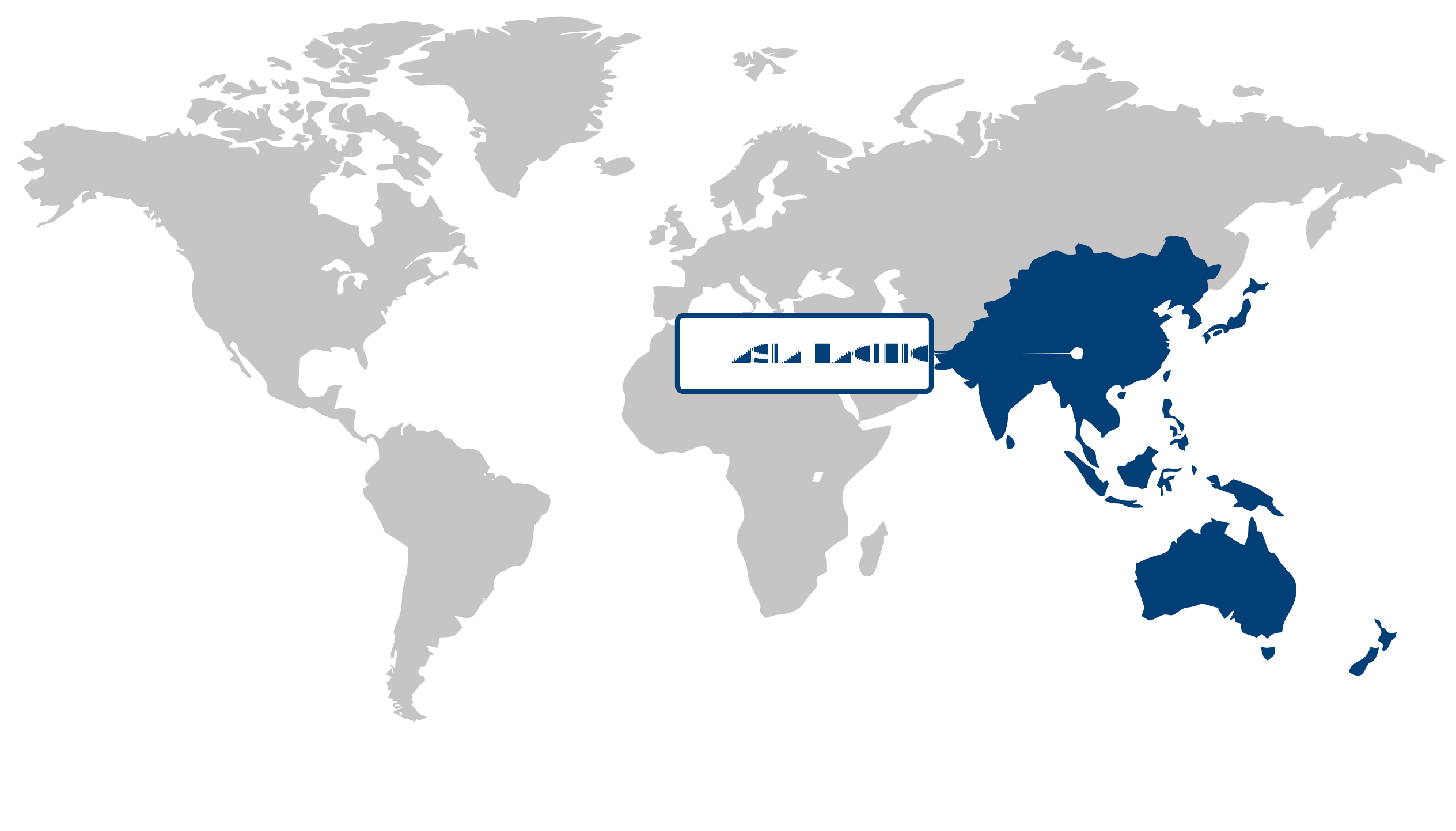
Largest Region
Asia Pacific
45.2% Market Share in 2025
The Asia Pacific N butyl acetate market dominated with a substantial 45.2% share of the global market in 2025, positioning it as both the largest and fastest-growing region, with a 5.52% CAGR. This growth is primarily driven by escalating industrial and automotive solvent demand, particularly in economic powerhouses like China and India. The region’s competitive manufacturing base and expansive automotive sector foster significant solvent consumption, a trend underscored by announcements from BASF’s China operations focusing on sustainable solvent formulations. Additionally, tightening environmental regulations in countries such as Japan, enforced by the Ministry of Environment, promote the adoption of eco-friendlier chemical intermediates like N butyl acetate. These forces together underpin robust demand growth and operational innovations, enhancing supply chain efficiency across Asia Pacific. Looking ahead, the confluence of expanding automotive production, stricter environmental oversight, and rising industrial output will sustain Asia Pacific’s pivotal role and offer lucrative opportunities for investors in the N butyl acetate market.
China anchors the Asia Pacific N butyl acetate market with its vast industrial expansion and booming automotive sector, significantly fueling regional growth. The country’s government-driven emphasis on advanced manufacturing and green chemistry, illustrated by programs from the Ministry of Industry and Information Technology, incentivizes manufacturers to utilize higher-grade solvents such as N butyl acetate to meet product quality and emission standards. Corporate initiatives by Sinopec to develop eco-friendly solvents further indicate rising market demand. This synergy between regulatory stringency and industrial scalability drives solvent consumption patterns uniquely in China, reinforcing the nation’s critical influence on Asia Pacific’s market trajectory in N butyl acetate. Consequently, China remains a strategic focal point for stakeholders seeking growth through innovation and sustainability in this sector.
Japan is positioned as a pivotal hub in the Asia Pacific N butyl acetate market, shaped by its rigorous regulatory frameworks and advanced chemical industry landscape. The Ministry of Economy, Trade and Industry’s strict enforcement of chemical safety and environmental protocols compels chemical manufacturers to innovate in solvent usage. Companies like Mitsubishi Chemical have responded by enhancing production efficiency and developing eco-conscious N butyl acetate grades tailored for domestic automotive paint and coatings sectors, where demand for quality and sustainability converges. Japan’s mature market, with heightened consumer and governmental expectations for low-toxicity solvents, amplifies the region’s leadership in setting industry standards. These factors strengthen Japan’s pivotal role in underpinning Asia Pacific’s competitive edge and growth potential in the N butyl acetate market.
Europe Market Analysis:
Europe held a commanding share in the N butyl acetate market, driven by its established industrial base and stringent environmental regulations fostering demand for greener solvents and coatings. The region’s mature manufacturing sector, particularly in automotive and construction, sustains consistent consumption of N butyl acetate-based products. Regulatory frameworks from the European Chemicals Agency (ECHA) have spurred innovation in eco-friendly formulations, prompting manufacturers to invest in sustainable production processes. Additionally, increasing consumer preference for high-performance and low-VOC (volatile organic compounds) coatings in countries such as Germany and France underpins steady market demand. Supply chain efficiency across European logistics hubs further supports competitive pricing and availability. As the industry integrates digital manufacturing technologies to enhance operational agility, Europe is well-positioned to capitalize on evolving end-user requirements and sustainability mandates, underscoring its strategic importance in the global N butyl acetate market.
Germany serves as a pivotal player in the European N butyl acetate market, leveraging its robust automotive and chemical industries to sustain significant demand. The country’s emphasis on advanced manufacturing technologies and stringent product standards under the German Environment Agency (Umweltbundesamt) enhances the adoption of high-quality, sustainable N butyl acetate formulations. Consumer preferences for durable and environmentally compliant coatings further stimulate market growth. Corporations like Covestro and BASF have announced increased investments in specialty solvents production within Germany, asserting the country’s competitive edge. Germany’s skilled workforce and well-integrated supply networks reinforce its role as a central manufacturing and export hub. These factors collectively position Germany to strengthen Europe’s market leadership through innovation and responsiveness to ecological considerations.
France contributes notably to Europe’s N butyl acetate market by focusing on regulated solvent usage and expanding demand in the building and furniture coatings sectors. The French Agency for Ecological Transition (ADEME) has catalyzed shifts towards safer, low-emission solvents, aligning with consumer trends favoring sustainability and indoor air quality. Companies such as Arkema have enhanced their R&D efforts in France, innovating in bio-based N butyl acetate alternatives to meet regulatory and market demands. The country’s dynamic construction industry, supported by recovery initiatives, further propels solvent consumption. France’s integration of digital supply chain management and green chemistry techniques amplifies market resilience. These developments affirm France’s strategic contribution to Europe’s sustained demand for premium and eco-conscious N butyl acetate products, reinforcing the region's global prominence.
North America Market Trends:
North America maintained a notable presence in the N butyl acetate market, driven by a balanced combination of industrial demand and evolving consumer preferences. The region’s significance stems from its diverse industrial base, encompassing automotive coatings, adhesives, and printing inks, which continue to underpin steady consumption patterns. Efforts to align with stricter environmental regulations, such as those outlined by the U.S. Environmental Protection Agency (EPA), have spurred incremental innovation toward lower-VOC formulations, enhancing product appeal in sustainable markets. Additionally, North America’s resilient supply chains and investments in digital process optimization, highlighted in recent Honeywell corporate releases, bolster operational efficiency and market responsiveness. These synergistic factors position the region for moderate growth, leveraging both traditional demand and gradual adoption of environmentally conscious solutions.
The U.S. plays a pivotal role within the North American N butyl acetate market, where strong industrial activity and regulatory frameworks shape demand. The U.S. Chemical Safety and Hazard Investigation Board’s focus on safer chemical use informs stringent compliance requirements, encouraging manufacturers like Eastman Chemical Company to expand production of compliant solvent blends. Concurrently, rising consumer awareness around product safety has heightened preference for coatings and adhesives with reduced emissions, as evidenced by PPG Industries’ recent launch of low-VOC coatings. These dynamics underline the U.S. as a key driver of technical and regulatory advancements, reinforcing North America’s strategic market opportunities in N butyl acetate.
No card data available for this language/report.
Segment Leadership and Growth Trends
The industrial grade segment held the largest share in the N butyl acetate market in 2025, driven primarily by its extensive use as a cost-effective solvent in coatings, adhesives, and sealants within the expanding automotive and construction industries. Its leadership stems from manufacturers’ preference for high-performance solvents that balance efficacy with cost-efficiency, supporting production scale-ups and sustainability efforts. Regulatory agencies, such as the U.S. Environmental Protection Agency, highlight industrial grade solvents for their optimized environmental risk profiles, reinforcing its adoption amid tightening emission standards. For both established and emerging producers, this segment offers strategic advantages through scalable demand and diversified applications. Given ongoing industrial growth and the persistent need for efficient solvent solutions, the industrial grade segment is positioned to maintain its prominence in the near to medium term.
Analysis by Application
Coating materials represented the largest share within the N butyl acetate market in 2025, propelled by rising demand for fast-evaporating solvents that enhance film formation and finish quality in paints and coatings. This segment leads due to increasing consumer and regulatory emphasis on product durability and aesthetic appeal, particularly in automotive and construction sectors. Insights from the American Coatings Association highlight innovation in solvent formulations that reduce VOC emissions while maintaining performance, strengthening this segment's competitive edge. The coating materials segment offers significant opportunities for firms investing in cleaner, high-performance solvent technologies. Sustained expansion in protective and decorative coatings across industries ensures that coating materials will remain a critical driver in the N butyl acetate market landscape.
Analysis by End-use Industry
The automotive segment dominated the N butyl acetate market in 2025, driven by rising vehicle production that demands solvents for coatings, adhesives, and sealants. This leadership is attributable to the sector’s focus on lightweight, durable finishes and adhesive technologies aimed at enhancing fuel efficiency and safety. Industry reports from the International Organization of Motor Vehicle Manufacturers emphasize solvent optimization for eco-friendly production processes, aligning with the automotive industry's trend toward sustainability. The sector’s robust supply chains and rigorous quality standards create strategic entry points for both major and niche players. Given ongoing global automotive growth and the evolving regulatory landscape supporting cleaner manufacturing, the automotive segment is set to remain a cornerstone of N butyl acetate demand.
| Report Segmentation | |||
| Segment | Sub-Segment | Largest Segment | Fastest Growing Segment |
|---|---|---|---|
| Grade | Technical Grade, Industrial Grade, Pharmaceutical Grade | ||
| Application | Coating Materials, Adhesives and Sealants, Paints and Inks, Pharmaceuticals, Personal care and Cosmetics, Cleaning and Maintenance, Plastics | ||
| End-use Industry | Construction, Automotive, Packaging, Pharmaceuticals, Electronics, Paper and pulp, Furniture and Woodworking | ||
 Read our Research Approach
Competitive Landscape and Market Positioning
Company Profile
Business Overview Financial Highlights Product Landscape SWOT Analysis Recent Developments Company Heat Map Analysis

The competitive landscape is shaped by rigorous efforts such as integrating advanced manufacturing technologies and expanding product portfolios. For instance, ExxonMobil and Celanese intensify innovation through enhanced formulations, while Mitsui Chemicals and Asahi Kasei focus on sustainability-oriented solutions to address evolving regulatory landscapes. Strategic collaborations and selective acquisitions are instrumental in broadening geographical access and accelerating market penetration, with players like SABIC reinforcing their foothold in emerging economies. This dynamic fosters an environment marked by continuous product evolution and heightened responsiveness to consumer demands.
Strategic / Actionable Recommendations for Regional Players
In North America, aligning with technology developers to adopt sustainable production methods could strengthen competitive advantages, while exploring emerging industrial applications may open high-value segments. Cultivating partnerships that leverage robust logistics networks would also enhance market responsiveness.
For the Asia Pacific region, capitalizing on growing industrialization by collaborating with regional manufacturers can drive volume growth, complemented by investments in R&D to tailor products to local environmental standards. Establishing alliances to access innovative feedstocks can provide a technological edge.
European players should prioritize integrating circular economy principles, collaborating across value chains to promote eco-friendly ingredients, and targeting premium segments driven by stringent regulations. Advancing digitalization initiatives could further enhance process efficiencies and customer engagement.
Our Clients


Why Choose Us
Specialized Expertise: Our team comprises industry experts with a deep understanding of your market segment. We bring specialized knowledge and experience that ensures our research and consulting services are tailored to your unique needs.
Customized Solutions: We understand that every client is different. That's why we offer customized research and consulting solutions designed specifically to address your challenges and capitalize on opportunities within your industry.
Proven Results: With a track record of successful projects and satisfied clients, we have demonstrated our ability to deliver tangible results. Our case studies and testimonials speak to our effectiveness in helping clients achieve their goals.
Cutting-Edge Methodologies: We leverage the latest methodologies and technologies to gather insights and drive informed decision-making. Our innovative approach ensures that you stay ahead of the curve and gain a competitive edge in your market.
Client-Centric Approach: Your satisfaction is our top priority. We prioritize open communication, responsiveness, and transparency to ensure that we not only meet but exceed your expectations at every stage of the engagement.
Continuous Innovation: We are committed to continuous improvement and staying at the forefront of our industry. Through ongoing learning, professional development, and investment in new technologies, we ensure that our services are always evolving to meet your evolving needs.
Value for Money: Our competitive pricing and flexible engagement models ensure that you get maximum value for your investment. We are committed to delivering high-quality results that help you achieve a strong return on your investment.
Select Licence Type

