



Women's Coats and Jackets Market Size & Growth Forecast 2027–2036, By Segments (Distribution Channel, Weight), Regional Demand Trends (North America, Asia Pacific, Europe), Key Country Insights (U.S., Japan, South Korea, Germany, France, Italy), and Competitive Landscape
Market Size and Growth Outlook
Women's Coats and Jackets Market size stood at USD 89.97 billion in 2026 and is predicted to grow at a 4.28% CAGR from 2027 to 2036, crossing USD 136.81 billion by 2036. The industry revenue for 2027 is estimated at USD 93.21 billion.
Base Year Value (2026)
USD 89.97 billion
CAGR (2027-2036)
4.28%
Forecast Year Value (2036)
USD 136.81 billion

Historical Data Period
2022-2026

Largest Region
Europe

Forecast Period
2027-2036
Women's Coats And Jackets Market Intelligence Snapshot:
-
Regional Market Dynamics:
- Europe held a 32.40% share in 2026, supported by mature retail networks, strong seasonal demand, frequent fashion refresh cycles, and extensive offline and online product availability.
- Asia Pacific is forecast to grow at a 5.24% CAGR, driven by rising urban consumption, expanding organized retail, stronger e-commerce adoption, and wider availability of international and regional brands.
-
Segment Momentum:
- Offline leads with a 72% share as consumers prefer in-store evaluation of fit, fabric, and comfort. Established retail formats like department stores and specialty chains continue to drive strong seasonal outerwear conversions.
- Online is the fastest-growing channel due to convenience, wider assortment access, and price transparency. Improved size guidance and digital shopping tools are reducing hesitation and increasing repeat seasonal purchases.
-
Market Expansion Drivers:
- Rising working women population and income levels boosting formal outerwear demand.
- E-commerce expansion and AI-based virtual try-on tools enhancing apparel purchasing conversion.
- Fast fashion cycles and sustainable material adoption reshaping global apparel sourcing strategies.
-
Leading Market Participants:
Prominent players in the women's coats and jackets market include Christian Dior SE (France), Chanel Limited (United Kingdom), Gucci S.p.A. (Italy), Prada S.p.A. (Italy), Giorgio Armani S.p.A. (Italy), Burberry Group plc (United Kingdom), Dolce & Gabbana S.r.l. (Italy), Gianni Versace S.r.l. (Italy), Louis Vuitton Malletier SAS (France), Moncler S.p.A. (Italy).
Global Market Forecast Snapshot:
-
Market Outlook:
- 2026 Market Size: USD 89.97 billion
- 2027 Estimated Market Size: USD 93.21 billion.
- Projected Market Size: USD 136.81 billion by 2036
- Growth Forecasts: 4.28% CAGR (2027-2036)
-
Regional and Segment Outlook:
- Leading Regional Market: Europe
- High-Growth Regional Hub: Asia Pacific
- Core Revenue Segment: Offline (Distribution Channel) | Medium (Weight)
- Emerging Opportunity Segment: Online (Distribution Channel) | Light (Weight)
Market Growth Drivers and Industry Trends
Rising working women population and income levels boosting formal outerwear demand
Increasing participation of women in professional employment, combined with improving purchasing capacity, is supporting demand for clothing that balances functionality with workplace-appropriate styling. The women's coats and jackets market is benefiting from greater demand for formal and smart-casual outerwear suitable for offices, business events, commuting, and professional travel. Higher disposable income can also encourage consumers to purchase multiple outerwear pieces differentiated by style, fabric, season, and occasion rather than relying on a limited wardrobe. This shift is strengthening demand for tailored coats, structured jackets, versatile blazers, and other products that can complement professional and contemporary fashion preferences.
E-commerce expansion and AI-based virtual try-on tools enhancing apparel purchasing conversion
Digital retail channels are making outerwear more accessible by allowing consumers to browse a broad selection of styles, sizes, materials, and price points without visiting physical stores. For the women's coats and jackets market, AI-based virtual try-on technologies can further reduce uncertainty associated with online apparel purchases by helping shoppers visualize how garments may appear when worn. Such tools can improve product discovery and provide more personalized digital shopping experiences, while detailed sizing and fit recommendations can address concerns surrounding apparel fit. The combination of wider online product availability and technology-enabled visualization is supporting greater consumer confidence during digital purchasing decisions.
Fast fashion cycles and sustainable material adoption reshaping global apparel sourcing strategies
Rapid changes in fashion preferences are encouraging apparel producers and retailers to adjust product assortments more frequently, while growing sustainability considerations are influencing how outerwear is designed and sourced. Within the women's coats and jackets market, shorter fashion cycles can increase demand for updated silhouettes, seasonal colors, and trend-oriented designs, requiring flexible sourcing and responsive production capabilities. At the same time, increased interest in recycled, responsibly sourced, and lower-impact materials is encouraging manufacturers to reconsider fabric selection and supply chain practices. The interaction between fast-moving fashion demand and sustainability requirements is shaping product development, material procurement, and inventory strategies across the outerwear industry.
| Growth Driver Assessment Framework | |||||
| Growth Driver | Impact On CAGR | Regulatory Influence | Geographic Relevance | Adoption Rate | Impact Timeline |
|---|---|---|---|---|---|
| Rising working women population and income levels boosting formal outerwear demand | 2.00% | Low | North America, Europe, Asia Pacific | High | Near Term |
| E-commerce expansion and AI-based virtual try-on tools enhancing apparel purchasing conversion | 1.70% | Moderate | Asia Pacific, North America, Europe | High | Near Term |
| Fast fashion cycles and sustainable material adoption reshaping global apparel sourcing strategies | 1.50% | High | Europe, North America | Medium | Long Term |
Unlock insights tailored to your business with our bespoke market research solutions - Click to get your customized report now!
Regional Demand Dynamics
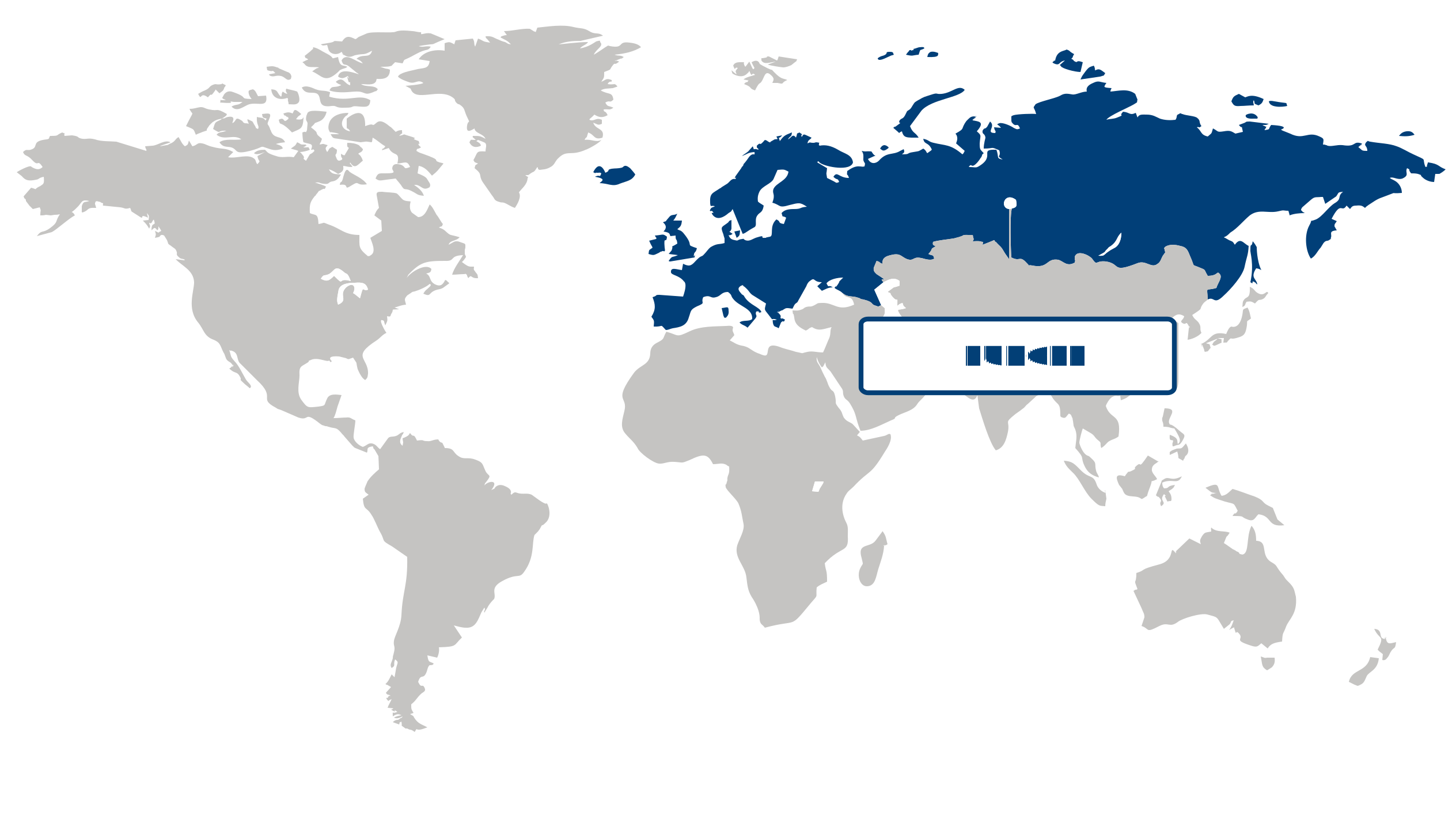
Largest Region
Europe
32.4% Market Share in 2026
Europe (Largest Region) vs Asia Pacific (Fastest-Growing Region)
Europe led the women's coats and jackets market with a 32.40% share in 2026, reflecting the region's established fashion industry, strong consumer interest in seasonal outerwear, and diverse demand for both functional and style-oriented garments. Climate variation across European markets supports sustained demand for different categories of coats and jackets, ranging from lightweight transitional pieces to insulated winter outerwear. Established retail ecosystems, fashion-conscious consumers, and increasing emphasis on sustainable materials and responsible production are also shaping product development and purchasing decisions, while premium and contemporary designs continue to reinforce the region's market position.
Asia Pacific is expected to experience the fastest market expansion, underpinned by rising disposable incomes, urbanization, and the growing influence of fashion-oriented consumer lifestyles. Expanding organized retail and e-commerce channels are making a broader range of women's outerwear accessible across both developed and emerging markets. Demand is also being influenced by evolving workplace and social dressing preferences, greater exposure to international fashion trends, and the need for versatile garments suited to changing urban climates. Manufacturers are increasingly adapting designs, materials, and price points to accommodate the region's wide range of climates and consumer preferences, supporting continued market development.
Key Country Insights
The U.S. women's coats and jackets market emphasizes versatile outerwear, premium materials, and omnichannel retail strategies. Brands in the U.S. continue expanding lightweight, performance-oriented, and sustainable collections that address changing weather conditions and evolving consumer style preferences.
Japan's women's coats and jackets market is shaped by refined tailoring, lightweight construction, and seasonal fashion cycles. Japanese brands emphasize premium craftsmanship and compact functional designs that suit urban lifestyles while supporting demand for high-quality apparel.
South Korea emphasizes fashion-forward women's outerwear inspired by rapidly changing consumer trends and digital retail engagement. Local brands frequently introduce contemporary silhouettes, premium fabrics, and limited seasonal collections to maintain consumer interest and product differentiation.
Germany prioritizes durable, weather-resistant women's coats and jackets that combine practicality with understated design. German consumers increasingly favor recycled fabrics, technical insulation, and long-lasting garments that align with sustainability expectations and everyday outdoor use.
France focuses on premium women's coats and jackets that combine timeless styling with superior craftsmanship. French manufacturers continue incorporating sustainable textiles and refined tailoring to strengthen product value across luxury and premium fashion segments.
Italy's women's coats and jackets market benefits from strong expertise in premium textiles and luxury garment manufacturing. Italian companies prioritize sophisticated designs, quality fabrics, and artisanal finishing to reinforce the appeal of premium outerwear collections.
Segment Leadership and Growth Trends
Distribution Channel Segment Analysis: Offline (Largest Segment) vs Online (Fastest-Growing Segment)
Offline channels accounted for the largest share of the women's coats and jackets market at 72% in 2026, supported by consumers' preference for physically assessing garment fit, fabric quality, weight, and styling before purchase. Coats and jackets often involve greater consideration of sizing, silhouette, and material characteristics than routine apparel purchases, making physical retail particularly relevant. Department stores, specialty apparel outlets, and other brick-and-mortar retailers also provide opportunities for consumers to compare styles and receive in-store assistance, reinforcing the channel's established position.
Online distribution is expanding rapidly as digital shopping platforms offer consumers broader product selections, convenient purchasing, and easier access to seasonal apparel collections. Improvements in size guidance, product visualization, delivery services, and return policies are helping reduce traditional barriers associated with purchasing outerwear without physical inspection. Increasing consumer comfort with online fashion shopping and the convenience of comparing designs and prices digitally are further supporting the shift toward e-commerce.
Weight Segment Analysis: Medium (Largest Segment) vs Light (Fastest-Growing Segment)
The medium-weight segment held the largest share of the women's coats and jackets market at 42.4% in 2026, reflecting its versatility across a broad range of climates, seasons, and everyday styling requirements. Medium-weight outerwear can provide a practical balance between warmth, comfort, and mobility, making it suitable for commuting, casual wear, and transitional weather. Its adaptability across different garment designs and consumer preferences contributes to its broad appeal in the women's outerwear market.
Lightweight coats and jackets are witnessing the fastest growth as consumers increasingly favor adaptable outerwear that can be layered and worn across changing weather conditions. Lightweight construction supports mobility and portability while allowing garments to transition between indoor and outdoor settings without excessive bulk. Growing interest in versatile wardrobes, travel-friendly apparel, transitional-season fashion, and functional everyday clothing is encouraging demand for lighter outerwear formats.
| Report Segmentation | |||
| Segment | Sub-Segment | Largest Segment | Fastest Growing Segment |
|---|---|---|---|
| Distribution Channel | Offline, Online | Offline | Online |
| Weight | Light, Medium, Heavy | Medium | Light |
 Read our Research Approach
Competitive Landscape and Market Positioning
Leading companies in the women's coats and jackets market:
1. Christian Dior SE (France)
2. Chanel Limited (United Kingdom)
3. Gucci S.p.A. (Italy)
4. Prada S.p.A. (Italy)
5. Giorgio Armani S.p.A. (Italy)
6. Burberry Group plc (United Kingdom)
7. Dolce & Gabbana S.r.l. (Italy)
8. Gianni Versace S.r.l. (Italy)
9. Louis Vuitton Malletier SAS (France)
10. Moncler S.p.A. (Italy)
Seasonal fashion cycles and sustainability preferences are influencing design strategies. Functional apparel innovation is merging style with performance features. The women's coats and jackets market is shaped by evolving lifestyle and climate adaptability needs.
Why Choose Us
Specialized Expertise: Our team comprises industry experts with a deep understanding of your market segment. We bring specialized knowledge and experience that ensures our research and consulting services are tailored to your unique needs.
Customized Solutions: We understand that every client is different. That's why we offer customized research and consulting solutions designed specifically to address your challenges and capitalize on opportunities within your industry.
Proven Results: With a track record of successful projects and satisfied clients, we have demonstrated our ability to deliver tangible results. Our case studies and testimonials speak to our effectiveness in helping clients achieve their goals.
Cutting-Edge Methodologies: We leverage the latest methodologies and technologies to gather insights and drive informed decision-making. Our innovative approach ensures that you stay ahead of the curve and gain a competitive edge in your market.
Client-Centric Approach: Your satisfaction is our top priority. We prioritize open communication, responsiveness, and transparency to ensure that we not only meet but exceed your expectations at every stage of the engagement.
Continuous Innovation: We are committed to continuous improvement and staying at the forefront of our industry. Through ongoing learning, professional development, and investment in new technologies, we ensure that our services are always evolving to meet your evolving needs.
Value for Money: Our competitive pricing and flexible engagement models ensure that you get maximum value for your investment. We are committed to delivering high-quality results that help you achieve a strong return on your investment.
Select Licence Type

