5PL Solutions Market Size & Growth Forecast 2027–2036, By Segments (Organization Size, Solution, Deployment Mode, End-user), Regional Demand Trends (North America, Asia Pacific, Europe), Key Country Insights (U.S., Japan, South Korea, Germany, France, Italy), and Competitive Landscape
Jump to Content
Market Size and Growth Outlook
5PL Solutions Market size was valued at USD 5.2 Billion in 2026 and is anticipated to grow at 13.52% CAGR from 2027 to 2036, exceeding USD 18.48 Billion by 2036. The industry revenue for 2027 is calculated at USD 5.81 Billion.
Get more details on this report
Request Free Sample Report5PL Solutions Market Intelligence Snapshot
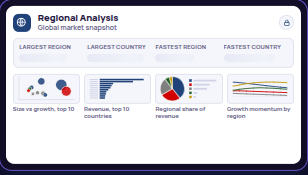
Regional Market Dynamics
- North America leads through its mature logistics ecosystem, sophisticated digital infrastructure, and strong adoption of technology-enabled supply chain management and orchestration.
- Asia Pacific is growing fastest as e-commerce, cross-border trade, manufacturing, digital connectivity, and logistics modernization increase demand for integrated supply chain orchestration.
Segment Momentum
- Large enterprises held a 61.44% share in 2026 due to complex global supply chains requiring advanced logistics coordination, visibility, and data-driven management capabilities.
- Supply chain optimization is expanding rapidly as businesses invest in tools for improved inventory management, demand forecasting, network design, and agile logistics decision-making.
Market Expansion Drivers
- Rising e-commerce globalization driving demand for integrated end-to-end logistics orchestration platforms
- Increasing demand for supply chain transparency accelerating digital logistics transformation
- Adoption of advanced analytics and AI in logistics optimizing multi-party supply chain coordination
Leading Market Participants
- Key players in the 5PL solutions market include A.P. Moller – Maersk (Denmark), DHL Supply Chain (Germany), Kuehne + Nagel International AG (Switzerland), DB Schenker (Germany), DSV A/S (Denmark), C.H. Robinson Worldwide Inc. (USA), Expeditors International of Washington Inc. (USA), Nippon Express Holdings Co., Ltd. (Japan), XPO Logistics Inc. (USA), United Parcel Service Inc. (USA)
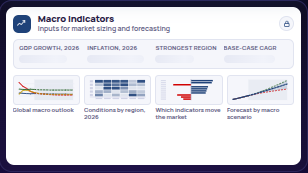
Global Market Forecast Snapshot
Market Outlook
- 2026 Market Size: USD 5.2 Billion
- 2027 Estimated Market Size: USD 5.81 Billion
- Projected Market Size: USD 18.48 Billion by 2036
- Growth Forecast: 13.52% CAGR (2027-2036)
Regional and Segment Outlook
- Leading Regional Market: North America
- High-Growth Regional Hub: Asia Pacific
- Core Revenue Segment: Large Enterprise (Organization Size) | Transportation (Solution) | Cloud (Deployment Mode) | Retail & E-Commerce (End-user)
- Emerging Opportunity Segment: SME (Organization Size) | Supply Chain Optimization (Solution) | Cloud (Deployment Mode) | Retail & E-Commerce (End-user)
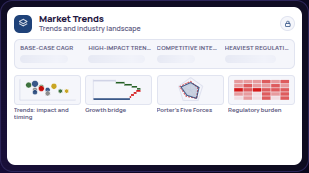
Market Growth Drivers and Industry Trends
Rising e-commerce globalization driving demand for integrated end-to-end logistics orchestration platforms
The rapid expansion of cross-border e-commerce is increasing the complexity of global supply chains, creating strong demand for comprehensive logistics coordination that will drive the 5PL solutions market growth. Businesses managing international sourcing, fulfillment, transportation, and returns require centralized platforms capable of orchestrating multiple logistics providers across diverse regions and transportation modes. Fifth-party logistics providers enable seamless integration of warehousing, freight management, customs coordination, and digital supply chain visibility within a unified ecosystem. As online retailers and manufacturers expand into new geographic markets, the need for scalable end-to-end logistics orchestration continues to strengthen the adoption of advanced 5PL solutions.
Increasing demand for supply chain transparency accelerating digital logistics transformation
Organizations are placing greater emphasis on operational visibility to improve inventory control, shipment tracking, and risk management, a trend that will propel the 5PL solutions market growth across global logistics networks. Businesses increasingly rely on digital platforms that provide real-time insights into the movement of goods, supplier performance, and transportation status throughout the supply chain. Enhanced transparency enables faster decision-making, supports proactive disruption management, and improves collaboration among manufacturers, distributors, carriers, and logistics partners. The growing importance of data-driven supply chain operations is encouraging enterprises to invest in integrated logistics solutions that deliver continuous monitoring and greater process accountability.
Adoption of advanced analytics and AI in logistics optimizing multi-party supply chain coordination
As logistics operations become increasingly data-intensive, the 5PL solutions market demand is benefiting from the integration of advanced analytics and artificial intelligence into supply chain management platforms. AI-powered systems help optimize route planning, demand forecasting, carrier selection, inventory allocation, and resource utilization while analyzing large volumes of operational data across multiple stakeholders. Advanced analytical capabilities also improve exception management by identifying potential delays, capacity constraints, and operational inefficiencies before they disrupt supply chain performance. These intelligent technologies support more coordinated logistics execution while enabling organizations to enhance responsiveness across complex multi-party transportation networks.
| Growth Driver | Impact on CAGR | Regulatory Influence | Geographic Relevance | Adoption Rate | Impact Timeline |
|---|---|---|---|---|---|
| Rising e-commerce globalization driving demand for integrated end-to-end logistics orchestration platforms | 2% | Moderate | Asia Pacific, North America | High | Near Term |
| Increasing demand for supply chain transparency accelerating digital logistics transformation | 1.8% | Moderate | Europe, Asia Pacific | High | Mid Term |
| Adoption of advanced analytics and AI in logistics optimizing multi-party supply chain coordination | 1.6% | Moderate | North America, Europe | Medium | Mid Term |
Unlock insights tailored to your business with our bespoke market research solutions.
Click to get your customized report now.
Regional Demand Dynamics

North America (Largest Region)
North America held the largest position in the 5PL solutions market in 2026, reflecting the region's mature logistics ecosystem, sophisticated digital infrastructure, and high adoption of technology-enabled supply chain management. Complex distribution networks and increasing demand for integrated logistics planning are encouraging businesses to rely on advanced orchestration models that coordinate multiple logistics functions. The growing emphasis on supply chain visibility, automation, and data-driven decision-making is further supporting demand for higher-level logistics management services.
Asia Pacific (Fastest-Growing Region)
Asia Pacific is experiencing the fastest growth as manufacturers, retailers, and logistics operators pursue more integrated approaches to managing increasingly complex supply chains. Expanding e-commerce, cross-border trade, and manufacturing activity are creating demand for coordinated logistics solutions capable of connecting transportation, warehousing, inventory, and digital processes. Improvements in digital connectivity and the modernization of logistics infrastructure are also making advanced supply chain orchestration more accessible across the region.
| Parameter | North America | Asia Pacific | Europe | Latin America | MEA |
|---|---|---|---|---|---|
| Innovation HubiScaleNascentDeveloping Advanced | |||||
| Cost-Sensitive RegioniScaleLowMedium High | |||||
| Regulatory EnvironmentiScaleRestrictiveNeutral Supportive | |||||
| Demand DriversiScaleWeakModerate Strong | |||||
| Development StageiScaleEmergingDeveloping Developed | |||||
| Adoption RateiScaleLowMedium High | |||||
| New Entrants / StartupsiScaleSparseModerate Dense | |||||
| Macro IndicatorsiScaleWeakStable Strong |
Key Country Insights
United States 🇺🇸
Digital Supply OrchestrationThe U.S. 5PL solutions market prioritizes digitally integrated logistics networks capable of managing complex global supply chains. Service providers in the U.S. continue investing in AI, automation, and analytics to optimize end-to-end transportation and fulfillment operations.
Germany 🇩🇪
Manufacturing Logistics CoordinationGermany emphasizes 5PL solutions that integrate manufacturing supply chains with advanced logistics planning. German providers continue strengthening digital coordination across suppliers, warehouses, and transportation partners to improve operational responsiveness.
Japan 🇯🇵
Integrated Network ManagementJapan focuses on highly coordinated 5PL services that support efficient inventory management and multimodal logistics. Japanese logistics providers continue deploying intelligent planning tools to enhance supply chain visibility and operational resilience.
South Korea 🇰🇷
Technology-Driven FulfillmentSouth Korea advances 5PL solutions by integrating digital platforms, warehouse automation, and data-driven logistics management. Service providers in South Korea continue expanding technology-enabled fulfillment capabilities for domestic and international supply chains.
France 🇫🇷
Cross-Border Logistics ExpertiseFrance prioritizes 5PL services that facilitate efficient cross-border logistics within European trade networks. French logistics companies continue enhancing digital coordination and transportation planning to improve supply chain flexibility and customer responsiveness.
Italy 🇮🇹
Flexible Distribution NetworksItaly emphasizes adaptable 5PL solutions that support diverse manufacturing and retail distribution requirements. Logistics providers in Italy continue expanding integrated supply chain management capabilities through digital platforms and collaborative transportation networks.
5PL Solutions Market Share (%), by Organization Size, 2026
Go beyond the chart, access full insights & data tables
Request Free Sample ReportOrganization Size Segment Analysis: Large Enterprise (Largest Segment) vs SME (Fastest-Growing Segment)
Large enterprises dominated the 5PL solutions market with a 61.44% share in 2026. These organizations manage extensive and often global supply chain networks that require advanced coordination across multiple logistics providers, transportation modes, and distribution channels. The need for end-to-end visibility, operational efficiency, and data-driven decision-making has encouraged large enterprises to adopt sophisticated fifth-party logistics solutions. Their greater financial resources and complex logistics requirements further support widespread implementation of integrated supply chain management platforms.
The SME segment is experiencing the fastest growth as smaller businesses increasingly recognize the value of outsourced logistics orchestration and digital supply chain capabilities. Growing participation in cross-border trade, e-commerce expansion, and the need to compete with larger enterprises are driving SMEs toward scalable 5PL services. These solutions enable smaller organizations to access advanced logistics expertise and technology without the need for substantial in-house infrastructure investments.
Solution Segment Analysis: Transportation (Largest Segment) vs Supply Chain Optimization (Fastest-Growing Segment)
The transportation solution segment held the largest share of 36.29% in 2026 within the 5PL solutions market. Transportation remains the foundation of logistics operations, requiring continuous coordination of carriers, routes, freight movements, and delivery schedules. Organizations prioritize transportation management solutions to improve efficiency, reduce operational complexity, and enhance service reliability across increasingly interconnected supply chains. The critical role of transportation in ensuring smooth product movement has sustained its leading position.
Supply chain optimization is the fastest-growing solution segment as businesses seek greater resilience, flexibility, and efficiency in their logistics operations. Advanced optimization tools help organizations improve inventory management, demand forecasting, network design, and resource allocation. Increasing supply chain complexity and the need for agile decision-making are encouraging companies to invest in technologies and services that enhance overall supply chain performance and responsiveness.
Deployment Mode Segment Analysis: Cloud (Largest & Fastest-Growing Segment)
Cloud deployment dominated the 5PL solutions market and represented the fastest-growing deployment mode in 2026. Its leadership is driven by the growing need for scalable, flexible, and interconnected logistics platforms capable of supporting complex supply chain operations across multiple regions and stakeholders. Cloud-based solutions enable real-time data sharing, enhanced visibility, and seamless integration with transportation, warehousing, and supply chain management systems. The model also supports faster implementation and continuous innovation, making it highly attractive for organizations seeking operational agility. As digital transformation initiatives continue to reshape logistics ecosystems, cloud deployment remains the preferred approach for organizations aiming to improve efficiency, collaboration, and supply chain performance.
| Segment | Sub-Segment | Largest Segment | Fastest Growing |
|---|---|---|---|
| Organization Size | Large Enterprise, SME | Large Enterprise | SME |
| Solution | Transportation, Warehousing, Order Management, Supply Chain Optimization, Reverse Logistics, Others | Transportation | Supply Chain Optimization |
| Deployment Mode | Cloud, On-premises | Cloud | Cloud |
| End-user | Retail & E-Commerce, Electronics, Automotive, Pharmaceuticals, Manufacturing, Others | Retail & E-Commerce | Retail & E-Commerce |
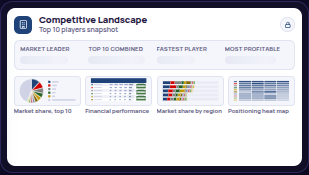
Competitive Landscape and Market Positioning
Major players in the 5PL solutions market:
- A.P. Moller – Maersk (Denmark)
- DHL Supply Chain (Germany)
- Kuehne + Nagel International AG (Switzerland)
- DB Schenker (Germany)
- DSV A/S (Denmark)
- C.H. Robinson Worldwide, Inc. (USA)
- Expeditors International of Washington, Inc. (USA)
- Nippon Express Holdings Co., Ltd. (Japan)
- XPO Logistics, Inc. (USA)
- United Parcel Service, Inc. (USA)
Competition within the 5PL Solutions Market is evolving around the ability to orchestrate increasingly complex supply chain ecosystems through automation, advanced analytics, and integrated decision-making platforms. Providers are shifting from traditional logistics coordination toward strategic supply chain management models that optimize networks, improve visibility, and support adaptive responses to changing market conditions. Differentiation is increasingly shaped by capabilities in digital infrastructure, data integration, and the management of multi-party logistics environments, as businesses seek partners that can coordinate transportation, warehousing, inventory, and fulfillment activities through a unified approach. The competitive landscape is also influenced by the growing need for scalable solutions that support global operations while improving efficiency and resilience.
| Company | Market Share | Company Revenue | Revenue CAGR (%) | Product Portfolio | Geographic Presence | Innovation / R&D Focus | Strategic Developments |
|---|---|---|---|---|---|---|---|
| A.P. Moller – Maersk (Denmark) | |||||||
| DHL Supply Chain (Germany) | |||||||
| Kuehne + Nagel International AG (Switzerland) | |||||||
| DB Schenker (Germany) | |||||||
| DSV A/S (Denmark) | |||||||
| C.H. Robinson Worldwide Inc. (USA) | |||||||
| Expeditors International of Washington Inc. (USA) | |||||||
| Nippon Express Holdings Co. Ltd. (Japan) | |||||||
| XPO Logistics Inc. (USA) | |||||||
| United Parcel Service Inc. (USA) |
Customize Your Report
Explore examples of how this report can be tailored to different research needs, including custom segments, additional topics or chapters, and related reports. Click a section of the wheel or its numbered marker to explore the available options.
5PL Solutions Market — Custom Segments
| Segment | Sub-Segment |
|---|---|
| Contract Type | Short-Term Contracts, Long-Term Contracts, Transaction-Based Contracts, Outcome-Based Contracts |
| Customer Engagement Model | Fully Managed, Co-Managed, Technology-Led Managed Services, Consulting & Advisory |
| Supply Chain Complexity | Single-Region Networks, Multi-Region Networks, Global Networks, Highly Integrated Multi-Echelon Networks |
5PL Solutions Market — Custom TOC
| Custom Chapter | Chapter Details |
|---|---|
| Digital Supply Chain Transformation Roadmap |
|
| AI-Driven Logistics Orchestration Benchmarking |
|
| Industry-Specific 5PL Opportunity Mapping |
|
Need a different cut of the data?
Request Custom ResearchFrequently Asked Questions
How large is the 5PL solutions market?
How will the 5PL solutions industry grow in terms of size and CAGR by 2036?
How is cross-border e-commerce influencing investment in 5PL solutions?
Why are AI and digital visibility becoming strategic priorities in the 5PL solutions market?
Why do large enterprises dominate the 5PL solutions market?
How is supply chain optimization becoming a fast-growing solution area in 5PL solutions?
Why does North America lead the 5PL solutions market?
What is driving 5PL solutions growth in Asia Pacific?
Who holds a significant market share in the 5PL solutions landscape?
Our Clients
"The team surpassed our expectations with the report depth. The actionable insights provided proved crucial in navigating market challenges."
Tata Motors
"We found the report to be very informative. The expertise and attention to market nuances significantly influenced our business direction."
DENSO Corporation
"The consumer survey findings were quite good. We now have a clearer picture of the customer churning and retention strategy."
HL Mando
Our Research Team & Methodology
Every Fundamental Business Insights report is built by a dedicated vertical research team, validated through a structured primary-and-secondary methodology, and reviewed for accuracy before it reaches you.
Delivery
Published
Available
Support
- Market Size & Forecast
- Market Segmentation
- Regional Analysis
- Growth Drivers & Challenges
- Market Dynamics
- Competitive Landscape
- Company Profiles
- Competitive Benchmarking
- Mergers & Acquisitions
- Market Share Analysis or Key Company Strategies
- Value Chain Analysis
- Porter's Five Forces
- PESTLE Analysis
- Pricing Trends
- Supply-Demand Analysis
- Technology Landscape
- Regulatory Landscape
- Investment & Funding Landscape
- Emerging Opportunities
- Future Market Outlook