



Advanced Carbon Materials Market Size & Growth Forecast 2027–2036, By Segments (Product, Application), Regional Demand Trends (North America, Asia Pacific, Europe), Key Country Insights (U.S., Japan, South Korea, Germany, France, Italy), and Competitive Landscape
Market Size and Growth Outlook
Advanced Carbon Materials Market size was more than USD 19.4 billion in 2026 and is set to grow at a 28.03% CAGR between 2027 and 2036, attaining USD 229.57 billion by 2036. The industry revenue for 2027 is estimated at USD 23.98 billion.
Base Year Value (2026)
USD 19.4 billion
CAGR (2027-2036)
28.03%
Forecast Year Value (2036)
USD 229.57 billion

Historical Data Period
2022-2026

Largest Region
Europe

Forecast Period
2027-2036
Advanced Carbon Materials Market Intelligence Snapshot:
-
Regional Market Dynamics:
- Europe held a 39.11% market share in 2026, supported by established automotive, aerospace, electronics, and energy industries, along with strong manufacturing capabilities and widespread integration of high-performance materials.
- North America is projected to grow at a 5.24% CAGR, fueled by innovation and increasing commercial adoption across aerospace, defense, electronics, and energy storage applications requiring lightweight, durable materials.
-
Segment Momentum:
- CNT accounted for 65.48% of the market in 2026, supported by established industrial use, scalable production, proven processing behavior, and lower commercialization risk, making it the preferred choice for many end users.
- Electronics is the fastest-growing application segment as manufacturers increasingly seek advanced materials that improve conductivity, thermal management, and miniaturization while supporting faster product innovation cycles.
-
Market Expansion Drivers:
- Expanding electric mobility and energy storage systems accelerating carbon material integration in batteries.
- Aerospace and defense lightweighting initiatives driving advanced carbon composite adoption.
- Localization of carbon nanomaterial production hubs strengthening resilient industrial supply chains.
-
Leading Market Participants:
Prominent companies in the advanced carbon materials market include Hexcel Corporation (United States), Mitsubishi Chemical Group Corporation (Japan), Resonac Holdings Corporation (Japan), Haydale Graphene Industries plc (United Kingdom), Graphenea S.A. (Spain), Jiangsu Cnano Technology Co., Ltd. (China), CVD Equipment Corporation (United States), Graphenano S.L. (Spain), Cabot Corporation (United States), Toray Industries, Inc. (Japan).
Global Market Forecast Snapshot:
-
Market Outlook:
- 2026 Market Size: USD 19.4 billion
- 2027 Estimated Market Size: USD 23.98 billion.
- Projected Market Size: USD 229.57 billion by 2036
- Growth Forecasts: 28.03% CAGR (2027-2036)
-
Regional and Segment Outlook:
- Leading Regional Market: Europe
- High-Growth Regional Hub: North America
- Core Revenue Segment: CNT (Product) | Aerospace & Defense (Application)
- Emerging Opportunity Segment: Graphene (Product) | Electronics (Application)
Market Growth Drivers and Industry Trends
Expanding electric mobility and energy storage systems accelerating carbon material integration in batteries
Expanding electric mobility and energy storage applications are creating new opportunities for the advanced carbon materials market through greater integration of specialized carbon materials into battery technologies. The transition toward electric vehicles requires energy storage systems that can support demanding performance, durability, and efficiency requirements, while stationary storage is increasingly important for managing renewable power generation and grid flexibility. Advanced carbon materials can contribute to electrode structures and other battery components by supporting electrical conductivity, structural stability, and charge-transfer characteristics. As battery developers pursue improved cell architectures and materials capable of meeting evolving energy-storage requirements, demand for engineered carbon-based materials is increasing across battery-related applications.
Aerospace and defense lightweighting initiatives driving advanced carbon composite adoption
Aerospace and defense lightweighting initiatives are contributing to the advanced carbon materials market by increasing the use of carbon-based composites in applications where weight reduction and mechanical performance are critical. Lower structural weight can support improvements in fuel efficiency, payload capacity, maneuverability, and overall platform performance, making lightweight materials valuable across aircraft, spacecraft, and defense systems. Advanced carbon composites can combine high strength with relatively low weight and can be tailored for demanding structural environments. Continued development of lighter platforms and performance-oriented components is therefore encouraging manufacturers to incorporate carbon composite materials into structural and specialized aerospace and defense applications.
Localization of carbon nanomaterial production hubs strengthening resilient industrial supply chains
Localization of carbon nanomaterial production hubs is strengthening the advanced carbon materials market by supporting more resilient and responsive industrial supply networks. Greater regional production capacity can reduce dependence on distant suppliers while improving access to specialized materials used in electronics, energy storage, composites, and other advanced applications. Establishing production closer to major downstream manufacturing centers can also facilitate technical collaboration, material customization, quality control, and supply continuity. As industries increasingly prioritize secure access to strategically important advanced materials, investment in localized carbon nanomaterial manufacturing capabilities is supporting broader integration of these materials into industrial value chains.
| Growth Driver Assessment Framework | |||||
| Growth Driver | Impact On CAGR | Regulatory Influence | Geographic Relevance | Adoption Rate | Impact Timeline |
|---|---|---|---|---|---|
| Expanding electric mobility and energy storage systems accelerating carbon material integration in batteries | 2.00% | Moderate | Asia Pacific, North America, Europe | High | Near Term |
| Aerospace and defense lightweighting initiatives driving advanced carbon composite adoption | 1.80% | High | North America, Europe | Medium | Mid Term |
| Localization of carbon nanomaterial production hubs strengthening resilient industrial supply chains | 1.50% | Moderate | Asia Pacific, North America | Emerging | Long Term |
Unlock insights tailored to your business with our bespoke market research solutions - Click to get your customized report now!
Regional Demand Dynamics
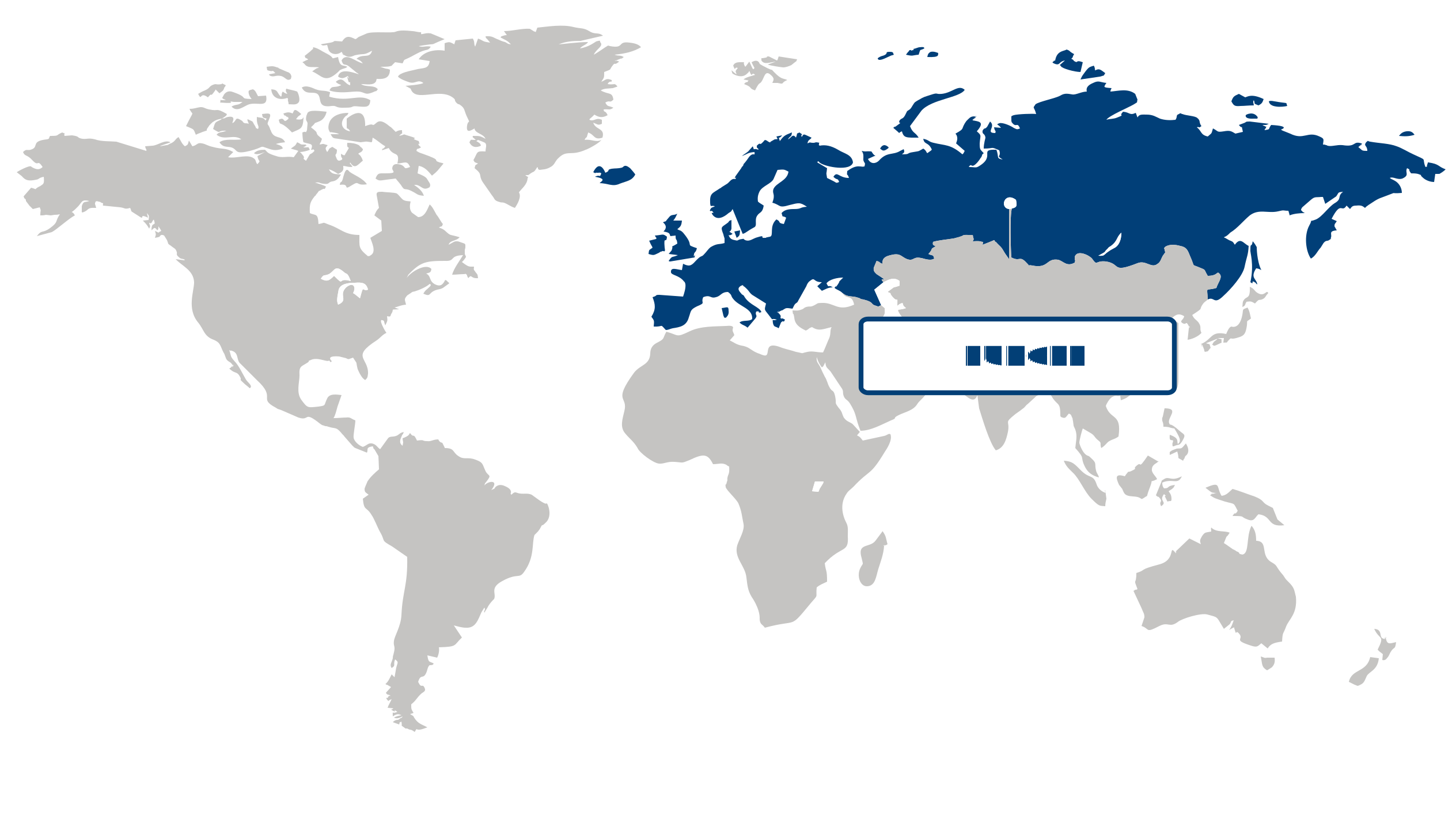
Largest Region
Europe
39.11% Market Share in 2026
Europe (Largest Region) vs North America (Fastest-Growing Region)
Holding a 39.11% share in 2026, Europe led the advanced carbon materials market, benefiting from its strong focus on sustainable industrial development, advanced manufacturing, and innovation in high-performance materials. Demand across automotive, aerospace, energy, electronics, and other technology-intensive industries supports the adoption of carbon-based materials with specialized strength, conductivity, thermal performance, and lightweight properties. The region's emphasis on reducing industrial emissions and improving energy efficiency is also encouraging the development and application of advanced materials in next-generation products and production systems.
North America is positioned as the fastest-growing region, supported by expanding investment in advanced technologies and growing demand for high-performance materials across strategically important industries. Strong research activity, increasing electrification, and the development of energy storage and clean energy applications are creating new opportunities for advanced carbon material adoption. The region's expanding focus on domestic manufacturing capabilities, technological innovation, and specialized industrial applications is expected to further accelerate market growth.
Key Country Insights
The U.S. advanced carbon materials market is driven by aerospace, electric vehicles, and semiconductor applications requiring lightweight and high-strength materials. Manufacturers in the U.S. continue expanding production capabilities while emphasizing performance consistency and advanced manufacturing integration.
Japan emphasizes advanced carbon materials that deliver exceptional purity and reliability for electronics, batteries, and specialty manufacturing. Japanese producers continue refining material performance to support demanding industrial and technology applications.
South Korea is strengthening the use of advanced carbon materials across battery manufacturing, electronics, and semiconductor production. Companies in South Korea increasingly invest in conductive and lightweight material technologies that complement next-generation industrial applications.
Germany prioritizes advanced carbon materials for automotive engineering, industrial equipment, and energy-efficient manufacturing. Companies in Germany increasingly adopt high-performance composites and conductive materials to improve product durability and manufacturing precision.
France focuses on advanced carbon materials for aerospace structures, transportation, and industrial innovation. French manufacturers increasingly integrate lightweight composites that enhance efficiency while supporting demanding engineering and sustainability objectives.
Italy is expanding the use of advanced carbon materials in automotive components, industrial machinery, and high-value manufacturing. Italian producers increasingly seek materials that combine structural performance with efficient processing for specialized industrial applications.
Segment Leadership and Growth Trends
Product Segment Analysis: CNT (Largest Segment) vs Graphene (Fastest-Growing Segment)
CNT held the largest share of 65.48% in 2026 in the advanced carbon materials market, supported by its combination of high strength, electrical conductivity, thermal performance, and compatibility with a wide range of composite materials. These characteristics make carbon nanotubes valuable in applications requiring enhanced mechanical or electrical properties, including advanced composites and functional materials. Ongoing demand for lightweight, high-performance materials across industrial applications continues to sustain the segment's strong market position.
Graphene is experiencing faster adoption as manufacturers and technology developers explore its exceptional conductivity, strength, surface properties, and potential for multifunctional material applications. Its relevance to advanced electronics, energy technologies, coatings, composites, and other emerging applications is broadening the addressable use base. Continued development of graphene-enabled products and increasing interest in materials capable of delivering multiple performance benefits are supporting segment expansion.
Application Segment Analysis: Aerospace & Defense (Largest Segment) vs Electronics (Fastest-Growing Segment)
The aerospace & defense segment accounted for the largest share of 28.3% in 2026, reflecting the sector's strong demand for lightweight, durable, and high-performance materials capable of meeting demanding operational requirements. Advanced carbon materials can contribute to weight reduction, structural performance, thermal management, and enhanced functionality in specialized aerospace and defense components. The continued emphasis on material efficiency and performance in mission-critical systems supports sustained utilization across these applications.
Electronics is emerging as the faster-growing application area as device manufacturers increasingly seek materials that can improve electrical conductivity, thermal management, miniaturization, and component performance. The distinctive electrical and thermal characteristics of advanced carbon materials create opportunities across increasingly sophisticated electronic architectures. Growing demand for high-performance components and continued development of next-generation electronic technologies are expanding the role of carbon-based advanced materials in this application.
| Report Segmentation | |||
| Segment | Sub-Segment | Largest Segment | Fastest Growing Segment |
|---|---|---|---|
| Product | Carbon Fibers, Structural Graphite, CNT, Graphene, Carbon Foams | CNT | Graphene |
| Application | Aerospace & Defense, Energy, Electronics, Sports, Automotive, Construction, Others | Aerospace & Defense | Electronics |
 Read our Research Approach
Competitive Landscape and Market Positioning
Prominent players in the advanced carbon materials market:
1. Hexcel Corporation (United States)
2. Mitsubishi Chemical Group Corporation (Japan)
3. Resonac Holdings Corporation (Japan)
4. Haydale Graphene Industries plc (United Kingdom)
5. Graphenea S.A. (Spain)
6. Jiangsu Cnano Technology Co. Ltd. (China)
7. CVD Equipment Corporation (United States)
8. Graphenano S.L. (Spain)
9. Cabot Corporation (United States)
10. Toray Industries Inc. (Japan)
Growing demand for high-performance materials is driving innovation in the advanced carbon materials market across industrial and energy applications. Continuous development in material engineering is improving strength, conductivity, and thermal resistance. Expansion into aerospace and automotive domains is increasing application diversity. The advanced carbon materials market is evolving through advanced material science breakthroughs.
Industry Development/News
| Company Name | Date | Key Development |
|---|---|---|
| Himadri Speciality Chemical Ltd. | Nov-24 | Himadri Speciality Chemical commissioned a 70,000 MTPA specialty carbon black production line at its Mahistikry facility, raising total capacity to 250,000 MTPA. This expansion significantly scales the company's manufacturing footprint to meet rising demand for high-performance carbon materials across the plastics, paints, coatings, and energy storage value chains. |
| NanoXplore Inc. | Nov-24 | NanoXplore finalized a multi-year supply agreement with Chevron Phillips Chemical to provide Tribograf, a proprietary carbon material. The contract marks a significant commercialization milestone, facilitating the industrial adoption of graphene-based lubricants and highlighting the material's performance advantages in challenging oil and gas drilling applications. |
| China Synthetic Rubber Corporation | Nov-24 | CSRC announced a strategic pivot toward specialty carbon materials, specifically expanding its carbon nanotube (CNT) business. This shift away from commoditized carbon black grades represents a broader corporate repositioning toward higher-value, technology-intensive material segments to improve margins and align with evolving industrial requirements for advanced functional materials. |
| Petro Carbon and Chemicals Limited | Nov-24 | PCCL commissioned a 10 MW waste heat recovery captive power plant at its Haldia facility while announcing plans to expand into advanced carbon materials. These initiatives demonstrate a dual focus on operational energy efficiency and strategic portfolio diversification into high-value carbon segments like graphitized petroleum coke for the battery industry. |
| Himadri Speciality Chemical Ltd. | Oct-24 | Himadri Speciality Chemical unveiled plans for a ₹1,130-crore investment to develop a greenfield facility in Odisha by FY27, specifically targeting lithium iron phosphate (LFP) production. This capital expenditure strengthens the company's vertical integration into the battery materials market and accelerates its transition toward serving the growing electric vehicle energy storage ecosystem. |
| The Advanced Carbons Company | Nov-24 | The Advanced Carbons Company partnered with the National University of Singapore’s Institute for Functional Intelligent Materials to accelerate graphene research and commercialization. The collaboration is designed to leverage academic expertise to bridge the gap between graphene innovation and large-scale industrial application, supporting the development of next-generation carbon-based technologies. |
| INOX Air Products | Nov-24 | INOX Air Products entered a long-term partnership with The Advanced Carbons Company to construct a nitrogen plant dedicated to TACC's battery materials facility. This infrastructure investment ensures a reliable supply chain for essential gases required in the manufacturing of high-purity advanced carbon materials, facilitating the scaling of energy storage production capabilities. |
Why Choose Us
Specialized Expertise: Our team comprises industry experts with a deep understanding of your market segment. We bring specialized knowledge and experience that ensures our research and consulting services are tailored to your unique needs.
Customized Solutions: We understand that every client is different. That's why we offer customized research and consulting solutions designed specifically to address your challenges and capitalize on opportunities within your industry.
Proven Results: With a track record of successful projects and satisfied clients, we have demonstrated our ability to deliver tangible results. Our case studies and testimonials speak to our effectiveness in helping clients achieve their goals.
Cutting-Edge Methodologies: We leverage the latest methodologies and technologies to gather insights and drive informed decision-making. Our innovative approach ensures that you stay ahead of the curve and gain a competitive edge in your market.
Client-Centric Approach: Your satisfaction is our top priority. We prioritize open communication, responsiveness, and transparency to ensure that we not only meet but exceed your expectations at every stage of the engagement.
Continuous Innovation: We are committed to continuous improvement and staying at the forefront of our industry. Through ongoing learning, professional development, and investment in new technologies, we ensure that our services are always evolving to meet your evolving needs.
Value for Money: Our competitive pricing and flexible engagement models ensure that you get maximum value for your investment. We are committed to delivering high-quality results that help you achieve a strong return on your investment.
Select Licence Type

