



Aerosol Disinfectants Market Size & Forecasts 2026-2035, By Segments (End Use, Application, Type, Formulation), Growth Opportunities, Innovation Landscape, Regulatory Shifts, Strategic Regional Insights (U.S., Japan, China, South Korea, UK, Germany, France), and Competitive Dynamics (Reckitt, SC Johnson, Clorox, Ecolab, Diversey)
Market Size and Growth Outlook
Aerosol Disinfectants Market size is estimated to increase from USD 2.77 billion in 2025 to USD 6.26 billion by 2035, supported by a CAGR exceeding 8.5% during 2026-2035. In 2026, revenues are forecast to reach USD 2.98 billion.
Base Year Value (2025)
USD 2.77 billion
CAGR (2026-2035)
8.5%
Forecast Year Value (2035)
USD 6.26 billion

Historical Data Period
2022-2025

Largest Region
Europe

Forecast Period
2026-2035
Key Takeaways
- Europe region secured more than 32.4% revenue share in 2025, supported by early compliance with evolving F-gas regulations and a transition toward eco-friendly propellants.
- Asia Pacific region will register more than 9.4% CAGR during the forecast period, impelled by growing population density and increasing urbanization in emerging economies.
- The residential segment maintained its lead in the aerosol disinfectants market, driven by enhanced household hygiene priorities post-pandemic.
- The household segment accounted for the majority share of the market in 2025, supported by frequent use of aerosol disinfectants for everyday sanitization tasks.
- The surface disinfectants segment led the aerosol disinfectants market in 2025, owing to sustained demand for effective surface disinfection solutions across settings.
- The alcohol-based segment held the largest share of the market in 2025, propelled by broad acceptance of alcohol-based disinfectants for quick and reliable microbial control.
- Top companies in the aerosol disinfectants market comprise Reckitt (UK), SC Johnson (USA), Clorox (USA), Ecolab (USA), Diversey (USA), Henkel (Germany), Unilever (UK/Netherlands), Godrej Consumer Products (India), GOJO Industries (USA), 3M (USA).
Market Growth Drivers and Industry Trends
Increased Hygiene Awareness and Disinfection PracticesHeightened public consciousness regarding hygiene following global health crises has fundamentally transformed the aerosol disinfectants market. Consumers and businesses alike now prioritize rapid, effective surface sanitation, driving demand for aerosol disinfectants as convenient, time-efficient solutions. The Centers for Disease Control and Prevention (CDC) has emphasized routine disinfection as vital for controlling infection spread, reinforcing this behavioral shift. This has incentivized manufacturers to enhance product efficacy and promote ease of use, benefiting both established brands with robust R&D capabilities and nimble startups focusing on targeted formulations. As hygiene remains a central public health theme, companies that leverage this wave through continuous consumer education and accessible product innovation will best capture enduring market share.
Innovation in Environmentally Friendly Aerosol Disinfectants
Sustainability pressures have steered the aerosol disinfectants market toward environmentally friendly formulations, responding to regulatory restrictions on volatile organic compounds (VOCs) and growing consumer demand for green products. Regulatory bodies like the European Chemicals Agency (ECHA) have imposed stricter limits on hazardous ingredients, prompting industry leaders such as SC Johnson to invest in bio-based and recyclable aerosol technologies. This shift generates strategic opportunities for innovators who can balance efficacy with reduced environmental impact, appealing to eco-conscious demographics and institutional buyers. As policymakers tighten environmental standards globally, the market is positioned for accelerated adoption of sustainable aerosols, incentivizing manufacturers to prioritize R&D in green chemistry and sustainable packaging.
Growing Commercial and Institutional Cleaning Demand
The expansion of commercial and institutional spaces demanding rigorous cleaning standards is a critical force shaping the aerosol disinfectants market. Heightened regulatory oversight from agencies like the Occupational Safety and Health Administration (OSHA) mandates comprehensive surface disinfection across sectors including healthcare, hospitality, and education. This institutionalization of disinfection protocols drives bulk procurement and long-term contracts, with companies like Procter & Gamble securing partnerships to supply aerosol disinfectants at scale. For established players, this translates into stable revenue streams, while new entrants can capitalize on niche segments such as customized formulations for industrial applications. Continued emphasis on workplace safety and hygiene ensures sustained growth opportunities tied to evolving operational standards and compliance requirements.
Industry Restraints:
Regulatory Compliance and Environmental Restrictions
Stringent regulations on volatile organic compounds (VOCs) and propellant restrictions significantly hinder innovation and market expansion for aerosol disinfectants. For instance, the U.S. Environmental Protection Agency’s (EPA) regulations under the Clean Air Act limit certain solvent and propellant usage to reduce environmental impact, complicating formulation efforts for manufacturers like SC Johnson and Reckitt Benckiser. These compliance constraints increase R&D timelines and production costs, disproportionately affecting smaller firms with limited resources. As governments globally intensify environmental policies, including the EU’s F-gas regulation targeting greenhouse gases, firms face continued pressure to reformulate products without compromising efficacy. Consequently, market participants must strategically invest in green chemistry and alternative delivery systems to sustain competitiveness, though these shifts may slow product rollout and adoption in the near term.
Consumer Health and Safety Concerns
Rising consumer awareness about chemical safety and indoor air quality has led to hesitation in aerosol disinfectant adoption, especially amid ongoing scrutiny of respiratory irritants and allergens. The Consumer Product Safety Commission (CPSC) and the Centers for Disease Control and Prevention (CDC) have highlighted potential risks associated with overuse or misuse of aerosolized biocides, driving demand for transparent labeling and safer formulations. This consumer reticence compels leading companies such as Lysol and Diversey to reformulate products with milder, bio-based ingredients, often at a premium cost. For new entrants, gaining trust amid stringent safety standards and evolving consumer expectations presents a formidable barrier. Expect this restraint to persist as end-users continue prioritizing health-conscious and sustainable options, adding complexity to market penetration and product differentiation strategies.
| Growth Driver Assessment Framework | |||||
| Growth Driver | Impact On CAGR | Regulatory Influence | Geographic Relevance | Adoption Rate | Impact Timeline |
|---|---|---|---|---|---|
| Increased Hygiene Awareness and Disinfection Practices | 3.00% | Short term (≤ 2 yrs) | North America, Europe; Spillover: Asia Pacific | High | Fast |
| Innovation in Environmentally Friendly Aerosol Disinfectants | 2.50% | Medium term (2–5 yrs) | Europe, North America; Spillover: Asia Pacific | Medium | Moderate |
| Growing Commercial and Institutional Cleaning Demand | 2.00% | Long term (5+ yrs) | North America, Asia Pacific; Spillover: Europe | Low | Moderate |
Unlock insights tailored to your business with our bespoke market research solutions - Click to get your customized report now!
Regional Demand Dynamics
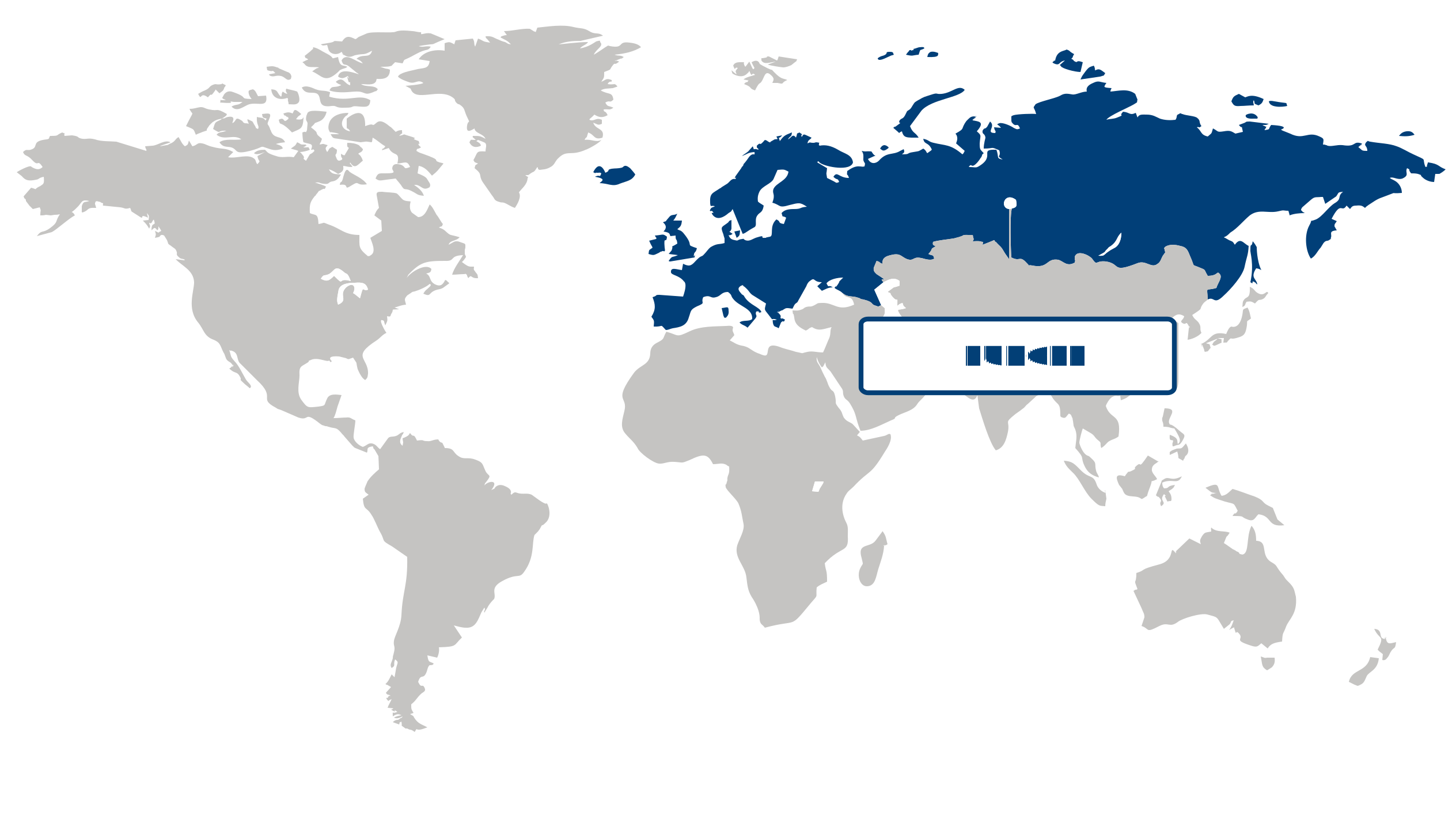
Largest Region
Europe
32.4% Market Share in 2025
Europe dominated the aerosol disinfectants market in 2025, representing more than 32.4% of the global share. This leadership is underpinned by early compliance with evolving F-gas regulations and a proactive shift toward eco-friendly propellants, positioning Europe as both the largest and most advanced market for aerosol disinfectants. Regulatory rigor from entities like the European Environment Agency has accelerated adoption of sustainable formulations, meeting rising consumer demand for environmentally responsible products. Companies such as Reckitt Benckiser and Henkel are aligning R&D with these mandates, leveraging operational advancements to enhance product efficacy and reduce environmental impact. Additionally, the region’s robust supply chain infrastructure and strong health safety awareness shape consumer preferences, driving consistent market expansion. These dynamics highlight Europe’s resilience and innovation capacity, offering substantial growth opportunities for investors and strategists focused on sustainable and regulatory-compliant product development in the aerosol disinfectants market.
Germany anchors the European aerosol disinfectants market, acting as a key driver for innovation and regulatory compliance. The country’s stringent environmental standards enforced by the Federal Environment Agency have propelled manufacturers to prioritize eco-friendly propellant technologies, exemplified by BASF’s recent product portfolio updates emphasizing sustainability. German consumers’ preference for high-performance and green-certified disinfectants strengthens market penetration, while industrial sectors boost demand for compliance-aligned solutions. This environment nurtures competitive advantage and positions Germany as a strategic hub, fostering regional momentum in the shift toward sustainable aerosol disinfectants.
France plays a pivotal role within the European aerosol disinfectants market, reflecting nuanced regulatory enforcement and growing consumer eco-consciousness. The French Environment and Energy Management Agency’s initiatives have accelerated the transition to low-GWP propellants, influencing local manufacturers like Air Liquide to innovate in formulations suitable for both commercial and personal use. This regulatory landscape, combined with increased public awareness campaigns, drives a steady rise in demand for sustainable disinfectants. France’s integrated approach to environmental policy and consumer engagement reinforces Europe’s hold on the global market, making it a critical fulcrum for scaling eco-friendly aerosol products across the region.
Asia Pacific Market Analysis:
Asia Pacific emerged as the fastest-growing region in the aerosol disinfectants market, registering a robust CAGR of 9.4%. This rapid growth is largely fueled by escalating population density and accelerating urbanization, particularly across emerging economies in the region. These demographic shifts have intensified the demand for effective sanitation solutions in crowded living spaces and public infrastructures. Moreover, heightened public awareness of hygiene, driven by government health initiatives and stringent regulatory frameworks from bodies like the Asia Pacific Economic Cooperation (APEC), has propelled adoption of aerosol disinfectants. The increasing preference for convenient, quick-acting disinfectants among urban consumers further reinforces market expansion. Leading manufacturers are also leveraging technological advancements in formulation and packaging to meet evolving consumer expectations. Given the region’s continued urban growth and rising health consciousness, Asia Pacific offers extensive opportunities for innovation and market penetration in aerosol disinfectants.
Japan plays a pivotal role in Asia Pacific’s aerosol disinfectants market, characterized by sophisticated regulatory standards and a mature consumer base prioritizing hygiene and safety. Japanese consumers’ preference for high-quality, eco-friendly disinfectants aligns with national sustainability policies and corporate responsibility initiatives highlighted in announcements from companies like Kao Corporation. Additionally, Japan’s advanced logistics infrastructure ensures reliable supply chain operations, enabling quick distribution to retail and healthcare sectors. The country’s focus on combining efficacy with biodegradable ingredients creates a benchmark for innovation within the regional market. Japan’s commitment to product excellence and regulatory compliance strengthens Asia Pacific’s overall market credibility and supports the region’s leadership in aerosol disinfectants.
China significantly contributes to Asia Pacific’s growth dynamics through its large urban population and rapid urbanization processes. The increased density in megacities intensifies demand for aerosol disinfectants across residential, commercial, and public transportation settings. Chinese regulatory bodies, such as the National Medical Products Administration (NMPA), have implemented rigorous controls on disinfectant safety, encouraging consumer trust and expanding market uptake. Domestic manufacturers are increasingly investing in digital marketing and e-commerce platforms, reflecting shifting purchasing behaviors toward online channels, as reported by Alibaba Group announcements. China’s robust industrial capabilities and evolving consumer preferences create a conducive environment for scaling aerosol disinfectant production and distribution, thereby reinforcing Asia Pacific’s position as the fastest-growing market.
North America Market Trends:
North America held a commanding share in the aerosol disinfectants market, driven by heightened hygiene awareness and stringent regulatory frameworks. The region's advanced healthcare infrastructure and high consumer spending on health and wellness products underpin robust demand. Regulatory agencies such as the U.S. Environmental Protection Agency (EPA) and Health Canada have enforced rigorous standards that incentivize manufacturers to innovate safer, eco-friendly formulations, aligning with growing sustainability priorities. Leading companies like Reckitt Benckiser and Clorox have expanded product portfolios leveraging digital marketing and supply chain digitalization to meet evolving consumer preferences. North America's well-established distribution networks and technological adoption continue to strengthen market penetration, creating significant entry barriers for newcomers. Going forward, increasing investments in smart packaging and automated production systems suggest sustained expansion opportunities within this mature and competitive landscape.
The U.S. serves as a pivotal market within North America, underpinning substantial aerosol disinfectants market growth through dynamic consumer demand and regulatory rigor. The enforcement of antimicrobial efficacy standards by the EPA has propelled product innovation, as exemplified by Clorox’s introduction of EPA-registered disinfectant sprays with reduced volatile organic compounds. Additionally, heightened consumer preference for convenient, ready-to-use formats supported by e-commerce penetration has accelerated sales. The U.S. government’s heightened emphasis on public health post-pandemic fosters favorable conditions for continued adoption, evidenced in increasing procurement contracts for disinfectant products. Strategically, the U.S. market's role as an innovation hub and regulatory benchmark highlights its critical contribution to advancing North America’s overall market development trajectory in aerosol disinfectants.
No card data available for this language/report.
Segment Leadership and Growth Trends
The residential segment held the largest share in the aerosol disinfectants market in 2025, driven primarily by heightened household hygiene priorities emerging from the post-pandemic environment. Consumer awareness around maintaining sanitized living spaces has intensified, encouraging frequent purchases and use of aerosol disinfectants at home. This trend aligns with evolving lifestyle patterns where health-conscious behaviors and convenience-oriented products gain traction, supported by detailed guidance from agencies like the U.S. Centers for Disease Control and Prevention (CDC) on home disinfection. The residential segment offers strategic opportunities for both established brands and startups to innovate formulations and packaging tailored to domestic users. Given the sustained consumer focus on hygiene, this segment is poised to retain its dominance as households continue to prioritize health security and preventive sanitation in everyday routines.
Analysis by Application
The household application segment dominated the aerosol disinfectants market in 2025, underpinned by frequent utilization of these products in routine sanitization practices. Consumers’ increasing reliance on quick and effective disinfecting solutions for high-touch surfaces and personal spaces has elevated demand. Industry leaders such as Reckitt Benckiser have highlighted consumer preference shifts toward convenient aerosol sprays due to their ease of use and rapid action, reflecting broader digital trends in consumer education and purchase behavior. Competitive dynamics in this segment encourage innovation in user-friendly designs and eco-friendlier compositions. This application segment remains strategically significant as daily sanitation becomes embedded in societal norms, driven by public health advisories and ongoing awareness campaigns, maintaining robust market relevance in the foreseeable future.
Analysis by Type
Surface disinfectants represented the largest share in the aerosol disinfectants market as of 2025, attributed to persistent demand for highly effective disinfection of frequently contacted surfaces in diverse environments. The segment’s leadership is reinforced by its critical role in infection control protocols endorsed by regulatory bodies including the Environmental Protection Agency (EPA), which approves surface disinfectants meeting stringent efficacy standards. This segment benefits from advances in antimicrobial technology and formulations that balance potency with safety, appealing to sustainability-conscious consumers and institutional buyers alike. Surface disinfectants confer competitive advantages by addressing cross-sector needs from residential to healthcare settings, enabling market entrants to leverage innovation and regulatory compliance. The segment’s relevance endures due to ongoing emphasis on contamination prevention in a range of sectors, influenced by heightened risk awareness and evolving hygiene norms.
| Report Segmentation | |||
| Segment | Sub-Segment | Largest Segment | Fastest Growing Segment |
|---|---|---|---|
| End Use | Residential, Institutional, Healthcare Facilities, Food Processing Units | ||
| Application | Household, Commercial, Industrial, Healthcare, Food Service | ||
| Type | Surface Disinfectants, Air Disinfectants, Multi-Purpose Disinfectants, Wipes, Sprays | ||
| Formulation | Alcohol-Based, Quaternary Ammonium Compounds, Bleach-Based, Peracetic Acid, Hydrogen Peroxide | ||
 Read our Research Approach
Competitive Landscape and Market Positioning
Key players in the aerosol disinfectants market include Reckitt, SC Johnson, Clorox, Ecolab, Diversey, Henkel, Unilever, Godrej Consumer Products, GOJO Industries, and 3M. These companies are distinguished by their expansive global reach and strong brand recognition, enabling significant influence over consumer preferences and distribution channels. Reckitt and Unilever leverage their multinational presence to innovate with eco-friendly and broad-spectrum disinfectants, while American firms such as SC Johnson and Clorox capitalize on established household trust and advanced formulation technologies. Meanwhile, companies like Godrej bring regional insights and adaptability to emerging markets, contributing to varied product portfolios that address both industrial and consumer needs. The comprehensive capabilities of these players foster robust market positioning through ongoing product and technology refinement.The competitive landscape reflects ongoing strategic endeavors among these leading companies to sustain and strengthen market shares. Several have intensified efforts through integrating sustainable manufacturing processes and enhancing formulation efficiency, setting elevated industry benchmarks. Collaborative ventures, absorption of niche players, and enhanced supply chain integration have notably expanded their operational scope, facilitating rapid response to evolving hygiene standards. Simultaneous introduction of novel disinfectant aerosols tailored for diversified applications—ranging from healthcare settings to commercial premises—illustrates a commitment to innovation. This dynamic environment fosters continuous differentiation, driving competitive resilience and encouraging technological advancement to anticipate regulatory and consumer demands.
Strategic / Actionable Recommendations for Regional Players
To consolidate their foothold, North American market participants should prioritize partnerships that emphasize sustainability credentials and leverage digital platforms to amplify consumer engagement. Embracing cutting-edge disinfection technologies, such as electrostatic spraying and advanced aerosol delivery mechanisms, could provide compelling differentiation amidst a mature competitive field.
In the Asia Pacific, players may benefit by forging alliances with established multinational companies to enhance access to advanced formulations and regulatory expertise. Targeting rapid urbanization-driven demand in densely populated regions through localized, affordable aerosol disinfectants will drive broader market acceptance and penetration.
European stakeholders should explore integrating biodegradable components and enhancing product efficacy against resistant pathogens to meet stringent environmental and health regulations. Collaborating with research institutions to access emerging biocidal technologies will further position companies as innovators attuned to evolving consumer expectations.
Why Choose Us
Specialized Expertise: Our team comprises industry experts with a deep understanding of your market segment. We bring specialized knowledge and experience that ensures our research and consulting services are tailored to your unique needs.
Customized Solutions: We understand that every client is different. That's why we offer customized research and consulting solutions designed specifically to address your challenges and capitalize on opportunities within your industry.
Proven Results: With a track record of successful projects and satisfied clients, we have demonstrated our ability to deliver tangible results. Our case studies and testimonials speak to our effectiveness in helping clients achieve their goals.
Cutting-Edge Methodologies: We leverage the latest methodologies and technologies to gather insights and drive informed decision-making. Our innovative approach ensures that you stay ahead of the curve and gain a competitive edge in your market.
Client-Centric Approach: Your satisfaction is our top priority. We prioritize open communication, responsiveness, and transparency to ensure that we not only meet but exceed your expectations at every stage of the engagement.
Continuous Innovation: We are committed to continuous improvement and staying at the forefront of our industry. Through ongoing learning, professional development, and investment in new technologies, we ensure that our services are always evolving to meet your evolving needs.
Value for Money: Our competitive pricing and flexible engagement models ensure that you get maximum value for your investment. We are committed to delivering high-quality results that help you achieve a strong return on your investment.
Select Licence Type

