Aftershave Lotions and Creams Market Size & Growth Forecast 2027–2036, By Segments (Product, Distribution Channel), Regional Demand Trends (North America, Asia Pacific, Europe), Key Country Insights (U.S., Japan, South Korea, Germany, France, Italy), and Competitive Landscape
Jump to content
Market Size and Growth Outlook
Aftershave Lotions and Creams Market size was worth USD 2.3 billion in 2026 and is expected to grow at a 5.89% CAGR between 2027 and 2036, crossing USD 4.08 billion by 2036. The industry revenue for 2027 is assessed at USD 2.41 billion.
Get more details on this report
Request Free Sample ReportAftershave Lotions and Creams Market Intelligence Snapshot
Regional Market Dynamics
- Europe held a 37.59% share in 2026, supported by mature grooming culture, strong retail networks, and consistent demand for branded personal care products.
- Asia Pacific is projected to expand at a 7.12% CAGR, fueled by younger consumer adoption, digital commerce growth, and evolving grooming preferences.
Segment Momentum
- Balm, Lotion & Gel held a 66.64% share in 2026 because they combine soothing, moisturizing, and skin-calming benefits that match daily grooming needs across a wide range of skin types.
- E-commerce is growing fastest as consumers increasingly purchase grooming products online, benefiting from wider product visibility, easier brand comparisons, and convenient access to broader assortments.
Market Expansion Drivers
- Rising skincare awareness among millennials and Gen Z boosting premium grooming product demand.
- Growing preference for natural ingredients and sustainable packaging increasing product adoption.
- Expanding digital retail ecosystems improving accessibility of personalized grooming and skincare products.
Leading Market Participants
- Top companies in the aftershave lotions and creams market include Procter & Gamble Company (United States), Unilever PLC (United Kingdom), L'Oréal S.A. (France), Coty Inc. (United States), Colgate-Palmolive Company (United States), Godrej Consumer Products Limited (India), Beiersdorf AG (Germany), D.R. Harris & Co. Ltd. (United Kingdom), Vi-John Group (India), Herbacin cosmetic GmbH (Germany).
Global Market Forecast Snapshot
Market Outlook
- 2026 Market Size: USD 2.3 billion
- 2027 Estimated Market Size: USD 2.41 billion.
- Projected Market Size: USD 4.08 billion by 2036
- Growth Forecast: 5.89% CAGR (2027-2036)
Regional and Segment Outlook
- Leading Regional Market: Europe
- High-Growth Regional Hub: Asia Pacific
- Core Revenue Segment: Balm, Lotion & Gel (Product) | Convenience Store (Distribution Channel)
- Emerging Opportunity Segment: Splash (Product) | E-commerce (Distribution Channel)
Market Growth Drivers and Industry Trends
Rising skincare awareness among millennials and Gen Z boosting premium grooming product demand
Younger consumers are increasingly incorporating skincare into daily grooming routines and paying greater attention to products that support skin comfort and appearance after shaving. This behavioral shift will drive the aftershave lotions and creams market growth as millennials and gen Z consumers increasingly seek premium formulations that provide hydration, soothing properties, and skin-conditioning benefits alongside traditional post-shave care. Product differentiation through specialized textures, fragrance profiles, skin-type positioning, and multifunctional benefits is helping aftershave products become part of broader skincare routines rather than being viewed solely as conventional shaving accessories. Greater engagement with personal grooming and skincare is also encouraging consumers to evaluate formulation quality when selecting post-shave products.
Growing preference for natural ingredients and sustainable packaging increasing product adoption
Consumer interest in ingredient transparency and environmentally responsible consumption is influencing purchasing decisions across personal care categories, including post-shave products. The aftershave lotions and creams market is benefiting as consumers increasingly favor formulations containing naturally derived botanical ingredients and products presented in packaging perceived as more sustainable. Ingredients associated with soothing and moisturizing properties can enhance product appeal among consumers seeking gentler post-shave care, particularly those attentive to skin sensitivity and formulation composition. At the same time, recyclable, reduced-material, and other sustainability-oriented packaging approaches can strengthen product acceptance among shoppers who consider environmental attributes alongside functional performance.
Expanding digital retail ecosystems improving accessibility of personalized grooming and skincare products
The expansion of online retail is making a wider range of grooming and skincare products accessible to consumers beyond the selection available through traditional physical stores. Digital retail channels will propel the aftershave lotions and creams market by enabling shoppers to compare formulations, discover specialized products, and select options tailored to preferences such as skin type, fragrance, ingredients, or desired post-shave benefits. Online product descriptions, customer reviews, personalized recommendations, and targeted merchandising can also reduce barriers to discovering premium or niche aftershave formulations. Greater digital accessibility is supporting broader consumer exposure to specialized grooming products and facilitating purchases that may not be readily available through conventional retail outlets.
| Growth Driver | Impact on CAGR | Regulatory Influence | Geographic Relevance | Adoption Rate | Impact Timeline |
|---|---|---|---|---|---|
| Rising skincare awareness among millennials and Gen Z boosting premium grooming product demand | 1.90% | Low | North America, Europe | High | Near Term |
| Growing preference for natural ingredients and sustainable packaging increasing product adoption | 1.60% | Moderate | Europe, Asia Pacific | Medium | Mid Term |
| Expanding digital retail ecosystems improving accessibility of personalized grooming and skincare products | 1.40% | Low | Asia Pacific, North America | High | Near Term |
Unlock insights tailored to your business with our bespoke market research solutions.
Click to get your customized report now.
Regional Demand Dynamics
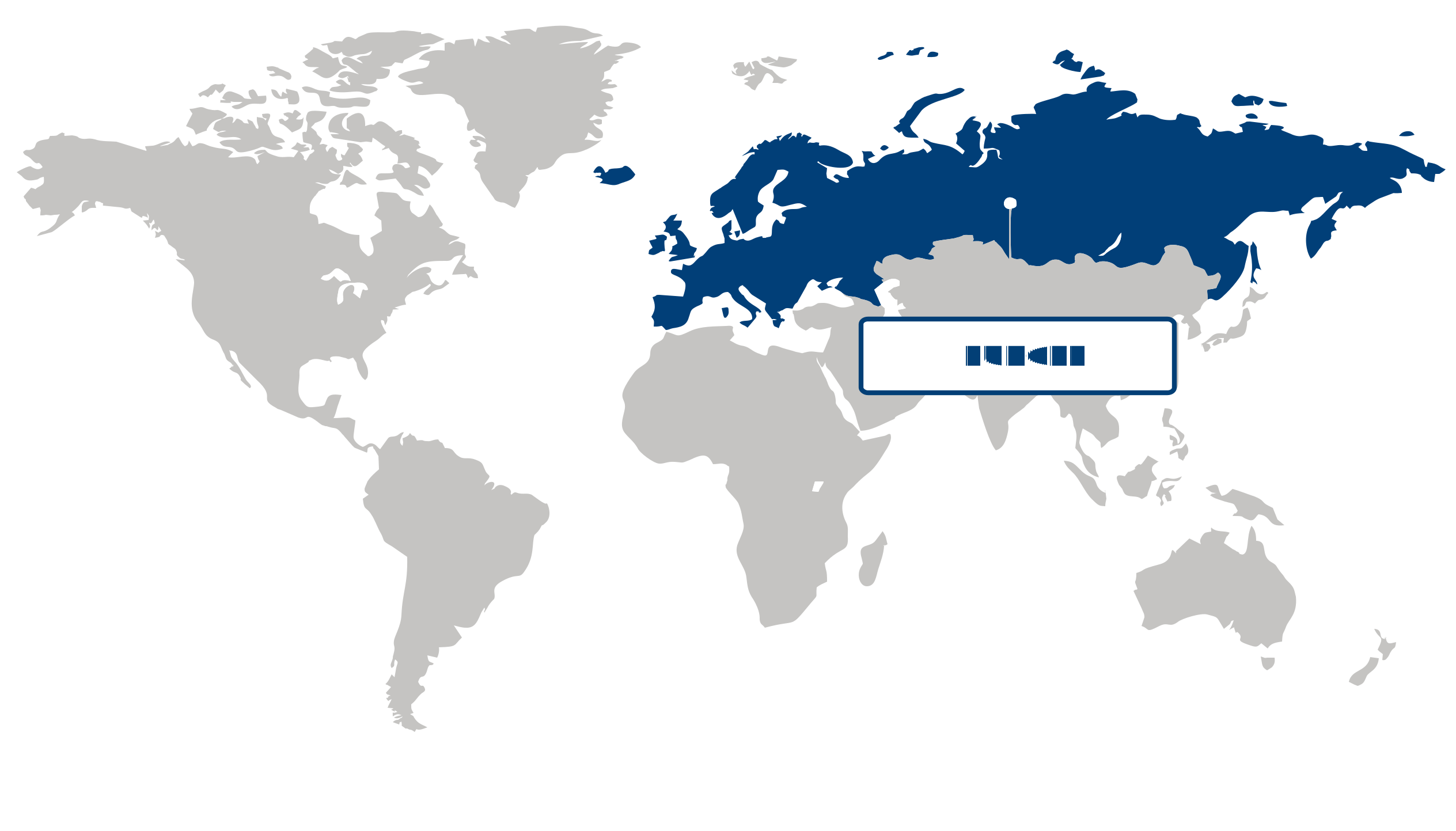
Europe (Largest Region)
Europe accounted for the largest share of the aftershave lotions and creams market at 37.59% in 2026, supported by established personal care consumption patterns, strong grooming awareness, and a mature market for men's skincare products. Consumers increasingly view post-shave care as part of broader skincare routines, creating demand for formulations that provide moisturization, soothing, and skin protection after shaving. The region's sophisticated beauty and personal care distribution infrastructure, together with interest in premium and specialized grooming products, further reinforces its market position.
Asia Pacific (Fastest-Growing Region)
Asia Pacific represents the fastest-growing region in the aftershave lotions and creams market, driven by rising grooming awareness, expanding men's personal care adoption, and increasing consumer interest in skincare-oriented shaving products. Growing urban populations and changing lifestyle preferences are encouraging more consumers to incorporate dedicated grooming routines into daily care. Expanding modern retail and digital commerce channels are also making a wider range of aftershave products accessible, while greater awareness of skin health is supporting demand for products that combine grooming with post-shave care.
| Parameter | North America | Asia Pacific | Europe | Latin America | MEA |
|---|---|---|---|---|---|
| Innovation HubiScaleNascentDeveloping Advanced | |||||
| Cost-Sensitive RegioniScaleLowMedium High | |||||
| Regulatory EnvironmentiScaleRestrictiveNeutral Supportive | |||||
| Demand DriversiScaleWeakModerate Strong | |||||
| Development StageiScaleEmergingDeveloping Developed | |||||
| Adoption RateiScaleLowMedium High | |||||
| New Entrants / StartupsiScaleSparseModerate Dense | |||||
| Macro IndicatorsiScaleWeakStable Strong |
Key Country Insights
Germany 🇩🇪
Dermatological Care PreferenceGermany prioritizes aftershave lotions and creams formulated for sensitive skin and supported by clinically oriented product development. Consumer demand encourages fragrance-balanced, alcohol-free, and skin barrier-supporting formulations across premium and pharmacy retail channels.
France 🇫🇷
Premium Fragrance BalanceFrance values aftershave lotions and creams that combine skincare performance with refined fragrance profiles. Manufacturers emphasize elegant formulations that provide post-shave comfort while complementing broader personal care and premium grooming product portfolios.
Italy 🇮🇹
Classic Grooming HeritageItaly maintains steady demand for aftershave lotions and creams that reflect traditional grooming practices while incorporating modern skincare ingredients. Product development increasingly balances heritage-inspired fragrances with improved moisturizing and skin-soothing performance.
Japan 🇯🇵
Lightweight Skincare IntegrationJapan increasingly integrates aftershave lotions and creams into broader men's skincare routines, encouraging lightweight and fast-absorbing formulations. Manufacturers focus on skin comfort, hydration, and minimal residue while addressing everyday grooming requirements in Japan.
South Korea 🇰🇷
Cosmetic-Driven GroomingSouth Korea blends cosmetic skincare innovation with aftershave product development, encouraging advanced formulations containing moisturizing and calming ingredients. Brands introduce products that complement comprehensive men's skincare routines while maintaining premium sensory appeal.
United States 🇺🇸
Grooming Innovation FocusThe U.S. aftershave lotions and creams market is driven by demand for multifunctional products that combine skin soothing, hydration, and post-shave protection. Brands continue expanding formulations with natural ingredients and dermatologist-focused positioning to address diverse grooming preferences.
Aftershave Lotions and Creams Market Share (%), by Product, 2026
Go beyond the chart, access full insights & data tables
Request Free Sample ReportProduct Segment Analysis: Balm, Lotion & Gel (Largest Segment) vs Splash (Fastest-Growing Segment)
The balm, lotion & gel segment dominated the aftershave lotions and creams market, holding the largest share of 66.64% in 2026. Its strong position is supported by broad consumer acceptance, versatile skin-care benefits, and the ability to provide moisturizing and soothing effects following shaving. These formulations are well suited to consumers seeking post-shave comfort while addressing common concerns such as dryness, irritation, and skin sensitivity. Their established presence across personal grooming routines and compatibility with different skin types continue to reinforce demand.
Splash products are gaining momentum as consumers increasingly favor lightweight, refreshing formulations that provide an immediate cooling sensation after shaving. Their fluid texture and quick application appeal to users seeking convenience and a less intensive post-shave routine. Growing interest in simplified grooming practices, freshness-oriented personal care, and easy-to-apply products is supporting the expansion of the splash segment.
Distribution Channel Segment Analysis: Convenience Store (Largest Segment) vs E-commerce (Fastest-Growing Segment)
Convenience stores represented the largest distribution channel in the aftershave lotions and creams market, accounting for the dominant share in 2026. Their accessibility, widespread presence, and ability to support immediate purchase decisions make them an important channel for personal grooming products. Consumers frequently purchase aftershave products alongside other everyday personal care items, while convenient locations and familiar retail environments continue to sustain channel demand.
E-commerce is emerging as the fastest-growing distribution channel as consumers increasingly use digital platforms to compare personal care products, evaluate product features, and complete purchases from home. Wider product availability, convenient delivery, and access to consumer reviews are improving the attractiveness of online purchasing. The growing shift toward digital shopping is therefore creating additional opportunities for aftershave products through direct and platform-based online sales.
| Segment | Sub-Segment | Largest Segment | Fastest Growing |
|---|---|---|---|
| Product | Balm, Lotion & Gel, Splash | Balm, Lotion & Gel | Splash |
| Distribution Channel | Supermarket/ Hypermarket, Convenience Store, Pharmacy, E-commerce, Others | Convenience Store | E-commerce |
Competitive Landscape and Market Positioning
Leading companies in the aftershave lotions and creams market:
1. Procter & Gamble Company (United States)
2. Unilever PLC (United Kingdom)
3. L'Oréal S.A. (France)
4. Coty Inc. (United States)
5. Colgate-Palmolive Company (United States)
6. Godrej Consumer Products Limited (India)
7. Beiersdorf AG (Germany)
8. D.R. Harris & Co. Ltd. (United Kingdom)
9. Vi-John Group (India)
10. Herbacin cosmetic GmbH (Germany)
The aftershave lotions and creams market is evolving through increased focus on skin-sensitive formulations and premium grooming experiences. Product developers are introducing botanical ingredients, alcohol-free variants, and multifunctional skincare benefits to cater to changing consumer grooming preferences. Growth in digital retailing and personalized marketing strategies is also strengthening brand engagement and product visibility.
| Company | Market Share | Company Revenue | Revenue CAGR (%) | Product Portfolio | Geographic Presence | Innovation / R&D Focus | Strategic Developments |
|---|---|---|---|---|---|---|---|
| Procter & Gamble Company (United States) | |||||||
| Unilever PLC (United Kingdom) | |||||||
| L'Oréal S.A. (France) | |||||||
| Coty Inc. (United States) | |||||||
| Colgate-Palmolive Company (United States) | |||||||
| Godrej Consumer Products Limited (India) | |||||||
| Beiersdorf AG (Germany) | |||||||
| D.R. Harris & Co. Ltd. (United Kingdom) | |||||||
| Vi-John Group (India) | |||||||
| Herbacin cosmetic GmbH (Germany). |
Customize Your Report
Explore examples of how this report can be tailored to different research needs, including custom segments, additional topics or chapters, and related reports. Click a section of the wheel or its numbered marker to explore the available options.
Aftershave Lotions and Creams Market — Custom Segments
| Segment | Sub-Segment |
|---|---|
| Skin Type | Normal Skin, Dry Skin, Oily Skin, Sensitive Skin, Combination Skin |
| Price Tier | Mass-Market, Mid-Range, Premium |
| Consumer Demographic | Men, Women, Unisex |
Aftershave Lotions and Creams Market — Custom TOC
| Custom Chapter | Chapter Details |
|---|---|
| Male Grooming Evolution Analysis |
|
| Premiumization and Luxury Segment Opportunity Study |
|
| E-Commerce Growth Strategy for Grooming Products |
|
Need a different cut of the data?
Request Custom ResearchFrequently Asked Questions
How much revenue does the aftershave lotions and creams market generate?
What is the projected value of the aftershave lotions and creams industry by 2036?
How is evolving skincare awareness influencing product positioning in the aftershave lotions and creams market?
What factors are expanding adoption of premium aftershave lotions and creams?
Why do balm, lotion & gel products lead the aftershave lotions and creams market?
Why is e-commerce the fastest-growing distribution channel in the aftershave lotions and creams market?
Why is Europe the leading region in the aftershave lotions and creams market?
What is driving Asia Pacific’s growth in aftershave lotions and creams?
What are the prominent companies operating in the aftershave lotions and creams landscape?
Our Clients
"The report provided us with a clear direction, and the level of detail was beyond what we expected. I would definitely recommend their services to others."
Haier Appliances
"The collaboration with Fundamental Business Insights has added significant value to our decision-making process, and we look forward to continuing this partnership for our future market research requirements."
Luxottica Group S.p.A.
"The team at FBI delivered an exceptional research report. The insights on industry innovations were particularly impressive and added a lot of value to the overall report."
Nike
Our Research Team & Methodology
Every Fundamental Business Insights report is built by a dedicated vertical research team, validated through a structured primary-and-secondary methodology, and reviewed for accuracy before it reaches you.
Delivery
Published
Available
Support
- Market Size & Forecast
- Market Segmentation
- Regional Analysis
- Growth Drivers & Challenges
- Market Dynamics
- Competitive Landscape
- Company Profiles
- Competitive Benchmarking
- Mergers & Acquisitions
- Market Share Analysis or Key Company Strategies
- Value Chain Analysis
- Porter's Five Forces
- PESTLE Analysis
- Pricing Trends
- Supply-Demand Analysis
- Technology Landscape
- Regulatory Landscape
- Investment & Funding Landscape
- Emerging Opportunities
- Future Market Outlook