Aircraft and Marine Turbochargers Market Size & Forecasts 2026-2035, By Segments (Turbocharger Type, Engine Type, Fuel Type, Application), Growth Opportunities, Innovation Landscape, Regulatory Shifts, Strategic Regional Insights (U.S., Japan, China, South Korea, UK, Germany, France), and Competitive Dynamics (Honeywell, Mitsubishi Heavy Industries, Garrett Motion, BorgWarner, IHI Corporation)
Market Size and Growth Outlook
Aircraft and Marine Turbochargers Market size is set to grow from USD 7.2 billion in 2025 to USD 10.86 billion by 2035, reflecting a CAGR greater than 4.2% through 2026-2035. Industry revenues in 2026 are estimated at USD 7.46 billion.
Get more details on this report
Request Free Sample ReportAircraft and Marine Turbochargers Market Intelligence Snapshot
Regional Market Dynamics
Segment Momentum
Market Expansion Drivers
Leading Market Participants
Global Market Forecast Snapshot
Market Outlook
Regional and Segment Outlook
Market Growth Drivers and Industry Trends
The rising demand for turbochargers in aircraft and marine engines is crucial in driving market growth, as operators prioritize enhanced engine performance and fuel economy amid volatile fuel prices and tighter emission regulations. For example, Rolls-Royce’s recent announcements emphasize turbocharging technologies to improve propulsion efficiency, aligning with stricter IMO and FAA emissions standards. This shift underscores growing industry emphasis on operational cost reduction and sustainable fuel use, fueling demand for turbocharger retrofits and new installations. Both established manufacturers and startups can capitalize on this surge by innovating reliable, high-output models tailored to modern engine architectures. As fleet modernization persists and regulatory bodies enforce greener practices, demand-driven opportunities in the aircraft and marine turbochargers market will increasingly favor adaptable, performance-optimized solutions.
Technological Advancements in High-Performance Turbocharging
Advancements in turbocharging technology, such as variable geometry turbochargers and electronic actuation systems, are reshaping the aircraft and marine turbochargers market by enabling higher efficiency and faster response times. Siemens’ recent R&D disclosures highlight development in turbocharger components that enhance thermal management, boosting engine performance in harsh operational environments. These innovations address growing customer demands for reliability and lower maintenance, driven by prolonged mission profiles and complex marine routes. The result is a competitive differentiation avenue for incumbents leveraging tech leadership and an inviting entry point for agile innovators focusing on smart turbocharger systems. Continued investment in R&D will be critical as operators seek turbochargers that seamlessly integrate into digitally controlled powertrains and hybrid propulsion systems.
Adoption of Lightweight and Fuel-Efficient Turbocharger Systems
The shift towards lightweight and fuel-efficient turbocharger systems is a pivotal driver, mirroring broader aerospace and maritime sustainability initiatives. Boeing’s and Maersk’s recent push towards reducing carbon footprints by adopting lightweight composite components in turbocharger assemblies exemplifies this trend. Lighter turbochargers contribute directly to lowering overall vessel and aircraft weight, thereby reducing fuel consumption and emissions. This trend opens strategic opportunities for manufacturers who can combine advanced materials engineering with precision manufacturing, appealing to customers focused on long-term operational savings and compliance with global decarbonization goals. Moving forward, the aircraft and marine turbochargers market is expected to favor suppliers capable of innovating fuel-efficient, lightweight designs that integrate seamlessly with emerging propulsion technologies.
Industry Restraints:
Stringent Environmental Regulations
Tightening environmental regulations significantly constrain the aircraft and marine turbochargers market by imposing strict emissions limits and fuel efficiency mandates, increasing development complexity and costs. For instance, the International Maritime Organization’s (IMO) 2020 sulfur cap and the International Civil Aviation Organization’s (ICAO) CO2 emissions standards require turbocharger designs to integrate advanced technologies that reduce pollutants, stretching R&D budgets and extending product certification timelines. These regulations often delay new product launches, as companies like Honeywell Aerospace and Garrett Motion must ensure compliance without compromising performance. Established players face rising compliance expenditures, while newcomers encounter higher entry barriers due to regulatory intricacies. Moving forward, evolving regulation frameworks will necessitate sustained innovation investments, making environmental compliance a persistent strategic challenge shaping competitive positioning and product development priorities across the market.
Material and Component Supply Constraints
Limited availability and rising costs of high-grade materials and precision components critically restrict the aircraft and marine turbochargers market’s growth and operational efficiency. The industry’s dependence on specialty alloys like titanium and nickel-based superalloys—highlighted by public supply chain notes from Rolls-Royce Holdings and MAN Energy Solutions—creates vulnerabilities amid global semiconductor shortages and geopolitical trade tensions. These supply bottlenecks induce production delays and inflate manufacturing costs, discouraging product experimentation and scaling efforts, particularly for smaller manufacturers with less negotiating power. Market participants must therefore optimize supply chain resilience and foster strategic supplier partnerships to sustain output. As material demand intensifies in aerospace and marine sectors, these constraints will likely persist, underscoring the need for supply diversification and innovation in alternative materials to mitigate operational risks.
| Growth Driver | Impact on CAGR | Regulatory Influence | Geographic Relevance | Adoption Rate | Impact Timeline |
|---|---|---|---|---|---|
| Demand for turbochargers in aircraft and marine engines | 1.50% | Short term (≤ 2 yrs) | North America, Europe | Medium | Moderate |
| Technological advancements in high-performance turbocharging | 1.40% | Medium term (2–5 yrs) | North America, Asia Pacific | Medium | Moderate |
| Adoption of lightweight and fuel-efficient turbocharger systems | 1.30% | Long term (5+ yrs) | Europe, Asia Pacific | Low | Moderate |
Explore Growth Opportunities
Request Free Sample ReportRegional Demand Dynamics
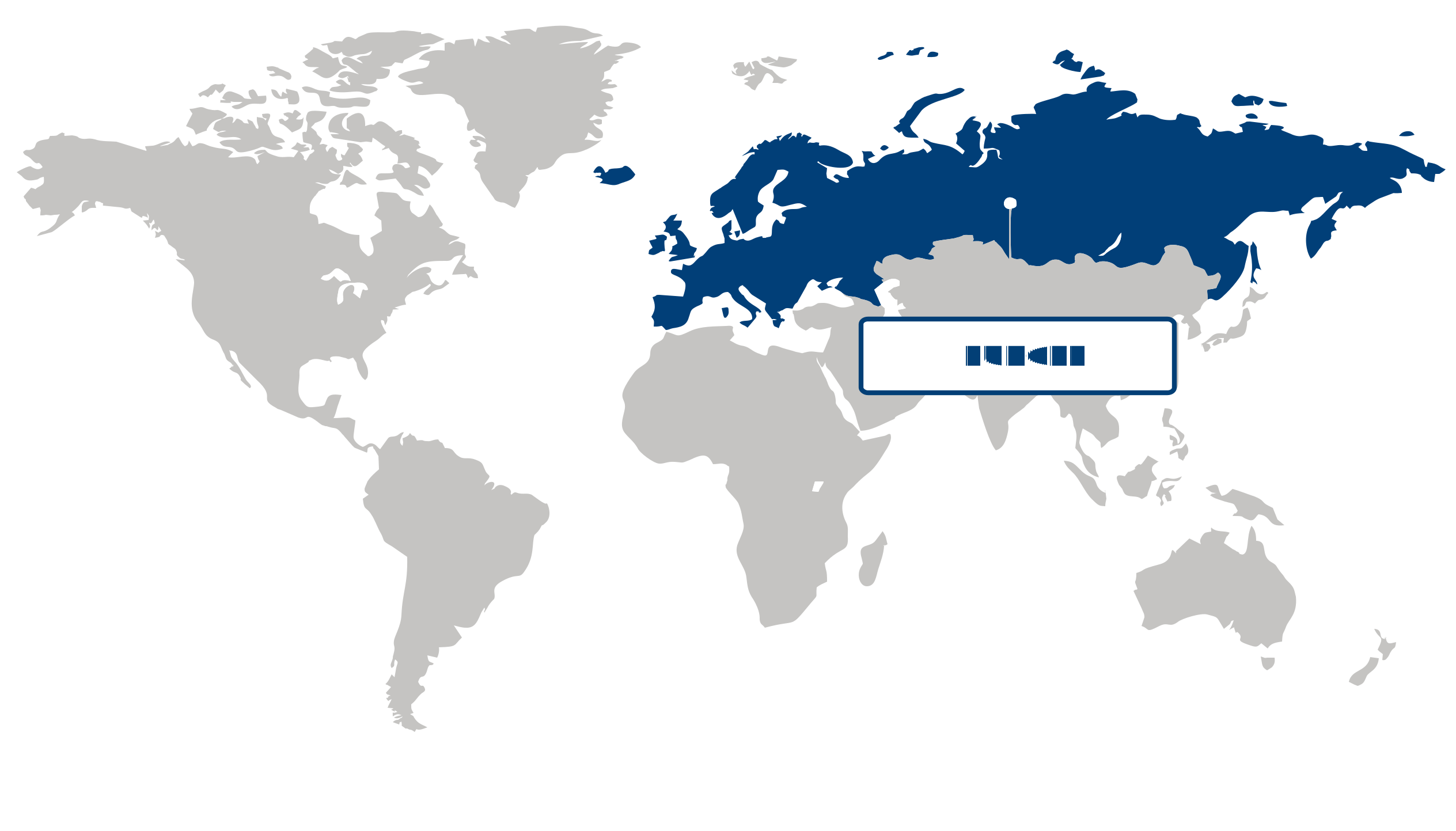
Europe captured more than 36% of the global aircraft and marine turbochargers market in 2025, solidifying its position as the largest regional contributor. This leadership is underpinned by a robust marine engine manufacturing base combined with the widespread adoption of emission-compliant powertrains, reflecting the region’s commitment to sustainability and regulatory compliance. High investments from established manufacturers, such as MAN Energy Solutions and Rolls-Royce, alongside the European Union’s stringent maritime emission standards, have accelerated innovation and demand for advanced turbocharger technologies. Additionally, the integration of digital monitoring and operational efficiency improvements enhances the competitiveness of European suppliers. These factors collectively ensure Europe remains pivotal in the aircraft and marine turbochargers market, offering investors and strategists substantial growth opportunities driven by continuous regulatory evolution and technological advancement.
Germany anchors the European aircraft and marine turbochargers market with its deep industrial expertise and strong marine engine manufacturing framework. Siemens Energy’s pioneering emission-compliant powertrains exemplify Germany’s innovative edge, supported by government incentives favoring cleaner technologies. This regulatory-driven approach not only boosts domestic demand but also strengthens export potential amid global decarbonization trends. Germany’s emphasis on precision engineering and digital integration further reinforces its leadership, positioning it as a critical hub driving regional market growth and resilience.
France plays a strategic role in the European aircraft and marine turbochargers market through its focus on sustainable maritime propulsion systems and aerospace innovation. Safran’s advancements in turbocharger efficiency and their collaboration with CNES on aerospace projects underscore France’s dual emphasis on environmental performance and technological excellence. French regulatory frameworks promoting emission reductions complement these industry efforts, fostering an ecosystem conducive to greener powertrains. This dynamic supports France’s growing market share and reinforces Europe's competitive advantage in delivering emission-compliant turbocharging solutions globally.
Asia Pacific Market Analysis:
Asia Pacific emerged as the fastest-growing region in the aircraft and marine turbochargers market, registering a robust CAGR of 5.1%. This rapid expansion is primarily driven by expanding shipbuilding activities and rising commercial aviation demand, which together foster substantial technological upgrades and capacity enhancements across the region. Countries in Asia Pacific are investing heavily in modernizing their fleets to meet stringent emission standards and fuel efficiency targets, as seen in recent initiatives by Japan’s Ministry of Land, Infrastructure, Transport and Tourism to support greener shipping solutions. Additionally, the surge in air passenger traffic, particularly in China, is prompting substantial capital infusion into turbocharger technologies to boost aircraft engine performance and durability. The region’s well-established manufacturing infrastructure, combined with strategic government incentives, underpins continued innovation and supply chain resilience, positioning Asia Pacific as a critical hub for advanced turbocharging solutions in both marine and aircraft sectors.
Japan holds a pivotal position within Asia Pacific’s aircraft and marine turbochargers market, leveraging its advanced industrial base and regulatory focus on environmental sustainability. Japanese manufacturers, such as IHI Corporation, have been at the forefront of developing high-performance turbochargers that enhance engine efficiency in commercial aviation and marine vessels alike. The government’s rigorous emission control regulations have accelerated adoption of these technologies, fostering partnerships between OEMs and research institutions to optimize turbocharger designs. This environment catalyzes a culture of continuous innovation, enabling Japan to set benchmarks in durability and eco-efficiency, which reinforces the country’s leadership role in the regional market.
China’s role in the Asia Pacific aircraft and marine turbochargers market is distinguished by its massive expansion in commercial aviation and aggressive growth in shipbuilding capacity. Reflecting shifts in consumer demand and government policy, Chinese shipyards such as China State Shipbuilding Corporation (CSSC) are increasingly adopting advanced turbocharging systems to comply with international maritime emission regulations. Meanwhile, China’s booming domestic airline industry, supported by civil aviation authorities, has spurred demand for turbochargers capable of optimizing engine performance amidst rising flight frequencies. The strategic focus on indigenous innovation and scale economies enhances China’s competitive positioning, thereby amplifying the overall growth momentum within Asia Pacific and unlocking new opportunities for global players to deepen market penetration.
North America Market Trends:
North America held a commanding share in the aircraft and marine turbochargers market, driven by its advanced aerospace sector and strong maritime industries. The region benefits from robust demand supported by high capital expenditure in commercial aviation and naval modernization, particularly within the U.S. The prioritization of reducing carbon emissions by agencies like the U.S. Environmental Protection Agency (EPA) has incentivized the adoption of more efficient turbocharger technologies, aligning with global sustainability trends. Additionally, North America's extensive supply chain infrastructure and technological innovation hubs foster rapid advancements in turbocharger design, further solidifying its market leadership. The presence of key industry players such as Garrett Motion and Honeywell Aerospace underscores competitive intensity and continuous product development. These factors position North America as a hub of technological excellence and regulatory alignment, offering significant opportunities to capitalize on ongoing digital transformation and environmental policy shifts in the aircraft and marine turbochargers market.
The U.S. plays a pivotal role in the aircraft and marine turbochargers market, propelled by its pioneering aerospace manufacturing and stringent environmental regulations. The Federal Aviation Administration’s (FAA) push for more fuel-efficient aircraft fuels demand for cutting-edge turbochargers that enhance engine performance while reducing emissions. U.S. naval investments in modernizing fleet capabilities, highlighted by initiatives from the U.S. Navy outlined on the Department of Defense website, further stimulate market growth in marine applications. Innovations spearheaded by companies like Honeywell Aerospace, demonstrated in recent product launches, highlight the country’s leadership in turbocharger technology. Strategically, the U.S.’s strong regulatory environment and emphasis on advanced propulsion systems amplifies North America’s broader market opportunities, reinforcing the region’s competitiveness in both aircraft and marine turbocharger segments.
| Parameter | North America | Asia Pacific | Europe | Latin America | MEA |
|---|---|---|---|---|---|
| Innovation Hub i Scale Nascent Developing Advanced | |||||
| Cost-Sensitive Region i Scale Low Medium High | |||||
| Regulatory Environment i Scale Restrictive Neutral Supportive | |||||
| Demand Drivers i Scale Weak Moderate Strong | |||||
| Development Stage i Scale Emerging Developing Developed | |||||
| Adoption Rate i Scale Low Medium High | |||||
| New Entrants / Startups i Scale Sparse Moderate Dense | |||||
| Macro Indicators i Scale Weak Stable Strong |
Segment Leadership and Growth Trends
Aircraft and Marine Turbochargers Market Share (%), by Turbocharger Type, 2026
Go beyond the chart, access full insights & data tables
Request Free Sample ReportVariable geometry turbochargers held the largest share in the aircraft and marine turbochargers market in 2025, driven by stringent global emission regulations and fuel efficiency mandates that necessitate sophisticated engine management systems. This segment’s leadership stems from the ability of variable geometry turbochargers to optimize airflow at varying engine speeds, significantly reducing emissions while enhancing fuel economy. Customer focus on sustainability and regulatory milestones such as standards from the International Civil Aviation Organization (ICAO) and the International Maritime Organization (IMO) reinforce demand for these advanced solutions. Developments in digital control systems, as showcased by Garrett Motion's recent product launches, underscore competitive advances. The segment offers strategic opportunities for manufacturers to innovate while catering to evolving environmental norms, assuring its continued relevance as emission limitations tighten and fuel efficiency remains paramount.
Analysis by Engine Type
Internal combustion engines represented the largest share of the aircraft and marine turbochargers market in 2025, anchored by their widespread adoption across diverse aviation and marine platforms requiring reliable power and improved efficiency. The segment benefits from mature supply chains and extensive aftermarket support, responding to persistent demand patterns in commercial aviation and maritime logistics. Regulatory encouragement for enhanced engine performance through organizations like the U.S. Environmental Protection Agency (EPA) supports this segment’s penetration. Leading engine manufacturers, including Rolls-Royce and Caterpillar, have prioritized turbocharger integration to meet both performance and emission targets. The segment’s deep entrenchment in existing fleets and ongoing upgrades ensures sustained opportunities for both incumbents and new entrants focused on advanced turbocharger designs.
Analysis by Fuel Type
Aviation fuel powered turbochargers dominated the aircraft and marine turbochargers market in 2025, propelled by the preeminence of traditional aviation fuel in powering turbocharged aircraft engines globally. This segment’s lead owes to the extensive reliance on kerosene-based fuels in commercial and military aircraft, reflecting entrenched supply infrastructure and regulatory compliance frameworks such as those from the Federal Aviation Administration (FAA). Customer preferences emphasize engine reliability and performance under stringent operational conditions, while OEMs continue refining turbocharger compatibility with aviation fuels to meet noise and emission standards. Industry initiatives by companies like Honeywell Aerospace to optimize turbocharger efficiency for aviation fuels highlight innovation. Given the slow transition to alternative fuels in aviation, this segment remains strategically vital as the backbone of current turbocharger demand.
| Segment | Sub-Segment | Largest Segment | Fastest Growing |
|---|---|---|---|
| Turbocharger Type | Single Turbocharger, Twin-Turbocharger, Variable Geometry Turbocharger | ||
| Engine Type | Internal Combustion Engine, Gas Turbine Engine, Diesel Engine | ||
| Fuel Type | Aviation Fuel, Marine Fuel, Biofuel | ||
| Application | Commercial Aviation, Military Aviation, Maritime Vessels, Light Aircraft |
Unlock insights tailored to your business with our bespoke market research solutions.
Click to get your customized report now.
Competitive Landscape and Market Positioning
The competitive landscape is characterized by robust efforts to enhance technological capabilities and expand operational footprints. Leading firms frequently engage in collaborative ventures and strategic integrations, accelerating the development of next-generation turbocharging solutions that meet stringent emission controls and fuel efficiency requirements. Continuous enhancements in R&D underpin new product introductions and system optimizations, fostering sustained differentiation. These maneuvers collectively amplify their influence and adaptability in a market where performance and regulatory compliance converge critically.
Strategic / Actionable Recommendations for Regional Players
North American entities should consider synergistic alliances with technology startups or research institutions to harness innovations in materials science and digital diagnostics, thereby reinforcing their design excellence and service offerings. Emphasizing integration of advanced sensors and data analytics could unlock new value in predictive maintenance and operational efficiency.
In the Asia Pacific region, tapping into the expanding marine logistics and commercial aviation sectors by tailoring turbocharger solutions to local engine manufacturers and fleet operators can drive growth. Collaborations with regional shipyards and airlines may expedite market penetration, especially by adapting products to evolving environmental standards.
European players might strengthen their foothold by focusing on green propulsion technologies and compliance-driven upgrades, aligning closely with regulatory agendas. Investing in joint ventures with energy and engineering firms could enhance capabilities in sustainable turbocharging systems, addressing shifting market demands and intensifying competition.
| Company | Market Share | Company Revenue | Revenue CAGR (%) | Product Portfolio | Geographic Presence | Innovation / R&D Focus | Strategic Developments |
|---|---|---|---|---|---|---|---|
| No companies available. | |||||||
Customize Your Report
Explore examples of how this report can be tailored to different research needs, including custom segments, additional topics or chapters, and related reports. Click a section of the wheel or its numbered marker to explore the available options.
Aircraft and Marine Turbochargers Market — Custom Segments
| Segment | Sub-Segment |
|---|---|
| No segment data available. | |
Aircraft and Marine Turbochargers Market — Custom TOC
| Custom Chapter | Chapter Details | ||
|---|---|---|---|
| No custom TOC data available. | |||
Need a different cut of the data?
Request Custom ResearchHow is the aircraft and marine turbochargers industry projected to perform over the next decade?
Which global region commands the highest percentage of the aircraft and marine turbochargers market?
What region has posted the highest CAGR in the aircraft and marine turbochargers sector?
How much is the variable geometry turbocharger segment expected to grow in the aircraft and marine turbochargers industry beyond 2025?
What factors give internal combustion engine segment a competitive edge in the aircraft and marine turbochargers sector?
Which is the largest sub-segment within the fuel type segment for aircraft and marine turbochargers industry?
Why does commercial aviation sub-segment dominate the application segment of aircraft and marine turbochargers sector?
Which organizations are considered leaders in the aircraft and marine turbochargers landscape?
Our Clients
"The reports offered a comprehensive view of the Food and Beverage landscape, covering market trends, consumer behavior, and competitive dynamics."
Terma A/S
"Our experience in acquiring market research reports has been outstanding — the depth of analysis and actionable insights have proven invaluable."
The Aerospace Corporation
"Fundamental Business Insights demonstrated a keen understanding of our business needs, delivering reports tailored to our specific objectives."
Kongsberg Gruppen
Our Research Team & Methodology
Every Fundamental Business Insights report is built by a dedicated vertical research team, validated through a structured primary-and-secondary methodology, and reviewed for accuracy before it reaches you.
Research Team Overview
Prepared by the Aerospace & Defence Research Team
Delivery
Published
Demand
Available
Support
Trust & Compliance
Research Intelligence
| Source | Reference |
|---|---|
| International Civil Aviation Organization (ICAO) | www.icao.int |
| International Air Transport Association (IATA) | www.iata.org |
| Federal Aviation Administration (FAA) | www.faa.gov |
| European Union Aviation Safety Agency (EASA) | www.easa.europa.eu |
| Aerospace Industries Association (AIA) | www.aia-aerospace.org |
| NATO | www.nato.int |
| U.S. Department of Defense (DoD) | www.defense.gov |
| Defense Advanced Research Projects Agency (DARPA) | www.darpa.mil |
| National Aeronautics and Space Administration (NASA) | www.nasa.gov |
| European Space Agency (ESA) | www.esa.int |
| SAE International | www.sae.org |
| RTCA | www.rtca.org |
| ASTM International | www.astm.org |
| International Organization for Standardization (ISO) | www.iso.org |
| National Institute of Standards and Technology (NIST) | www.nist.gov |
| International Organization for Standardization - Aerospace (IAQG standards via 9100 series) | iaqg.org |
| Airports Council International (ACI World) | aci.aero |
| Missile Defense Agency (MDA) | www.mda.mil |
| Stockholm International Peace Research Institute (SIPRI) | www.sipri.org |
| Jane's (Janes) | www.janes.com |
Research Workflow & Quality Assurance
Data Collection
Verified information gathered through primary and secondary research.
Data Triangulation
Cross-validation using multiple independent data sources.
Forecast Modelling
Market estimates developed using historical trends and analytical models.
Analyst Validation
Findings reviewed by domain experts for accuracy and consistency.
Editorial & Quality Review
Final editorial, quality, and compliance checks before publication.
Final Publication
Released after successful completion of the internal review process.
Report Coverage
📊 Market Assessment
- Market Size & Forecast
- Market Segmentation
- Regional Analysis
- Growth Drivers & Challenges
- Market Dynamics
🏢 Competitive Intelligence
- Competitive Landscape
- Company Profiles
- Competitive Benchmarking
- Mergers & Acquisitions
- Market Share Analysis or Key Company Strategies
🔍 Strategic Analysis
- Value Chain Analysis
- Porter's Five Forces
- PESTLE Analysis
- Pricing Trends
- Supply-Demand Analysis
🚀 Future Outlook
- Technology Landscape
- Regulatory Landscape
- Investment & Funding Landscape
- Emerging Opportunities
- Future Market Outlook
Have a question about this report or need a custom scope?
Request Customization