Airsoft Gun Market Size & Growth Forecast 2027–2036, By Segments (Distribution Channel, Product), Regional Demand Trends (North America, Asia Pacific, Europe), Key Country Insights (U.S., Japan, South Korea, Germany, France, Italy), and Competitive Landscape
Jump to Content
Market Size and Growth Outlook
Airsoft Gun Market size stood at USD 2.6 billion in 2026 and is predicted to grow at a 7.98% CAGR from 2027 to 2036, attaining USD 5.6 billion by 2036. The industry revenue for 2027 is estimated at USD 2.77 billion.
Get more details on this report
Request Free Sample ReportAirsoft Gun Market Intelligence Snapshot
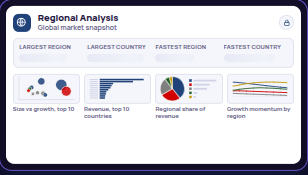
Regional Market Dynamics
- North America held a 40.70% share in 2026, supported by a strong recreational shooting culture, established retail networks, and active airsoft communities that encourage repeat purchases.
- Asia Pacific is projected to grow at an 8.93% CAGR as participation expands, online sales improve accessibility, and rising interest in recreational activities attracts new consumers.
Segment Momentum
- Offline distribution leads the market because buyers often prefer to inspect product quality, handling, weight, and accessory compatibility in person while benefiting from direct retail guidance.
- Rifles are the fastest-growing product segment as players increasingly seek realistic gameplay experiences, customization options, and platforms that support accessories and performance upgrades.
Market Expansion Drivers
- Growing participation in recreational shooting sports boosting consumer demand for airsoft equipment.
- Expansion of cross-border e-commerce platforms accelerating airsoft product accessibility in emerging markets.
- Increasing adoption of simulation-based tactical training supporting professional airsoft equipment demand.
Leading Market Participants
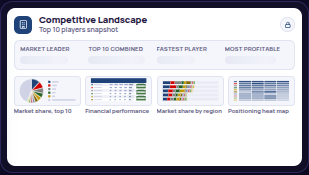
- Major players in the airsoft gun market include Tokyo Marui Co., Ltd. (Japan), Umarex GmbH & Co. KG (Germany), Crosman Corporation (USA), Colt's Manufacturing Company LLC (USA), ICS Airsoft, Inc. (Taiwan), G&G Armament (Taiwan), CYMA (China), Lancer Tactical (USA), Valken Sports (USA), KRISS USA, Inc. (USA).
Global Market Forecast Snapshot
Market Outlook
- 2026 Market Size: USD 2.6 billion
- 2027 Estimated Market Size: USD 2.77 billion.
- Projected Market Size: USD 5.6 billion by 2036
- Growth Forecast: 7.98% CAGR (2027-2036)
Regional and Segment Outlook
- Leading Regional Market: North America
- High-Growth Regional Hub: Asia Pacific
- Core Revenue Segment: Offline (Distribution Channel) | Handgun (Product)
- Emerging Opportunity Segment: Online (Distribution Channel) | Rifle (Product)
Market Growth Drivers and Industry Trends
Growing participation in recreational shooting sports boosting consumer demand for airsoft equipment
The expanding popularity of recreational shooting sports will drive the airsoft gun market growth as consumers seek structured activities that combine competition, outdoor recreation, and equipment-based gameplay. Airsoft provides participants with a simulated sporting environment supported by specialized protective gear, replicas, accessories, and organized events, encouraging repeat participation and equipment purchases. The growth of organized airsoft communities and recreational venues also supports broader consumer engagement by providing participants with opportunities to practice gameplay in controlled sporting environments.
Expansion of cross-border e-commerce platforms accelerating airsoft product accessibility in emerging markets
The increasing reach of cross-border e-commerce is strengthening the airsoft gun market by making specialized sporting equipment more accessible to consumers in emerging markets. Online platforms can connect buyers with a broader selection of recreational products, allowing consumers to compare equipment specifications, configurations, and related accessories that may have limited availability through local retail channels. Improved digital purchasing infrastructure and international fulfillment capabilities are also expanding product visibility, although sales and distribution remain subject to applicable local laws and regulations governing airsoft equipment.
Increasing adoption of simulation-based tactical training supporting professional airsoft equipment demand
Simulation-based training activities are contributing to the airsoft gun market as organizations and training groups use controlled scenarios to replicate aspects of tactical decision-making and team coordination without relying exclusively on live-fire environments. Airsoft equipment can provide realistic movement, communication, and scenario-based exercises while supporting repeated training activities under managed conditions. Its application in structured training environments also encourages demand for durable equipment and supporting gear suited to repeated use during organized simulation exercises.
| Growth Driver | Impact on CAGR | Regulatory Influence | Geographic Relevance | Adoption Rate | Impact Timeline |
|---|---|---|---|---|---|
| Growing participation in recreational shooting sports boosting consumer demand for airsoft equipment | 2.10% | Moderate | North America, Europe | High | Near Term |
| Expansion of cross-border e-commerce platforms accelerating airsoft product accessibility in emerging markets | 1.80% | Moderate | Asia Pacific, Middle East & Africa | High | Mid Term |
| Increasing adoption of simulation-based tactical training supporting professional airsoft equipment demand | 1.30% | High | North America, Europe | Emerging | Long Term |
Unlock insights tailored to your business with our bespoke market research solutions.
Click to get your customized report now.
Regional Demand Dynamics

North America (Largest Region)
North America held the largest share of the airsoft gun market, accounting for 40.70% in 2026. The region's strong position is supported by an established recreational shooting culture, broad participation in organized airsoft activities, and the availability of dedicated sporting facilities and retail channels. Demand is further reinforced by consumer interest in realistic sporting experiences, competitive events, and outdoor recreational activities. Well-developed distribution infrastructure and established communities of enthusiasts also support product accessibility and sustained market engagement across the region.
Asia Pacific (Fastest-Growing Region)
Asia Pacific is emerging as the fastest-growing region for the airsoft gun market, supported by expanding recreational and competitive sporting activities, rising disposable incomes, and growing interest in outdoor leisure experiences. Increasing urbanization and the development of organized airsoft communities are creating broader opportunities for participation, while improving retail and e-commerce infrastructure is making related equipment more accessible. The region's expanding consumer base and growing adoption of recreational shooting as an organized leisure activity are expected to strengthen its market growth trajectory.
| Parameter | North America | Asia Pacific | Europe | Latin America | MEA |
|---|---|---|---|---|---|
| Innovation HubiScaleNascentDeveloping Advanced | |||||
| Cost-Sensitive RegioniScaleLowMedium High | |||||
| Regulatory EnvironmentiScaleRestrictiveNeutral Supportive | |||||
| Demand DriversiScaleWeakModerate Strong | |||||
| Development StageiScaleEmergingDeveloping Developed | |||||
| Adoption RateiScaleLowMedium High | |||||
| New Entrants / StartupsiScaleSparseModerate Dense | |||||
| Macro IndicatorsiScaleWeakStable Strong |
Key Country Insights
Germany 🇩🇪
Compliance-Focused InnovationGermany emphasizes airsoft products that align with stringent regulatory requirements while maintaining performance and product quality. Manufacturers serving Germany prioritize certified designs, durable construction, and compliance-oriented product development to meet retailer and consumer expectations.
France 🇫🇷
Specialty Retail FocusFrance maintains steady demand through specialty sporting goods retailers and recreational gaming communities. Businesses operating in France prioritize compliant product portfolios, customer education, and premium equipment offerings that align with responsible recreational use.
Italy 🇮🇹
Outdoor Recreation SegmentItaly supports the airsoft gun market through active outdoor sports communities and simulation-based recreational activities. Manufacturers serving Italy increasingly emphasize durable equipment, tactical accessories, and product reliability to satisfy both new participants and experienced hobbyists.
Japan 🇯🇵
Precision Product CultureJapan remains an important market for high-quality airsoft equipment, supported by consumer preference for precision engineering and reliable product performance. Companies in Japan focus on advanced manufacturing standards, lightweight materials, and continuous product refinement to strengthen market appeal.
South Korea 🇰🇷
Competitive Sports AdoptionSouth Korea benefits from growing participation in recreational shooting activities and organized airsoft competitions. Suppliers increasingly introduce technologically enhanced models, improved customization options, and upgraded accessories to address evolving preferences among enthusiasts in South Korea.
United States 🇺🇸
Recreational Demand BaseThe U.S. airsoft gun market is supported by a well-established recreational sports culture, organized events, and broad aftermarket accessory demand. Manufacturers continue emphasizing product variety, safety features, and realistic training applications to address diverse consumer and institutional requirements.
Airsoft Gun Market Share (%), by Distribution Channel, 2026
Go beyond the chart, access full insights & data tables
Request Free Sample ReportDistribution Channel Segment Analysis: Offline (Largest Segment) vs Online (Fastest-Growing Segment)
Offline distribution held the largest share of the airsoft gun market in 2026, supported by consumers' preference for physically evaluating products before purchase and obtaining guidance from specialized retailers. In-store purchasing allows customers to assess product design, handling characteristics, accessories, and compatibility while receiving assistance based on their intended use. The availability of immediate product access and opportunities for personalized customer interaction continues to support the relevance of offline channels within the market.
Online distribution is the fastest-growing channel as digital commerce provides consumers with broader product visibility, convenient purchasing, and access to detailed product information. Online platforms also enable buyers to compare product specifications, accessories, and customer feedback before making purchasing decisions. Increasing consumer familiarity with e-commerce and the wider availability of specialized recreational products through digital channels are strengthening online sales opportunities.
Product Segment Analysis: Handgun (Largest Segment) vs Rifle (Fastest-Growing Segment)
Handgun products accounted for the largest share of the airsoft gun market in 2026, reflecting their broad appeal among recreational users and their suitability for target practice, training-oriented activities, and close-range gameplay. Their relatively compact form factor and ease of handling make them accessible across a range of user preferences. Product variety, customization options, and the established use of handgun-style products in recreational scenarios continue to support their leading position.
Rifle products represent the fastest-growing product segment as users increasingly seek platforms offering greater range, stability, and versatility across outdoor recreational activities. The expanding popularity of organized gameplay and scenario-based activities is encouraging interest in rifle configurations suited to varied playing environments. Continued development of product designs, accessories, and customization capabilities is also supporting broader adoption of airsoft rifles among recreational users.
| Segment | Sub-Segment | Largest Segment | Fastest Growing |
|---|---|---|---|
| Distribution Channel | Online, Offline | Offline | Online |
| Product | Handgun, Rifle, Shotgun, Muzzle Loading | Handgun | Rifle |
Competitive Landscape and Market Positioning
Prominent players in the airsoft gun market:
1. Tokyo Marui Co. Ltd. (Japan)
2. Umarex GmbH & Co. KG (Germany)
3. Crosman Corporation (USA)
4. Colt's Manufacturing Company LLC (USA)
5. ICS Airsoft Inc. (Taiwan)
6. G&G Armament (Taiwan)
7. CYMA (China)
8. Lancer Tactical (USA)
9. Valken Sports (USA)
10. KRISS USA Inc. (USA)
The airsoft gun market is witnessing continuous product evolution as manufacturers focus on enhancing realism, durability, and gameplay performance for recreational users. Advancements in battery systems, lightweight materials, and precision firing mechanisms are contributing to stronger product differentiation across competitive segments. Additionally, rising consumer interest in immersive tactical experiences is encouraging innovation in customizable accessories and advanced training-oriented airsoft gun solutions.
| Company | Market Share | Company Revenue | Revenue CAGR (%) | Product Portfolio | Geographic Presence | Innovation / R&D Focus | Strategic Developments |
|---|---|---|---|---|---|---|---|
| Tokyo Marui Co. Ltd. (Japan) | |||||||
| Umarex GmbH & Co. KG (Germany) | |||||||
| Crosman Corporation (USA) | |||||||
| Colt's Manufacturing Company LLC (USA) | |||||||
| ICS Airsoft Inc. (Taiwan) | |||||||
| G&G Armament (Taiwan) | |||||||
| CYMA (China) | |||||||
| Lancer Tactical (USA) | |||||||
| Valken Sports (USA) | |||||||
| KRISS USA Inc. (USA). |
Industry Development/News
| Company Name | Date | Key Development |
|---|---|---|
| Airsoft Gun India | Apr-26 | Airsoft Gun India expanded its premium product portfolio by introducing the KWC PT92 CO2 BB Air Pistol. As a full-metal, blowback-action replica, the unit targets the growing demand for realistic firearm simulations, providing domestic enthusiasts and training users with international-grade equipment that mirrors the handling and weight of authentic sidearms. |
| Airsoft Gun India | Aug-25 | Airsoft Gun India launched a comprehensive franchise program to scale its retail and distribution presence across the Indian market. This strategic expansion aligns with the rising regional interest in organized recreational shooting sports and tactical gaming, allowing the company to consolidate its distribution network and improve product accessibility for a rapidly growing consumer base. |
| Kalashnikov | Feb-25 | Kalashnikov Concern launched its AK-12 airsoft platform, explicitly designed for weapon familiarization and tactical simulation training. This move expands the company’s product ecosystem by repurposing its iconic rifle design for the simulation market, catering to the increasing institutional and recreational demand for high-fidelity, ergonomic replicas used in force-on-force training exercises. |
Customize Your Report
Explore examples of how this report can be tailored to different research needs, including custom segments, additional topics or chapters, and related reports. Click a section of the wheel or its numbered marker to explore the available options.
Airsoft Gun Market — Custom Segments
| Segment | Sub-Segment |
|---|---|
| Power Source | Spring-Powered, Gas-Powered, Electric-Powered |
| User Type | Recreational Users, Competitive Players, Training & Simulation Users, Collectors |
| Firing Mechanism | Manual, Semi-Automatic, Automatic |
Airsoft Gun Market — Custom TOC
| Custom Chapter | Chapter Details |
|---|---|
| Recreational Shooting Infrastructure Assessment |
|
| Distribution Channel and Retail Strategy |
|
| Military and Law Enforcement Training Opportunity Analysis |
|
Need a different cut of the data?
Request Custom ResearchFrequently Asked Questions
How much is the airsoft gun market worth?
What is the expected industry size of airsoft gun by 2036?
How is increasing participation in recreational shooting sports influencing purchasing behavior in the airsoft gun market?
Why is simulation-based tactical training creating new commercial opportunities in the airsoft gun market?
Why does offline distribution remain the leading channel in the airsoft gun market?
Which product segment is growing fastest in the airsoft gun market?
What makes North America the leading airsoft gun market?
Why is Asia Pacific emerging as the fastest-growing airsoft gun market?
What are the key competitors in the airsoft gun landscape?
Our Clients
"The report provided us with a clear direction, and the level of detail was beyond what we expected. I would definitely recommend their services to others."
Haier Appliances
"The collaboration with Fundamental Business Insights has added significant value to our decision-making process, and we look forward to continuing this partnership for our future market research requirements."
Luxottica Group S.p.A.
"The team at FBI delivered an exceptional research report. The insights on industry innovations were particularly impressive and added a lot of value to the overall report."
Nike
Our Research Team & Methodology
Every Fundamental Business Insights report is built by a dedicated vertical research team, validated through a structured primary-and-secondary methodology, and reviewed for accuracy before it reaches you.
Delivery
Published
Available
Support
- Market Size & Forecast
- Market Segmentation
- Regional Analysis
- Growth Drivers & Challenges
- Market Dynamics
- Competitive Landscape
- Company Profiles
- Competitive Benchmarking
- Mergers & Acquisitions
- Market Share Analysis or Key Company Strategies
- Value Chain Analysis
- Porter's Five Forces
- PESTLE Analysis
- Pricing Trends
- Supply-Demand Analysis
- Technology Landscape
- Regulatory Landscape
- Investment & Funding Landscape
- Emerging Opportunities
- Future Market Outlook