



Alkaline Water Electrolysis Market Size & Growth Forecast 2027–2036, By Segments (Application, Type), Regional Demand Trends (North America, Asia Pacific, Europe), Key Country Insights (U.S., Japan, South Korea, Germany, France, Italy), and Competitive Landscape
Market Size and Growth Outlook
Alkaline Water Electrolysis Market size was worth USD 237.5 million in 2026 and is expected to grow at a 18.81% CAGR between 2027 and 2036, reaching USD 1.33 billion by 2036. The industry revenue for 2027 is calculated at USD 275.12 million.
Base Year Value (2026)
USD 237.5 million
CAGR (2027-2036)
18.81%
Forecast Year Value (2036)
USD 1.33 billion

Historical Data Period
2022-2026

Largest Region
Europe

Forecast Period
2027-2036
Alkaline Water Electrolysis Market Intelligence Snapshot:
-
Regional Market Dynamics:
- Europe accounted for 41.98% of the market in 2026, supported by hydrogen project development, policy-driven decarbonization initiatives, and strong investment in large-scale electrolyzer deployment.
- North America is projected to expand at a 21.73% CAGR as clean hydrogen investment accelerates and commercial-scale electrolyzer projects move beyond pilot installations into broader deployment.
-
Segment Momentum:
- Power Plants held a 30.89% market share in 2026 as they can integrate hydrogen production with grid balancing, renewable energy utilization, and on-site energy management at large scale.
- < 10 M3/h systems are growing fastest because they support pilot projects and localized hydrogen production, offering a lower-cost, easier entry point for organizations adopting electrolysis technology.
-
Market Expansion Drivers:
- Rising green hydrogen demand accelerating adoption of large-scale electrolysis systems.
- Government subsidies and hydrogen transition policies boosting electrolyzer deployment.
- Declining renewable electricity costs improving hydrogen production economics via electrolysis.
-
Leading Market Participants:
Major companies in the alkaline water electrolysis market include thyssenkrupp nucera AG & Co. KGaA (Germany), Nel ASA (Norway), ITM Power plc (United Kingdom), Cummins Inc. (United States), McPhy Energy S.A. (France), Asahi Kasei Corporation (Japan), Green Hydrogen Systems A/S (Denmark), SunHydrogen, Inc. (United States), Teledyne Energy Systems, Inc. (United States), Siemens Energy AG (Germany).
Global Market Forecast Snapshot:
-
Market Outlook:
- 2026 Market Size: USD 237.5 million
- 2027 Estimated Market Size: USD 275.12 million.
- Projected Market Size: USD 1.33 billion by 2036
- Growth Forecasts: 18.81% CAGR (2027-2036)
-
Regional and Segment Outlook:
- Leading Regional Market: Europe
- High-Growth Regional Hub: North America
- Core Revenue Segment: Power Plants (Application) | < 50 M3/h (Type)
- Emerging Opportunity Segment: Industrial Gases (Application) | < 10 M3/h (Type)
Market Growth Drivers and Industry Trends
Rising green hydrogen demand accelerating adoption of large-scale electrolysis systems
Rising demand for green hydrogen will drive the alkaline water electrolysis market as industries and energy systems increasingly seek low-carbon alternatives to hydrogen produced from fossil fuels. The growing role of green hydrogen in industrial decarbonization, clean mobility, energy storage, and renewable energy integration is encouraging the development of larger hydrogen production projects. Alkaline electrolysis is particularly suited to large-scale applications because of its established technology base and ability to support continuous hydrogen production, encouraging greater deployment of electrolyzer systems across emerging clean-energy infrastructure.
Government subsidies and hydrogen transition policies boosting electrolyzer deployment
Government subsidies and hydrogen transition policies will propel the alkaline water electrolysis market by reducing investment barriers and encouraging the development of domestic hydrogen production capabilities. Public support through financial incentives, clean-energy programs, infrastructure initiatives, and decarbonization policies can improve the economic attractiveness of electrolyzer projects while accelerating the integration of hydrogen into industrial and energy strategies. Such policy measures also encourage investments in hydrogen infrastructure and electrolyzer manufacturing, creating stronger demand for alkaline systems among project developers and energy producers.
Declining renewable electricity costs improving hydrogen production economics via electrolysis
Lower renewable electricity costs are improving the economics of hydrogen production, thereby supporting growth in the alkaline water electrolysis market as electricity represents a critical input for electrolysis-based hydrogen generation. Increasing availability of cost-competitive solar and wind power enables hydrogen producers to operate electrolyzers with more favorable production economics while strengthening the connection between renewable generation and clean hydrogen facilities. Greater access to affordable renewable electricity can also support larger electrolysis projects and improve the feasibility of integrating hydrogen production with renewable power assets.
| Growth Driver Assessment Framework | |||||
| Growth Driver | Impact On CAGR | Regulatory Influence | Geographic Relevance | Adoption Rate | Impact Timeline |
|---|---|---|---|---|---|
| Rising green hydrogen demand accelerating adoption of large-scale electrolysis systems | 2.50% | High | Europe, Asia Pacific | High | Near Term |
| Government subsidies and hydrogen transition policies boosting electrolyzer deployment | 2.20% | High | Europe, North America | High | Near Term |
| Declining renewable electricity costs improving hydrogen production economics via electrolysis | 1.80% | Moderate | Global | Medium | Mid Term |
Unlock insights tailored to your business with our bespoke market research solutions - Click to get your customized report now!
Regional Demand Dynamics
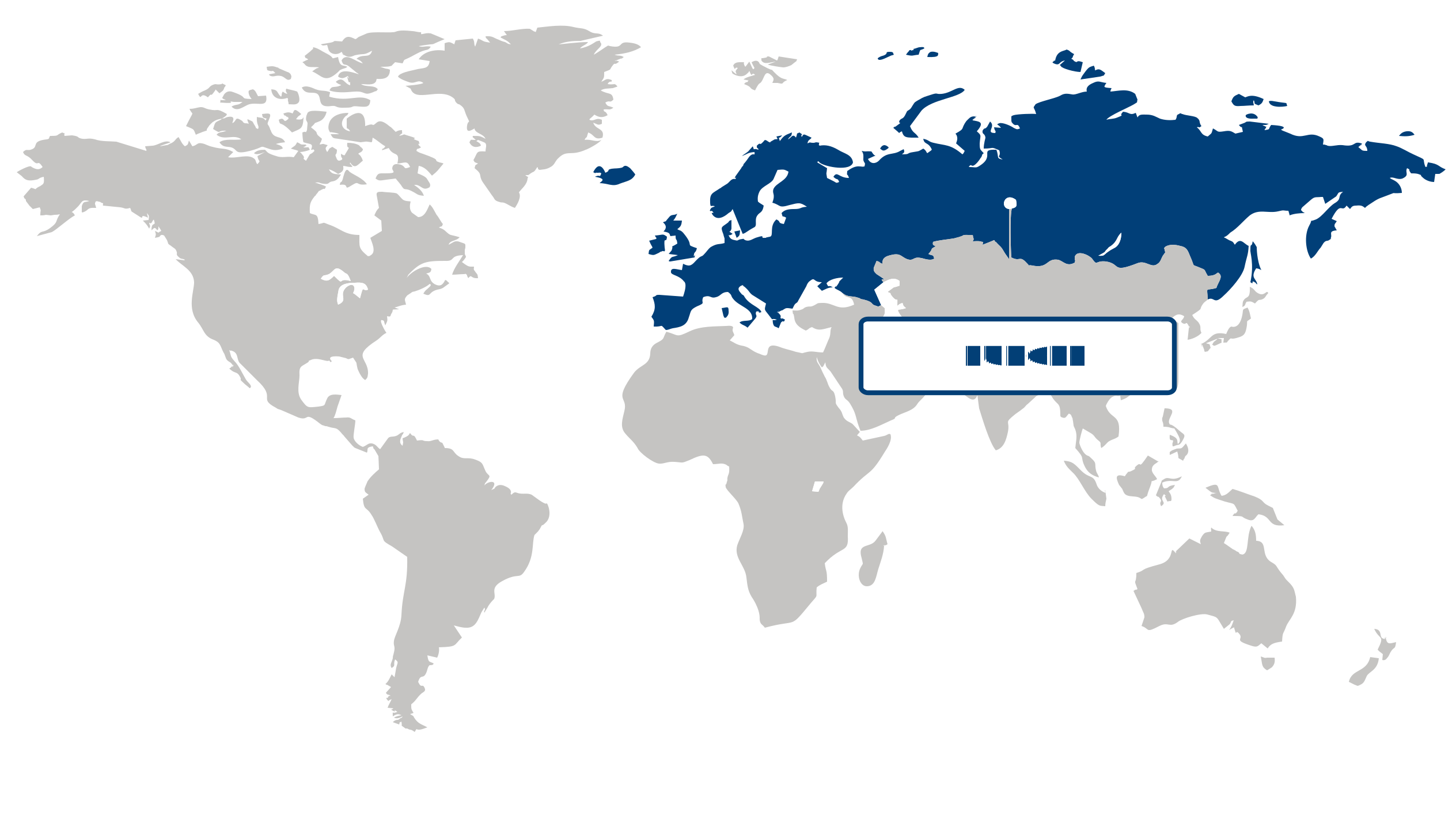
Largest Region
Europe
41.98% Market Share in 2026
Europe (Largest Region) vs North America (Fastest-Growing Region)
Europe held a 41.98% share of the alkaline water electrolysis market in 2026, supported by strong investment in clean hydrogen infrastructure, decarbonization initiatives, and the development of renewable energy systems. Alkaline electrolysis is gaining importance as industries seek scalable pathways for producing low-carbon hydrogen, particularly in applications linked to industrial energy transition. Established energy infrastructure, supportive policy frameworks, and increasing integration of renewable power with hydrogen production are reinforcing regional demand for electrolysis technologies.
North America is the fastest-growing region, driven by increasing investment in hydrogen production, renewable energy integration, and industrial decarbonization. Growing interest in hydrogen as an energy carrier is encouraging the development of electrolysis capacity and supporting infrastructure. The region's expanding clean energy ecosystem and focus on reducing emissions from industrial processes are creating additional opportunities for alkaline electrolysis, while efforts to strengthen domestic hydrogen supply chains are supporting market expansion.
Key Country Insights
The U.S. alkaline water electrolysis market is expanding through industrial decarbonization initiatives and clean hydrogen investments. Project developers in the U.S. increasingly deploy scalable electrolysis systems that integrate with renewable electricity and established industrial facilities.
Japan advances alkaline water electrolysis deployment to strengthen long-term hydrogen availability for industrial and energy applications. Japanese organizations increasingly emphasize system efficiency, operational reliability, and integration with national hydrogen infrastructure initiatives.
South Korea supports alkaline water electrolysis through investments in hydrogen production and advanced manufacturing capabilities. Companies in South Korea continue developing integrated projects that connect renewable power generation with industrial hydrogen demand.
Germany prioritizes alkaline water electrolysis projects that support industrial decarbonization and renewable energy utilization. Companies in Germany continue integrating electrolysis capacity into hydrogen value chains serving manufacturing, chemicals, and energy applications.
France continues expanding alkaline water electrolysis installations to reduce emissions across industrial sectors. French developers increasingly prioritize large-scale projects that align hydrogen production with renewable energy resources and industrial consumption.
Italy focuses on alkaline water electrolysis for industrial hydrogen production supporting manufacturing and energy transition objectives. Project developers in Italy increasingly evaluate electrolysis systems that improve operational flexibility while integrating with renewable energy sources.
Segment Leadership and Growth Trends
Application Segment Analysis: Power Plants (Largest Segment) vs Industrial Gases (Fastest-Growing Segment)
Power plants segment represented the largest share of the alkaline water electrolysis market in 2026, holding a 30.89% share, supported by increasing interest in hydrogen production as part of power-sector decarbonization and energy management strategies. Alkaline electrolysis can use electricity to produce hydrogen, creating opportunities to connect renewable power generation with hydrogen production and energy storage. Power facilities are increasingly evaluating hydrogen as a means of improving energy-system flexibility and integrating variable renewable resources. The ability to utilize established alkaline electrolysis technology within larger energy infrastructure is supporting its strong position across power-related applications.
Industrial gases are advancing at the fastest pace as manufacturers increasingly explore hydrogen production to support industrial processes and strengthen low-carbon gas supply chains. Hydrogen generated through alkaline electrolysis can serve applications where clean hydrogen is required as an industrial input, creating opportunities across multiple manufacturing processes. Growing emphasis on decarbonizing industrial operations and replacing conventional hydrogen production pathways is encouraging greater interest in electrolysis-based systems. Increasing integration of renewable electricity with hydrogen production is further supporting adoption within the industrial gases application.
Type Segment Analysis: < 50 M3/h (Largest Segment) vs < 10 M3/h (Fastest-Growing Segment)
The < 50 M3/h capacity segment accounted for the largest share of the alkaline water electrolysis market in 2026, representing a 32.4% share, reflecting demand for systems capable of supporting hydrogen production across a range of commercial and industrial applications. This capacity range offers flexibility for users seeking electrolysis systems that can align production with their operational hydrogen requirements without relying on the largest-scale configurations. Growing deployment of hydrogen projects across distributed and industrial settings is supporting demand for appropriately sized alkaline electrolysis equipment. The segment's balance between production capability and deployment flexibility continues to reinforce its leading position.
The < 10 M3/h capacity segment is experiencing the fastest growth as smaller-scale hydrogen production becomes increasingly relevant for distributed applications, pilot projects, and users seeking localized hydrogen generation. Compact electrolysis systems can provide greater flexibility where hydrogen demand is limited or where operators want to integrate production directly with available renewable electricity. Increasing interest in decentralized hydrogen infrastructure and gradual expansion of hydrogen adoption are creating favorable conditions for smaller-capacity systems. Their suitability for localized and emerging applications is supporting the segment's rapid growth.
| Report Segmentation | |||
| Segment | Sub-Segment | Largest Segment | Fastest Growing Segment |
|---|---|---|---|
| Application | Power Plants, Steel Plants, Electronics and PV, Industrial Gases, Others | Power Plants | Industrial Gases |
| Type | < 10 M3/h, < 30 M3/h, < 50 M3/h, ≥ 80 M3/h, >= 80 M3/h | < 50 M3/h | < 10 M3/h |
 Read our Research Approach
Competitive Landscape and Market Positioning
Top players in the alkaline water electrolysis market:
1. thyssenkrupp nucera AG & Co. KGaA (Germany)
2. Nel ASA (Norway)
3. ITM Power plc (United Kingdom)
4. Cummins Inc. (United States)
5. McPhy Energy S.A. (France)
6. Asahi Kasei Corporation (Japan)
7. Green Hydrogen Systems A/S (Denmark)
8. SunHydrogen Inc. (United States)
9. Teledyne Energy Systems Inc. (United States)
10. Siemens Energy AG (Germany)
The alkaline water electrolysis market is advancing through improvements in hydrogen generation efficiency supported by continuous technological refinement. Collaborative development efforts are enabling scaling of cleaner energy systems and improved system durability. The market is evolving toward broader energy transition applications, with innovation focused on cost reduction and enhanced electrolyzer performance.
Industry Development/News
| Company Name | Date | Key Development |
|---|---|---|
| Thyssenkrupp Nucera | Sep-25 | Thyssenkrupp Nucera acquired key technology assets from Green Hydrogen Systems, a strategic move to bolster its intellectual property portfolio and enhance its competitive standing within the industrial electrolyzer market. This acquisition provides the company with additional technical capabilities to support its large-scale hydrogen deployment projects. |
| HydrogenPro ASA | Aug-25 | HydrogenPro ASA established a strategic partnership with Thermax to localize the manufacturing and commercialization of alkaline water electrolysis systems in India. This collaboration aims to leverage regional production capabilities to scale the deployment of green hydrogen solutions for large-scale industrial projects within the Indian market. |
| Thyssenkrupp Uhde | Jun-26 | Thyssenkrupp Uhde secured pre-FEED contracts for two green ammonia plants in Brazil, each with a production capacity of 400,000 tonnes per year. Developed by Fuella, these projects are positioned to drive large-scale integration of alkaline electrolysis technology within the green ammonia value chain. |
| Cepsa | May-24 | Cepsa selected thyssenkrupp nucera as the preferred supplier for a 300 MW electrolyzer unit to support its planned green hydrogen production facility in Spain. This selection marks a significant deployment of large-scale alkaline water electrolysis technology aimed at decarbonizing industrial processes through substantial hydrogen capacity expansion. |
| thyssenkrupp nucera | Mar-26 | thyssenkrupp nucera was awarded a FEED contract for a 260 MW green hydrogen project in India. The contract reflects the company's continued expansion in the global electrolyzer market and its ability to secure large-scale operational commitments in high-growth regions requiring significant electrolysis infrastructure. |
| H2Terminals | Mar-26 | H2Terminals entered a strategic partnership with CIMC GH2 Technology to develop integrated solutions for the green hydrogen sector. The collaboration focuses on streamlining the value chain by combining electrolysis technology with liquid hydrogen storage and specialized transportation infrastructure to accelerate global hydrogen adoption. |
| Korea Southern Power | Dec-25 | Korea Southern Power and BHI successfully completed the joint development of a 2 MW-class alkaline water electrolysis system, currently the largest of its type in South Korea. This achievement enhances domestic production capabilities and provides a scalable model for future industrial-grade green hydrogen generation within the region. |
| Shuangliang Hydrogen | Dec-24 | Shuangliang Hydrogen secured a supply agreement to provide green hydrogen production systems for ACME’s large-scale hydrogen and ammonia project in Oman. This contract facilitates the expansion of industrial-scale electrolysis capacity in the Middle East, supporting the region's transition toward large-capacity green hydrogen and ammonia production. |
| Stegra | Jun-25 | Stegra advanced the construction of its green hydrogen production facility in Boden, Sweden, by installing critical process equipment. The facility is designed to support the company’s internal transition toward green iron and steel operations, marking a significant step in the adoption of large-scale electrolysis in heavy industry. |
| Bharat Petroleum Corporation Limited | Feb-24 | Bharat Petroleum Corporation Limited announced the development of its first domestically produced alkaline electrolyzer in India. This initiative is designed to support national objectives for large-scale green hydrogen production, contributing to the broader goal of scaling domestic manufacturing capacity to meet future industrial demand. |
Why Choose Us
Specialized Expertise: Our team comprises industry experts with a deep understanding of your market segment. We bring specialized knowledge and experience that ensures our research and consulting services are tailored to your unique needs.
Customized Solutions: We understand that every client is different. That's why we offer customized research and consulting solutions designed specifically to address your challenges and capitalize on opportunities within your industry.
Proven Results: With a track record of successful projects and satisfied clients, we have demonstrated our ability to deliver tangible results. Our case studies and testimonials speak to our effectiveness in helping clients achieve their goals.
Cutting-Edge Methodologies: We leverage the latest methodologies and technologies to gather insights and drive informed decision-making. Our innovative approach ensures that you stay ahead of the curve and gain a competitive edge in your market.
Client-Centric Approach: Your satisfaction is our top priority. We prioritize open communication, responsiveness, and transparency to ensure that we not only meet but exceed your expectations at every stage of the engagement.
Continuous Innovation: We are committed to continuous improvement and staying at the forefront of our industry. Through ongoing learning, professional development, and investment in new technologies, we ensure that our services are always evolving to meet your evolving needs.
Value for Money: Our competitive pricing and flexible engagement models ensure that you get maximum value for your investment. We are committed to delivering high-quality results that help you achieve a strong return on your investment.
Select Licence Type

