



Alpine Ski Equipment Market Size & Forecasts 2026-2035, By Segments (Ability Level, Target Group, Product Type), Growth Opportunities, Innovation Landscape, Regulatory Shifts, Strategic Regional Insights (U.S., Japan, China, South Korea, UK, Germany, France), and Competitive Dynamics (Rossignol, Atomic, Salomon, Head, Fischer)
Market Size and Growth Outlook
Alpine Ski Equipment Market size is set to grow from USD 3.36 billion in 2025 to USD 5.12 billion by 2035, reflecting a CAGR greater than 4.3% through 2026-2035. Industry revenues in 2026 are estimated at USD 3.48 billion.
Base Year Value (2025)
USD 3.36 billion
CAGR (2026-2035)
4.3%
Forecast Year Value (2035)
USD 5.12 billion

Historical Data Period
2022-2025

Largest Region
Europe

Forecast Period
2026-2035
Key Takeaways
- Europe region acquired around 43% revenue share in 2025, supported by investments in modern lift systems and snowmaking technologies.
- Asia Pacific region will grow at around 6.02% CAGR from 2026 to 2035, accelerated by government-supported winter sports initiatives and rising resort development.
- The expert segment led the market in 2025, accelerated by rising participation in winter sports globally.
- The alpine racers segment captured a majority share of the alpine ski equipment market in 2025, propelled by demand for high-performance competitive skiing gear.
- In 2025, the skis segment dominated the market share, driven by foundational equipment requirements for skiing activities.
- Major competitors in the alpine ski equipment market include Rossignol (France), Atomic (Austria), Salomon (France), Head (Austria), Fischer (Austria), K2 (USA), Elan (Slovenia), Volkl (Germany), Dynastar (France), Blizzard (Austria).
Market Growth Drivers and Industry Trends
Expansion of Winter Tourism and Skiing ActivitiesThe steady increase in winter tourism globally, driven by rising disposable incomes and greater international travel accessibility, is a fundamental growth catalyst for the alpine ski equipment market. According to the World Tourism Organization (UNWTO), winter sports destinations in Europe and North America have reported higher visitor numbers year-over-year, fueling demand for ski gear. This trend taps into evolving consumer preferences for experiential leisure and outdoor recreation. Established manufacturers can capitalize on this by expanding product offerings tailored to diverse skill levels and emerging markets, while new entrants can innovate through boutique or region-specific equipment lines. As infrastructure improvements and promotional campaigns intensify, the alpine ski equipment market will continue to benefit from a broader, more enthusiastic consumer base seeking quality and reliability in their gear.
Integration of Advanced Ski Equipment Technologies
Technological innovation, including advancements in materials science and smart sensors, is reshaping the alpine ski equipment market, enhancing performance, safety, and comfort. Companies such as Rossignol and Salomon have introduced intelligent bindings and adaptive materials that respond to terrain conditions, satisfying evolving consumer demands for personalized, high-performance gear. The competitive landscape is influenced by investments in R&D that leverage digital transformation, enabling data-driven customer insights and customization. This trend presents strategic openings for incumbents to deepen brand loyalty through innovation leadership, while agile startups can disrupt segments with cutting-edge solutions. Given ongoing patent filings and product launches highlighted by the European Outdoor Group, technology adoption will persist as a critical factor in product differentiation and market expansion.
Demand for Eco-friendly and Lightweight Ski Equipment
Growing environmental consciousness is prompting consumers to prioritize sustainable and lightweight materials, directly impacting the alpine ski equipment market’s product development strategies. Initiatives like Atomic’s use of recycled composites and biodegradable components, as publicized in their corporate sustainability reports, exemplify this shift. This trend aligns with broader regulatory pressure for reduced carbon footprints and resource-efficient manufacturing. Players integrating eco-friendly practices gain competitive advantage by appealing to environmentally aware demographics, particularly younger, affluent skiers. New entrants specializing in green innovations can carve niche segments, while legacy brands must adapt supply chains to meet stricter environmental standards. As sustainability commitments become a deciding factor in purchasing decisions, the market will increasingly favor companies with verifiable eco-credentials and transparent production methodologies.
Industry Restraints:
High Production and Material Costs
Escalating costs of raw materials such as carbon fiber, metal alloys, and high-performance polymers significantly constrain the alpine ski equipment market by pressuring manufacturers’ profit margins and elevating retail prices. According to a 2023 report by the International Trade Centre, global supply chain disruptions and inflationary trends have driven up material expenses by over 12% year-over-year. This cost pressure limits innovation investment for both incumbents like Rossignol and new entrants attempting to penetrate the market. Consequently, higher prices may deter value-sensitive consumers, reducing overall demand growth. As material sourcing remains volatile due to geopolitical tensions and supply shortages, market participants must optimize production efficiency and explore alternative materials to sustain competitiveness in the near term.
Seasonal Demand Volatility and Climate Change Impact
Seasonal fluctuations and the growing unpredictability of winter weather, exacerbated by climate change, pose a critical restraint on consistent demand for alpine ski equipment. The National Oceanic and Atmospheric Administration (NOAA) highlights a significant reduction in snow cover duration across key alpine regions since 2010, shortening ski seasons and discouraging casual and professional skiers alike. This environmental shift pressures suppliers to manage inventory risks and engage in aggressive marketing during narrow windows, complicating cash flow and production planning. Established brands must balance maintaining legacy product lines with adapting to evolving consumer patterns, while startups face heightened barriers to securing investment. Ongoing climatic volatility will necessitate strategic agility and diversification for sustained growth in alpine ski equipment markets.
| Growth Driver Assessment Framework | |||||
| Growth Driver | Impact On CAGR | Regulatory Influence | Geographic Relevance | Adoption Rate | Impact Timeline |
|---|---|---|---|---|---|
| Growth in winter tourism & skiing activities | 1.50% | Short term (≤ 2 yrs) | Europe, North America | Low | Fast |
| Adoption of advanced ski equipment technologies | 1.20% | Medium term (2–5 yrs) | Europe, Asia Pacific | Medium | Moderate |
| Eco-friendly & lightweight ski equipment | 1.60% | Long term (5+ yrs) | Europe, North America | Medium | Slow |
Unlock insights tailored to your business with our bespoke market research solutions - Click to get your customized report now!
Regional Demand Dynamics
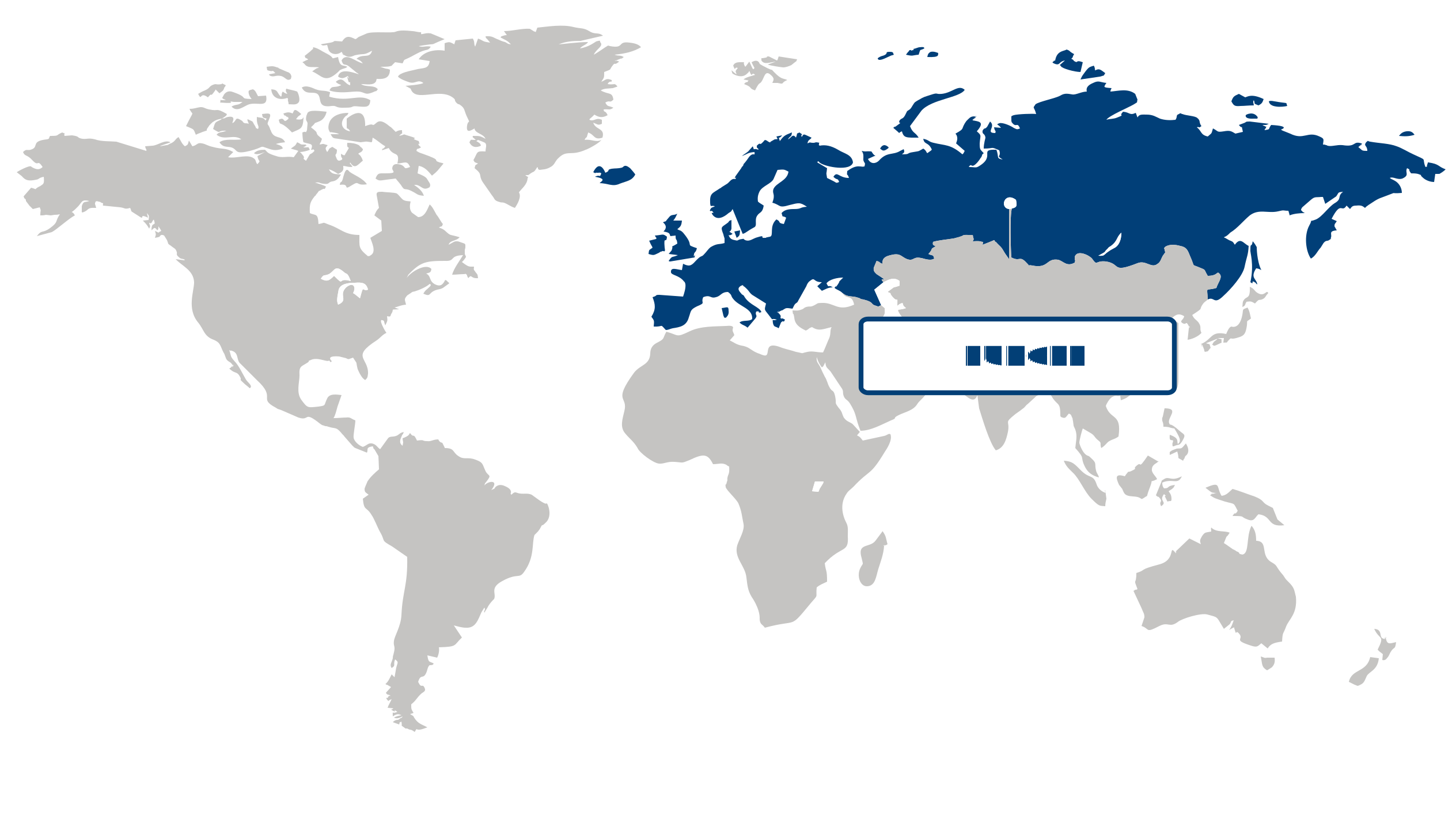
Largest Region
Europe
43% Market Share in 2025
Europe dominated the alpine ski equipment market, representing more than 43% of the global share in 2025. This region leads largely due to significant investments in modern lift systems and advanced snowmaking technologies, which enhance the ski experience and extend the skiing season. The International Ski Federation highlights that such infrastructure improvements in key alpine destinations like the Alps have driven steady demand for upgraded skiing gear. Moreover, European consumers’ preference for high-performance equipment coupled with sustainability initiatives by manufacturers—such as low-impact materials promoted by the European Outdoor Group—further strengthen market growth. Economic resilience and government backing for winter tourism also sustain spending on premium alpine ski equipment. Moving forward, ongoing technological advancements in snow management and lift operations will open strategic avenues for innovation and market expansion across Europe.
Germany plays a pivotal role in the European alpine ski equipment market, propelled by robust demand fostered through a blend of recreational skiing culture and steady consumer spending on high-quality gear. German resorts, often cited by the German Ski Association for their modernized lift infrastructure, contribute to extended ski seasons, thus reinforcing consistent market activity. Leading German companies such as Völkl and Fischer continue to emphasize innovation and sustainability in product development, aligning with evolving consumer preferences. This stable, innovation-driven demand positions Germany as a critical hub that bolsters Europe's regional dominance in alpine ski equipment.
France anchors a significant portion of Europe’s alpine ski equipment market, benefiting from its extensive and well-developed ski resorts in the French Alps, where upgraded snowmaking technologies have substantially mitigated climate variability risks. The French Ministry of Ecological Transition supports initiatives integrating environmental sustainability with winter tourism, indirectly boosting demand for eco-friendly ski equipment. French retailers and manufacturers, including Rossignol, capitalize on this trend by advancing lightweight, durable product lines. France’s strategic prioritization of winter tourism infrastructure markedly enhances its market contribution, reinforcing Europe’s position as the global leader in the alpine ski equipment sector.
Asia Pacific Market Analysis:
Asia Pacific emerged as the fastest-growing region in the alpine ski equipment market, registering a robust CAGR of 6.02%. This acceleration is largely driven by government-supported winter sports initiatives and extensive development of ski resorts across the region, which have significantly enhanced accessibility and appeal for alpine skiing enthusiasts. Notably, policies promoted by entities such as the Japan Sports Agency and China’s Ministry of Culture and Tourism focus on expanding winter sports infrastructure and encouraging participation through subsidies and event hosting. Rising consumer disposable incomes and growing urban middle classes have further shifted demand toward premium, technologically advanced ski equipment. Additionally, manufacturers are increasingly adopting sustainable materials in response to heightened environmental consciousness among regional consumers and regulatory frameworks targeting eco-friendly products. These developments, along with expanding retail ecosystems and digital engagement, position Asia Pacific as a pivotal market for alpine ski equipment growth and innovation.
Japan plays a critical role within Asia Pacific’s alpine ski equipment market as one of the pioneers in integrating winter sports into national recreation and tourism strategies. The country’s government-backed initiatives, such as the “Sport for All” program led by Japan’s Ministry of Education, Culture, Sports, Science and Technology, have ushered in widespread winter sports participation and modernization of ski resorts. This has spurred consumer demand for high-performance, lightweight ski gear tailored to diverse skill levels. Japan’s well-established distribution networks and leading domestic brands, supported by advancements in ski manufacturing technology, allow it to meet evolving consumer preferences efficiently. The country’s focus on environmental sustainability also drives innovation in product materials, reinforcing its competitive posture.
China’s alpine ski equipment market growth is propelled by rapid resort development and substantial government investment through campaigns like the Winter Sports Promotion Plan unveiled by the General Administration of Sport of China. Rising urban middle-class interest in skiing, especially post-2022 Beijing Winter Olympics, has escalated demand for quality equipment that integrates smart technology and enhances user experience. Domestic and international manufacturers are capitalizing on this surge, expanding supply chains and leveraging e-commerce platforms to reach tech-savvy consumers. Regulatory emphasis on sustainable resort operations helps shape market offerings that balance performance with eco-conscious design. China’s expanding market depth and infrastructure development underscore its strategic importance within the broader Asia Pacific alpine ski equipment landscape, reinforcing regional growth opportunities.
North America Market Trends:
North America held a substantial share in the alpine ski equipment market, driven by a robust outdoor recreation culture and widespread consumer spending on winter sports. The region benefits from diverse mountain ranges like the Rockies and the Appalachians, fostering steady demand for advanced ski gear tailored to varied terrains and skill levels. Companies such as Vail Resorts have reported increased investments in digital platforms to enhance customer engagement, reflecting a growing trend towards integrating technology with alpine sports. Additionally, North America's regulatory environment supports sustainable manufacturing practices, meeting rising consumer expectations for eco-friendly products. Supply chain enhancements and partnerships with innovative material suppliers, highlighted by announcements from Burton Snowboards, have further strengthened market resilience. These factors collectively position North America as a prime market, with ongoing technological and operational advancements promising sustained growth in alpine ski equipment demand.
The U.S. plays a pivotal role within North America’s alpine ski equipment market, propelled by strong consumer enthusiasm and early adoption of next-generation equipment. The country's emphasis on innovation is evident through Callaway Golf’s recent acquisition of a ski equipment startup, signaling strategic moves to integrate cutting-edge technology and smart gear. Moreover, the U.S. regulatory focus on environmental standards influences manufacturers to prioritize sustainable materials, as reported by the U.S. Environmental Protection Agency’s guidelines on production emissions. High participation rates in skiing, supported by organizations like the National Ski Areas Association, demonstrate vibrant market opportunities yet intensifying competition requires continuous product differentiation. This environment cements the U.S. as a critical testing ground for new alpine ski equipment, reinforcing North America’s overall market strength.
No card data available for this language/report.
Segment Leadership and Growth Trends
The expert segment held the largest share in the alpine ski equipment market in 2025, driven primarily by rising global participation in winter sports. This increase in experienced skiers has intensified demand for specialized, high-performance gear suited to expert-level demands. Industry leaders like Rossignol and Salomon have emphasized innovation in advanced materials and precision engineering to cater to this discerning clientele, reflecting a broader trend toward customization and technological enhancement in product design. Growing interest in competitive alpine skiing and extreme sports, supported by initiatives from organizations such as the International Ski Federation (FIS), further underscores this segment’s leadership. For both established brands and new entrants, this segment offers a strategic advantage through premium product lines and brand differentiation. The expert segment is expected to remain pivotal as consumer enthusiasm for challenging winter sports persists amid expanding global winter sports infrastructure.
Analysis by Target Group
The alpine racers segment represented the largest share in the alpine ski equipment market in 2025, propelled by strong demand for high-performance competitive skiing gear. This segment’s leadership is anchored in professional and amateur racing circuits that fuel continuous innovation and investment in lightweight, aerodynamically optimized equipment. Brands such as Atomic and Head have leveraged partnerships with elite athletes and competitive events sanctioned by the International Ski Federation (FIS) to refine their product portfolios. Additionally, cultural emphasis on competitive sports in regions like Europe and North America amplifies the segment’s growth through youth sports development programs. For industry players, catering to alpine racers enables premium pricing strategies and brand prestige. The segment’s relevance will endure given sustained interest in competitive skiing and the increasing integration of wearable technology and data analytics for performance optimization.
Analysis by Product Type
The skis segment dominated the alpine ski equipment market in 2025, supported by its foundational role in skiing activities as the primary interface of the sport. The growth driver lies in the essential nature of skis that necessitate ongoing technological upgrades and diverse offerings across ability levels and terrain types. Leading manufacturers such as Fischer and Volkl have invested in eco-friendly manufacturing processes and innovative composite materials, aligning with evolving sustainability priorities and regulatory scrutiny on environmental impact. Consumer demand for versatile and durable skis is shaped by expanding participation in both recreational and competitive skiing. This segment creates significant opportunities for incumbents to capitalize on brand loyalty and for newcomers to introduce disruptive design innovations. Looking ahead, the skis segment’s critical function in the skiing ecosystem will ensure persistent demand supported by continuous technological and sustainability advancements.
| Report Segmentation | |||
| Segment | Sub-Segment | Largest Segment | Fastest Growing Segment |
|---|---|---|---|
| Ability Level | Beginners, Intermediates, Advanced, Expert | ||
| Target Group | Alpine Racers, Recreational Skiers, Freestylers, Cross-Country Skiers, Ski Touring Enthusiasts | ||
| Product Type | Skis, Bindings, Boots, Poles, Helmets, Goggles, Ski Wear, Other Ski Equipment | ||
 Read our Research Approach
Competitive Landscape and Market Positioning
Key players in the alpine ski equipment market include Rossignol, Atomic, Salomon, Head, Fischer, K2, Elan, Volkl, Dynastar, and Blizzard. These companies hold distinguished positions through heritage, product innovation, and reputation across global skiing hubs. Brands like Rossignol and Salomon leverage deep-rooted expertise to maintain loyalty among alpine enthusiasts, while Atomic and Head capitalize on Austria’s alpine legacy, strengthening their technological credibility. American-based K2 contributes an innovative approach addressing diverse skier profiles. European brands such as Elan, Volkl, Dynastar, and Blizzard benefit from proximity to key markets and alpine resorts, enhancing responsiveness to evolving consumer preferences. Collectively, these players influence market dynamics by blending tradition with modernity, securing durable competitive advantages.The competitive landscape evolves through strategic maneuvers that amplify technological sophistication and market reach. These leaders continuously introduce refined ski models integrating advanced materials and design, aligning with performance and safety demands. Collaborative efforts between equipment brands and winter sports organizations further consolidate innovation pipelines. Investments in R&D foster novel product lines enhancing skier experience across varying skill levels. Enhancing brand stature via selective alliances and acquisitions also fortifies penetration into emerging markets, ensuring broader footprint and customer engagement. This interplay of innovation and strategic expansion sustains intense rivalry while driving continuous evolution within the alpine ski equipment sector.
Strategic / Actionable Recommendations for Regional Players
In North America, tapping into collaborations with ski resorts and outdoor experience providers could deepen consumer engagement, supported by incorporating smart sensor technologies that track performance and safety. Focusing on tailoring equipment for niche segments like freestyle and backcountry skiing may capitalize on growing adventure trends.
Asian market participants could amplify their presence by aligning with winter tourism initiatives and local sports federations, fostering brand recognition. Embracing digital customization platforms and eco-friendly manufacturing can differentiate offerings amid expanding urban middle-class affluence and environmental awareness.
European players should leverage their proximity to leading alpine destinations by enhancing co-development ventures with athletes and resorts to refine product relevance. Prioritizing lightweight, versatile gear suited for changing climate conditions and encouraging circular economy principles would position them advantageously against intensifying competition and evolving consumer expectations.
Why Choose Us
Specialized Expertise: Our team comprises industry experts with a deep understanding of your market segment. We bring specialized knowledge and experience that ensures our research and consulting services are tailored to your unique needs.
Customized Solutions: We understand that every client is different. That's why we offer customized research and consulting solutions designed specifically to address your challenges and capitalize on opportunities within your industry.
Proven Results: With a track record of successful projects and satisfied clients, we have demonstrated our ability to deliver tangible results. Our case studies and testimonials speak to our effectiveness in helping clients achieve their goals.
Cutting-Edge Methodologies: We leverage the latest methodologies and technologies to gather insights and drive informed decision-making. Our innovative approach ensures that you stay ahead of the curve and gain a competitive edge in your market.
Client-Centric Approach: Your satisfaction is our top priority. We prioritize open communication, responsiveness, and transparency to ensure that we not only meet but exceed your expectations at every stage of the engagement.
Continuous Innovation: We are committed to continuous improvement and staying at the forefront of our industry. Through ongoing learning, professional development, and investment in new technologies, we ensure that our services are always evolving to meet your evolving needs.
Value for Money: Our competitive pricing and flexible engagement models ensure that you get maximum value for your investment. We are committed to delivering high-quality results that help you achieve a strong return on your investment.
Select Licence Type

