



Amphoteric Surfactants Market Size & Forecasts 2026-2035, By Segments (Product Type, Fuctionality, Application), Growth Opportunities, Innovation Landscape, Regulatory Shifts, Strategic Regional Insights (U.S., Japan, China, South Korea, UK, Germany, France), and Competitive Dynamics (BASF, Evonik, Clariant, Croda International, Lubrizol)
Market Size and Growth Outlook
Base Year Value (2025)
USD 5.49 Billion
CAGR (2026-2035)
6.7%
Forecast Year Value (2035)
USD 10.5 Billion

Historical Data Period
2021-2025

Largest Region
Asia Pacific

Forecast Period
2026-2035
Key Takeaways
- Asia Pacific region acquired around 41.2% revenue share in 2025, on account of growth in personal care and cleaning products.
- Asia Pacific region will expand at over 7.5% CAGR from 2026 to 2035, boosted by increasing consumer goods demand.
- Holding 41.2% share in 2025, the success of detergency segment was shaped by cleaning demand drives detergency dominance.
- The market share of betaine segment stood at 49.5% in 2025, propelled by versatility drives betaine dominance.
- With a share of 49.5% in 2025, personal care segment’s dominance was secured by cosmetic demand drives personal care dominance.
- Top companies in the amphoteric surfactants market comprise BASF (Germany), Evonik (Germany), Clariant (Switzerland), Croda International (UK), Lubrizol (USA), Solvay (Belgium), Stepan Company (USA), AkzoNobel (Netherlands), Kao Corporation (Japan), Galaxy Surfactants (India).
Market Growth Drivers and Industry Trends
Rising Demand for Biodegradable and Eco-Friendly Surfactants
The amphoteric surfactants market is increasingly shaped by consumer preferences shifting towards sustainability and eco-friendliness. As environmental concerns gain traction, brands are under pressure to adopt biodegradable formulations that minimize ecological impact. For instance, the European Commission has implemented stringent regulations on chemical substances, encouraging manufacturers to innovate and replace traditional surfactants with greener alternatives. This shift not only aligns with consumer expectations but also opens avenues for established players to reformulate their products and for new entrants to capture market share with innovative, sustainable solutions. Companies like BASF are already investing in research to develop biodegradable surfactants, highlighting the strategic opportunity for growth in this segment.
Growth in Personal Care and Cosmetics Sector
The amphoteric surfactants market is significantly influenced by the booming personal care and cosmetics sector, which has seen a surge in demand for multifunctional ingredients that enhance product performance. As consumers increasingly seek products that deliver both efficacy and gentleness, amphoteric surfactants have emerged as a preferred choice due to their mildness and versatility. Industry leaders such as Unilever and Procter & Gamble are expanding their product lines to include formulations featuring these surfactants, thereby capitalizing on this trend. This growth presents strategic opportunities for both established brands to innovate and for new entrants to differentiate themselves through unique product offerings tailored to evolving consumer preferences.
Expanding Industrial Cleaning Applications in Emerging Markets
The amphoteric surfactants market is poised for growth as industrial cleaning applications expand in emerging markets, driven by rapid urbanization and increasing industrial activities. Countries like India and Brazil are witnessing a rise in demand for effective cleaning agents in sectors such as manufacturing and hospitality. Regulatory bodies in these regions are also emphasizing the importance of using safer, less toxic cleaning agents, further propelling the adoption of amphoteric surfactants. This trend presents significant opportunities for both established companies to enter new markets and for startups to offer tailored solutions that meet local needs. As infrastructure development continues, the demand for efficient cleaning solutions will likely drive further growth in this segment.
Industry Restraints:
Regulatory Compliance Burdens
The amphoteric surfactants market faces significant challenges due to stringent regulatory compliance requirements imposed by various governmental and environmental agencies. These regulations often necessitate extensive testing and documentation to ensure product safety and environmental sustainability, leading to increased operational costs and extended time-to-market for new formulations. For instance, the European Chemicals Agency (ECHA) enforces REACH regulations that require manufacturers to register chemical substances, creating a substantial barrier for both established companies and new entrants. This compliance burden can deter innovation and limit the introduction of novel amphoteric surfactants that meet evolving consumer preferences for eco-friendly products, thereby restricting market growth and competitiveness.
Supply Chain Vulnerabilities
Supply chain vulnerabilities further complicate the amphoteric surfactants market, particularly as global disruptions from geopolitical tensions and pandemic-related logistics challenges continue to affect sourcing and distribution. The reliance on specific raw materials, often sourced from limited geographical areas, exposes manufacturers to risks of shortages and price volatility. For example, disruptions in the supply of fatty acids, a key ingredient in many amphoteric surfactants, have been reported by the American Cleaning Institute, highlighting the fragility of supply chains. These vulnerabilities can lead to increased costs and reduced product availability, impacting both established players and newcomers who may struggle to secure reliable supplies. In the near to medium term, these supply chain issues are likely to persist, compelling market participants to adopt more resilient sourcing strategies and rethink their operational frameworks to mitigate risks.
| Growth Driver Assessment Framework | |||||
| Growth Driver | Impact On CAGR | Regulatory Influence | Geographic Relevance | Adoption Rate | Impact Timeline |
|---|---|---|---|---|---|
| Rising demand for biodegradable and eco-friendly surfactants | 2.00% | Short term (≤ 2 yrs) | Europe, North America (spillover: Asia Pacific) | High | Fast |
| Growth in personal care and cosmetics sector | 1.50% | Medium term (2–5 yrs) | Asia Pacific, North America (spillover: Europe) | Low | Moderate |
| Expanding industrial cleaning applications in emerging markets | 1.00% | Long term (5+ yrs) | Asia Pacific, MEA (spillover: Latin America) | Low | Slow |
Unlock insights tailored to your business with our bespoke market research solutions - Click to get your customized report now!
Regional Demand Dynamics
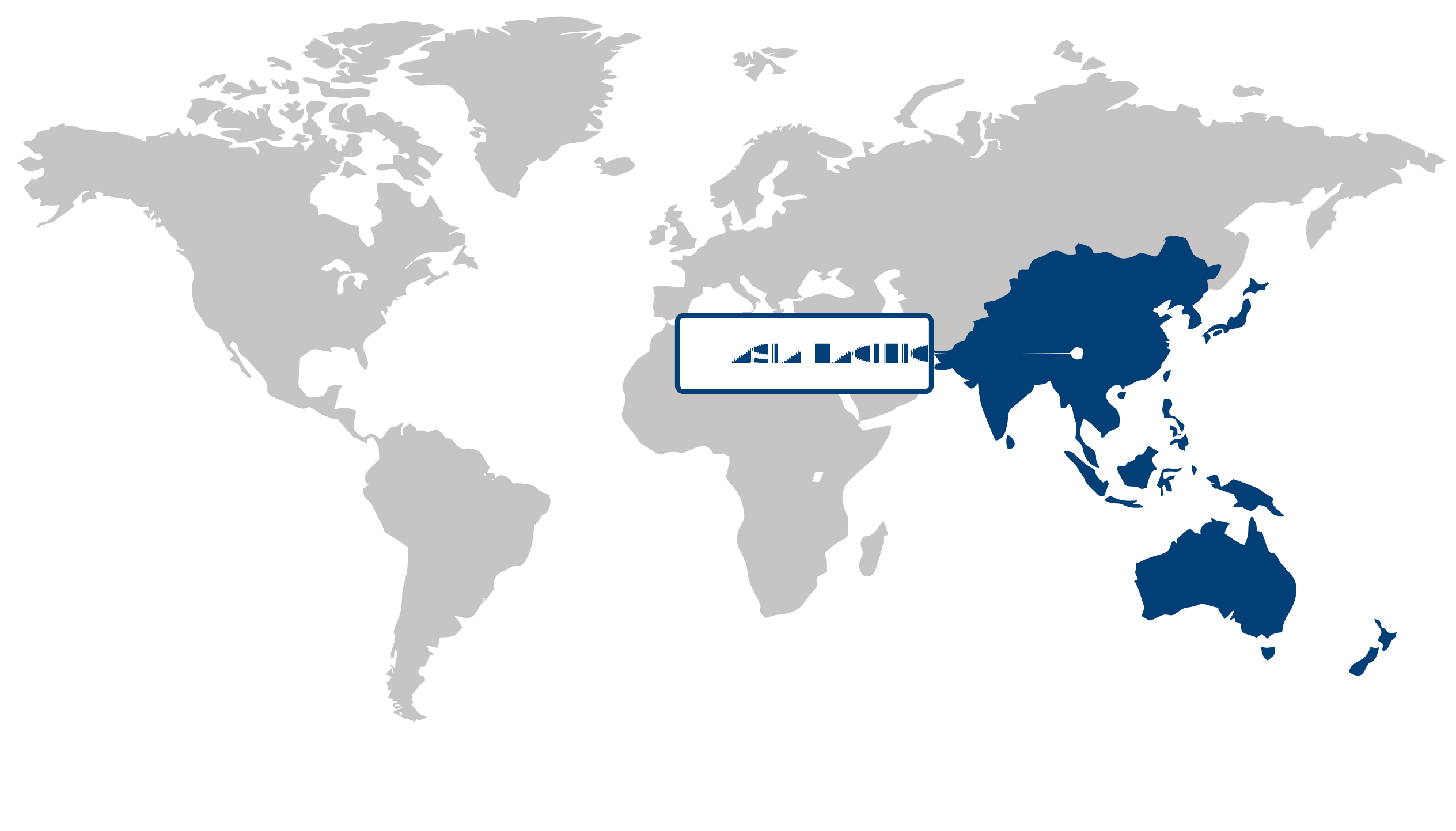
Largest Region
Asia Pacific
41.2% Market Share in 2025
Asia Pacific Market Statistics:
The Asia Pacific region captured over 41.2% of the global amphoteric surfactants market in 2025, establishing itself as both the largest and fastest-growing market, with a notable CAGR of 7.5%. This dominance is attributed to the increasing growth in personal care and cleaning products, driven by evolving consumer preferences towards sustainable and multifunctional products. As consumers in this region prioritize eco-friendly formulations, manufacturers are adapting to these shifts by innovating their product lines to meet sustainability standards, thereby enhancing their competitive edge. The Asia Pacific's robust economic resilience, coupled with a rapidly expanding middle class, has led to increased disposable incomes and spending on personal care and household cleaning, further propelling the demand for amphoteric surfactants. Reports from the Asian Development Bank highlight this trend, underscoring the region's potential for significant opportunities in the amphoteric surfactants market moving forward.
Japan is positioned as a pivotal hub in the Asia Pacific amphoteric surfactants market, driven by its advanced technological landscape and strong consumer demand for high-quality personal care products. The country's regulatory environment encourages innovation, allowing manufacturers to explore new formulations that align with both consumer expectations and environmental standards. For instance, the Ministry of Health, Labour and Welfare has been proactive in promoting the use of biodegradable ingredients, which has spurred local companies like Kao Corporation to enhance their product offerings with eco-friendly surfactants. This strategic focus not only meets domestic needs but also positions Japan as a leader in exporting innovative amphoteric surfactants to other markets, reinforcing the region's overall growth.
China, as a major player in the Asia Pacific amphoteric surfactants market, is experiencing a surge in demand driven by its booming personal care and cleaning sectors. The country's rapid urbanization and changing lifestyles are propelling consumers towards premium products that feature effective and safe ingredients. The National Development and Reform Commission has emphasized the importance of sustainable practices, prompting local manufacturers such as Procter & Gamble (China) to invest in environmentally friendly surfactant technologies. This alignment of consumer trends with regulatory support not only enhances the competitive landscape within China but also contributes to the broader regional dynamics of the amphoteric surfactants market, presenting substantial opportunities for growth and innovation.
North America Market Analysis:
North America held a commanding share of the amphoteric surfactants market, underpinned by its robust consumer base and increasing demand for eco-friendly products. The region's significance is amplified by a growing trend towards sustainability, with consumers increasingly favoring biodegradable and non-toxic surfactants in personal care and household products. This shift is driven by heightened awareness of environmental issues and regulatory pressures aimed at reducing harmful chemicals in consumer goods. Companies like BASF and Stepan Company are actively innovating to meet these demands, investing in research and development to create more sustainable amphoteric surfactants. As a result, North America presents substantial opportunities for growth, particularly as brands adapt to these evolving consumer preferences and regulatory landscapes.
In the U.S., the amphoteric surfactants market is characterized by a strong emphasis on innovation and sustainability. The country leads in developing new formulations that cater to the growing demand for environmentally friendly products. For instance, the American Cleaning Institute has reported a significant increase in consumer preference for products that are both effective and sustainable, influencing manufacturers to prioritize the development of greener amphoteric surfactants. Additionally, regulatory bodies like the Environmental Protection Agency are tightening guidelines on chemical usage, prompting companies to invest in cleaner production methods. This focus on sustainability not only enhances brand loyalty but also positions U.S. manufacturers as leaders in the global amphoteric surfactants market. The U.S. market's proactive approach to sustainability and innovation reinforces North America's overall leadership in the amphoteric surfactants sector, creating a fertile ground for investment and growth.
Europe Market Trends:
The amphoteric surfactants market in Europe has maintained a notable presence, driven by a combination of consumer preferences for eco-friendly products and stringent regulatory frameworks aimed at sustainability. This region is significant due to its advanced manufacturing capabilities and a robust demand for amphoteric surfactants in personal care and household cleaning applications. The increasing consumer awareness regarding environmental impact has prompted companies to innovate and adapt their product lines, aligning with sustainability priorities. For instance, the European Chemical Agency (ECHA) has been instrumental in enforcing regulations that promote the use of biodegradable ingredients, thereby influencing market dynamics. As a result, Europe presents substantial opportunities for growth, particularly as companies strive to meet evolving consumer expectations and regulatory demands.
Germany plays a pivotal role in the amphoteric surfactants market, showcasing moderate growth fueled by its strong industrial base and commitment to sustainability. The country has seen a rise in demand for amphoteric surfactants in both personal care and industrial applications, largely driven by consumer trends favoring natural and biodegradable products. Companies like BASF have been at the forefront of this shift, investing in research and development to create innovative surfactant solutions that meet regulatory standards while catering to consumer preferences. This strategic focus not only enhances market competitiveness but also positions Germany as a leader in sustainable surfactant solutions, reinforcing its importance within the European context.
France, similarly, has emerged as a key player in the amphoteric surfactants market, characterized by moderate growth largely influenced by changing consumer behaviors and an emphasis on environmentally friendly products. The French market is increasingly receptive to innovations that align with sustainability goals, as evidenced by the initiatives from companies such as Arkema, which are investing in the development of bio-based surfactants. This alignment with consumer values and regulatory expectations enhances France's competitive landscape, providing opportunities for market expansion. The synergy between consumer demand for sustainable products and the regulatory push for greener alternatives positions France as a critical contributor to the overall growth of the amphoteric surfactants market in Europe.
| Regional Market Attractiveness & Strategic Fit Matrix | |||||
| Parameter | North America | Asia Pacific | Europe | Latin America | MEA |
|---|---|---|---|---|---|
| Innovation Hub | Advanced | Developing | Advanced | Nascent | Nascent |
| Cost-Sensitive Region | Low | Medium | Low | High | High |
| Regulatory Environment | Supportive | Neutral | Restrictive | Neutral | Neutral |
| Demand Drivers | Moderate | Strong | Moderate | Weak | Weak |
| Development Stage | Developed | Developing | Developed | Emerging | Emerging |
| Adoption Rate | Medium | Medium | Medium | Low | Low |
| New Entrants / Startups | Moderate | Moderate | Moderate | Sparse | Sparse |
| Macro Indicators | Strong | Stable | Stable | Weak | Weak |
No card data available for this language/report.
Segment Leadership and Growth Trends
Analysis by Functionality
The amphoteric surfactants market in the detergency segment is projected to hold a commanding 41.2% share in 2025, driven primarily by the increasing cleaning demand across various sectors. This segment leads due to its essential role in formulating effective cleaning products, which are increasingly favored by consumers seeking high-performance solutions. Factors such as heightened awareness of hygiene and sustainability are reshaping consumer preferences, pushing manufacturers to innovate with eco-friendly formulations. Notably, the American Cleaning Institute emphasizes the importance of effective surfactants in meeting consumer expectations. The strategic advantage for established firms lies in their ability to leverage advanced technologies for product development, while emerging players can capitalize on niche markets focused on sustainable cleaning solutions. As the demand for cleanliness continues to rise, this segment is expected to maintain its relevance, supported by ongoing trends in consumer behavior and regulatory standards.
Analysis by Product Type
The amphoteric surfactants market is dominated by the betaine segment, capturing over 49.5% share in 2025, attributed to its versatility in various applications. Betaine's leadership stems from its multifunctional properties, making it a preferred choice in personal care and cleaning products, where consumers increasingly prioritize gentle yet effective formulations. The growing trend towards natural ingredients is also influencing demand, as betaine derived from plant sources aligns with consumer preferences for sustainability. According to the Personal Care Products Council, the shift towards cleaner labels is driving innovation in product formulations. Established companies can leverage their extensive distribution networks to capitalize on this trend, while new entrants have opportunities to introduce specialized products that cater to evolving consumer demands. With the rising focus on personal care, the betaine segment is expected to remain significant, reflecting ongoing shifts in consumer preferences and regulatory developments.
Analysis by Application
In the amphoteric surfactants market, the personal care segment is anticipated to hold a substantial 49.5% share in 2025, fueled by the surging demand for cosmetic products. This segment thrives on the growing consumer inclination towards personal grooming and wellness, which has been further accelerated by the global pandemic. The emphasis on skin-friendly and multifunctional ingredients is driving brands to incorporate amphoteric surfactants, particularly in formulations that enhance product efficacy without compromising safety. The Cosmetic Ingredient Review has highlighted the importance of such ingredients in meeting consumer safety and performance expectations. This presents strategic opportunities for established firms to expand their product lines while enabling emerging players to carve out niches in clean beauty. As consumer interest in personal care continues to evolve, this segment is likely to remain a focal point, driven by innovation and changing market dynamics.
| Report Segmentation | |||
| Segment | Sub-Segment | Largest Segment | Fastest Growing Segment |
|---|---|---|---|
| Product Type | Betaine, Amine Oxide, Amphoacetate, Amphopropionate, Others | ||
| Fuctionality | Detergency, Foaming Agents, Emulsifiers, Wetting Agents | ||
| Application | Personal Care, Homecare, Industrial and Institutional Cleaning, Oil and Gas, Others | ||
 Read our Research Approach
Competitive Landscape and Market Positioning
Company Profile
Business Overview Financial Highlights Product Landscape SWOT Analysis Recent Developments Company Heat Map Analysis

Key players in the amphoteric surfactants market include BASF, Evonik, Clariant, Croda International, Lubrizol, Solvay, Stepan Company, AkzoNobel, Kao Corporation, and Galaxy Surfactants. These companies are recognized for their robust portfolios and innovative approaches, which significantly influence the market landscape. BASF and Evonik, for instance, leverage their extensive research and development capabilities to introduce advanced surfactant solutions that cater to diverse applications. Clariant and Croda International are noted for their commitment to sustainability, integrating eco-friendly practices into their product offerings, thereby enhancing their market positioning and appeal to environmentally conscious consumers. Meanwhile, established players like Lubrizol and Solvay maintain a competitive edge through strategic investments in technology and product development, ensuring their relevance in a rapidly evolving market.
The competitive environment in the amphoteric surfactants market is characterized by a dynamic interplay of strategic initiatives among the top players. Companies are increasingly engaging in collaborative ventures and alliances to enhance their innovation capabilities and expand their market reach. For instance, recent product launches by Stepan Company and AkzoNobel reflect a keen focus on developing specialized surfactants that meet the evolving needs of various industries. Furthermore, players like Kao Corporation and Galaxy Surfactants are actively exploring technological advancements to improve the efficiency and performance of their offerings, thereby reinforcing their positions in the market. These initiatives not only foster competitiveness but also drive innovation, enabling companies to adapt to changing consumer preferences and regulatory landscapes.
Strategic / Actionable Recommendations for Regional Players
In North America, market players are encouraged to explore potential collaborations with local research institutions to bolster their innovation pipelines, particularly in the development of sustainable surfactant solutions that align with regulatory trends. Embracing emerging technologies, such as digitalization in manufacturing processes, can enhance operational efficiencies and product quality. In Asia Pacific, companies should focus on targeting high-growth sub-segments, such as personal care and home care, by leveraging local consumer insights to tailor their product offerings effectively. Engaging in partnerships with regional distributors can further strengthen market presence and facilitate entry into untapped markets. For Europe, fostering alliances with sustainability-focused organizations can enhance brand reputation and appeal, while investing in R&D for biodegradable surfactants can position companies favorably in a market increasingly driven by environmental considerations.
Frequently Asked Questions
How large is the amphoteric surfactants market?
In 2026, the market for amphoteric surfactants is worth approximately USD 5.81 billion.
What is the anticipated CAGR of the amphoteric surfactants industry?
Amphoteric Surfactants Market size is anticipated to rise from USD 5.49 billion in 2025 to USD 10.5 billion by 2035, reflecting a CAGR surpassing 6.7% over the forecast horizon of 2026-2035.
In which region is the amphoteric surfactants industry share the greatest?
Asia Pacific region acquired around 41.2% revenue share in 2025, on account of growth in personal care and cleaning products.
Where has the amphoteric surfactants sector recorded the sharpest year-over-year increase?
Asia Pacific region will expand at over 7.5% CAGR from 2026 to 2035, boosted by increasing consumer goods demand.
How does detergency sub-segment fare in the amphoteric surfactants industry?
Holding 41.2% share in 2025, the success of detergency segment was shaped by cleaning demand drives detergency dominance.
What share does betaine segment hold in the amphoteric surfactants sector as of 2025?
The market share of betaine segment stood at 49.5% in 2025, propelled by versatility drives betaine dominance.
How much is the personal care expected to grow in the amphoteric surfactants industry beyond 2025?
With a share of 49.5% in 2025, personal care segment’s dominance was secured by cosmetic demand drives personal care dominance.
Who holds a significant market share in the amphoteric surfactants landscape?
Top companies in the amphoteric surfactants market comprise BASF (Germany), Evonik (Germany), Clariant (Switzerland), Croda International (UK), Lubrizol (USA), Solvay (Belgium), Stepan Company (USA), AkzoNobel (Netherlands), Kao Corporation (Japan), Galaxy Surfactants (India).
Our Clients


Why Choose Us
Specialized Expertise: Our team comprises industry experts with a deep understanding of your market segment. We bring specialized knowledge and experience that ensures our research and consulting services are tailored to your unique needs.
Customized Solutions: We understand that every client is different. That's why we offer customized research and consulting solutions designed specifically to address your challenges and capitalize on opportunities within your industry.
Proven Results: With a track record of successful projects and satisfied clients, we have demonstrated our ability to deliver tangible results. Our case studies and testimonials speak to our effectiveness in helping clients achieve their goals.
Cutting-Edge Methodologies: We leverage the latest methodologies and technologies to gather insights and drive informed decision-making. Our innovative approach ensures that you stay ahead of the curve and gain a competitive edge in your market.
Client-Centric Approach: Your satisfaction is our top priority. We prioritize open communication, responsiveness, and transparency to ensure that we not only meet but exceed your expectations at every stage of the engagement.
Continuous Innovation: We are committed to continuous improvement and staying at the forefront of our industry. Through ongoing learning, professional development, and investment in new technologies, we ensure that our services are always evolving to meet your evolving needs.
Value for Money: Our competitive pricing and flexible engagement models ensure that you get maximum value for your investment. We are committed to delivering high-quality results that help you achieve a strong return on your investment.
Select Licence Type

