



Animal Antimicrobial and Antibiotics Market Size & Growth Forecast 2026–2035, By Segments (Type, Livestock), Regional Demand Trends (North America, Asia Pacific, Europe), Key Country Insights (U.S., Japan, South Korea, Germany, France, Italy), and Competitive Landscape
Market Size and Growth Outlook
Base Year Value (2025)
USD 741.54 Million
CAGR (2026-2035)
3.6%
Forecast Year Value (2035)
USD 1.06 Billion

Historical Data Period
2022-2025

Largest Region
Europe

Forecast Period
2026-2035
Animal Antimicrobial and Antibiotics Market Intelligence Snapshot:
-
Regional Market Dynamics:
- Europe captured a 36.04% market share in 2025, supported by structured veterinary care, regulated livestock health practices, and consistent demand across intensive commercial farming operations.
- Asia Pacific is projected to grow at a 4.1% CAGR as commercial livestock production expands and modern farming practices increase demand for structured veterinary disease management solutions.
-
Segment Momentum:
- Antibiotics held a 58.8% share in 2025 due to their established role in veterinary treatment protocols, routine livestock health management, and widespread purchasing across commercial farming operations.
- Poultry is both the largest and fastest-growing livestock segment, holding a 42.4% share in 2025 as intensive production requires consistent disease management to maintain flock health and productivity.
-
Market Expansion Drivers:
- Rising global meat consumption increasing livestock density and antimicrobial usage demand.
- Growing antibiotic resistance concerns driving stricter regulations and controlled usage practices.
- Shift toward vaccines and probiotics reducing dependency on conventional antibiotics in livestock.
-
Leading Market Participants:
Leading companies in the animal antimicrobial and antibiotics market include Zoetis Inc. (United States), Elanco Animal Health Incorporated (United States), Virbac S.A. (France), Vetoquinol S.A. (France), Boehringer Ingelheim International GmbH (Germany), Ceva Santé Animale (France), Dechra Pharmaceuticals PLC (United Kingdom), Neogen Corporation (United States), Phibro Animal Health Corporation (United States), HIPRA, S.A. (Spain).
Global Market Forecast Snapshot:
-
Market Outlook:
- 2025 Market Size: USD 741.54 Million
- 2026 Market Size: USD 15.2 billion
- Projected Market Size: USD 1.06 Billion by 2035
- Growth Forecasts: 3.6% CAGR (2026-2035)
-
Regional and Segment Outlook:
- Leading Regional Market: Europe
- High-Growth Regional Hub: Asia Pacific
- Core Revenue Segment: Antibiotics (Type) | Poultry (Livestock)
- Emerging Opportunity Segment: Antimicrobial (Type) | Poultry (Livestock)
Market Growth Drivers and Industry Trends
Rising global meat consumption increasing livestock density and antimicrobial usage demandAs meat consumption rises, producers intensify poultry, swine, and cattle operations to improve output per unit of land, labor, and feed, which raises stocking density and increases disease transmission risk. That operating environment supports demand for the animal antimicrobial and antibiotics market because farmers and integrators rely on therapeutic and preventive treatments to limit production losses, protect feed conversion efficiency, and maintain delivery schedules to processors and retailers. The effect is especially visible in large-scale commercial systems, where even short disease outbreaks can disrupt herd performance and create immediate procurement needs for broad-spectrum and species-specific anti-infective products.
Growing antibiotic resistance concerns driving stricter regulations and controlled usage practices
Heightened concern over antibiotic resistance is changing purchasing and prescribing behavior in the animal antimicrobial and antibiotics market by shifting demand away from routine, unmanaged use toward products and treatment protocols that can withstand tighter oversight. Regulators, veterinarians, and food supply companies are placing greater emphasis on prescription control, withdrawal compliance, residue monitoring, and documented therapeutic need, which favors manufacturers with strong regulatory capabilities, approved formulations, and established stewardship support. In practice, this does not simply suppress usage; it reshapes product mix, channel control, and competitive positioning as livestock producers move toward more targeted administration under formal animal health management programs.
Shift toward vaccines and probiotics reducing dependency on conventional antibiotics in livestock
A broader move toward vaccines and probiotics is altering treatment economics in the animal antimicrobial and antibiotics market by reducing reliance on conventional antibiotics for routine disease prevention and growth-related management. Producers are adopting preventive health strategies that improve gut health, immunity, and flock or herd resilience before infections escalate, which lowers demand for repeated mass-medication approaches in several intensive livestock systems. This trend is influencing market adoption toward more selective antibiotic use, with sales increasingly tied to acute treatment needs, combination herd-health programs, and products that fit alongside non-antibiotic interventions rather than serving as the default line of defense.
| Growth Driver Assessment Framework | |||||
| Growth Driver | Impact On CAGR | Regulatory Influence | Geographic Relevance | Adoption Rate | Impact Timeline |
|---|---|---|---|---|---|
| Rising livestock population & zoonotic disease prevention | 1.40% | Short term (≤ 2 yrs) | Asia Pacific, North America (spillover: Europe) | High | Fast |
| Intensification of animal protein production systems | 1.20% | Medium term (2–5 yrs) | Latin America, Asia Pacific (spillover: Europe) | Medium | Moderate |
| Development of alternatives & stewardship programs | 1.00% | Long term (5+ yrs) | Europe, North America (spillover: Asia Pacific) | High | Slow |
| Rising global meat consumption increasing livestock density and antimicrobial usage demand | 2.20% | High | Asia Pacific, Latin America | High | Near Term |
| Growing antibiotic resistance concerns driving stricter regulations and controlled usage practices | 2.00% | High | North America, Europe | High | Mid Term |
| Shift toward vaccines and probiotics reducing dependency on conventional antibiotics in livestock | 1.50% | Moderate | Europe, Asia Pacific | Emerging | Long Term |
Unlock insights tailored to your business with our bespoke market research solutions - Click to get your customized report now!
Regional Demand Dynamics
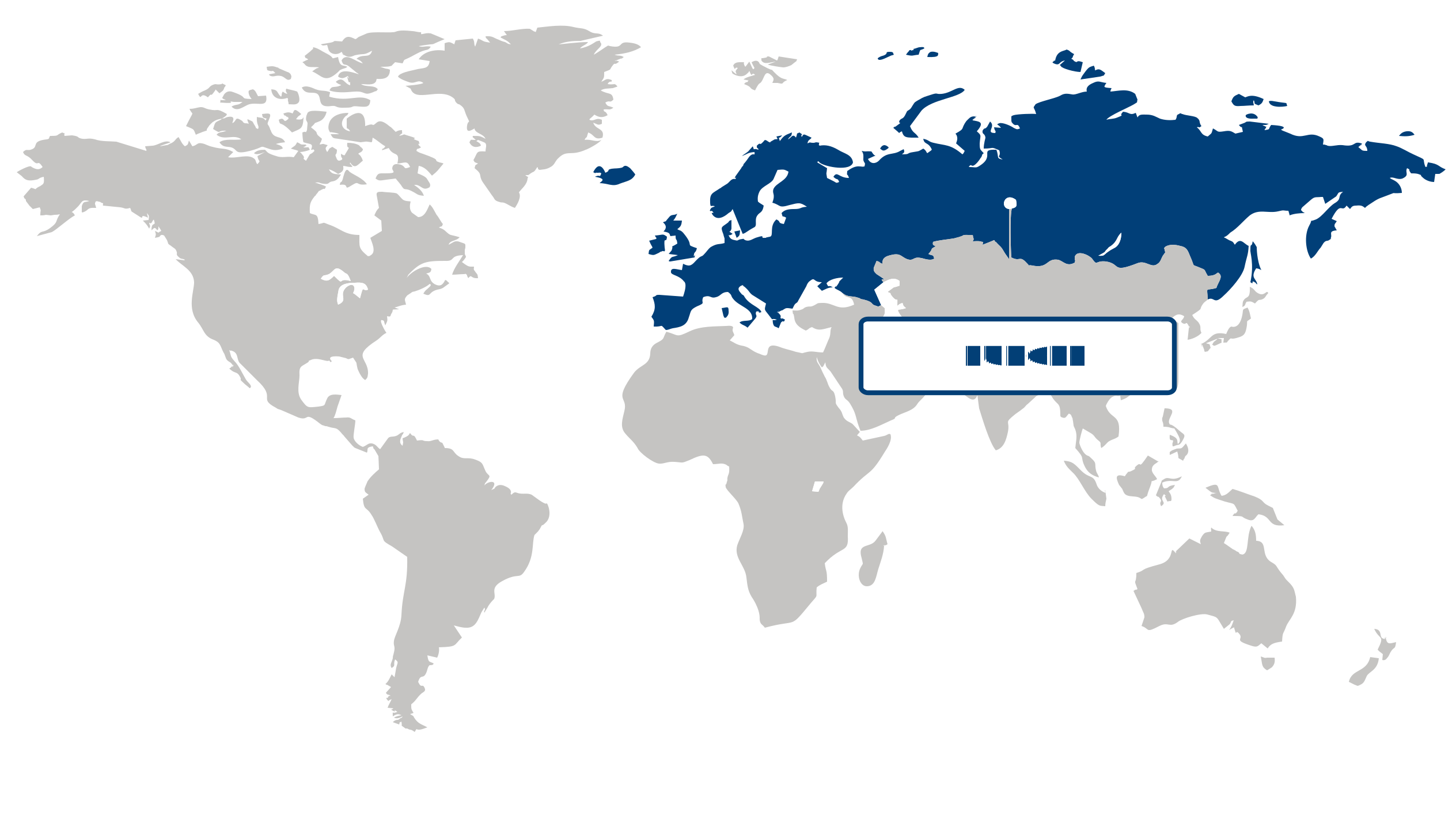
Largest Region
Europe
36.04% Market Share in 2025
Europe held a 36.04% share of the animal antimicrobial and antibiotics market in 2025, bolstered by its well-established livestock production systems, structured veterinary care networks, and consistent use of regulated animal health products across commercial farming operations. The region’s leadership is underpinned by mature animal husbandry practices in which disease prevention, herd health management, and productivity control are closely tied to veterinary oversight and formal treatment protocols. This creates steady demand through organized procurement channels, particularly in intensive poultry, swine, and cattle operations where antimicrobial use is embedded in day-to-day farm health management.
Asia Pacific is projected to expand at a 4.1% CAGR over the forecast period, with growth in the animal antimicrobial and antibiotics market being propelled by rising commercial livestock production and the ongoing modernization of animal farming practices across the region. As producers scale operations to meet growing demand for meat, दूध, and other animal-derived products, the need for more reliable disease control and treatment is increasing in practical farm settings. Adoption is accelerating as larger farms and integrated producers place greater emphasis on maintaining animal health, reducing infection-related losses, and improving output consistency through more structured veterinary intervention.
| Regional Market Attractiveness & Strategic Fit Matrix | |||||
| Parameter | North America | Asia Pacific | Europe | Latin America | MEA |
|---|---|---|---|---|---|
| Innovation Hub | Advanced | Developing | Advanced | Developing | Developing |
| Cost-Sensitive Region | Low | High | Medium | High | High |
| Regulatory Environment | Restrictive | Neutral | Restrictive | Neutral | Neutral |
| Demand Drivers | Strong | Strong | Strong | Moderate | Moderate |
| Development Stage | Developed | Developing | Developed | Developing | Emerging |
| Adoption Rate | High | High | High | Medium | Medium |
| New Entrants / Startups | Moderate | Moderate | Moderate | Sparse | Sparse |
| Macro Indicators | Strong | Strong | Stable | Stable | Stable |
Key Country Insights
The U.S. emphasizes responsible antimicrobial use alongside productivity improvements in commercial livestock systems. Investment in veterinary pharmaceuticals, surveillance programs, and alternatives to conventional antibiotics continues to shape purchasing priorities across the animal antimicrobial and antibiotics market.
Japan focuses on high-quality veterinary medicines that support disease prevention and controlled antimicrobial application. The animal antimicrobial and antibiotics market in Japan benefits from strong quality standards and increasing adoption of advanced livestock health management practices.
South Korea's intensive livestock sector requires effective antimicrobial solutions combined with enhanced biosecurity measures. Market participants increasingly develop products that align with disease management programs while supporting responsible antibiotic use across commercial farms.
Germany prioritizes antimicrobial stewardship by encouraging targeted therapies and veterinary oversight. Demand in Germany increasingly favors products that support regulatory compliance while maintaining animal health and production efficiency across livestock operations.
France promotes balanced livestock health strategies that combine prudent antibiotic use with preventive animal care. The market increasingly values veterinary products that improve herd health while supporting sustainability objectives within the agricultural sector.
Italy's animal antimicrobial and antibiotics market is shaped by the needs of diverse livestock producers seeking reliable disease management solutions. Manufacturers focus on products that improve treatment effectiveness while aligning with evolving veterinary prescribing practices.
Segment Leadership and Growth Trends
Antibiotics held the leading position in the animal antimicrobial and antibiotics market in 2025, accounting for a 58.8% share. This leadership is maintained through their entrenched role in routine veterinary care, where they remain widely used for treating common bacterial infections across commercial livestock systems. Demand stays concentrated in this segment because antibiotics are already embedded in established treatment protocols, farm management practices, and animal health purchasing patterns, which helps preserve their dominant share in the market.
Antimicrobial is emerging as the fastest-growing segment in the animal antimicrobial and antibiotics market as producers and animal health stakeholders place greater emphasis on broader infection control strategies and more targeted disease management approaches. Its momentum is being supported by evolving livestock health requirements, where the need for flexible therapeutic options is increasing relative to conventional antibiotic-led usage. This shift is helping the antimicrobial segment expand faster as end users respond to changing treatment priorities across intensive animal production environments.
Livestock Segment Analysis: Poultry (Largest & Fastest-Growing Segment)
Within the animal antimicrobial and antibiotics market, poultry represented a 42.4% share in 2025, making it both the largest and fastest-growing livestock segment. its position is closely tied to the scale and intensity of poultry production, where disease transmission risks are heightened by dense rearing conditions and short production cycles that require consistent health management. The same operating environment continues to support strong growth momentum, as poultry producers remain highly dependent on effective antimicrobial and antibiotic use to maintain flock health, limit productivity losses, and sustain efficient output in large-volume commercial systems.
| Report Segmentation | |||
| Segment | Sub-Segment | Largest Segment | Fastest Growing Segment |
|---|---|---|---|
| Type | Antimicrobial, Antibiotics | Antibiotics | Antimicrobial |
| Livestock | Cattle, Pork, Poultry, Aquaculture, Others | Poultry | Poultry |
 Read our Research Approach
Competitive Landscape and Market Positioning
Company Profile
Business Overview Financial Highlights Product Landscape SWOT Analysis Recent Developments Company Heat Map Analysis

1. Zoetis Inc. (United States)
2. Elanco Animal Health Incorporated (United States)
3. Virbac S.A. (France)
4. Vetoquinol S.A. (France)
5. Boehringer Ingelheim International GmbH (Germany)
6. Ceva Santé Animale (France)
7. Dechra Pharmaceuticals PLC (United Kingdom)
8. Neogen Corporation (United States)
9. Phibro Animal Health Corporation (United States)
10. HIPRA S.A. (Spain)
Evolving veterinary health regulations are shaping the animal antimicrobial and antibiotics market, with increasing research focused on responsible antimicrobial use, advanced therapeutic formulations, and disease prevention strategies. Continuous innovation supports improved animal health while addressing antimicrobial stewardship objectives.
Industry Development/News
| Company Name | Date | Key Development |
|---|---|---|
| Dechra Veterinary Products | Nov-25 | Dechra Veterinary Products announced the upcoming U.S. launch of Solovecin (cefovecin sodium), a long-acting injectable antibiotic for treating skin infections in dogs and cats. The product is designed as a single-dose treatment option, improving ease of administration and compliance in companion animal care, and expanding Dechra’s antibiotic portfolio in veterinary therapeutics. |
| Ceva Santé Animale | Feb-25 | Ceva Santé Animale launched Kesium, an oral chewable antibiotic combining amoxicillin and clavulanate for treating skin and soft tissue infections in dogs and cats. The formulation, positioned as bioequivalent to Clavamox, aims to improve palatability and treatment adherence, strengthening Ceva’s presence in companion animal antibiotic therapies. |
| Elanco Animal Health | Feb-25 | Elanco Animal Health introduced Pradalex (pradofloxacin injection) for bovine respiratory disease and swine respiratory disease treatment. The FDA-approved injectable antibiotic represents the first new molecule in this category for roughly two decades, expanding Elanco’s livestock respiratory disease portfolio and enhancing its competitive positioning in veterinary antimicrobials. |
| Elanco Animal Health | Sep-24 | Elanco Animal Health received FDA approval for Zenrelia, an oral treatment for itching and atopic dermatitis in dogs over 12 months of age. This approval broadened Elanco’s canine dermatology portfolio and strengthened its companion animal therapeutics offering, contributing to portfolio diversification beyond antibiotics. |
Frequently Asked Questions
What is the market valuation of animal antimicrobial and antibiotics?
In 2026 the market for animal antimicrobial and antibiotics is worth approximately USD 764.23 million.
What are the growth projections for the animal antimicrobial and antibiotics industry?
Animal Antimicrobial And Antibiotics Market size is anticipated to rise from USD 741.54 million in 2025 to USD 1.06 billion by 2035 reflecting a CAGR surpassing 3.6% over the forecast horizon of 2026-2035.
How are regulatory pressures influencing treatment practices in the animal antimicrobial and antibiotics market?
Stricter regulation and antibiotic resistance concerns are shifting usage toward controlled, documented treatments. Farmers and veterinarians increasingly follow formal protocols, favoring targeted antimicrobial use and reducing routine, unmanaged antibiotic administration across livestock systems.
What is driving the shift from antibiotics toward broader antimicrobial strategies in livestock management?
Livestock producers are adopting broader antimicrobial approaches as disease management becomes more complex in intensive farming environments. These solutions offer more flexible treatment strategies aligned with evolving herd health requirements and changing infection control priorities.
Why do antibiotics dominate the animal antimicrobial and antibiotics market?
Antibiotics held a 58.8% share in 2025 due to their established role in veterinary treatment protocols, routine livestock health management, and widespread purchasing across commercial farming operations.
Which livestock segment is expanding the fastest in the animal antimicrobial and antibiotics market?
Poultry is both the largest and fastest-growing livestock segment, holding a 42.4% share in 2025 as intensive production requires consistent disease management to maintain flock health and productivity.
Why is Europe the leading region in the animal antimicrobial and antibiotics market?
Europe captured a 36.04% market share in 2025, supported by structured veterinary care, regulated livestock health practices, and consistent demand across intensive commercial farming operations.
How is Asia Pacific supporting future growth in the animal antimicrobial and antibiotics market?
Asia Pacific is projected to grow at a 4.1% CAGR as commercial livestock production expands and modern farming practices increase demand for structured veterinary disease management solutions.
Which companies dominate the animal antimicrobial and antibiotics landscape?
Leading companies in the animal antimicrobial and antibiotics market include Zoetis Inc. (United States), Elanco Animal Health Incorporated (United States), Virbac S.A. (France), Vetoquinol S.A. (France), Boehringer Ingelheim International GmbH (Germany), Ceva Santé Animale (France), Dechra Pharmaceuticals PLC (United Kingdom), Neogen Corporation (United States), Phibro Animal Health Corporation (United States), HIPRA, S.A. (Spain).
Our Clients


Why Choose Us
Specialized Expertise: Our team comprises industry experts with a deep understanding of your market segment. We bring specialized knowledge and experience that ensures our research and consulting services are tailored to your unique needs.
Customized Solutions: We understand that every client is different. That's why we offer customized research and consulting solutions designed specifically to address your challenges and capitalize on opportunities within your industry.
Proven Results: With a track record of successful projects and satisfied clients, we have demonstrated our ability to deliver tangible results. Our case studies and testimonials speak to our effectiveness in helping clients achieve their goals.
Cutting-Edge Methodologies: We leverage the latest methodologies and technologies to gather insights and drive informed decision-making. Our innovative approach ensures that you stay ahead of the curve and gain a competitive edge in your market.
Client-Centric Approach: Your satisfaction is our top priority. We prioritize open communication, responsiveness, and transparency to ensure that we not only meet but exceed your expectations at every stage of the engagement.
Continuous Innovation: We are committed to continuous improvement and staying at the forefront of our industry. Through ongoing learning, professional development, and investment in new technologies, we ensure that our services are always evolving to meet your evolving needs.
Value for Money: Our competitive pricing and flexible engagement models ensure that you get maximum value for your investment. We are committed to delivering high-quality results that help you achieve a strong return on your investment.
Select Licence Type

