Animal Feed Insect Protein Market Size & Growth Forecast 2027–2036, By Segments (Livestock, Insect Type), Regional Demand Trends (North America, Asia Pacific, Europe), Key Country Insights (U.S., Japan, South Korea, Germany, France, Italy), and Competitive Landscape
Jump to Content
Market Size and Growth Outlook
Animal Feed Insect Protein Market size was worth USD 703.86 Million in 2026 and is poised to grow at 7.74% CAGR between 2027 and 2036, crossing USD 1.48 Billion by 2036. The industry revenue for 2027 is assessed at USD 750.1 Million.
Get more details on this report
Request Free Sample ReportAnimal Feed Insect Protein Market Intelligence Snapshot
Regional Market Dynamics
- Europe leads through strong demand for sustainable livestock and aquaculture feed, supportive regulatory developments, circular economy awareness, and investment in insect farming infrastructure.
- North America is expected to grow fastest as producers seek sustainable feed alternatives, supported by advances in insect farming, processing capabilities, and expanding aquaculture and pet food applications.
Segment Momentum
- Aquaculture accounted for 34.13% of the market in 2026 because insect protein offers a sustainable, nutrient-rich alternative that supports healthy growth and feed efficiency in farmed fish and shrimp.
- The black soldier fly held a 31.98% share in 2026 and is the fastest-growing insect type due to its efficient conversion of organic by-products into high-quality protein and its suitability for scalable, sustainable feed production.
Market Expansion Drivers
- Rising investment in insect protein production scaling alternative feed supply chains
- Low environmental footprint and high nutrition profile driving feed substitution demand
- Expanding regulatory approval for novel proteins supporting livestock feed diversification
Leading Market Participants
- Prominent players in the animal feed insect protein market include Ynsect SAS (France), Protix B.V. (Netherlands), Innovafeed S.A. (France), Entobel Pte. Ltd. (Singapore), EnviroFlight LLC (United States), NextProtein SAS (France), Hexafly Biotech Ltd. (Ireland), HiProMine S.A. (Poland), Nutrition Technologies (Malaysia), Beta Hatch Inc. (United States)
Global Market Forecast Snapshot
Market Outlook
- 2026 Market Size: USD 703.86 Million
- 2027 Estimated Market Size: USD 750.1 Million
- Projected Market Size: USD 1.48 Billion by 2036
- Growth Forecast: 7.74% CAGR (2027-2036)
Regional and Segment Outlook
- Leading Regional Market: Europe
- High-Growth Regional Hub: North America
- Core Revenue Segment: Aquaculture (Livestock) | Black Soldier Fly (Insect Type)
- Emerging Opportunity Segment: Aquaculture (Livestock) | Black Soldier Fly (Insect Type)
Market Growth Drivers and Industry Trends
Rising investment in insect protein production scaling alternative feed supply chains
Increasing capital investment in insect farming facilities, processing technologies, and commercial-scale production capacity will drive the animal feed insect protein market growth by strengthening the availability of alternative protein ingredients for feed manufacturers. Expanded production infrastructure improves supply consistency and supports cost optimization, encouraging wider adoption across livestock, aquaculture, and poultry nutrition. Investments in automated rearing systems and advanced processing methods also enhance production efficiency while enabling manufacturers to meet quality requirements for large-volume feed applications.
Low environmental footprint and high nutrition profile driving feed substitution demand
Sustainability considerations are reshaping feed ingredient selection, and the animal feed insect protein market is benefiting from growing interest in protein sources that combine nutritional value with lower environmental impact. Insect-derived proteins offer balanced amino acid profiles and are increasingly viewed as viable substitutes for conventional feed ingredients in animal diets. Their efficient resource utilization and reduced dependence on traditional agricultural inputs align with the evolving priorities of feed producers seeking environmentally responsible solutions without compromising nutritional performance.
Expanding regulatory approval for novel proteins supporting livestock feed diversification
Broader regulatory acceptance of insect-based proteins is creating favorable conditions that will boost the animal feed insect protein market demand across multiple animal nutrition segments. As authorities establish clearer frameworks for the use of novel feed ingredients, livestock producers and feed manufacturers gain greater confidence in incorporating insect proteins into commercial formulations. Regulatory clarity also encourages product innovation, facilitates market entry for new suppliers, and supports the diversification of feed ingredient portfolios to improve supply chain resilience.
| Growth Driver | Impact on CAGR | Regulatory Influence | Geographic Relevance | Adoption Rate | Impact Timeline |
|---|---|---|---|---|---|
| Rising investment in insect protein production scaling alternative feed supply chains | 2% | Moderate | Europe, Asia Pacific | Medium | Mid Term |
| Low environmental footprint and high nutrition profile driving feed substitution demand | 1.8% | High | Europe, North America | High | Near Term |
| Expanding regulatory approval for novel proteins supporting livestock feed diversification | 1.5% | High | Europe, North America | Emerging | Long Term |
Unlock insights tailored to your business with our bespoke market research solutions.
Click to get your customized report now.
Regional Demand Dynamics
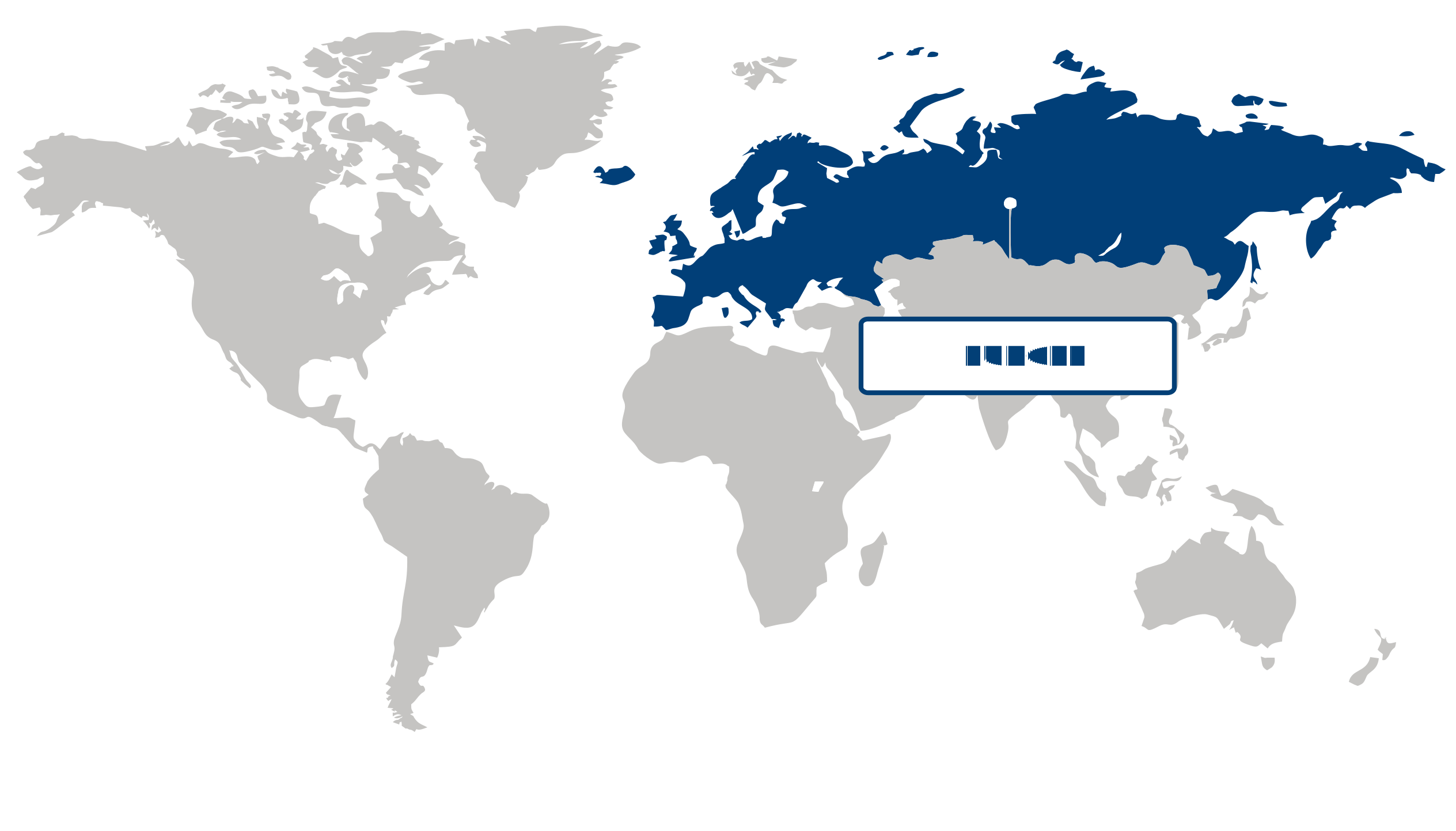
Europe (Largest Region)
Europe held the largest share of the animal feed insect protein market in 2026, supported by strong interest in sustainable livestock production and alternative feed ingredients. The region has placed increasing emphasis on reducing the environmental impact of animal agriculture, creating favorable conditions for insect-based proteins as resource-efficient feed inputs. Growing demand for sustainable aquaculture and livestock nutrition is encouraging feed producers to explore alternative protein sources that can complement conventional ingredients. Regulatory developments supporting the use of approved insect-derived feed materials, together with increasing awareness of circular economy principles, are also contributing to market development. Investments in insect farming and feed processing infrastructure are further strengthening the regional ecosystem.
North America (Fastest-Growing Region)
North America is expected to register the fastest growth in the animal feed insect protein market as livestock and aquaculture producers increasingly explore sustainable alternatives to conventional feed proteins. Growing attention to feed efficiency, resource conservation, and environmentally responsible agricultural practices is encouraging interest in insect-derived ingredients. Advances in insect farming technologies and improvements in processing capabilities are helping increase the commercial viability of these products. In addition, expanding demand for sustainable pet food and aquaculture feed is widening the potential application base, while increasing consumer and industry awareness of circular food production is supporting broader acceptance of insect protein as a feed ingredient.
| Parameter | North America | Asia Pacific | Europe | Latin America | MEA |
|---|---|---|---|---|---|
| Innovation HubiScaleNascentDeveloping Advanced | |||||
| Cost-Sensitive RegioniScaleLowMedium High | |||||
| Regulatory EnvironmentiScaleRestrictiveNeutral Supportive | |||||
| Demand DriversiScaleWeakModerate Strong | |||||
| Development StageiScaleEmergingDeveloping Developed | |||||
| Adoption RateiScaleLowMedium High | |||||
| New Entrants / StartupsiScaleSparseModerate Dense | |||||
| Macro IndicatorsiScaleWeakStable Strong |
Key Country Insights
United States 🇺🇸
Sustainable Feed DiversificationThe U.S. expands the use of insect protein in animal feed as producers seek sustainable alternatives to conventional protein ingredients. Feed manufacturers increasingly evaluate insect-based formulations for aquaculture, poultry, and specialty livestock nutrition.
Germany 🇩🇪
Circular Feed InnovationGermany promotes insect protein within animal feed through circular economy initiatives and resource-efficient production models. German feed companies focus on incorporating sustainable protein ingredients that align with evolving livestock nutrition strategies.
Japan 🇯🇵
Aquaculture Feed EnhancementJapan prioritizes insect protein for aquaculture and specialty animal nutrition where sustainable feed ingredients support production efficiency. Japanese companies continue investing in feed innovation to improve nutritional performance while reducing dependence on traditional protein sources.
South Korea 🇰🇷
Feed Technology AdvancementSouth Korea advances insect protein adoption through innovation in animal nutrition and commercial feed manufacturing. The country encourages development of alternative protein ingredients that improve feed sustainability and production resilience.
France 🇫🇷
Sustainable Livestock NutritionFrance integrates insect protein into livestock and aquaculture feed as sustainability objectives influence ingredient selection. French feed producers increasingly collaborate across the value chain to expand commercially viable insect-based nutrition solutions.
Italy 🇮🇹
Alternative Feed IngredientsItaly explores insect protein to diversify feed formulations for livestock and aquaculture operations. Italian producers focus on balancing nutritional performance, sustainable sourcing, and regulatory compliance as alternative feed ingredients gain wider commercial acceptance.
Animal Feed Insect Protein Market Share (%), by Livestock, 2026
Go beyond the chart, access full insights & data tables
Request Free Sample ReportLivestock Segment Analysis: Aquaculture (Largest & Fastest-Growing Segment)
The animal feed insect protein market was led by the aquaculture segment, accounting for a 34.13% share in 2026, while also emerging as the fastest-growing livestock category. Insect protein is increasingly utilized in aquaculture feed because it provides a sustainable, nutrient-rich alternative to conventional protein sources while supporting healthy growth and feed efficiency in farmed fish and shrimp. Rising expansion of aquaculture production, increasing pressure on traditional marine feed resources, and growing emphasis on environmentally sustainable feed ingredients continue to strengthen the segment's dominant position.
Insect Type Segment Analysis: Black Soldier Fly (Largest & Fastest-Growing Segment)
The animal feed insect protein market was dominated by the black soldier fly segment, which accounted for a 31.98% share in 2026 while also registering as the fastest-growing insect type. Black soldier fly larvae are widely preferred because they efficiently convert organic by-products into high-quality protein and beneficial lipids, making them highly suitable for commercial animal feed production. Their scalable cultivation, favorable nutritional profile, and compatibility with circular economy practices have accelerated industry adoption. Increasing investment in sustainable feed production technologies and rising demand for alternative protein sources are expected to further reinforce the segment's leadership.
| Segment | Sub-Segment | Largest Segment | Fastest Growing |
|---|---|---|---|
| Livestock | Poultry Feed, Swine, Aquaculture, Pet Food, Other | Aquaculture | Aquaculture |
| Insect Type | Black Soldier Fly, Housefly, Crickets, Mealworms, Beetles, Caterpillars, Grasshopper, Locusts, Bees, Wasps & Ants, Scale Insects & True Bugs, Others | Black Soldier Fly | Black Soldier Fly |
Competitive Landscape and Market Positioning
Major players in the animal feed insect protein market:
- Ynsect SAS (France)
- Protix B.V. (Netherlands)
- Innovafeed S.A. (France)
- Entobel Pte. Ltd. (Singapore)
- EnviroFlight LLC (United States)
- NextProtein SAS (France)
- Hexafly Biotech Ltd. (Ireland)
- HiProMine S.A. (Poland)
- Nutrition Technologies (Malaysia)
- Beta Hatch, Inc. (United States)
The animal feed insect protein market is transitioning from an emerging alternative ingredient segment into a more structured competitive environment driven by production efficiency and feed application expertise. Companies are differentiating through advancements in insect cultivation systems, processing methods, and the ability to deliver consistent nutritional profiles for livestock and aquaculture producers. As adoption expands, competitive advantage is increasingly linked to operational scalability, regulatory readiness, and integration into existing feed formulations. Providers capable of demonstrating reliability and sustainability benefits are shaping the direction of the market as traditional feed suppliers evaluate alternative protein sources.
| Company | Market Share | Company Revenue | Revenue CAGR (%) | Product Portfolio | Geographic Presence | Innovation / R&D Focus | Strategic Developments |
|---|---|---|---|---|---|---|---|
| Ynsect SAS (France) | |||||||
| Protix B.V. (Netherlands) | |||||||
| Innovafeed S.A. (France) | |||||||
| Entobel Pte. Ltd. (Singapore) | |||||||
| EnviroFlight LLC (United States) | |||||||
| NextProtein SAS (France) | |||||||
| Hexafly Biotech Ltd. (Ireland) | |||||||
| HiProMine S.A. (Poland) | |||||||
| Nutrition Technologies (Malaysia) | |||||||
| Beta Hatch Inc. (United States) |
Industry Development/News
| Company Name | Date | Key Development |
|---|---|---|
| Tyson Foods, Inc. | Oct-23 | Tyson Foods, Inc. reached an agreement for a strategic, two-fold investment with Protix to support the growth of the emerging insect ingredient industry. This partnership aims to expand the use of insect ingredient solutions to produce efficient and sustainable proteins and lipids for the global food system. |
| Global Bugs | Apr-22 | Global Bugs entered into a partnership with Natural Solutions to develop and market insect-based protein solutions for animal feed. The collaboration focuses on optimizing production processes, formulating feed ingredients, and conducting research to demonstrate the nutritional benefits of insect protein for animals. |
Customize Your Report
Explore examples of how this report can be tailored to different research needs, including custom segments, additional topics or chapters, and related reports. Click a section of the wheel or its numbered marker to explore the available options.
Animal Feed Insect Protein Market — Custom Segments
| Segment | Sub-Segment |
|---|---|
| Protein Form | Insect Meal, Protein Concentrates, Protein Isolates, Protein Hydrolysates |
| Processing Method | Dry Processing, Wet Processing, Fermentation-Based Processing, Enzymatic Processing |
| Distribution Channel | Direct Sales, Feed Ingredient Distributors, Specialized Animal Nutrition Suppliers, Online B2B Channels |
Animal Feed Insect Protein Market — Custom TOC
| Custom Chapter | Chapter Details |
|---|---|
| Insect Protein Feed Adoption Roadmap |
|
| Feed Formulation Economics |
|
| Regulatory Approval Pathways |
|
Need a different cut of the data?
Request Custom ResearchFrequently Asked Questions
What is the current revenue of the animal feed insect protein market?
What is the projected value of the animal feed insect protein industry by 2036?
Why is investment in insect protein production becoming strategically important for feed manufacturers?
How is regulatory approval influencing adoption of insect protein in animal feed?
Why is aquaculture the largest livestock segment in the animal feed insect protein market?
Why is the black soldier fly the fastest-growing insect type in the animal feed insect protein market?
Why does Europe lead the animal feed insect protein market?
How is North America driving faster growth in insect protein adoption?
Which companies are driving growth in the animal feed insect protein landscape?
Our Clients
"The report provided a thorough look at market trends, technological advancements, and the competitive landscape. The depth of insights was really valuable."
ITC Limited
"We would highly recommend Fundamental Business Insights & Consulting to anyone looking for reliable, detailed, and comprehensive market research in the Food industry."
Tyson Foods
"The clarity and presentation of the information were commendable. The report was delivered timely, which made the overall experience smooth and convenient."
Mondelēz International
Our Research Team & Methodology
Every Fundamental Business Insights report is built by a dedicated vertical research team, validated through a structured primary-and-secondary methodology, and reviewed for accuracy before it reaches you.
This report was prepared by the Food & Beverage Research Team at Fundamental Business Insights, a dedicated research group specializing in the global food, beverage, ingredients, and food processing industries. Our analysts continuously monitor evolving consumer preferences, product innovation, ingredient developments, food safety regulations, manufacturing technologies, supply chain dynamics, pricing trends, sustainability initiatives, and changing retail and foodservice landscapes to deliver timely and reliable market intelligence. The research is developed using a structured methodology that combines primary discussions with food manufacturers, ingredient suppliers, distributors, retailers, industry experts, and other key stakeholders, along with company annual reports, regulatory publications, government trade statistics, food safety authorities, industry associations, technical publications, and other authoritative secondary sources. Market estimates are validated through multiple research techniques, including top-down and bottom-up analysis, before undergoing an internal quality review to ensure accuracy, consistency, and methodological integrity prior to publication.
Delivery
Published
Available
Support
- Market Size & Forecast
- Market Segmentation
- Regional Analysis
- Growth Drivers & Challenges
- Market Dynamics
- Competitive Landscape
- Company Profiles
- Competitive Benchmarking
- Mergers & Acquisitions
- Market Share Analysis or Key Company Strategies
- Value Chain Analysis
- Porter's Five Forces
- PESTLE Analysis
- Pricing Trends
- Supply-Demand Analysis
- Technology Landscape
- Regulatory Landscape
- Investment & Funding Landscape
- Emerging Opportunities
- Future Market Outlook