Antibacterial Glass Market Size & Growth Forecast 2027–2036, By Segments (Product, Application), Regional Demand Trends (North America, Asia Pacific, Europe), Key Country Insights (U.S., Japan, South Korea, Germany, France, Italy), and Competitive Landscape
Jump to content
Market Size and Growth Outlook
Antibacterial Glass Market size was more than USD 340.29 million in 2026 and is set to grow at a 7.13% CAGR between 2027 and 2036, crossing USD 677.58 million by 2036. The industry revenue for 2027 is calculated at USD 360.71 million.
Get more details on this report
Request Free Sample ReportAntibacterial Glass Market Intelligence Snapshot
Regional Market Dynamics
- Europe leads due to strong adoption in healthcare and public infrastructure, strict hygiene requirements, and a mature glass manufacturing base supporting consistent supply and specification demand.
- Asia Pacific is expanding at an 8.59% CAGR, driven by healthcare expansion, urban infrastructure growth, and rising adoption of antimicrobial surfaces across hospitals, transport hubs, and commercial buildings.
Segment Momentum
- Silver leads with 85.88% share in 2026 due to strong commercial acceptance and proven antimicrobial performance suitable for hygiene-focused applications across environments.
- Military is fastest-growing due to increasing hygiene requirements in controlled environments where durable antimicrobial surfaces are needed for shared operational and medical settings.
Market Expansion Drivers
- Rising healthcare hygiene standards driving adoption of antimicrobial glass in hospitals and clinics.
- Increasing consumer electronics usage boosting demand for antimicrobial coated glass surfaces.
- Expansion of smart public infrastructure integrating antimicrobial materials in transport and education facilities.
Leading Market Participants
- Top companies in the antibacterial glass market include AGC Inc. (Japan), Corning Incorporated (United States), SCHOTT AG (Germany), Saint-Gobain S.A. (France), Nippon Sheet Glass Co., Ltd. (Japan), Guardian Industries Holdings (United States), Ishizuka Glass Co., Ltd. (Japan), Kastus Technologies Ltd. (Ireland), Smartglass International Ltd. (Ireland), Sumita Optical Glass, Inc. (Japan).
Global Market Forecast Snapshot
Market Outlook
- 2026 Market Size: USD 340.29 million
- 2027 Estimated Market Size: USD 360.71 million.
- Projected Market Size: USD 677.58 million by 2036
- Growth Forecast: 7.13% CAGR (2027-2036)
Regional and Segment Outlook
- Leading Regional Market: Europe
- High-Growth Regional Hub: Asia Pacific
- Core Revenue Segment: Silver (Product) | Hospitals (Application)
- Emerging Opportunity Segment: Silver (Product) | Military (Application)
Market Growth Drivers and Industry Trends
Rising healthcare hygiene standards driving adoption of antimicrobial glass in hospitals and clinics
Stricter hygiene expectations across healthcare facilities are strengthening the role of antimicrobial surfaces in infection-control environments, and the antibacterial glass market will benefit from increasing adoption in hospitals, clinics, treatment rooms, and other clinical settings. Antimicrobial glass can be incorporated into partitions, doors, windows, displays, and frequently touched surfaces, providing material-level protection alongside routine cleaning protocols. As healthcare providers place greater emphasis on reducing surface-associated contamination and maintaining hygienic environments, demand is supported by the need for durable materials that combine functional performance with ease of maintenance.
Increasing consumer electronics usage boosting demand for antimicrobial coated glass surfaces
The growing penetration of smartphones, tablets, touchscreens, smart appliances, and other frequently handled devices is creating additional opportunities for antimicrobial surface technologies, with the antibacterial glass market gaining from greater demand for coated glass components. Consumer electronics are routinely exposed to repeated physical contact, making surface hygiene an increasingly relevant consideration in product design. Antimicrobial coatings can be applied to display covers and other glass interfaces while preserving the functional role of the surface, supporting broader integration of hygienic features into electronic devices and touch-enabled products.
Expansion of smart public infrastructure integrating antimicrobial materials in transport and education facilities
Smart infrastructure projects are increasingly incorporating advanced materials that address both functionality and public-use requirements, creating opportunities for antimicrobial glass across transportation hubs, schools, universities, and other shared facilities. The antibacterial glass market can gain from the integration of antimicrobial materials into partitions, information displays, doors, and other glass surfaces exposed to frequent public interaction. As transport and education infrastructure becomes more digitally enabled and heavily utilized, material choices that support cleaner shared environments can become an important consideration in facility design and modernization.
| Growth Driver | Impact on CAGR | Regulatory Influence | Geographic Relevance | Adoption Rate | Impact Timeline |
|---|---|---|---|---|---|
| Rising healthcare hygiene standards driving adoption of antimicrobial glass in hospitals and clinics | 2.20% | High | North America, Europe, Asia Pacific | High | Near Term |
| Increasing consumer electronics usage boosting demand for antimicrobial coated glass surfaces | 1.80% | Moderate | Asia Pacific, North America | High | Near Term |
| Expansion of smart public infrastructure integrating antimicrobial materials in transport and education facilities | 1.50% | Moderate | Asia Pacific, Europe | Emerging | Mid Term |
Unlock insights tailored to your business with our bespoke market research solutions.
Click to get your customized report now.
Regional Demand Dynamics
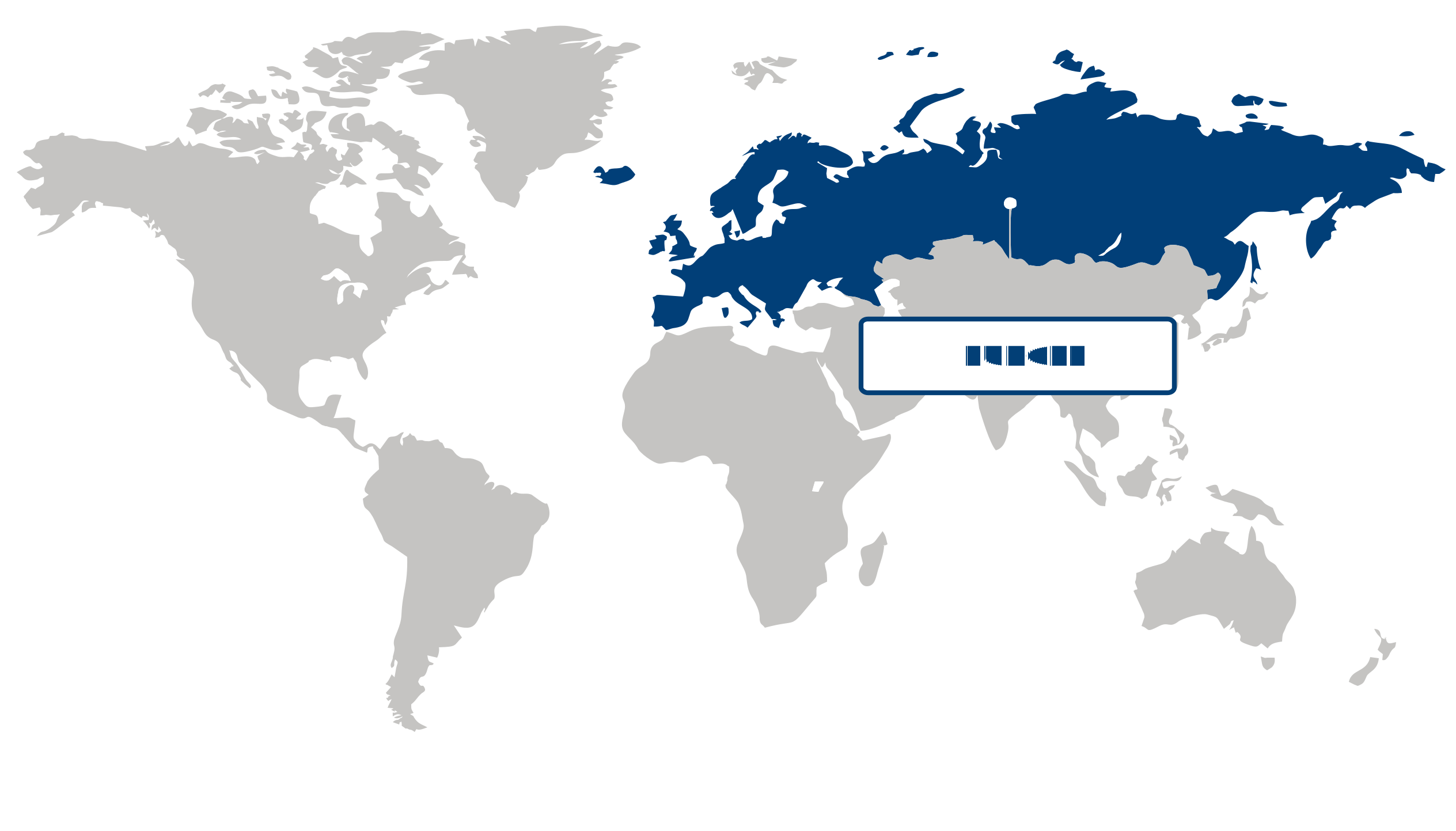
Europe (Largest Region)
Europe held the largest share of the antibacterial glass market in 2026, supported by strong demand for hygienic and low-maintenance materials across healthcare, commercial buildings, hospitality, and public infrastructure. The region's emphasis on stringent hygiene standards and sustainable building practices encourages the use of glass solutions with antimicrobial properties in environments where surface cleanliness is a critical consideration. Ongoing renovation of healthcare and commercial facilities, combined with architectural preference for durable and functional glazing materials, further supports adoption. Increasing attention to indoor environmental quality and material performance is also strengthening opportunities for antibacterial glass applications.
Asia Pacific (Fastest-Growing Region)
Asia Pacific is emerging as the fastest-growing regional market, propelled by rapid urbanization, expanding healthcare infrastructure, and increasing construction activity. Rising investment in hospitals, commercial facilities, transportation infrastructure, and modern residential developments is creating broader opportunities for specialty glass products that combine functional performance with hygiene benefits. Growing awareness of infection-control practices and improving construction standards are encouraging the integration of antimicrobial materials into new facilities. In addition, expanding manufacturing capabilities and technological advancements in glass processing are supporting wider availability and application of antibacterial glass across the region.
| Parameter | North America | Asia Pacific | Europe | Latin America | MEA |
|---|---|---|---|---|---|
| Innovation HubiScaleNascentDeveloping Advanced | |||||
| Cost-Sensitive RegioniScaleLowMedium High | |||||
| Regulatory EnvironmentiScaleRestrictiveNeutral Supportive | |||||
| Demand DriversiScaleWeakModerate Strong | |||||
| Development StageiScaleEmergingDeveloping Developed | |||||
| Adoption RateiScaleLowMedium High | |||||
| New Entrants / StartupsiScaleSparseModerate Dense | |||||
| Macro IndicatorsiScaleWeakStable Strong |
Key Country Insights
Germany 🇩🇪
Advanced Material ApplicationsGermany is applying antibacterial glass in healthcare, transportation, and commercial construction projects that require durable hygienic surfaces. German manufacturers continue improving coating technologies and product reliability for demanding operational environments.
France 🇫🇷
Public Hygiene SolutionsFrance is increasing the application of antibacterial glass in healthcare, hospitality, and public infrastructure where hygiene standards influence material selection. French suppliers are focusing on aesthetically versatile products that support long-term surface protection.
Italy 🇮🇹
Architectural Hygiene MaterialsItaly is incorporating antibacterial glass into healthcare facilities and premium architectural projects that emphasize cleanliness and design quality. Italian manufacturers are developing specialized glass products that combine antimicrobial properties with decorative applications.
Japan 🇯🇵
Precision Surface InnovationJapan emphasizes antibacterial glass with advanced surface technologies for healthcare equipment, consumer electronics, and public facilities. Japanese producers are refining material performance while maintaining optical clarity and long-term durability.
South Korea 🇰🇷
Smart Facility IntegrationSouth Korea is integrating antibacterial glass into smart buildings, healthcare environments, and public transportation projects. Local manufacturers are combining antimicrobial functionality with premium glass technologies suited for modern infrastructure applications.
United States 🇺🇸
Healthcare Infrastructure DemandThe U.S. is expanding the use of antibacterial glass across healthcare facilities, laboratories, and public infrastructure where hygiene remains a design priority. Manufacturers are introducing durable glass solutions that combine antimicrobial performance with architectural functionality.
Antibacterial Glass Market Share (%), by Product, 2026
Go beyond the chart, access full insights & data tables
Request Free Sample ReportProduct Segment Analysis: Silver (Largest & Fastest-Growing Segment)
Silver held the largest and fastest-growing position in the antibacterial glass market, accounting for an 85.88% share in 2026. Its established antimicrobial effectiveness and suitability for applications requiring continuous protection against bacterial contamination support widespread adoption. Silver-based antibacterial glass is particularly relevant in environments where hygiene and surface cleanliness are critical, including healthcare and other high-contact settings. Growing emphasis on infection control, durable antimicrobial materials, and improved hygiene standards continues to strengthen demand for silver-based solutions.
Application Segment Analysis: Hospitals (Largest Segment) vs Military (Fastest-Growing Segment)
Hospitals represented the largest application segment in the antibacterial glass market with a 48.12% share in 2026, driven by the critical importance of infection prevention and hygienic environments across healthcare facilities. Antibacterial glass can support contamination control in areas with frequent human interaction and stringent cleanliness requirements, complementing broader infection-control practices. Increasing attention to healthcare-associated infections and the adoption of materials with antimicrobial properties are reinforcing demand within hospital environments.
Military applications are advancing as the fastest-growing segment as defense facilities increasingly prioritize durable materials that support hygiene, operational readiness, and controlled environments. Antibacterial glass can provide functional benefits in facilities where maintaining clean and resilient infrastructure is important, including accommodation, medical, and operational spaces. The broader focus on robust facility management and improved environmental protection is supporting greater consideration of antimicrobial materials across military infrastructure.
| Segment | Sub-Segment | Largest Segment | Fastest Growing |
|---|---|---|---|
| Product | Silver, Others | Silver | Silver |
| Application | Hospitals, Military, Residential, Food & Beverage, Others | Hospitals | Military |
Competitive Landscape and Market Positioning
Leading companies in the antibacterial glass market:
1. AGC Inc. (Japan)
2. Corning Incorporated (United States)
3. SCHOTT AG (Germany)
4. Saint-Gobain S.A. (France)
5. Nippon Sheet Glass Co. Ltd. (Japan)
6. Guardian Industries Holdings (United States)
7. Ishizuka Glass Co. Ltd. (Japan)
8. Kastus Technologies Ltd. (Ireland)
9. Smartglass International Ltd. (Ireland)
10. Sumita Optical Glass Inc. (Japan)
Heightened awareness regarding hygiene and infection prevention is driving advancements in the antibacterial glass market. Manufacturers are developing antimicrobial surface technologies and durable coating solutions suitable for healthcare, hospitality, and public infrastructure applications. Rising adoption of touch-sensitive and high-traffic glass surfaces is also encouraging investment in long-lasting antibacterial functionality and enhanced material performance.
| Company | Market Share | Company Revenue | Revenue CAGR (%) | Product Portfolio | Geographic Presence | Innovation / R&D Focus | Strategic Developments |
|---|---|---|---|---|---|---|---|
| AGC Inc. (Japan) | |||||||
| Corning Incorporated (United States) | |||||||
| SCHOTT AG (Germany) | |||||||
| Saint-Gobain S.A. (France) | |||||||
| Nippon Sheet Glass Co. Ltd. (Japan) | |||||||
| Guardian Industries Holdings (United States) | |||||||
| Ishizuka Glass Co. Ltd. (Japan) | |||||||
| Kastus Technologies Ltd. (Ireland) | |||||||
| Smartglass International Ltd. (Ireland) | |||||||
| Sumita Optical Glass Inc. (Japan). |
Industry Development / News
| Company Name | Date | Key Development |
|---|---|---|
| AGC Inc. | Dec-24 | AGC Inc. announced that it is preparing for major leadership changes, with new nominations for its Board of Directors and Audit & Supervisory Board, subject to shareholder approval in March 2025. A key appointment includes Koji Arima from DENSO Corporation as a new Director. These leadership adjustments are part of AGC’s efforts to enhance its governance and leadership capabilities. |
| Corning Incorporated | Jun-24 | Corning Incorporated introduced Gorilla Glass 7i, enhancing durability for mid-range smartphones. It offers improved drop protection, surviving drops up to one meter onto rough surfaces, and is twice as scratch-resistant as competing glasses. |
Customize Your Report
Explore examples of how this report can be tailored to different research needs, including custom segments, additional topics or chapters, and related reports. Click a section of the wheel or its numbered marker to explore the available options.
Antibacterial Glass Market — Custom Segments
| Segment | Sub-Segment |
|---|---|
| Glass Product Format | Flat Glass, Laminated Glass, Tempered Glass, Insulated Glass Units, Other Specialty Glass Formats |
| Installation Type | New Construction, Retrofit & Replacement, Modular & Prefabricated Installations |
| Sales Channel | Direct Sales, Glass Processors & Fabricators, Distributors & Dealers, Specialty Building Material Suppliers |
Antibacterial Glass Market — Custom TOC
| Custom Chapter | Chapter Details |
|---|---|
| Healthcare Infrastructure Adoption and Specification Trends |
|
| Hygiene Material Substitution and Application Demand |
|
| Antibacterial Glass Commercialization Strategy |
|
Need a different cut of the data?
Request Custom ResearchFrequently Asked Questions
How much revenue does the antibacterial glass market generate?
What is the projected value of the antibacterial glass industry by 2036?
How are evolving hygiene standards in healthcare environments influencing procurement of antibacterial glass solutions?
How is consumer electronics growth and smart infrastructure development expanding applications for antibacterial glass?
Why does Silver dominate the antibacterial glass market?
What is driving Military adoption growth in antibacterial glass applications?
Why does Europe lead the antibacterial glass market?
What is driving antibacterial glass growth in Asia Pacific?
What are the prominent companies operating in the antibacterial glass landscape?
Our Clients
"The report helped us understand emerging consumer trends in our product category. It clarified where to focus innovation for the next product launch."
LyondellBasell
"The regional forecast section was incredibly useful. We were able to identify two new potential partners in Europe thanks to the vendor mapping you included."
SABIC
"We appreciated how actionable the recommendations were. It guided us to improve supply chain resilience."
Olin Corporation
Our Research Team & Methodology
Every Fundamental Business Insights report is built by a dedicated vertical research team, validated through a structured primary-and-secondary methodology, and reviewed for accuracy before it reaches you.
Delivery
Published
Available
Support
- Market Size & Forecast
- Market Segmentation
- Regional Analysis
- Growth Drivers & Challenges
- Market Dynamics
- Competitive Landscape
- Company Profiles
- Competitive Benchmarking
- Mergers & Acquisitions
- Market Share Analysis or Key Company Strategies
- Value Chain Analysis
- Porter's Five Forces
- PESTLE Analysis
- Pricing Trends
- Supply-Demand Analysis
- Technology Landscape
- Regulatory Landscape
- Investment & Funding Landscape
- Emerging Opportunities
- Future Market Outlook