Aroma Chemicals Market Size & Growth Forecast 2027–2036, By Segments (Source, Chemicals, Application), Regional Demand Trends (North America, Asia Pacific, Europe), Key Country Insights (U.S., Japan, South Korea, Germany, France, Italy), and Competitive Landscape
Jump to Content
Market Size and Growth Outlook
Aroma Chemicals Market size was valued at USD 6.7 billion in 2026 and is anticipated to grow at a 5.51% CAGR from 2027 to 2036, surpassing USD 11.46 billion by 2036. The industry revenue for 2027 is estimated at USD 7.01 billion.
Get more details on this report
Request Free Sample ReportAroma Chemicals Market Intelligence Snapshot
Regional Market Dynamics
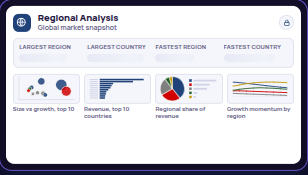
- Asia Pacific leads with 34.66% share due to strong fragrance, personal care, and food manufacturing, supported by dense supply chains and high-volume downstream consumer production.
- North America’s 5.7% CAGR is driven by demand for specialty fragrance and flavor formulations across personal care, cosmetics, and food sectors, supported by continuous product differentiation activity.
Segment Momentum
- Synthetic aroma chemicals held a 67.8% share in 2026 due to their reliable large-scale availability, cost efficiency, and consistent performance, which support standardized fragrance and personal care manufacturing.
- Musk chemicals are growing fastest because fragrance developers increasingly seek long-lasting scent performance and richer base-note characteristics across personal care, fabric care, and fine fragrance formulations.
Market Expansion Drivers
- Rising clean-label and natural fragrance demand across personal care products.
- Growth in biotech fermentation enabling sustainable aroma chemical production scaling.
- Regulatory compliance pressures driving reformulation toward safer aroma compounds.
Leading Market Participants
- Top players in the aroma chemicals market include BASF SE (Germany), Givaudan SA (Switzerland), Symrise AG (Germany), Takasago International Corporation (Japan), Kao Corporation (Japan), Privi Speciality Chemicals Limited (India), Bell Flavors & Fragrances, Inc. (United States), S H Kelkar and Company Limited (India), International Flavors & Fragrances Inc. (United States), Firmenich SA (Switzerland).
Global Market Forecast Snapshot
Market Outlook
- 2026 Market Size: USD 6.7 billion
- 2027 Estimated Market Size: USD 7.01 billion.
- Projected Market Size: USD 11.46 billion by 2036
- Growth Forecast: 5.51% CAGR (2027-2036)
Regional and Segment Outlook
- Leading Regional Market: Asia Pacific
- High-Growth Regional Hub: North America
- Core Revenue Segment: Synthetic (Source) | Terpenes (Chemicals) | Personal Care (Application)
- Emerging Opportunity Segment: Natural (Source) | Musk Chemicals (Chemicals) | Food and Beverages (Application)
Market Growth Drivers and Industry Trends
Rising clean-label and natural fragrance demand across personal care products
The growing preference for clean-label and naturally positioned personal care products is strengthening the aroma chemicals market as consumers increasingly scrutinize ingredient profiles and seek fragrance formulations perceived as safer and more environmentally compatible. Personal care manufacturers are responding by incorporating aroma ingredients derived from natural or nature-identical sources while maintaining the sensory performance required in perfumes, skincare, haircare, and body care products. This shift is encouraging formulators to explore aroma chemicals that can provide consistent fragrance characteristics while supporting cleaner product positioning. Demand for transparent ingredient sourcing and formulations aligned with natural-product preferences is also influencing fragrance development and the selection of aroma ingredients.
Growth in biotech fermentation enabling sustainable aroma chemical production scaling
Advances in biotechnology and fermentation are creating new production pathways for aroma ingredients, which will propel the aroma chemicals market by enabling manufacturers to develop more sustainable alternatives to conventional chemical synthesis. Fermentation-based processes can utilize renewable biological feedstocks and controlled microbial systems to produce specific aromatic compounds with greater process flexibility. These technologies are particularly relevant for ingredients that are difficult to source consistently from natural materials or require resource-intensive conventional production methods. As fermentation platforms become more adaptable to commercial-scale manufacturing, aroma producers can expand access to specialty compounds while addressing sustainability expectations from fragrance and personal care formulators.
Regulatory compliance pressures driving reformulation toward safer aroma compounds
Stricter regulatory scrutiny of fragrance ingredients is encouraging manufacturers to reformulate products with aroma compounds that meet evolving safety and environmental requirements, supporting the aroma chemicals market through continued demand for compliant alternatives. Restrictions or assessment requirements for certain fragrance substances can prompt formulators to evaluate ingredient profiles, exposure levels, and potential sensitization concerns across finished products. Aroma chemical suppliers therefore face greater demand for compounds supported by appropriate safety information and consistent quality specifications. Reformulation activity also creates opportunities for specialized ingredients that can preserve desired olfactory characteristics while helping manufacturers align fragrance compositions with changing regulatory expectations.
| Growth Driver | Impact on CAGR | Regulatory Influence | Geographic Relevance | Adoption Rate | Impact Timeline |
|---|---|---|---|---|---|
| Rising clean-label and natural fragrance demand across personal care products | 2.20% | Moderate | Asia Pacific, Europe | High | Near Term |
| Growth in biotech fermentation enabling sustainable aroma chemical production scaling | 1.80% | Moderate | North America, Europe | Medium | Mid Term |
| Regulatory compliance pressures driving reformulation toward safer aroma compounds | 1.70% | High | Europe, North America | Medium | Mid Term |
Unlock insights tailored to your business with our bespoke market research solutions.
Click to get your customized report now.
Regional Demand Dynamics

Asia Pacific (Largest Region)
Asia Pacific held the largest share of the aroma chemicals market, accounting for 34.66% in 2026. The region's leading position is supported by its extensive fragrance, cosmetics, personal care, food, and household products manufacturing base, which creates sustained demand for aroma chemicals across diverse end-use applications. Rapid industrialization, expanding consumer markets, and the increasing preference for fragranced personal and home-care products are strengthening regional consumption. The availability of established chemical manufacturing capabilities and comparatively efficient production ecosystems also supports the region's competitiveness. In addition, growing investments in specialty and value-added chemical production are encouraging manufacturers to broaden their aroma chemical portfolios and improve product quality, consistency, and application performance.
North America (Fastest-Growing Region)
North America is emerging as the fastest-growing region in the aroma chemicals market, driven by strong demand for premium fragrances, personal care products, and innovative food and beverage formulations. Consumers' increasing interest in distinctive scents, clean-label formulations, and higher-quality ingredients is encouraging manufacturers to adopt more specialized aroma compounds. The region's advanced research and development capabilities further support product innovation, particularly in sustainable and bio-based alternatives. Increasing attention to environmental standards and ingredient transparency is also encouraging the development of safer, renewable, and more environmentally responsible aroma chemical solutions, supporting continued market expansion.
| Parameter | North America | Asia Pacific | Europe | Latin America | MEA |
|---|---|---|---|---|---|
| Innovation HubiScaleNascentDeveloping Advanced | |||||
| Cost-Sensitive RegioniScaleLowMedium High | |||||
| Regulatory EnvironmentiScaleRestrictiveNeutral Supportive | |||||
| Demand DriversiScaleWeakModerate Strong | |||||
| Development StageiScaleEmergingDeveloping Developed | |||||
| Adoption RateiScaleLowMedium High | |||||
| New Entrants / StartupsiScaleSparseModerate Dense | |||||
| Macro IndicatorsiScaleWeakStable Strong |
Key Country Insights
Germany 🇩🇪
Specialty Ingredient DevelopmentGermany focuses on producing high-purity aroma chemicals for fragrance, cosmetic, and flavor applications requiring consistent performance. German manufacturers emphasize technical expertise, product reliability, and efficient production processes to meet demanding customer specifications.
France 🇫🇷
Fine Fragrance ExpertiseFrance maintains strong demand for sophisticated aroma chemicals that support premium fragrance creation and luxury cosmetic formulations. French manufacturers prioritize ingredient quality, creative formulation capabilities, and reliable sourcing to meet evolving industry expectations.
Italy 🇮🇹
Creative Formulation SupportItaly integrates aroma chemicals into fragrance, personal care, and household product manufacturing with an emphasis on distinctive formulations. Italian companies increasingly seek flexible ingredient portfolios that enable product differentiation while maintaining consistent sensory performance.
Japan 🇯🇵
Premium Fragrance FormulationJapan emphasizes refined aroma chemicals for luxury cosmetics, personal care products, and premium fragrances. Japanese companies continue developing sophisticated ingredient portfolios that deliver subtle scent profiles while meeting stringent quality and formulation requirements.
South Korea 🇰🇷
Beauty Industry IntegrationSouth Korea leverages aroma chemicals extensively within its cosmetics and personal care manufacturing ecosystem. Suppliers in South Korea focus on innovative fragrance ingredients that complement rapid product development cycles and support differentiated consumer offerings.
United States 🇺🇸
Fragrance Innovation HubThe U.S. aroma chemicals market benefits from continuous product innovation across fragrances, personal care, and household products. Companies in the U.S. increasingly prioritize high-quality aroma ingredients that support distinctive formulations and evolving consumer preferences for premium products.
Aroma Chemicals Market Share (%), by Source, 2026
Go beyond the chart, access full insights & data tables
Request Free Sample ReportSource Segment Analysis: Synthetic (Largest Segment) vs Natural (Fastest-Growing Segment)
The synthetic segment dominated the aroma chemicals market with a 67.8% share in 2026, supported by its ability to provide consistent quality, reliable availability, and cost-effective production of fragrance ingredients. Synthetic aroma chemicals enable manufacturers to achieve precise olfactory profiles and maintain formulation consistency across perfumes, personal care products, household products, and other consumer applications. Their broad ingredient portfolio and compatibility with large-scale manufacturing continue to make synthetic sources a core component of fragrance formulation.
Natural aroma chemicals are the fastest-growing source segment, reflecting increasing consumer and industry interest in naturally derived ingredients and cleaner-label formulations. Natural sources can provide distinctive sensory characteristics while aligning with preferences for plant-derived and sustainably positioned ingredients. Growing attention to ingredient transparency, environmental considerations, and natural product positioning is encouraging fragrance and personal care manufacturers to explore greater use of naturally sourced aroma chemicals.
Chemicals Segment Analysis: Terpenes (Largest Segment) vs Musk Chemicals (Fastest-Growing Segment)
Terpenes accounted for the largest share of the aroma chemicals market at 40.17% in 2026, reflecting their importance as versatile fragrance ingredients used to create diverse aromatic profiles across perfumes, cosmetics, personal care products, and household formulations. Their distinctive sensory characteristics and ability to contribute fresh, woody, citrus, and other fragrance notes support extensive use in formulation development. Continued innovation in fragrance compositions and demand for differentiated sensory experiences reinforce the strong position of terpene-based aroma chemicals.
Musk chemicals represent the fastest-growing chemicals segment as fragrance manufacturers seek ingredients that provide long-lasting, distinctive, and sophisticated scent characteristics. Musk notes are widely valued for their ability to enhance fragrance depth, improve persistence, and complement other aromatic ingredients in complex formulations. Increasing demand for premium and personalized fragrances, together with ongoing development of innovative fragrance compositions, is supporting broader adoption of musk chemicals across consumer fragrance applications.
| Segment | Sub-Segment | Largest Segment | Fastest Growing |
|---|---|---|---|
| Source | Natural, Synthetic | Synthetic | Natural |
| Chemicals | Terpenes, Benzenoids, Musk Chemicals, Others | Terpenes | Musk Chemicals |
| Application | Personal Care, Household Care, Food and Beverages, Others | Personal Care | Food and Beverages |
Competitive Landscape and Market Positioning
Major players in the aroma chemicals market:
1. BASF SE (Germany)
2. Givaudan SA (Switzerland)
3. Symrise AG (Germany)
4. Takasago International Corporation (Japan)
5. Kao Corporation (Japan)
6. Privi Speciality Chemicals Limited (India)
7. Bell Flavors & Fragrances Inc. (United States)
8. S H Kelkar and Company Limited (India)
9. International Flavors & Fragrances Inc. (United States)
10. Firmenich SA (Switzerland)
The aroma chemicals market is becoming increasingly competitive as manufacturers focus on unique fragrance compositions, sustainable ingredients, and advanced formulation technologies. Investments in research activities aimed at developing long-lasting and naturally derived scent profiles are supporting product differentiation strategies. Rising demand from personal care, household, and fine fragrance applications continues to drive innovation across the market.
| Company | Market Share | Company Revenue | Revenue CAGR (%) | Product Portfolio | Geographic Presence | Innovation / R&D Focus | Strategic Developments |
|---|---|---|---|---|---|---|---|
| BASF SE (Germany) | |||||||
| Givaudan SA (Switzerland) | |||||||
| Symrise AG (Germany) | |||||||
| Takasago International Corporation (Japan) | |||||||
| Kao Corporation (Japan) | |||||||
| Privi Speciality Chemicals Limited (India) | |||||||
| Bell Flavors & Fragrances Inc. (United States) | |||||||
| S H Kelkar and Company Limited (India) | |||||||
| International Flavors & Fragrances Inc. (United States) | |||||||
| Firmenich SA (Switzerland). |
Industry Development/News
| Company Name | Date | Key Development |
|---|---|---|
| Zeon Corp. | May-26 | Zeon Corp. is expanding aroma-related chemical production capacity at its Mizushima GPI plant, increasing DCPD output by 20%. The expansion secures feedstock for downstream optical film applications and incorporates process enhancements designed to lower CO₂ emissions, demonstrating a strategic integration of production capacity expansion and sustainability-focused operational improvements. |
| MSME Parks | May-26 | Industrial infrastructure development in the SPSR Nellore district is accelerating as fragrance and perfume manufacturers establish new operations in the region. This trend indicates increasing investment in the aroma chemical value chain, positioning the locality as an emerging regional hub for fragrance manufacturing and specialty chemical production activity. |
| Natara | Sep-25 | Natara established a distribution partnership with Azelis Ashapura to expand the market reach of its natural extracts, essential oils, and specialty aroma chemicals across India. The agreement enhances Natara’s commercial distribution network, facilitating deeper penetration of its ingredient portfolio into the Indian perfumery and specialty chemicals sector. |
| Neogen Chemicals | Aug-25 | Neogen Chemicals secured ₹200 crore through non-convertible debentures to fund operational upgrades and the reconstruction of its Dahej manufacturing facility. This capital deployment strengthens the company's financial capacity to support ongoing growth initiatives and infrastructure improvements within its specialty chemical manufacturing segment. |
| ChainCraft | Mar-25 | ChainCraft entered a strategic partnership with Eternis Fine Chemicals to commercialize low-carbon, bio-based aroma chemicals. By utilizing fermentation-derived fatty acids from the SensiCraft® range, the collaboration focuses on decarbonizing the fragrance ingredient supply chain and scaling sustainable production methods for the global perfumery market. |
| Symrise | Feb-25 | Symrise is constructing a 30,000 m² manufacturing facility in Giza, Greater Cairo, to consolidate its MENA regional operations. The project aims to expand production capacity for fragrances and flavors while enhancing supply chain efficiency. This investment reflects a strategic move to optimize regional manufacturing footprints and improve localized distribution capabilities. |
| Eternis | Dec-24 | Eternis acquired Sharon Personal Care, significantly expanding its manufacturing assets, R&D laboratories, and global distribution infrastructure. This acquisition deepens the company’s presence in the specialty chemicals and personal care sectors, broadening its downstream application portfolio and scaling its reach within the global aroma chemical market. |
| Privi Speciality Chemicals | Oct-24 | Privi Speciality Chemicals, via its Prigiv joint venture, commercialized a ₹178 crore greenfield manufacturing facility in Maharashtra. This site is dedicated to producing high-complexity fragrance ingredients exclusively for Givaudan. The development significantly enhances Privi’s contract manufacturing capacity and strengthens its competitive positioning within the premium fragrance supply chain. |
| Godavari Biorefineries | May-24 | Godavari Biorefineries commissioned a multi-purpose specialty chemicals plant in Sakharwadi, Maharashtra. The facility increases the firm's capacity for bio-based aroma chemicals and intermediates. This expansion reinforces the company’s strategic commitment to biomass-based industrial chemistry and enhances its production capabilities for sustainable fragrance ingredients. |
Customize Your Report
Explore examples of how this report can be tailored to different research needs, including custom segments, additional topics or chapters, and related reports. Click a section of the wheel or its numbered marker to explore the available options.
Aroma Chemicals Market — Custom Segments
| Segment | Sub-Segment |
|---|---|
| End-Use Product Category | Fine Fragrances, Personal Care Products, Household & Institutional Care Products, Food Flavorings, Air Care Products |
| Customer Type | Fragrance Houses, Flavor Houses, Cosmetics & Personal Care Manufacturers, Household Care Manufacturers, Food & Beverage Manufacturers |
| Distribution Channel | Direct Sales, Specialty Chemical Distributors, Fragrance & Flavor Ingredient Distributors, Online B2B Channels |
Aroma Chemicals Market — Custom TOC
| Custom Chapter | Chapter Details |
|---|---|
| Feedstock Transition and Bio-based Sourcing Outlook |
|
| Fragrance House Procurement Benchmarking |
|
| High-Growth End-use Innovation Pipeline |
|
Need a different cut of the data?
Request Custom ResearchFrequently Asked Questions
How big is the aroma chemicals market?
How is the aroma chemicals industry expected to grow over the next 10 years?
How is clean-label demand influencing sourcing strategies in the aroma chemicals market?
Why is biotech fermentation becoming strategically important in the aroma chemicals market?
Why do synthetic sources dominate the aroma chemicals market?
What is fueling growth in the musk chemicals segment of the aroma chemicals market?
Why does Asia Pacific hold the largest share in the aroma chemicals market?
What is driving North America’s growth in aroma chemicals?
Who are the major participants shaping the aroma chemicals landscape?
Our Clients
"The report helped us understand emerging consumer trends in our product category. It clarified where to focus innovation for the next product launch."
LyondellBasell
"The regional forecast section was incredibly useful. We were able to identify two new potential partners in Europe thanks to the vendor mapping you included."
SABIC
"We appreciated how actionable the recommendations were. It guided us to improve supply chain resilience."
Olin Corporation
Our Research Team & Methodology
Every Fundamental Business Insights report is built by a dedicated vertical research team, validated through a structured primary-and-secondary methodology, and reviewed for accuracy before it reaches you.
Delivery
Published
Available
Support
- Market Size & Forecast
- Market Segmentation
- Regional Analysis
- Growth Drivers & Challenges
- Market Dynamics
- Competitive Landscape
- Company Profiles
- Competitive Benchmarking
- Mergers & Acquisitions
- Market Share Analysis or Key Company Strategies
- Value Chain Analysis
- Porter's Five Forces
- PESTLE Analysis
- Pricing Trends
- Supply-Demand Analysis
- Technology Landscape
- Regulatory Landscape
- Investment & Funding Landscape
- Emerging Opportunities
- Future Market Outlook