



Assisted Reproductive Technology Market Size & Growth Forecast 2027–2036, By Segments (Type, End-use), Regional Demand Trends (North America, Asia Pacific, Europe), Key Country Insights (U.S., Japan, South Korea, Germany, France, Italy), and Competitive Landscape
Market Size and Growth Outlook
Assisted Reproductive Technology Market size was worth USD 33.4 billion in 2026 and is expected to grow at a 5.7% CAGR between 2027 and 2036, crossing USD 58.14 billion by 2036. The industry revenue for 2027 is estimated at USD 35 billion.
Base Year Value (2026)
USD 33.4 billion
CAGR (2027-2036)
5.70%
Forecast Year Value (2036)
USD 58.14 billion

Historical Data Period
2022-2026

Largest Region
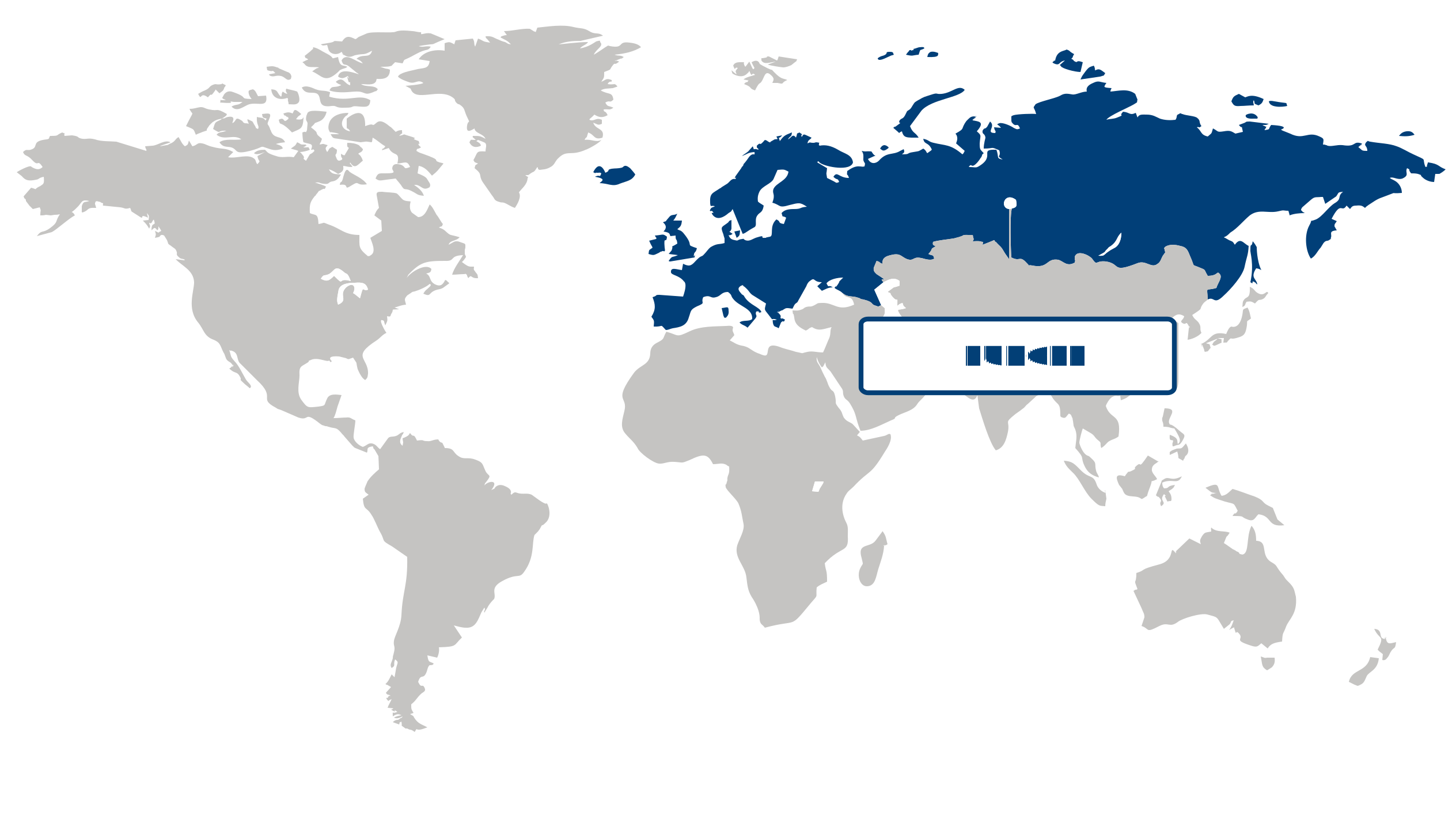
Europe

Forecast Period
2027-2036
Assisted Reproductive Technology Market Intelligence Snapshot:
-
Regional Market Dynamics:
- Europe led the market in 2026 with established fertility clinic networks, advanced reproductive procedures, and mature clinical pathways supporting consistent treatment volumes and patient access.
- North America is projected to grow at a 7.01% CAGR as demand rises for advanced fertility services, supported by private fertility providers and increasing adoption of sophisticated laboratory techniques.
-
Segment Momentum:
- IVF leads with an 87.31% share due to its established clinical role, broader applicability across fertility cases, and strong physician reliance on its controlled and repeatable treatment pathway.
- Hospital and surgery clinics are expanding fastest as fertility services integrate into broader healthcare systems, improving patient access through existing hospital networks and diversified clinical infrastructure.
-
Market Expansion Drivers:
- Rising global infertility prevalence increasing demand for assisted reproductive procedures and fertility services.
- Advancements in embryo testing and imaging technologies improving ART success rates.
- Growing public awareness and fertility clinic expansion supporting wider acceptance of reproductive treatments.
-
Leading Market Participants:
Top companies in the assisted reproductive technology market include CooperSurgical, Inc. (United States), Merck KGaA (Germany), Ferring Pharmaceuticals (Switzerland), Vitrolife AB (Sweden), Irvine Scientific Sales Company, Inc. (United States), Hamilton Thorne Ltd. (Canada), FUJIFILM Irvine Scientific, Inc. (United States), Genea Biomedx Pty Ltd. (Australia), Cook Medical LLC (United States), Esco Micro Pte. Ltd. (Singapore).
Global Market Forecast Snapshot:
-
Market Outlook:
- 2026 Market Size: USD 33.4 billion
- 2027 Estimated Market Size: USD 35 billion.
- Projected Market Size: USD 58.14 billion by 2036
- Growth Forecasts: 5.7% CAGR (2027-2036)
-
Regional and Segment Outlook:
- Leading Regional Market: Europe
- High-Growth Regional Hub: North America
- Core Revenue Segment: In-Vitro Fertilization (IVF) (Type) | Fertility Clinics (End-use)
- Emerging Opportunity Segment: Artificial Insemination (Type) | Hospital & Surgery Clinics (End-use)
Market Growth Drivers and Industry Trends
Rising global infertility prevalence increasing demand for assisted reproductive procedures and fertility services
The increasing prevalence of infertility among individuals and couples is strengthening demand for medical interventions, which will propel the assisted reproductive technology market. Changes in reproductive health patterns, delayed family formation, and the growing need for specialized fertility care are encouraging more patients to seek clinical assistance when natural conception is difficult. Procedures such as in vitro fertilization and related fertility treatments provide structured pathways for patients requiring reproductive support, increasing utilization of fertility clinics and associated laboratory services. The need for personalized treatment planning and repeated clinical interventions also contributes to sustained demand for reproductive technologies, diagnostic services, and specialized fertility care.
Advancements in embryo testing and imaging technologies improving ART success rates
Technological improvements in embryo assessment, testing, imaging, and laboratory procedures are enhancing treatment selection and decision-making, supporting growth of the assisted reproductive technology market. More sophisticated approaches to evaluating embryo development can provide fertility specialists with additional information when determining which embryos are appropriate for transfer. Advanced imaging capabilities can also support closer observation of embryonic development during laboratory procedures, helping clinicians assess developmental characteristics with greater precision. These improvements can increase confidence in treatment protocols and encourage patients and healthcare providers to adopt technologically advanced fertility procedures as part of comprehensive reproductive care.
Growing public awareness and fertility clinic expansion supporting wider acceptance of reproductive treatments
Greater awareness of infertility treatment options is reducing information barriers and encouraging more individuals to explore professional fertility services, thereby supporting the assisted reproductive technology market. Increased access to educational resources and broader discussion of reproductive health are helping patients become more familiar with available procedures, treatment pathways, and fertility preservation options. At the same time, the expansion of fertility clinics and specialized reproductive care facilities is improving access to assisted reproductive procedures across more patient populations. A wider clinical footprint enables patients to obtain consultations, diagnostic assessments, laboratory services, and treatment within dedicated reproductive healthcare settings.
| Growth Driver Assessment Framework | |||||
| Growth Driver | Impact On CAGR | Regulatory Influence | Geographic Relevance | Adoption Rate | Impact Timeline |
|---|---|---|---|---|---|
| Rising global infertility prevalence increasing demand for assisted reproductive procedures and fertility services | 2.00% | High | Europe, North America | High | Near Term |
| Advancements in embryo testing and imaging technologies improving ART success rates | 1.80% | High | North America, Asia Pacific | High | Mid Term |
| Growing public awareness and fertility clinic expansion supporting wider acceptance of reproductive treatments | 1.50% | Moderate | Asia Pacific, Europe | Medium | Mid Term |
Unlock insights tailored to your business with our bespoke market research solutions - Click to get your customized report now!
Regional Demand Dynamics
Largest Region
Europe
Largest Market Share in 2026
Europe (Largest Region) vs North America (Fastest-Growing Region)
Europe led the assisted reproductive technology market in 2026, supported by established fertility-care infrastructure, widespread access to reproductive health services, and substantial clinical expertise in assisted conception procedures. The region has a mature network of fertility centers and specialized healthcare professionals, while advancements in embryo assessment, cryopreservation, and laboratory technologies continue to improve treatment capabilities. Growing acceptance of fertility treatment, delayed parenthood, and increasing awareness of available reproductive options are also supporting demand. In addition, established clinical standards and regulatory frameworks contribute to treatment quality and patient confidence, reinforcing Europe's position as a major market for assisted reproductive technologies.
North America is the fastest-growing region, benefiting from rising demand for fertility services, technological advancement, and increasing investment in specialized reproductive healthcare. Greater awareness of fertility preservation and assisted conception is encouraging more individuals and couples to seek treatment, while improvements in laboratory techniques and reproductive diagnostics are broadening available treatment options. The region's strong private healthcare infrastructure and access to advanced medical technologies further support adoption. Increasing interest in personalized fertility care, together with greater integration of digital tools and advanced clinical workflows, is creating additional opportunities for market expansion.
Key Country Insights
The U.S. assisted reproductive technology market emphasizes advanced fertility procedures, genetic screening, and digital patient management. Clinics across the U.S. continue expanding personalized treatment pathways and laboratory capabilities to improve patient experience and clinical efficiency.
Japan continues strengthening assisted reproductive technology services to address delayed parenthood and changing demographic trends. Fertility centers in Japan invest in laboratory modernization, cryopreservation capabilities, and patient-centered reproductive care.
South Korea supports assisted reproductive technology through technologically advanced fertility clinics and expanding reproductive health services. Providers in South Korea increasingly integrate digital monitoring and laboratory automation to enhance treatment efficiency and patient engagement.
Germany's assisted reproductive technology market operates within a structured regulatory framework that shapes treatment approaches and laboratory standards. Fertility providers in Germany focus on clinical quality, patient safety, and specialized reproductive care services.
France prioritizes coordinated reproductive healthcare with strong clinical oversight and standardized fertility services. Fertility centers in France continue enhancing laboratory quality and multidisciplinary care to support patients throughout the treatment journey.
Italy continues expanding specialized fertility centers with greater emphasis on advanced reproductive procedures and laboratory expertise. Italian providers focus on improving treatment accessibility, embryo preservation technologies, and coordinated patient care.
Segment Leadership and Growth Trends
Type Segment Analysis: In-Vitro Fertilization (IVF) (Largest Segment) vs Artificial Insemination (Fastest-Growing Segment)
The in-vitro fertilization (IVF) segment dominated the assisted reproductive technology market in 2026, accounting for an 87.31% share, reflecting its established role in treating a broad range of infertility challenges and its ability to support more complex reproductive needs. IVF enables controlled fertilization and embryo development before transfer, making it a widely utilized option when conventional approaches are insufficient or when multiple reproductive factors require clinical intervention. Artificial insemination is expanding at the fastest pace as patients and healthcare providers increasingly seek less complex and comparatively accessible fertility treatment options where clinically appropriate. Growing awareness of fertility services, broader access to reproductive care, and increasing demand for personalized treatment pathways are supporting wider consideration of artificial insemination.
End-use Segment Analysis: Fertility Clinics (Largest Segment) vs Hospital & Surgery Clinics (Fastest-Growing Segment)
Fertility clinics held the leading position in the assisted reproductive technology market in 2026 with a 76.73% share, owing to their specialized infrastructure, dedicated reproductive medicine expertise, and ability to provide comprehensive fertility assessment and treatment services. These facilities are structured around the specific clinical, laboratory, and procedural requirements associated with assisted reproduction, supporting efficient delivery of complex fertility care. Hospital & surgery clinics are experiencing the fastest growth as reproductive services become increasingly integrated into broader healthcare systems and patients seek fertility treatment within multidisciplinary medical environments. Greater access to specialized reproductive procedures, improved hospital-based fertility capabilities, and the integration of reproductive care with related medical services are supporting expansion across this end-use setting.
| Report Segmentation | |||
| Segment | Sub-Segment | Largest Segment | Fastest Growing Segment |
|---|---|---|---|
| Type | In-Vitro Fertilization (IVF), Artificial Insemination | In-Vitro Fertilization (IVF) | Artificial Insemination |
| End-use | Fertility Clinics, Hospital & Surgery Clinics | Fertility Clinics | Hospital & Surgery Clinics |
 Read our Research Approach
Competitive Landscape and Market Positioning
Leading companies in the assisted reproductive technology market:
1. CooperSurgical Inc. (United States)
2. Merck KGaA (Germany)
3. Ferring Pharmaceuticals (Switzerland)
4. Vitrolife AB (Sweden)
5. Irvine Scientific Sales Company Inc. (United States)
6. Hamilton Thorne Ltd. (Canada)
7. FUJIFILM Irvine Scientific Inc. (United States)
8. Genea Biomedx Pty Ltd. (Australia)
9. Cook Medical LLC (United States)
10. Esco Micro Pte. Ltd. (Singapore)
Advancements in reproductive science are enabling more precise and effective fertility treatment approaches. Increasing collaboration between clinical research and diagnostic innovation is improving success rates and procedural efficiency. The assisted reproductive technology market is evolving through enhanced genetic screening and embryo assessment techniques.
Industry Development/News
| Company Name | Date | Key Development |
|---|---|---|
| Cook Medical | Jul-24 | Cook Medical entered a definitive agreement to divest its reproductive health business to the private equity firm Astorg. The transaction includes plans to integrate these assets with Hamilton Thorne’s existing portfolio, signaling a strategic consolidation effort within the fertility-focused medical device market aimed at achieving greater operational scale and technical synergy. |
| Yellow Fertility | Jan-26 | Yellow Fertility entered a strategic partnership with CARE IVF to scale fertility treatment infrastructure across Eastern and North-Eastern India. The expansion plan includes the establishment of eight new fertility centers over a two-year period, focusing on standardizing clinical protocols and increasing regional accessibility to high-quality IVF services in previously underserved markets. |
| ATBUTH | May-26 | The Abubakar Tafawa Balewa University Teaching Hospital (ATBUTH) commissioned a new specialized Infertility and Assisted Reproductive Technology Centre. This public-sector investment significantly expands regional healthcare capacity, establishing a dedicated facility for advanced infertility diagnostics and reproductive medicine that strengthens the institutional footprint of ART services within Nigeria's healthcare landscape. |
| Costco | Mar-26 | Costco initiated a strategic partnership with healthcare providers to address cost barriers associated with fertility treatments. By integrating employer-linked or membership-based health solutions, the initiative aims to increase patient access to expensive procedures such as IVF across the United States, effectively introducing new commercial pathways for service delivery within the reproductive care sector. |
| RSCM Kencana | May-26 | Dr. Cipto Mangunkusumo National Hospital (RSCM) relaunched its Klinik Yasmin Reproductive Cluster through RSCM Kencana. This initiative optimizes integrated reproductive care by streamlining clinical pathways and combining ART services with multi-disciplinary clinical support, aimed at enhancing operational efficiency and patient throughput within Indonesia’s primary public hospital network. |
| Fresenius Kabi | Aug-24 | Fresenius Kabi launched a generic version of cetrorelix acetate injection, a critical pharmaceutical agent used in controlled ovarian stimulation protocols. By introducing a lower-cost alternative to established therapies, the company is facilitating broader affordability for IVF treatment regimens, directly impacting the cost structure and accessibility of essential ART-related medical interventions. |
| Kindbody | Jan-24 | Kindbody accelerated its expansion strategy by scaling its clinic network and enhancing its digital-first fertility care model. This strategic growth phase focuses on leveraging technology-enabled service delivery to improve operational performance and market penetration, reinforcing the company's position as a provider of comprehensive, scalable assisted reproductive technology services. |
| Yangon Fertility Centre | May-26 | The Yangon Fertility Centre at Central Women’s Hospital reported sustained operational growth, having supported over 5,400 women since its inception. The continued expansion of service utilization within this public-sector facility indicates a meaningful rise in demand for fertility treatments in Myanmar and highlights the scaling of public health infrastructure for reproductive medicine. |
Why Choose Us
Specialized Expertise: Our team comprises industry experts with a deep understanding of your market segment. We bring specialized knowledge and experience that ensures our research and consulting services are tailored to your unique needs.
Customized Solutions: We understand that every client is different. That's why we offer customized research and consulting solutions designed specifically to address your challenges and capitalize on opportunities within your industry.
Proven Results: With a track record of successful projects and satisfied clients, we have demonstrated our ability to deliver tangible results. Our case studies and testimonials speak to our effectiveness in helping clients achieve their goals.
Cutting-Edge Methodologies: We leverage the latest methodologies and technologies to gather insights and drive informed decision-making. Our innovative approach ensures that you stay ahead of the curve and gain a competitive edge in your market.
Client-Centric Approach: Your satisfaction is our top priority. We prioritize open communication, responsiveness, and transparency to ensure that we not only meet but exceed your expectations at every stage of the engagement.
Continuous Innovation: We are committed to continuous improvement and staying at the forefront of our industry. Through ongoing learning, professional development, and investment in new technologies, we ensure that our services are always evolving to meet your evolving needs.
Value for Money: Our competitive pricing and flexible engagement models ensure that you get maximum value for your investment. We are committed to delivering high-quality results that help you achieve a strong return on your investment.
Select Licence Type

