Automotive Diecast Scale Model Market Size & Forecasts 2026-2035, By Segments (License, Scale, Type, Material), Growth Opportunities, Innovation Landscape, Regulatory Shifts, Strategic Regional Insights (U.S., Japan, China, South Korea, UK, Germany, France), and Competitive Dynamics (Mattel, Takara Tomy, Maisto, Kyosho, Minichamps)
Market Size and Growth Outlook
Automotive Diecast Scale Model Market size is predicted to expand from USD 3.46 billion in 2025 to USD 6.2 billion by 2035, with growth underpinned by a CAGR above 6% between 2026 and 2035. The industry revenue outlook for 2026 is USD 3.64 billion.
Get more details on this report
Request Free Sample ReportAutomotive Diecast Scale Model Market Intelligence Snapshot
Regional Market Dynamics
Segment Momentum
Market Expansion Drivers
Leading Market Participants
Global Market Forecast Snapshot
Market Outlook
Regional and Segment Outlook
Market Growth Drivers and Industry Trends
Growing consumer enthusiasm for automotive collectibles is reshaping the automotive diecast scale model market. Driven by a resurgence in nostalgic hobbies and increasing disposable incomes among millennials and Gen X consumers, this trend is amplified by community-building through social media platforms like Instagram and dedicated forums such as ScaleAuto. According to announcements from companies like Mattel’s Hot Wheels and GreenLight Collectibles, limited-edition releases and collaboration models are driving heightened engagement and premium pricing. This surge offers strategic opportunities for established brands to deepen customer loyalty through exclusive offerings, while new entrants can capture niche segments by targeting emerging collector demographics. The sustained cultural fascination with iconic and vintage vehicles ensures an evolving market where innovation in product curation will remain key.
Innovation in Diecasting Techniques and Materials
Advances in diecasting technologies, particularly the adoption of precision 3D printing and eco-friendly alloy blends, are significantly influencing the automotive diecast scale model market’s evolution. Manufacturers like Bburago and Maisto have publicly highlighted their investment in environmentally sustainable materials and automated manufacturing processes, reducing costs and environmental impact. This innovation addresses growing consumer demand for both higher-quality, more detailed replicas and responsible production methods in line with global sustainability standards advocated by entities such as the International Aluminum Institute. For incumbents, leveraging such innovations ensures competitive differentiation and compliance, while startups can capitalize on agile, low-volume manufacturing to quickly introduce custom or limited-run products. Continued technological enhancement will drive product sophistication and operational efficiency industry-wide.
Intellectual Property and Licensing Regulations
Strengthened enforcement of intellectual property (IP) and licensing laws is shaping the governance of the automotive diecast scale model market, particularly concerning brand authenticity and design replication. Regulatory bodies like the U.S. Patent and Trademark Office have increased oversight on counterfeit products, encouraging licensed partnerships between scale model manufacturers and automotive OEMs such as Ford and Ferrari. This framework benefits established players with official licenses by protecting their market share and enabling premium pricing through brand association. Conversely, new entrants face higher entry barriers, necessitating strategic negotiations for licensing agreements or focusing on generic or non-branded segments. With increasing global harmonization of IP standards, adherence to licensing will become a critical factor in market access and sustained revenue growth for all participants.
Industry Restraints:
Raw Material Cost Volatility and Supply Constraints
Fluctuating prices and availability of raw materials, particularly zinc, aluminum, and plastic resins, significantly restrict the automotive diecast scale model market’s growth. These materials, central to product fabrication, have been subject to supply shocks due to geopolitical tensions and tight global commodity markets, as highlighted in recent statements by the International Zinc Association and the U.S. Geological Survey. Elevated costs and sporadic shortages increase production expenses and disrupt manufacturing schedules, impacting lead times and margins. This volatility poses strategic challenges, especially for smaller manufacturers unable to hedge or negotiate favorable long-term contracts, while larger firms face strategic recalibration to maintain pricing competitiveness. This persistent instability is expected to continue constraining production efficiency and limiting market expansion as supply chains adjust unevenly to global pressures.
Increasing Regulatory Pressure on Sustainable Materials
Emerging regulations targeting sustainable manufacturing and material usage present a critical barrier for diecast model producers. Authorities such as the European Chemicals Agency (ECHA) are pushing stringent standards for recycling and hazardous substances, forcing manufacturers to redesign products and supply chains at considerable cost, as noted in recent ECHA guidance on cadmium use restrictions. The mandate to adopt eco-friendly materials challenges incumbent players entrenched in traditional diecasting processes while raising entry barriers for startups facing elevated compliance costs. Strategically, firms must allocate resources to R&D and certification, affecting capital allocation and timelines. Given rising global sustainability mandates, this restraint will shape competitive dynamics and innovation priorities for years, reinforcing a shift toward environmentally compliant materials and processes in the automotive diecast scale model market.
| Growth Driver | Impact on CAGR | Regulatory Influence | Geographic Relevance | Adoption Rate | Impact Timeline |
|---|---|---|---|---|---|
| Rising interest in automotive collectibles and hobby models | 2.50% | Short term (≤ 2 yrs) | North America, Europe | Low | Fast |
| Innovation in diecasting techniques and materials | 1.80% | Medium term (2–5 yrs) | Asia Pacific, Europe | Low | Moderate |
| Intellectual property and licensing regulations | 1.70% | Long term (5+ yrs) | Europe, North America | Medium | Moderate |
Unlock insights tailored to your business with our bespoke market research solutions.
Click to get your customized report now.
Regional Demand Dynamics
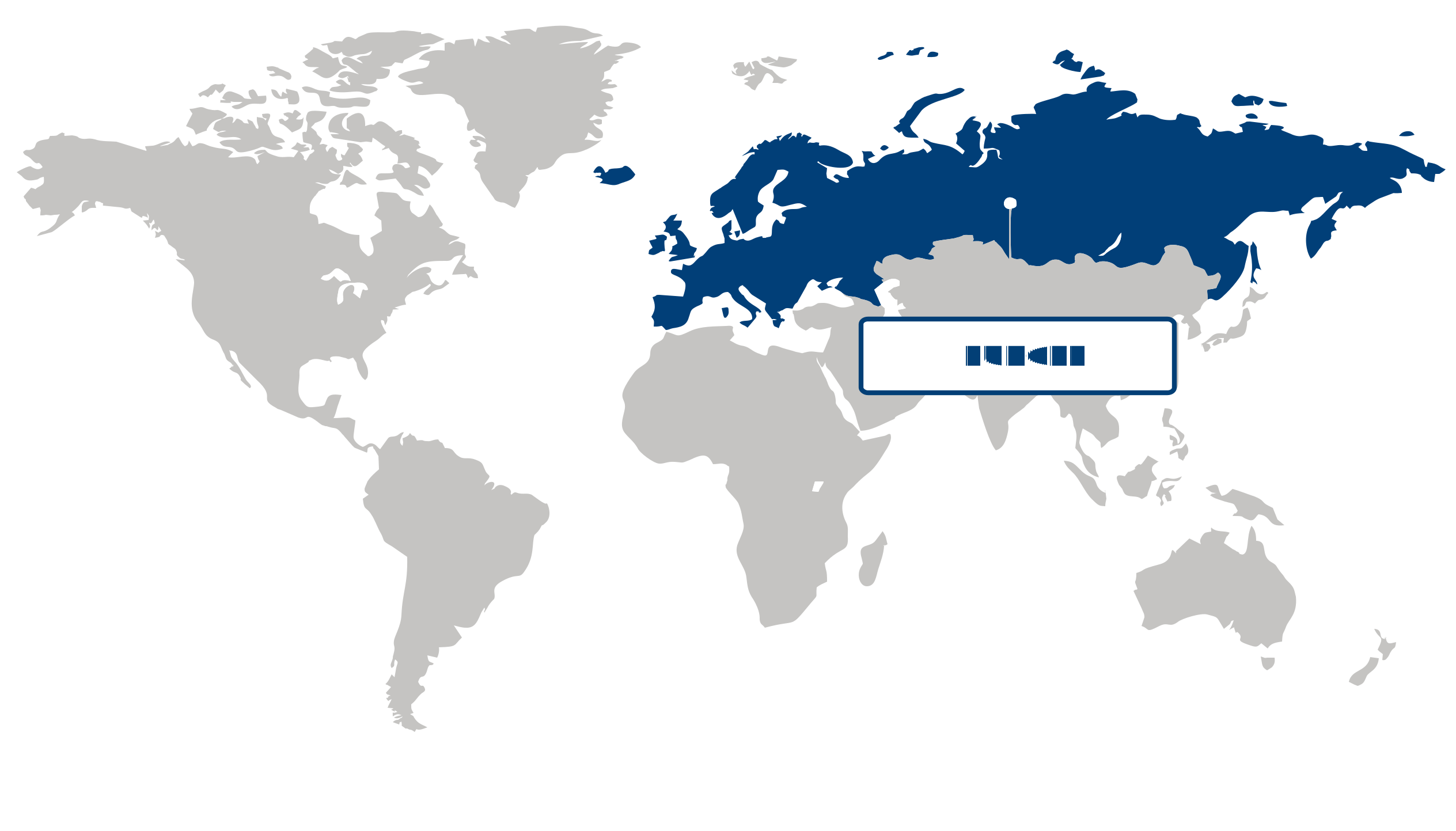
Europe dominated the automotive diecast scale model market in 2025, representing more than 39% of the global share. This leadership stems from the region’s robust collector culture and the sustained demand for premium licensed automotive miniatures, which align with Europe’s appreciation for craftsmanship and heritage brands. According to the European Collectors Association, enthusiasts increasingly seek high-fidelity replicas of classic and luxury vehicles, driving manufacturers like Minichamps and Schuco to expand offerings. Additionally, rising disposable incomes and sophisticated retail ecosystems in Europe foster premium spending. The region’s strong intellectual property enforcement ensures authenticity, further boosting consumer confidence. Looking forward, Europe’s blend of tradition and innovation positions it as a hotspot for evolving collector preferences and technologically advanced production techniques, offering substantial growth prospects in the automotive diecast scale model market.
Germany anchors the European automotive diecast scale model market, reflecting the country’s deep automotive legacy and a discerning consumer base. German companies such as Autoart and Herpa emphasize meticulous detailing and officially licensed replicas, capitalizing on the affinity for brands like BMW, Mercedes-Benz, and Porsche. The Deutscher Verband der Automobilindustrie (VDA) reports that local hobbyists prioritize precision and authenticity, driving product differentiation. Moreover, Germany’s extensive network of specialty retailers and collector events enhances market penetration. This intensifying domestic demand confirms Germany’s pivotal role, reinforcing Europe’s overall market dominance.
France significantly contributes to Europe’s automotive diecast scale model market by blending cultural appreciation for automotive heritage with a growing interest in limited-edition collectibles. Brands such as Norev, headquartered in France, specialize in producing high-quality replicas of iconic French vehicles like Citroën and Peugeot, appealing to national pride and global collectors alike. The Fédération Française de Modélisme highlights increasing participation in automotive miniature exhibitions, reflecting vibrant community engagement. This dynamic nurtures innovation and collaboration among manufacturers and collectors, enhancing product variety and market depth. France’s specialization enriches the European landscape, amplifying the region’s appeal to discerning collectors in the automotive diecast scale model market.
Asia Pacific Market Analysis:
Asia Pacific emerged as the fastest-growing region in the automotive diecast scale model market, registering a robust CAGR of 7.5%. This dynamic growth is primarily driven by expanding hobbyist communities and the rising popularity of automotive collectibles across the region. Increasing disposable incomes coupled with a cultural emphasis on preserving automotive heritage have strengthened consumer demand for detailed and authentic diecast models. Additionally, rapid urbanization and digital connectivity have enabled niche collector groups to flourish, facilitating peer-to-peer exchanges and specialized retail experiences. The widespread interest in automotive collectibles is also supported by local manufacturers adopting advanced production technologies to meet rising quality expectations. The prominence of automotive-themed events and exhibitions, such as those promoted by the Japan Diecast Model Association, further enhances market visibility. Looking ahead, Asia Pacific’s blend of cultural affinity and technological adoption positions it as an enduring hotspot for investment and innovation in the automotive diecast scale model market.
Japan commands a pivotal role within Asia Pacific’s automotive diecast scale model market, where consumer preferences lean heavily towards precision and authenticity. The nation’s established hobbyist base values meticulous craftsmanship, prompting manufacturers to integrate cutting-edge production techniques like 3D laser etching and high-detail paint applications announced by Tomica Limited. Moreover, Japan’s regulatory focus on product safety and quality ensures sustained consumer trust and market stability. Cultural festivals celebrating automobiles, supported by the Japan Automobile Manufacturers Association, continue to nurture collector enthusiasm and product demand. These factors create a fertile environment for premium segment growth, reinforcing Japan’s status as a trendsetter in the region’s collectible market. Consequently, Japan remains a strategic cornerstone for stakeholders aiming to capitalize on Asia Pacific’s overall growth in automotive diecast scale models.
China plays a transformative role in Asia Pacific’s ascending trajectory within the automotive diecast scale model market, driven by rapid urbanization and an expanding middle class eager to engage in leisure activities. The rising popularity of automotive collectibles is bolstered by a surge in digital retail platforms, with e-commerce giants such as Alibaba providing extensive reach for niche products. Local manufacturers are increasingly adopting innovative designs and partnerships to appeal to younger demographics, a trend underscored by joint ventures reported by Shenzhen-based diecast producers. Regulatory support for cultural industries fosters favorable conditions for hobbyist expansion, further amplified by grassroots automotive clubs and online communities on platforms like Weibo. As China continues to cultivate these dynamics, it solidifies its position as a critical growth engine within Asia Pacific, amplifying opportunities across the automotive diecast scale model market landscape.
North America Market Trends:
North America held a commanding share of the automotive diecast scale model market, driven by its established collector culture and strong retail infrastructure supporting hobbyists and enthusiasts. The region’s economic resilience and widespread digital engagement have increased demand for collectible models, while advancements in manufacturing and supply chain efficiencies by companies like Greenlight Collectibles reinforce market leadership. Consumer preferences have shifted toward highly detailed, limited-edition models, reflecting growing interest in nostalgia and premium collectible segments, as highlighted in recent press releases from Maisto International. Regulatory frameworks supporting environmentally conscious materials and packaging further align with regional sustainability trends. With robust e-commerce platforms facilitating broader accessibility and international distribution, North America is well positioned to capitalize on evolving consumer behaviors and operational innovations, creating substantial growth opportunities in the automotive diecast scale model market.
The U.S. serves as a pivotal driver within North America’s automotive diecast scale model market, anchored by a vibrant community of collectors and a strong culture of automotive enthusiasm. Demand is further buoyed by increasing participation in motorsport events and pop culture collaborations, as reported by the Specialty Equipment Market Association (SEMA). Consumer spending on premium and licensed merchandise continues to rise, reflecting a preference for authenticity and brand heritage in scale models. Additionally, U.S.-based manufacturers are accelerating adoption of digital customization technologies, exemplified by Mattel’s expansion into digitally enhanced collectible models, positioning the country as a hub for innovation. This dynamic underscores the U.S. role not only as a major consumption market but also as an innovation leader, enhancing North America’s competitive edge in the global automotive diecast scale model market.
| Parameter | North America | Asia Pacific | Europe | Latin America | MEA |
|---|---|---|---|---|---|
| Innovation Hub i Scale Nascent Developing Advanced | |||||
| Cost-Sensitive Region i Scale Low Medium High | |||||
| Regulatory Environment i Scale Restrictive Neutral Supportive | |||||
| Demand Drivers i Scale Weak Moderate Strong | |||||
| Development Stage i Scale Emerging Developing Developed | |||||
| Adoption Rate i Scale Low Medium High | |||||
| New Entrants / Startups i Scale Sparse Moderate Dense | |||||
| Macro Indicators i Scale Weak Stable Strong |
Segment Leadership and Growth Trends
Automotive Diecast Scale Model Market Share (%), by License, 2026
Go beyond the chart, access full insights & data tables
Request Free Sample ReportThe licensed segment represented the largest share in the automotive diecast scale model market in 2025, driven by strong collector demand for officially licensed replica models. This leadership stems from the enhanced authenticity and brand trust that licensed models provide, catering to consumers who prioritize accuracy and provenance. International licensing agreements, as noted in Mattel’s corporate press releases, have expanded portfolio diversity and reinforced quality assurance, encouraging deeper collector engagement. Such officially sanctioned products also reduce counterfeit risks, appealing to discerning hobbyists and investors alike. Licensed models offer strategic advantages by leveraging popular automotive brands to drive premium pricing and global market penetration. Given increasing emphasis on intellectual property rights enforcement and consumer preference for genuine collectibles, the licensed segment is set to maintain its dominant position as regulations and partnerships continue to favor officially endorsed merchandise.
Analysis by Scale
The 1:43 scale segment held the largest share in the automotive diecast scale model market in 2025, fueled by growing collector and hobbyist demand for models balancing detailed replication with manageable display dimensions. This scale’s popularity reflects preferences for high-quality craftsmanship that fits typical home and office settings, supporting sustained consumer appeal worldwide. Associations such as the International Diecast Collectors Club highlight the 1:43 scale for its ideal size-to-detail ratio, fostering vibrant secondary markets and enthusiast communities. Supply chain efficiencies and advances in precision molding also enhance production quality at this scale, enabling manufacturers to meet increasing demand with improved turnaround. For industry players, focusing on the 1:43 scale opens opportunities in premium and mid-tier segments, capitalizing on spatial convenience and aesthetic standards. As hobbyist demographics evolve, the 1:43 segment remains critical for balancing tradition with practical collector needs.
Analysis by Type
The cars segment dominated the automotive diecast scale model market in 2025, driven by the category’s widespread popularity among diecast enthusiasts and collectors. This leadership is reinforced by culturally ingrained automotive fascination across markets, where cars symbolize innovation and lifestyle aspirations, as supported by trends reported by the Specialty Equipment Market Association (SEMA). Product development in this segment benefits from ongoing digital transformation initiatives that facilitate detailed replica design and customization, responding to varied consumer tastes. Competitive dynamics favor car models through broader licensing availability and more diversified collections compared to other vehicle types. This segment provides lucrative opportunities for established firms to leverage iconic models and for emerging players to innovate with niche or limited-edition releases. Given persistent global automotive enthusiasm and expanding collector bases, the cars segment will remain a cornerstone of the market landscape.
| Segment | Sub-Segment | Largest Segment | Fastest Growing |
|---|---|---|---|
| License | Licensed, Unlicensed, Custom | ||
| Scale | 118, 124, 132, 143, 164 | ||
| Type | Cars, Motorcycles, Trucks, Aircraft, Other | ||
| Material | Metal, Resin, Plastic, Alloy, Composite |
Competitive Landscape and Market Positioning
The competitive landscape is marked by dynamic efforts among these leaders to maintain relevance and edge through collaborations, portfolio expansions, and technological enhancements. New model introductions highlighting licensed vehicles deepen consumer engagement, while behind-the-scenes partnerships foster design innovation. Investment in advanced manufacturing techniques enhances detail fidelity, raising consumer expectations. Several players have expanded regional footprints through strategic alliances, increasing accessibility in emerging and mature markets alike. These moves collectively intensify rivalry yet stimulate innovation, pressuring each company to elevate quality, diversify offerings, and accelerate product cycles, thus reinforcing leadership within an increasingly discerning collector base.
Strategic / Actionable Recommendations for Regional Players:
North American firms should pursue collaborations with automotive manufacturers and entertainment franchises to capitalize on consumer affinity for licensed products. Integrating digital customization options and augmented reality features could unlock novel engagement avenues amid evolving collector preferences.
In Asia Pacific, companies can strengthen positions by embracing emerging manufacturing technologies, enabling premium-quality yet affordable models. Aligning with regional automotive events and cultural trends may further deepen consumer connections and broaden market outreach.
European players might benefit from augmenting historical and limited-edition releases, a strong regional passion point, while exploring partnerships that enhance precision and authenticity. Leveraging e-commerce platforms and experiential marketing could enrich customer experience, fostering loyalty amid intensifying competition.
| Company | Market Share | Company Revenue | Revenue CAGR (%) | Product Portfolio | Geographic Presence | Innovation / R&D Focus | Strategic Developments |
|---|---|---|---|---|---|---|---|
| No companies available. | |||||||
Industry Development/News
| Company Name | Date | Key Development |
|---|
Customize Your Report
Explore examples of how this report can be tailored to different research needs, including custom segments, additional topics or chapters, and related reports. Click a section of the wheel or its numbered marker to explore the available options.
Automotive Diecast Scale Model Market — Custom Segments
| Segment | Sub-Segment |
|---|---|
| No segment data available. | |
Automotive Diecast Scale Model Market — Custom TOC
| Custom Chapter | Custom Details | ||
|---|---|---|---|
| No custom TOC data available. | |||
Need a different cut of the data?
Request Custom ResearchWhat are the growth projections for the automotive diecast scale model industry?
What is the leading region in terms of automotive diecast scale model market share?
Which area is showing the greatest surge in automotive diecast scale model sector?
Where is the licensed segment seeing the strongest adoption within the automotive diecast scale model industry?
When did 143 sub-segment emerge as the largest sub-segment in the scale segment of automotive diecast scale model sector?
Why is the cars segment leading in the automotive diecast scale model industry?
Why does metal sub-segment dominate the material segment of automotive diecast scale model sector?
Which companies dominate the automotive diecast scale model landscape?
Our Clients
"The report provided us with a clear direction, and the level of detail was beyond what we expected. I would definitely recommend their services to others."
Haier Appliances
"The collaboration with Fundamental Business Insights has added significant value to our decision-making process, and we look forward to continuing this partnership for our future market research requirements."
Luxottica Group S.p.A.
"The team at FBI delivered an exceptional research report. The insights on industry innovations were particularly impressive and added a lot of value to the overall report."
Nike
Our Research Team & Methodology
Every Fundamental Business Insights report is built by a dedicated vertical research team, validated through a structured primary-and-secondary methodology, and reviewed for accuracy before it reaches you.
Research Team Overview
Prepared by the Consumer Goods & Services Research Team
Delivery
Published
Demand
Available
Support
Trust & Compliance
Research Domains
10 coverage areasResearch Intelligence
| Source | Reference |
|---|---|
| International Organization for Standardization (ISO) | www.iso.org |
| ASTM International | www.astm.org |
| U.S. Consumer Product Safety Commission (CPSC) | www.cpsc.gov |
| European Commission – Consumer Safety | ec.europa.eu/safety-gate |
| Consumer Technology Association (CTA) | www.cta.tech |
| National Retail Federation (NRF) | nrf.com |
| World Retail Congress | www.worldretailcongress.com |
| World Travel & Tourism Council (WTTC) | wttc.org |
| UN Tourism | www.unwto.org |
| Personal Care Products Council (PCPC) | www.personalcarecouncil.org |
| Cosmetics Europe | cosmeticseurope.eu |
| International Housewares Association (IHA) | www.housewares.org |
| American Apparel & Footwear Association (AAFA) | www.aafaglobal.org |
| World Federation of the Sporting Goods Industry (WFSGI) | wfsgi.org |
| Juvenile Products Manufacturers Association (JPMA) | www.jpma.org |
| Pet Industry Joint Advisory Council (PIJAC) | pijac.org |
| International Council of Toy Industries (ICTI) | www.toy-icti.org |
| International Association of Amusement Parks and Attractions (IAAPA) | iaapa.org |
| Organisation for Economic Co-operation and Development (OECD) | www.oecd.org |
| World Bank Data | data.worldbank.org |
Research Workflow & Quality Assurance
Data Collection
Verified information gathered through primary and secondary research.
Data Triangulation
Cross-validation using multiple independent data sources.
Forecast Modelling
Market estimates developed using historical trends and analytical models.
Analyst Validation
Findings reviewed by domain experts for accuracy and consistency.
Editorial & Quality Review
Final editorial, quality, and compliance checks before publication.
Final Publication
Released after successful completion of the internal review process.
Report Coverage
📊 Market Assessment
- Market Size & Forecast
- Market Segmentation
- Regional Analysis
- Growth Drivers & Challenges
- Market Dynamics
🏢 Competitive Intelligence
- Competitive Landscape
- Company Profiles
- Competitive Benchmarking
- Mergers & Acquisitions
- Market Share Analysis or Key Company Strategies
🔍 Strategic Analysis
- Value Chain Analysis
- Porter's Five Forces
- PESTLE Analysis
- Pricing Trends
- Supply-Demand Analysis
🚀 Future Outlook
- Technology Landscape
- Regulatory Landscape
- Investment & Funding Landscape
- Emerging Opportunities
- Future Market Outlook
Have a question about this report or need a custom scope?
Request Customization