Automotive Emission Test Equipment Market Size & Growth Forecast 2027–2036, By Segments (Emission Equipment, Solution), Regional Demand Trends (North America, Asia Pacific, Europe), Key Country Insights (U.S., Japan, South Korea, Germany, France, Italy), and Competitive Landscape
Market Size and Growth Outlook
Automotive Emission Test Equipment Market size was valued at USD 1 billion in 2026 and is anticipated to grow at a 5.51% CAGR from 2027 to 2036, attaining USD 1.71 billion by 2036. The industry revenue for 2027 is assessed at USD 1.05 billion.
Get more details on this report
Request Free Sample ReportAutomotive Emission Test Equipment Market Intelligence Snapshot
Regional Market Dynamics
- Europe accounted for 35.62% of the market in 2026, supported by stringent emissions compliance, extensive inspection infrastructure, and consistent replacement demand for advanced testing equipment.
- Asia Pacific is projected to grow at a 5.88% CAGR, driven by rising vehicle production, expanding inspection capacity, tighter emissions oversight, and increasing demand for efficient compliance testing systems.
Segment Momentum
- This segment held an 80.75% share in 2026 due to its broad coverage of essential testing hardware and components used across inspection, diagnostics, and compliance activities.
- Emission test services are growing fastest because they provide testing access without the costs and operational responsibilities associated with equipment ownership, maintenance, and calibration.
Market Expansion Drivers
- Strict vehicular emission regulations and Euro standards enforcement expanding compliance testing demand.
- Rising periodic technical inspection mandates driving opacity meter and portable emissions system adoption.
- Fleet electrification transition increasing need for hybrid vehicle emission calibration and digital monitoring systems.
Leading Market Participants
- Major players in the automotive emission test equipment market include HORIBA, Ltd. (Japan), AVL List GmbH (Austria), SGS SA (Switzerland), Applus+ (Spain), TÜV NORD AG (Germany), TEXA S.p.A. (Italy), CAPELEC SAS (France), Gemco Equipment Ltd. (United Kingdom), Robert Bosch GmbH (Germany), Maha Maschinenbau Haldenwang GmbH & Co. KG (Germany).
Global Market Forecast Snapshot
Market Outlook
- 2026 Market Size: USD 1 billion
- 2027 Estimated Market Size: USD 1.05 billion.
- Projected Market Size: USD 1.71 billion by 2036
- Growth Forecast: 5.51% CAGR (2027-2036)
Regional and Segment Outlook
- Leading Regional Market: Europe
- High-Growth Regional Hub: Asia Pacific
- Core Revenue Segment: Other Vehicle Emission Test Equipment/Components (Emission Equipment) | Emission Test Equipment (Solution)
- Emerging Opportunity Segment: Opacity Meters/Smoke Meters (Emission Equipment) | Emission Test Services (Solution)
Market Growth Drivers and Industry Trends
Strict vehicular emission regulations and Euro standards enforcement expanding compliance testing demand
Stringent vehicle emission requirements will drive the automotive emission test equipment market growth by increasing the need for accurate and reliable systems capable of verifying compliance with regulatory standards. As governments strengthen controls on vehicle pollutants, manufacturers, testing facilities, and inspection authorities require equipment that can measure emissions under defined testing conditions. Continued enforcement of euro standards and related regulatory requirements also increases the importance of standardized testing procedures, calibration, and monitoring throughout the vehicle compliance process.
Rising periodic technical inspection mandates driving opacity meter and portable emissions system adoption
Expansion of periodic technical inspection requirements is supporting the automotive emission test equipment market growth by increasing the frequency with which vehicles must undergo emissions-related assessments. Inspection centers require practical equipment such as opacity meters and portable emissions systems to evaluate exhaust performance efficiently across different vehicle categories. The need for accessible and repeatable testing during routine inspections encourages greater deployment of measurement technologies that can identify excessive emissions and support enforcement of vehicle environmental requirements.
Fleet electrification transition increasing need for hybrid vehicle emission calibration and digital monitoring systems
As vehicle fleets transition toward electrified powertrains, the automotive emission test equipment market growth is being influenced by the evolving requirements associated with hybrid vehicles and increasingly digital vehicle architectures. Hybrid vehicles combine internal combustion engines with electric propulsion, creating more complex operating conditions that require appropriate emissions calibration and monitoring approaches. Digital testing and monitoring systems can help assess vehicle performance across different operating modes while providing more integrated data for diagnostics, compliance assessment, and emissions management.
| Growth Driver | Impact on CAGR | Regulatory Influence | Geographic Relevance | Adoption Rate | Impact Timeline |
|---|---|---|---|---|---|
| Strict vehicular emission regulations and Euro standards enforcement expanding compliance testing demand | 2.00% | High | Europe, North America, Asia Pacific | High | Near Term |
| Rising periodic technical inspection mandates driving opacity meter and portable emissions system adoption | 1.70% | High | Europe, North America, Asia Pacific | High | Near Term |
| Fleet electrification transition increasing need for hybrid vehicle emission calibration and digital monitoring systems | 1.30% | Moderate | Global | Medium | Mid Term |
Unlock insights tailored to your business with our bespoke market research solutions.
Click to get your customized report now.
Regional Demand Dynamics
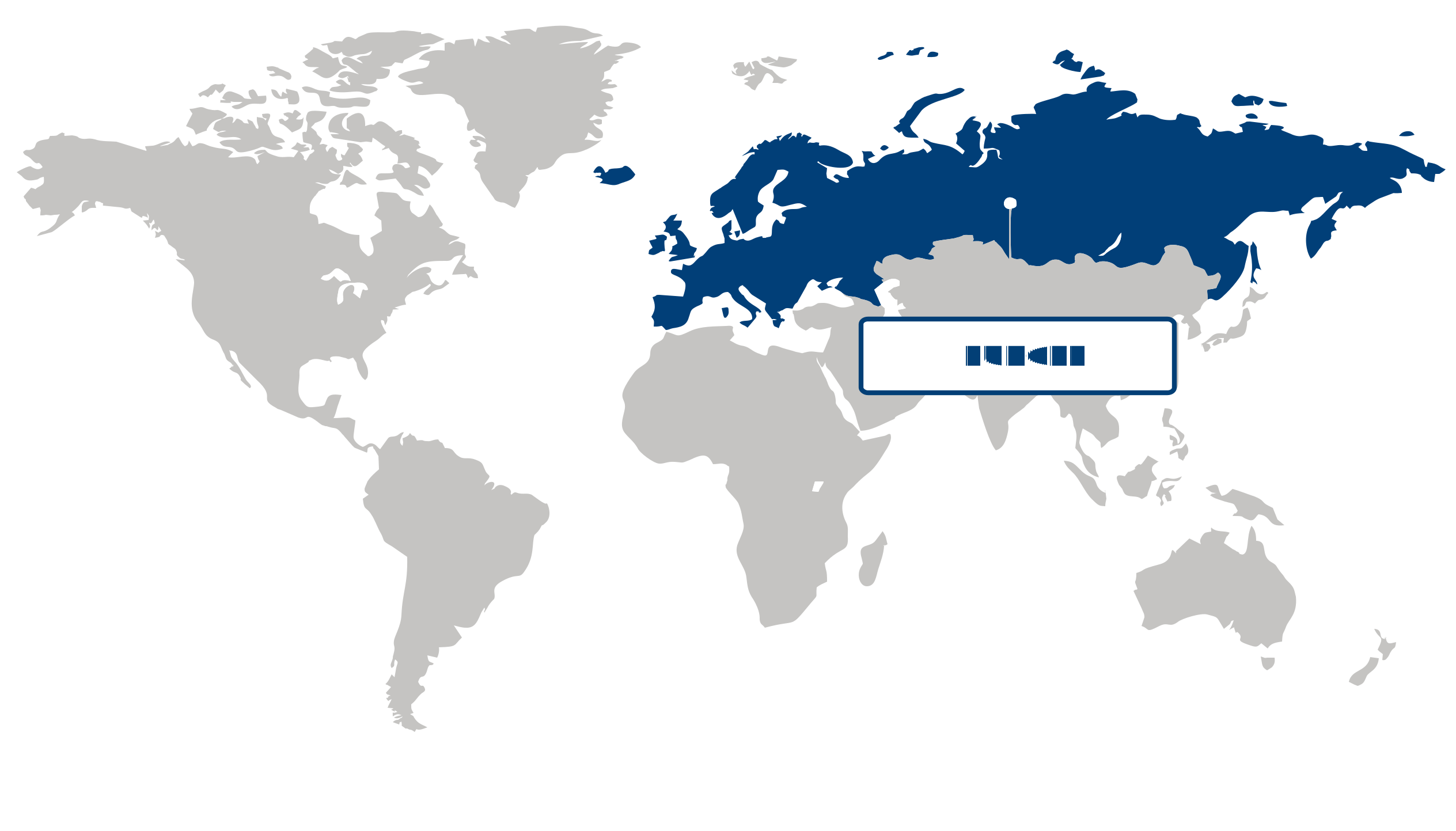
Europe (Largest Region)
Europe accounted for the largest share of 35.62% in 2026 in the automotive emission test equipment market, reflecting the region’s stringent environmental regulations and strong focus on reducing vehicle emissions. Automotive manufacturers and testing facilities require sophisticated equipment to comply with increasingly demanding emissions standards and validate vehicle performance under regulated testing conditions. The region’s established automotive manufacturing base, emphasis on environmental sustainability, and continued development of cleaner vehicle technologies support sustained demand for advanced emission measurement and testing systems.
Asia Pacific (Fastest-Growing Region)
Asia Pacific is the fastest-growing region, supported by expanding automotive production, increasing vehicle ownership, and the implementation of tighter environmental standards across major markets. Governments and regulatory authorities are placing greater emphasis on controlling transportation-related emissions, encouraging manufacturers to strengthen testing and compliance capabilities. The expansion of automotive manufacturing infrastructure, technological upgrades in testing facilities, and growing adoption of cleaner powertrain technologies are creating additional opportunities for emission test equipment across the region.
| Parameter | North America | Asia Pacific | Europe | Latin America | MEA |
|---|---|---|---|---|---|
| Innovation Hub i Scale Nascent Developing Advanced | |||||
| Cost-Sensitive Region i Scale Low Medium High | |||||
| Regulatory Environment i Scale Restrictive Neutral Supportive | |||||
| Demand Drivers i Scale Weak Moderate Strong | |||||
| Development Stage i Scale Emerging Developing Developed | |||||
| Adoption Rate i Scale Low Medium High | |||||
| New Entrants / Startups i Scale Sparse Moderate Dense | |||||
| Macro Indicators i Scale Weak Stable Strong |
Key Country Insights
Germany 🇩🇪
Precision Validation FocusGermany prioritizes highly accurate automotive emission test equipment that supports premium vehicle manufacturing and stringent regulatory verification. The market benefits from continuous upgrades in laboratory testing capabilities and integrated measurement technologies across automotive engineering operations.
France 🇫🇷
Regulatory Inspection ModernizationFrance emphasizes modernization of automotive emission test equipment for inspection centers and vehicle certification activities. Demand reflects continued investment in accurate emissions measurement, digital reporting capabilities, and reliable testing infrastructure supporting environmental compliance.
Italy 🇮🇹
Workshop Equipment EnhancementItaly focuses on upgrading automotive emission test equipment within independent workshops and vehicle inspection networks. The market supports practical, flexible testing platforms that improve service efficiency while meeting evolving emissions verification requirements across diverse vehicle fleets.
Japan 🇯🇵
Advanced Inspection IntegrationJapan focuses on integrating automotive emission test equipment with automated production and quality assurance processes. Manufacturers increasingly seek compact, high-precision testing solutions that align with efficient vehicle development and evolving emissions validation practices.
South Korea 🇰🇷
Smart Testing InfrastructureSouth Korea continues expanding smart automotive emission test equipment across vehicle manufacturing and inspection facilities. The market favors digitally connected systems that improve testing efficiency, support advanced powertrain validation, and streamline regulatory compliance workflows.
United States 🇺🇸
Compliance Technology AdoptionThe U.S. automotive emission test equipment market emphasizes advanced diagnostic platforms that help manufacturers and testing facilities comply with evolving emissions and inspection requirements. Demand is supported by investments in connected testing systems, calibration accuracy, and workshop modernization.
Segment Leadership and Growth Trends
Automotive Emission Test Equipment Market Share (%), by Emission Equipment, 2026
Go beyond the chart, access full insights & data tables
Request Free Sample ReportEmission Equipment Segment Analysis: Other Vehicle Emission Test Equipment/Components (Largest Segment) vs Opacity Meters/Smoke Meters (Fastest-Growing Segment)
Other vehicle emission test Equipment/Components dominated the automotive emission test equipment market in 2026, accounting for an 80.75% share, supported by their broad application across vehicle emission measurement, diagnostics, and regulatory compliance testing. These equipment and components enable comprehensive assessment of exhaust emissions and vehicle performance, making them important for inspection centers, testing facilities, and automotive service environments. Increasing emphasis on emissions compliance and tighter environmental standards is sustaining demand for versatile testing solutions capable of addressing different vehicle categories and emission parameters.
Opacity Meters/Smoke meters are expected to grow at the fastest rate, driven by increasing attention to visible exhaust emissions and particulate pollution from combustion-powered vehicles. These instruments provide practical measurement of smoke and exhaust opacity, supporting vehicle inspections and emission-control programs. Their relevance is strengthened by continued efforts to identify high-emitting vehicles and improve compliance with environmental requirements, particularly where diesel exhaust monitoring remains important.
Solution Segment Analysis: Emission Test Equipment (Largest Segment) vs Emission Test Services (Fastest-Growing Segment)
Emission test equipment held the largest position in the automotive emission test equipment market in 2026, representing a 49.93% share, as accurate measurement and monitoring systems remain fundamental to vehicle emissions testing and regulatory verification. These systems support the detection and quantification of pollutants while enabling testing facilities and automotive stakeholders to assess vehicle compliance with applicable emission requirements. Rising regulatory scrutiny and the continued need for reliable testing infrastructure are reinforcing demand for specialized equipment.
The emission test services segment is poised for the fastest growth as vehicle owners, inspection facilities, and other end users increasingly seek specialized testing expertise rather than managing all testing activities internally. Service-based models can provide access to technical capabilities, equipment operation, diagnostics, and compliance support while reducing operational complexity for users. Growing emphasis on efficient and standardized emissions verification is expected to encourage broader use of outsourced and specialized testing services.
| Segment | Sub-Segment | Largest Segment | Fastest Growing |
|---|---|---|---|
| Emission Equipment | Opacity Meters/Smoke Meters, Other Vehicle Emission Test Equipment/Components | Other Vehicle Emission Test Equipment/Components | Opacity Meters/Smoke Meters |
| Solution | Emission Test Equipment, Emission Test Software, Emission Test Services | Emission Test Equipment | Emission Test Services |
Competitive Landscape and Market Positioning
Prominent players in the automotive emission test equipment market:
1. HORIBA Ltd. (Japan)
2. AVL List GmbH (Austria)
3. SGS SA (Switzerland)
4. Applus+ (Spain)
5. TÃœV NORD AG (Germany)
6. TEXA S.p.A. (Italy)
7. CAPELEC SAS (France)
8. Gemco Equipment Ltd. (United Kingdom)
9. Robert Bosch GmbH (Germany)
10. Maha Maschinenbau Haldenwang GmbH & Co. KG (Germany)
The automotive emission test equipment market is being influenced by tightening environmental regulations and rising demand for advanced vehicle diagnostics systems. Manufacturers are developing high-precision testing technologies capable of supporting evolving emission compliance standards across conventional and electric vehicle segments. Automation and digital reporting capabilities are also improving efficiency and accuracy in emission testing operations.
| Company | Market Share | Company Revenue | Revenue CAGR (%) | Product Portfolio | Geographic Presence | Innovation / R&D Focus | Strategic Developments |
|---|---|---|---|---|---|---|---|
| HORIBA Ltd. (Japan) | |||||||
| AVL List GmbH (Austria) | |||||||
| SGS SA (Switzerland) | |||||||
| Applus+ (Spain) | |||||||
| TÜV NORD AG (Germany) | |||||||
| TEXA S.p.A. (Italy) | |||||||
| CAPELEC SAS (France) | |||||||
| Gemco Equipment Ltd. (United Kingdom) | |||||||
| Robert Bosch GmbH (Germany) | |||||||
| Maha Maschinenbau Haldenwang GmbH & Co. KG (Germany). |
Industry Development/News
| Company Name | Date | Key Development |
|---|---|---|
| HORIBA | Feb-21 | HORIBA announced that its vehicle emission test automation software, STAR VETS, had been made available for the Windows 10 64-bit operating system. The software ensures that vehicle emission tests run efficiently and smoothly with preloaded processes, configuration data, and results calculations for a broad range of regulatory compliances. |
| Capelec | Jan-21 | Capelec, in partnership with IFPEN, developed Real-e, a connected tool that measures emissions in a vehicle’s exhaust gases in actual driving conditions. These measurements are based on the driving style, traffic conditions, and the kind of journey. |
Customize Your Report
Explore examples of how this report can be tailored to different research needs, including custom segments, additional topics or chapters, and related reports. Click a section of the wheel or its numbered marker to explore the available options.
Automotive Emission Test Equipment Market — Custom Segments
| Segment | Sub-Segment |
|---|---|
| Vehicle Type | Passenger Vehicles, Light Commercial Vehicles, Heavy Commercial Vehicles, Two- & Three-Wheelers |
| Buyer Type | Automotive Manufacturers, Vehicle Inspection Centers, Automotive Repair & Service Facilities, Government & Regulatory Agencies |
| Testing Environment | Laboratory Testing, In-Line Production Testing, Service-Center Testing, Roadside & Field Testing |
Automotive Emission Test Equipment Market — Custom TOC
| Custom Chapter | Custom Details |
|---|---|
| Vehicle Emission Standards Compliance Roadmap |
|
| Emission Testing Infrastructure Gap Assessment |
|
| Electrification Impact on Emission Testing Demand |
|
Need a different cut of the data?
Request Custom ResearchWhat is the market size of automotive emission test equipment?
How will the automotive emission test equipment industry grow in terms of size and CAGR by 2036?
How are stricter emission regulations influencing demand in the automotive emission test equipment market?
How is fleet electrification changing equipment requirements in the automotive emission test equipment market?
Why does Other Vehicle Emission Test Equipment/Components lead the automotive emission test equipment market?
Why are emission test services the fastest-growing solution segment in the automotive emission test equipment market?
Why is Europe the largest automotive emission test equipment market?
What is driving growth in the automotive emission test equipment market across Asia Pacific?
Which organizations are considered leaders in the automotive emission test equipment landscape?
Our Clients
"The team surpassed our expectations with the report depth. The actionable insights provided proved crucial in navigating market challenges."
Tata Motors
"We found the report to be very informative. The expertise and attention to market nuances significantly influenced our business direction."
DENSO Corporation
"The consumer survey findings were quite good. We now have a clearer picture of the customer churning and retention strategy."
HL Mando
Our Research Team & Methodology
Every Fundamental Business Insights report is built by a dedicated vertical research team, validated through a structured primary-and-secondary methodology, and reviewed for accuracy before it reaches you.
Research Team Overview
Prepared by the Automotive & Transportation Research Team
Delivery
Published
Demand
Available
Support
Trust & Compliance
Research Domains
10 coverage areasResearch Intelligence
| Source | Reference |
|---|---|
| International Organization of Motor Vehicle Manufacturers (OICA) | www.oica.net |
| SAE International | www.sae.org |
| International Energy Agency (IEA) | www.iea.org |
| International Transport Forum (ITF) | www.itf-oecd.org |
| International Road Federation (IRF) | www.irf.global |
| International Organization for Standardization (ISO) | www.iso.org |
| United Nations Economic Commission for Europe (UNECE) | unece.org |
| National Highway Traffic Safety Administration (NHTSA) | www.nhtsa.gov |
| U.S. Department of Transportation (USDOT) | www.transportation.gov |
| European Automobile Manufacturers' Association (ACEA) | www.acea.auto |
| Society of Indian Automobile Manufacturers (SIAM) | www.siam.in |
| International Air Transport Association (IATA) | www.iata.org |
| International Civil Aviation Organization (ICAO) | www.icao.int |
| International Maritime Organization (IMO) | www.imo.org |
| International Union of Railways (UIC) | uic.org |
| American Public Transportation Association (APTA) | www.apta.com |
| International Federation of Robotics (IFR) | ifr.org |
| CharIN | www.charin.global |
| World Shipping Council | www.worldshipping.org |
| International Federation of Freight Forwarders Associations (FIATA) | fiata.org |
Research Workflow & Quality Assurance
Data Collection
Verified information gathered through primary and secondary research.
Data Triangulation
Cross-validation using multiple independent data sources.
Forecast Modelling
Market estimates developed using historical trends and analytical models.
Analyst Validation
Findings reviewed by domain experts for accuracy and consistency.
Editorial & Quality Review
Final editorial, quality, and compliance checks before publication.
Final Publication
Released after successful completion of the internal review process.
Report Coverage
📊 Market Assessment
- Market Size & Forecast
- Market Segmentation
- Regional Analysis
- Growth Drivers & Challenges
- Market Dynamics
🏢 Competitive Intelligence
- Competitive Landscape
- Company Profiles
- Competitive Benchmarking
- Mergers & Acquisitions
- Market Share Analysis or Key Company Strategies
🔍 Strategic Analysis
- Value Chain Analysis
- Porter's Five Forces
- PESTLE Analysis
- Pricing Trends
- Supply-Demand Analysis
🚀 Future Outlook
- Technology Landscape
- Regulatory Landscape
- Investment & Funding Landscape
- Emerging Opportunities
- Future Market Outlook
Have a question about this report or need a custom scope?
Request Customization