



Automotive Finance Market Size & Growth Forecast 2027–2036, By Segments (Provider, Finance, Vehicle, Purpose), Regional Demand Trends (North America, Asia Pacific, Europe), Key Country Insights (U.S., Japan, South Korea, Germany, France, Italy), and Competitive Landscape
Market Size and Growth Outlook
Automotive Finance Market size was estimated at USD 340.2 billion in 2026 and is projected to grow at a 7.22% CAGR from 2027 to 2036, surpassing USD 683.11 billion by 2036. The industry revenue for 2027 is calculated at USD 360.88 billion.
Base Year Value (2026)
USD 340.2 billion
CAGR (2027-2036)
7.22%
Forecast Year Value (2036)
USD 683.11 billion

Historical Data Period
2022-2026

Largest Region
Europe

Forecast Period
2027-2036
Automotive Finance Market Intelligence Snapshot:
-
Regional Market Dynamics:
- Europe leads with 41.66% share due to mature financing ecosystems, strong integration of banks and dealerships, and high penetration of leasing and credit-based vehicle purchases.
- Asia Pacific is growing at 8.36% CAGR, driven by rising vehicle ownership, expanding lender participation, and increasing adoption of installment-based financing across emerging consumer markets.
-
Segment Momentum:
- Banks accounted for 60.38% of the market in 2026 due to their established lending infrastructure, broad customer reach, standardized credit assessment, and long-standing relationships with vehicle dealers.
- Indirect finance is growing fastest because dealership-based financing streamlines the purchasing process, allowing buyers to complete vehicle purchases and financing together while helping lenders capture demand at the point of sale.
-
Market Expansion Drivers:
- Rising electric vehicle adoption expanding structured automotive loan and leasing demand.
- AI-driven credit underwriting improving approval efficiency and reducing default risk exposure.
- Growing dealership digital retailing and embedded finance models increasing loan origination channels.
-
Leading Market Participants:
Top players in the automotive finance market include Ally Financial Inc. (United States), Bank of America Corporation (United States), Capital One Financial Corporation (United States), JPMorgan Chase & Co. (United States), Ford Motor Credit Company LLC (United States), Toyota Financial Services Corporation (Japan), Volkswagen Financial Services AG (Germany), Santander Consumer USA Holdings Inc. (United States), Mercedes-Benz Mobility AG (Germany), Mitsubishi HC Capital Inc. (Hitachi Capital Corporation) (Japan).
Global Market Forecast Snapshot:
-
Market Outlook:
- 2026 Market Size: USD 340.2 billion
- 2027 Estimated Market Size: USD 360.88 billion.
- Projected Market Size: USD 683.11 billion by 2036
- Growth Forecasts: 7.22% CAGR (2027-2036)
-
Regional and Segment Outlook:
- Leading Regional Market: Europe
- High-Growth Regional Hub: Asia Pacific
- Core Revenue Segment: Banks (Provider) | Direct (Finance) | Passenger Vehicles (Vehicle) | Loan (Purpose)
- Emerging Opportunity Segment: OEMs (Provider) | Indirect (Finance) | Commercial Vehicles (Vehicle) | Leasing (Purpose)
Market Growth Drivers and Industry Trends
Rising electric vehicle adoption expanding structured automotive loan and leasing demand
Rising electric vehicle adoption will drive the automotive finance market growth by creating a broader need for structured financing and leasing options as consumers and businesses transition toward electric mobility. The higher upfront cost associated with many electric vehicles can increase reliance on loans, leases, and other financing arrangements that distribute vehicle acquisition costs over time. Financial providers can also develop financing structures aligned with electric vehicle ownership patterns, supporting greater accessibility for buyers while enabling dealerships to serve a wider range of customers seeking flexible payment solutions.
AI-driven credit underwriting improving approval efficiency and reducing default risk exposure
AI-driven credit underwriting will propel the automotive finance market growth by enabling lenders to assess borrower information more efficiently and support faster financing decisions. Automated analysis of credit profiles and relevant borrower characteristics can improve the consistency of risk evaluation while helping financial institutions identify potential repayment concerns at an earlier stage. More efficient underwriting processes can also reduce manual workloads, streamline loan processing, and support responsive financing experiences for customers purchasing vehicles through increasingly digital sales channels.
Growing dealership digital retailing and embedded finance models increasing loan origination channels
The automotive finance market growth is supported by expanding dealership digital retailing and embedded finance models that integrate financing directly into vehicle purchasing journeys. Digital platforms can allow customers to explore financing options, complete applications, and receive credit decisions alongside vehicle selection, reducing friction between shopping and loan origination. Dealerships and financing providers can further broaden access to credit by embedding financial products into online and omnichannel sales processes, creating additional touchpoints for loan and lease origination.
| Growth Driver Assessment Framework | |||||
| Growth Driver | Impact On CAGR | Regulatory Influence | Geographic Relevance | Adoption Rate | Impact Timeline |
|---|---|---|---|---|---|
| Rising electric vehicle adoption expanding structured automotive loan and leasing demand | 2.00% | Moderate | North America, Europe, Asia Pacific | High | Near Term |
| AI-driven credit underwriting improving approval efficiency and reducing default risk exposure | 1.80% | High | North America, Europe | High | Mid Term |
| Growing dealership digital retailing and embedded finance models increasing loan origination channels | 1.60% | Moderate | North America, Europe | Emerging | Mid Term |
Unlock insights tailored to your business with our bespoke market research solutions - Click to get your customized report now!
Regional Demand Dynamics
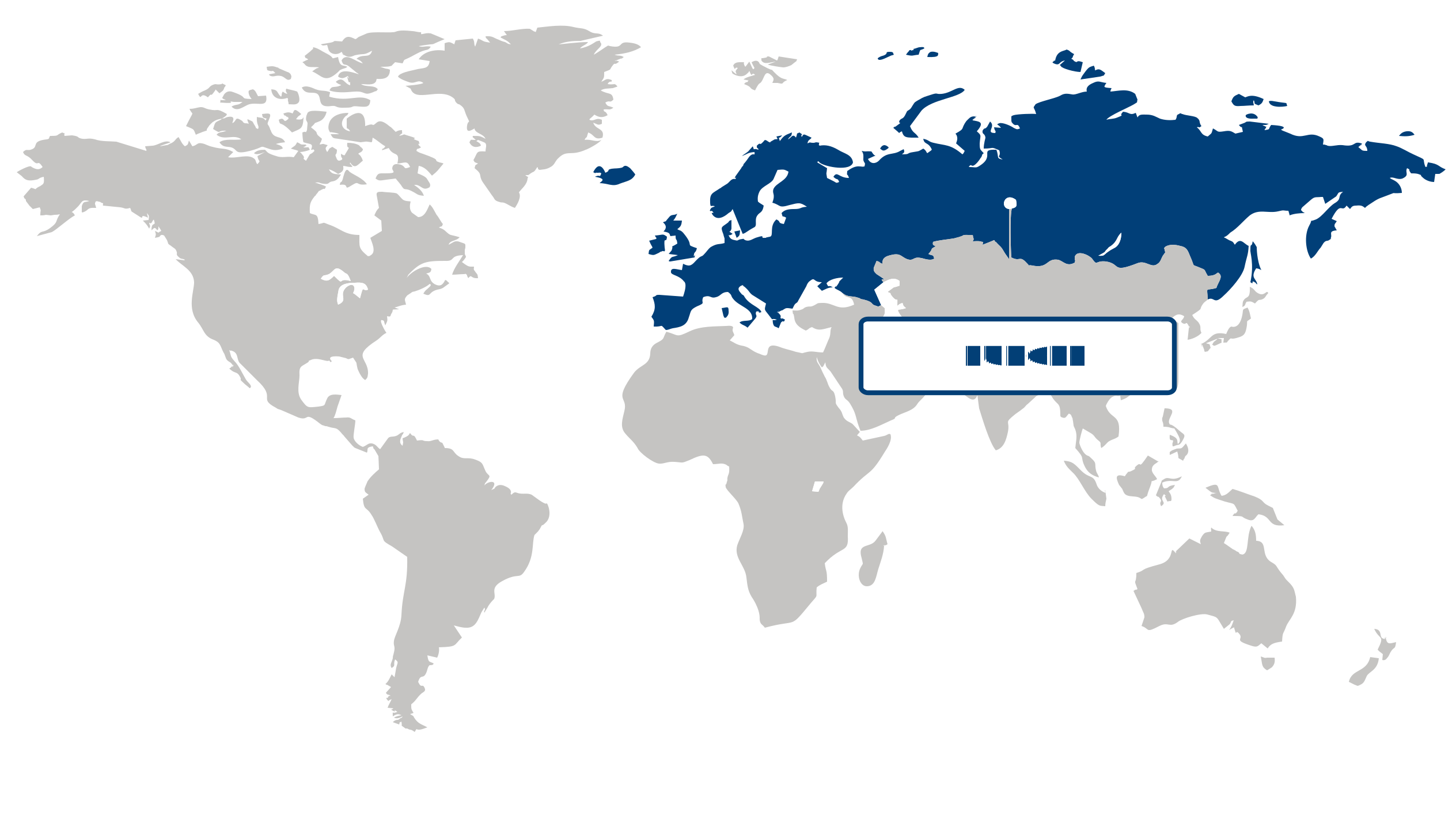
Largest Region
Europe
41.66% Market Share in 2026
Europe (Largest Region) vs Asia Pacific (Fastest-Growing Region)
The automotive finance market was led by Europe, which held a 41.66% share in 2026, supported by a mature automotive ecosystem, well-established consumer lending practices, and broad availability of financing options for vehicle purchases. Strong demand for passenger and commercial vehicles, together with widespread acceptance of installment-based purchasing and leasing models, reinforces the region’s financing activity. Regulatory frameworks that promote transparency in consumer credit, established financial infrastructure, and increasing preference for flexible ownership arrangements also contribute to market strength. Meanwhile, Asia Pacific is positioned as the fastest-growing region, driven by expanding vehicle ownership, rising household purchasing power, rapid urbanization, and increasing access to formal financial services. Growing penetration of digital lending platforms and simplified financing processes is making vehicle credit more accessible, particularly in emerging economies, while the expansion of automotive sales networks and demand for personal mobility creates additional opportunities for finance providers.
Key Country Insights
The U.S. automotive finance market emphasizes digital loan origination, flexible leasing models, and data-driven credit assessment. Lenders in the U.S. continue refining omnichannel financing experiences while expanding partnerships with dealerships and mobility service providers.
Japan continues adapting automotive finance offerings to changing vehicle ownership preferences and hybrid mobility models. Financial institutions in Japan emphasize customer retention through long-term leasing, maintenance packages, and digital account management.
South Korea integrates automotive finance with connected vehicle ecosystems and digital consumer platforms. Financial providers increasingly design flexible financing products that complement electric vehicles and technology-focused automotive purchasing decisions.
Germany prioritizes finance solutions closely aligned with automotive manufacturers and dealer networks. The country's automotive finance market increasingly supports electric vehicle adoption through tailored leasing structures and value-added financial services.
France aligns automotive finance with demand for low-emission vehicles and evolving mobility solutions. Financing providers in France are expanding leasing portfolios and incentive-compatible products that support environmentally focused vehicle purchasing decisions.
Italy maintains strong collaboration between dealerships and financial institutions to simplify vehicle financing. Automotive finance providers in Italy continue enhancing consumer access through customized installment plans and streamlined credit approval processes.
Segment Leadership and Growth Trends
Provider Segment Analysis: Banks (Largest Segment) vs OEMs (Fastest-Growing Segment)
Banks held the largest share of the automotive finance market with a 60.38% share in 2026, supported by their established lending infrastructure, broad customer relationships, and extensive experience in vehicle financing. Banks can provide structured credit products and established underwriting processes that serve consumers across diverse vehicle purchasing needs. Their strong financial position and widespread access to lending networks continue to make bank financing a major channel for vehicle purchases, reinforcing the segment's leading position in 2026.
The OEMs segment is the fastest-growing provider category, driven by vehicle manufacturers' increasing focus on offering financing solutions directly alongside vehicle purchases. OEM-backed finance can create a more integrated purchasing experience by combining vehicle sales with tailored financing, digital application processes, and customer support. The growing emphasis on customer retention, streamlined vehicle transactions, and embedded financial services is encouraging manufacturers to expand their role in automotive financing.
Finance Segment Analysis: Direct (Largest Segment) vs Indirect (Fastest-Growing Segment)
The direct finance segment represented the largest share of the automotive finance market in 2026, supported by consumers' continued use of financing arrangements obtained directly from financial institutions. Direct lending can provide borrowers with greater visibility into financing terms and allows financial providers to maintain a direct relationship with customers throughout the lending process. Established lending practices, digital application capabilities, and consumer familiarity with direct borrowing continue to sustain the segment's substantial market presence.
Indirect finance is the fastest-growing segment, benefiting from the increasing integration of financing into vehicle purchase transactions through dealerships and other automotive sales channels. Indirect arrangements can simplify the purchasing journey by allowing customers to arrange vehicle financing within the same transaction environment. Growing digitalization of automotive retail and the increasing emphasis on convenient, seamless purchasing experiences are supporting broader adoption of indirect financing models.
| Report Segmentation | |||
| Segment | Sub-Segment | Largest Segment | Fastest Growing Segment |
|---|---|---|---|
| Provider | Banks, OEMs, Others | Banks | OEMs |
| Finance | Direct, Indirect | Direct | Indirect |
| Vehicle | Commercial Vehicles, Passenger Vehicles | Passenger Vehicles | Commercial Vehicles |
| Purpose | Loan, Leasing, Others | Loan | Leasing |
 Read our Research Approach
Competitive Landscape and Market Positioning
Major players in the automotive finance market:
1. Ally Financial Inc. (United States)
2. Bank of America Corporation (United States)
3. Capital One Financial Corporation (United States)
4. JPMorgan Chase & Co. (United States)
5. Ford Motor Credit Company LLC (United States)
6. Toyota Financial Services Corporation (Japan)
7. Volkswagen Financial Services AG (Germany)
8. Santander Consumer USA Holdings Inc. (United States)
9. Mercedes-Benz Mobility AG (Germany)
10. Mitsubishi HC Capital Inc. (Hitachi Capital Corporation) (Japan)
The automotive finance market is evolving with digital lending platforms and automated credit assessment systems improving customer experience. Collaborative initiatives between financial institutions and mobility providers are enhancing service accessibility. New digital financing solutions are streamlining loan processing, while ecosystem integration is strengthening end-to-end automotive purchasing journeys.
Industry Development/News
| Company Name | Date | Key Development |
|---|---|---|
| KG Group | Jun-26 | KG Group announced plans to acquire K Car to build a vertically integrated mobility ecosystem. The transaction spans vehicle manufacturing, used-car distribution, automotive finance, and payments, supporting the company's long-term strategy to expand its operational footprint and capture market share across the automotive financial services value chain. |
| ITOCHU Corporation | May-26 | ITOCHU Corporation acquired a strategic stake in UK-based auto loan broker CARMONEY Ltd. through a partnership with Japan's ICT-focused overseas development fund. The investment broadens ITOCHU's geographic expansion into international automotive financing services and strengthens its positioning in competitive European vehicle finance markets. |
| duPont REGISTRY Group | Mar-26 | duPont REGISTRY Group acquired LLP Exotic Auto Finance, a specialized provider of leasing and financing solutions for premium vehicles. This acquisition expands the company's financial services capabilities, enhancing its competitive positioning and distribution reach within the high-end luxury and exotic automotive lending ecosystem. |
| Figure | Feb-26 | Figure entered into a strategic partnership with Agora Data to diversify into consumer automotive lending. The collaboration integrates auto loans into the Figure Connect technology ecosystem, broadening commercial access to structured automotive lending assets and accelerating digital transformation across its financing platform. |
| TrueCar | Oct-25 | TrueCar entered into a definitive agreement to be acquired by Fair Holdings in an all-cash transaction valued at approximately USD 227 million. The take-private transaction represents a significant ownership consolidation and corporate restructuring within the digital automotive retail, marketplace, and finance ecosystem. |
| Arra Finance | Jun-25 | Arra Finance agreed to acquire the auto-financing division of Crescent Bank. The transaction directly scales Arra Finance's core automotive lending operations, expanding its market share and competitive footprint within the subprime vehicle financing segment. |
| Solifi | Oct-24 | Solifi received a majority equity investment from private equity firm TA Associates. The capital infusion is directed toward accelerating global product development, geographic expansion, and targeted strategic acquisitions, strengthening Solifi's market position as an automotive finance technology solution provider. |
| AutoScout24 | Aug-24 | AutoScout24 executed an agreement to acquire TRADER Corporation, owner of leading digital automotive marketplaces in Canada. The cross-border acquisition drives geographic expansion and consolidates AutoScout24's market presence across automotive retail, financing, and transactional marketplace services. |
| Vroom | Jan-24 | Vroom implemented a major organizational restructuring, winding down its used vehicle e-commerce and dealership operations. The strategic shift reallocates all corporate resources toward its high-margin automotive finance operations and AI-driven data services, shifting its core business model. |
| Shorooq | Apr-26 | Shorooq participated in a USD 10.3 million Series A funding round for South Korean automotive fintech platform Chazm. The investment accelerates the commercialization of Chazm's digital finance solutions, which are designed to transform vehicles into data-driven financial assets. |
Why Choose Us
Specialized Expertise: Our team comprises industry experts with a deep understanding of your market segment. We bring specialized knowledge and experience that ensures our research and consulting services are tailored to your unique needs.
Customized Solutions: We understand that every client is different. That's why we offer customized research and consulting solutions designed specifically to address your challenges and capitalize on opportunities within your industry.
Proven Results: With a track record of successful projects and satisfied clients, we have demonstrated our ability to deliver tangible results. Our case studies and testimonials speak to our effectiveness in helping clients achieve their goals.
Cutting-Edge Methodologies: We leverage the latest methodologies and technologies to gather insights and drive informed decision-making. Our innovative approach ensures that you stay ahead of the curve and gain a competitive edge in your market.
Client-Centric Approach: Your satisfaction is our top priority. We prioritize open communication, responsiveness, and transparency to ensure that we not only meet but exceed your expectations at every stage of the engagement.
Continuous Innovation: We are committed to continuous improvement and staying at the forefront of our industry. Through ongoing learning, professional development, and investment in new technologies, we ensure that our services are always evolving to meet your evolving needs.
Value for Money: Our competitive pricing and flexible engagement models ensure that you get maximum value for your investment. We are committed to delivering high-quality results that help you achieve a strong return on your investment.
Select Licence Type

