Automotive Front & Rear Phygital Shield Market Size & Growth Forecast 2027–2036, By Segments (Product, Vehicle, Sales Channel, Technology, Material), Regional Demand Trends (North America, Asia Pacific, Europe), Key Country Insights (U.S., Japan, South Korea, Germany, France, Italy), and Competitive Landscape
Jump to Content
Market Size and Growth Outlook
Automotive Front & Rear Phygital Shield Market size stood at USD 820.01 million in 2026 and is predicted to grow at a 19.14% CAGR from 2027 to 2036, attaining USD 4.72 billion by 2036. The industry revenue for 2027 is calculated at USD 955.8 million.
Get more details on this report
Request Free Sample ReportAutomotive Front & Rear Phygital Shield Market Intelligence Snapshot
Regional Market Dynamics
- Europe accounted for 37.8% of the market in 2026, supported by advanced automotive manufacturing, strong safety and design priorities, and investments in electrification, connected vehicles, and driver-assistance technologies.
- Asia Pacific is projected to grow fastest as automotive production expands and manufacturers increase adoption of connected vehicle technologies, electric vehicles, and intelligent exterior components with digital functionality.
Segment Momentum
- Front phygital shields accounted for 62.4% of the market in 2026, reflecting their role in integrating sensors, lighting, displays, and communication features while supporting distinctive vehicle styling and functional protection.
- OEMs lead sales by integrating phygital shields during vehicle development and manufacturing, enabling suppliers to align digital functions, electronic platforms, styling, and safety requirements with vehicle architecture.
Market Expansion Drivers
- Rising demand for advanced vehicle protection and safety technologies.
- Integration of phygital shield technology with connected car systems.
- Expansion of OEM and aftermarket collaborations for phygital shield adoption.
Leading Market Participants
- Major players in the automotive front & rear phygital shield market include Bosch (Germany), Denso (Japan), Continental (Germany), Valeo (France), Magna International (Canada), Aptiv (Ireland), ZF Friedrichshafen (Germany), Hella (Germany), Aisin Seiki (Japan), Marelli (Japan/Italy).
Global Market Forecast Snapshot
Market Outlook
- 2026 Market Size: USD 820.01 million
- 2027 Estimated Market Size: USD 955.8 million
- Projected Market Size: USD 4.72 billion by 2036
- Growth Forecast: 19.14% CAGR (2027-2036)
Regional and Segment Outlook
- Leading Regional Market: Europe
- High-Growth Regional Hub: Asia Pacific
- Core Revenue Segment: Product (Front Phygital Shield) | Vehicle (Passenger Vehicles) | Sales Channel (OEM) | Technology (Sensor-integrated Shield) | Material (Plastic/polymer-based)
- Emerging Opportunity Segment: Product (Front Phygital Shield) | Vehicle (Passenger Vehicles) | Sales Channel (OEM) | Technology (Sensor-integrated Shield) | Material (Plastic/polymer-based)
Market Growth Drivers and Industry Trends
Rising demand for advanced vehicle protection and safety technologies
The rising demand for advanced vehicle protection and safety technologies is driving interest in automotive front and rear phygital shields that combine physical protection with digitally enabled functions. Modern vehicle users increasingly expect protective systems to support not only structural safety but also enhanced awareness, monitoring, and interaction with surrounding conditions. Phygital shield solutions can integrate protective components with sensing, communication, and intelligent response capabilities, creating opportunities for more comprehensive vehicle protection. Increasing vehicle complexity and the development of advanced driver assistance features are further encouraging manufacturers to explore integrated protection technologies. Growing emphasis on vehicle safety, durability, and intelligent functionality is therefore supporting adoption across emerging automotive applications.
Integration of phygital shield technology with connected car systems
The integration of phygital shield technology with connected car systems is creating new opportunities for intelligent vehicle protection and enhanced interaction between physical components and digital platforms. Connected vehicle architectures enable protective systems to exchange information with onboard sensors, electronic control systems, and other vehicle functions. This integration can support real-time monitoring of vehicle surroundings, component conditions, and potential impacts while enabling more responsive safety functions. As vehicles become increasingly software-enabled, the ability to connect protective hardware with digital systems is becoming an important consideration in automotive design. Continued development of connected mobility technologies is therefore supporting broader adoption of integrated phygital protection solutions.
Expansion of OEM and aftermarket collaborations for phygital shield adoption
The expansion of collaborations between vehicle manufacturers and aftermarket participants is supporting wider adoption of phygital shield technologies by combining vehicle integration expertise with specialized protection solutions. Original equipment integration can help incorporate phygital features into vehicle designs from the development stage, while aftermarket partnerships can expand access to compatible solutions for existing vehicles. Collaboration also facilitates improvements in installation, system compatibility, customization, and service support. As automotive protection technologies become more sophisticated, partnerships across the vehicle supply and aftermarket ecosystem can accelerate product development and market accessibility. Increasing cooperation around connected and intelligent vehicle technologies is therefore creating additional pathways for phygital shield adoption.
| Growth Driver | Impact on CAGR | Regulatory Influence | Geographic Relevance | Adoption Rate | Impact Timeline |
|---|---|---|---|---|---|
| Rising demand for advanced vehicle protection and safety technologies | 2% | Short term (≤ 2 yrs) | North America; Europe; Spillover: Asia Pacific | Medium | Fast |
| Integration of phygital shield technology with connected car systems | 1.5% | Medium term (2–5 yrs) | Asia Pacific; Europe | Low | Moderate |
| Expansion of OEM and aftermarket collaborations for phygital shield adoption | 1.5% | Long term (5+ yrs) | North America; Asia Pacific | Medium | Moderate |
Explore Growth Opportunities
Request Free Sample ReportRegional Demand Dynamics
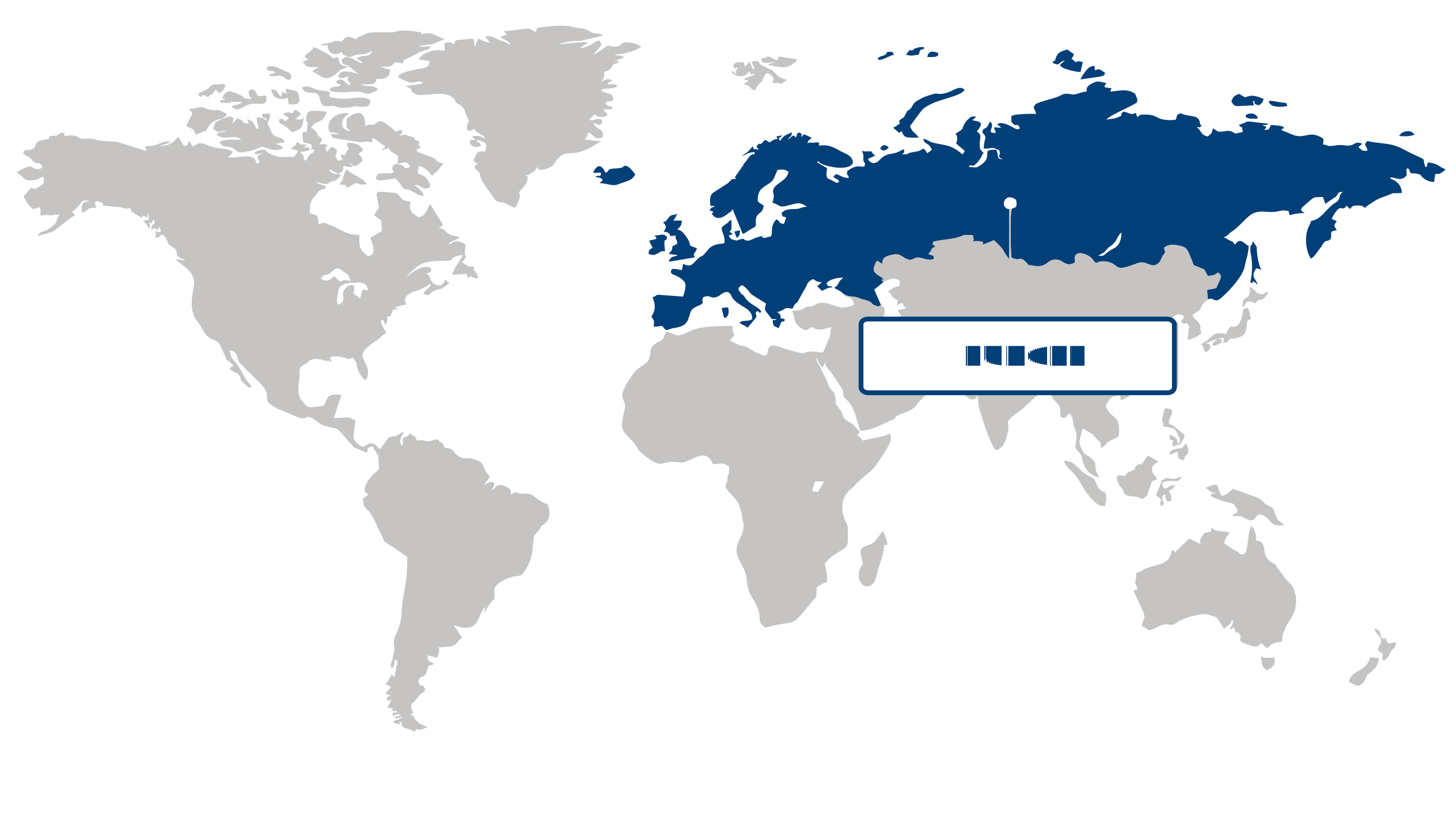
Europe (Largest Region)
Europe held the largest share of the automotive front & rear phygital shield market, accounting for 37.8% in 2026. The region’s leading position is led by advanced automotive manufacturing capabilities, strong emphasis on vehicle safety and design, and increasing integration of physical and digital technologies into modern vehicles. Automotive manufacturers are increasingly focusing on intelligent exterior systems that combine protective functionality with sensing, connectivity, and enhanced user interaction. Growing investment in vehicle electrification, advanced driver-assistance technologies, and connected vehicle platforms is creating additional opportunities for phygital shield applications. Strong automotive research and development capabilities and demand for technologically advanced vehicle designs further support regional market growth.
Asia Pacific (Fastest-Growing Region)
Asia Pacific is projected to be the fastest-growing region in the automotive front & rear phygital shield market, influenced by expanding automotive production, increasing adoption of connected vehicle technologies, and rapid development of smart mobility infrastructure. Growing consumer interest in technologically advanced vehicles is encouraging manufacturers to integrate intelligent exterior components with enhanced sensing and digital functionality. Rising investments in electric vehicles and advanced automotive electronics are further creating demand for innovative vehicle protection and interaction systems. Continued automotive industry expansion, technological development, and increasing adoption of connected features are expected to strengthen the region’s growth potential.
| Parameter | North America | Asia Pacific | Europe | Latin America | MEA |
|---|---|---|---|---|---|
| Innovation HubiScaleNascentDeveloping Advanced | |||||
| Cost-Sensitive RegioniScaleLowMedium High | |||||
| Regulatory EnvironmentiScaleRestrictiveNeutral Supportive | |||||
| Demand DriversiScaleWeakModerate Strong | |||||
| Development StageiScaleEmergingDeveloping Developed | |||||
| Adoption RateiScaleLowMedium High | |||||
| New Entrants / StartupsiScaleSparseModerate Dense | |||||
| Macro IndicatorsiScaleWeakStable Strong |
Key Country Insights
United States 🇺🇸
Connected Safety IntegrationThe U.S. market is likely to prioritize phygital shield solutions that combine physical vehicle protection with connected sensing and digital safety functions. Automakers and suppliers can focus on integrating these systems into increasingly software-defined vehicle architectures while maintaining practical protection requirements.
Germany 🇩🇪
Premium Vehicle IntegrationGermany presents a strong focus on integrating advanced front and rear protection technologies into premium and technically sophisticated vehicle platforms. Market priorities center on refined sensor integration, design compatibility, and seamless coordination between physical shielding and digital vehicle safety systems.
Japan 🇯🇵
Compact Safety SolutionsJapan is positioned around integrating sophisticated protection capabilities within space-efficient vehicle designs. Manufacturers can emphasize compact phygital shield configurations that support advanced sensing and safety functions without compromising packaging efficiency, particularly across increasingly electronics-intensive passenger vehicle platforms.
South Korea 🇰🇷
Smart Vehicle ProtectionSouth Korea is likely to emphasize digitally enabled vehicle protection as automakers expand connected and electronically integrated vehicle platforms. Suppliers can prioritize sensor-compatible shielding and intelligent front and rear protection architectures that align with broader vehicle electronics integration.
France 🇫🇷
Design-Led Safety IntegrationFrance offers scope for phygital shield technologies that balance vehicle protection with styling and packaging considerations. Market priorities are likely to include solutions that integrate digital safety capabilities discreetly into exterior structures while supporting evolving automotive design requirements.
Italy 🇮🇹
Styling-Compatible ProtectionItaly is likely to place particular emphasis on combining advanced protection functionality with distinctive vehicle styling. Suppliers can differentiate through phygital shield systems that accommodate digital sensing and connectivity while preserving exterior design flexibility across passenger vehicle applications.
Automotive Front & Rear Phygital Shield Market Share (%), by Product, 2026
Go beyond the chart, access full insights & data tables
Request Free Sample ReportProduct Segment Analysis: Front Phygital Shield (Largest & Fastest-Growing Segment)
The front phygital shield segment accounted for a 62.4% share of the automotive front and rear phygital shield market in 2026 and is also expected to maintain the fastest growth, reflecting its central role in integrating digital functionality with the vehicle’s front-end design. Positioned prominently at the vehicle’s exterior, the front shield can support the integration of sensors, display elements, lighting, and communication features while contributing to styling and functional protection. Automakers’ increasing focus on connected vehicle experiences, advanced driver-assistance systems, and distinctive front-end interfaces is strengthening demand for these solutions. Its visibility and potential to accommodate multiple technologies make the front phygital shield an important platform for integrating aesthetics, connectivity, and vehicle functionality.
Vehicle Segment Analysis: Passenger Vehicles (Largest & Fastest-Growing Segment)
Passenger vehicles represent the largest and fastest-growing vehicle segment in the automotive front and rear phygital shield market, with the segment expected to retain the highest market share in 2026, supported by its broad production base and increasing integration of connected and digitally enhanced features. Automakers are incorporating advanced sensing, interactive lighting, and smart exterior components to differentiate vehicle designs and improve user experiences. The growing emphasis on vehicle personalization, safety technologies, and connected mobility is creating opportunities for phygital shields across both conventional and premium passenger models. In addition, the expansion of electric and digitally enabled passenger vehicles is encouraging manufacturers to adopt exterior components that can integrate functional capabilities with distinctive styling.
Sales Channel Segment Analysis: OEM (Largest & Fastest-Growing Segment)
The OEM sales channel represents the largest and fastest-growing route to market, with its market share expected to remain significant in 2026, as phygital shields are increasingly designed and integrated during vehicle development and manufacturing rather than added after production. Direct collaboration with automakers allows suppliers to align shield systems with vehicle architecture, electronic platforms, styling requirements, and safety specifications. Factory-level integration also supports consistent quality, compatibility, and efficient installation, making OEM procurement particularly relevant for components that integrate physical protection with digital and sensing capabilities. As manufacturers expand their focus on connected vehicle features and differentiated exterior designs, demand through OEM channels is expected to benefit from early-stage design partnerships and integration into new vehicle programs.
| Segment | Sub-Segment | Largest Segment | Fastest Growing |
|---|---|---|---|
| Product | Front Phygital Shield, Rear Phygital Shield | Front Phygital Shield | Front Phygital Shield |
| Vehicle | Passenger Vehicles, Commercial Vehicles | Passenger Vehicles | Passenger Vehicles |
| Sales Channel | OEM, Aftermarket | OEM | OEM |
| Technology | Sensor-integrated Shield, LED/display, Aerodynamic | Sensor-integrated Shield | Sensor-integrated Shield |
| Material | Plastic/polymer-based, Metal-based, Composite | Plastic/polymer-based | Plastic/polymer-based |
Unlock insights tailored to your business with our bespoke market research solutions.
Click to get your customized report now.
Competitive Landscape and Market Positioning
Analyst Perspective:
As automotive exterior components evolve into multifunctional phygital shields, suppliers face the complex challenge of merging visual brand styling with sensitive electronic hardware. Integrating lighting elements, radar, and LiDAR into seamless exterior surfaces requires careful management of packaging, thermal dissipation, and signal transparency while maintaining active pedestrian safety compliance. Simultaneously, exterior shield geometries must be refined through aerodynamic optimization to minimize air drag and support vehicle energy efficiency without disrupting underlying sensor fields. To stand out commercially, suppliers must offer broad aesthetic customization—such as unique surface textures, illumination effects, and premium finishes—while limiting tooling complexity and ensuring robust high-volume manufacturability across diverse vehicle platforms.
Top players in the automotive front & rear phygital shield market:
- Bosch (Germany)
- Denso (Japan)
- Continental (Germany)
- Valeo (France)
- Magna International (Canada)
- Aptiv (Ireland)
- ZF Friedrichshafen (Germany)
- Hella (Germany)
- Aisin Seiki (Japan)
- Marelli (Japan/Italy)
| Company | Market Share | Company Revenue | Revenue CAGR (%) | Product Portfolio | Geographic Presence | Innovation / R&D Focus | Strategic Developments |
|---|---|---|---|---|---|---|---|
| Bosch (Germany) | |||||||
| Denso (Japan) | |||||||
| Continental (Germany) | |||||||
| Valeo (France) | |||||||
| Magna International (Canada) | |||||||
| Aptiv (Ireland) | |||||||
| ZF Friedrichshafen (Germany) | |||||||
| Hella (Germany) | |||||||
| Aisin Seiki (Japan) | |||||||
| Marelli (Japan/Italy) |
Industry Development/News
| Company Name | Date | Key Development |
|---|---|---|
| FORVIA HELLA | September 2024 | FORVIA HELLA secured major automotive electronics and lighting contracts valued at over $2 billion, scheduled for production launch within two to four years at its Mexican manufacturing facility. The series orders include smart car access systems and advanced exterior lighting integrations, expanding the company's production footprint and commercial scale in front and rear phygital shield technologies. |
| Marelli | July 2023 | Marelli Automotive Lighting signed a Memorandum of Understanding with Samvardhana Motherson Automotive Systems Group to collaborate on smart illuminated external body components. The partnership focuses on joint development and feasibility studies for illuminated front grilles, bumpers, and outer body panels, strengthening both companies' technological positioning in integrated phygital shield applications. |
Customize Your Report
Explore examples of how this report can be tailored to different research needs, including custom segments, additional topics or chapters, and related reports. Click a section of the wheel or its numbered marker to explore the available options.
Automotive Front & Rear Phygital Shield Market — Custom Segments
| Segment | Sub-Segment |
|---|---|
| Fonction d'affichage | Écrans sans affichage, panneaux d'information, panneaux d'avertissement/de signalisation, écrans interactifs |
| Architecture de connectivité | Non connecté, connecté au réseau du véhicule, connecté au cloud |
| Niveau de personnalisation | Conceptions standardisées, conceptions configurables, conceptions entièrement personnalisées |
Automotive Front & Rear Phygital Shield Market — Custom TOC
| Custom Chapter | Chapter Details |
|---|---|
| Vehicle Cybersecurity Threat Landscape |
|
| Connected Vehicle Data Governance |
|
| Automotive Cybersecurity Procurement Trends |
|
Need a different cut of the data?
Request Custom ResearchFrequently Asked Questions
What is the total addressable market for automotive front & rear phygital shield?
What is the projected value of the automotive front & rear phygital shield industry by 2036?
How is connected-car integration influencing adoption of phygital vehicle protection systems?
How are OEM and aftermarket collaborations accelerating phygital shield deployment?
Why do front phygital shields dominate the automotive front and rear phygital shield market?
How is OEM procurement supporting growth in the automotive phygital shield market?
Why does Europe lead the automotive front and rear phygital shield market?
How is Asia Pacific creating growth opportunities in the automotive front and rear phygital shield market?
Which companies are driving growth in the automotive front & rear phygital shield landscape?
Our Clients
"The team surpassed our expectations with the report depth. The actionable insights provided proved crucial in navigating market challenges."
Tata Motors
"We found the report to be very informative. The expertise and attention to market nuances significantly influenced our business direction."
DENSO Corporation
"The consumer survey findings were quite good. We now have a clearer picture of the customer churning and retention strategy."
HL Mando
Our Research Team & Methodology
Every Fundamental Business Insights report is built by a dedicated vertical research team, validated through a structured primary-and-secondary methodology, and reviewed for accuracy before it reaches you.
This report was prepared by the Automotive & Transportation Research Team at Fundamental Business Insights, a dedicated research group specializing in the global automotive, mobility, and transportation industries. Our analysts continuously monitor vehicle technology advancements, electrification trends, autonomous and connected mobility, manufacturing developments, supply chain dynamics, regulatory standards, emissions policies, aftermarket activities, and evolving consumer and commercial transportation requirements to deliver timely and reliable market intelligence. The research is developed using a structured methodology that combines primary discussions with vehicle manufacturers, component suppliers, technology providers, distributors, logistics stakeholders, and industry experts, along with company annual reports, regulatory publications, government transportation statistics, industry associations, technical standards, and other authoritative secondary sources. Market estimates are validated through multiple research techniques, including top-down and bottom-up analysis, before undergoing an internal quality review to ensure accuracy, consistency, and methodological integrity prior to publication.
Delivery
Published
Available
Support
- Market Size & Forecast
- Market Segmentation
- Regional Analysis
- Growth Drivers & Challenges
- Market Dynamics
- Competitive Landscape
- Company Profiles
- Competitive Benchmarking
- Mergers & Acquisitions
- Market Share Analysis or Key Company Strategies
- Value Chain Analysis
- Porter's Five Forces
- PESTLE Analysis
- Pricing Trends
- Supply-Demand Analysis
- Technology Landscape
- Regulatory Landscape
- Investment & Funding Landscape
- Emerging Opportunities
- Future Market Outlook