



Automotive Lighting Market Size & Growth Forecast 2027–2036, By Segments (Technology, Vehicle, Sales Channel, Application), Regional Demand Trends (North America, Asia Pacific, Europe), Key Country Insights (U.S., Japan, South Korea, Germany, France, Italy), and Competitive Landscape
Market Size and Growth Outlook
Automotive Lighting Market size stood at USD 38.5 billion in 2026 and is predicted to grow at a 5.61% CAGR from 2027 to 2036, reaching USD 66.45 billion by 2036. The industry revenue for 2027 is assessed at USD 40.32 billion.
Base Year Value (2026)
USD 38.5 billion
CAGR (2027-2036)
5.61%
Forecast Year Value (2036)
USD 66.45 billion

Historical Data Period
2022-2026

Largest Region
Europe

Forecast Period
2027-2036
Automotive Lighting Market Intelligence Snapshot:
-
Regional Market Dynamics:
- Europe leads due to its strong vehicle manufacturing base, premium automakers, strict regulatory standards, and high adoption of LED and adaptive lighting systems across vehicle platforms.
- Asia Pacific grows at a 6.89% CAGR, driven by rising vehicle production, feature-rich vehicle demand, LED adoption, and rapid localization of lighting component manufacturing.
-
Segment Momentum:
- LED held a 49.18% market share in 2026 due to its broad use across exterior and interior vehicle lighting. Automakers value its design flexibility, energy efficiency, and long operating life.
- Commercial Vehicle is the fastest-growing segment, driven by rising demand for durable, high-visibility lighting in transport and fleet operations where safety, reliability, and extended-use performance are priorities.
-
Market Expansion Drivers:
- Government safety regulations and LED adoption enhancing vehicle visibility and road safety standards.
- Rising global automobile production and OEM integration boosting advanced lighting system demand.
- Electric and autonomous vehicle development driving adaptive and intelligent lighting system integration.
-
Leading Market Participants:
Key players in the automotive lighting market include Hella GmbH & Co. KGaA (Germany), Koito Manufacturing Co. Ltd. (Japan), Valeo SE (France), Stanley Electric Co. Ltd. (Japan), Magneti Marelli S.p.A. (Italy), Hyundai Mobis Co. Ltd. (South Korea), OSRAM Licht AG (Germany), Marelli Holdings Co. Ltd. (Japan), ZKW Group GmbH (Austria), Varroc Engineering Ltd. (India).
Global Market Forecast Snapshot:
-
Market Outlook:
- 2026 Market Size: USD 38.5 billion
- 2027 Estimated Market Size: USD 40.32 billion.
- Projected Market Size: USD 66.45 billion by 2036
- Growth Forecasts: 5.61% CAGR (2027-2036)
-
Regional and Segment Outlook:
- Leading Regional Market: Europe
- High-Growth Regional Hub: Asia Pacific
- Core Revenue Segment: LED (Technology) | Passenger Vehicle (Vehicle) | Original Equipment Manufacturers (Sales Channel) | Front Lighting/Headlamps (Application)
- Emerging Opportunity Segment: Xenon/HD (Technology) | Commercial Vehicle (Vehicle) | Aftermarket (Sales Channel) | Rear Lighting (Application)
Market Growth Drivers and Industry Trends
Government safety regulations and LED adoption enhancing vehicle visibility and road safety standards
Stronger vehicle safety requirements will drive the automotive lighting market growth by increasing the importance of lighting systems that improve visibility for drivers, pedestrians, and other road users. LED technology offers advantages in illumination efficiency, design flexibility, and controllability, making it increasingly suitable for meeting evolving vehicle lighting requirements. Regulatory emphasis on visibility and road safety also encourages manufacturers to incorporate advanced lighting configurations that provide effective illumination across different driving and environmental conditions.
Rising global automobile production and OEM integration boosting advanced lighting system demand
Growing automobile production is supporting the automotive lighting market growth as increasing vehicle assembly creates broader demand for integrated exterior and interior lighting components. Original equipment manufacturers are incorporating lighting systems earlier into vehicle design, allowing advanced illumination technologies to become closely aligned with vehicle styling, functionality, and safety requirements. Increasing integration at the vehicle manufacturing stage also supports the adoption of sophisticated lighting modules designed specifically for different vehicle platforms and configurations.
Electric and autonomous vehicle development driving adaptive and intelligent lighting system integration
The development of electric and autonomous vehicles will boost the automotive lighting market demand by creating new requirements for adaptive, responsive, and electronically controlled lighting systems. Electric vehicles provide greater design flexibility for incorporating advanced lighting architectures, while autonomous driving technologies increase the importance of vehicle-to-environment communication and visual signaling. Intelligent lighting can adjust illumination according to driving conditions and support communication between vehicles, pedestrians, and surrounding road users, expanding the functional role of vehicle lighting beyond conventional illumination.
| Growth Driver Assessment Framework | |||||
| Growth Driver | Impact On CAGR | Regulatory Influence | Geographic Relevance | Adoption Rate | Impact Timeline |
|---|---|---|---|---|---|
| Government safety regulations and LED adoption enhancing vehicle visibility and road safety standards | 2.10% | High | North America, Europe | High | Near Term |
| Rising global automobile production and OEM integration boosting advanced lighting system demand | 1.90% | Moderate | Asia Pacific, North America | High | Mid Term |
| Electric and autonomous vehicle development driving adaptive and intelligent lighting system integration | 1.50% | Moderate | North America, Europe, Asia Pacific | Medium | Mid Term |
Unlock insights tailored to your business with our bespoke market research solutions - Click to get your customized report now!
Regional Demand Dynamics
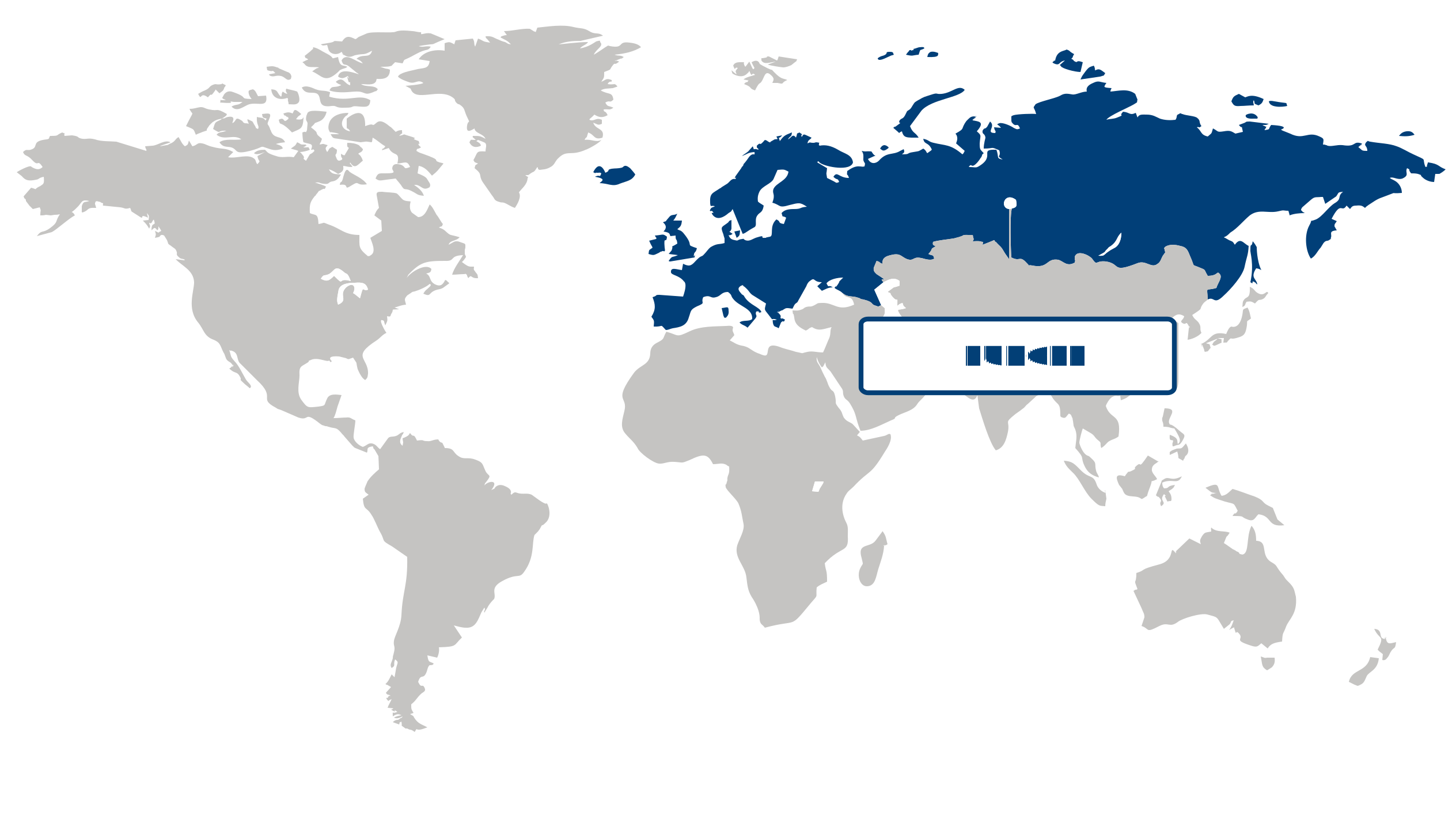
Largest Region
Europe
Largest Market Share in 2026
Europe (Largest Region) vs Asia Pacific (Fastest-Growing Region)
Europe held the largest share of the automotive lighting market in 2026, supported by a well-established automotive manufacturing ecosystem, strong emphasis on vehicle safety, and widespread adoption of advanced lighting technologies. Stringent vehicle safety and lighting requirements are encouraging manufacturers to incorporate efficient and intelligent illumination systems into new vehicles. Growing demand for premium vehicle features, adaptive lighting, energy-efficient LEDs, and enhanced exterior styling is also supporting regional adoption. The increasing integration of electronic systems and driver-assistance technologies is further creating opportunities for sophisticated automotive lighting solutions across passenger and commercial vehicles.
Asia Pacific is emerging as the fastest-growing region, driven by expanding vehicle production, rising consumer demand for technologically advanced automobiles, and increasing investments in automotive manufacturing capabilities. The growing adoption of electric and connected vehicles is creating additional opportunities for innovative lighting systems that combine functional performance with distinctive vehicle design. Rapid urbanization and improving consumer purchasing power are also supporting demand for newer vehicles equipped with advanced lighting features. At the same time, the region's expanding automotive supply chain and increasing focus on vehicle safety and energy efficiency are accelerating the adoption of modern lighting technologies.
Key Country Insights
The U.S. automotive lighting market emphasizes intelligent lighting systems that enhance safety, vehicle styling, and driver assistance functions. Manufacturers are integrating adaptive LEDs, connected lighting controls, and energy-efficient solutions across passenger and commercial vehicle platforms.
Japan advances automotive lighting through compact, energy-efficient designs that align with vehicle efficiency and production quality objectives. Demand supports high-performance LED modules and intelligent lighting systems suited for both domestic production and export-oriented vehicle programs.
South Korea focuses on automotive lighting solutions compatible with connected and electric vehicle platforms. Manufacturers increasingly adopt digital lighting technologies that improve vehicle functionality, design flexibility, and integration with advanced driver assistance systems.
Germany prioritizes advanced automotive lighting technologies that complement precision vehicle engineering and premium product differentiation. Automotive manufacturers continue investing in matrix lighting, digital illumination, and integrated electronic control systems to support evolving vehicle architectures.
France encourages automotive lighting innovation that combines distinctive vehicle aesthetics with functional performance. The market supports advanced LED technologies and adaptive lighting features that address evolving regulatory requirements and consumer expectations for modern vehicle design.
Italy strengthens the automotive lighting market through specialized component manufacturing and design-focused engineering capabilities. Suppliers emphasize customizable lighting systems that support premium vehicle production and enhance product differentiation across automotive segments.
Segment Leadership and Growth Trends
Technology Segment Analysis: LED (Largest Segment) vs Xenon/HD (Fastest-Growing Segment)
LED technology dominated the automotive lighting market with a 49.18% share in 2026, supported by its energy efficiency, compact design, durability, and flexibility in vehicle lighting applications. LED systems enable manufacturers to integrate distinctive lighting signatures while supporting improved illumination and design freedom. Their compatibility with increasingly sophisticated vehicle architectures and growing emphasis on efficient, reliable lighting continue to reinforce their widespread adoption across automotive applications.
Xenon/HD technology is advancing as the fastest-growing technology segment, supported by demand for enhanced illumination and more sophisticated lighting performance. High-definition lighting approaches can provide greater control over beam distribution and visibility, aligning with the industry's movement toward advanced vehicle lighting systems. Increasing focus on driver visibility, styling differentiation, and intelligent lighting functionality is creating additional opportunities for Xenon/HD solutions.
Vehicle Segment Analysis: Passenger Vehicle (Largest Segment) vs Commercial Vehicle (Fastest-Growing Segment)
Passenger vehicles represented the largest vehicle segment in the automotive lighting market in 2026, reflecting the extensive integration of lighting systems across everyday consumer vehicles. Lighting has become an important component of passenger vehicle safety, visibility, styling, and overall vehicle design, encouraging manufacturers to adopt increasingly capable solutions. Rising consumer expectations for attractive and functional vehicle features further support continued demand for advanced automotive lighting within passenger vehicles.
Commercial vehicles are experiencing the fastest growth as fleet operators and vehicle manufacturers place greater emphasis on visibility, operational safety, and dependable lighting performance. Commercial vehicles often operate across demanding conditions and extended usage cycles, increasing the importance of robust lighting solutions. The growing focus on vehicle safety and functional illumination is supporting greater adoption of advanced lighting technologies across commercial transportation applications.
| Report Segmentation | |||
| Segment | Sub-Segment | Largest Segment | Fastest Growing Segment |
|---|---|---|---|
| Technology | Halogen, Xenon/HD, LED | LED | Xenon/HD |
| Vehicle | Passenger Vehicle, Commercial Vehicle | Passenger Vehicle | Commercial Vehicle |
| Sales Channel | Original Equipment Manufacturers, Aftermarket | Original Equipment Manufacturers | Aftermarket |
| Application | Front Lighting/Headlamps, Rear Lighting, Side Lighting, Interior Lighting | Front Lighting/Headlamps | Rear Lighting |
 Read our Research Approach
Competitive Landscape and Market Positioning
Top players in the automotive lighting market:
1. Hella GmbH & Co. KGaA (Germany)
2. Koito Manufacturing Co. Ltd. (Japan)
3. Valeo SE (France)
4. Stanley Electric Co. Ltd. (Japan)
5. Magneti Marelli S.p.A. (Italy)
6. Hyundai Mobis Co. Ltd. (South Korea)
7. OSRAM Licht AG (Germany)
8. Marelli Holdings Co. Ltd. (Japan)
9. ZKW Group GmbH (Austria)
10. Varroc Engineering Ltd. (India)
The automotive lighting market is evolving through rapid innovation in adaptive lighting systems, LED technologies, and intelligent vehicle illumination solutions. Manufacturers are investing in advanced optics, energy-efficient designs, and connected lighting functionalities that enhance driver visibility and vehicle aesthetics. The growing adoption of electric and autonomous vehicles is further accelerating development across the automotive lighting market.
Industry Development/News
| Company Name | Date | Key Development |
|---|---|---|
| Mutares SE & Co. KGaA | Apr-26 | Mutares signed agreements to acquire Magna’s European automotive lighting business and Car-Top Systems business. The acquisition strengthens Mutares’ "Amaneos" group by integrating advanced lighting technologies with exterior modules, creating a highly integrated exterior systems platform for automotive OEMs. |
| Excellence Optoelectronics | Mar-26 | Excellence Optoelectronics accelerated the ramp-up of its Mexico manufacturing facility, aiming to increase volume production of automotive LED modules. This expansion is designed to improve utilization rates and better serve the North American automotive market as demand for LED components grows. |
| Hyundai Mobis | Jan-26 | Hyundai Mobis selected French parts maker OPmobility as the preferred bidder for its automotive lamp business division. The potential share sale is part of Hyundai Mobis’s broader strategy to restructure its business portfolio toward electrification and Software-Defined Vehicle (SDV) technologies. |
| ZKW | Jan-26 | ZKW collaborated with Audi to develop high-resolution digital Matrix LED headlights for the new Audi Q3. Each headlight module features 25,600 individually controllable pixels, enabling advanced glare-free high beams, precision light control, and projection functions tailored for compact SUV applications. |
| Toyoda Gosei | Jan-26 | Toyoda Gosei unveiled an innovative "moving light" technology capable of projecting light patterns onto the road. Designed primarily for autonomous and electric vehicles, this system enhances safety by visually communicating the vehicle’s intended path or status to pedestrians and other drivers. |
| Mercedes-Benz | Oct-25 | Mercedes-Benz inaugurated a dedicated automotive lighting testing facility at its Global Proving Ground in Germany. The site serves as a specialized hub for validating next-generation lighting technologies, such as adaptive headlamps and smart interior lighting, ensuring they meet rigorous global safety and performance standards. |
| San’an Optoelectronics | Aug-25 | San’an Optoelectronics entered an agreement to acquire Lumileds for US$239 million. The deal provides San’an with established global market channels, proprietary LED intellectual property, and a stronger technological foundation to compete in the advanced automotive and industrial LED lighting sectors. |
| Marelli | Jul-25 | Marelli initiated U.S. Chapter 11 bankruptcy proceedings as part of a comprehensive financial restructuring plan. The move is aimed at stabilizing the company’s global operations—including its significant automotive lighting business—and ensuring long-term competitiveness amid industry shifts toward electrification. |
| Neolite ZKW | Oct-24 | Neolite ZKW inaugurated a new automotive lighting manufacturing plant in Pune, India. The facility enhances local production capabilities for passenger, commercial, and electric vehicle lighting, focusing on advanced LED modules and adaptive front lighting systems (AFS) to meet the rapidly growing demand in the Indian market. |
| OLEDWorks | Jan-24 | OLEDWorks launched "Atala," a new brand dedicated to the automotive lighting industry. The brand provides tailored design and engineering services specifically for OLED technology, aiming to meet the industry’s stringent requirements for slim, high-performance, and stylized vehicle lighting solutions. |
Why Choose Us
Specialized Expertise: Our team comprises industry experts with a deep understanding of your market segment. We bring specialized knowledge and experience that ensures our research and consulting services are tailored to your unique needs.
Customized Solutions: We understand that every client is different. That's why we offer customized research and consulting solutions designed specifically to address your challenges and capitalize on opportunities within your industry.
Proven Results: With a track record of successful projects and satisfied clients, we have demonstrated our ability to deliver tangible results. Our case studies and testimonials speak to our effectiveness in helping clients achieve their goals.
Cutting-Edge Methodologies: We leverage the latest methodologies and technologies to gather insights and drive informed decision-making. Our innovative approach ensures that you stay ahead of the curve and gain a competitive edge in your market.
Client-Centric Approach: Your satisfaction is our top priority. We prioritize open communication, responsiveness, and transparency to ensure that we not only meet but exceed your expectations at every stage of the engagement.
Continuous Innovation: We are committed to continuous improvement and staying at the forefront of our industry. Through ongoing learning, professional development, and investment in new technologies, we ensure that our services are always evolving to meet your evolving needs.
Value for Money: Our competitive pricing and flexible engagement models ensure that you get maximum value for your investment. We are committed to delivering high-quality results that help you achieve a strong return on your investment.
Select Licence Type

