Bean Bag Chairs Market Size & Growth Forecast 2027–2036, By Segments (Raw Material, Application, Distribution Channel), Regional Demand Trends (North America, Asia Pacific, Europe), Key Country Insights (U.S., Japan, South Korea, Germany, France, Italy), and Competitive Landscape
Jump to content
Market Size and Growth Outlook
Bean Bag Chairs Market size was over USD 4.2 billion in 2026 and is likely to grow at a 4.66% CAGR between 2027 and 2036, surpassing USD 6.62 billion by 2036. The industry revenue for 2027 is calculated at USD 4.36 billion.
Get more details on this report
Request Free Sample ReportBean Bag Chairs Market Intelligence Snapshot
Regional Market Dynamics
- Europe holds 38.69% share due to mature furniture retail networks, strong consumer preference for flexible seating, and steady demand across residential and lifestyle interior applications.
- Asia Pacific is growing at 5.7% CAGR, driven by urbanization, e-commerce expansion, and rising demand for affordable, space-saving seating in compact living environments.
Segment Momentum
- Faux Leather held a 40.92% share in 2026 because it combines durability, attractive appearance, and easy maintenance, making it a practical choice for everyday home seating applications.
- Commercial is expanding fastest as lounges, collaborative spaces, and recreational venues increasingly adopt flexible seating that supports adaptable layouts and quick space reconfiguration.
Market Expansion Drivers
- Rising urban lifestyle shift toward flexible and informal furniture in compact living spaces.
- Expanding commercial adoption in offices, lounges, and educational collaborative spaces.
- Product innovation in ergonomic and modular bean bags enhancing consumer comfort and durability.
Leading Market Participants
- Leading companies in the bean bag chairs market include Lovesac Company (United States), Yogibo LLC (United States), Fatboy the Original B.V. (Netherlands), MUJI Co., Ltd. (Japan), SUMO Lounge International (United States), Big Joe (Comfort Research LLC) (United States), CordaRoy’s (United States), Jaxx Bean Bags (United States), Comfy Sacks LLC (United States).
Global Market Forecast Snapshot
Market Outlook
- 2026 Market Size: USD 4.2 billion
- 2027 Estimated Market Size: USD 4.36 billion.
- Projected Market Size: USD 6.62 billion by 2036
- Growth Forecast: 4.66% CAGR (2027-2036)
Regional and Segment Outlook
- Leading Regional Market: Europe
- High-Growth Regional Hub: Asia Pacific
- Core Revenue Segment: Faux Leather (Raw Material) | Residential (Application) | Offline (Distribution Channel)
- Emerging Opportunity Segment: Cotton (Raw Material) | Commercial (Application) | Online (Distribution Channel)
Market Growth Drivers and Industry Trends
Rising urban lifestyle shift toward flexible and informal furniture in compact living spaces
The bean bag chairs market is benefiting from changing urban lifestyles, particularly as consumers seek furniture that can adapt to smaller apartments and multifunctional living areas. Limited floor space is encouraging preferences for lightweight, movable, and informal seating that can be repositioned according to different household activities. Bean bags offer flexibility compared with conventional bulky furniture and can be used for relaxation, gaming, reading, or casual socializing, making them suitable for compact residential environments where space utilization and adaptable interior arrangements are important considerations.
Expanding commercial adoption in offices, lounges, and educational collaborative spaces
Commercial demand is creating broader application opportunities for the bean bag chairs market as offices, lounges, and educational environments increasingly incorporate informal seating into collaborative areas. Flexible furniture can support relaxed interactions, group discussions, informal meetings, and temporary work arrangements while helping organizations create more adaptable spaces. In educational settings, movable seating can also complement collaborative learning environments by allowing users to reorganize spaces according to different activities, while hospitality and workplace lounges can use bean bags to create casual areas for relaxation and interaction.
Product innovation in ergonomic and modular bean bags enhancing consumer comfort and durability
Product innovation is strengthening the bean bag chairs market as manufacturers focus on improving comfort, structural support, material quality, and long-term usability. Developments in filling materials, outer fabrics, internal construction, and ergonomic shaping are enabling bean bags to provide more consistent support while maintaining their flexible characteristics. Modular designs further allow consumers to adapt seating configurations to different rooms and uses, while durable and removable covers can improve maintenance and extend product usability in both residential and commercial environments.
| Growth Driver | Impact on CAGR | Regulatory Influence | Geographic Relevance | Adoption Rate | Impact Timeline |
|---|---|---|---|---|---|
| Rising urban lifestyle shift toward flexible and informal furniture in compact living spaces | 1.60% | Low | Europe, Asia Pacific | High | Near Term |
| Expanding commercial adoption in offices, lounges, and educational collaborative spaces | 1.40% | Low | North America, Europe | High | Mid Term |
| Product innovation in ergonomic and modular bean bags enhancing consumer comfort and durability | 1.20% | Low | Asia Pacific, Europe | Medium | Mid Term |
Unlock insights tailored to your business with our bespoke market research solutions.
Click to get your customized report now.
Regional Demand Dynamics
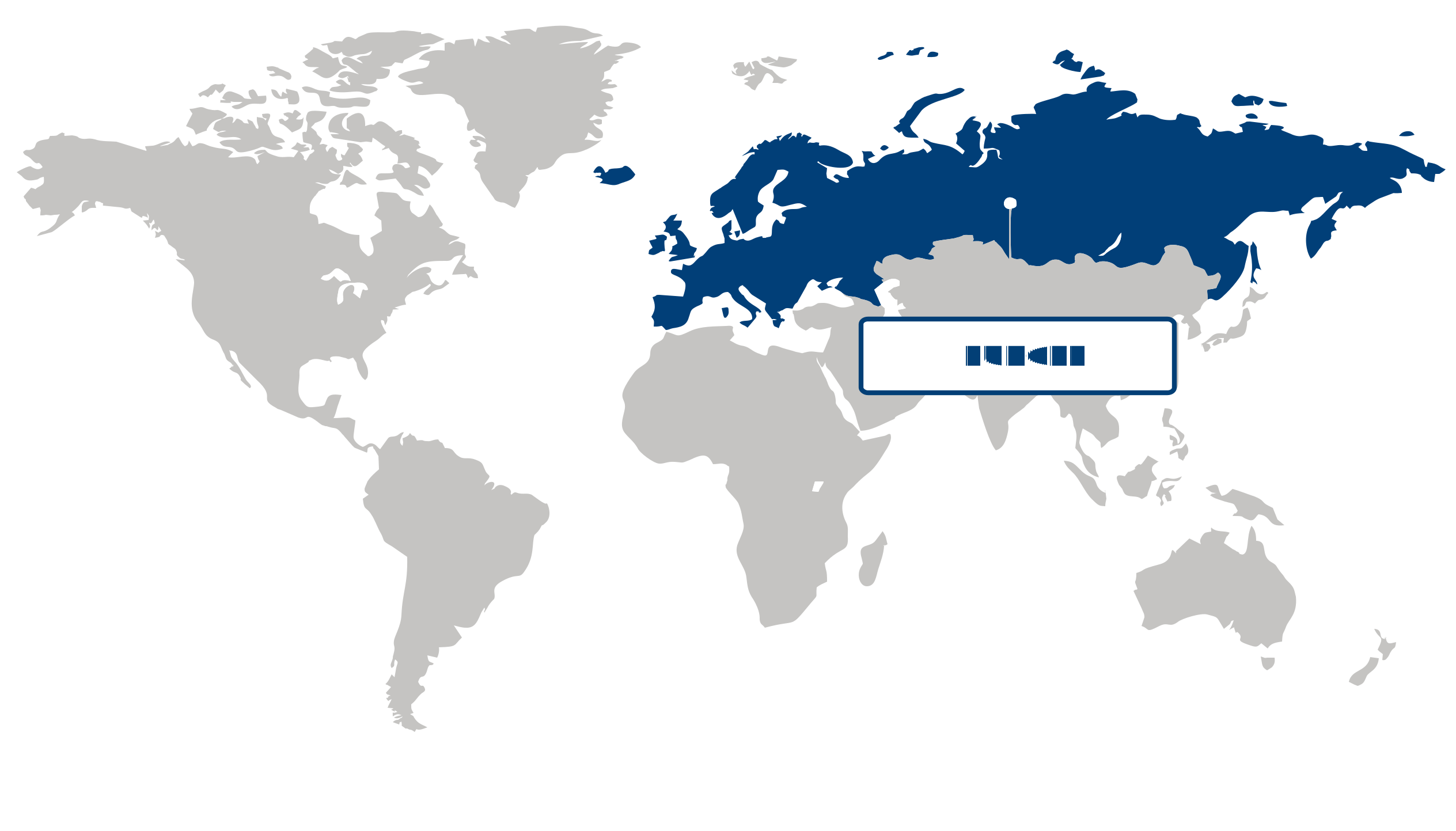
Europe (Largest Region)
The bean bag chairs market was led by Europe, which held a 38.69% share in 2026. The region’s strong position is supported by established furniture consumption patterns, growing interest in flexible and informal seating, and evolving interior design preferences. Demand for space-efficient furniture is also benefiting from changing residential lifestyles, while the region’s developed retail infrastructure and broad availability of contemporary home furnishings support widespread product adoption across residential and commercial settings.
Asia Pacific (Fastest-Growing Region)
Asia Pacific is the fastest-growing region for bean bag chairs, driven by rapid urbanization, changing household structures, and increasing demand for adaptable furniture suited to modern living environments. Rising consumer purchasing power and expanding residential development are supporting spending on affordable and multifunctional furnishings. At the same time, the growth of online furniture retail is improving product accessibility, while increasing exposure to contemporary interior trends is encouraging consumers to adopt casual and versatile seating solutions.
| Parameter | North America | Asia Pacific | Europe | Latin America | MEA |
|---|---|---|---|---|---|
| Innovation HubiScaleNascentDeveloping Advanced | |||||
| Cost-Sensitive RegioniScaleLowMedium High | |||||
| Regulatory EnvironmentiScaleRestrictiveNeutral Supportive | |||||
| Demand DriversiScaleWeakModerate Strong | |||||
| Development StageiScaleEmergingDeveloping Developed | |||||
| Adoption RateiScaleLowMedium High | |||||
| New Entrants / StartupsiScaleSparseModerate Dense | |||||
| Macro IndicatorsiScaleWeakStable Strong |
Key Country Insights
Germany 🇩🇪
Sustainable Design PreferenceGermany emphasizes bean bag chairs made with durable materials and environmentally responsible fabrics. Consumers increasingly value product longevity, recyclable fillings, and contemporary designs that complement modern residential interiors.
France 🇫🇷
Contemporary Home StylingFrance incorporates bean bag chairs into modern home décor and casual leisure spaces. Consumers seek premium upholstery, refined color selections, and versatile furniture that balances aesthetic appeal with everyday functionality.
Italy 🇮🇹
Designer Comfort ProductsItaly positions bean bag chairs within design-conscious furniture collections where comfort and craftsmanship are equally valued. Manufacturers emphasize premium materials and distinctive styling to appeal to consumers seeking contemporary yet elegant seating options.
Japan 🇯🇵
Compact Living SolutionsJapan favors bean bag chairs designed for compact living environments where multifunctional furniture is essential. Manufacturers focus on lightweight products that maximize comfort while fitting efficiently within limited residential spaces.
South Korea 🇰🇷
Modern Interior AppealSouth Korea is experiencing steady interest in bean bag chairs that match contemporary interior design trends. Local brands emphasize stylish aesthetics, practical comfort, and online retail channels to reach younger consumers and apartment dwellers.
United States 🇺🇸
Lifestyle Furniture DemandThe U.S. bean bag chairs market benefits from demand for flexible seating across homes, gaming spaces, and student accommodation. Brands are introducing premium fabrics, ergonomic designs, and customizable options to attract diverse consumer segments.
Bean Bag Chairs Market Share (%), by Raw Material, 2026
Go beyond the chart, access full insights & data tables
Request Free Sample ReportRaw Material Segment Analysis: Faux Leather (Largest Segment) vs Cotton (Fastest-Growing Segment)
Faux leather held the largest share of the bean bag chairs market, accounting for 40.92% in 2026, supported by its combination of visual appeal, durability, and ease of maintenance. Faux leather surfaces can provide a contemporary appearance while offering resistance to everyday wear and relatively simple cleaning, making them attractive for households and commercial interiors. Its versatility across different interior styles and suitability for high-use seating environments continue to support its broad adoption in bean bag chair manufacturing.
Cotton is projected to be the fastest-growing raw material segment, driven by increasing consumer interest in comfortable, breathable, and naturally derived upholstery materials. Cotton provides a soft tactile experience and can appeal to consumers seeking a more relaxed and fabric-oriented seating option. Growing attention to material feel, home comfort, and preferences for natural textiles is supporting the expansion of cotton-based bean bag chairs across residential and lifestyle-oriented applications.
Application Segment Analysis: Residential (Largest Segment) vs Commercial (Fastest-Growing Segment)
Residential applications dominated the bean bag chairs market in 2026, reflecting the widespread use of bean bag chairs as flexible and informal seating solutions in homes. Their lightweight construction, adaptable form, and suitability for bedrooms, living areas, recreational spaces, and home offices make them attractive to consumers seeking versatile furniture. Growing interest in casual interiors, multifunctional spaces, and comfort-focused home furnishings continues to reinforce residential demand.
Commercial applications are expected to grow at the fastest pace as businesses, hospitality venues, educational facilities, entertainment spaces, and recreational establishments increasingly incorporate informal seating into their interiors. Bean bag chairs can help create relaxed environments while providing flexible seating arrangements that can be adapted to different spaces and user needs. The growing emphasis on experiential interiors and comfortable, informal environments is creating additional opportunities for bean bag chairs in commercial settings.
| Segment | Sub-Segment | Largest Segment | Fastest Growing |
|---|---|---|---|
| Raw Material | Cotton, Leather, Faux Leather, Polypropylene, Others | Faux Leather | Cotton |
| Application | Residential, Commercial | Residential | Commercial |
| Distribution Channel | Offline, Online | Offline | Online |
Competitive Landscape and Market Positioning
Major players in the bean bag chairs market:
1. Lovesac Company (United States)
2. Yogibo LLC (United States)
3. Fatboy the Original B.V. (Netherlands)
4. MUJI Co. Ltd. (Japan)
5. SUMO Lounge International (United States)
6. Big Joe (Comfort Research LLC) (United States)
7. CordaRoy’s (United States)
8. Jaxx Bean Bags (United States)
9. Comfy Sacks LLC (United States)
In the bean bag chairs market, design innovation is increasingly centered on comfort, material durability, and aesthetic versatility. New product variations are addressing changing lifestyle and interior design preferences. Development efforts are enhancing fabric quality and ergonomic support. The bean bag chairs market continues to evolve through lifestyle-driven product customization.
| Company | Market Share | Company Revenue | Revenue CAGR (%) | Product Portfolio | Geographic Presence | Innovation / R&D Focus | Strategic Developments |
|---|---|---|---|---|---|---|---|
| Lovesac Company (United States) | |||||||
| Yogibo LLC (United States) | |||||||
| Fatboy the Original B.V. (Netherlands) | |||||||
| MUJI Co. Ltd. (Japan) | |||||||
| SUMO Lounge International (United States) | |||||||
| Big Joe (Comfort Research LLC) (United States) | |||||||
| CordaRoy’s (United States) | |||||||
| Jaxx Bean Bags (United States) | |||||||
| Comfy Sacks LLC (United States). |
Industry Development / News
| Company Name | Date | Key Development |
|---|---|---|
| Encore Data Products | Apr-26 | The institutional equipment distributor expanded its K-12 educational solutions catalog by integrating BERPL-branded flexible furniture lines, introducing mobile and ergonomic active-learning seating alternatives designed for modern, dynamic classroom environments. |
| PM&J | Mar-26 | The home furnishings manufacturer expanded its licensed consumer products portfolio by rolling out an exclusive collection of Squishmallows-branded bean bag chairs, featuring three popular character profiles to target youth and novelty seating categories. |
| Bottega Veneta | Mar-26 | The luxury fashion house introduced high-end furniture aesthetics into its consumer lifestyle ecosystem with the release of "The Ark" collection, premiering a series of animal-shaped bean bag chairs meticulously crafted from premium Italian leather. |
| The Pokémon Company | Mar-26 | The entertainment franchise expanded its licensed lifestyle product lines by engineering a novelty collection of oversized bean bag chairs modeled after popular characters Jigglypuff, Gengar, and Lechonk to capture casual home decor segments. |
| Lovesac | Feb-24 | The premium furniture brand formed a multi-season creative partnership with streetwear fashion label KidSuper, initiating the collaboration with a limited-edition SuperSac bean bag chair featuring bold, experimental artist prints designed by Colm Dillane. |
| MUJI | Nov-23 | The global lifestyle retailer finalized a comprehensive expansion and grand reopening of its MUJI Plaza Singapura location as the largest global flagship store in Southeast Asia, premiering a localized full-service interior design service featuring a 4-room fully furnished show flat. |
Customize Your Report
Explore examples of how this report can be tailored to different research needs, including custom segments, additional topics or chapters, and related reports. Click a section of the wheel or its numbered marker to explore the available options.
Bean Bag Chairs Market — Custom Segments
| Segment | Sub-Segment |
|---|---|
| Size Category | Small, Medium, Large, Extra-Large |
| Price Tier | Economy, Mid-Range, Premium |
| Filling Material | Polystyrene Beads, Polyurethane Foam, Memory Foam, Fiber Fill |
Bean Bag Chairs Market — Custom TOC
| Custom Chapter | Chapter Details |
|---|---|
| Consumer Lifestyle & Furniture Preference Analysis |
|
| Sustainable Materials & Circular Design Roadmap |
|
| Hospitality & Recreational Space Demand Study |
|
Need a different cut of the data?
Request Custom ResearchFrequently Asked Questions
How much is the bean bag chairs market worth?
How is the bean bag chairs industry projected to perform over the next decade?
How is urban lifestyle change influencing demand for bean bag chairs in residential spaces?
Why is commercial adoption expanding for bean bag seating in offices and educational spaces?
Why is faux leather the leading raw material in the bean bag chairs market?
Why is commercial use the fastest-growing application in the bean bag chairs market?
Why is Europe the largest bean bag chairs market?
What is driving Asia Pacific growth in bean bag chairs?
What are the key competitors in the bean bag chairs landscape?
Our Clients
"The report provided us with a clear direction, and the level of detail was beyond what we expected. I would definitely recommend their services to others."
Haier Appliances
"The collaboration with Fundamental Business Insights has added significant value to our decision-making process, and we look forward to continuing this partnership for our future market research requirements."
Luxottica Group S.p.A.
"The team at FBI delivered an exceptional research report. The insights on industry innovations were particularly impressive and added a lot of value to the overall report."
Nike
Our Research Team & Methodology
Every Fundamental Business Insights report is built by a dedicated vertical research team, validated through a structured primary-and-secondary methodology, and reviewed for accuracy before it reaches you.
Delivery
Published
Available
Support
- Market Size & Forecast
- Market Segmentation
- Regional Analysis
- Growth Drivers & Challenges
- Market Dynamics
- Competitive Landscape
- Company Profiles
- Competitive Benchmarking
- Mergers & Acquisitions
- Market Share Analysis or Key Company Strategies
- Value Chain Analysis
- Porter's Five Forces
- PESTLE Analysis
- Pricing Trends
- Supply-Demand Analysis
- Technology Landscape
- Regulatory Landscape
- Investment & Funding Landscape
- Emerging Opportunities
- Future Market Outlook