Beauty Pillowcases Market Size & Growth Forecast 2027–2036, By Segments (Type, Application, Product, Distribution Channel), Regional Demand Trends (North America, Asia Pacific, Europe), Key Country Insights (U.S., Japan, South Korea, Germany, France, Italy), and Competitive Landscape
Jump to content
Market Size and Growth Outlook
Beauty Pillowcases Market size stood at USD 1.1 billion in 2026 and is predicted to grow at a 5.7% CAGR from 2027 to 2036, reaching USD 1.91 billion by 2036. The industry revenue for 2027 is estimated at USD 1.15 billion.
Get more details on this report
Request Free Sample ReportBeauty Pillowcases Market Intelligence Snapshot
Regional Market Dynamics
- Europe held a 32.65% market share in 2026, supported by strong demand for premium sleep textiles, mature retail and e-commerce channels, and repeat purchases driven by wellness-focused consumer preferences.
- Asia Pacific is projected to grow at a 6.89% CAGR as rising beauty awareness, expanding online retail, and increasing adoption of premium personal care accessories boost consumer demand.
Segment Momentum
- Zippered pillowcases held a 50.77% market share in 2026 because their secure closure keeps the pillowcase firmly in place, supporting consistent skin and hair contact with smooth fabric surfaces during sleep.
- Hair Care is the fastest-growing application as consumers increasingly choose beauty pillowcases to reduce overnight hair friction and support everyday hair maintenance, expanding demand beyond traditional skincare-focused use.
Market Expansion Drivers
- Rising consumer awareness of skin and hair health benefits driving demand for silk-based pillowcases.
- Growth of e-commerce and personalized luxury bedding accelerating premium pillowcase sales.
- Increasing demand for wellness-focused sleep products and aromatherapy-infused textiles enhancing product adoption.
Leading Market Participants
- Key players in the beauty pillowcases market include Slip Silk Pillowcase LLC (Australia), Blissy LLC (United States), Mayfairsilk Group Ltd. (United Kingdom), John Lewis plc (United Kingdom), Zhejiang Jiaxin Silk Corp., Ltd. (China), BEAUSILK (China), Jim Thompson Suzhou Stitch Textile Technology Co., Ltd. (China), Anhui Comfytouch Ltd. (China), Benu Blanc (United States), Poshey LLC (United States).
Global Market Forecast Snapshot
Market Outlook
- 2026 Market Size: USD 1.1 billion
- 2027 Estimated Market Size: USD 1.15 billion.
- Projected Market Size: USD 1.91 billion by 2036
- Growth Forecast: 5.7% CAGR (2027-2036)
Regional and Segment Outlook
- Leading Regional Market: Europe
- High-Growth Regional Hub: Asia Pacific
- Core Revenue Segment: Zippered (Type) | Skin Care (Application) | Silk (Product) | Supermarkets and Hypermarkets (Distribution Channel)
- Emerging Opportunity Segment: Envelope (Type) | Hair Care (Application) | Bamboo (Product) | Online (Distribution Channel)
Market Growth Drivers and Industry Trends
Rising consumer awareness of skin and hair health benefits driving demand for silk-based pillowcases
Greater consumer attention to nighttime skin and hair care is encouraging purchases of products perceived to support beauty routines during sleep. The beauty pillowcases market is benefiting from awareness of silk-based materials as a premium bedding option associated with reduced friction and gentler contact with hair and skin.
Growth of e-commerce and personalized luxury bedding accelerating premium pillowcase sales
The expansion of e-commerce is making premium bedding products more accessible while allowing consumers to compare designs, materials, and personalization options more easily. Beauty pillowcases market growth is strengthened by this digital purchasing environment, which supports premium positioning and enables luxury-oriented products to reach more targeted consumer segments.
Increasing demand for wellness-focused sleep products and aromatherapy-infused textiles enhancing product adoption
Consumers are increasingly incorporating wellness considerations into their sleep environments, creating interest in bedding that combines comfort with lifestyle-oriented features. Within the beauty pillowcases market, aromatherapy-infused textiles and related wellness attributes can enhance product appeal by connecting everyday bedding purchases with broader personal care and relaxation routines.
| Growth Driver | Impact on CAGR | Regulatory Influence | Geographic Relevance | Adoption Rate | Impact Timeline |
|---|---|---|---|---|---|
| Rising consumer awareness of skin and hair health benefits driving demand for silk-based pillowcases | 2.20% | Low | North America, Europe | High | Near Term |
| Growth of e-commerce and personalized luxury bedding accelerating premium pillowcase sales | 1.90% | Low | North America, Asia Pacific | High | Near Term |
| Increasing demand for wellness-focused sleep products and aromatherapy-infused textiles enhancing product adoption | 1.60% | Low | Europe, Asia Pacific | Medium | Mid Term |
Unlock insights tailored to your business with our bespoke market research solutions.
Click to get your customized report now.
Regional Demand Dynamics
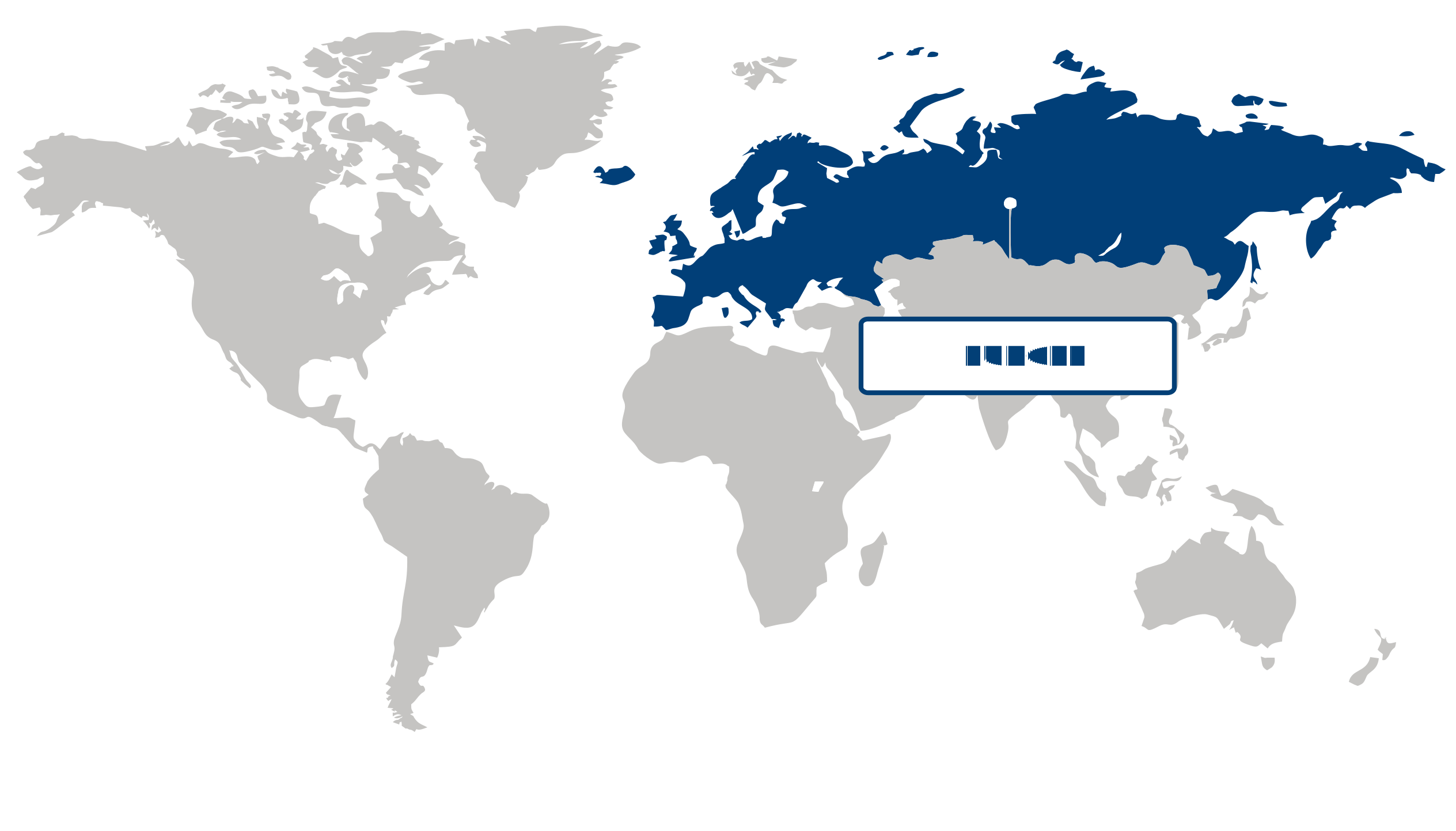
Europe (Largest Region)
Europe dominated the beauty pillowcases market with a 32.65% share in 2026, benefiting from strong consumer awareness of personal care, beauty routines, and premium lifestyle products. Consumers in the region increasingly view sleep-related products as part of broader skin and hair care practices, supporting interest in pillowcases made from materials designed to reduce friction and help maintain hair and skin condition. A mature beauty and wellness culture, established retail infrastructure, and demand for premium home products further reinforce regional adoption. Growing emphasis on self-care and preventative beauty routines is also broadening the appeal of specialized bedding products.
Asia Pacific (Fastest-Growing Region)
Asia Pacific is the fastest-growing region for beauty pillowcases, supported by rising disposable incomes, expanding beauty and personal care awareness, and growing consumer interest in at-home wellness solutions. Rapid urbanization and the influence of digital commerce are improving access to specialized lifestyle products, while increasing exposure to beauty trends is encouraging consumers to incorporate sleep products into daily care routines. Demand is also being supported by younger, digitally engaged consumers seeking products that combine functional benefits with aesthetic appeal. The expanding premium home and personal care segments provide further opportunities for market penetration across the region.
| Parameter | North America | Asia Pacific | Europe | Latin America | MEA |
|---|---|---|---|---|---|
| Innovation HubiScaleNascentDeveloping Advanced | |||||
| Cost-Sensitive RegioniScaleLowMedium High | |||||
| Regulatory EnvironmentiScaleRestrictiveNeutral Supportive | |||||
| Demand DriversiScaleWeakModerate Strong | |||||
| Development StageiScaleEmergingDeveloping Developed | |||||
| Adoption RateiScaleLowMedium High | |||||
| New Entrants / StartupsiScaleSparseModerate Dense | |||||
| Macro IndicatorsiScaleWeakStable Strong |
Key Country Insights
Germany 🇩🇪
Sustainable Textile FocusGermany emphasizes certified fabrics, durable craftsmanship, and environmentally responsible production in the beauty pillowcases market. Consumers increasingly favor products that align with premium home textiles while supporting long-term skin and hair care routines.
France 🇫🇷
Luxury Bedding AppealFrance supports demand for beauty pillowcases through its preference for premium home linens and beauty-oriented lifestyle products. Manufacturers highlight refined materials, elegant design, and product quality to appeal to discerning consumers.
Italy 🇮🇹
Design-Centered CraftsmanshipItaly combines luxury textile expertise with premium beauty pillowcase production focused on fabric quality and design aesthetics. Brands increasingly position products as both functional sleep accessories and upscale home décor items.
Japan 🇯🇵
Functional Fabric InnovationJapan prioritizes advanced textile technologies that enhance comfort, moisture control, and hair protection in beauty pillowcases. Manufacturers continue refining premium materials and compact luxury offerings suited to quality-conscious consumers.
South Korea 🇰🇷
Beauty Lifestyle IntegrationSouth Korea integrates beauty pillowcases into broader skincare and wellness routines, encouraging demand for silk and high-performance fabrics. Local brands leverage digital retail and beauty-focused marketing to expand consumer engagement.
United States 🇺🇸
Premium Sleep WellnessThe U.S. beauty pillowcases market is shaped by consumer demand for products combining skincare, hair protection, and premium bedding. Brands are expanding sustainable fabrics, dermatologist-backed claims, and direct-to-consumer channels to strengthen product differentiation.
Beauty Pillowcases Market Share (%), by Type, 2026
Go beyond the chart, access full insights & data tables
Request Free Sample ReportType Segment Analysis: Zippered (Largest Segment) vs Envelope (Fastest-Growing Segment)
Zippered pillowcases accounted for the largest share of the beauty pillowcases market in 2026 at 50.77%, supported by their secure closure mechanism and ability to maintain close contact with the pillow during use. The design helps prevent the pillowcase from shifting or slipping, which is particularly relevant for beauty-oriented products intended to maintain consistent contact with hair and skin. Consumers also value the neat appearance and practical handling associated with zippered designs, while increasing awareness of specialized bedding products is supporting demand for premium pillowcase formats.
Envelope pillowcases are the fastest-growing type segment, driven by their simple construction, convenient removal, and ease of use. The absence of a zipper can provide a smoother surface and straightforward washing and replacement, while the overlapping closure helps keep the pillow enclosed without additional fastening components. Growing consumer interest in beauty-focused sleep products and preference for comfortable, functional bedding designs are supporting wider adoption of envelope-style pillowcases.
Application Segment Analysis: Skin Care (Largest Segment) vs Hair Care (Fastest-Growing Segment)
Skin care held the largest application share in the beauty pillowcases market in 2026, accounting for 48.55%. The segment benefits from growing consumer attention to nighttime skincare routines and the role of bedding materials in maintaining skin comfort and cleanliness. Beauty pillowcases are increasingly positioned as complementary products for consumers seeking smoother, gentler surfaces that can reduce friction during sleep and support established skincare practices. Rising interest in self-care and premium sleep accessories continues to strengthen demand for pillowcases designed with skin-related benefits in mind.
Hair care is the fastest-growing application segment as consumers increasingly recognize the relationship between pillowcase materials and overnight hair friction, moisture retention, and manageability. Beauty-focused pillowcases can help create a smoother sleeping surface, making them attractive to consumers seeking to reduce hair disturbance during sleep. The growing convergence of beauty, wellness, and sleep-related purchasing is expanding consumer interest in products that address hair maintenance as part of everyday nighttime routines.
| Segment | Sub-Segment | Largest Segment | Fastest Growing |
|---|---|---|---|
| Type | Zippered, Envelope, Others | Zippered | Envelope |
| Application | Hair Care, Skin Care, Anti-Aging | Skin Care | Hair Care |
| Product | Silk, Satin, Bamboo, Others | Silk | Bamboo |
| Distribution Channel | Supermarkets and Hypermarkets, Specialty Stores, Online, Others | Supermarkets and Hypermarkets | Online |
Competitive Landscape and Market Positioning
Top players in the beauty pillowcases market:
1. Slip Silk Pillowcase LLC (Australia)
2. Blissy LLC (United States)
3. Mayfairsilk Group Ltd. (United Kingdom)
4. John Lewis plc (United Kingdom)
5. Zhejiang Jiaxin Silk Corp. Ltd. (China)
6. BEAUSILK (China)
7. Jim Thompson Suzhou Stitch Textile Technology Co. Ltd. (China)
8. Anhui Comfytouch Ltd. (China)
9. Benu Blanc (United States)
10. Poshey LLC (United States)
The beauty pillowcases market is shaped by rising consumer awareness around hair and skin health during sleep. Preference for smooth, skin-friendly fabrics and hypoallergenic materials is driving product innovation. Brands are differentiating through texture enhancement and multifunctional sleep accessories. The beauty pillowcases market is also witnessing steady expansion as wellness-oriented nighttime routines become more mainstream.
| Company | Market Share | Company Revenue | Revenue CAGR (%) | Product Portfolio | Geographic Presence | Innovation / R&D Focus | Strategic Developments |
|---|---|---|---|---|---|---|---|
| Slip Silk Pillowcase LLC (Australia) | |||||||
| Blissy LLC (United States) | |||||||
| Mayfairsilk Group Ltd. (United Kingdom) | |||||||
| John Lewis plc (United Kingdom) | |||||||
| Zhejiang Jiaxin Silk Corp. Ltd. (China) | |||||||
| BEAUSILK (China) | |||||||
| Jim Thompson Suzhou Stitch Textile Technology Co. Ltd. (China) | |||||||
| Anhui Comfytouch Ltd. (China) | |||||||
| Benu Blanc (United States) | |||||||
| Poshey LLC (United States). |
Industry Development / News
| Company Name | Date | Key Development |
|---|---|---|
| LILYSILK | May-23 | LILYSILK launched a GOTS-certified organic silk pillowcase collection made from 100% organic silk fibers. The introduction strengthens the company’s positioning in sustainable luxury bedding and expands its presence in environmentally certified textile-based beauty sleep products. |
| PureCare | Dec-20 | PureCare launched its Pure Silk collection featuring 100% mulberry silk pillowcases designed for beauty and wellness applications. The product line expands the company’s portfolio in premium sleep textiles and responds to growing consumer demand for silk-based personal care bedding products. |
Customize Your Report
Explore examples of how this report can be tailored to different research needs, including custom segments, additional topics or chapters, and related reports. Click a section of the wheel or its numbered marker to explore the available options.
Beauty Pillowcases Market — Custom Segments
| Segment | Sub-Segment |
|---|---|
| Price Tier | Economy, Mid-Range, Premium, Luxury |
| End-User Type | Residential Consumers, Hotels & Resorts, Spas & Wellness Facilities, Other Commercial Users |
| Consumer Demographic | Millennials, Generation X, Generation Z, Baby Boomers & Older Consumers |
Beauty Pillowcases Market — Custom TOC
| Custom Chapter | Chapter Details |
|---|---|
| Premium Beauty Sleep Consumer Trends |
|
| Material Innovation and Fabric Strategy |
|
| E-Commerce and Direct-to-Consumer Strategy |
|
Need a different cut of the data?
Request Custom ResearchFrequently Asked Questions
What is the market size of beauty pillowcases?
How is the beauty pillowcases industry expected to grow over the next 10 years?
How is growing awareness of skin and hair health driving adoption of beauty pillowcases?
How are e-commerce growth and wellness-focused sleep trends influencing demand for premium pillowcases?
Why are Zippered beauty pillowcases the largest product type?
Why is Hair Care the fastest-growing application in the beauty pillowcases market?
Why does Europe lead the beauty pillowcases market?
What is driving rapid growth in the Asia Pacific beauty pillowcases market?
Which organizations are considered leaders in the beauty pillowcases landscape?
Our Clients
"The report provided us with a clear direction, and the level of detail was beyond what we expected. I would definitely recommend their services to others."
Haier Appliances
"The collaboration with Fundamental Business Insights has added significant value to our decision-making process, and we look forward to continuing this partnership for our future market research requirements."
Luxottica Group S.p.A.
"The team at FBI delivered an exceptional research report. The insights on industry innovations were particularly impressive and added a lot of value to the overall report."
Nike
Our Research Team & Methodology
Every Fundamental Business Insights report is built by a dedicated vertical research team, validated through a structured primary-and-secondary methodology, and reviewed for accuracy before it reaches you.
Delivery
Published
Available
Support
- Market Size & Forecast
- Market Segmentation
- Regional Analysis
- Growth Drivers & Challenges
- Market Dynamics
- Competitive Landscape
- Company Profiles
- Competitive Benchmarking
- Mergers & Acquisitions
- Market Share Analysis or Key Company Strategies
- Value Chain Analysis
- Porter's Five Forces
- PESTLE Analysis
- Pricing Trends
- Supply-Demand Analysis
- Technology Landscape
- Regulatory Landscape
- Investment & Funding Landscape
- Emerging Opportunities
- Future Market Outlook