



Beta Glucan Market Size & Growth Forecast 2027–2036, By Segments (Product, Source, Application), Regional Demand Trends (North America, Asia Pacific, Europe), Key Country Insights (U.S., Japan, South Korea, Germany, France, Italy), and Competitive Landscape
Market Size and Growth Outlook
Beta Glucan Market size was valued at USD 720.3 million in 2026 and is anticipated to grow at a 7.13% CAGR from 2027 to 2036, attaining USD 1.43 billion by 2036. The industry revenue for 2027 is calculated at USD 763.52 million.
Base Year Value (2026)
USD 720.3 million
CAGR (2027-2036)
7.13%
Forecast Year Value (2036)
USD 1.43 billion

Historical Data Period
2022-2026

Largest Region
Europe

Forecast Period
2027-2036
Beta Glucan Market Intelligence Snapshot:
-
Regional Market Dynamics:
- Europe leads due to mature functional food and supplement markets, strong consumer awareness of immune and cholesterol health benefits, and widespread use of oat, yeast, and cereal-derived beta glucan formulations.
- Asia Pacific grows at 9.15% CAGR driven by rising health consciousness, expanding supplement and fortified food applications, increasing disposable incomes, and wider availability through modern retail channels.
-
Segment Momentum:
- Soluble beta glucan accounted for 59.56% of the market in 2026 due to its extensive use in food, beverage, and nutrition formulations where fiber enrichment, texture enhancement, and viscosity are valued.
- Yeast is the fastest-growing source segment as manufacturers increasingly seek ingredients for immune-support and specialized wellness formulations, creating stronger demand for differentiated, function-focused sourcing options.
-
Market Expansion Drivers:
- Increasing demand for immunity-boosting nutraceutical ingredients driving beta glucan adoption.
- Rising preference for organic and sustainably sourced pharmaceutical ingredients supporting market expansion.
- Advancements in extraction and processing technologies improving beta glucan product efficiency and scalability.
-
Leading Market Participants:
Major players in the beta glucan market include DSM-Firmenich AG (Switzerland), Cargill, Incorporated (United States), Tate & Lyle PLC (United Kingdom), Lesaffre International SAS (France), Kerry Group plc (Ireland), Biothera Pharmaceuticals, Inc. (United States), Ceapro Inc. (Canada), Biotec Pharmacon ASA (Norway), Garuda International, Inc. (United States), MilliporeSigma (United States).
Global Market Forecast Snapshot:
-
Market Outlook:
- 2026 Market Size: USD 720.3 million
- 2027 Estimated Market Size: USD 763.52 million.
- Projected Market Size: USD 1.43 billion by 2036
- Growth Forecasts: 7.13% CAGR (2027-2036)
-
Regional and Segment Outlook:
- Leading Regional Market: Europe
- High-Growth Regional Hub: Asia Pacific
- Core Revenue Segment: Soluble (Product) | Cereal (Source) | Food and Beverages (Application)
- Emerging Opportunity Segment: Insoluble (Product) | Yeast (Source) | Pharmaceuticals (Application)
Market Growth Drivers and Industry Trends
Increasing demand for immunity-boosting nutraceutical ingredients driving beta glucan adoption
Growing consumer interest in immune health is increasing demand for functional ingredients that can be incorporated into nutraceuticals, dietary supplements, and health-oriented formulations. This trend will drive the beta glucan market as manufacturers seek ingredients that support the development of products positioned around immune wellness. Beta glucan's compatibility with various functional formulations also allows it to be incorporated into a range of health-focused products designed for consumers prioritizing preventive nutrition.
Rising preference for organic and sustainably sourced pharmaceutical ingredients supporting market expansion
The pharmaceutical and health products industries are placing greater emphasis on ingredient sourcing practices that align with consumer and industry sustainability expectations. The beta glucan market will gain from rising preference for organic and sustainably sourced ingredients as manufacturers seek alternatives that support responsible product development and transparent sourcing. Greater attention to raw-material origin can also influence formulation and procurement decisions where sustainability attributes are increasingly considered alongside functional performance.
Advancements in extraction and processing technologies improving beta glucan product efficiency and scalability
Technological improvements in extraction and processing are enabling manufacturers to improve the consistency, quality, and usability of beta glucan ingredients. These advances will propel the beta glucan market by supporting more efficient production and enabling manufacturers to develop formulations with improved functional characteristics. Better processing methods can also facilitate greater scalability while helping maintain desirable ingredient properties during manufacturing and incorporation into nutraceutical and pharmaceutical products.
| Growth Driver Assessment Framework | |||||
| Growth Driver | Impact On CAGR | Regulatory Influence | Geographic Relevance | Adoption Rate | Impact Timeline |
|---|---|---|---|---|---|
| Increasing demand for immunity-boosting nutraceutical ingredients driving beta glucan adoption | 2.00% | Moderate | Europe, Asia Pacific | High | Near Term |
| Rising preference for organic and sustainably sourced pharmaceutical ingredients supporting market expansion | 1.70% | High | North America, Europe | Medium | Mid Term |
| Advancements in extraction and processing technologies improving beta glucan product efficiency and scalability | 1.50% | Moderate | Asia Pacific, Europe | Medium | Long Term |
Unlock insights tailored to your business with our bespoke market research solutions - Click to get your customized report now!
Regional Demand Dynamics
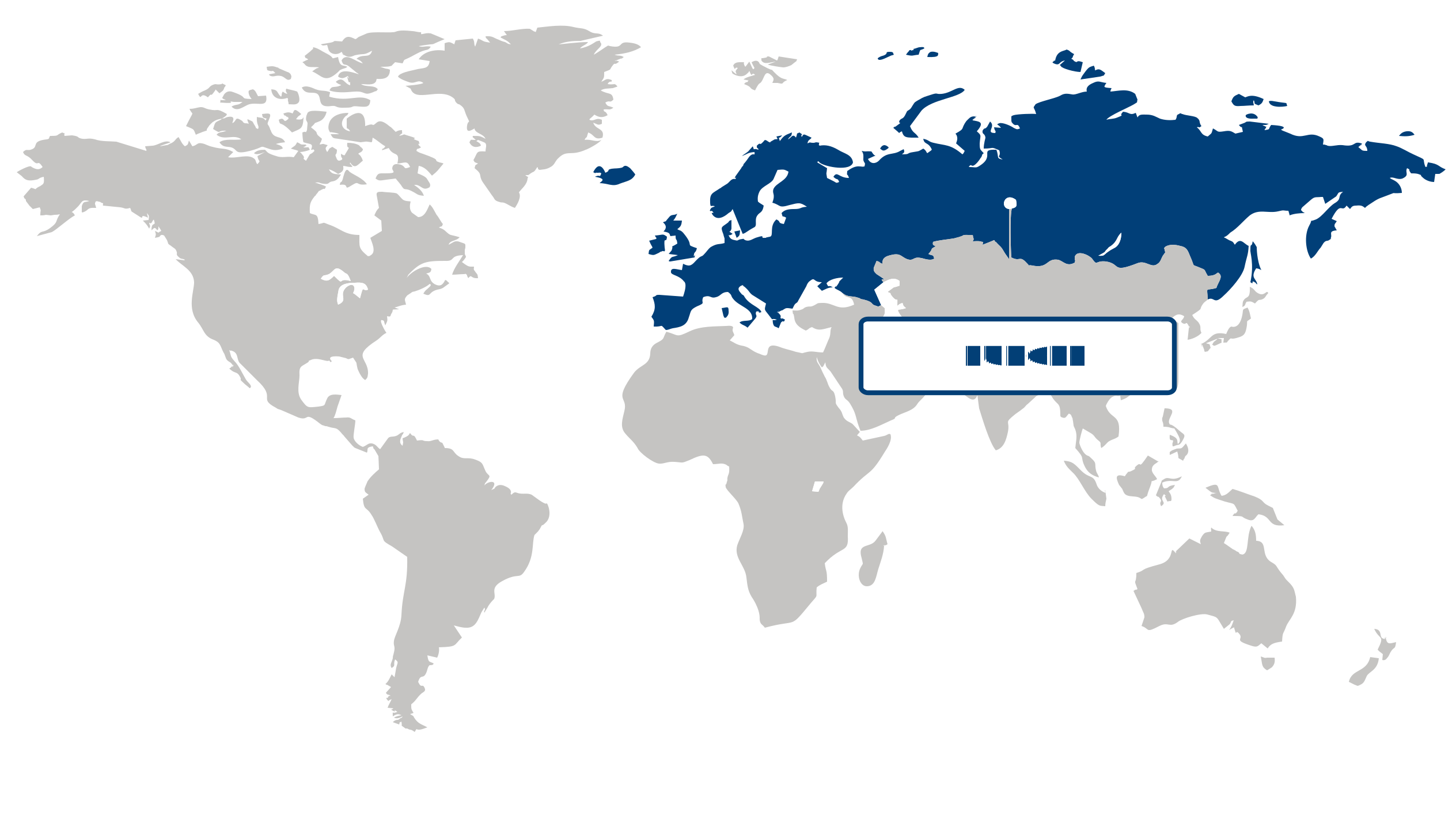
Largest Region
Europe
Largest Market Share in 2026
Europe (Largest Region) vs Asia Pacific (Fastest-Growing Region)
Europe held the largest share of the beta glucan market in 2026, reflecting strong demand for functional food ingredients and growing consumer attention to nutrition, digestive wellness, and cardiovascular health. The region has a well-established functional food and nutraceutical ecosystem, supporting the incorporation of beta glucan into foods, beverages, and dietary formulations. Increasing preference for products positioned around preventive health and clean-label nutrition further encourages ingredient adoption across established food and health-product categories.
Asia Pacific is the fastest-growing regional market, supported by rising health awareness, dietary diversification, and expanding demand for functional nutrition products. Growing urban populations and increasing consumer interest in wellness-oriented foods are creating broader opportunities for ingredients associated with immune, digestive, and metabolic health. Expanding food processing and nutraceutical industries are also improving the incorporation of functional ingredients into everyday products, while greater awareness of preventive nutrition supports continued market development.
Key Country Insights
The U.S. beta glucan market is supported by growing demand for functional foods, dietary supplements, and wellness-focused ingredients. Manufacturers increasingly incorporate beta glucan into products targeting immune health and heart wellness applications.
Japan integrates beta glucan into health-oriented food products that align with preventive nutrition preferences. Manufacturers emphasize convenient delivery formats and scientifically supported ingredient functionality for everyday consumption.
South Korea increasingly incorporates beta glucan into nutraceuticals, functional beverages, and dietary supplements. Companies focus on product innovation supported by consumer interest in immune-supporting and wellness-oriented ingredients.
Germany prioritizes high-quality beta glucan ingredients supported by scientific validation and strict manufacturing standards. Companies emphasize product transparency and formulation consistency across food, beverage, and nutraceutical applications.
France encourages beta glucan applications that emphasize naturally derived ingredients and clean product positioning. Manufacturers respond to consumer preference for functional nutrition supported by recognizable ingredient sources.
Italy expands beta glucan usage through fortified foods and nutritional products that complement everyday diets. Companies prioritize ingredient compatibility with traditional food formats while addressing growing health-conscious consumer demand.
Segment Leadership and Growth Trends
Product Segment Analysis: Soluble (Largest Segment) vs Insoluble (Fastest-Growing Segment)
The soluble segment led the beta glucan market by product type, accounting for a 59.56% share in 2026. Its leading position is closely associated with the broad functional benefits and versatility of soluble beta glucan across food, beverage, and nutritional applications. Soluble forms are particularly valued for their incorporation into products positioned around dietary fiber, heart health, and metabolic wellness, aligning with growing consumer interest in functional nutrition. Their ability to be incorporated into a variety of formulations also supports adoption by food manufacturers seeking to enhance nutritional profiles without substantially changing established product categories. Rising awareness of preventive nutrition and the role of dietary fiber is therefore reinforcing demand for soluble beta glucan.
Insoluble beta glucan is expected to be the fastest-growing product segment, supported by expanding interest in fiber-rich formulations and functional ingredients that can contribute to digestive and nutritional benefits. Its potential use in food formulations requiring enhanced fiber content is creating opportunities across cereals, bakery products, nutritional foods, and other health-oriented applications. Increasing consumer attention to digestive wellness and balanced diets is encouraging manufacturers to explore a broader range of fiber ingredients. As product developers seek functional ingredients that can address evolving nutritional preferences, the adoption of insoluble beta glucan is gaining momentum.
Source Segment Analysis: Cereal (Largest Segment) vs Yeast (Fastest-Growing Segment)
Cereal was the leading source segment in the beta glucan market, representing a 36.15% share in 2026. Cereals are an established and widely available source of beta glucan, supporting their extensive use in food and nutritional applications. Cereal-derived beta glucan benefits from established processing practices and its compatibility with commonly consumed products such as breakfast cereals, bakery formulations, and functional foods. Growing consumer awareness of the nutritional value of whole grains and dietary fiber further strengthens demand for cereal-based ingredients. This established supply base and broad application potential continue to support cereal's leading position within the source landscape.
Yeast is projected to register the fastest growth among beta glucan sources as manufacturers and consumers increasingly explore alternative ingredient origins with differentiated functional properties. Yeast-derived beta glucan is gaining attention in functional nutrition and health-oriented formulations, where demand is expanding for ingredients associated with immune support and wellness applications. Advances in ingredient processing and formulation are also helping broaden the potential uses of yeast-derived beta glucan beyond traditional applications. Increasing investment in functional food innovation and the wider shift toward value-added nutritional ingredients are expected to strengthen the segment's growth trajectory.
| Report Segmentation | |||
| Segment | Sub-Segment | Largest Segment | Fastest Growing Segment |
|---|---|---|---|
| Product | Soluble, Insoluble | Soluble | Insoluble |
| Source | Cereal, Yeast, Mushroom, Others | Cereal | Yeast |
| Application | Food and Beverages, Pharmaceuticals, Cosmetics, Animal Feed, Others | Food and Beverages | Pharmaceuticals |
 Read our Research Approach
Competitive Landscape and Market Positioning
Prominent players in the beta glucan market:
1. DSM-Firmenich AG (Switzerland)
2. Cargill Incorporated (United States)
3. Tate & Lyle PLC (United Kingdom)
4. Lesaffre International SAS (France)
5. Kerry Group plc (Ireland)
6. Biothera Pharmaceuticals Inc. (United States)
7. Ceapro Inc. (Canada)
8. Biotec Pharmacon ASA (Norway)
9. Garuda International Inc. (United States)
10. MilliporeSigma (United States)
The beta glucan market is benefiting from rising interest in immune health, functional nutrition, and preventive wellness products. Market participants are investing in advanced extraction technologies and clinically supported formulations to improve efficacy across dietary supplements and food applications. Innovation in clean-label and fortified products is further supporting expansion opportunities as consumers increasingly prioritize scientifically backed health ingredients.
Industry Development/News
| Company Name | Date | Key Development |
|---|---|---|
| Euglena | May-26 | Euglena acquired the microalgae business of Kobelco Eco-Solutions to bolster its immune health ingredient portfolio. This strategic acquisition enhances the company's functional ingredient capabilities and strengthens its competitive position within the health and wellness sector, specifically addressing demand for immune-supportive compounds derived from microalgae. |
| Yeastup | Jan-26 | Yeastup inaugurated its first industrial-scale production facility in Switzerland, marking a significant manufacturing expansion. The site utilizes upcycling processes to convert spent brewer’s yeast into high-value functional proteins and fibers, enabling the company to scale the commercialization of sustainable, yeast-derived ingredients for the functional food market. |
| Yeastup | Dec-24 | Yeastup secured approximately $9.9 million in funding to facilitate the conversion of a former dairy facility into a specialized production plant. This investment directly supports the scale-up of manufacturing capacity for protein and fiber ingredients derived from spent brewer’s yeast, accelerating the commercialization of its sustainable functional ingredient pipeline. |
| Enifer | Jun-25 | Enifer established a strategic partnership with FS to deploy its proprietary fermentation technology in South America. The initiative focuses on producing mycoprotein from corn ethanol byproducts, representing a significant geographic expansion and operational scaling of sustainable protein production capabilities within the regional agricultural value chain. |
| Mush Foods | Jan-24 | Mush Foods secured $6.2 million in seed funding while simultaneously launching its mycelium-based 50Cut mushroom root blend into the U.S. foodservice market. This dual development integrates capital infusion with commercial market entry, aimed at positioning mycelium-based ingredients as scalable, sustainable, and nutritional additives for the broader meat alternative and food processing sectors. |
| Ceapro Inc. | Nov-22 | Ceapro Inc. advanced the commercial application of its proprietary Pressurized Gas eXpanded (PGX) technology to process high-value bio-actives, including yeast beta-glucan. This technological integration aims to enhance the company’s manufacturing capabilities for nutraceutical and pharmaceutical products, representing a strategic shift toward advanced ingredient processing and portfolio diversification. |
| BENEO | Jul-23 | BENEO introduced Orafti β-Fit, a specialized barley beta-glucan ingredient targeting heart health and blood sugar management. This product launch represents a strategic entry into the cardio-metabolic health segment, leveraging the company's ingredient expertise to expand its global reach and competitive footprint in the functional fiber market. |
| Otis | Jun-24 | Otis commissioned a purpose-built plant-based milk manufacturing facility in Auckland, New Zealand. This infrastructure investment significantly increases regional production capacity for oat-based beverages, strengthening the company's supply chain and ability to meet growing consumer demand for plant-derived functional dairy alternatives. |
Why Choose Us
Specialized Expertise: Our team comprises industry experts with a deep understanding of your market segment. We bring specialized knowledge and experience that ensures our research and consulting services are tailored to your unique needs.
Customized Solutions: We understand that every client is different. That's why we offer customized research and consulting solutions designed specifically to address your challenges and capitalize on opportunities within your industry.
Proven Results: With a track record of successful projects and satisfied clients, we have demonstrated our ability to deliver tangible results. Our case studies and testimonials speak to our effectiveness in helping clients achieve their goals.
Cutting-Edge Methodologies: We leverage the latest methodologies and technologies to gather insights and drive informed decision-making. Our innovative approach ensures that you stay ahead of the curve and gain a competitive edge in your market.
Client-Centric Approach: Your satisfaction is our top priority. We prioritize open communication, responsiveness, and transparency to ensure that we not only meet but exceed your expectations at every stage of the engagement.
Continuous Innovation: We are committed to continuous improvement and staying at the forefront of our industry. Through ongoing learning, professional development, and investment in new technologies, we ensure that our services are always evolving to meet your evolving needs.
Value for Money: Our competitive pricing and flexible engagement models ensure that you get maximum value for your investment. We are committed to delivering high-quality results that help you achieve a strong return on your investment.
Select Licence Type

