Bevel Gearbox Market Size & Forecasts 2026-2035, By Segments (Size, Shaft Angle, Gear Type, Material), Growth Opportunities, Innovation Landscape, Regulatory Shifts, Strategic Regional Insights (U.S., Japan, China, South Korea, UK, Germany, France), and Competitive Dynamics (SEW-Eurodrive, Sumitomo, Bonfiglioli, Flender, Nord Drivesystems)
Jump to content
Market Size and Growth Outlook
Bevel Gearbox Market size is forecast to climb from USD 1.94 billion in 2025 to USD 2.82 billion by 2035, expanding at a CAGR of over 3.8% during 2026-2035. Industry revenue in 2026 is projected at USD 2.01 billion.
Get more details on this report
Request Free Sample ReportBevel Gearbox Market Intelligence Snapshot
Regional Market Dynamics
Segment Momentum
Market Expansion Drivers
Leading Market Participants
Global Market Forecast Snapshot
Market Outlook
Regional and Segment Outlook
Market Growth Drivers and Industry Trends
The bevel gearbox market is significantly propelled by the growing implementation of advanced drivetrain systems in automotive and industrial applications. Enhanced drivetrain configurations, promoted by manufacturers such as Bosch and ZF Friedrichshafen AG, improve efficiency and durability, matching rising consumer demand for performance and reliability. Regulatory pressures from bodies like the European Commission on emissions and fuel economy further expedite adoption of these advanced systems. This trend opens strategic avenues for established players to innovate high-precision bevel gear solutions and for new entrants to focus on niche applications requiring sophisticated torque management. As drivetrain technologies evolve, the bevel gearbox market will increasingly align with integrated, system-level automotive architectures tied to regulations and shifting end-user expectations.
Technological Innovations in Bevel Gear Design
Continuous enhancements in bevel gear manufacturing, such as the application of CNC machining, additive manufacturing, and advanced materials like high-strength alloys, are reshaping the bevel gearbox market. Industry leaders like Timken and Gleason Corporation are investing heavily in R&D to improve gear tooth accuracy and surface finish, which reduce noise and increase load capacity. These innovations respond to stringent industry standards and customer demands for quieter, lighter, and more efficient mechanical transmissions. Strategic opportunities emerge in offering bespoke, high-performance gearbox components for aerospace, automotive, and renewable energy sectors. Moving forward, the market stands to benefit from manufacturing technologies that enable rapid prototyping and scalability, differentiating providers based on precision and material advancements.
Adoption of Electric and Hybrid Drivetrains
The rise of electric and hybrid vehicles, advocated by global policy frameworks including support from the U.S. Department of Energy and China’s New Energy Vehicle mandates, strategically fuels growth in the bevel gearbox market. These drivetrains necessitate specialized gearboxes capable of handling different torque profiles and compact designs compatible with electric motor configurations. Players like GKN Automotive showcase these tailored solutions designed for e-axles and hybrid powertrains. This paradigm shift allows emerging firms to introduce innovative, lightweight bevel gearbox architectures, while incumbents adapt existing product lines to integrate with e-mobility powertrains. With electrification becoming a core focus, the bevel gearbox market is positioned to evolve alongside the transition to cleaner, more efficient propulsion systems worldwide.
Industry Restraints:
Raw Material Price Volatility
Fluctuating costs of steel and specialty alloys, central to bevel gearbox manufacturing, significantly constrain market growth by escalating production expenses and compressing profit margins. For example, the U.S. Geological Survey has documented notable price swings in stainless steel and nickel, materials critical for durable gear components. This volatility forces manufacturers like SKF and Timken to absorb cost shocks or pass them to customers, dampening demand especially in price-sensitive industries such as automotive and industrial machinery. Smaller players struggle disproportionately to hedge against these fluctuations, impairing their competitive positioning. Strategically, companies are compelled to invest in cost forecasting and long-term supplier contracts to mitigate risks. Given ongoing geopolitical tensions and supply chain unpredictability, raw material price instability will persist as a critical restraint, compelling manufacturers to balance cost pressures with innovation in material efficiency to remain viable.
Complex Regulatory Standards for Industrial Equipment
Diverse and stringent regulatory requirements across jurisdictions act as a significant barrier to market expansion, limiting bevel gearbox deployment in regulated sectors. Agencies such as the European Union’s Machinery Directive and the U.S. Occupational Safety and Health Administration enforce rigorous safety and environmental norms, mandating extensive compliance testing and certification. This increases time-to-market and imposes substantial capital burdens on manufacturers like Bosch Rexroth and Bonfiglioli, particularly affecting entrants lacking robust regulatory expertise and resources. For established players, navigating multilayered standards demands strategic investment in compliance infrastructure and adaptive product design. Moving forward, tightening environmental guidelines and heightened focus on operational safety are expected to sustain regulatory complexity as a market restraint, pushing firms toward integrated compliance and innovation solutions to maintain global market access.
| Growth Driver | Impact on CAGR | Regulatory Influence | Geographic Relevance | Adoption Rate | Impact Timeline |
|---|---|---|---|---|---|
| Increasing adoption of advanced drivetrain systems | 1.20% | Short term (≤ 2 yrs) | Europe, Asia Pacific | Medium | Fast |
| Technological innovations in bevel gear design | 1.30% | Medium term (2–5 yrs) | North America, Europe | Medium | Moderate |
| Adoption of electric and hybrid drivetrains | 1.30% | Long term (5+ yrs) | Europe, Asia Pacific | Medium | Slow |
Unlock insights tailored to your business with our bespoke market research solutions.
Click to get your customized report now.
Regional Demand Dynamics
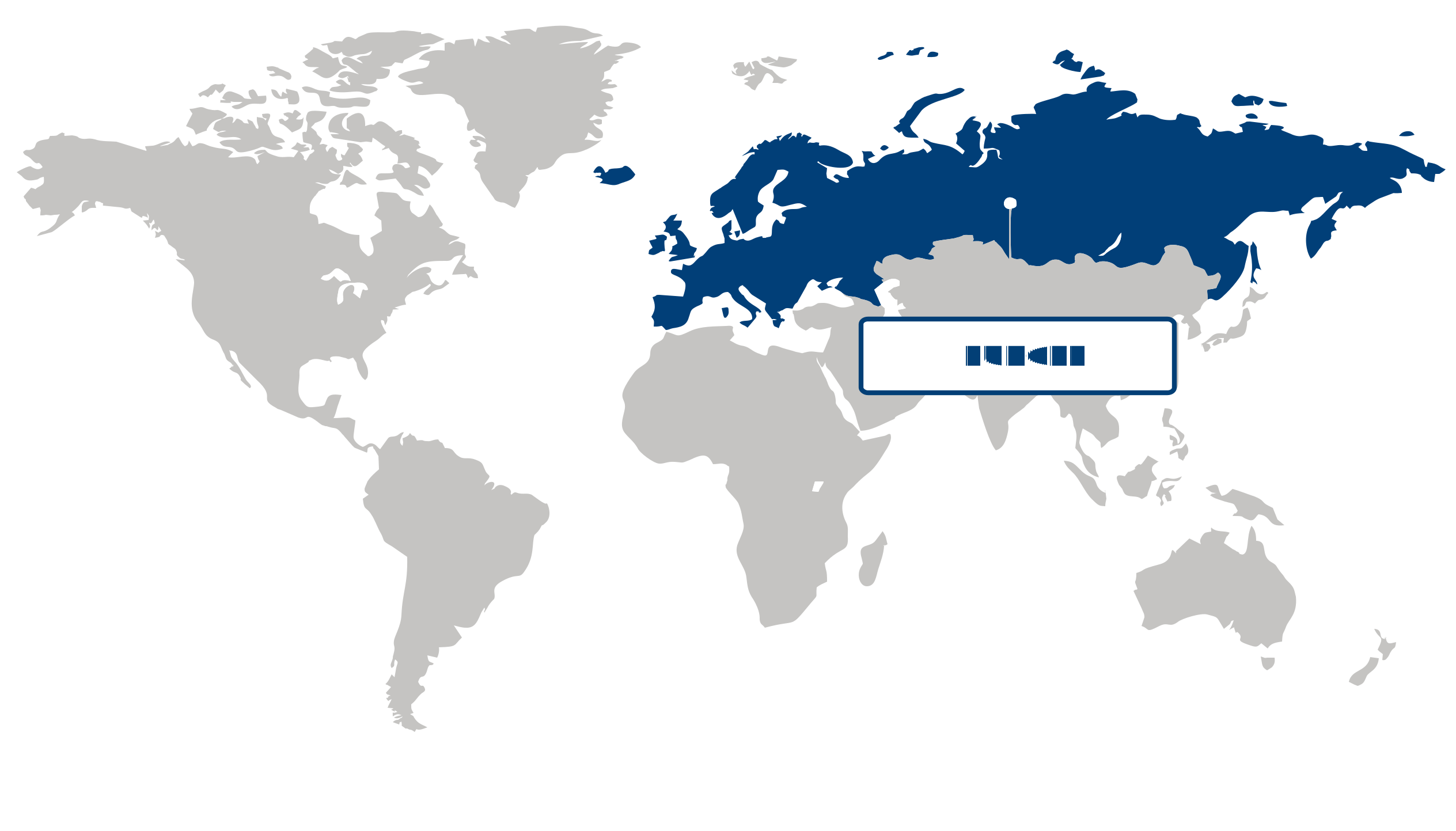
Europe dominated the bevel gearbox market in 2025, representing more than 37% of the global share, driven primarily by robust industrial machinery manufacturing and escalating demand for precision power transmission systems. The region’s advanced manufacturing infrastructure, combined with a skilled workforce and stringent quality standards, underpins this leadership. For instance, Siemens AG’s recent innovations in drive technology underscore Europe’s commitment to operational excellence and sustainability. Additionally, policy frameworks from the European Commission promoting energy efficiency have encouraged manufacturers to adopt sophisticated bevel gearbox solutions, fostering innovation and supply chain resilience. This confluence of factors positions Europe as a fertile ground for continued growth, attracting investments in smart manufacturing and automation that will further fuel demand for advanced bevel gearboxes.
Germany anchors the European bevel gearbox market with its powerhouse automotive and industrial sectors. The country’s focus on digitization and Industry 4.0, exemplified by Bosch’s integration of advanced manufacturing techniques, supports high demand for precise, reliable transmission systems. Meanwhile, France capitalizes on its aerospace and renewable energy industries, with companies like Safran leveraging bevel gearboxes for turbine manufacturing. The distinct industrial bases of Germany and France complement each other, reinforcing Europe’s regional dominance and offering investors strategic avenues to capitalize on diversified technological advancements across sectors.
Asia Pacific Market Analysis:
Asia Pacific emerged as the fastest-growing region in the bevel gearbox market, registering rapid growth with a robust CAGR of 5.4%. This expansion is primarily driven by accelerated industrialization and the continuous development of manufacturing infrastructure across the region. Key economies in Asia Pacific are witnessing a surge in demand for precision mechanical components, spurred by evolving manufacturing practices and rising automation adoption. For example, the Asian Development Bank’s recent report highlights significant investments in smart factories and Industry 4.0 initiatives in the region, bolstering the need for technologically advanced bevel gearboxes. Moreover, governments' supportive policies encouraging local production and infrastructure modernization further amplify market potential. Given the scaling industrial activities and rising capital expenditure in manufacturing hubs, Asia Pacific offers substantial opportunities for manufacturers and investors aiming to capitalize on a rapidly advancing industrial ecosystem.
Japan’s role in the Asia Pacific bevel gearbox market is marked by its position as a leader in advanced manufacturing technologies. The country's demand for high-precision bevel gearboxes is fueled by its automotive and robotics sectors, where stringent quality and efficiency standards predominate. Companies such as Mitsubishi Electric and NSK Ltd. are driving innovation in compact, energy-efficient bevel gear systems, responding to domestic manufacturers’ preferences for reliability and performance. Additionally, Japan’s regulatory focus on sustainability and energy-efficient industrial equipment promotes the adoption of advanced gearbox solutions that reduce operational costs. This technological leadership strengthens Japan’s contribution to the region’s growth, cementing its strategic importance within the Asia Pacific bevel gearbox market.
China stands as a critical driver of the Asia Pacific bevel gearbox market’s rapid expansion, underpinned by its large-scale industrialization and vast manufacturing base. The country’s aggressive infrastructure development and growing middle-class consumption fuel demand for industrial automation and machinery upgrades. Chinese manufacturers, supported by the Ministry of Industry and Information Technology’s push for “Made in China 2025,” prioritize upgrading gearbox components to meet higher efficiency and durability standards. Leading companies like Nidec Corporation have expanded operations to serve local manufacturers, enabling shorter supply chains and more responsive customer support. This dynamic supports China’s pivotal role in sustaining the region’s accelerated market growth and positions it as a gateway for innovations and scale economies in bevel gearbox production within Asia Pacific.
North America Market Trends:
North America maintained a notable presence in the bevel gearbox market, driven by evolving industrial automation and energy-efficient solutions across manufacturing and automotive sectors. Rising investments in smart manufacturing by key players and supportive regulatory frameworks enhancing equipment safety and efficiency have bolstered market growth, according to the U.S. Department of Energy’s recent report on industrial innovation. The region’s emphasis on sustainability and digital integration underpins demand shifts toward advanced gearbox technologies with longer service life and reduced maintenance. Logistics resilience and a skilled workforce further position North America favorably amid moderate growth trends seen in adjacent mechanical components markets, as detailed by the North American Gear Manufacturers Association. These factors collectively indicate robust avenues for technology-driven expansion in bevel gearbox applications, aligning with increasing automation and green manufacturing initiatives.
The U.S. plays a pivotal role in North America’s bevel gearbox market, propelled by accelerated adoption of Industry 4.0 practices and stringent standards on mechanical system reliability. Corporate press releases from Siemens USA highlight extensive deployment of connected gearboxes in automotive assembly lines and wind turbines, sectors prioritizing operational efficiency and downtime reduction. Moreover, federal grants targeting renewable energy projects, as noted by the U.S. Department of Energy, stimulate demand for specialized gearing solutions that maximize energy capture and transmission efficiency. The country’s advanced supply chains and innovation ecosystems elevate competitiveness, fostering a conducive environment for manufacturers to refine bevel gearbox designs. Strategically, the U.S. market’s alignment with sustainability mandates and digital transformation initiatives exemplifies North America’s growing appeal as a center for high-performance gearbox technologies.
| Parameter | North America | Asia Pacific | Europe | Latin America | MEA |
|---|---|---|---|---|---|
| Innovation HubiScaleNascentDeveloping Advanced | |||||
| Cost-Sensitive RegioniScaleLowMedium High | |||||
| Regulatory EnvironmentiScaleRestrictiveNeutral Supportive | |||||
| Demand DriversiScaleWeakModerate Strong | |||||
| Development StageiScaleEmergingDeveloping Developed | |||||
| Adoption RateiScaleLowMedium High | |||||
| New Entrants / StartupsiScaleSparseModerate Dense | |||||
| Macro IndicatorsiScaleWeakStable Strong |
Bevel Gearbox Market Share (%), by Size, 2026
Go beyond the chart, access full insights & data tables
Request Free Sample ReportThe bevel gearbox market is dominated by the medium size segment, which is set to hold the largest share in 2025. This leadership stems from the growing demand for gearboxes that balance performance and versatility across a diverse array of industries, including automotive, material handling, and industrial machinery. Customer preferences increasingly favor medium-sized gearboxes due to their adaptability to various torque and speed requirements without compromising durability. Supply chain enhancements and manufacturing precision from key players like SEW-Eurodrive reflect this trend. The segment offers strategic opportunities for established firms to innovate in modular designs, while new entrants can capture niche industrial applications. Given the ongoing industrial modernization and a stable demand for balanced performance units, the medium size segment will maintain its market relevance in the near to medium term.
Analysis by Shaft Angle
The bevel gearbox market in the 90 degrees shaft angle segment represented the largest share in 2025, driven by widespread adoption in automotive drivetrains and heavy machinery. The standardized 90-degree configuration simplifies integration into existing mechanical systems, aligning with industry preferences for proven, reliable designs that support efficient power transmission. Regulatory compliance and evolving emission standards for vehicles by agencies like the U.S. Environmental Protection Agency (EPA) indirectly reinforce usage of predictable shaft angles improving drivetrain efficiency. Competitive dynamics favor manufacturers with streamlined production of 90-degree gearboxes, supporting supply chain reliability. For both incumbents and emerging vendors, focusing on 90-degree solutions offers avenues for customization and incremental efficiency upgrades. Strengthened by entrenched industrial usage, this segment is poised to sustain its dominance as core componentry evolves with technological improvements.
Analysis by Gear Type
In the bevel gearbox market, the spiral bevel gears segment held the largest share in 2025, buoyed by its superior load capacity and smoother operational characteristics compared to other gear types. This segment benefits from increasing machine performance requirements where noise reduction and longevity are critical, as observed in announcements from Bosch Rexroth and other industrial suppliers emphasizing low-vibration engineering. The segment reflects shifting customer demand towards advanced designs that support sustainability by reducing energy losses and enhancing system reliability. Competitive pressure encourages continuous R&D investments, making spiral bevel gears a preferred choice in evolving industrial automation and mobility sectors. These factors collectively present compelling growth pathways for market leaders and agile new entrants. Given ongoing digital transformation and precision engineering trends, spiral bevel gear solutions are expected to retain their pivotal role in the bevel gearbox market.
| Segment | Sub-Segment | Largest Segment | Fastest Growing |
|---|---|---|---|
| Size | Small, Medium, Large | ||
| Shaft Angle | 90 Degrees, 120 Degrees, Other Shaft Angles | ||
| Gear Type | Straight Bevel Gears, Spiral Bevel Gears, Hypoid Bevel Gears, Zerol Bevel Gears | ||
| Material | Steel, Cast Iron, Aluminum, Stainless Steel, Composite Materials |
Competitive Landscape and Market Positioning
The competitive landscape is shaped by concerted efforts to enhance technological capabilities and market accessibility. Leading players frequently unveil new designs emphasizing energy efficiency and compactness, responding to evolving industrial automation standards. Strategic collaborations and enhanced R&D investments foster the development of high-precision gearboxes tailored for niche applications, such as wind energy and robotics. Moreover, these companies leverage acquisitions and alliances to expand geographical presence, complement product lines, and deepen client engagement. This focus on continuous innovation and targeted expansion underpins their ability to anticipate and satisfy complex market demands, securing a competitive advantage across diverse industrial sectors.
Strategic / Actionable Recommendations for Regional Players
In North America, local manufacturers should pursue collaborations with technology integrators to embed smart monitoring solutions within bevel gearboxes, capitalizing on the region’s advanced automation ecosystem. Targeting sectors like renewable energy and aerospace could yield substantial gains, given existing industrial clusters and government support.
Asia Pacific players can strengthen their foothold by aligning closely with automotive and electronics manufacturers, leveraging emerging materials and additive manufacturing technologies to enhance gearbox performance and reduce costs. Building partnerships with established global suppliers can accelerate knowledge transfer and innovation adoption.
European entities ought to prioritize customization capabilities and sustainable manufacturing practices, aligning with the continent’s regulatory emphasis on energy efficiency and environmental impact. Deepening OEM relationships and co-developing specialized gearboxes for emerging industrial niches will reinforce market positioning amidst intense regional competition.
| Company | Market Share | Company Revenue | Revenue CAGR (%) | Product Portfolio | Geographic Presence | Innovation / R&D Focus | Strategic Developments |
|---|---|---|---|---|---|---|---|
| No companies available. | |||||||
Customize Your Report
Explore examples of how this report can be tailored to different research needs, including custom segments, additional topics or chapters, and related reports. Click a section of the wheel or its numbered marker to explore the available options.
Bevel Gearbox Market — Custom Segments
| Segment | Sub-Segment |
|---|---|
| No segment data available. | |
Bevel Gearbox Market — Custom TOC
| Custom Chapter | Chapter Details |
|---|---|
| No custom TOC data available. | |
Need a different cut of the data?
Request Custom ResearchFrequently Asked Questions
What is the forecasted size of the bevel gearbox industry?
Which region holds the largest share of the bevel gearbox market?
Which region is experiencing the fastest growth in the bevel gearbox sector?
Why does medium sub-segment dominate the size segment of bevel gearbox sector?
How does 90 degrees segment fare in the bevel gearbox industry?
What share does spiral bevel gears segment hold in the bevel gearbox sector as of 2025?
Where is the steel segment seeing the strongest adoption within the bevel gearbox industry?
What are the prominent companies operating in the bevel gearbox landscape?
Our Clients
"The team at Fundamental Business Insights & Consulting demonstrated a commitment to excellence, not only in the quality of the report but also in their client-centric approach."
FANUC
"The level of detail in the market segmentation provided were particularly noteworthy. The detailed country-level insights were also very helpful."
B&R Industrial Automation GmbH
"The consultant took the time to understand our specific business objectives, ensuring that the reports were tailored to address our unique challenges and opportunities."
KUKA SE & Co. KGaA
Our Research Team & Methodology
Every Fundamental Business Insights report is built by a dedicated vertical research team, validated through a structured primary-and-secondary methodology, and reviewed for accuracy before it reaches you.
Delivery
Published
Available
Support
- Market Size & Forecast
- Market Segmentation
- Regional Analysis
- Growth Drivers & Challenges
- Market Dynamics
- Competitive Landscape
- Company Profiles
- Competitive Benchmarking
- Mergers & Acquisitions
- Market Share Analysis or Key Company Strategies
- Value Chain Analysis
- Porter's Five Forces
- PESTLE Analysis
- Pricing Trends
- Supply-Demand Analysis
- Technology Landscape
- Regulatory Landscape
- Investment & Funding Landscape
- Emerging Opportunities
- Future Market Outlook