Bicycle Drivetrain Cassette Market Size & Growth Forecast 2027–2036, By Segments (Bike, Distribution Channel, Weight Class, Material, Cassette Size, Speed), Regional Demand Trends (North America, Asia Pacific, Europe), Key Country Insights (U.S., Japan, South Korea, Germany, France, Italy), and Competitive Landscape
Market Size and Growth Outlook
Bicycle Drivetrain Cassette Market size was worth USD 502.12 Million in 2026 and is expected to grow at 4.86% CAGR between 2027 and 2036, crossing USD 807.06 Million by 2036. The industry revenue for 2027 is estimated at USD 522.46 Million.
Get more details on this report
Request Free Sample ReportBicycle Drivetrain Cassette Market Intelligence Snapshot
Regional Market Dynamics
- Europe held 34.56% in 2026, supported by established cycling culture, e-bike adoption, cycling infrastructure, and demand for durable, high-performance drivetrain components.
- Asia Pacific is projected to grow fastest as bicycle and e-bike adoption rises alongside urbanization, domestic component production, sustainable mobility initiatives, and recreational cycling.
Segment Momentum
- Mountain bikes accounted for 43.2% of the market in 2026, driven by strong participation in recreational, competitive, and adventure cycling that requires durable cassettes with reliable shifting and wider gear ranges.
- The aftermarket is expanding as cyclists increasingly replace worn cassettes and upgrade bicycles for better performance. Rising customization, preventive maintenance, and broader retail and online availability continue to support demand.
Market Expansion Drivers
- Rising cycling adoption for fitness and recreation driving drivetrain component demand growth
- Growing e-bike penetration accelerating demand for durable and high-efficiency drivetrain systems
- Sustainability trends promoting cycling as eco-friendly urban mobility alternative
Leading Market Participants
- Top players in the bicycle drivetrain cassette market include Shimano Inc. (Japan), SRAM LLC (United States), Campagnolo S.r.l. (Italy), SunRace Sturmey-Archer Inc. (Taiwan), microSHIFT (Taiwan), KMC Chain Industrial Co., Ltd. (Taiwan), FSA (Full Speed Ahead) (United States), Rotor Bike Components (Spain), Garbaruk (Poland), Box Components (United States)
Global Market Forecast Snapshot
Market Outlook
- 2026 Market Size: USD 502.12 Million
- 2027 Estimated Market Size: USD 522.46 Million
- Projected Market Size: USD 807.06 Million by 2036
- Growth Forecast: 4.86% CAGR (2027-2036)
Regional and Segment Outlook
- Leading Regional Market: Europe
- High-Growth Regional Hub: Asia Pacific
- Core Revenue Segment: Mountain Bike (Bike) | OEM (Distribution Channel) | Light Weight (Weight Class) | Steel (Material) | 11-34T (Cassette Size) | 12 and Above (Speed)
- Emerging Opportunity Segment: Gravel Bike (Bike) | Aftermarket (Distribution Channel) | Light Weight (Weight Class) | Titanium (Material) | 10-50T (Cassette Size) | 12 and Above (Speed)
Market Growth Drivers and Industry Trends
Rising cycling adoption for fitness and recreation driving drivetrain component demand growth
The increasing popularity of cycling as a fitness activity and recreational pursuit is encouraging consumers to invest in reliable bicycle components that enhance riding performance. The bicycle drivetrain cassette market growth is driven by higher demand for drivetrain systems capable of delivering smooth gear transitions, efficient power transfer, and dependable performance across diverse riding conditions. As more individuals participate in road cycling, trail riding, and leisure cycling, the need for durable replacement and upgrade components continues to expand. This trend is supporting greater demand for cassettes designed to improve riding comfort and optimize pedaling efficiency over varying terrains.
Growing e-bike penetration accelerating demand for durable and high-efficiency drivetrain systems
The rapid expansion of electric bicycle adoption is creating new performance requirements for drivetrain components exposed to higher torque and more frequent gear changes. Growing e-bike penetration will propel the bicycle drivetrain cassette market growth as manufacturers develop durable cassette systems engineered to withstand increased mechanical loads while maintaining smooth and efficient operation. Riders increasingly seek drivetrain solutions that offer enhanced wear resistance, precise shifting, and extended service life to complement the performance characteristics of electric-assist bicycles. These evolving requirements are encouraging continuous innovation in cassette materials, tooth profiles, and overall drivetrain durability.
Sustainability trends promoting cycling as eco-friendly urban mobility alternative
Environmental awareness and the pursuit of sustainable transportation are encouraging greater adoption of bicycles for daily commuting and short-distance travel. Sustainability trends will boost the bicycle drivetrain cassette market by supporting increased bicycle usage as an environmentally responsible alternative to conventional motorized transportation. As cities promote cycling infrastructure and individuals embrace lower-emission mobility options, demand for reliable drivetrain components continues to rise across commuter and urban bicycle segments. Regular bicycle use also increases maintenance and replacement cycles, creating sustained demand for high-quality cassettes that ensure efficient and dependable everyday performance.
| Growth Driver | Impact on CAGR | Regulatory Influence | Geographic Relevance | Adoption Rate | Impact Timeline |
|---|---|---|---|---|---|
| Rising cycling adoption for fitness and recreation driving drivetrain component demand growth | 1.8% | Low | North America, Europe, Asia Pacific | High | Near Term |
| Growing e-bike penetration accelerating demand for durable and high-efficiency drivetrain systems | 1.7% | Low | Europe, Asia Pacific | High | Near Term |
| Sustainability trends promoting cycling as eco-friendly urban mobility alternative | 1.4% | Low | Europe, North America | High | Mid Term |
Unlock insights tailored to your business with our bespoke market research solutions.
Click to get your customized report now.
Regional Demand Dynamics
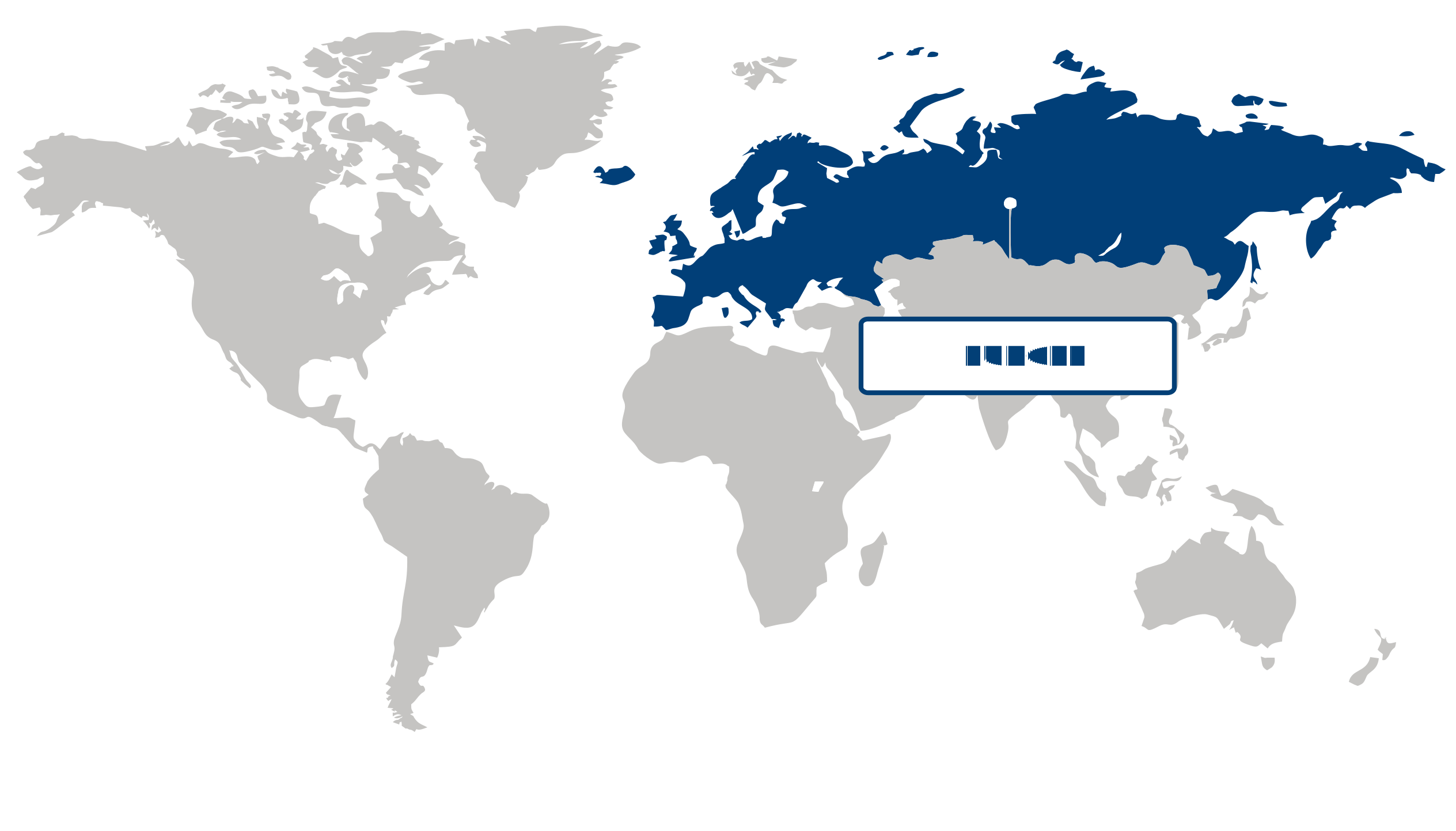
Europe (Largest Region)
Europe accounted for the largest share of 34.56% in the bicycle drivetrain cassette market in 2026. The region's strong position is supported by a well-established cycling culture, widespread use of bicycles for recreation and transportation, and demand for technologically advanced bicycle components. Growing adoption of performance bicycles and e-bikes is increasing the need for efficient drivetrain systems capable of supporting different riding conditions and power requirements. The expansion of cycling infrastructure and increasing emphasis on sustainable mobility are further encouraging bicycle usage across urban and recreational settings. In addition, consumer preference for durable and high-performance components is supporting demand for advanced drivetrain cassettes across the region.
Asia Pacific (Fastest-Growing Region)
Asia Pacific is projected to be the fastest-growing region in the bicycle drivetrain cassette market, driven by rising bicycle adoption, expanding e-bike demand, and increasing interest in cycling for transportation and recreation. Rapid urbanization and growing awareness of sustainable mobility are encouraging consumers and local authorities to promote cycling as an alternative transportation mode. The expansion of domestic bicycle manufacturing and component production is strengthening regional supply capabilities, while growing participation in recreational and competitive cycling is creating demand for higher-performance drivetrain components. Increasing adoption of electric bicycles is also expected to support demand for durable cassette systems suited to more demanding operating conditions.
| Parameter | North America | Asia Pacific | Europe | Latin America | MEA |
|---|---|---|---|---|---|
| Innovation Hub i Scale Nascent Developing Advanced | |||||
| Cost-Sensitive Region i Scale Low Medium High | |||||
| Regulatory Environment i Scale Restrictive Neutral Supportive | |||||
| Demand Drivers i Scale Weak Moderate Strong | |||||
| Development Stage i Scale Emerging Developing Developed | |||||
| Adoption Rate i Scale Low Medium High | |||||
| New Entrants / Startups i Scale Sparse Moderate Dense | |||||
| Macro Indicators i Scale Weak Stable Strong |
Key Country Insights
United States 🇺🇸
High-Performance DrivetrainsThe U.S. bicycle drivetrain cassette market benefits from demand for versatile gearing systems across road, gravel, and mountain bicycles. Manufacturers are expanding lightweight cassette options that improve shifting precision and drivetrain efficiency.
Germany 🇩🇪
Precision Gear SystemsGermany focuses on bicycle drivetrain cassettes that provide smooth shifting, durability, and compatibility with advanced drivetrain technologies. Component development emphasizes engineering precision and long-term mechanical performance.
Japan 🇯🇵
Advanced Shifting TechnologyJapan continues to refine bicycle drivetrain cassettes through lightweight materials and high-precision manufacturing. Companies are supporting increasingly sophisticated drivetrain systems that improve rider efficiency across varied cycling disciplines.
South Korea 🇰🇷
Component Manufacturing ExpansionSouth Korea is strengthening bicycle drivetrain cassette production through investments in precision manufacturing and advanced materials. Suppliers are developing cassette designs suited to both conventional bicycles and rapidly expanding e-bike platforms.
France 🇫🇷
Endurance Cycling ComponentsFrance supports bicycle drivetrain cassette demand through active road cycling and endurance riding communities. Manufacturers are introducing gear configurations that improve climbing performance while maintaining efficient power transfer across diverse terrain.
Italy 🇮🇹
Premium Drivetrain CraftsmanshipItaly emphasizes bicycle drivetrain cassettes that complement premium bicycle manufacturing with refined shifting performance. Producers focus on lightweight construction, machining quality, and compatibility with high-end road cycling systems.
Segment Leadership and Growth Trends
Bicycle Drivetrain Cassette Market Share (%), by Bike, 2026
Go beyond the chart, access full insights & data tables
Request Free Sample ReportBike Segment Analysis: Mountain Bike (Largest Segment) vs Gravel Bike (Fastest-Growing Segment)
The mountain bike segment dominated the bicycle drivetrain cassette market and accounted for a 43.2% share in 2026. Its leadership is supported by the widespread popularity of mountain biking across recreational, competitive, and adventure cycling activities, all of which require durable and high-performance drivetrain components. Mountain bikes frequently operate under demanding terrain conditions that place significant stress on cassette systems, encouraging demand for products with enhanced durability, wider gear ranges, and reliable shifting performance. Continuous innovation in off-road drivetrain technologies and growing participation in trail riding further reinforce the segment's leading position.
The gravel bike segment is anticipated to register the fastest growth as riders increasingly seek bicycles capable of handling mixed terrain with greater versatility. Gravel cycling has gained momentum among enthusiasts looking for long-distance comfort and off-road capability, creating higher demand for drivetrain cassettes optimized for varied gradients and riding conditions. Manufacturers are responding with wider-range gearing options and lightweight cassette designs that improve efficiency across diverse surfaces, supporting the rapid expansion of this segment.
Distribution Channel Segment Analysis: OEM (Largest Segment) vs Aftermarket (Fastest-Growing Segment)
The OEM segment held the largest share in 2026, driven by strong partnerships between bicycle manufacturers and drivetrain component suppliers. Original equipment installation ensures compatibility, optimized drivetrain performance, and adherence to manufacturer specifications, making OEM channels the preferred source for cassette integration in new bicycles. Rising production of performance-oriented bicycles and continuous product innovation are further supporting the dominance of this distribution channel.
The aftermarket segment is expected to experience the fastest growth as cyclists increasingly replace worn drivetrain components or upgrade existing bicycles to improve performance. Growing interest in bicycle customization, preventive maintenance, and premium drivetrain upgrades is fueling demand for replacement cassettes across recreational and competitive cycling communities. Expanding availability of specialized cycling retailers and online sales platforms is also contributing to aftermarket growth.
Weight Class Segment Analysis: Light Weight (Largest & Fastest-Growing Segment)
The light-weight segment dominated the bicycle drivetrain cassette market in 2026 while also emerging as the fastest-growing weight class. Lightweight cassettes are increasingly preferred because they reduce overall bicycle weight, improve pedaling efficiency, and enhance acceleration and climbing performance. Their adoption is expanding across road, gravel, and mountain bicycles as riders prioritize speed, responsiveness, and endurance. Continuous advancements in materials engineering and precision manufacturing are enabling the production of lighter yet highly durable cassette systems, further strengthening the segment's market leadership.
| Segment | Sub-Segment | Largest Segment | Fastest Growing |
|---|---|---|---|
| Bike | Mountain Bike, Road Bike, Gravel Bike, Others | Mountain Bike | Gravel Bike |
| Distribution Channel | OEM, Aftermarket | OEM | Aftermarket |
| Weight Class | Light Weight, Heavy Weight | Light Weight | Light Weight |
| Material | Steel, Aluminum, Titanium, Others | Steel | Titanium |
| Cassette Size | 11-28T, 14-28T, 11-34T, 10-50T, Others | 11-34T | 10-50T |
| Speed | 7, 8, 9, 10, 11, 12 and Above | 12 and Above | 12 and Above |
Competitive Landscape and Market Positioning
Key companies in the bicycle drivetrain cassette market:
- Shimano, Inc. (Japan)
- SRAM LLC (United States)
- Campagnolo S.r.l. (Italy)
- SunRace Sturmey-Archer, Inc. (Taiwan)
- microSHIFT (Taiwan)
- KMC Chain Industrial Co., Ltd. (Taiwan)
- FSA (Full Speed Ahead) (United States)
- Rotor Bike Components (Spain)
- GarbarUK (Poland)
- Box Components (United States)
Rivalry in the bicycle drivetrain cassette market is increasingly shaped by the ability to balance lightweight construction, durability, and shifting precision across diverse riding conditions. Manufacturers are moving beyond incremental material improvements by refining tooth profiles, surface treatments, and manufacturing techniques that enhance drivetrain efficiency while extending service life. Competitive pressure is also emerging from the growing expectation for compatibility across multiple drivetrain configurations, encouraging suppliers to design more adaptable component ecosystems that appeal to both original equipment manufacturers and the aftermarket. As cycling segments continue to diversify, product development is becoming more specialized, with differentiation built around performance optimization for road, mountain, gravel, and urban applications rather than broad product portfolios alone.
| Company | Market Share | Company Revenue | Revenue CAGR (%) | Product Portfolio | Geographic Presence | Innovation / R&D Focus | Strategic Developments |
|---|---|---|---|---|---|---|---|
| Shimano Inc. (Japan) | |||||||
| SRAM LLC (United States) | |||||||
| Campagnolo S.r.l. (Italy) | |||||||
| SunRace Sturmey-Archer Inc. (Taiwan) | |||||||
| microSHIFT (Taiwan) | |||||||
| KMC Chain Industrial Co. Ltd. (Taiwan) | |||||||
| FSA (Full Speed Ahead) (United States) | |||||||
| Rotor Bike Components (Spain) | |||||||
| Garbaruk (Poland) | |||||||
| Box Components (United States) |
Industry Development/News
| Company Name | Date | Key Development |
|---|
Customize Your Report
Explore examples of how this report can be tailored to different research needs, including custom segments, additional topics or chapters, and related reports. Click a section of the wheel or its numbered marker to explore the available options.
Bicycle Drivetrain Cassette Market — Custom Segments
| Segment | Sub-Segment |
|---|---|
| Price Tier | Entry-Level, Mid-Range, Premium, High-End |
| Cassette Compatibility | Shimano-Compatible, SRAM-Compatible, Campagnolo-Compatible, Other Drive Systems |
| Riding Environment | Road Cycling, Mountain & Trail Cycling, Gravel Cycling, Cyclocross & All-Terrain Cycling |
Bicycle Drivetrain Cassette Market — Custom TOC
| Custom Chapter | Custom Details |
|---|---|
| E-Bike Drivetrain Evolution |
|
| OEM Component Sourcing Strategy |
|
| Premium Bicycle Segment Opportunity |
|
Need a different cut of the data?
Request Custom ResearchHow much revenue does the bicycle drivetrain cassette market generate?
What are the growth projections for the bicycle drivetrain cassette industry?
How is e-bike growth influencing innovation in bicycle drivetrain cassettes?
Why are sustainability trends supporting growth in the bicycle drivetrain cassette market?
Why do mountain bikes lead demand in the bicycle drivetrain cassette market?
Why is the aftermarket distribution channel growing rapidly in the bicycle drivetrain cassette market?
Why does Europe lead the bicycle drivetrain cassette market?
What is driving faster bicycle drivetrain cassette growth in Asia Pacific?
What are the prominent companies operating in the bicycle drivetrain cassette landscape?
Our Clients
"The team surpassed our expectations with the report depth. The actionable insights provided proved crucial in navigating market challenges."
Tata Motors
"We found the report to be very informative. The expertise and attention to market nuances significantly influenced our business direction."
DENSO Corporation
"The consumer survey findings were quite good. We now have a clearer picture of the customer churning and retention strategy."
HL Mando
Our Research Team & Methodology
Every Fundamental Business Insights report is built by a dedicated vertical research team, validated through a structured primary-and-secondary methodology, and reviewed for accuracy before it reaches you.
Research Team Overview
Prepared by the Automotive & Transportation Research Team
Delivery
Published
Demand
Available
Support
Trust & Compliance
Research Domains
10 coverage areasResearch Intelligence
| Source | Reference |
|---|---|
| International Organization of Motor Vehicle Manufacturers (OICA) | www.oica.net |
| SAE International | www.sae.org |
| International Energy Agency (IEA) | www.iea.org |
| International Transport Forum (ITF) | www.itf-oecd.org |
| International Road Federation (IRF) | www.irf.global |
| International Organization for Standardization (ISO) | www.iso.org |
| United Nations Economic Commission for Europe (UNECE) | unece.org |
| National Highway Traffic Safety Administration (NHTSA) | www.nhtsa.gov |
| U.S. Department of Transportation (USDOT) | www.transportation.gov |
| European Automobile Manufacturers' Association (ACEA) | www.acea.auto |
| Society of Indian Automobile Manufacturers (SIAM) | www.siam.in |
| International Air Transport Association (IATA) | www.iata.org |
| International Civil Aviation Organization (ICAO) | www.icao.int |
| International Maritime Organization (IMO) | www.imo.org |
| International Union of Railways (UIC) | uic.org |
| American Public Transportation Association (APTA) | www.apta.com |
| International Federation of Robotics (IFR) | ifr.org |
| CharIN | www.charin.global |
| World Shipping Council | www.worldshipping.org |
| International Federation of Freight Forwarders Associations (FIATA) | fiata.org |
Research Workflow & Quality Assurance
Data Collection
Verified information gathered through primary and secondary research.
Data Triangulation
Cross-validation using multiple independent data sources.
Forecast Modelling
Market estimates developed using historical trends and analytical models.
Analyst Validation
Findings reviewed by domain experts for accuracy and consistency.
Editorial & Quality Review
Final editorial, quality, and compliance checks before publication.
Final Publication
Released after successful completion of the internal review process.
Report Coverage
📊 Market Assessment
- Market Size & Forecast
- Market Segmentation
- Regional Analysis
- Growth Drivers & Challenges
- Market Dynamics
🏢 Competitive Intelligence
- Competitive Landscape
- Company Profiles
- Competitive Benchmarking
- Mergers & Acquisitions
- Market Share Analysis or Key Company Strategies
🔍 Strategic Analysis
- Value Chain Analysis
- Porter's Five Forces
- PESTLE Analysis
- Pricing Trends
- Supply-Demand Analysis
🚀 Future Outlook
- Technology Landscape
- Regulatory Landscape
- Investment & Funding Landscape
- Emerging Opportunities
- Future Market Outlook
Have a question about this report or need a custom scope?
Request Customization