Bicycle Saddles Market Size & Growth Forecast 2027–2036, By Segments (Distribution Channel, Activity, Sales Channel), Regional Demand Trends (North America, Asia Pacific, Europe), Key Country Insights (U.S., Japan, South Korea, Germany, France, Italy), and Competitive Landscape
Jump to content
Market Size and Growth Outlook
Bicycle Saddles Market size was around USD 6.2 billion in 2026 and is slated to grow at a 8.55% CAGR from 2027 to 2036, surpassing USD 14.08 billion by 2036. The industry revenue for 2027 is estimated at USD 6.65 billion.
Get more details on this report
Request Free Sample ReportBicycle Saddles Market Intelligence Snapshot
Regional Market Dynamics
- Europe leads the market through its established cycling culture, mature manufacturing ecosystem, consistent replacement demand, and extensive specialty retail channels supporting OEM and aftermarket sales.
- Asia Pacific is forecast to grow at a 9.04% CAGR, fueled by rising bicycle adoption, expanding manufacturing activity, and stronger demand across urban mobility and fitness applications.
Segment Momentum
- OEM leads with 60.06% share because bicycle manufacturers integrate saddles directly into production at scale, prioritizing consistency, volume sourcing, and alignment with factory specifications across models.
- E-bikes are the fastest-growing segment as rising adoption for commuting and leisure increases demand for comfort-focused saddles, driven by longer riding durations and diverse urban usage conditions.
Market Expansion Drivers
- Rising e-bike adoption and premium bicycle demand accelerating saddle consumption growth.
- Government cycling infrastructure investments expanding global bicycle commuter base.
- Demand for ergonomic and sustainable saddle materials driving product innovation cycles.
Leading Market Participants
- Top players in the bicycle saddles market include Shimano Inc. (Japan), Specialized Bicycle Components, Inc. (United States), Selle Italia S.r.l. (Italy), Giant Manufacturing Co., Ltd. (Taiwan), Merida Industry Co., Ltd. (Taiwan), fi'zi:k S.r.l. (Italy), Prologo S.r.l. (Italy), Bontrager Corporation (United States), DDK Group (Taiwan), SDG Components, Inc. (United States).
Global Market Forecast Snapshot
Market Outlook
- 2026 Market Size: USD 6.2 billion
- 2027 Estimated Market Size: USD 6.65 billion.
- Projected Market Size: USD 14.08 billion by 2036
- Growth Forecast: 8.55% CAGR (2027-2036)
Regional and Segment Outlook
- Leading Regional Market: Europe
- High-Growth Regional Hub: Asia Pacific
- Core Revenue Segment: OEM (Distribution Channel) | Road Bikes (Activity) | Offline (Sales Channel)
- Emerging Opportunity Segment: Aftermarket (Distribution Channel) | E-bikes (Activity) | Online (Sales Channel)
Market Growth Drivers and Industry Trends
Rising e-bike adoption and premium bicycle demand accelerating saddle consumption growth
Rising adoption of e-bikes is contributing to the bicycle saddles market as increased bicycle usage creates greater requirements for comfortable and durable seating components. E-bike users may undertake longer commutes and recreational journeys, increasing attention to saddle cushioning, pressure distribution, riding posture, and overall comfort. At the same time, demand for premium bicycles is encouraging consumers to select higher-quality components that complement the performance and design of their vehicles. Manufacturers are therefore developing saddles with specialized shapes, supportive padding, lightweight construction, and materials suited to different riding styles, including urban commuting, touring, and performance cycling.
Government cycling infrastructure investments expanding global bicycle commuter base
Government investments in cycling lanes, dedicated paths, bicycle parking facilities, and other mobility infrastructure are encouraging more people to use bicycles for commuting and short-distance transportation. As cycling becomes more practical and safer within urban environments, regular riders require components capable of supporting frequent and extended use. The bicycle saddles market benefits from this shift because commuter bicycles must provide adequate comfort and ergonomic support across repeated journeys, while growing bicycle ownership creates replacement demand for worn or unsuitable saddles. Improved cycling infrastructure also encourages broader participation among users transitioning from conventional transportation modes to active mobility.
Demand for ergonomic and sustainable saddle materials driving product innovation cycles
Consumer attention to riding comfort, posture, and environmental considerations is influencing the bicycle saddles market by encouraging manufacturers to refine both saddle ergonomics and material selection. Modern saddle development increasingly focuses on pressure relief, anatomical shaping, ventilation, shock absorption, and weight distribution to address discomfort associated with prolonged riding. At the same time, interest in sustainable materials is encouraging experimentation with recycled inputs, lower-impact manufacturing processes, and alternative coverings or cushioning materials. The combination of comfort expectations and sustainability preferences is creating opportunities for differentiated saddle designs across commuter, recreational, and performance applications.
| Growth Driver | Impact on CAGR | Regulatory Influence | Geographic Relevance | Adoption Rate | Impact Timeline |
|---|---|---|---|---|---|
| Rising e-bike adoption and premium bicycle demand accelerating saddle consumption growth | 3.00% | Moderate | Asia Pacific, Europe, North America | High | Near Term |
| Government cycling infrastructure investments expanding global bicycle commuter base | 2.60% | High | Europe, North America, Asia Pacific | High | Mid Term |
| Demand for ergonomic and sustainable saddle materials driving product innovation cycles | 2.10% | Moderate | Europe, North America | Medium | Mid Term |
Unlock insights tailored to your business with our bespoke market research solutions.
Click to get your customized report now.
Regional Demand Dynamics
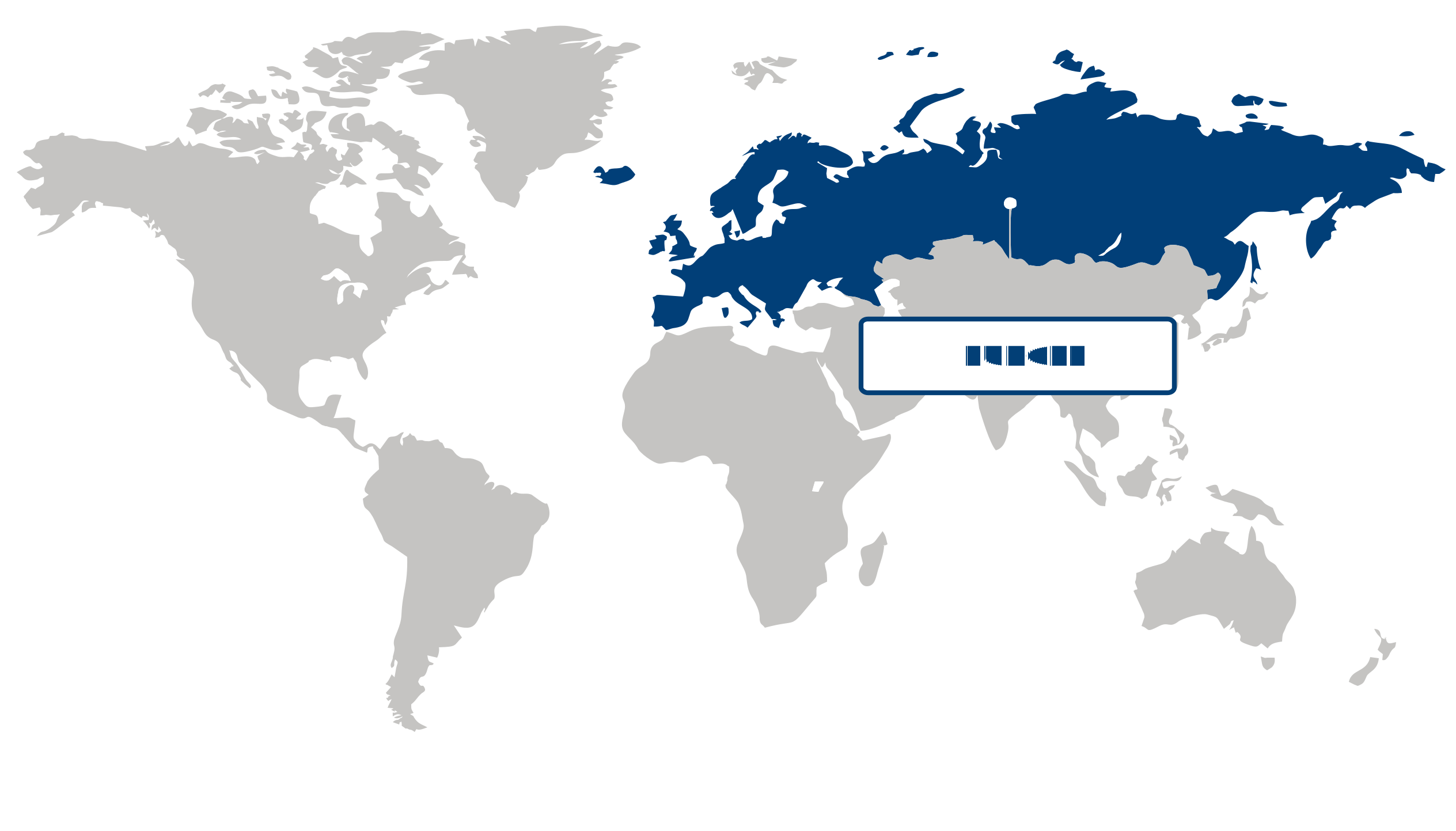
Europe (Largest Region)
Europe maintained the largest share of the bicycle saddles market in 2026, supported by a well-established cycling culture, extensive cycling infrastructure, and strong participation in recreational and performance-oriented cycling. Growing emphasis on sustainable mobility and active lifestyles continues to encourage bicycle use, while demand for ergonomically designed and performance-focused components supports the replacement and upgrade cycle for saddles.
Asia Pacific (Fastest-Growing Region)
Asia Pacific is the fastest-growing region, benefiting from increasing urban cycling, expanding interest in fitness and recreational activities, and growing adoption of bicycles for short-distance transportation. Improvements in cycling infrastructure and rising awareness of sustainable mobility are also creating favorable conditions for saddle demand.
| Parameter | North America | Asia Pacific | Europe | Latin America | MEA |
|---|---|---|---|---|---|
| Innovation HubiScaleNascentDeveloping Advanced | |||||
| Cost-Sensitive RegioniScaleLowMedium High | |||||
| Regulatory EnvironmentiScaleRestrictiveNeutral Supportive | |||||
| Demand DriversiScaleWeakModerate Strong | |||||
| Development StageiScaleEmergingDeveloping Developed | |||||
| Adoption RateiScaleLowMedium High | |||||
| New Entrants / StartupsiScaleSparseModerate Dense | |||||
| Macro IndicatorsiScaleWeakStable Strong |
Key Country Insights
Germany 🇩🇪
Engineering-Focused InnovationGermany prioritizes technically advanced bicycle saddles that complement its strong cycling culture and premium bicycle manufacturing ecosystem. Demand favors ergonomic design, durable materials, and compatibility with performance and urban mobility segments.
France 🇫🇷
Recreational Cycling FocusFrance benefits from strong participation in road cycling and leisure riding, encouraging demand for high-quality bicycle saddles across multiple riding styles. French buyers increasingly value ergonomic performance, sustainability, and compatibility with premium bicycle models.
Italy 🇮🇹
Premium Craftsmanship HeritageItaly maintains strong demand for bicycle saddles that combine advanced materials with refined craftsmanship, reflecting its established cycling industry. Italian manufacturers continue emphasizing performance-focused designs and premium aesthetics for competitive and enthusiast cyclists.
Japan 🇯🇵
Comfort-Oriented Urban MobilityJapan emphasizes bicycle saddles designed for daily commuting, compact bicycles, and long-term riding comfort. Manufacturers in Japan focus on ergonomic construction, lightweight components, and practical features that suit dense urban transportation needs.
South Korea 🇰🇷
Smart Cycling AdoptionSouth Korea supports demand for bicycle saddles that align with recreational cycling growth and expanding premium bicycle ownership. Product development increasingly focuses on comfort, lightweight construction, and designs suited for both fitness and urban riders.
United States 🇺🇸
Performance Cycling DemandThe U.S. bicycle saddles market is shaped by demand for premium road, gravel, and mountain cycling products alongside growing interest in ergonomic comfort. Manufacturers emphasize lightweight materials, customization, and direct-to-consumer distribution to address diverse rider preferences.
Bicycle Saddles Market Share (%), by Distribution Channel, 2026
Go beyond the chart, access full insights & data tables
Request Free Sample ReportDistribution Channel Segment Analysis: OEM (Largest Segment) vs Aftermarket (Fastest-Growing Segment)
The OEM segment represented the largest share of the bicycle saddles market, accounting for 60.06% in 2026, supported by the integration of saddles directly into new bicycle manufacturing and assembly processes. OEM supply enables bicycle manufacturers to match saddle design, ergonomics, and performance characteristics with the specifications of complete bicycles. This approach provides compatibility and consistency while allowing saddle selection to reflect the intended riding style and positioning of the bicycle. Continued demand for new bicycles across recreational, commuting, performance, and other applications sustains the importance of OEM channels in the market.
Aftermarket is expanding at a faster pace as cyclists increasingly seek replacement saddles and upgrades tailored to personal comfort, riding preferences, and performance requirements. Saddle fit can significantly influence riding comfort, making replacement an attractive option for users looking to improve ergonomics or adapt an existing bicycle to a different riding style. The growing availability of specialized designs and greater consumer awareness of bicycle components are encouraging cyclists to make more informed upgrade decisions. This increasing emphasis on customization and component-level performance is supporting stronger aftermarket demand.
Activity Segment Analysis: Road Bikes (Largest Segment) vs E-bikes (Fastest-Growing Segment)
Road bikes led the bicycle saddles market with a 36.68% share in 2026, reflecting the importance of saddle performance in cycling activities where comfort, positioning, and riding efficiency are central considerations. Road cycling often involves extended periods of continuous riding, increasing the need for saddles designed to provide appropriate support while accommodating performance-oriented riding positions. The established cycling culture surrounding road bikes and the availability of specialized components further reinforce demand for purpose-designed saddles. Continued interest in cycling as both a recreational and performance activity supports the segment's leading position.
E-bikes are the fastest-growing activity segment as electric-assisted cycling expands into commuting, recreation, and everyday transportation. E-bike users have varied riding patterns, creating demand for saddles that balance comfort, stability, and ergonomic support across different usage environments. The broader adoption of electric bicycles is also bringing new users into cycling, increasing attention to comfort-oriented components that can improve the overall riding experience. As e-bike designs diversify across urban, leisure, and utility applications, saddle manufacturers have greater opportunities to develop products suited to the distinct requirements of electric-assisted riders.
| Segment | Sub-Segment | Largest Segment | Fastest Growing |
|---|---|---|---|
| Distribution Channel | OEM, Aftermarket | OEM | Aftermarket |
| Activity | Mountain Bikes, Hybrid Bikes, Road Bikes, E-bikes, Others | Road Bikes | E-bikes |
| Sales Channel | Online, Offline, Bike Store, Mass Market Retail Store, Sporting Goods Store, Others | Offline | Online |
Competitive Landscape and Market Positioning
Major players in the bicycle saddles market:
1. Shimano Inc. (Japan)
2. Specialized Bicycle Components Inc. (United States)
3. Selle Italia S.r.l. (Italy)
4. Giant Manufacturing Co. Ltd. (Taiwan)
5. Merida Industry Co. Ltd. (Taiwan)
6. fi'zi:k S.r.l. (Italy)
7. Prologo S.r.l. (Italy)
8. Bontrager Corporation (United States)
9. DDK Group (Taiwan)
10. SDG Components Inc. (United States)
The bicycle saddles market is evolving through innovations focused on ergonomic comfort, lightweight materials, and performance-oriented designs. Manufacturers are increasingly adopting sustainable production methods and recyclable materials to align with environmentally conscious consumer preferences. Demand for customized saddles designed for professional cycling, commuting, and recreational use is also supporting market diversification.
| Company | Market Share | Company Revenue | Revenue CAGR (%) | Product Portfolio | Geographic Presence | Innovation / R&D Focus | Strategic Developments |
|---|---|---|---|---|---|---|---|
| Shimano Inc. (Japan) | |||||||
| Specialized Bicycle Components Inc. (United States) | |||||||
| Selle Italia S.r.l. (Italy) | |||||||
| Giant Manufacturing Co. Ltd. (Taiwan) | |||||||
| Merida Industry Co. Ltd. (Taiwan) | |||||||
| fi'zi:k S.r.l. (Italy) | |||||||
| Prologo S.r.l. (Italy) | |||||||
| Bontrager Corporation (United States) | |||||||
| DDK Group (Taiwan) | |||||||
| SDG Components Inc. (United States). |
Industry Development / News
| Company Name | Date | Key Development |
|---|---|---|
| SHIMANO INC. | Jan-26 | SHIMANO INC. expanded its Pro Stealth saddle line with the launch of the Pro Stealth 3D model. The saddle features 3D-printed, multi-density padding developed from rider pressure mapping data, designed to enhance comfort and vibration absorption while maintaining the aerodynamic performance posture required for competitive cycling. |
| Selle Italia s.r.l. | Jul-25 | Selle Italia launched the fourth generation of its iconic SLR saddle, featuring a refined three-variant lineup with performance-oriented upgrades. The updated design incorporates lighter carbon stays for improved vibration damping and a shell optimized for efficiency, ensuring the model remains competitive within the professional cycling sector while meeting UCI regulatory length requirements. |
| Prologo | Jan-25 | Prologo entered a multi-year technical partnership to serve as the official saddle supplier for the Team Picnic PostNL men's and women's WorldTour squads. This collaboration reinforces Prologo’s competitive positioning in the professional peloton and provides a high-stakes development environment for R&D efforts, including the refinement of its Proxim gravity-line product suite. |
| Velo | Jun-23 | Velo introduced the "Angel Revo Halo" saddle, utilizing advanced nitrogen-infused TPU foam technology adapted from the sneaker industry. This expansion of the Angel line provides high-performance cyclists with improved shock absorption and durability options, maintaining a standardized physical profile that ensures compatibility with varied competitive riding disciplines and equipment setups. |
Customize Your Report
Explore examples of how this report can be tailored to different research needs, including custom segments, additional topics or chapters, and related reports. Click a section of the wheel or its numbered marker to explore the available options.
Bicycle Saddles Market — Custom Segments
| Segment | Sub-Segment |
|---|---|
| Rider Profile | Recreational Riders, Performance & Competitive Riders, Commuters & Urban Riders, Touring & Long-Distance Riders |
| Saddle Material | Synthetic Leather, Genuine Leather, Textile & Fabric, Other Materials |
| Price Tier | Economy, Mid-Range, Premium |
Bicycle Saddles Market — Custom TOC
| Custom Chapter | Chapter Details |
|---|---|
| Premiumization and Product Differentiation Landscape |
|
| OEM and Aftermarket Demand Assessment |
|
| Sustainable Materials and Circularity Strategy |
|
Need a different cut of the data?
Request Custom ResearchFrequently Asked Questions
What is the current size of the bicycle saddles market?
How much is the bicycle saddles industry expected to grow by 2036?
How is rising e-bike adoption influencing demand for bicycle saddles?
What role is cycling infrastructure investment playing in market expansion?
Why does the OEM segment dominate the bicycle saddles market?
Why is the e-bikes segment growing fastest in bicycle saddles demand?
Why does Europe lead the bicycle saddles market?
What is driving bicycle saddles market growth in Asia Pacific?
Who are the leading players in the bicycle saddles landscape?
Our Clients
"The report provided us with a clear direction, and the level of detail was beyond what we expected. I would definitely recommend their services to others."
Haier Appliances
"The collaboration with Fundamental Business Insights has added significant value to our decision-making process, and we look forward to continuing this partnership for our future market research requirements."
Luxottica Group S.p.A.
"The team at FBI delivered an exceptional research report. The insights on industry innovations were particularly impressive and added a lot of value to the overall report."
Nike
Our Research Team & Methodology
Every Fundamental Business Insights report is built by a dedicated vertical research team, validated through a structured primary-and-secondary methodology, and reviewed for accuracy before it reaches you.
Delivery
Published
Available
Support
- Market Size & Forecast
- Market Segmentation
- Regional Analysis
- Growth Drivers & Challenges
- Market Dynamics
- Competitive Landscape
- Company Profiles
- Competitive Benchmarking
- Mergers & Acquisitions
- Market Share Analysis or Key Company Strategies
- Value Chain Analysis
- Porter's Five Forces
- PESTLE Analysis
- Pricing Trends
- Supply-Demand Analysis
- Technology Landscape
- Regulatory Landscape
- Investment & Funding Landscape
- Emerging Opportunities
- Future Market Outlook