



Bio-based Leather Market Size & Growth Forecast 2027–2036, By Segments (Application, Source), Regional Demand Trends (North America, Asia Pacific, Europe), Key Country Insights (U.S., Japan, South Korea, Germany, France, Italy), and Competitive Landscape
Market Size and Growth Outlook
Bio-based Leather Market size was worth USD 842.31 Million in 2026 and is expected to grow at 7% CAGR between 2027 and 2036, exceeding USD 1.66 Billion by 2036. The industry revenue for 2027 is calculated at USD 892.34 Million.
Base Year Value (2026)
USD 842.31 Million
CAGR (2027-2036)
7%
Forecast Year Value (2036)
USD 1.66 Billion

Historical Data Period
2022-2026

Largest Region
Europe

Forecast Period
2027-2036
Bio-based Leather Market Intelligence Snapshot:
-
Regional Market Dynamics:
- Europe held the largest share in 2025, supported by sustainability initiatives, environmentally conscious consumers, premium fashion and automotive industries, and advanced sustainable material research.
- Asia Pacific is the fastest-growing region, supported by expanding manufacturing, sustainable material demand, footwear and apparel industries, and investment in material innovation.
-
Segment Momentum:
- The footwear segment held the largest market share at 40.5% in 2025, supported by rising demand for sustainable materials, innovative product designs, and growing consumer preference for environmentally responsible footwear.
- The automotive segment is growing as manufacturers increasingly incorporate bio-based leather into vehicle interiors, reflecting stronger demand for sustainable materials and environmentally conscious automotive manufacturing practices.
-
Market Expansion Drivers:
- Environmental sustainability concerns accelerating adoption of bio-based leather alternatives across industries
- Rising ethical and animal welfare preferences driving shift toward cruelty-free material sourcing
- Expansion of fashion and automotive applications increasing demand for scalable bio-material leather production
-
Leading Market Participants:
Top companies in the bio-based leather market include MycoWorks Inc. (USA), Modern Meadow, Inc. (USA), Bolt Threads, Inc. (USA), Ecovative Design LLC (USA), Natural Fiber Welding, Inc. (USA), Ananas Anam Ltd. (United Kingdom), Desserto (Mexico), Vegea S.r.l. (Italy), Ultrafabrics Holdings Co., Ltd. (Japan), ECCO Sko A/S (Denmark)
Global Market Forecast Snapshot:
-
Market Outlook:
- 2026 Market Size: USD 842.31 Million
- 2027 Estimated Market Size: USD 892.34 Million
- Projected Market Size: USD 1.66 Billion by 2036
- Growth Forecasts: 7% CAGR (2027-2036)
-
Regional and Segment Outlook:
- Leading Regional Market: Europe
- High-Growth Regional Hub: Asia Pacific
- Core Revenue Segment: Footwear (Application) | Cork (Source)
- Emerging Opportunity Segment: Automotive (Application) | Pineapple (Source)
Market Growth Drivers and Industry Trends
Environmental sustainability concerns accelerating adoption of bio-based leather alternatives across industries
Growing emphasis on reducing environmental impact is encouraging manufacturers to replace conventional materials with renewable and lower-impact alternatives across multiple industries. The bio-based leather market will drive growth as brands increasingly incorporate bio-derived materials into product portfolios to support sustainability objectives, reduce dependence on resource-intensive production methods, and align with evolving environmental expectations. Businesses are also integrating sustainable material sourcing into broader corporate strategies that emphasize circular economy principles, responsible manufacturing, and reduced environmental footprints.
Rising ethical and animal welfare preferences driving shift toward cruelty-free material sourcing
Consumers are placing greater importance on ethical purchasing decisions, prompting manufacturers to adopt materials that eliminate reliance on animal-derived products while maintaining quality and design flexibility. This shift will propel the bio-based leather market growth as fashion, footwear, furniture, and consumer goods companies expand the use of cruelty-free alternatives that resonate with environmentally and socially conscious buyers. Demand is also supported by brands seeking to strengthen responsible sourcing practices and differentiate their products through transparent material selection.
Expansion of fashion and automotive applications increasing demand for scalable bio-material leather production
The adoption of bio-based materials is expanding beyond niche products into large-scale commercial applications across the fashion and automotive industries. The bio-based leather market benefits from increasing demand for production technologies capable of delivering consistent material quality, durability, and design versatility at commercial volumes. Manufacturers are investing in scalable manufacturing processes that enable bio-based leather to meet the performance, aesthetic, and supply requirements of high-volume applications while supporting product innovation across multiple end-use sectors.
| Growth Driver Assessment Framework | |||||
| Growth Driver | Impact On CAGR | Regulatory Influence | Geographic Relevance | Adoption Rate | Impact Timeline |
|---|---|---|---|---|---|
| Environmental sustainability concerns accelerating adoption of bio-based leather alternatives across industries | 2.1% | High | Europe, North America | High | Near Term |
| Rising ethical and animal welfare preferences driving shift toward cruelty-free material sourcing | 1.8% | Moderate | North America, Europe | High | Mid Term |
| Expansion of fashion and automotive applications increasing demand for scalable bio-material leather production | 1.6% | Low | Asia Pacific, Europe | Medium | Mid Term |
Unlock insights tailored to your business with our bespoke market research solutions - Click to get your customized report now!
Regional Demand Dynamics
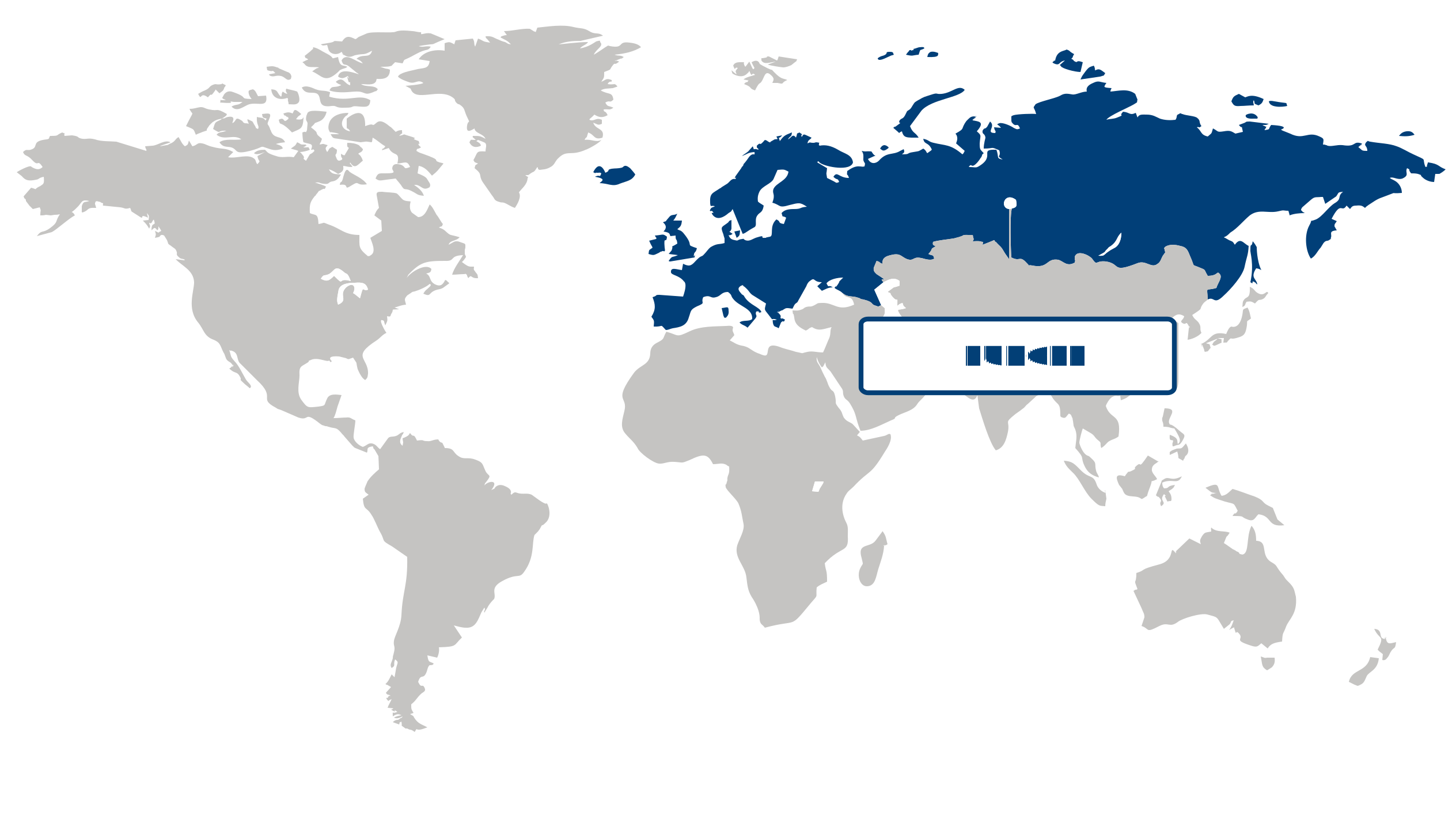
Largest Region
Europe
Largest Market Share in 2026
Europe (Largest Region) vs Asia Pacific (Fastest-Growing Region)
Europe led the bio-based leather market and accounted for the largest regional share in 2026, supported by strong sustainability initiatives, consumer demand for environmentally responsible materials, and the region's established premium fashion and automotive industries. Increasing scrutiny of conventional leather production and growing interest in alternatives with lower environmental impact are encouraging manufacturers to explore bio-based material solutions. European consumers and brands are placing greater emphasis on responsible sourcing, circularity, and innovative material development, creating a favorable environment for bio-based leather adoption. In addition, the region's advanced research capabilities and established ecosystem for sustainable product development are supporting the commercialization of alternative leather materials across fashion, footwear, accessories, and automotive applications.
Asia Pacific is projected to experience the fastest growth, driven by expanding manufacturing capabilities, rising demand for sustainable materials, and growing adoption of environmentally conscious products. The region's extensive footwear, apparel, automotive, and consumer goods industries provide a broad potential application base for bio-based leather materials. Increasing awareness of environmental impacts associated with conventional materials is encouraging manufacturers to investigate plant-derived and other bio-based alternatives. At the same time, growing investment in material innovation and the development of sustainable manufacturing processes are improving opportunities for regional production and adoption. The expansion of premium and sustainability-focused consumer segments is expected to further strengthen demand for bio-based leather products.
No card data available for this language/report.
Segment Leadership and Growth Trends
Application Segment Analysis: Footwear (Largest Segment) vs Automotive (Fastest-Growing Segment)
The footwear segment dominated the bio-based leather market, accounting for the largest market share of 40.5% in 2026. The increasing demand for sustainable alternatives to traditional leather in footwear manufacturing is driving the adoption of bio-based materials across the industry. Footwear brands and manufacturers are focusing on environmentally responsible materials to address changing consumer preferences for sustainable products. The flexibility, aesthetic appeal, and ability of bio-based leather to support innovative designs further contribute to its growing use in footwear applications.
The automotive segment is expected to witness significant growth, driven by the rising focus on sustainable vehicle interiors and the integration of eco-friendly materials in automotive design. Automakers are increasingly exploring bio-based leather alternatives for seats, trims, and interior components to reduce dependence on conventional materials. The growing emphasis on sustainable mobility and environmentally conscious manufacturing practices is encouraging greater adoption of bio-based leather within automotive applications.
Source Segment Analysis: Cork (Largest Segment) vs Pineapple (Fastest-Growing Segment)
The cork segment accounted for the largest market share of 27% in 2026, supported by the established use of cork-based materials in sustainable leather alternatives. Cork offers desirable characteristics such as lightweight properties, durability, and natural texture, making it suitable for various applications including fashion and consumer products. The growing demand for renewable materials and plant-based alternatives is strengthening the adoption of cork as a preferred source for bio-based leather production.
The pineapple segment is expected to experience strong growth, driven by increasing interest in agricultural waste-derived materials and innovative sustainable solutions. Pineapple-based leather alternatives utilize plant residues to create environmentally friendly materials, aligning with the growing focus on circular economy practices. The rising demand for cruelty-free and renewable material options is supporting the expansion of pineapple-based bio-leather applications.
| Report Segmentation | |||
| Segment | Sub-Segment | Largest Segment | Fastest Growing Segment |
|---|---|---|---|
| Application | Automotive, Footwear, Furniture, Garments & Accessories, Others | Footwear | Automotive |
| Source | Cork, Corn, Leftover Fruits, Mushroom, Palm, Pineapple, Others | Cork | Pineapple |
 Read our Research Approach
Competitive Landscape and Market Positioning
Top players in the bio-based leather market:
- MycoWorks, Inc. (USA)
- Modern Meadow, Inc. (USA)
- Bolt Threads, Inc. (USA)
- Ecovative Design LLC (USA)
- Natural Fiber Welding, Inc. (USA)
- Ananas Anam Ltd. (United Kingdom)
- Desserto (Mexico)
- Vegea S.r.l. (Italy)
- Ultrafabrics Holdings Co., Ltd. (Japan)
- ECCO Sko A/S (Denmark)
The bio-based leather market is evolving as competition moves beyond material substitution toward performance improvement, sustainability credentials, and scalable manufacturing capabilities. Participants are differentiating through advancements in plant-derived and alternative biomaterial formulations that aim to achieve durability, consistency, and aesthetic qualities comparable with conventional materials. The market is attracting diverse stakeholders as demand rises for lower-impact materials across fashion, automotive, and consumer goods applications, creating pressure for producers to improve production efficiency while maintaining environmental advantages. Companies with stronger innovation pipelines and reliable raw material sourcing are positioned to shape adoption as buyers increasingly evaluate materials based on both functional performance and sustainability considerations.
Industry Development/News
| Company Name | Date | Key Development |
|---|---|---|
| Yiru Technology | Jul-26 | Yiru Technology completed a Series A financing round exceeding 100 million yuan to advance its synthetic biology-based leather technology, driving industrial scale-up and commercial implementation while capturing nearly 100 million yuan in overseas luxury-brand orders. |
| Vegea | Mar-26 | Vegea marked a decade of operational scale-up by expanding the manufacturing capacity and industrialization parameters of its proprietary GrapeSkin bio-based material, strengthening its global enterprise supply chain footprint. |
| Rheom Materials | Feb-26 | Rheom Materials commercialized its sugar-based leather alternative, Shorai™, by launching a joint capsule collection with Econock at Lineapelle in Milan, showcasing the material's operational readiness for global fashion, apparel, and accessories applications. |
| Revoltech | Nov-25 | Revoltech expanded its material portfolio by scaling LOVR™, an innovative, high-performance hemp-based leather alternative manufactured from upcycled agricultural residues to advance circular manufacturing frameworks. |
| Hyundai CRADLE | Aug-25 | Hyundai CRADLE formed a strategic partnership with UNCAGED Innovations to engineer high-performance, sustainable bio-based leather alternatives specifically for integration within future automotive vehicle interior programs. |
| Uncaged Innovations | Nov-24 | Uncaged Innovations commercialized its plant-based leather alternative, Elevate, across the fashion and lifestyle sectors through strategic deployment and cross-branding collaborations with ten independent commercial design brands. |
| Modern Meadow | Sep-24 | Modern Meadow successfully transitioned its Bio-Vera alternative leather material into commercial-scale industrial manufacturing, substantially increasing supply chain availability for enterprise consumer product customers. |
| Alt. Leather | Jan-24 | Australian startup Alt. Leather secured US$1.1 million in an oversubscribed seed financing round to accelerate the technical development, structural optimization, and commercial market entry of its proprietary plant-based textiles. |
| Stella McCartney | Oct-23 | Luxury fashion brand Stella McCartney expanded its circular economy presence by commercializing a new high-end handbag collection utilizing Mirum, a durable bio-based leather alternative manufactured from upcycled apple peels. |
| Hermès | Oct-23 | French luxury house Hermès introduced high-end watch straps manufactured from MycoWorks Mylo, driving commercial adoption and validating the structural viability of mushroom mycelium-derived leather alternatives within premium luxury supply chains. |
Why Choose Us
Specialized Expertise: Our team comprises industry experts with a deep understanding of your market segment. We bring specialized knowledge and experience that ensures our research and consulting services are tailored to your unique needs.
Customized Solutions: We understand that every client is different. That's why we offer customized research and consulting solutions designed specifically to address your challenges and capitalize on opportunities within your industry.
Proven Results: With a track record of successful projects and satisfied clients, we have demonstrated our ability to deliver tangible results. Our case studies and testimonials speak to our effectiveness in helping clients achieve their goals.
Cutting-Edge Methodologies: We leverage the latest methodologies and technologies to gather insights and drive informed decision-making. Our innovative approach ensures that you stay ahead of the curve and gain a competitive edge in your market.
Client-Centric Approach: Your satisfaction is our top priority. We prioritize open communication, responsiveness, and transparency to ensure that we not only meet but exceed your expectations at every stage of the engagement.
Continuous Innovation: We are committed to continuous improvement and staying at the forefront of our industry. Through ongoing learning, professional development, and investment in new technologies, we ensure that our services are always evolving to meet your evolving needs.
Value for Money: Our competitive pricing and flexible engagement models ensure that you get maximum value for your investment. We are committed to delivering high-quality results that help you achieve a strong return on your investment.
Select Licence Type

