Biodegradable Polymers Market Size & Forecasts 2026-2035, By Segments (Structure, End-User), Growth Opportunities, Innovation Landscape, Regulatory Shifts, Strategic Regional Insights (U.S., Japan, China, South Korea, UK, Germany, France), and Competitive Dynamics (NatureWorks, BASF, Novamont, Corbion, TotalEnergies)
Market Size and Growth Outlook
Biodegradable Polymers Market size is likely to expand from USD 12.92 billion in 2025 to USD 88.37 billion by 2035, posting a CAGR above 21.2% across 2026-2035. The industry’s revenue potential for 2026 is USD 15.41 billion.
Get more details on this report
Request Free Sample ReportBiodegradable Polymers Market Intelligence Snapshot
Regional Market Dynamics
Segment Momentum
Market Expansion Drivers
Leading Market Participants
Global Market Forecast Snapshot
Market Outlook
Regional and Segment Outlook
Market Growth Drivers and Industry Trends
Growing environmental awareness among consumers is significantly influencing the biodegradable polymers market, as preference shifts toward products with reduced ecological footprints. Regulatory bodies such as the European Chemicals Agency (ECHA) have introduced stricter standards on single-use plastics, driving brands like Nestlé to commit to sustainable packaging solutions. These changes encourage companies to replace conventional polymers with biodegradable alternatives, creating opportunities for firms that can deliver compliant, high-performance materials. Established players benefit by leveraging their R&D capabilities to align with evolving regulations, while startups can capitalize on niche segments prioritizing sustainability. As governments continue tightening environmental policies and consumers’ eco-consciousness deepens, demand for biodegradable polymers will increasingly reflect shifting societal values.
Advancements in Biodegradable Polymer Formulations
Innovation in polymer chemistry is transforming the biodegradable polymers market, enabling developers to overcome traditional limitations such as mechanical strength and degradation timelines. Collaborations, like those announced by BASF and Corbion, showcase breakthroughs in combining bio-based materials with functional additives to enhance performance for diverse end uses. Such progress attracts higher-value applications beyond packaging, including medical devices and agricultural films, where tailored biodegradability is critical. For incumbents, continuous investment in R&D presents a pathway to differentiate products and maintain leadership, while startups that pioneer novel polymer blends or bio-sourcing methods can disrupt conventional value chains. The pace of formulation innovation, supported by advancements in biotechnology, will underpin the biodegradable polymers market's diversification.
Market Expansion Driven by Packaging, Agriculture, and Consumer Goods in Emerging Regions
The biodegradable polymers market is benefiting from increasing adoption in packaging, agriculture, and consumer goods sectors across emerging markets, responding to rising urbanization and income growth. Countries such as India and Brazil are witnessing heightened interest from local manufacturers aiming to meet both consumer expectations and government initiatives on waste reduction, as emphasized by India’s Plastic Waste Management Rules. Leading suppliers, including NatureWorks, are expanding production capacity and local partnerships to better serve these dynamic markets. This geographical diversification presents strategic opportunities for global players to tailor solutions addressing regional needs, while new entrants can leverage fewer legacy constraints to innovate. The sustained infrastructure buildout and policy support in emerging economies will further entrench biodegradable polymers as alternatives to traditional plastics.
Industry Restraints:
High Production Costs and Economies of Scale
The high production costs of biodegradable polymers remain a critical restraint, largely due to the reliance on specialized feedstocks and complex bioprocessing techniques that raise unit costs compared to conventional plastics. For instance, NatureWorks LLC’s announcements consistently highlight challenges in decreasing costs while scaling up Ingeo biopolymer production, noting raw material price volatility and energy-intensive manufacturing as key barriers. These elevated costs translate into higher retail prices, deterring widespread adoption among cost-sensitive consumers and manufacturers. Established players must balance R&D investments against market acceptance, while new entrants face steep capital requirements to achieve competitive scale. Unless technological breakthroughs or feedstock cost reductions emerge, this cost premium is poised to exert persistent pressure, limiting market penetration in price-driven segments in the near term.
Inadequate End-of-Life Infrastructure and Recycling Challenges
A significant constraint on the biodegradable polymers market is the insufficient infrastructure for effective composting and recycling, undermining the environmental benefits touted by producers. The UNEP Global Environment Outlook underscores that many municipalities lack industrial composting facilities capable of processing these materials, resulting in biodegradable polymers often being landfilled or incinerated alongside traditional plastics. This disconnect fuels consumer skepticism and regulatory ambiguity regarding labeling and disposal guidelines, complicating brand positioning. For established companies, this raises reputational risks, while startups must navigate uncertain regulatory frameworks without reliable waste management support. Moving forward, the market’s evolution will hinge on coordinated investments in waste infrastructure and clearer policies, shaping strategic priorities around end-of-life accountability.
| Growth Driver | Impact on CAGR | Regulatory Influence | Geographic Relevance | Adoption Rate | Impact Timeline |
|---|---|---|---|---|---|
| Demand for sustainable & eco-friendly polymer applications | 7.00% | Short term (≤ 2 yrs) | Europe, North America | High | Fast |
| Innovation in biodegradable polymer formulations | 6.00% | Medium term (2–5 yrs) | Asia Pacific, Europe | Medium | Moderate |
| Expansion in packaging, agriculture & consumer goods in emerging markets | 8.20% | Long term (5+ yrs) | Asia Pacific; Spillover: Latin America | Low | Moderate |
Explore Growth Opportunities
Request Free Sample ReportRegional Demand Dynamics
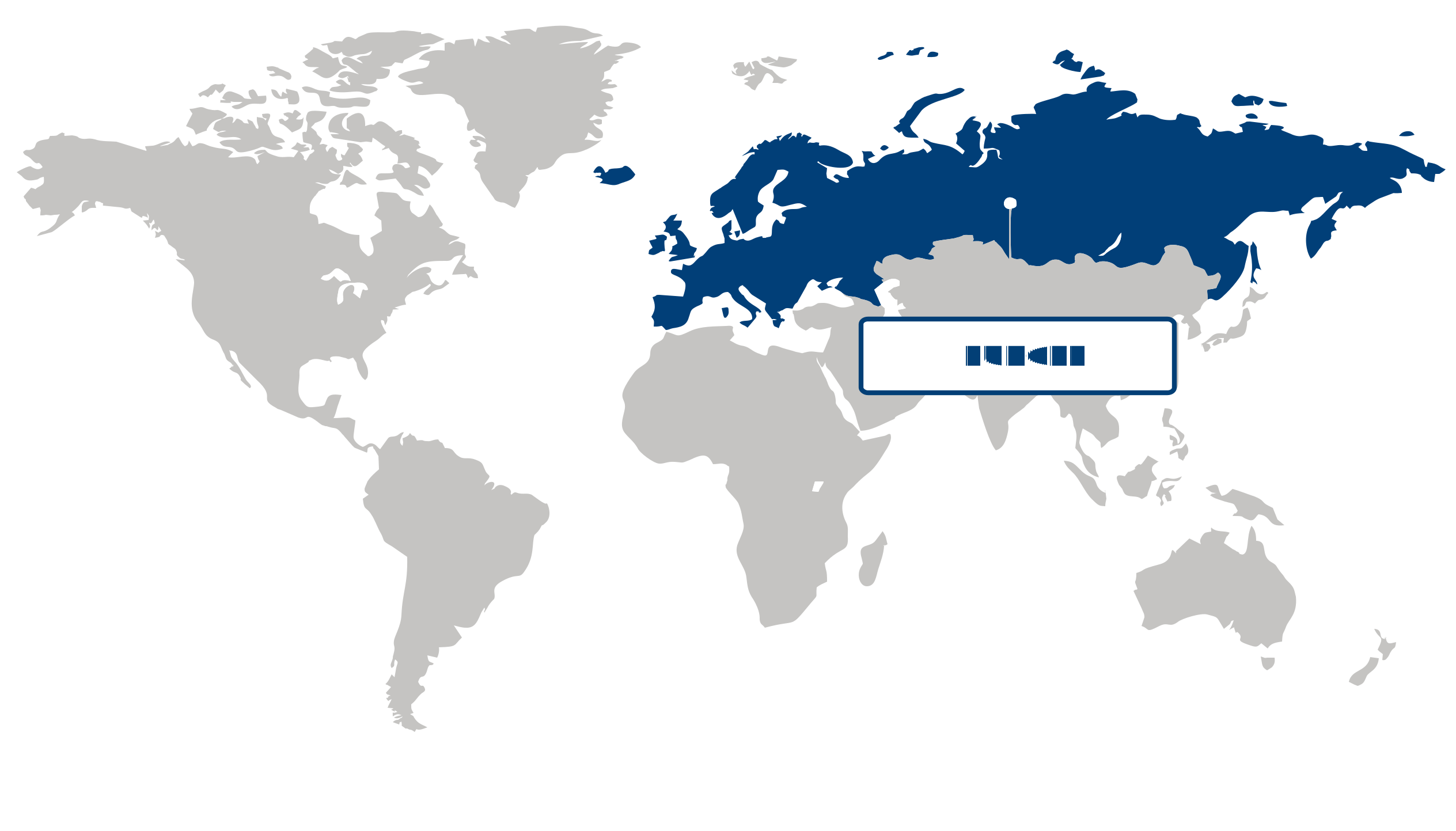
Europe captured more than 39.20% of the global biodegradable polymers market in 2025, positioning it as the largest regional contributor. Driven primarily by stringent environmental regulations and robust circular-economy initiatives, the region's market benefits from policy frameworks such as the European Union’s Single-Use Plastics Directive and ambitious waste reduction targets. These measures incentivize manufacturers to adopt biodegradable polymers in packaging and consumer goods, while growing consumer consciousness towards sustainable products further fuels demand. For example, the European Bioplastics Association highlights increasing collaborations between governments and industries in advancing bio-based material adoption. This blend of policy rigor and shifting market expectations ensures Europe remains a pivotal and resilient hub for biodegradable polymer innovation and uptake, presenting extensive opportunities for investors eyeing sustainable portfolio growth.
Germany anchors the European biodegradable polymers market as a leader in integrating eco-friendly materials into industrial applications. The nation’s commitment to the German Packaging Act, which mandates recycling and compostability standards, intensifies demand for biodegradable polymers, especially in food and retail sectors. Key players such as BASF and Novamont emphasize localized production capabilities aligned with environmental compliance, reflecting strategic shifts towards circularity. Furthermore, Germany’s well-developed logistics infrastructure and strong R&D ecosystem enable efficient scaling and technological advancement. This positions Germany not only as a critical consumption market but also as an innovation hub that reinforces Europe’s broader sustainability momentum in biodegradable polymers.
France plays a pivotal role in shaping Europe’s biodegradable polymers market through ambitious policy measures and consumer engagement strategies. The French Anti-Waste Law for a Circular Economy fosters the inclusion of biodegradable materials in packaging and disposable items, pushing manufacturers to innovate rapidly. Companies like TotalEnergies and Carbios spearhead bio-based polymer research while French retailers increasingly incorporate biodegradable packaging to meet rising eco-conscious consumer preferences. French governmental support via ADEME (Agency for Environment and Energy Management) bolsters these efforts through funding and regulatory oversight. Consequently, France’s proactive stance amplifies regional growth dynamics, making it a strategic market that complements Germany’s industrial leadership and strengthens Europe’s overall position in the biodegradable polymers sector.
Asia Pacific Market Analysis:
Asia Pacific emerged as the fastest-growing region in the biodegradable polymers market, registering a remarkable CAGR of 29.4%. This rapid expansion is primarily driven by the escalating demand for sustainable packaging solutions, coupled with significant investments in bio-polymer manufacturing capacity across the region. Rising environmental awareness and tightening regulations on single-use plastics in countries such as Japan and China have accelerated the shift towards biodegradable alternatives. According to the Asia Pacific Economic Cooperation (APEC), governments in the region have increased incentives for green technologies, enabling manufacturers to scale production and reduce costs. Additionally, expanding consumer preference for eco-friendly products, especially among younger demographics, is further fueling market momentum. The strategic focus on circular economy models and enhanced logistical frameworks in Asia Pacific reinforces its leading position and paints a promising outlook for continued innovation and commercial adoption in the biodegradable polymers market.
Japan plays a pivotal role in Asia Pacific’s biodegradable polymers market, driven by stringent national regulations targeting plastic waste reduction and a mature consumer base demanding sustainable products. Japanese manufacturers, such as Mitsubishi Chemical Corporation, are investing heavily in R&D to develop high-performance bio-polymers tailored for packaging and automotive applications. The country benefits from a sophisticated supply chain and a culture emphasizing environmental stewardship, supporting efficient commercialization of biodegradable solutions. The Ministry of Economy, Trade and Industry’s latest initiatives to promote bio-based materials underline Japan’s commitment, enhancing both domestic consumption and export potential. Japan’s leadership in advanced material innovation not only strengthens the regional market but also sets a benchmark for sustainability standards in Asia Pacific.
China’s expanding bio-polymer manufacturing capacity is a key engine behind the region’s market growth, as industrial giants like BASF and Sinopec scale up production facilities to meet surging demand. The Chinese government’s “Plastics Ban” policies and promotion of green technology have spurred robust investment in biodegradable polymers across packaging, agriculture, and consumer goods sectors. Urban consumers increasingly prioritize eco-conscious brands, prompting suppliers to diversify biodegradable product offerings. China’s integration of digital transformation in manufacturing and logistics optimizes production efficiency and supply chain transparency, as highlighted in recent reports by the China Plastics Processing Industry Association. This dynamic environment positions China as a critical growth hub, expanding Asia Pacific’s influence in the global biodegradable polymers market by providing volume and innovation capacity.
North America Market Trends:
North America held a substantial share in the biodegradable polymers market, driven by a confluence of shifting consumer preferences towards sustainable products and stringent regulatory frameworks promoting eco-friendly materials. The region’s mature industrial base and well-established supply chains enable rapid innovation and commercial-scale production of biodegradable polymers, as underscored by DuPont’s recent expansion in bio-based polymer manufacturing facilities. Heightened environmental awareness among consumers and growing corporate commitments to circular economy principles, exemplified by Walmart’s sustainable packaging initiatives, further bolster demand. Additionally, regulatory bodies like the U.S. Environmental Protection Agency (EPA) continue to push for reduced plastic waste, reinforcing market momentum. Going forward, North America’s robust infrastructure and proactive policy environment position it as a critical hub for advancing biodegradable polymer adoption, presenting significant opportunities for investors and innovators aiming to capitalize on rising sustainability mandates.
The United States serves as the keystone country in North America’s biodegradable polymers market, where evolving regulatory measures and rising consumer demand for green alternatives converge to accelerate growth. The U.S. Food and Drug Administration’s (FDA) evolving guidelines on compostable materials and the federal government’s biodegradability standards create a conducive environment while fostering innovation. Notably, NatureWorks LLC’s announcement of scaling up production capacity for polylactic acid (PLA) underscores industrial commitment to meeting surging demand. Moreover, shifts in retail and packaging sectors, embracing bio-based polymers to meet consumer expectations and reduce carbon footprints, drive market expansion. Strategically, the U.S.’s technological leadership combined with favorable policy signals establishes it as a pivotal catalyst for North America’s broader biodegradable polymers market, anchoring regional growth prospects by setting benchmarks in product development and regulatory compliance.
| Parameter | North America | Asia Pacific | Europe | Latin America | MEA |
|---|---|---|---|---|---|
| Innovation Hub i Scale Nascent Developing Advanced | |||||
| Cost-Sensitive Region i Scale Low Medium High | |||||
| Regulatory Environment i Scale Restrictive Neutral Supportive | |||||
| Demand Drivers i Scale Weak Moderate Strong | |||||
| Development Stage i Scale Emerging Developing Developed | |||||
| Adoption Rate i Scale Low Medium High | |||||
| New Entrants / Startups i Scale Sparse Moderate Dense | |||||
| Macro Indicators i Scale Weak Stable Strong |
Segment Leadership and Growth Trends
Biodegradable Polymers Market Share (%), by Structure, 2026
Go beyond the chart, access full insights & data tables
Request Free Sample ReportBiopolymers held the largest share in the biodegradable polymers market structure segment in 2025, driven primarily by the rising adoption of sustainable and eco-friendly polymer materials. This leadership reflects growing consumer and industrial preferences for renewable and compostable alternatives that align with global sustainability commitments, including those endorsed by the United Nations Environment Programme (UNEP). Enhanced supply chain integrations by key producers like NatureWorks and BASF have streamlined access to biopolymers, augmenting their market penetration. For industry players, the biopolymers segment offers significant strategic advantages in branding and compliance with tightening environmental regulations such as the EU’s Single-Use Plastics Directive. Given ongoing advancements in bio-based polymer technologies and expanding demand from diverse sectors, biopolymers are expected to maintain their prominence in the biodegradable polymers market in the near to medium term.
Analysis by End-User
Packaging represented the largest share in the biodegradable polymers market end-user segment in 2025, supported by the surging demand for sustainable and biodegradable packaging solutions across multiple industries. The packaging segment’s dominance results from increasing regulatory mandates, including those by the U.S. Environmental Protection Agency (EPA) and the European Chemicals Agency (ECHA), which promote reduced plastic waste and mandate eco-friendly alternatives. Consumer awareness campaigns by organizations such as the Sustainable Packaging Coalition have further accelerated brand adoption of biodegradable materials. Leading corporations like Amcor and Mondi have expanded their biodegradable packaging portfolio to meet this demand, offering opportunities for both established players and agile startups to innovate in design and functionality. This segment is poised to remain critical as environmental concerns and circular economy initiatives continue to shape purchasing behaviors and regulatory frameworks globally.
| Segment | Sub-Segment | Largest Segment | Fastest Growing |
|---|---|---|---|
| Structure | Agro-polymers, Biopolymers | ||
| End-User | Agriculture, Textiles, Healthcare, Packaging, Electronics, Others |
Unlock insights tailored to your business with our bespoke market research solutions.
Click to get your customized report now.
Competitive Landscape and Market Positioning
The competitive landscape reflects a vigorous pursuit of cross-industry collaborations and innovation accelerations among these leading entities. Several have advanced their market edge through alliances that combine biotechnological prowess with chemical synthesis capabilities, resulting in novel biodegradable materials tailored for packaging, agriculture, and medical applications. Investments in renewable feedstock sourcing and proprietary polymerization technologies underscore a commitment to enhancing performance while reducing environmental impacts. Product rollouts focusing on compostable and tailored degradation profiles respond directly to evolving regulatory environments and consumer demand, reinforcing market positioning. This dynamic interplay of partnerships, portfolio diversification, and innovation pipelines intensifies the competitive intensity, fostering rapid development cycles and expanded application scopes for biodegradable polymers.
Strategic / Actionable Recommendations for Regional Players
North American companies should deepen engagements with technology providers and end-use industries to co-create application-specific biodegradable polymer solutions, enhancing differentiation against entrenched competitors. Leveraging advanced bioprocessing techniques and expanding bio-based feedstock diversification may unlock new value chains and reduce dependence on conventional raw materials.
Players in the Asia Pacific can capitalize on the region’s growing plastic consumption by fostering joint ventures that integrate local agricultural residues into polymer production, optimizing cost structures and supply resilience. Emphasizing scalable innovation platforms could help capture emerging sub-segments driven by increasing governmental sustainability initiatives and diversifying consumer preferences.
In Europe, companies may benefit from intensifying cooperation with regulatory bodies and sustainability consortia to anticipate compliance trends and establish leadership in circular economy initiatives. Expanding investments in biodegradable polymers suited for high-value sectors such as healthcare and electronics can differentiate offerings while aligning with stringent environmental standards prevalent across the region.
| Company | Market Share | Company Revenue | Revenue CAGR (%) | Product Portfolio | Geographic Presence | Innovation / R&D Focus | Strategic Developments |
|---|---|---|---|---|---|---|---|
| No companies available. | |||||||
Customize Your Report
Explore examples of how this report can be tailored to different research needs, including custom segments, additional topics or chapters, and related reports. Click a section of the wheel or its numbered marker to explore the available options.
Biodegradable Polymers Market — Custom Segments
| Segment | Sub-Segment |
|---|---|
| No segment data available. | |
Biodegradable Polymers Market — Custom TOC
| Custom Chapter | Chapter Details | ||
|---|---|---|---|
| No custom TOC data available. | |||
Need a different cut of the data?
Request Custom ResearchHow much is the biodegradable polymers market worth?
How will the biodegradable polymers industry grow in terms of size and CAGR by 2035?
What is the leading region in terms of biodegradable polymers market share?
What is the fastest growing region in the biodegradable polymers sector?
Which is the largest sub-segment within the structure segment for biodegradable polymers industry?
Why does packaging sub-segment dominate the end-user segment of biodegradable polymers sector?
What are the key competitors in the biodegradable polymers landscape?
Our Clients
"The report helped us understand emerging consumer trends in our product category. It clarified where to focus innovation for the next product launch."
LyondellBasell
"The regional forecast section was incredibly useful. We were able to identify two new potential partners in Europe thanks to the vendor mapping you included."
SABIC
"We appreciated how actionable the recommendations were. It guided us to improve supply chain resilience."
Olin Corporation
Our Research Team & Methodology
Every Fundamental Business Insights report is built by a dedicated vertical research team, validated through a structured primary-and-secondary methodology, and reviewed for accuracy before it reaches you.
Research Team Overview
Prepared by the Chemicals & Materials Research Team
Delivery
Published
Demand
Available
Support
Trust & Compliance
Research Intelligence
| Source | Reference |
|---|---|
| American Chemistry Council (ACC) | www.americanchemistry.com |
| European Chemical Industry Council (Cefic) | cefic.org |
| International Council of Chemical Associations (ICCA) | icca-chem.org |
| European Chemicals Agency (ECHA) | echa.europa.eu |
| U.S. Environmental Protection Agency (EPA) | www.epa.gov |
| ASTM International | www.astm.org |
| International Organization for Standardization (ISO) | www.iso.org |
| National Institute of Standards and Technology (NIST) | www.nist.gov |
| Plastics Industry Association (PLASTICS) | www.plasticsindustry.org |
| European Biplastics | www.european-bioplastics.org |
| The Adhesive and Sealant Council (ASC) | www.ascouncil.org |
| National Association of Corrosion Engineers (AMPP) | www.ampp.org |
| Society of Plastics Engineers (SPE) | www.4spe.org |
| International Fertilizer Association (IFA) | www.fertilizer.org |
| CropLife International | croplife.org |
| Packaging Europe | packagingeurope.com |
| Flexible Packaging Association (FPA) | www.flexpack.org |
| Battery Council International (BCI) | batterycouncil.org |
| International Copper Association (ICA) | internationalcopper.org |
| World Steel Association | worldsteel.org |
Research Workflow & Quality Assurance
Data Collection
Verified information gathered through primary and secondary research.
Data Triangulation
Cross-validation using multiple independent data sources.
Forecast Modelling
Market estimates developed using historical trends and analytical models.
Analyst Validation
Findings reviewed by domain experts for accuracy and consistency.
Editorial & Quality Review
Final editorial, quality, and compliance checks before publication.
Final Publication
Released after successful completion of the internal review process.
Report Coverage
📊 Market Assessment
- Market Size & Forecast
- Market Segmentation
- Regional Analysis
- Growth Drivers & Challenges
- Market Dynamics
🏢 Competitive Intelligence
- Competitive Landscape
- Company Profiles
- Competitive Benchmarking
- Mergers & Acquisitions
- Market Share Analysis or Key Company Strategies
🔍 Strategic Analysis
- Value Chain Analysis
- Porter's Five Forces
- PESTLE Analysis
- Pricing Trends
- Supply-Demand Analysis
🚀 Future Outlook
- Technology Landscape
- Regulatory Landscape
- Investment & Funding Landscape
- Emerging Opportunities
- Future Market Outlook
Have a question about this report or need a custom scope?
Request Customization