



Biodegradable Superabsorbent Materials Market Size & Growth Forecast 2027–2036, By Segments (Product, Application), Regional Demand Trends (North America, Asia Pacific, Europe), Key Country Insights (U.S., Japan, South Korea, Germany, France, Italy), and Competitive Landscape
Market Size and Growth Outlook
Biodegradable Superabsorbent Materials Market size was valued at USD 175.9 million in 2026 and is projected to grow at a 7.6% CAGR from 2027 to 2036, exceeding USD 365.92 million by 2036. The industry revenue for 2027 is estimated at USD 187.16 million.
Base Year Value (2026)
USD 175.9 million
CAGR (2027-2036)
7.60%
Forecast Year Value (2036)
USD 365.92 million

Historical Data Period
2022-2026

Largest Region
Europe

Forecast Period
2027-2036
Biodegradable Superabsorbent Materials Market Intelligence Snapshot:
-
Regional Market Dynamics:
- Europe held a 32.86% market share in 2026, supported by strong demand from hygiene, agriculture, and packaging sectors alongside preference for bio-based and compostable materials.
- Asia Pacific is projected to grow at a 9.04% CAGR, supported by expanding production capacity, rising industrial adoption, and increasing use of biodegradable absorbent materials across high-volume applications.
-
Segment Momentum:
- Polyvinyl alcohol held a 64.02% share in 2026 because it delivers dependable absorbency, strong processability, and broad suitability for biodegradable absorbent product manufacturing.
- Disposable diapers led with a 60.9% share in 2026 and remain the fastest-growing application due to high consumption volumes, essential absorbency needs, and increasing demand for sustainable hygiene materials.
-
Market Expansion Drivers:
- Rising demand for sustainable hygiene products including diapers and feminine care.
- Shift from petroleum-based polymers toward biodegradable absorbent materials in packaging.
- Growing agricultural water retention applications improving crop yield efficiency.
-
Leading Market Participants:
Leading players in the biodegradable superabsorbent materials market include BASF SE (Germany), Nippon Shokubai Co., Ltd. (Japan), SNF Group (France), Evonik Industries AG (Germany), The Lubrizol Corporation (USA), Archer Daniels Midland Company (USA), Itaconix plc (United Kingdom), Sumitomo Seika Chemicals Co., Ltd. (Japan), Kao Corporation (Japan), LG Chem Ltd. (South Korea).
Global Market Forecast Snapshot:
-
Market Outlook:
- 2026 Market Size: USD 175.9 million
- 2027 Estimated Market Size: USD 187.16 million.
- Projected Market Size: USD 365.92 million by 2036
- Growth Forecasts: 7.6% CAGR (2027-2036)
-
Regional and Segment Outlook:
- Leading Regional Market: Europe
- High-Growth Regional Hub: Asia Pacific
- Core Revenue Segment: Polyvinyl Alcohol (Product) | Disposable Diapers (Application)
- Emerging Opportunity Segment: Polyacrylamide (Product) | Disposable Diapers (Application)
Market Growth Drivers and Industry Trends
Rising demand for sustainable hygiene products including diapers and feminine care
Increasing consumer and manufacturer emphasis on environmentally responsible hygiene products will propel the biodegradable superabsorbent materials market growth as producers seek alternatives that can provide strong liquid absorption while reducing dependence on conventional materials. Diapers, feminine hygiene products, and other absorbent applications require materials capable of retaining substantial amounts of liquid without compromising product comfort or performance. Growing environmental awareness is encouraging brands and consumers to consider biodegradable material options, particularly where concerns surrounding persistent synthetic polymers are influencing purchasing and product development decisions. Advances in bio-based absorbent formulations are also supporting their incorporation into disposable hygiene products with sustainability-oriented product positioning.
Shift from petroleum-based polymers toward biodegradable absorbent materials in packaging
Efforts to reduce reliance on fossil-derived materials in packaging applications are creating opportunities for biodegradable alternatives, and the biodegradable superabsorbent materials market is being strengthened by the transition toward more environmentally compatible absorbent solutions. Conventional petroleum-based polymers are widely used for moisture management, but concerns related to waste persistence and resource dependence are encouraging packaging developers to explore biodegradable materials. Superabsorbent materials can help control excess moisture in applications involving food, agricultural products, and other moisture-sensitive goods, supporting product quality during storage and transportation. Their incorporation into sustainability-focused packaging formats can also complement broader efforts to reduce the environmental footprint of disposable packaging components.
Growing agricultural water retention applications improving crop yield efficiency
Agricultural producers are increasingly exploring water-efficient technologies to address irrigation constraints, variable rainfall, and moisture loss, which will boost the biodegradable superabsorbent materials market demand through expanded use in soil water retention applications. These materials can absorb and retain water in the root zone before gradually releasing moisture as plants require it, helping improve water availability between irrigation cycles. Biodegradable formulations are particularly attractive for agricultural applications because they can provide moisture management without introducing persistent synthetic residues into cultivated soils. Their use around seeds, roots, and planting substrates can support more efficient irrigation practices while helping crops maintain access to moisture during periods of limited water availability.
| Growth Driver Assessment Framework | |||||
| Growth Driver | Impact On CAGR | Regulatory Influence | Geographic Relevance | Adoption Rate | Impact Timeline |
|---|---|---|---|---|---|
| Rising demand for sustainable hygiene products including diapers and feminine care | 2.30% | High | Asia Pacific, North America | High | Near Term |
| Shift from petroleum-based polymers toward biodegradable absorbent materials in packaging | 2.00% | High | Europe, North America | High | Mid Term |
| Growing agricultural water retention applications improving crop yield efficiency | 1.50% | Moderate | Asia Pacific, Latin America | Medium | Mid Term |
Unlock insights tailored to your business with our bespoke market research solutions - Click to get your customized report now!
Regional Demand Dynamics
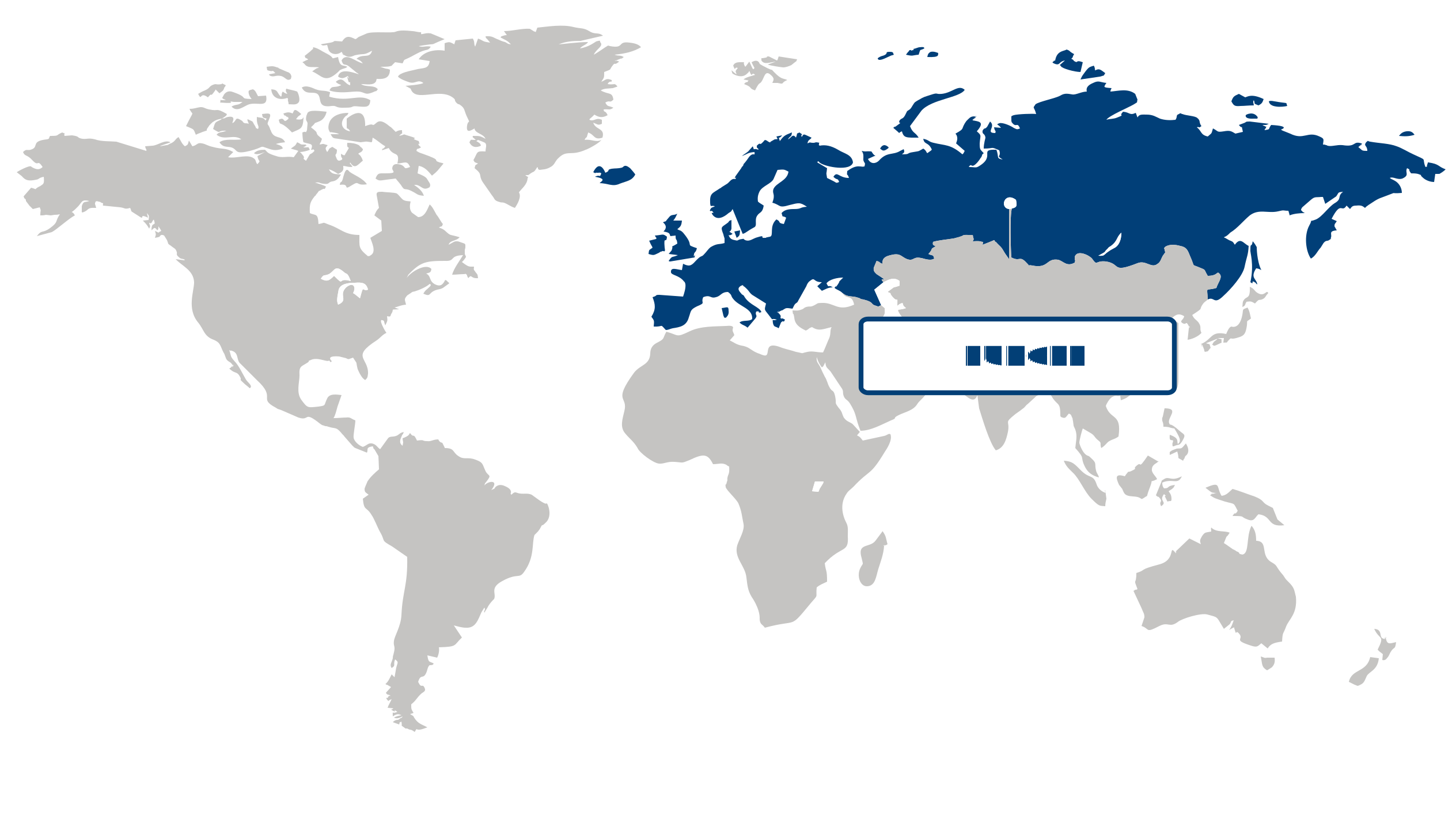
Largest Region
Europe
32.86% Market Share in 2026
Europe (Largest Region) vs Asia Pacific (Fastest-Growing Region)
Europe held the largest share of the biodegradable superabsorbent materials market, representing 32.86% in 2026. The region's strong position is closely associated with its emphasis on environmental sustainability, circular-economy practices, and the reduction of dependence on conventional petroleum-based materials. Demand is being supported by growing interest in environmentally responsible absorbent products across hygiene, agriculture, packaging, and other applications where moisture management is essential. Regulatory attention toward waste reduction and material sustainability is also encouraging manufacturers and end users to consider biodegradable alternatives, while established research capabilities and advanced manufacturing infrastructure are supporting product development and commercialization. These factors are strengthening the market's integration into sustainability-focused value chains across the region.
Asia Pacific is the fastest-growing regional market, driven by rapid industrialization, expanding consumer markets, and rising demand for sustainable material solutions. Increasing urbanization and greater consumption of hygiene products are creating a broader application base for high-performance absorbent materials, while agricultural modernization is generating additional opportunities for biodegradable superabsorbent products designed to improve moisture retention and resource efficiency. Growing environmental awareness and efforts to address plastic waste are further encouraging the adoption of bio-based and biodegradable materials. Improvements in manufacturing capabilities and increasing investment in sustainable technologies are also helping regional producers respond to evolving regulatory and consumer expectations.
Key Country Insights
The U.S. biodegradable superabsorbent materials market is supported by demand for environmentally responsible hygiene, medical, and agricultural products. Manufacturers prioritize bio-based material development and scalable production to meet sustainability commitments and evolving customer expectations.
Japan advances biodegradable superabsorbent materials through continuous innovation in bio-polymers and specialty chemicals. Japanese companies concentrate on maintaining absorption efficiency while reducing environmental impact across personal care and healthcare applications.
South Korea is expanding commercialization of biodegradable superabsorbent materials for consumer goods and advanced packaging applications. Local manufacturers invest in material research that balances biodegradability with durability and production efficiency.
Germany emphasizes biodegradable superabsorbent materials that align with circular economy objectives and sustainable manufacturing practices. German producers focus on renewable feedstocks, product certification, and performance improvements for hygiene and specialty industrial applications.
France encourages adoption of biodegradable superabsorbent materials in hygiene and agricultural products through sustainability-focused purchasing trends. French suppliers emphasize renewable raw materials and environmentally responsible product design to address evolving customer requirements.
Italy supports the biodegradable superabsorbent materials market through specialty polymer manufacturing and environmentally conscious product development. Italian manufacturers prioritize flexible production capabilities for hygiene, agriculture, and niche industrial applications requiring sustainable material alternatives.
Segment Leadership and Growth Trends
Product Segment Analysis: Polyvinyl Alcohol (Largest Segment) vs Polyacrylamide (Fastest-Growing Segment)
Polyvinyl alcohol held the largest position in the biodegradable superabsorbent materials market in 2026, accounting for a 64.02% share, supported by its favorable film-forming characteristics, water affinity, and suitability for applications requiring efficient liquid absorption. Its material properties allow manufacturers to develop absorbent products that balance functionality with growing environmental considerations, making it relevant across hygiene and other moisture-management applications. Polyacrylamide is advancing at the fastest pace as manufacturers increasingly explore high-performance absorbent materials capable of supporting efficient fluid retention while addressing the demand for more sustainable product solutions. Ongoing development of biodegradable and environmentally conscious materials is encouraging innovation around polymer formulations and broadening the potential application base for polyacrylamide.
Application Segment Analysis: Disposable Diapers (Largest & Fastest-Growing Segment)
The disposable diapers segment dominated the biodegradable superabsorbent materials market in 2026, capturing a 60.9% share while also representing the fastest-growing application. Disposable diapers require highly effective absorbent materials to retain moisture, improve comfort, and support leakage protection, creating strong demand for superabsorbent technologies. The increasing focus on hygiene, product performance, and environmentally responsible consumer goods is encouraging manufacturers to incorporate biodegradable materials into absorbent hygiene products. Growing consumer awareness of the environmental impact of conventional materials is also strengthening interest in diaper products that can deliver required absorbency while reducing sustainability concerns, supporting continued adoption of biodegradable superabsorbent materials in this application.
| Report Segmentation | |||
| Segment | Sub-Segment | Largest Segment | Fastest Growing Segment |
|---|---|---|---|
| Product | Polyvinyl Alcohol, Polyitaconic Acid, Polyacrylamide, Polysaccharides | Polyvinyl Alcohol | Polyacrylamide |
| Application | Disposable Diapers, Adult Incontinence Products, Female Hygiene, Agriculture, Medical, Others | Disposable Diapers | Disposable Diapers |
 Read our Research Approach
Competitive Landscape and Market Positioning
Key companies in the biodegradable superabsorbent materials market:
1. BASF SE (Germany)
2. Nippon Shokubai Co. Ltd. (Japan)
3. SNF Group (France)
4. Evonik Industries AG (Germany)
5. The Lubrizol Corporation (USA)
6. Archer Daniels Midland Company (USA)
7. Itaconix plc (United Kingdom)
8. Sumitomo Seika Chemicals Co. Ltd. (Japan)
9. Kao Corporation (Japan)
10. LG Chem Ltd. (South Korea)
Innovation in material absorption efficiency and environmental compatibility is driving the biodegradable superabsorbent materials market forward. Continuous research efforts are enabling improved water retention and degradation properties. The biodegradable superabsorbent materials market is gaining traction across hygiene and agricultural applications due to growing sustainability priorities.
Industry Development/News
| Company Name | Date | Key Development |
|---|---|---|
| Sumitomo Seika | Apr-23 | Sumitomo Seika consolidated its Asia-Pacific operations through the merger of its regional subsidiaries to strengthen market presence and improve operational efficiency. The integration is aimed at optimizing distribution networks and enhancing responsiveness to demand for superabsorbent polymer products across key Asian markets, supporting scale advantages in a competitive materials segment. |
| Nippon Shokubai | Nov-22 | Nippon Shokubai developed a recycling technology for disposable diapers using superabsorbent polymer recovery processes. The initiative is designed to reduce environmental impact by lowering energy consumption during recycling and improving material recovery outcomes, supporting circular economy applications within hygiene product supply chains. |
| Nippon Shokubai | Sep-22 | Nippon Shokubai introduced a new superabsorbent polymer with enhanced fast-drying and liquid retention performance compared to conventional products. The development targets hygiene applications such as diapers, improving absorption efficiency and user comfort while addressing performance requirements related to leakage prevention and skin compatibility. |
| Sumitomo Seika | Apr-23 | Sumitomo Seika merged its Asia-Pacific subsidiaries to streamline operations and strengthen regional market presence in superabsorbent polymer products. The consolidation improves distribution efficiency and operational integration, enabling the company to better serve rising demand across high-growth Asian hygiene and absorbent materials markets. |
| Nippon Shokubai | Nov-22 | Nippon Shokubai developed a superabsorbent polymer recycling technology for disposable diapers aimed at improving material recovery and reducing environmental impact. The initiative focuses on lowering energy consumption in recycling processes while supporting circular economy applications in hygiene product value chains. |
| Nippon Shokubai | Sep-22 | Nippon Shokubai introduced a new high-performance superabsorbent polymer featuring faster drying and improved liquid retention. The material is designed for hygiene applications such as diapers, enhancing absorption efficiency and improving user comfort while reducing leakage risks in end-use products. |
Why Choose Us
Specialized Expertise: Our team comprises industry experts with a deep understanding of your market segment. We bring specialized knowledge and experience that ensures our research and consulting services are tailored to your unique needs.
Customized Solutions: We understand that every client is different. That's why we offer customized research and consulting solutions designed specifically to address your challenges and capitalize on opportunities within your industry.
Proven Results: With a track record of successful projects and satisfied clients, we have demonstrated our ability to deliver tangible results. Our case studies and testimonials speak to our effectiveness in helping clients achieve their goals.
Cutting-Edge Methodologies: We leverage the latest methodologies and technologies to gather insights and drive informed decision-making. Our innovative approach ensures that you stay ahead of the curve and gain a competitive edge in your market.
Client-Centric Approach: Your satisfaction is our top priority. We prioritize open communication, responsiveness, and transparency to ensure that we not only meet but exceed your expectations at every stage of the engagement.
Continuous Innovation: We are committed to continuous improvement and staying at the forefront of our industry. Through ongoing learning, professional development, and investment in new technologies, we ensure that our services are always evolving to meet your evolving needs.
Value for Money: Our competitive pricing and flexible engagement models ensure that you get maximum value for your investment. We are committed to delivering high-quality results that help you achieve a strong return on your investment.
Select Licence Type

