



Biogas Market Size & Growth Forecast 2027–2036, By Segments (Source, Application), Regional Demand Trends (North America, Asia Pacific, Europe), Key Country Insights (U.S., Japan, South Korea, Germany, France, Italy), and Competitive Landscape
Market Size and Growth Outlook
Biogas Market size was worth USD 74.9 billion in 2026 and is expected to grow at a 3.99% CAGR between 2027 and 2036, reaching USD 110.76 billion by 2036. The industry revenue for 2027 is estimated at USD 77.42 billion.
Base Year Value (2026)
USD 74.9 billion
CAGR (2027-2036)
3.99%
Forecast Year Value (2036)
USD 110.76 billion

Historical Data Period
2022-2026

Largest Region
Europe

Forecast Period
2027-2036
Biogas Market Intelligence Snapshot:
-
Regional Market Dynamics:
- Europe leads with 43.46% share due to mature anaerobic digestion infrastructure, integrated waste-to-energy networks linking municipalities, farms, and industry, plus strong grid injection and operational scale advantages.
- Asia Pacific growth at 5.02% CAGR is driven by rising agricultural and organic waste conversion, localized energy needs, and expansion from small digesters to structured commercial biogas installations.
-
Segment Momentum:
- Municipal sources held 43.83% of the biogas market in 2026 due to continuous organic waste availability from sewage, food waste, and municipal solid waste systems, supporting stable and operationally practical biogas production.
- Upgraded biogas is the fastest-growing application because purification expands its commercial versatility, allowing producers to access broader energy uses and distribution pathways beyond on-site power generation.
-
Market Expansion Drivers:
- Rising renewable electricity generation increasing demand for biogas across power applications.
- Government decarbonization initiatives accelerating biogas adoption as vehicle and cooking fuel.
- Expanding municipal waste-to-energy projects strengthening feedstock availability for biogas production.
-
Leading Market Participants:
Major companies in the biogas market include Scandinavian Biogas Fuels International AB (Sweden), Gasum Oy (Finland), TotalEnergies SE (France), Air Liquide S.A. (France), Xebec Adsorption Inc. (Canada), PlanET Biogas Group GmbH (Germany), DMT International (Netherlands), Schmack Biogas Service GmbH (Germany), HomeBiogas Ltd. (Israel), Agrinz Technologies GmbH (Austria).
Global Market Forecast Snapshot:
-
Market Outlook:
- 2026 Market Size: USD 74.9 billion
- 2027 Estimated Market Size: USD 77.42 billion.
- Projected Market Size: USD 110.76 billion by 2036
- Growth Forecasts: 3.99% CAGR (2027-2036)
-
Regional and Segment Outlook:
- Leading Regional Market: Europe
- High-Growth Regional Hub: Asia Pacific
- Core Revenue Segment: Municipal (Source) | Electricity (Application)
- Emerging Opportunity Segment: Industrial (Source) | Upgraded Biogas (Application)
Market Growth Drivers and Industry Trends
Rising renewable electricity generation increasing demand for biogas across power applications
The expansion of renewable electricity generation is supporting the biogas market by increasing interest in dispatchable energy sources that can complement intermittent renewable power. Biogas can be converted into electricity through engines, turbines, and other generation systems, while its production from organic feedstocks provides an additional pathway for recovering energy from waste streams. As power systems pursue greater renewable integration and seek flexible generation resources, biogas-based electricity can provide a controllable source of energy alongside solar and wind generation, particularly where locally available organic waste can support continuous feedstock supply.
Government decarbonization initiatives accelerating biogas adoption as vehicle and cooking fuel
Government efforts to reduce greenhouse gas emissions are strengthening the biogas market by encouraging the substitution of conventional fossil fuels with renewable gases across transportation and household energy applications. Upgraded biogas can be processed into biomethane with properties suitable for use as a vehicle fuel, while biogas can also support cooking applications where appropriate distribution and purification infrastructure is available. Policy measures focused on renewable fuels, waste reduction, and lower-carbon energy systems are improving the economic rationale for developing production facilities and associated upgrading, storage, and distribution infrastructure.
Expanding municipal waste-to-energy projects strengthening feedstock availability for biogas production
The development of municipal waste-to-energy infrastructure is creating a broader and more consistent feedstock base for the biogas market as cities seek productive uses for organic waste. Anaerobic digestion can convert food waste, sewage sludge, and other biodegradable materials into biogas while also supporting waste management objectives and reducing the volume of material requiring disposal. Municipal projects that integrate collection, segregation, digestion, and energy recovery can therefore establish localized production systems, with organic waste streams providing the raw material needed for continued biogas generation.
| Growth Driver Assessment Framework | |||||
| Growth Driver | Impact On CAGR | Regulatory Influence | Geographic Relevance | Adoption Rate | Impact Timeline |
|---|---|---|---|---|---|
| Rising renewable electricity generation increasing demand for biogas across power applications | 1.80% | High | Europe, North America | High | Near Term |
| Government decarbonization initiatives accelerating biogas adoption as vehicle and cooking fuel | 1.60% | High | Europe, Asia Pacific | High | Mid Term |
| Expanding municipal waste-to-energy projects strengthening feedstock availability for biogas production | 1.30% | Moderate | Europe, Latin America | Emerging | Long Term |
Unlock insights tailored to your business with our bespoke market research solutions - Click to get your customized report now!
Regional Demand Dynamics
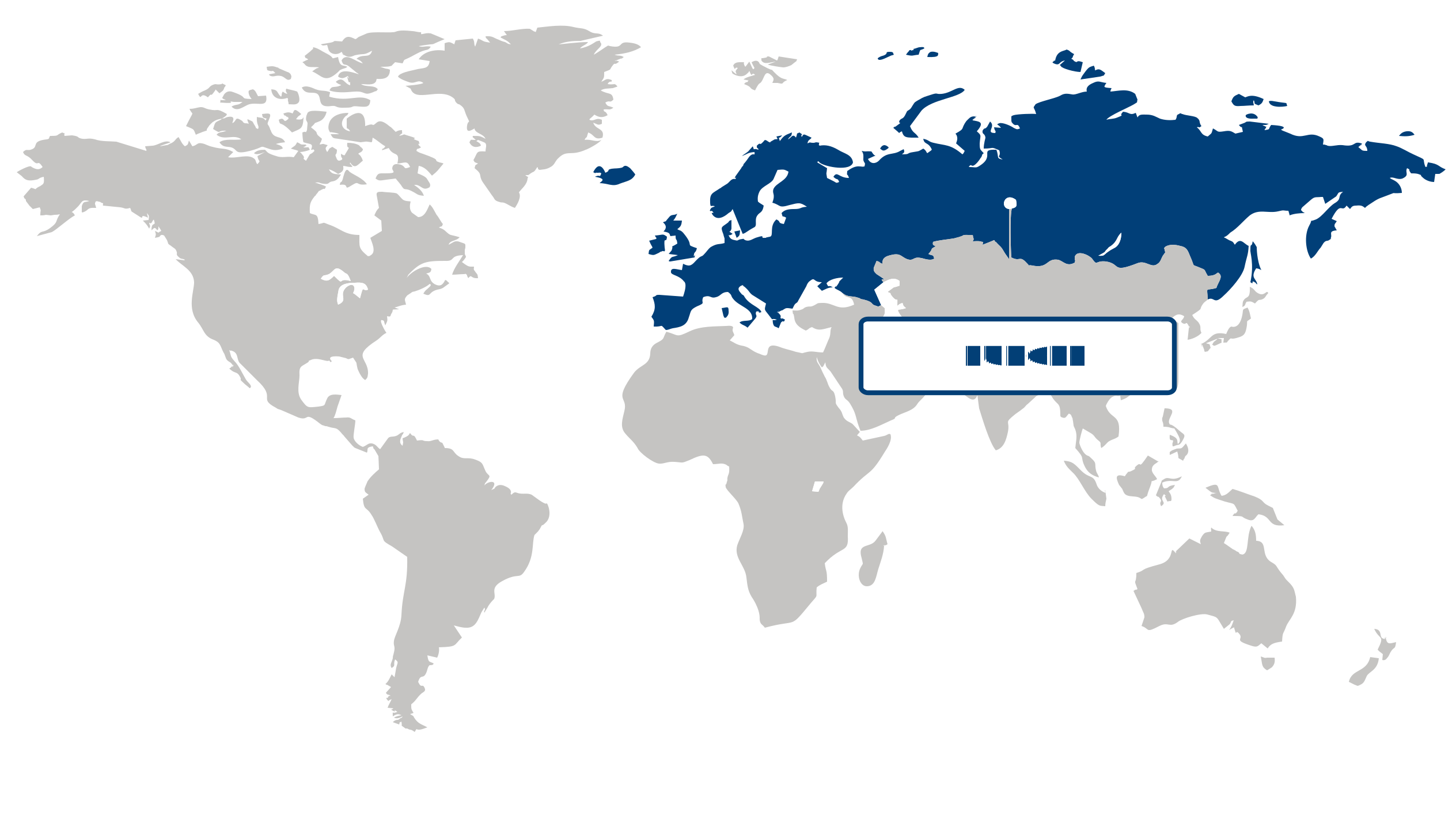
Largest Region
Europe
43.46% Market Share in 2026
Europe (Largest Region) vs Asia Pacific (Fastest-Growing Region)
The Europe biogas market held the largest share in 2026, accounting for 43.46% of the market. The region’s strong position is supported by established renewable energy infrastructure, favorable policy frameworks for decarbonization, and growing efforts to convert agricultural, municipal, and industrial organic waste into usable energy. Expanding demand for low-carbon fuels and renewable gas is encouraging investment in anaerobic digestion and upgrading facilities. Integration of biogas into existing energy and waste-management systems further strengthens its role in the regional transition toward circular and lower-emission energy systems.
Asia Pacific is experiencing the fastest growth, driven by increasing energy demand, expanding urban populations, and the need for more effective organic waste management. Agricultural residues, livestock waste, food-processing byproducts, and municipal waste provide substantial feedstock opportunities for biogas production. Growing interest in decentralized renewable energy and rural energy access is also supporting project development. Government efforts to improve waste treatment, reduce dependence on conventional fuels, and promote cleaner energy sources are creating favorable conditions for wider adoption across both urban and agricultural settings.
Key Country Insights
The U.S. biogas market increasingly focuses on converting agricultural, municipal, and industrial waste into renewable gas. Investment priorities include upgrading facilities and expanding infrastructure that supports broader energy diversification objectives.
Japan advances biogas adoption through efficient organic waste utilization and localized renewable energy projects. Businesses prioritize compact processing technologies suitable for urban infrastructure and industrial waste management requirements.
South Korea promotes biogas development by expanding waste-to-energy initiatives across municipal and industrial facilities. Technology providers focus on improving operational efficiency while supporting environmental management objectives.
Germany strengthens biogas deployment by integrating renewable energy production with efficient waste management practices. Operators continue improving plant efficiency while supporting broader circular resource utilization across agricultural and municipal sectors.
France continues expanding biogas production through agricultural residues and livestock waste management initiatives. Developers prioritize reliable feedstock supply chains and integration with regional renewable energy infrastructure.
Italy increasingly incorporates farm-based biogas facilities into agricultural operations to improve waste utilization and energy efficiency. Companies emphasize practical technology deployment that complements existing farming and renewable energy activities.
Segment Leadership and Growth Trends
Source Segment Analysis: Municipal (Largest Segment) vs Industrial (Fastest-Growing Segment)
Municipal sources held the largest position in the biogas market by source, accounting for a 43.83% share in 2026. Municipal waste streams provide a consistent feedstock base for anaerobic digestion, particularly through the treatment of organic municipal waste and wastewater. Growing emphasis on sustainable waste management is encouraging local authorities and waste operators to adopt solutions that can reduce organic waste sent to disposal while simultaneously producing renewable energy. The ability of municipal biogas facilities to address waste treatment and energy recovery within the same system strengthens their economic and environmental relevance. Increasing focus on circular resource management is therefore supporting the continued prominence of municipal sources.
Industrial sources are emerging as the fastest-growing segment as businesses across manufacturing, food processing, agriculture-related industries, and other sectors seek more effective methods of managing organic waste while improving energy efficiency. Industrial facilities can generate substantial volumes of biodegradable residues that are suitable for anaerobic digestion, creating an opportunity to convert waste streams into useful biogas. The growing emphasis on reducing operational waste, improving resource utilization, and incorporating renewable energy into industrial processes is encouraging greater adoption of biogas systems. This combination of waste-management benefits and energy recovery potential is strengthening the growth prospects of industrial feedstock sources.
Application Segment Analysis: Electricity (Largest Segment) vs Upgraded Biogas (Fastest-Growing Segment)
Electricity generation accounted for the largest share of the biogas market by application, representing 32.4% in 2026. Biogas-to-electricity systems provide a practical pathway for converting organic waste into usable power while supporting decentralized energy generation. Their relevance is particularly strong where reliable access to renewable electricity can be integrated with existing waste treatment infrastructure. Growing efforts to reduce dependence on conventional energy sources and improve the utilization of locally available organic feedstocks are supporting electricity generation from biogas. The dual benefit of waste treatment and renewable power production continues to make this application an important part of the biogas value chain.
Upgraded biogas is expected to be the fastest-growing application as the market increasingly moves beyond direct combustion and electricity generation toward higher-value uses of purified biomethane. Upgrading technologies can remove unwanted components from raw biogas, enabling the resulting gas to be used in applications that require a higher-quality fuel. Growing interest in renewable gas, decarbonization of energy-intensive activities, and the integration of biomethane into broader energy systems is encouraging investment in upgrading infrastructure. The potential to use upgraded biogas as a flexible renewable fuel is consequently expanding its strategic importance across the market.
| Report Segmentation | |||
| Segment | Sub-Segment | Largest Segment | Fastest Growing Segment |
|---|---|---|---|
| Source | Municipal, Industrial, Agricultural | Municipal | Industrial |
| Application | Vehicle Fuel, Electricity, Heat, Upgraded Biogas, Cooking Gas | Electricity | Upgraded Biogas |
 Read our Research Approach
Competitive Landscape and Market Positioning
Top players in the biogas market:
1. Scandinavian Biogas Fuels International AB (Sweden)
2. Gasum Oy (Finland)
3. TotalEnergies SE (France)
4. Air Liquide S.A. (France)
5. Xebec Adsorption Inc. (Canada)
6. PlanET Biogas Group GmbH (Germany)
7. DMT International (Netherlands)
8. Schmack Biogas Service GmbH (Germany)
9. HomeBiogas Ltd. (Israel)
10. Agrinz Technologies GmbH (Austria)
The biogas market is expanding through increasing investments in renewable energy infrastructure and waste-to-energy technologies. Industry stakeholders are adopting advanced anaerobic digestion systems and upgrading technologies to improve methane yield and operational efficiency. Supportive environmental policies and growing emphasis on decarbonization are further encouraging project development and regional market expansion within the biogas sector.
Industry Development/News
| Company Name | Date | Key Development |
|---|---|---|
| Nordion Energi | May-26 | Nordion Energi has initiated construction on a liquefied biogas facility at the Port of Gothenburg, with operational commencement targeted for late 2027. This infrastructure project is strategically designed to enhance the availability of liquefied biogas for the maritime transport sector and bolster Sweden’s broader renewable gas supply chain. |
| Neogenyx | May-26 | Neogenyx has launched a dedicated renewable natural gas business backed by a US$400 million investment. This capital infusion is intended to accelerate the development of the company’s biogas project pipeline and facilitate the scaled expansion of its regional renewable natural gas operations. |
| Syzygy Plasmonics | Mar-26 | Syzygy Plasmonics signed a memorandum of understanding with Geo bio gas&carbon to develop commercial-scale biogas-to-sustainable aviation fuel projects in Brazil. The initiative aims to leverage local feedstock, specifically biogas derived from sugarcane and ethanol waste streams, to produce low-carbon aviation fuels at scale. |
| Maas Energy Works | Feb-26 | Maas Energy Works commissioned the Couco Creek Dairy renewable natural gas facility in California. Developed in collaboration with Pacific Gas and Electric Co., the plant increases dairy-based biogas conversion capacity, strengthening the U.S. market infrastructure for renewable natural gas production and distribution. |
| Goodtech | Feb-26 | Goodtech secured a NOK 20 million contract to provide automation and control systems for an Antec Biogas facility in Hornindal, Norway. This partnership supports the implementation of advanced process control technology, enhancing the operational efficiency and output capacity of the facility's biogas production infrastructure. |
| Copenhagen Infrastructure Partners | Nov-25 | Copenhagen Infrastructure Partners acquired a biogas plant in Northwich, United Kingdom, marking its entry into the British market. This acquisition serves as a strategic expansion of the firm’s renewable gas investment portfolio, reflecting broader institutional interest in scaling European biomethane assets. |
| BVS Biogas | Oct-25 | BVS Biogas commenced construction on a new biogas and gas-upgrading facility in Sweden. Designed to process approximately 370,000 tons of feedstock annually, the facility represents a significant increase in regional biomethane production capacity, contributing to the expansion of industrial-scale gas upgrading capabilities. |
| Biofriends Inc. | Sep-25 | Biofriends Inc. signed a formal agreement with Cheongmyeong Co. to develop South Korea’s first commercial-scale biogas-based biomethanol plant. The project aims to advance the domestic production of low-carbon fuels by utilizing biogas as a primary feedstock, diversifying the industrial applications of renewable gas in the region. |
| Gasum | Sep-25 | Gasum established a strategic cooperation agreement with Preem to provide corporate customers access to liquid and compressed biogas via Gasum’s fueling network in Sweden. This integration strengthens the distribution reach for renewable transport fuels and facilitates wider commercial adoption of biogas across the heavy-duty transport segment. |
| Syzygy Plasmonics | Jun-25 | Syzygy Plasmonics awarded a front-end engineering design contract to Kent for the NovaSAF 1 project in Uruguay. Projected as the world’s first fully electrified facility converting biogas into sustainable aviation fuel, the project represents a significant technological milestone in the commercial-scale production of low-carbon aviation alternatives. |
Why Choose Us
Specialized Expertise: Our team comprises industry experts with a deep understanding of your market segment. We bring specialized knowledge and experience that ensures our research and consulting services are tailored to your unique needs.
Customized Solutions: We understand that every client is different. That's why we offer customized research and consulting solutions designed specifically to address your challenges and capitalize on opportunities within your industry.
Proven Results: With a track record of successful projects and satisfied clients, we have demonstrated our ability to deliver tangible results. Our case studies and testimonials speak to our effectiveness in helping clients achieve their goals.
Cutting-Edge Methodologies: We leverage the latest methodologies and technologies to gather insights and drive informed decision-making. Our innovative approach ensures that you stay ahead of the curve and gain a competitive edge in your market.
Client-Centric Approach: Your satisfaction is our top priority. We prioritize open communication, responsiveness, and transparency to ensure that we not only meet but exceed your expectations at every stage of the engagement.
Continuous Innovation: We are committed to continuous improvement and staying at the forefront of our industry. Through ongoing learning, professional development, and investment in new technologies, we ensure that our services are always evolving to meet your evolving needs.
Value for Money: Our competitive pricing and flexible engagement models ensure that you get maximum value for your investment. We are committed to delivering high-quality results that help you achieve a strong return on your investment.
Select Licence Type

