



Bioplastic Packaging Market Size & Growth Forecast 2027–2036, By Segments (Packaging Type, Material, End-use Industry), Regional Demand Trends (North America, Asia Pacific, Europe), Key Country Insights (U.S., Japan, South Korea, Germany, France, Italy), and Competitive Landscape
Market Size and Growth Outlook
Bioplastic Packaging Market size was around USD 26.56 Billion in 2026 and is slated to grow at 17.99% CAGR from 2027 to 2036, reaching USD 138.89 Billion by 2036. The industry revenue for 2027 is estimated at USD 30.7 Billion.
Base Year Value (2026)
USD 26.56 Billion
CAGR (2027-2036)
17.99%
Forecast Year Value (2036)
USD 138.89 Billion

Historical Data Period
2022-2026

Largest Region
Europe

Forecast Period
2027-2036
Bioplastic Packaging Market Intelligence Snapshot:
-
Regional Market Dynamics:
- Europe held 35.32% in 2026, supported by sustainability-focused policies, environmental awareness, established packaging industries, and demand for renewable and biodegradable materials.
- Europe is also the fastest-growing region, with investment in sustainable material technologies, recyclability, compostability, renewable feedstocks, and lower-impact production processes accelerating adoption.
-
Segment Momentum:
- Flexible packaging accounted for 58.3% of the market in 2026 due to its lightweight design, lower material consumption, easier transportation, extended product protection, and strong alignment with sustainability goals across industries.
- Biodegradable materials are the fastest-growing segment as rising environmental awareness, restrictions on conventional plastics, and growing demand for sustainable packaging continue to accelerate their adoption across packaging applications.
-
Market Expansion Drivers:
- Stringent government regulations on plastic waste accelerating shift toward biodegradable packaging materials
- Rising consumer preference for sustainable packaging driving adoption across retail and food sectors
- Expansion of cost-efficient biopolymer production improving commercial scalability of sustainable packaging solutions
-
Leading Market Participants:
Key players in the bioplastic packaging market include NatureWorks LLC (United States), Novamont S.p.A. (Italy), BASF SE (Germany), Corbion N.V. (Netherlands), Amcor plc (Switzerland), Sealed Air Corporation (United States), Stora Enso Oyj (Finland), Tetra Pak International S.A. (Switzerland), Futamura Group (Japan), Bio4Life BV (Netherlands)
Global Market Forecast Snapshot:
-
Market Outlook:
- 2026 Market Size: USD 26.56 Billion
- 2027 Estimated Market Size: USD 30.7 Billion
- Projected Market Size: USD 138.89 Billion by 2036
- Growth Forecasts: 17.99% CAGR (2027-2036)
-
Regional and Segment Outlook:
- Leading Regional Market: Europe
- High-Growth Regional Hub: Europe
- Core Revenue Segment: Flexible Packaging (Packaging Type) | Biodegradable (Material) | Food and Beverage (End-use Industry)
- Emerging Opportunity Segment: Flexible Packaging (Packaging Type) | Biodegradable (Material) | Food and Beverage (End-use Industry)
Market Growth Drivers and Industry Trends
Stringent government regulations on plastic waste accelerating shift toward biodegradable packaging materials
Increasing legislative action aimed at reducing plastic pollution is encouraging manufacturers to replace conventional packaging materials with environmentally preferable alternatives. The bioplastic packaging market benefits from these regulatory developments as producers across multiple industries adopt biodegradable solutions to align with evolving compliance requirements and sustainability objectives. Regulatory frameworks promoting responsible material selection are also influencing packaging design strategies, prompting greater investment in products that support improved waste management practices.
Rising consumer preference for sustainable packaging driving adoption across retail and food sectors
Consumer purchasing decisions are increasingly influenced by environmental considerations, encouraging brands to incorporate sustainable packaging into product offerings across retail shelves and food distribution channels. This changing demand pattern will boost the bioplastic packaging market as businesses seek packaging formats that reflect sustainability commitments while maintaining product protection and functionality. Retailers and food service providers are also responding by expanding the use of renewable and compostable packaging materials that align with evolving customer expectations regarding environmental responsibility.
Expansion of cost-efficient biopolymer production improving commercial scalability of sustainable packaging solutions
Advancements in manufacturing processes and production efficiencies are reducing barriers associated with the large-scale use of biopolymer-based packaging materials. As production becomes more economical, the bioplastic packaging market is gaining broader commercial acceptance across industries seeking practical alternatives to conventional plastics without compromising processing compatibility or packaging performance. Greater manufacturing efficiency also enables wider product availability, supports diversified packaging applications, and encourages integration into existing packaging conversion operations.
| Growth Driver Assessment Framework | |||||
| Growth Driver | Impact On CAGR | Regulatory Influence | Geographic Relevance | Adoption Rate | Impact Timeline |
|---|---|---|---|---|---|
| Stringent government regulations on plastic waste accelerating shift toward biodegradable packaging materials | 4.1% | High | Europe, North America | High | Near Term |
| Rising consumer preference for sustainable packaging driving adoption across retail and food sectors | 3.8% | Moderate | North America, Europe, Asia Pacific | High | Near Term |
| Expansion of cost-efficient biopolymer production improving commercial scalability of sustainable packaging solutions | 3.5% | Moderate | Asia Pacific, Europe | High | Mid Term |
Unlock insights tailored to your business with our bespoke market research solutions - Click to get your customized report now!
Regional Demand Dynamics
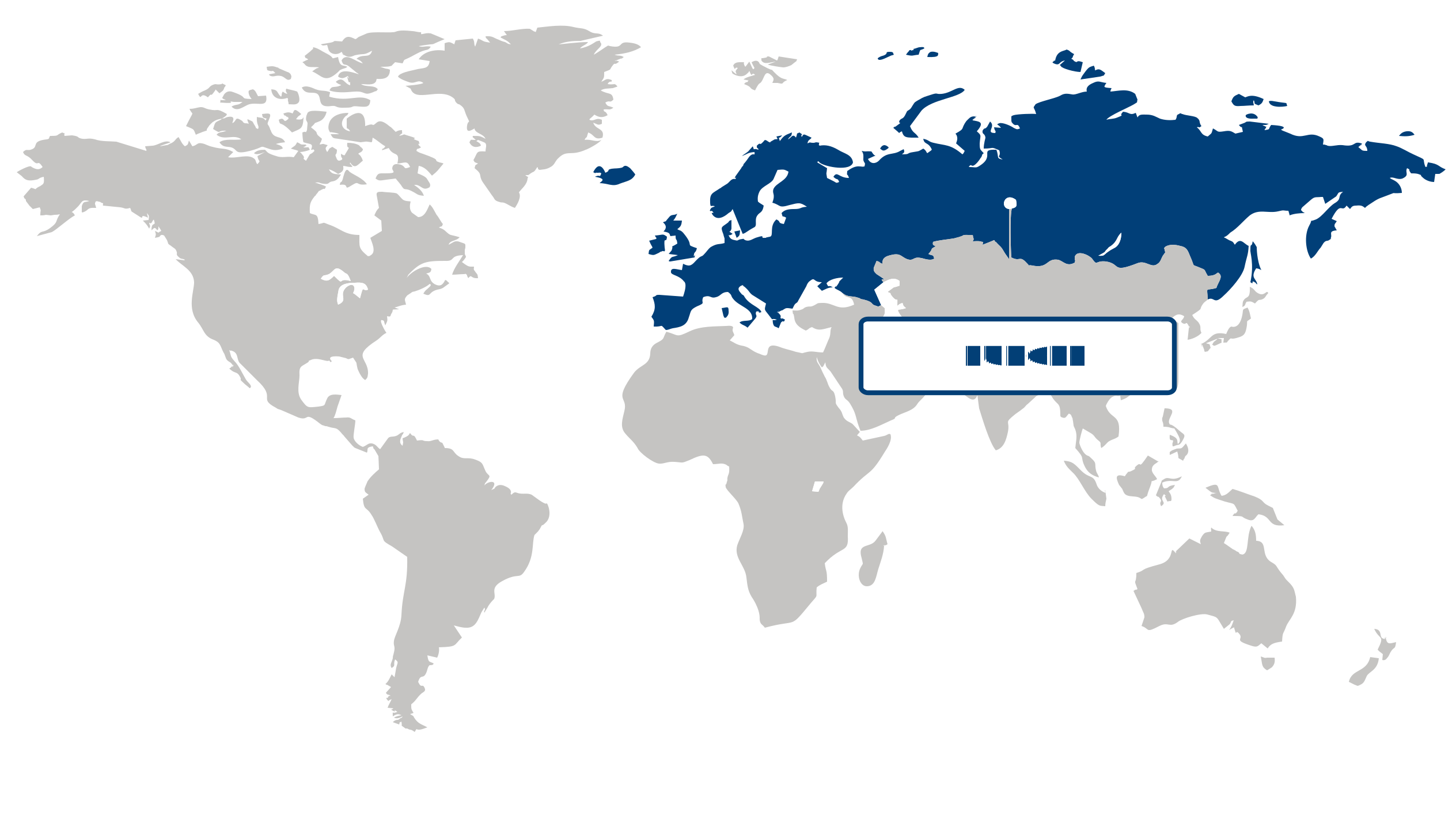
Largest Region
Europe
35.32% Market Share in 2026
Europe (Largest & Fastest-Growing Region)
Europe held the largest and fastest-growing position in the bioplastic packaging market in 2026, accounting for 35.32%. The region's strong position is supported by growing emphasis on sustainable packaging, increasing environmental awareness, and efforts to reduce dependence on conventional fossil-based plastics. Regulatory initiatives promoting circularity, waste reduction, and the use of renewable materials are encouraging packaging manufacturers and brand owners to explore bioplastic alternatives. In addition, established packaging industries and increasing consumer preference for environmentally responsible products are supporting the integration of biodegradable and bio-based materials across food, beverage, personal care, and other packaging applications.
The region's growth momentum is further reinforced by continued investment in sustainable material technologies and the development of packaging solutions with improved functionality and environmental performance. Manufacturers are increasingly focusing on renewable feedstocks, recyclability, compostability, and lower-impact production processes to meet evolving sustainability expectations. Strong collaboration across the packaging value chain, combined with supportive environmental policies and increasing demand for alternatives to conventional plastics, is expected to sustain Europe's leadership and accelerate adoption of bioplastic packaging.
Key Country Insights
The U.S. bioplastic packaging market is driven by growing demand for sustainable packaging across food, consumer goods, and retail applications. Manufacturers in the U.S. continue investing in materials that balance environmental performance with compatibility across existing packaging operations.
Japan advances bioplastic packaging by developing materials that combine sustainability with high barrier performance and product protection. Japanese manufacturers continue refining packaging technologies suited for premium food, healthcare, and consumer product applications.
South Korea is expanding the adoption of bioplastic packaging as consumer brands seek environmentally responsible packaging alternatives. Companies in South Korea increasingly integrate bio-based materials into packaging portfolios while maintaining production efficiency and product quality.
Germany promotes bioplastic packaging through strong emphasis on circular material use and sustainable product design. German packaging companies prioritize recyclable and bio-based solutions that align with evolving environmental compliance requirements and consumer expectations.
France encourages wider use of bioplastic packaging through sustainability-focused retail and food packaging initiatives. French manufacturers emphasize packaging formats that reduce environmental impact while preserving functionality and visual appeal for consumer products.
Italy applies bioplastic packaging extensively in premium food and beverage segments where product presentation and sustainability are equally valued. Italian packaging producers continue developing bio-based solutions that support brand differentiation and regulatory compliance.
Segment Leadership and Growth Trends
Packaging Type Segment Analysis: Flexible Packaging (Largest & Fastest-Growing Segment)
The bioplastic packaging market was led by the flexible packaging segment, which accounted for 58.3% of the market share in 2026 while also emerging as the fastest-growing segment. Its strong market position is supported by rising demand for lightweight, resource-efficient, and sustainable packaging solutions across multiple industries. Flexible bioplastic packaging offers advantages such as lower material consumption, ease of transportation, extended product protection, and enhanced design versatility. Increasing efforts by manufacturers and brand owners to reduce packaging waste while meeting sustainability objectives continue to strengthen the adoption of flexible packaging formats.
Material Segment Analysis: Biodegradable (Largest & Fastest-Growing Segment)
The bioplastic packaging market was dominated by the biodegradable material segment, which held the largest share in 2026 while also emerging as the fastest-growing category. Growing environmental awareness, increasing restrictions on conventional plastic waste, and rising consumer preference for sustainable packaging solutions are driving widespread adoption of biodegradable materials. Their ability to decompose under suitable conditions while reducing long-term environmental impact aligns with evolving regulatory frameworks and corporate sustainability initiatives, reinforcing continued demand across packaging applications.
End-use Industry Segment Analysis: Food and Beverage (Largest & Fastest-Growing Segment)
The bioplastic packaging market was led by the food and beverage end-use industry segment, which held the largest share in 2026 and also represented the fastest-growing segment. The increasing need for sustainable packaging for fresh produce, beverages, ready-to-eat meals, and packaged foods is accelerating the use of bioplastic materials throughout the industry. Food and beverage manufacturers are increasingly adopting environmentally responsible packaging to meet changing consumer expectations and regulatory requirements while maintaining product quality and shelf stability. Continued innovation in biodegradable and compostable packaging technologies is expected to further support the segment's sustained expansion.
| Report Segmentation | |||
| Segment | Sub-Segment | Largest Segment | Fastest Growing Segment |
|---|---|---|---|
| Packaging Type | Flexible Packaging, Rigid Packaging | Flexible Packaging | Flexible Packaging |
| Material | Biodegradable, Non-biodegradable | Biodegradable | Biodegradable |
| End-use Industry | Food and Beverage, Consumer Goods, Pharmaceuticals, Building and Construction, Others | Food and Beverage | Food and Beverage |
 Read our Research Approach
Competitive Landscape and Market Positioning
Top players in the bioplastic packaging market:
- NatureWorks LLC (United States)
- Novamont S.p.A. (Italy)
- BASF SE (Germany)
- Corbion N.V. (Netherlands)
- Amcor plc (Switzerland)
- Sealed Air Corporation (United States)
- Stora Enso Oyj (Finland)
- Tetra Pak International S.A. (Switzerland)
- Futamura Group (Japan)
- Bio4Life BV (Netherlands)
Material innovation is becoming the principal battleground as packaging suppliers work to balance sustainability objectives with the mechanical strength, barrier performance, and processing characteristics expected by brand owners and manufacturers. Rather than competing solely on renewable content, producers are investing in formulations that integrate more effectively with existing packaging operations while meeting evolving performance expectations across food, consumer goods, and industrial applications. The market is also seeing stronger competition around end-of-life functionality, with recyclability, compostability, and compatibility with circular economy initiatives increasingly influencing purchasing decisions.
Industry Development/News
| Company Name | Date | Key Development |
|---|---|---|
| Just Eat Takeaway | Nov-25 | Just Eat Takeaway expanded the geographical commercialization of Xampla's Morro plant-based coated packaging by launching the plastic-free alternative in its Austrian operations via Lieferando. Building upon previous functional deployments across Germany and the United Kingdom, the operational rollout scales alternative material adoption within the food delivery infrastructure. |
| Uluu | Oct-25 | Uluu secured AU$16 million in funding to construct a dedicated production facility aimed at scaling its proprietary seaweed-based bioplastic technology. The capital injection accelerates the commercialization of recyclable, home-compostable, and marine-biodegradable materials engineered specifically to replace conventional structural options within the packaging and diverse end-use manufacturing industries. |
| SmartSolve | Oct-25 | SmartSolve launched a bio-based, water-soluble, and plastic-free film engineered to replace standard single-use plastics. The introduction commercializes a highly differentiated functional capability within consumer packaged goods, addressing stricter regulatory barriers and shifting competitive dynamics away from traditional fossil-fuel derived flexible packaging lines. |
| TotalEnergies Corbion | Sep-25 | TotalEnergies Corbion finalized a strategic distribution agreement with Multi Trade Group to expand the regional availability of its Luminy polylactic acid compostable bioplastics. The partnership targets structural logistics expansion across the Middle East, specifically enhancing supply chain resilience and market access within the United Arab Emirates and Saudi Arabia for packaging applications. |
| Emirates Biotech | Dec-24 | Emirates Biotech selected Sulzer as the technology provider for its new polylactic acid production facility in the UAE. The two-phase project will feature a combined annual capacity of 160,000 metric tons. Once operational, the facility is expected to become the world's largest polylactic acid production plant, significantly expanding global supply capabilities for bioplastic materials. |
| Walki Group | Nov-24 | Walki Group and Lactips entered into a strategic collaboration focused on manufacturing completely biodegradable, plastic-free food packaging utilizing natural polymers. This operational alignment directly addresses mounting commercial demand for compliant, sustainable food contact solutions and alters competitive positioning by introducing high-barrier natural polymer alternatives to the traditional packaging value chain. |
| Accredo Packaging | Oct-24 | Accredo Packaging commercialized a 100% bioplastic, store drop-off recyclable pouch developed through value chain integration with Braskem's sugarcane-derived resin and Fresh-Lock closures. The product launch represents a material technological innovation in flexible packaging, providing consumer goods manufacturers with functional, fully renewable alternatives to conventional polymer laminates. |
Why Choose Us
Specialized Expertise: Our team comprises industry experts with a deep understanding of your market segment. We bring specialized knowledge and experience that ensures our research and consulting services are tailored to your unique needs.
Customized Solutions: We understand that every client is different. That's why we offer customized research and consulting solutions designed specifically to address your challenges and capitalize on opportunities within your industry.
Proven Results: With a track record of successful projects and satisfied clients, we have demonstrated our ability to deliver tangible results. Our case studies and testimonials speak to our effectiveness in helping clients achieve their goals.
Cutting-Edge Methodologies: We leverage the latest methodologies and technologies to gather insights and drive informed decision-making. Our innovative approach ensures that you stay ahead of the curve and gain a competitive edge in your market.
Client-Centric Approach: Your satisfaction is our top priority. We prioritize open communication, responsiveness, and transparency to ensure that we not only meet but exceed your expectations at every stage of the engagement.
Continuous Innovation: We are committed to continuous improvement and staying at the forefront of our industry. Through ongoing learning, professional development, and investment in new technologies, we ensure that our services are always evolving to meet your evolving needs.
Value for Money: Our competitive pricing and flexible engagement models ensure that you get maximum value for your investment. We are committed to delivering high-quality results that help you achieve a strong return on your investment.
Select Licence Type

