Bioplastics Market Size & Growth Forecast 2027–2036, By Segments (Product, Application), Regional Demand Trends (North America, Asia Pacific, Europe), Key Country Insights (U.S., Japan, South Korea, Germany, France, Italy), and Competitive Landscape
Jump to Content
Market Size and Growth Outlook
Bioplastics Market size was valued at USD 21.7 billion in 2026 and is projected to grow at a 16.72% CAGR from 2027 to 2036, exceeding USD 101.84 billion by 2036. The industry revenue for 2027 is estimated at USD 24.76 billion.
Get more details on this report
Request Free Sample ReportBioplastics Market Intelligence Snapshot
Regional Market Dynamics
- Europe leads due to strong regulatory push for sustainable materials, high adoption across packaging industries, and established industrial capacity to substitute conventional plastics with bio-based alternatives.
- North America is expanding at a 21.84% CAGR, driven by rising investment in sustainable materials and growing adoption across packaging and consumer goods industries aligned with corporate sustainability goals.
Segment Momentum
- Packaging held a 59.52% share in 2026 due to its high-volume demand and strong need for material substitution, making it the most scalable application for bioplastics in everyday consumer and industrial use.
- Automotive & Transportation is growing the fastest as manufacturers increasingly integrate bioplastics into vehicle components to support evolving material requirements and sustainability objectives across higher-value applications.
Market Expansion Drivers
- Government restrictions on petrochemical plastics accelerating biodegradable packaging material adoption.
- Rising consumer demand for sustainable plastic alternatives driving bioplastic product innovation.
- Expanding corporate sustainability commitments increasing investment in circular bio-based material production.
Leading Market Participants
- Leading players in the bioplastics market include TEIJIN LIMITED (Japan), Toray Industries, Inc (Japan), Toyota Tsusho Corporation (Japan), Avantium N.V. (Netherlands), PTT MCC Biochem Co., Ltd. (Thailand), NatureWorks LLC (United States), SABIC (Saudi Arabia), BASF SE (Germany), Braskem S.A. (Brazil), TotalEnergies Corbion (Netherlands).
Global Market Forecast Snapshot
Market Outlook
- 2026 Market Size: USD 21.7 billion
- 2027 Estimated Market Size: USD 24.76 billion.
- Projected Market Size: USD 101.84 billion by 2036
- Growth Forecast: 16.72% CAGR (2027-2036)
Regional and Segment Outlook
- Leading Regional Market: Europe
- High-Growth Regional Hub: North America
- Core Revenue Segment: Biodegradable (Product) | Packaging (Application)
- Emerging Opportunity Segment: Biodegradable (Product) | Automotive & Transportation (Application)
Market Growth Drivers and Industry Trends
Government restrictions on petrochemical plastics accelerating biodegradable packaging material adoption
Government restrictions on conventional petrochemical plastics are accelerating the transition toward biodegradable materials, creating stronger demand in the bioplastics market. Policies targeting single-use plastics, packaging waste, and difficult-to-recycle materials are encouraging manufacturers and packaging producers to evaluate bio-based alternatives that can satisfy performance requirements while reducing dependence on conventional plastics. This regulatory shift is particularly relevant for packaging applications where material selection is increasingly influenced by waste management requirements and environmental compliance considerations.
Rising consumer demand for sustainable plastic alternatives driving bioplastic product innovation
Consumer preferences for environmentally responsible products are strengthening the bioplastics market as brands and manufacturers respond with packaging and product formats incorporating renewable or biodegradable materials. Growing awareness of plastic waste is influencing purchasing decisions and encouraging companies to improve the functionality, appearance, durability, and processing characteristics of bioplastic materials. Innovation across material formulations and end-use applications is helping expand the range of products that can incorporate bioplastics while addressing practical requirements such as packaging performance and usability.
Expanding corporate sustainability commitments increasing investment in circular bio-based material production
Corporate sustainability commitments are increasing investment in bio-based materials and supporting the expansion of the bioplastics market through greater emphasis on circular production systems. Companies are seeking to reduce fossil-based material consumption, improve resource efficiency, and incorporate renewable feedstocks into their product and packaging portfolios. These objectives are encouraging investment in production processes that support material recovery, recycling, compostability, and more efficient use of bio-based inputs, while procurement strategies increasingly favor suppliers capable of supporting broader environmental targets.
| Growth Driver | Impact on CAGR | Regulatory Influence | Geographic Relevance | Adoption Rate | Impact Timeline |
|---|---|---|---|---|---|
| Government restrictions on petrochemical plastics accelerating biodegradable packaging material adoption | 2.10% | High | Europe, North America | High | Near Term |
| Rising consumer demand for sustainable plastic alternatives driving bioplastic product innovation | 1.90% | Moderate | Asia Pacific, Europe | High | Mid Term |
| Expanding corporate sustainability commitments increasing investment in circular bio-based material production | 1.50% | Moderate | North America, Asia Pacific | Emerging | Long Term |
Unlock insights tailored to your business with our bespoke market research solutions.
Click to get your customized report now.
Regional Demand Dynamics
Europe (Largest Region)
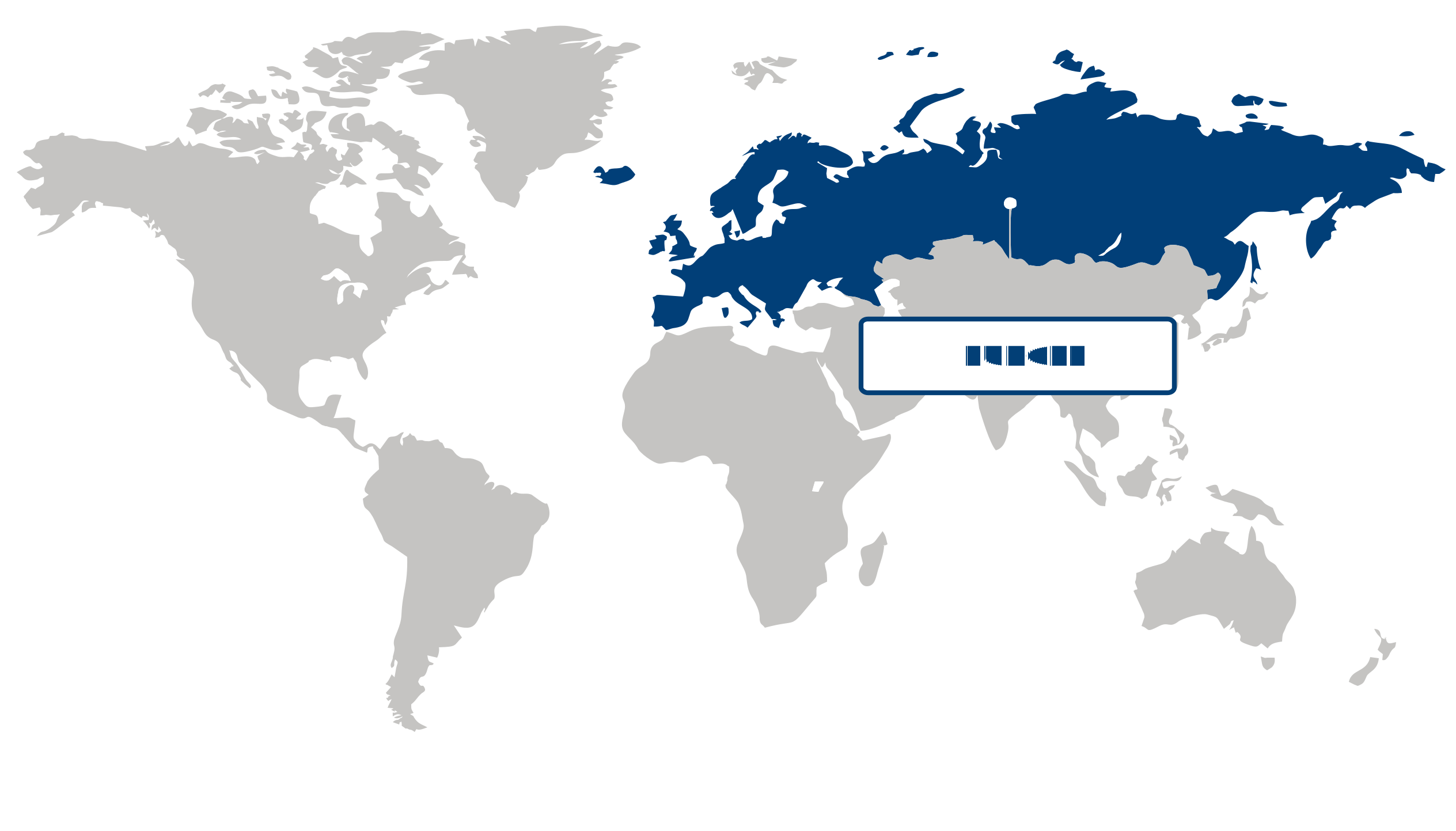
Europe led the bioplastics market in 2026, accounting for a 45.98% share, supported by strong environmental policies, established sustainability initiatives, and increasing efforts to reduce dependence on conventional plastics. The region has developed a favorable ecosystem for bio-based and biodegradable materials through growing consumer awareness, circular-economy objectives, and demand for more sustainable packaging and product solutions. Manufacturers across packaging, food and beverage, agriculture, consumer goods, and other applications are increasingly evaluating bioplastics as part of broader efforts to lower environmental impact. Regulatory measures encouraging waste reduction, recycling, renewable feedstocks, and more sustainable material use are also strengthening market adoption, while investments in material innovation are helping expand the functional applications of bioplastics.
North America (Fastest-Growing Region)
North America represents the fastest-growing regional market, supported by rising demand for sustainable materials and increasing interest in alternatives to petroleum-based plastics. Growing sustainability commitments among manufacturers and brand owners are encouraging greater use of bio-based and biodegradable materials in packaging, food service, consumer products, and other applications. Advances in polymer development and processing technologies are improving the performance and commercial suitability of bioplastics, while increasing attention to plastic waste and resource efficiency is strengthening demand. The expansion of composting, recycling, and bio-based material infrastructure, together with evolving environmental policies, is creating a supportive environment for investment and accelerating the integration of bioplastics into broader material and packaging strategies.
| Parameter | North America | Asia Pacific | Europe | Latin America | MEA |
|---|---|---|---|---|---|
| Innovation HubiScaleNascentDeveloping Advanced | |||||
| Cost-Sensitive RegioniScaleLowMedium High | |||||
| Regulatory EnvironmentiScaleRestrictiveNeutral Supportive | |||||
| Demand DriversiScaleWeakModerate Strong | |||||
| Development StageiScaleEmergingDeveloping Developed | |||||
| Adoption RateiScaleLowMedium High | |||||
| New Entrants / StartupsiScaleSparseModerate Dense | |||||
| Macro IndicatorsiScaleWeakStable Strong |
Key Country Insights
Germany 🇩🇪
Circular Manufacturing FocusGermany prioritizes integrating bioplastics into circular manufacturing systems with strong attention to recyclability, industrial processing compatibility, and regulatory compliance. Demand is reinforced by automotive, packaging, and consumer goods manufacturers seeking lower-impact material alternatives.
France 🇫🇷
Sustainable Consumer PackagingFrance promotes bioplastics primarily through environmentally focused packaging initiatives and increasing demand for renewable materials in consumer products. French manufacturers emphasize compostable and bio-based solutions that align with evolving sustainability expectations across multiple industries.
Italy 🇮🇹
Specialty Processing ExpertiseItaly leverages its expertise in plastics processing to develop customized bioplastic products for packaging, agriculture, and consumer applications. Italian converters increasingly adapt production capabilities to accommodate renewable materials while maintaining product functionality and design flexibility.
Japan 🇯🇵
High-Performance Material DevelopmentJapan concentrates on developing premium bioplastics with enhanced durability, heat resistance, and precision processing capabilities. Japanese manufacturers align innovation with electronics, packaging, and specialty industrial applications where material quality remains a key purchasing criterion.
South Korea 🇰🇷
Advanced Packaging IntegrationSouth Korea expands bioplastics adoption through advanced packaging technologies and collaboration between material suppliers and consumer goods companies. The country's manufacturing ecosystem supports rapid evaluation of sustainable polymers across food, cosmetics, and industrial packaging applications.
United States 🇺🇸
Innovation Commercialization HubThe U.S. bioplastics market emphasizes scaling advanced bio-based materials through partnerships between chemical producers, consumer brands, and research institutions. Commercial adoption is supported by growing demand for sustainable packaging and industrial applications requiring improved material performance.
Bioplastics Market Share (%), by Product, 2026
Go beyond the chart, access full insights & data tables
Request Free Sample ReportProduct Segment Analysis: Biodegradable (Largest & Fastest-Growing Segment)
The biodegradable segment led the bioplastics market in 2026, accounting for a 52.52% share, and is also expected to be the fastest-growing segment. Its strong market position reflects rising demand for materials that can reduce reliance on conventional plastics and support more sustainable product lifecycles. Biodegradable bioplastics are increasingly attractive in applications where environmental impact, waste reduction, and compliance with sustainability objectives are important purchasing considerations. Growing consumer awareness of plastic pollution, combined with efforts across industries to adopt more environmentally responsible materials, is strengthening demand for biodegradable alternatives. The segment is further supported by ongoing improvements in material performance, processing compatibility, and application versatility, enabling biodegradable bioplastics to serve a broader range of end uses while aligning with the transition toward circular and lower-impact material solutions.
Application Segment Analysis: Packaging (Largest Segment) vs Automotive & Transportation (Fastest-Growing Segment)
The packaging segment dominated the bioplastics market in 2026, capturing a 59.52% share. Packaging remains a major application area because bioplastics can provide alternatives to petroleum-based materials in products such as food packaging, containers, films, and other disposable or short-use formats. Increasing pressure to reduce plastic waste and improve the environmental profile of packaging is encouraging manufacturers and brand owners to consider bio-based and biodegradable materials. The segment also benefits from growing consumer preference for sustainable packaging and broader efforts to incorporate environmentally responsible materials into supply chains. Improvements in barrier properties, durability, and processing capabilities are helping expand the suitability of bioplastics for diverse packaging requirements.
Automotive & transportation is expected to be the fastest-growing application segment, supported by increasing efforts to reduce vehicle weight, improve material efficiency, and incorporate more sustainable materials into vehicle components. Bioplastics can be utilized in selected interior, exterior, and functional applications where manufacturers seek alternatives with favorable environmental characteristics without compromising required performance. The automotive industry's broader focus on material innovation and lifecycle sustainability is creating opportunities for bio-based polymers in vehicle manufacturing. Growing attention to resource efficiency and the environmental impact of automotive materials is expected to further encourage adoption across transportation-related applications.
| Segment | Sub-Segment | Largest Segment | Fastest Growing |
|---|---|---|---|
| Product | Biodegradable, Non-biodegradable | Biodegradable | Biodegradable |
| Application | Packaging, Agriculture, Automotive & Transportation, Electronics, Textile, Others | Packaging | Automotive & Transportation |
Competitive Landscape and Market Positioning
Key companies in the bioplastics market:
1. TEIJIN LIMITED (Japan)
2. Toray Industries Inc (Japan)
3. Toyota Tsusho Corporation (Japan)
4. Avantium N.V. (Netherlands)
5. PTT MCC Biochem Co. Ltd. (Thailand)
6. NatureWorks LLC (United States)
7. SABIC (Saudi Arabia)
8. BASF SE (Germany)
9. Braskem S.A. (Brazil)
10. TotalEnergies Corbion (Netherlands)
The bioplastics market is expanding with increasing demand for sustainable and biodegradable material alternatives across packaging and industrial applications. Continuous innovation in bio-based polymer development is improving performance and scalability. The bioplastics market is increasingly shaped by environmental sustainability transitions.
| Company | Market Share | Company Revenue | Revenue CAGR (%) | Product Portfolio | Geographic Presence | Innovation / R&D Focus | Strategic Developments |
|---|---|---|---|---|---|---|---|
| TEIJIN LIMITED (Japan) | |||||||
| Toray Industries Inc (Japan) | |||||||
| Toyota Tsusho Corporation (Japan) | |||||||
| Avantium N.V. (Netherlands) | |||||||
| PTT MCC Biochem Co. Ltd. (Thailand) | |||||||
| NatureWorks LLC (United States) | |||||||
| SABIC (Saudi Arabia) | |||||||
| BASF SE (Germany) | |||||||
| Braskem S.A. (Brazil) | |||||||
| TotalEnergies Corbion (Netherlands). |
Industry Development/News
| Company Name | Date | Key Development |
|---|---|---|
| NatureWorks | May-26 | NatureWorks commissioned a 75,000-ton polylactic acid (PLA) production facility in Thailand. This expansion significantly boosts the company's global manufacturing capacity, strengthening its supply chain footprint in Asia and improving the availability of bio-based resins for large-scale packaging and industrial applications. |
| Mitsubishi Chemical | May-26 | Mitsubishi Chemical and PTT Global Chemical announced the closure of their joint venture for BioPBS resin in Thailand. The decision, driven by persistent profitability challenges in the compostable polyester market, signals ongoing commercial hurdles in achieving economies of scale and cost-competitiveness for specific bioplastic grades. |
| Balrampur Chini Mills | Nov-25 | Balrampur Chini Mills announced a $340 million investment to establish India’s first large-scale PLA bioplastics facility under the brand Bioyug. Scheduled for operational launch by late 2026, the plant aims to produce 80,000 tons of compostable, sugarcane-derived bioplastics annually, representing a major strategic shift toward indigenous sustainable material production. |
| Emirates Biotech | Nov-25 | Emirates Biotech launched its Embio PLA product line manufactured in the UAE. This localized production hub increases regional access to polylactic acid materials, supporting broader efforts to reduce reliance on imported conventional plastics in the Middle East's packaging and industrial manufacturing sectors. |
| Renaissance BioScience | Nov-25 | Renaissance BioScience partnered with Biome Bioplastics to utilize advanced yeast fermentation technology for creating renewable bioplastic building blocks. This collaboration aims to develop high-sustainability, bio-based inputs for packaging, reflecting a trend toward leveraging synthetic biology to improve the performance and renewability of next-generation bioplastics. |
| Teknor Apex | Jun-25 | Teknor Apex acquired Danimer Scientific, integrating the firm’s proprietary biodegradable polymer technologies into its materials portfolio. This strategic acquisition enhances Teknor Apex's manufacturing capabilities and provides a broader range of sustainable, bio-based solutions for packaging and industrial sectors, accelerating its market presence in the bioplastics value chain. |
| Braskem | Jun-25 | Braskem inaugurated a $20 million R&D center in Massachusetts to accelerate the development of bio-based alternatives to fossil-fuel plastics. The facility focuses on optimizing production pathways and scaling sustainable polymer solutions, strengthening the company's innovation pipeline for high-performance bioplastics. |
| UKHI | Jun-25 | Indian cleantech startup UKHI launched EcoGran, a biodegradable biopolymer synthesized from agricultural byproducts such as hemp, flax, and crop stubble. By converting agricultural waste into a scalable plastic alternative, the firm offers a resource-efficient model for manufacturers seeking sustainable, low-carbon materials for consumer and industrial packaging. |
| Intec Bioplastics | May-25 | Intec Bioplastics introduced EarthPlus Hercules Bioflex, a plant-based stretch wrap film containing approximately 35% renewable content. This product expansion targets the commercial logistics and food packaging sectors, providing a practical solution for firms seeking to lower carbon emissions through the adoption of partially bio-based packaging films. |
Customize Your Report
Explore examples of how this report can be tailored to different research needs, including custom segments, additional topics or chapters, and related reports. Click a section of the wheel or its numbered marker to explore the available options.
Bioplastics Market — Custom Segments
| Segment | Sub-Segment |
|---|---|
| Feedstock Source | Starch-Based Feedstock, Sugar-Based Feedstock, Vegetable Oil-Based Feedstock, Cellulose-Based Feedstock, Other Bio-Based Feedstocks |
| Polymer Type | Polylactic Acid (PLA), Polyhydroxyalkanoates (PHA), Bio-Based Polyamides, Bio-Based Polyethylene & Polypropylene, Bio-Based Polyethylene Terephthalate (PET), Other Biopolymers |
| End-of-Life Pathway | Industrial Composting, Home Composting, Mechanical Recycling, Chemical Recycling, Biodegradation |
Bioplastics Market — Custom TOC
| Custom Chapter | Chapter Details |
|---|---|
| Fossil Plastic Replacement Opportunity Mapping |
|
| End-of-Life Infrastructure Readiness Analysis |
|
| Brand Sustainability Adoption Assessment |
|
Need a different cut of the data?
Request Custom ResearchFrequently Asked Questions
What is the market valuation of bioplastics?
What are the growth projections for the bioplastics industry?
How are regulatory restrictions on conventional plastics influencing the bioplastics market?
Why are corporate sustainability commitments accelerating investment in bioplastics?
Why is Packaging the largest application segment in the bioplastics market?
Why is Automotive & Transportation the fastest-growing application in the bioplastics market?
Why does Europe dominate the bioplastics market with a 45.98% share?
How is North America shaping growth in the bioplastics market?
Which companies dominate the bioplastics landscape?
Our Clients
"The report helped us understand emerging consumer trends in our product category. It clarified where to focus innovation for the next product launch."
LyondellBasell
"The regional forecast section was incredibly useful. We were able to identify two new potential partners in Europe thanks to the vendor mapping you included."
SABIC
"We appreciated how actionable the recommendations were. It guided us to improve supply chain resilience."
Olin Corporation
Our Research Team & Methodology
Every Fundamental Business Insights report is built by a dedicated vertical research team, validated through a structured primary-and-secondary methodology, and reviewed for accuracy before it reaches you.
This report was prepared by the Chemicals & Materials Research Team at Fundamental Business Insights, a dedicated research group specializing in the global chemicals, advanced materials, and industrial manufacturing sectors. Our analysts continuously monitor raw material supply chains, feedstock pricing, production technologies, regulatory developments, sustainability initiatives, environmental compliance, trade dynamics, and evolving end-use applications to deliver timely and reliable market intelligence. The research is developed using a structured methodology that combines primary discussions with manufacturers, raw material suppliers, distributors, and industry experts, along with company annual reports, regulatory publications, government trade statistics, industry associations, technical literature, patent databases, and other authoritative secondary sources. Market estimates are validated through multiple research techniques, including top-down and bottom-up analysis, before undergoing an internal quality review to ensure accuracy, consistency, and methodological integrity prior to publication.
Delivery
Published
Available
Support
- Market Size & Forecast
- Market Segmentation
- Regional Analysis
- Growth Drivers & Challenges
- Market Dynamics
- Competitive Landscape
- Company Profiles
- Competitive Benchmarking
- Mergers & Acquisitions
- Market Share Analysis or Key Company Strategies
- Value Chain Analysis
- Porter's Five Forces
- PESTLE Analysis
- Pricing Trends
- Supply-Demand Analysis
- Technology Landscape
- Regulatory Landscape
- Investment & Funding Landscape
- Emerging Opportunities
- Future Market Outlook