Birch Sap Market Size & Growth Forecast 2027–2036, By Segments (Application, Distribution Channel, Processing Method), Regional Demand Trends (North America, Asia Pacific, Europe), Key Country Insights (U.S., Japan, South Korea, Germany, France, Italy), and Competitive Landscape
Market Size and Growth Outlook
Birch Sap Market size was assessed at USD 94.04 Billion in 2026 and is poised to grow at 13.1% CAGR between 2027 and 2036, crossing USD 322.06 Billion by 2036. The industry revenue for 2027 is calculated at USD 104.7 Billion.
Get more details on this report
Request Free Sample ReportBirch Sap Market Intelligence Snapshot
Regional Market Dynamics
- Europe benefits from established consumer familiarity, demand for natural beverages, clean-label preferences, and a developed food and beverage industry.
- North America is the fastest-growing region, supported by rising interest in functional beverages, plant-based products, botanical ingredients, and alternative wellness-oriented drinks.
Segment Momentum
- The food & beverages segment leads the market as birch sap is increasingly used in functional beverages, flavored drinks, natural sweeteners, and wellness-focused products that align with clean-label consumer preferences.
- Health supplements are the fastest-growing application, supported by rising demand for natural, plant-based ingredients and increasing consumer interest in preventive health and functional nutrition products.
Market Expansion Drivers
- Rising consumer preference for natural and organic wellness beverages driving functional drink adoption
- Health and wellness trend expansion increasing demand for nutrient-rich plant-based hydration products
- Expanding use of birch sap in cosmetics and personal care formulations enhancing product diversification
Leading Market Participants
- Key players in the birch sap market include Polar Beverages (United States), The Birch Grove Company (Canada), Taiga Harvest (Canada), Elixia Beverage Company LLC (United States), Birch Haven Naturals (Canada), Sapwood Naturals (Finland), Be Organics (United Kingdom), Alemor International (Russia), Sapwood Nuturanyo (Russia), Nordic Birch Sap Company (Sweden)
Global Market Forecast Snapshot
Market Outlook
- 2026 Market Size: USD 94.04 Billion
- 2027 Estimated Market Size: USD 104.7 Billion
- Projected Market Size: USD 322.06 Billion by 2036
- Growth Forecast: 13.1% CAGR (2027-2036)
Regional and Segment Outlook
- Leading Regional Market: Europe
- High-Growth Regional Hub: North America
- Core Revenue Segment: Food & Beverages (Application) | Online Retail (Distribution Channel) | Spray Drying (Processing Method)
- Emerging Opportunity Segment: Health Supplements (Application) | Online Retail (Distribution Channel) | Spray Drying (Processing Method)
Market Growth Drivers and Industry Trends
Rising consumer preference for natural and organic wellness beverages driving functional drink adoption
Consumers are increasingly choosing beverages made from recognizable, minimally processed ingredients as part of their everyday wellness routines, creating favorable conditions that will drive the birch sap market growth. Demand for natural hydration options is expanding alongside interest in products that offer perceived functional benefits without relying on artificial additives or excessive sugar content. Birch sap aligns well with these purchasing preferences by offering a plant-derived alternative that appeals to health-conscious buyers seeking authenticity, sustainability, and ingredient transparency. Retailers and beverage manufacturers are also broadening their portfolios with naturally sourced drinks to address changing consumer expectations across premium grocery, specialty health, and online retail channels.
Health and wellness trend expansion increasing demand for nutrient-rich plant-based hydration products
As health-focused lifestyles become more deeply integrated into daily consumption habits, the birch sap market is benefiting from stronger demand for plant-based beverages that support balanced nutrition and natural hydration. Consumers are actively exploring alternatives to conventional soft drinks and are placing greater value on products perceived to contain naturally occurring nutrients and fewer synthetic ingredients. This shift encourages beverage producers to introduce innovative formulations that emphasize botanical origins, clean ingredient profiles, and functional positioning. The expanding popularity of wellness-oriented diets further strengthens the appeal of plant-based hydration products among diverse consumer groups with evolving dietary preferences.
Expanding use of birch sap in cosmetics and personal care formulations enhancing product diversification
Beyond the beverage sector, manufacturers are discovering new applications for birch sap in skincare, haircare, and other beauty formulations, a trend that will boost the birch sap market demand through broader commercial utilization. Interest in botanical ingredients with naturally derived characteristics has encouraged personal care companies to incorporate plant extracts into premium product lines that emphasize gentle formulations and ingredient transparency. This diversification creates additional revenue opportunities for suppliers while reducing dependence on a single end-use industry. Product developers are also leveraging the natural origin of birch sap to align with consumer preferences for cosmetics that feature plant-based ingredients and simplified formulations.
| Growth Driver | Impact on CAGR | Regulatory Influence | Geographic Relevance | Adoption Rate | Impact Timeline |
|---|---|---|---|---|---|
| Rising consumer preference for natural and organic wellness beverages driving functional drink adoption | 2.6% | Low | Europe, North America | High | Near Term |
| Health and wellness trend expansion increasing demand for nutrient-rich plant-based hydration products | 2.3% | Low | North America, Asia Pacific | High | Near Term |
| Expanding use of birch sap in cosmetics and personal care formulations enhancing product diversification | 2% | Moderate | Europe, Asia Pacific | Medium | Mid Term |
Unlock insights tailored to your business with our bespoke market research solutions.
Click to get your customized report now.
Regional Demand Dynamics
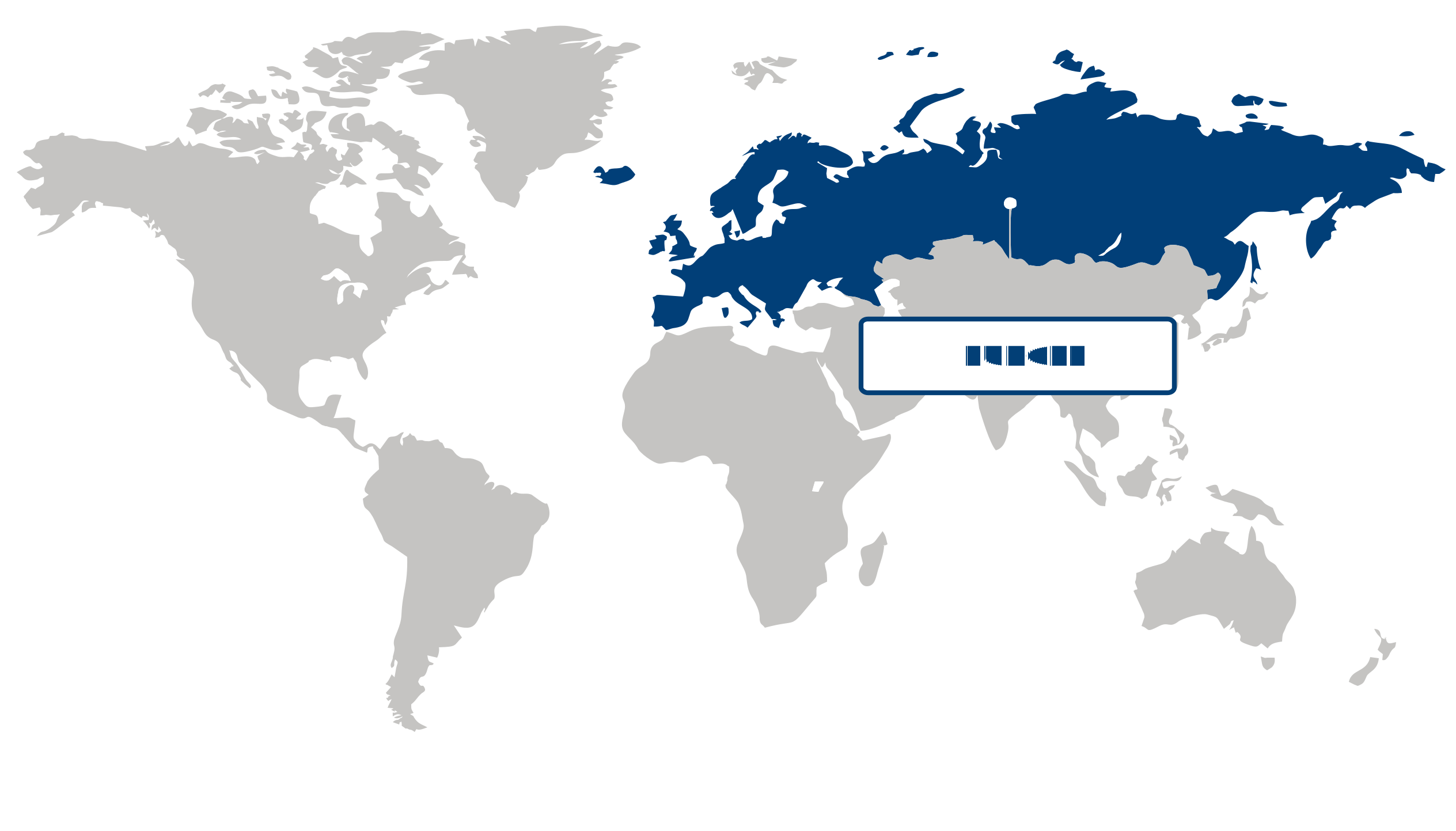
Europe (Largest Region)
Europe accounted for the largest share of the birch sap market in 2026, benefiting from established consumer familiarity with birch-derived beverages and growing interest in natural, plant-based products. Demand is being supported by increasing consumer preference for minimally processed and functional beverages, alongside broader interest in traditional botanical ingredients. The region’s developed food and beverage industry and strong emphasis on clean-label consumption also provide a favorable environment for birch sap products, particularly as consumers increasingly seek alternatives perceived as naturally sourced and wellness-oriented.
North America (Fastest-Growing Region)
North America is expected to register the fastest growth in the birch sap market, driven by rising consumer interest in functional beverages, plant-based products, and distinctive natural ingredients. Growing awareness of alternative hydration and wellness beverages is expanding opportunities beyond conventional drink categories. Retail diversification and increasing experimentation with botanical-based products are also helping introduce birch sap to a broader consumer base, while the region’s strong demand for innovative health-oriented beverages supports its growth potential.
| Parameter | North America | Asia Pacific | Europe | Latin America | MEA |
|---|---|---|---|---|---|
| Innovation Hub i Scale Nascent Developing Advanced | |||||
| Cost-Sensitive Region i Scale Low Medium High | |||||
| Regulatory Environment i Scale Restrictive Neutral Supportive | |||||
| Demand Drivers i Scale Weak Moderate Strong | |||||
| Development Stage i Scale Emerging Developing Developed | |||||
| Adoption Rate i Scale Low Medium High | |||||
| New Entrants / Startups i Scale Sparse Moderate Dense | |||||
| Macro Indicators i Scale Weak Stable Strong |
Key Country Insights
United States 🇺🇸
Functional Beverage AdoptionThe U.S. birch sap market is shaped by consumer interest in natural hydration and plant-based wellness beverages. Brands in the U.S. are expanding premium product portfolios with clean-label positioning and innovative flavor combinations to differentiate within the functional drinks category.
Germany 🇩🇪
Natural Ingredient PreferenceGermany emphasizes minimally processed beverages with transparent sourcing and sustainable production practices. Birch sap products are gaining attention among health-conscious consumers seeking natural alternatives to conventional soft drinks and sweetened beverages.
Japan 🇯🇵
Premium Wellness BeveragesJapan values high-quality functional beverages with refined taste and nutritional appeal. Birch sap products in Japan are positioned within premium wellness offerings, where product purity, packaging convenience, and ingredient authenticity influence purchasing decisions.
South Korea 🇰🇷
Health Lifestyle InnovationSouth Korea continues to expand its functional beverage portfolio with products aligned to wellness-focused lifestyles. Birch sap is attracting interest through premium retail channels where consumers seek naturally sourced drinks with distinctive health-oriented positioning.
France 🇫🇷
Clean-Label Beverage DemandFrance encourages beverage innovation centered on natural ingredients and simplified formulations. Birch sap producers increasingly emphasize organic sourcing, product authenticity, and environmentally responsible packaging to appeal to consumers seeking healthier refreshment options.
Italy 🇮🇹
Premium Natural RefreshmentItaly is incorporating birch sap into the premium beverage segment through specialty retail and health-focused outlets. Consumers increasingly appreciate products that combine natural hydration with recognizable ingredients and distinctive botanical origins.
Segment Leadership and Growth Trends
Birch Sap Market Share (%), by Application, 2026
Go beyond the chart, access full insights & data tables
Request Free Sample ReportApplication Segment Analysis: Food & Beverages (Largest Segment) vs Health Supplements (Fastest-Growing Segment)
The food & beverages segment held the largest share of the birch sap market in 2026. Birch sap is increasingly incorporated into functional beverages, flavored drinks, natural sweeteners, and wellness-focused food products due to its refreshing taste and naturally derived composition. Growing consumer preference for clean-label ingredients and minimally processed beverages has encouraged manufacturers to expand product offerings using birch sap, reinforcing the segment's dominant position.
The health supplements segment is emerging as the fastest-growing application as consumers increasingly seek natural products that align with preventive healthcare and wellness trends. Birch sap is gaining attention as an ingredient in nutritional supplements because of its association with plant-based lifestyles and naturally sourced formulations. Rising awareness of functional nutrition and increasing demand for botanical ingredients are supporting broader adoption across the dietary supplement industry.
Distribution Channel Segment Analysis: Online Retail (Largest & Fastest-Growing Segment)
The birch sap market was led by the online retail segment, which held the largest share in 2026 while also recording the fastest growth. Online platforms provide consumers with convenient access to a broad selection of birch sap products, allowing easy comparison of brands, product formats, and ingredient information. Digital commerce has expanded the availability of specialty wellness products beyond traditional retail locations, enabling manufacturers to reach wider customer bases. Continued growth in e-commerce, direct-to-consumer strategies, and health-focused online purchasing behavior is expected to further strengthen this segment.
Processing Method Segment Analysis: Spray Drying (Largest & Fastest-Growing Segment)
Holding the largest share of the birch sap market, the spray drying segment dominated in 2026 and also represented the fastest-growing processing method. Spray drying enables efficient conversion of birch sap into stable powder formulations while preserving product quality and improving storage, transportation, and shelf life. The resulting powdered ingredient is well suited for use in beverages, dietary supplements, and functional food formulations because it offers convenient handling and formulation flexibility. Increasing demand for value-added natural ingredients and longer-lasting product formats continues to support the widespread adoption of spray drying across the birch sap industry.
| Segment | Sub-Segment | Largest Segment | Fastest Growing |
|---|---|---|---|
| Application | Food & Beverages, Personal Care & Cosmetics, Health Supplements, Household Products | Food & Beverages | Health Supplements |
| Distribution Channel | Online Retail, Retail Stores, Direct Sales, Foodservice | Online Retail | Online Retail |
| Processing Method | Spray Drying, Freeze-Drying, Evaporation, Pasteurization | Spray Drying | Spray Drying |
Competitive Landscape and Market Positioning
Prominent players in the birch sap market:
- Polar Beverages (United States)
- The Birch Grove Company (Canada)
- Taiga Harvest (Canada)
- Elixia Beverage Company LLC (United States)
- Birch Haven Naturals (Canada)
- Sapwood Naturals (Finland)
- Be Organics (United Kingdom)
- Alemor International (Russia)
- Sapwood Nuturanyo (Russia)
- Nordic Birch Sap Company (Sweden)
The Birch Sap Market is transitioning from a niche natural beverage segment toward a more differentiated category where product authenticity, sourcing practices, and processing expertise increasingly shape competitive positioning. Producers are expanding beyond conventional offerings by refining preservation methods and developing premium formulations that retain the natural characteristics of the raw ingredient while extending commercial viability. As consumer expectations shift toward traceable and minimally processed products, suppliers are investing in transparent supply chains and sustainable harvesting capabilities that are difficult to replicate. Competition is also becoming more regionalized, with participants adapting product formats, branding approaches, and distribution strategies to match varying consumption preferences across established and emerging markets.
| Company | Market Share | Company Revenue | Revenue CAGR (%) | Product Portfolio | Geographic Presence | Innovation / R&D Focus | Strategic Developments |
|---|---|---|---|---|---|---|---|
| Polar Beverages (United States) | |||||||
| The Birch Grove Company (Canada) | |||||||
| Taiga Harvest (Canada) | |||||||
| Elixia Beverage Company LLC (United States) | |||||||
| Birch Haven Naturals (Canada) | |||||||
| Sapwood Naturals (Finland) | |||||||
| Be Organics (United Kingdom) | |||||||
| Alemor International (Russia) | |||||||
| Sapwood Nuturanyo (Russia) | |||||||
| Nordic Birch Sap Company (Sweden) |
Industry Development/News
| Company Name | Date | Key Development |
|---|
Customize Your Report
Explore examples of how this report can be tailored to different research needs, including custom segments, additional topics or chapters, and related reports. Click a section of the wheel or its numbered marker to explore the available options.
Birch Sap Market — Custom Segments
| Segment | Sub-Segment |
|---|---|
| Product Form | Liquid Birch Sap, Concentrated Birch Sap, Powdered Birch Sap, Ready-to-Drink Birch Sap Beverages |
| Product Positioning | Conventional, Organic, Natural/Minimal-Ingredient, Functional/Enhanced |
| Packaging Format | Bottles, Cartons, Pouches, Cans |
Birch Sap Market — Custom TOC
| Custom Chapter | Custom Details |
|---|---|
| Birch Sap Product Innovation Landscape |
|
| Sustainable Sourcing & Supply Security |
|
| Premium Channel Opportunity Mapping |
|
Need a different cut of the data?
Request Custom ResearchWhat is the market valuation of birch sap?
How much is the birch sap industry expected to grow by 2036?
What consumer trends are driving growth in the birch sap market?
How is product diversification supporting expansion of the birch sap market?
Why is the food & beverages segment the largest in the birch sap market?
Which application segment is expected to grow the fastest in the birch sap market?
Why does Europe hold the largest share of the birch sap market?
How is North America creating growth opportunities for birch sap?
Which companies dominate the birch sap landscape?
Our Clients
"The report provided a thorough look at market trends, technological advancements, and the competitive landscape. The depth of insights was really valuable."
ITC Limited
"We would highly recommend Fundamental Business Insights & Consulting to anyone looking for reliable, detailed, and comprehensive market research in the Food industry."
Tyson Foods
"The clarity and presentation of the information were commendable. The report was delivered timely, which made the overall experience smooth and convenient."
Mondelēz International
Our Research Team & Methodology
Every Fundamental Business Insights report is built by a dedicated vertical research team, validated through a structured primary-and-secondary methodology, and reviewed for accuracy before it reaches you.
Research Team Overview
Prepared by the Food & Beverage Research Team
Delivery
Published
Demand
Available
Support
Trust & Compliance
Research Domains
10 coverage areasResearch Intelligence
| Source | Reference |
|---|---|
| Food and Agriculture Organization (FAO) | www.fao.org |
| World Health Organization (WHO) | www.who.int |
| U.S. Food & Drug Administration (FDA) | www.fda.gov |
| European Food Safety Authority (EFSA) | www.efsa.europa.eu |
| U.S. Department of Agriculture (USDA) | www.usda.gov |
| Codex Alimentarius Commission | www.fao.org/fao-who-codexalimentarius |
| International Organization for Standardization (ISO) | www.iso.org |
| AOAC INTERNATIONAL | www.aoac.org |
| Institute of Food Technologists (IFT) | www.ift.org |
| International Dairy Foods Association (IDFA) | www.idfa.org |
| International Sweeteners Association (ISA) | www.sweeteners.org |
| International Probiotics Association (IPA) | internationalprobiotics.org |
| Good Food Institute (GFI) | gfi.org |
| American Feed Industry Association (AFIA) | www.afia.org |
| International Feed Industry Federation (IFIF) | ifif.org |
| Specialty Food Association (SFA) | www.specialtyfood.com |
| Brewers Association | www.brewersassociation.org |
| International Bottled Water Association (IBWA) | bottledwater.org |
| International Alliance for Dietary/Food Supplement Associations (IADSA) | www.iadsa.org |
| OECD Agriculture & Food | www.oecd.org/agriculture |
Research Workflow & Quality Assurance
Data Collection
Verified information gathered through primary and secondary research.
Data Triangulation
Cross-validation using multiple independent data sources.
Forecast Modelling
Market estimates developed using historical trends and analytical models.
Analyst Validation
Findings reviewed by domain experts for accuracy and consistency.
Editorial & Quality Review
Final editorial, quality, and compliance checks before publication.
Final Publication
Released after successful completion of the internal review process.
Report Coverage
📊 Market Assessment
- Market Size & Forecast
- Market Segmentation
- Regional Analysis
- Growth Drivers & Challenges
- Market Dynamics
🏢 Competitive Intelligence
- Competitive Landscape
- Company Profiles
- Competitive Benchmarking
- Mergers & Acquisitions
- Market Share Analysis or Key Company Strategies
🔍 Strategic Analysis
- Value Chain Analysis
- Porter's Five Forces
- PESTLE Analysis
- Pricing Trends
- Supply-Demand Analysis
🚀 Future Outlook
- Technology Landscape
- Regulatory Landscape
- Investment & Funding Landscape
- Emerging Opportunities
- Future Market Outlook
Have a question about this report or need a custom scope?
Request Customization