



Bladeless Wind Turbines Market Size & Forecasts 2026-2035, By Segments (Turbine Type, Application, Power Output), Growth Opportunities, Innovation Landscape, Regulatory Shifts, Strategic Regional Insights (U.S., Japan, China, South Korea, UK, Germany, France), and Competitive Dynamics (Vortex Bladeless, SheerWind, Aria Structures, Enessere, Oscilla Power)
Market Size and Growth Outlook
Bladeless Wind Turbines Market size is likely to expand from USD 76.18 billion in 2025 to USD 180.35 billion by 2035, posting a CAGR above 9% across 2026-2035. The industry’s revenue potential for 2026 is USD 82.14 billion.
Base Year Value (2025)
USD 76.18 billion
CAGR (2026-2035)
9%
Forecast Year Value (2035)
USD 180.35 billion

Historical Data Period
2022-2025

Largest Region
Europe

Forecast Period
2026-2035
Key Takeaways
- Europe region gained over 36.8% revenue share in 2025, owing to the availability of advanced technology and favorable environmental conditions for wind energy utilization.
- Asia Pacific region will record over 12.6% CAGR from 2026 to 2035, propelled by growing government initiatives for renewable energy generation and urban energy infrastructure.
- The darrieus wind turbine segment led the bladeless wind turbines market in 2025, supported by the aerodynamic efficiency and adaptability of Darrieus turbines across varied wind conditions.
- The commercial segment held the largest share of the market in 2025, owing to favourable economics and corporate sustainability mandates driving installations in commercial buildings.
- In 2025, the small-scale (less than 10 kw) segment captured a majority share of the bladeless wind turbines market, accelerated by suitability for residential and urban installations.
- Key companies dominating the bladeless wind turbines market are Vortex Bladeless (Spain), SheerWind (USA), Aria Structures (Italy), Enessere (Italy), Oscilla Power (USA), Future Fibres (UK), Hyet (Germany), CalmWind (Netherlands), Kitepower (Netherlands), KNC Power (South Korea).
Market Growth Drivers and Industry Trends
Growing Adoption of Bladeless Wind Turbines for Urban and Offshore SitesThe increasing incorporation of bladeless wind turbines in urban and offshore environments is fundamentally reshaping the bladeless wind turbines market. Traditional turbines’ noise and space constraints have slowed adoption in densely populated areas, but bladeless designs address these challenges, enabling deployment in cities and coastal zones. For example, the startup Vortex Bladeless has demonstrated pilot projects in urban settings, highlighting their suitability for noise-sensitive, confined spaces. This shift enables players to tap into new customer segments focused on decentralizing energy production. Both incumbents and startups can capitalize on growing municipal sustainability goals that prioritize low-impact infrastructure. As cities worldwide enhance clean energy commitments, the bladeless wind turbines market stands to benefit from infrastructural investments compatible with urban aesthetics and spatial limitations.
Integration in Distributed Renewable Energy Systems
Bladeless wind turbines have gained traction due to their seamless incorporation into distributed energy architectures, transforming the bladeless wind turbines market. Distributed energy—characterized by localized, grid-independent systems—prioritizes resilience and sustainability. Companies like Siemens and Schneider Electric are promoting microgrid solutions that integrate bladeless turbines, appreciated for their easier installation and reduced maintenance. This integration aligns with shifting energy consumption patterns favoring on-site generation, supporting sectors from remote communities to commercial real estate. The opportunity exists for established renewable firms and innovative newcomers to develop turnkey solutions tailored to decentralized power networks. With global emphasis on energy democratization, the bladeless wind turbines market is poised for deeper penetration alongside distributed system expansion.
Expansion in Emerging Markets and Sustainability Initiatives
Emerging markets are increasingly adopting bladeless wind turbines, driven by ambitious sustainability policies and energy access priorities, stimulating growth in the bladeless wind turbines market. Governments in regions such as Southeast Asia and Africa are incorporating renewables within national targets to reduce fossil fuel dependence, supported by organizations like the International Renewable Energy Agency (IRENA). This creates a fertile environment for cost-effective, low-maintenance bladeless technology suited to rural and off-grid applications. For developers and investors, these regions offer strategic entry points, balancing social impact with commercial viability. As global climate frameworks drive tighter regulations and funding streams for green projects, sustained support for clean tech underscores the ongoing expansion potential for bladeless wind turbines in emerging economies.
Industry Restraints:
Technological Maturity and Performance Limitations
Bladeless wind turbines face significant technological challenges that constrain their market adoption. Unlike traditional turbines, bladeless designs often exhibit lower energy conversion efficiency and limited scalability, factors that hinder their competitiveness. Research published by the U.S. Department of Energy highlights that current vibro-wind technologies struggle to match the output and reliability of conventional rotary turbines, limiting appeal to large-scale energy providers. This results in slower integration into established energy infrastructure, deterring major utilities and investors focused on proven returns. For market entrants, the burden of intensive R&D investment and proving operational viability creates entry barriers. Moving forward, advancements in materials science and vibration control, coupled with pilot projects like those from Vortex Bladeless, may alleviate some constraints, but technological maturity will likely remain a pivotal hurdle shaping strategic priorities in the coming years.
Regulatory and Certification Challenges
The bladeless wind turbine market is restrained by complex regulatory frameworks and certification requirements, which amplify time-to-market and heighten compliance costs. Since these turbines deviate from conventional designs, securing approvals from agencies such as the International Electrotechnical Commission (IEC) and national bodies like the U.K.’s Renewable Energy Assurance Limited often involves extended testing protocols and unclear standards. BRE Group studies underscore that delays in certification stifle innovation adoption and heighten financial risk for manufacturers and developers alike. This creates a cautious market environment favoring incumbent players with established regulatory expertise, while smaller innovators may struggle to navigate these procedural bottlenecks. Continued evolution in policy and standardization is necessary; however, in the near term, regulatory inertia and fragmented certification regimes will continue to limit widespread deployment and investor confidence.
| Growth Driver Assessment Framework | |||||
| Growth Driver | Impact On CAGR | Regulatory Influence | Geographic Relevance | Adoption Rate | Impact Timeline |
|---|---|---|---|---|---|
| Growing adoption of bladeless wind turbines for urban and offshore sites | 3.50% | Short term (≤ 2 yrs) | Europe, North America | Medium | Fast |
| Integration in distributed renewable energy systems | 3.00% | Medium term (2–5 yrs) | Asia Pacific, Europe | Medium | Moderate |
| Expansion in emerging markets and sustainability initiatives | 2.50% | Long term (5+ yrs) | North America, Asia Pacific | Low | Slow |
Unlock insights tailored to your business with our bespoke market research solutions - Click to get your customized report now!
Regional Demand Dynamics
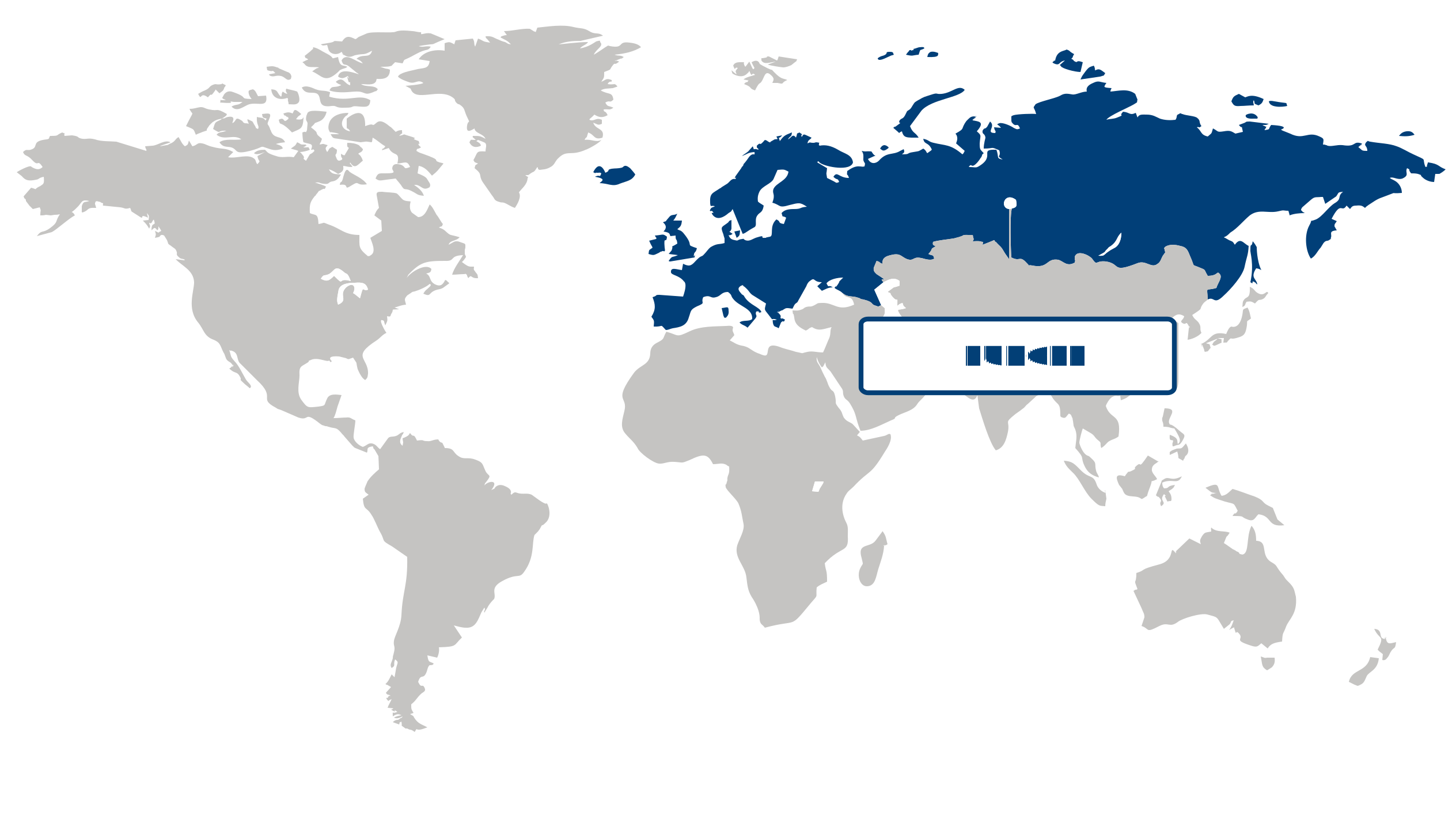
Largest Region
Europe
36.8% Market Share in 2025
Europe dominated the bladeless wind turbines market with a substantial 36.8% share of the global market in 2025. This leadership stems from the region's combination of advanced technological capabilities and favorable environmental conditions for wind energy deployment. Countries such as Germany and France have leveraged cutting-edge innovations in turbine design and materials to enhance efficiency and durability, aligning with the European Union’s stringent sustainability and carbon reduction targets. The proactive regulatory frameworks and substantial investments in renewable infrastructure reported by the European Commission further underpin this dominant position. Additionally, growing consumer and corporate preferences for green energy contribute to the robust demand environment. These factors collectively create a resilient and dynamic market landscape, positioning Europe as a pivotal arena for ongoing advancements and expansions in bladeless wind turbine technologies.
Germany anchors the European bladeless wind turbines market, driven by its highly developed renewable energy sector and strong governmental incentives. The country’s Energiewende policy, supported by the Federal Ministry for Economic Affairs and Climate Action, fosters innovation and deployment of environmentally sound solutions, including bladeless turbines suited to its varied topography and wind conditions. Leading firms like Vortex Bladeless have publicly announced pilot projects and collaborations within Germany, highlighting its role as a testing ground for new technologies. This environment enables Germany to convert technological potential into tangible market growth, reinforcing the broader European market’s vitality.
France holds a strategic position in the European bladeless wind turbines market, capitalizing on national commitments to diversify renewable energy sources and reduce fossil fuel reliance. The French government’s multi-year energy plan, overseen by the Ministry of Ecological Transition, prioritizes investments in wind technologies that are less intrusive and more adaptable to complex environmental zones. Companies such as Blue Turtle Energy have emphasized France’s blend of favorable coastal winds and supportive public policies in recent press releases. France’s approach complements Germany’s advancements, collectively fueling Europe's sustained leadership and unlocking continued investment and innovation opportunities across the region.
Asia Pacific Market Analysis:
Asia Pacific emerged as the fastest-growing region in the bladeless wind turbines market, registering a rapid CAGR of 12.6%. This growth is primarily propelled by intensifying government initiatives aimed at renewable energy generation and urban energy infrastructure development. Governments across Asia Pacific are aggressively promoting clean energy alternatives to mitigate urban pollution and enhance energy security, evident from substantial investments and supportive policy frameworks. For instance, the Asian Development Bank has been actively funding sustainable urban energy projects in several countries, fostering adoption of bladeless wind technology. Additionally, increasing urbanization and the associated demand for compact, low-noise, and environmentally friendly energy solutions position the region favorably. The integration of smart city concepts further augments the need for such innovative wind solutions, creating a fertile landscape for market expansion. These dynamics collectively offer sustained opportunities for stakeholders investing in the region's bladeless wind turbines market.
Japan holds a pivotal role within Asia Pacific’s bladeless wind turbines market, driven by its advanced regulatory environment and strong commitment to renewable energy as part of national energy security goals. The Japanese government’s Feed-in Tariff program and sustainable urban development policies have encouraged widespread adoption of bladeless wind technologies, particularly in densely populated areas where noise and space constraints are critical concerns. Companies like Mitsubishi Heavy Industries have spearheaded technological innovations, incorporating bladeless turbines into urban infrastructure. Additionally, Japan’s consumer preference for clean, quiet energy solutions aligns well with bladeless designs, fostering a conducive market environment. This positions Japan as a key contributor to Asia Pacific’s overall momentum in transforming urban energy landscapes through bladeless wind power.
China, as a dominant player in Asia Pacific’s bladeless wind turbines market, capitalizes on its expansive urbanization and aggressive renewable energy targets set by the National Energy Administration. China’s vast investments in green energy infrastructure and mandating stricter emissions standards have accelerated the deployment of bladeless turbines in urban and industrial zones. Corporations like Goldwind are actively expanding their bladeless technology portfolios, responding to demand for safer and more bird-friendly turbines. Moreover, China’s focus on reducing reliance on coal and improving air quality supports long-term growth, as bladeless turbines offer scalable, maintenance-efficient solutions suitable for dense urban settings. This establishes China not only as a manufacturing hub but also as a major market driving Asia Pacific’s leadership in bladeless wind turbine deployment.
North America Market Trends:
North America maintained a notable presence in the bladeless wind turbines market, underpinned by increasing emphasis on sustainable energy and stringent environmental regulations. The region’s mature energy infrastructure and growing consumer preference for innovative, low-impact renewable technologies foster market traction. Key players such as Vortex Bladeless have leveraged advanced aerodynamics and noise reduction to align with North American urban and suburban deployment trends, as highlighted in their 2023 corporate release. Additionally, supportive policies from the U.S. Department of Energy and regional incentives in states like California drive demand. The region’s expanding clean tech talent pool and robust supply chain networks further enhance competitive positioning. Given these factors, North America offers significant opportunities for scalable adoption of bladeless wind technology, particularly in residential and commercial segments emphasizing minimal maintenance and ecological compatibility.
The U.S. plays a pivotal role in the bladeless wind turbines market as a hub for innovation and early adoption, driven by progressive regulatory frameworks and heightened consumer environmental consciousness. The U.S. Environmental Protection Agency’s initiatives promoting sustainable energy solutions have catalyzed market interest, with companies like Vortex Bladeless announcing pilot projects across the Northeast and West Coast, reflecting strong regional demand. Moreover, growing urbanization and increasing community opposition to traditional wind turbines due to noise and wildlife impact bolster interest in bladeless options. Strategic investments in clean energy infrastructure, exemplified by funding from the Department of Energy’s Office of Energy Efficiency and Renewable Energy (EERE), position the U.S. as a key driver of regional growth. This leadership role reinforces North America’s overall market potential by validating bladeless wind turbines as a viable, community-friendly renewable alternative.
No card data available for this language/report.
Segment Leadership and Growth Trends
Darrieus wind turbine dominated the bladeless wind turbines market in 2025, primarily due to its superior aerodynamic efficiency and adaptability across varied wind conditions. This segment benefits from advanced engineering designs that enhance energy capture even in fluctuating urban and rural environments, meeting growing demand for flexible, low-noise solutions. The World Wind Energy Association highlights Darrieus turbines as pivotal in next-generation renewables, reflecting regulatory incentives in regions prioritizing reduced environmental impact. For established firms, this segment offers differentiation through patented technology, while new entrants can leverage modular, scalable designs. Given ongoing research by institutes like the National Renewable Energy Laboratory focusing on improving turbine robustness and integration with smart grids, the Darrieus segment is poised to maintain its leading role amidst rising global sustainability commitments.
Analysis by Application
The commercial segment represented the largest share in the bladeless wind turbines market in 2025, driven by favorable economics and increasing corporate sustainability mandates promoting clean energy deployment in business infrastructures. Demand is propelled by businesses aiming to reduce carbon footprints and comply with evolving regulations, as evidenced by the US Green Building Council's LEED certification encouraging on-site renewable installations. Enhanced supply chain synchronization enables quicker project rollouts, while competitive pressures push innovation in turbine aesthetics and maintenance. This segment presents significant growth opportunities for suppliers offering turnkey solutions tailored to commercial real estate portfolios. Continued emphasis on ESG (Environmental, Social, and Governance) criteria assures ongoing relevance of the commercial market, especially as digital transformation facilitates optimized energy management and reporting frameworks in corporate environments.
Analysis by Power Output
Small-scale (less than 10 kW) held the largest share in the bladeless wind turbines market in 2025, attributed to its suitability for residential and urban installations where space constraints and noise considerations prevail. This segment aligns with increasing decentralized energy trends and consumer preferences for sustainable, self-sufficient power solutions, supported by government programs such as Germany’s KfW Renewable Energy incentives. Design innovations improving efficiency and ease of installation further enhance adoption in densely populated areas. Small-scale turbines also open avenues for emerging players to access niche markets through customizable systems. With urbanization accelerating worldwide and sustainability mandates encouraging green energy at the microgrid level, the small-scale segment is expected to remain a critical market pillar, integrating seamlessly with residential solar and battery storage technologies.
| Report Segmentation | |||
| Segment | Sub-Segment | Largest Segment | Fastest Growing Segment |
|---|---|---|---|
| Turbine Type | Vertical Axis Wind Turbine (VAWT), Savonius Wind Turbine, Darrieus Wind Turbine | ||
| Application | Residential, Commercial, Industrial | ||
| Power Output | Small-scale (less than 10 kW), Medium-scale (10-100 kW), Large-scale (over 100 kW) | ||
 Read our Research Approach
Competitive Landscape and Market Positioning
Key players in the bladeless wind turbines market include Vortex Bladeless, SheerWind, Aria Structures, Enessere, Oscilla Power, Future Fibres, Hyet, CalmWind, Kitepower, and KNC Power. Vortex Bladeless from Spain stands out for pioneering vortex-induced vibration technology, shaping industry standards. US-based SheerWind and Oscilla Power leverage advanced engineering to enhance efficiency and deployment scalability. European entities like Aria Structures and Enessere integrate design innovation with sustainability, while CalmWind and Kitepower emphasize modular and flexible solutions. Future Fibres and Hyet contribute through cutting-edge materials and aerodynamics, whereas South Korea’s KNC Power extends regional innovation. Collectively, these companies influence diverse segments within the bladeless market, competing through differentiated technological approaches and strategic advancements.The competitive landscape among these ten companies is dynamic, with frequent collaborative efforts enhancing core technologies and accelerating product rollout. Strategic alignments facilitate access to advanced R&D capabilities, enabling optimized turbine designs with improved reliability and cost efficiencies. Newer entrants often form alliances to challenge established incumbents, pushing innovation in energy conversion and power density. Incremental product introductions demonstrate responsiveness to varying environmental conditions and customer requirements. This environment fosters rapid refinement and adoption of bladeless solutions, solidifying market positioning through the convergence of engineering expertise and responsive development cycles, thus maintaining high barriers to entry despite growing competition.
Strategic / Actionable Recommendations for Regional Players
In North America, companies should consider forming cross-sector partnerships with technology innovators in energy storage and IoT to amplify system integration and market reach. Leveraging advanced data analytics could enhance performance monitoring, supporting differentiation amidst competitive pressure.
Within the Asia Pacific region, tapping into local manufacturing ecosystems will reduce costs and foster customization suitable for diverse climatic conditions. Collaborations with renewable infrastructure developers can unlock new sub-segments, particularly in urban and off-grid applications.
European players would benefit from intensifying cooperation with environmental agencies to align product development with aggressive sustainability goals. Emphasizing modular, low-maintenance designs can respond to regulatory shifts and growing demand for resilient energy solutions across varied geographies.
Why Choose Us
Specialized Expertise: Our team comprises industry experts with a deep understanding of your market segment. We bring specialized knowledge and experience that ensures our research and consulting services are tailored to your unique needs.
Customized Solutions: We understand that every client is different. That's why we offer customized research and consulting solutions designed specifically to address your challenges and capitalize on opportunities within your industry.
Proven Results: With a track record of successful projects and satisfied clients, we have demonstrated our ability to deliver tangible results. Our case studies and testimonials speak to our effectiveness in helping clients achieve their goals.
Cutting-Edge Methodologies: We leverage the latest methodologies and technologies to gather insights and drive informed decision-making. Our innovative approach ensures that you stay ahead of the curve and gain a competitive edge in your market.
Client-Centric Approach: Your satisfaction is our top priority. We prioritize open communication, responsiveness, and transparency to ensure that we not only meet but exceed your expectations at every stage of the engagement.
Continuous Innovation: We are committed to continuous improvement and staying at the forefront of our industry. Through ongoing learning, professional development, and investment in new technologies, we ensure that our services are always evolving to meet your evolving needs.
Value for Money: Our competitive pricing and flexible engagement models ensure that you get maximum value for your investment. We are committed to delivering high-quality results that help you achieve a strong return on your investment.
Select Licence Type

