Boilers and Steam Generators Market Size & Forecasts 2026-2035, By Segments (Boiler Type, Pressure Range, Application, Fuel Type, Capacity), Growth Opportunities, Innovation Landscape, Regulatory Shifts, Strategic Regional Insights (U.S., Japan, China, South Korea, UK, Germany, France), and Competitive Dynamics (Viessmann, Bosch Thermotechnology, Miura, Cleaver-Brooks, Babcock & Wilcox)
Jump to content
Market Size and Growth Outlook
Boilers and Steam Generators Market size is forecasted to reach USD 76.95 billion by 2035, rising from USD 53.51 billion in 2025, at a CAGR of more than 3.7% between 2026 and 2035. In 2026, revenue is projected at USD 55.19 billion.
Get more details on this report
Request Free Sample ReportBoilers and Steam Generators Market Intelligence Snapshot
Regional Market Dynamics
Segment Momentum
Market Expansion Drivers
Leading Market Participants
Global Market Forecast Snapshot
Market Outlook
Regional and Segment Outlook
Market Growth Drivers and Industry Trends
The boilers and steam generators market is increasingly shaped by surging demand within industrial power generation and process industries. Heavy industries such as chemicals, petroleum refining, and pulp and paper rely on high-capacity steam generation, driving procurement of advanced boilers. The U.S. Energy Information Administration highlights a rising utilization of steam-based processes in power plants, reflecting broader industrial expansion and infrastructure upgrades. This trend offers established manufacturers opportunities to supply tailored, high-performance equipment while incentivizing new entrants to focus on niche industrial applications. As industries prioritize operational efficiency and reliability, the market will continue to evolve around robust steam generation solutions that align with demanding process requirements.
Innovation in Energy-Efficient Boiler Technologies
Technological innovation towards energy efficiency is a pivotal growth driver in the boilers and steam generators market. Companies like Bosch Thermotechnology and Cleaver-Brooks have introduced advanced designs that optimize fuel consumption and reduce emissions, prompted by increasingly stringent regulations from agencies such as the U.S. Environmental Protection Agency (EPA). Energy-efficient boilers align with corporate sustainability goals and regulatory compliance, pushing market adoption. This shift opens strategic avenues for manufacturers to invest in R&D and digital integration, enabling product differentiation. As regulatory frameworks tighten and operational costs grow, energy-efficient solutions will become standard, driving sustained R&D investments and competitive positioning.
Expansion in Emerging Markets’ Industrial and Residential Sectors
Emerging markets’ rapid industrialization and urbanization are fueling growth in the boilers and steam generators market. Regions like Southeast Asia and Latin America witness rising demand from expanding manufacturing hubs and improving residential infrastructure, according to the International Energy Agency (IEA). Enhanced electrification efforts and government-backed initiatives to modernize energy systems further stimulate market uptake. This presents a dual opportunity: established players can leverage existing supply chains to scale operations, while new entrants can tap into underserved segments with cost-effective and adaptable product offerings. The continual infrastructure development in these markets will ensure steady demand for boilers and steam generators aligned with local energy needs and economic growth trajectories.
Industry Restraints:
Environmental Regulatory Pressures
Stringent environmental regulations significantly constrain the boilers and steam generators market by imposing costly emission controls and fuel-switching mandates, which slow new installations and upgrades. Regulatory bodies such as the U.S. Environmental Protection Agency (EPA) enforce standards including the Boiler Maximum Achievable Control Technology (MACT) rules, demanding reductions in hazardous air pollutants. This compels operators to invest heavily in emission control technologies or transition to renewable alternatives. As highlighted in the EPA’s compliance reports, many industrial users delay modernization due to high capital expenditures and complex permitting processes. For market players, this creates barriers to entry and pressures incumbent suppliers to innovate toward cleaner solutions rapidly. Looking ahead, as global climate commitments intensify, regulatory stringency will deepen, prolonging operational challenges and accelerating a shift toward sustainable boiler technologies, reshaping competitor dynamics and technology roadmaps.
Volatile Raw Material Costs
Fluctuating costs of key inputs such as steel and specialty alloys sharply impede market growth by increasing production expenses and squeezing manufacturer margins. The World Steel Association’s data illustrate recurring price volatility driven by global supply-demand imbalances, trade tariffs, and geopolitical tensions. This unpredictability hinders strategic planning for both established manufacturers and startups, forcing price adjustments that dampen buyer confidence. For instance, boiler supplier Babcock & Wilcox noted in their 2023 earnings call that material cost inflation contributed to delayed project orders and renegotiated contracts. Companies are thus compelled to adopt cost mitigation practices including sourcing diversification and long-term procurement agreements. Given ongoing geopolitical uncertainties and raw material market disruptions, input cost volatility will remain a pivotal constraint, necessitating agile supply chain management and flexible pricing models to sustain competitiveness.
| Growth Driver | Impact on CAGR | Regulatory Influence | Geographic Relevance | Adoption Rate | Impact Timeline |
|---|---|---|---|---|---|
| Rising demand in industrial power generation and process industries | 1.50% | Short term (≤ 2 yrs) | North America, Europe | Low | Fast |
| Innovation in energy-efficient boiler technologies | 1.30% | Medium term (2–5 yrs) | Asia Pacific, Europe | Medium | Moderate |
| Expansion in emerging markets’ industrial and residential sectors | 0.90% | Long term (5+ yrs) | Asia Pacific, Latin America; Spillover: Europe | Low | Moderate |
Unlock insights tailored to your business with our bespoke market research solutions.
Click to get your customized report now.
Regional Demand Dynamics
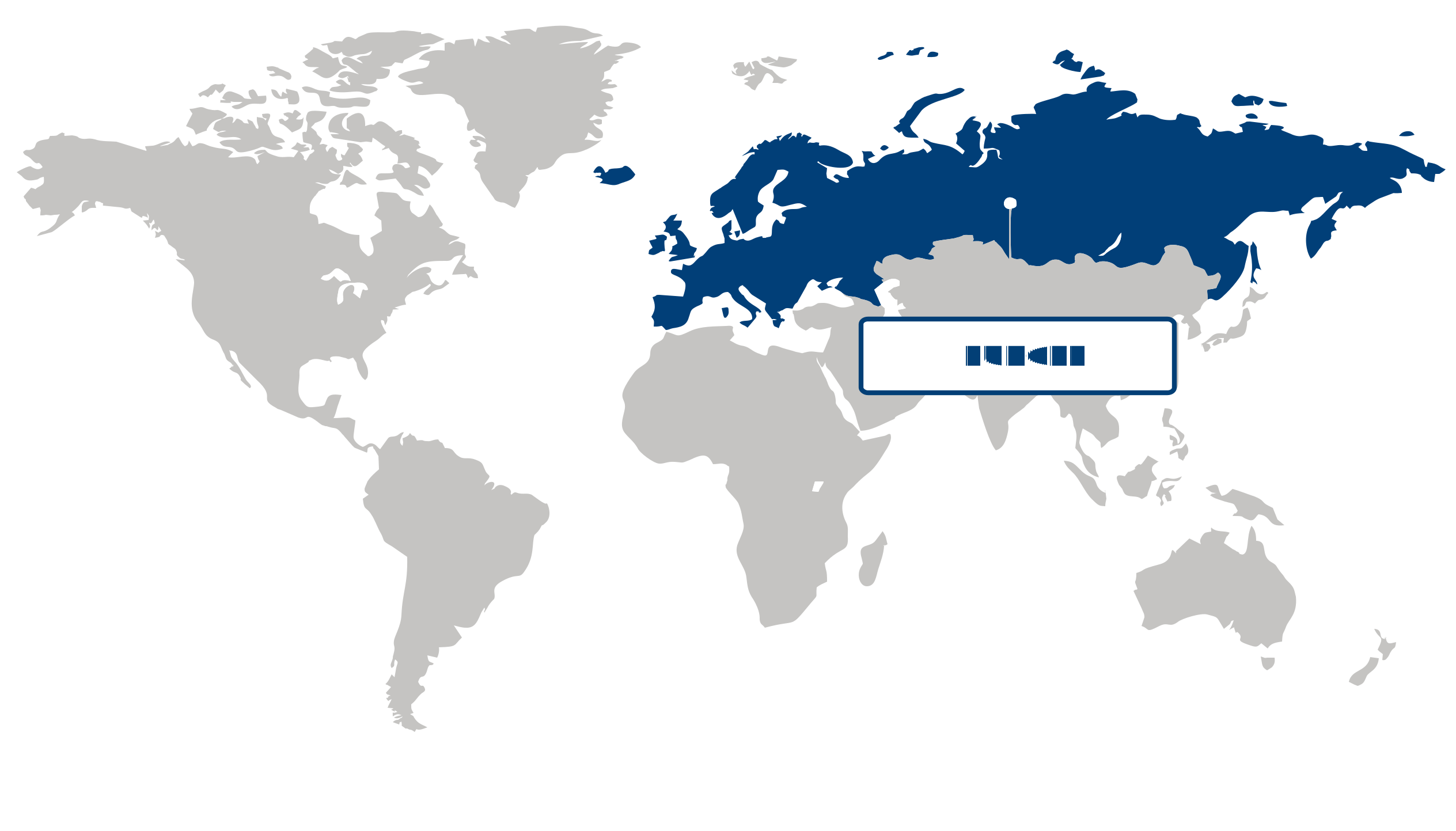
Europe dominated the boilers and steam generators market in 2025, representing more than 40% of the global share. The region's leadership stems from its robust industrial and commercial infrastructure, which consistently drives substantial demand for efficient steam generation solutions. Retrofit demand also plays a critical role, as many European countries modernize legacy systems to meet stricter energy efficiency and emissions standards. According to the European Boiler Manufacturers Association, ongoing regulatory tightening and sustainability initiatives have accelerated the adoption of advanced boilers, particularly in manufacturing and district heating sectors. Europe's strong focus on reducing carbon footprints and optimizing energy use enhances the appeal of innovative boiler technologies. This combination of infrastructural resilience, evolving policy frameworks, and retrofit activities positions Europe as a promising arena for sustained growth and innovation in the boilers and steam generators market.
Germany anchors the European boilers and steam generators market, leveraging its extensive industrial base and commitment to energy transformation. The country's stringent environmental regulations, as outlined by the German Environment Agency (UBA), have prompted industries to adopt cleaner, high-efficiency boilers. France complements this trend with its aggressive retrofit programs targeting public and private sector facilities, bolstered by incentives from the French Ministry for Ecological Transition. These programs aim to replace outdated boilers with modern steam generators that offer reduced emissions and enhanced reliability. The emphasis on energy efficiency and climate goals in both countries underlines their critical roles within Europe's broader market landscape, driving competitive innovation and reinforcing Europe’s leadership in the boilers and steam generators sector.
Asia Pacific Market Analysis:
Asia Pacific emerged as the fastest-growing region in the boilers and steam generators market, registering a robust CAGR of 5.18%. This impressive growth is driven primarily by rapid industrialization, expansive power generation projects, and surging energy demand across the region. Countries in APAC are witnessing heightened investments in manufacturing hubs and infrastructure development, amplifying the need for efficient steam generation solutions. Moreover, a strategic shift towards sustainable energy practices and stringent regulatory frameworks encouraging energy-efficient technologies are adding momentum. For example, initiatives by the Asian Development Bank promoting cleaner energy projects have catalyzed adoption of advanced boilers. As digital transformation integrates into industrial operations, smarter and optimized steam generation systems are becoming critical. The region’s diverse economy coupled with improving supply chain resilience positions APAC as a lucrative market, with substantial opportunities fueled by ongoing urbanization and expanding power sectors.
China plays a pivotal role in Asia Pacific’s boilers and steam generators market owing to its vast industrial base and aggressive power infrastructure expansion. The country’s commitment to upgrading energy infrastructure, highlighted by the National Energy Administration’s push for high-efficiency thermal power plants, has accelerated adoption of advanced steam systems. Manufacturers like Dongfang Electric are innovating with eco-friendly boilers, aligning with China’s broader environmental policies targeting emissions reduction. This dynamic fosters robust demand from power plants and heavy industries, shaping the competitive landscape. In parallel, incentives for renewable integration are stimulating hybrid boiler technologies, helping companies capture emerging niches. Consequently, China’s scale and regulatory rigor reinforce Asia Pacific’s leadership, signaling extensive regional investment potential.
Japan’s role in the Asia Pacific boilers and steam generators market is distinguished by its technological sophistication and focus on energy efficiency. Known for pioneering high-performance boilers, Japanese firms such as Mitsubishi Heavy Industries emphasize innovation aligned with sustainability goals. Japan’s industrial energy demand is influenced by policies from the Ministry of Economy, Trade and Industry promoting renewable energy integration and carbon neutrality by 2050. This regulatory environment encourages modernization of steam generation systems, integrating IoT for predictive maintenance and operational efficiency. Additionally, supply chain agility and a skilled workforce enable rapid adaptation of cutting-edge technologies. Japan’s emphasis on quality and environmental compliance enhances its market influence, complementing regional trends and underscoring Asia Pacific’s trajectory as a hub for advanced, sustainable steam generation solutions.
North America Market Trends:
North America maintained a notable presence in the boilers and steam generators market, driven by its diverse industrial base and increasing emphasis on energy-efficient technologies. Rising investment in infrastructure modernization, coupled with stringent environmental regulations enacted by the U.S. Environmental Protection Agency, has encouraged the adoption of low-emission and fuel-flexible boiler systems. Additionally, industrial sectors such as chemicals, food processing, and power generation have shown growing preference for smart, digitally integrated steam generators to enhance operational efficiency and reduce downtime, as highlighted in Honeywell’s recent press release on advanced control systems. Robust supply chain networks and skilled labor availability further underpin market resilience. With ongoing regulatory tightening and innovation in sustainable heating solutions, North America is positioned to capture significant growth opportunities through upgraded installations and retrofitting projects.
The U.S. plays a pivotal role in the boilers and steam generators market within North America, propelled by its large-scale industrial demand and progressive energy policies promoting cleaner technologies. The Department of Energy’s Better Plants Program has accelerated energy performance improvements, encouraging manufacturers to integrate high-efficiency steam systems. General Electric’s recent announcement on deploying modular boilers with improved heat recovery exemplifies technological adoption aligned with regulatory incentives. Moreover, the U.S. industrial sector’s shift towards electrification and biomass co-firing reflects evolving market dynamics seen in states with renewable portfolio standards, reinforcing competitive intensity. This leadership in innovation and sustainability positions the U.S. as a critical growth driver in the North American boilers and steam generators market landscape.
| Parameter | North America | Asia Pacific | Europe | Latin America | MEA |
|---|---|---|---|---|---|
| Innovation HubiScaleNascentDeveloping Advanced | |||||
| Cost-Sensitive RegioniScaleLowMedium High | |||||
| Regulatory EnvironmentiScaleRestrictiveNeutral Supportive | |||||
| Demand DriversiScaleWeakModerate Strong | |||||
| Development StageiScaleEmergingDeveloping Developed | |||||
| Adoption RateiScaleLowMedium High | |||||
| New Entrants / StartupsiScaleSparseModerate Dense | |||||
| Macro IndicatorsiScaleWeakStable Strong |
Boilers and Steam Generators Market Share (%), by Boiler Type, 2026
Go beyond the chart, access full insights & data tables
Request Free Sample ReportFiretube boilers held the largest share in the boilers and steam generators market in 2025, driven by their simple design, high reliability, and lower maintenance costs relative to watertube and electric alternatives. This segment benefits from user preferences for dependable, cost-effective solutions that minimize operational disruptions, as reflected in Endress+Hauser and Spirax Sarco’s operational reliability reports. The straightforward engineering of firetube boilers aligns well with long-established manufacturing and energy supply chain infrastructures, enabling swift installation and servicing. These attributes create strategic advantages for both leading manufacturers and new entrants focusing on value and ease of maintenance. Given ongoing emphasis on operational efficiency and sustainable asset management, the firetube segment is poised to maintain prominence, supported by continuous incremental innovations and consistent demand in traditional heating and power industries.
Analysis by Pressure Range
Low pressure (0-150 psi) systems represented the largest share in the boilers and steam generators market in 2025, largely due to widespread adoption in commercial and residential heating applications. Their dominance is underpinned by evolving building codes and energy efficiency standards promoted by agencies such as the U.S. Department of Energy, encouraging safer and more efficient low-pressure installations. This segment’s prominence aligns with increasing urbanization and the retrofit of aging infrastructure with user-friendly, compliant technologies. Market leaders benefit from broad, consistent demand and simplified regulatory approval processes, while new players can capitalize on modular, scalable solutions. Low-pressure boilers’ adaptability and compliance with stringent environmental regulations ensure their sustained relevance amid shifting energy policies and expanding clean energy mandates across multiple regions.
Analysis by Application
The industrial segment dominated the boilers and steam generators market in 2025, largely driven by robust demand in process heating and power generation sectors requiring consistent, high-capacity steam supply. This segment benefits from industrial energy efficiency initiatives and stringent emission regulations established by bodies such as the International Energy Agency and EPA, which have accelerated upgrades to advanced steam technologies. Major industrial users prioritize reliability and integration with digital monitoring systems, as showcased in Siemens and GE’s industrial solutions announcements. The scale and complexity of industrial applications create opportunities for both incumbent suppliers offering customized systems and technology innovators focusing on automation and emissions control. Given continuous industrial expansion and modernization efforts, the industrial segment is expected to retain market leadership with a focus on sustainability and operational excellence.
| Segment | Sub-Segment | Largest Segment | Fastest Growing |
|---|---|---|---|
| Boiler Type | Firetube Boilers, Watertube Boilers, Electric Boilers | ||
| Pressure Range | Low Pressure (0-150 psi), Medium Pressure (150-900 psi), High Pressure (Over 900 psi) | ||
| Application | Industrial, Commercial, Residential | ||
| Fuel Type | Natural Gas, Coal, Oil, Biomass, Electricity | ||
| Capacity | Small (Up to 500,000 BTU/hr), Medium (500,000 - 1,000,000 BTU/hr), Large (Over 1,000,000 BTU/hr) |
Competitive Landscape and Market Positioning
The competitive landscape reflects dynamic efforts among these firms to consolidate leadership via integrated solutions and advanced product portfolios. By fostering technological enhancements and pursuing targeted alliances, they reinforce product differentiation and address shifting client demands in energy-efficient steam generation. Investments focus on modular designs and digital integration, supporting reliability and operational control improvements. Strategic moves like cross-border collaborations and selective acquisitions have enhanced market penetration, particularly in industrial and commercial sectors with tightening environmental regulations, thereby shaping an innovation-driven competitive terrain.
Strategic / Actionable Recommendations for Regional Players
In North America, companies could benefit from deepening partnerships with technology providers specializing in IoT and predictive maintenance to boost operational efficiency and reduce downtime. Emphasizing solutions that comply with stringent emissions regulations can differentiate offerings in industrial sectors focused on decarbonization efforts.
In the Asia Pacific region, players may strengthen presence by aligning with government initiatives targeting sustainable infrastructure development and expanding modular boiler systems tailored for small-to-medium enterprises. Collaboration with local technology innovators can accelerate the adoption of energy-saving features and digital controls to capture high-growth sub-segments.
European companies might advance their market stance by integrating renewable energy compatibility into their portfolio and capitalizing on regulatory frameworks that prioritize carbon-neutral technologies. Forming consortiums to co-develop next-generation boilers with enhanced fuel flexibility will position firms to meet evolving environmental standards and industrial demands.
| Company | Market Share | Company Revenue | Revenue CAGR (%) | Product Portfolio | Geographic Presence | Innovation / R&D Focus | Strategic Developments |
|---|---|---|---|---|---|---|---|
| No companies available. | |||||||
Customize Your Report
Explore examples of how this report can be tailored to different research needs, including custom segments, additional topics or chapters, and related reports. Click a section of the wheel or its numbered marker to explore the available options.
Boilers and Steam Generators Market — Custom Segments
| Segment | Sub-Segment |
|---|---|
| No segment data available. | |
Boilers and Steam Generators Market — Custom TOC
| Custom Chapter | Chapter Details |
|---|---|
| No custom TOC data available. | |
Need a different cut of the data?
Request Custom ResearchFrequently Asked Questions
How is the boilers and steam generators industry size expected to evolve during the forecast period?
Which part of the world shows the greatest dominance in the boilers and steam generators market?
In which region is the boilers and steam generators sector expanding at the quickest pace?
Why is the firetube boilers segment leading in the boilers and steam generators industry?
Why does low pressure (0-150 psi) sub-segment dominate the pressure range segment of boilers and steam generators sector?
How much is the industrial segment expected to grow in the boilers and steam generators industry beyond 2025?
What factors give natural gas segment a competitive edge in the boilers and steam generators sector?
Which is the largest sub-segment within the capacity segment for boilers and steam generators industry?
What are the prominent companies operating in the boilers and steam generators landscape?
Our Clients
"The team at Fundamental Business Insights & Consulting demonstrated a commitment to excellence, not only in the quality of the report but also in their client-centric approach."
FANUC
"The level of detail in the market segmentation provided were particularly noteworthy. The detailed country-level insights were also very helpful."
B&R Industrial Automation GmbH
"The consultant took the time to understand our specific business objectives, ensuring that the reports were tailored to address our unique challenges and opportunities."
KUKA SE & Co. KGaA
Our Research Team & Methodology
Every Fundamental Business Insights report is built by a dedicated vertical research team, validated through a structured primary-and-secondary methodology, and reviewed for accuracy before it reaches you.
Delivery
Published
Available
Support
- Market Size & Forecast
- Market Segmentation
- Regional Analysis
- Growth Drivers & Challenges
- Market Dynamics
- Competitive Landscape
- Company Profiles
- Competitive Benchmarking
- Mergers & Acquisitions
- Market Share Analysis or Key Company Strategies
- Value Chain Analysis
- Porter's Five Forces
- PESTLE Analysis
- Pricing Trends
- Supply-Demand Analysis
- Technology Landscape
- Regulatory Landscape
- Investment & Funding Landscape
- Emerging Opportunities
- Future Market Outlook