Botanicals and Acupuncture Market Size & Growth Forecast 2027–2036, By Segments (Distribution Method, Intervention Scope), Regional Demand Trends (North America, Asia Pacific, Europe), Key Country Insights (U.S., Japan, South Korea, Germany, France, Italy), and Competitive Landscape
Jump to content
Market Size and Growth Outlook
Botanicals and Acupuncture Market size was around USD 99.5 billion in 2026 and is slated to grow at a 20.14% CAGR from 2027 to 2036, attaining USD 623.3 billion by 2036. The industry revenue for 2027 is assessed at USD 116.38 billion.
Get more details on this report
Request Free Sample ReportBotanicals and Acupuncture Market Intelligence Snapshot
Regional Market Dynamics
- Europe held largest share due to strong acceptance of non-pharmaceutical wellness, mature complementary therapy networks, and integration of herbal and acupuncture into preventive care routines sustaining demand.
- Asia Pacific is projected 22.66% CAGR driven by cultural familiarity with traditional medicine, expanding practitioner access, broader distribution, and rising adoption in urban wellness and self-care.
Segment Momentum
- Direct Sales held a 70.46% market share in 2026 because practitioner-led distribution builds trust, enables personalized recommendations, provides immediate treatment access, and supports better patient education and adherence.
- Acupuncture is growing fastest as demand rises for practitioner-administered, non-pharmacological treatments that deliver personalized care through professional settings, supporting stronger adoption than botanicals.
Market Expansion Drivers
- Reverse pharmacology reducing botanical drug development costs and accelerating complementary therapy commercialization.
- Digital health platforms improving accessibility to acupuncture and botanical wellness services.
- Sustainable sourcing initiatives strengthening consumer trust in premium herbal therapeutic products.
Leading Market Participants
- Major players in the botanicals and acupuncture market include Pure Encapsulations, LLC (United States), LKK Health Products Group Limited (Hong Kong), Sheng Chang Pharmaceutical Co., Ltd. (Taiwan), Modern Acupuncture (United States), Ayush Ayurveda (India), Columbia Nutritional (United States), Herb Pharm, LLC (United States), Nordic Naturals, Inc. (United States), NatureKue, Inc. (United States).
Global Market Forecast Snapshot
Market Outlook
- 2026 Market Size: USD 99.5 billion
- 2027 Estimated Market Size: USD 116.38 billion.
- Projected Market Size: USD 623.3 billion by 2036
- Growth Forecast: 20.14% CAGR (2027-2036)
Regional and Segment Outlook
- Leading Regional Market: Europe
- High-Growth Regional Hub: Asia Pacific
- Core Revenue Segment: Direct Sales (Distribution Method) | Botanicals (Intervention Scope)
- Emerging Opportunity Segment: Distance Correspondence (Distribution Method) | Acupuncture (Intervention Scope)
Market Growth Drivers and Industry Trends
Reverse pharmacology reducing botanical drug development costs and accelerating complementary therapy commercialization
Reverse pharmacology is helping translate established traditional therapeutic practices into scientifically evaluated interventions by beginning with observed clinical effects and subsequently investigating their active mechanisms and constituents. This approach can improve the efficiency of botanical product development and, in turn, support the botanicals and acupuncture market by reducing some of the uncertainty associated with identifying promising therapeutic candidates. By connecting traditional use with pharmacological validation, researchers can prioritize botanical compounds with demonstrated therapeutic potential and improve the basis for product formulation and clinical evaluation. Greater scientific characterization can also facilitate regulatory discussions and commercialization of complementary therapies, while increasing acceptance among healthcare professionals and consumers seeking evidence-supported botanical treatment options.
Digital health platforms improving accessibility to acupuncture and botanical wellness services
Digital health platforms are expanding access to acupuncture consultations, wellness guidance, appointment scheduling, and botanical therapy services, creating new channels for engagement within the botanicals and acupuncture market. Virtual consultations and digital booking systems can reduce geographic and logistical barriers, particularly for consumers seeking practitioners or specialized wellness services outside major healthcare centers. Mobile applications and online platforms can also support treatment reminders, educational content, practitioner communication, and personalized wellness programs, encouraging users to maintain ongoing engagement with complementary therapies. The growing integration of digital tools into healthcare and wellness delivery is making these services more convenient while helping practitioners connect with broader consumer segments.
Sustainable sourcing initiatives strengthening consumer trust in premium herbal therapeutic products
Sustainable sourcing practices are becoming increasingly important for consumers who associate product quality with responsible cultivation, harvesting, processing, and supply-chain management, thereby supporting demand within the botanicals and acupuncture market. Ethical sourcing can help address concerns surrounding overharvesting, biodiversity loss, contamination, and inconsistent raw-material quality, particularly for herbal products positioned as premium therapeutic offerings. Greater transparency around the origin and handling of botanical ingredients can strengthen consumer confidence and differentiate products in a market where perceived authenticity and purity influence purchasing decisions. Producers that emphasize environmentally responsible cultivation and traceable sourcing can also appeal to wellness consumers who increasingly consider sustainability alongside therapeutic attributes when evaluating herbal products.
| Growth Driver | Impact on CAGR | Regulatory Influence | Geographic Relevance | Adoption Rate | Impact Timeline |
|---|---|---|---|---|---|
| Reverse pharmacology reducing botanical drug development costs and accelerating complementary therapy commercialization | 2.00% | High | North America, Europe, Asia Pacific | High | Mid Term |
| Digital health platforms improving accessibility to acupuncture and botanical wellness services | 1.70% | Moderate | North America, Asia Pacific | High | Near Term |
| Sustainable sourcing initiatives strengthening consumer trust in premium herbal therapeutic products | 1.30% | Moderate | Europe, Asia Pacific | Emerging | Long Term |
Unlock insights tailored to your business with our bespoke market research solutions.
Click to get your customized report now.
Regional Demand Dynamics
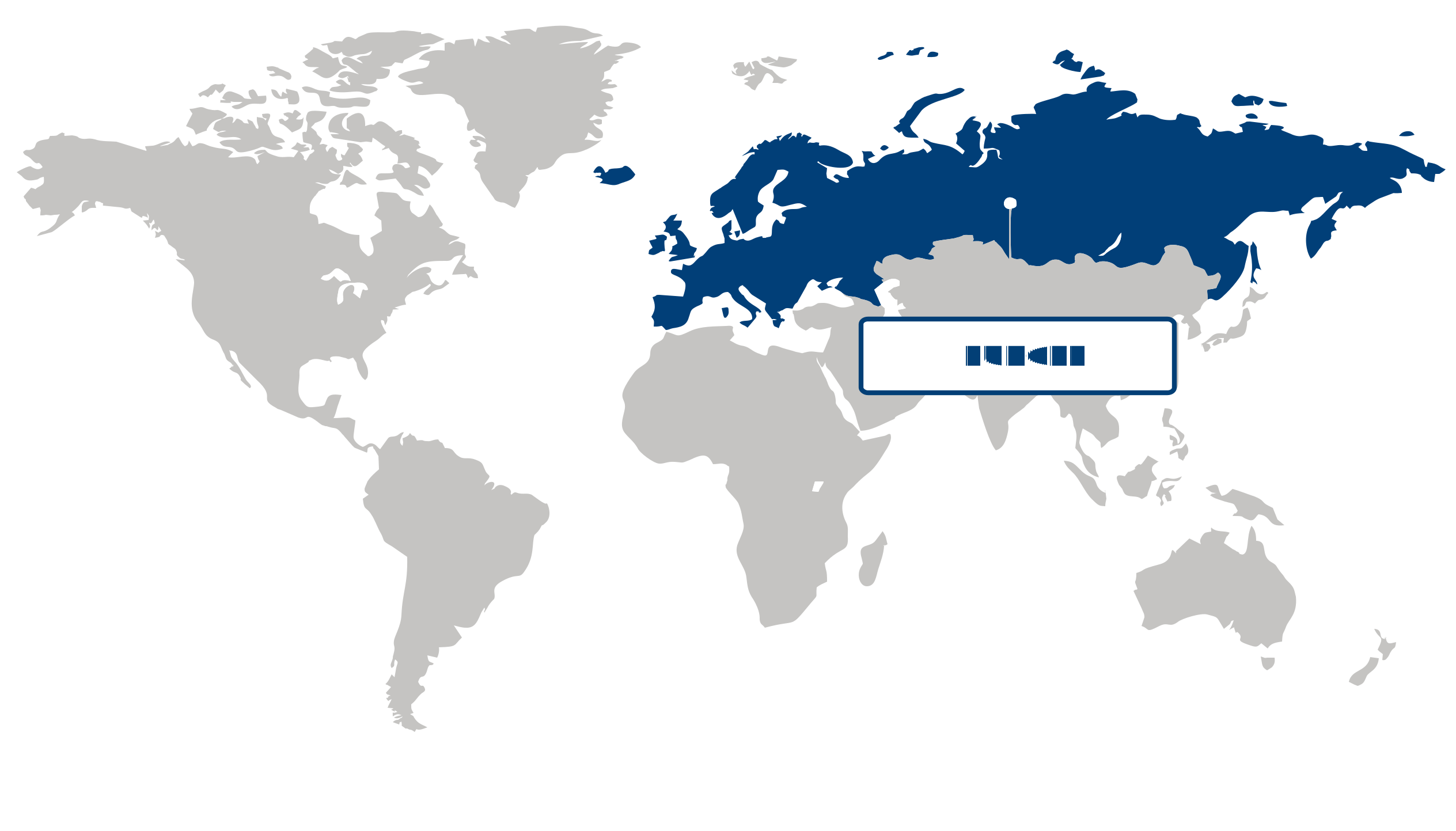
Europe (Largest Region)
Europe held the largest share of the botanicals and acupuncture market in 2026, reflecting the region's established acceptance of complementary and traditional healthcare approaches alongside conventional medical practices. Consumer interest in plant-based wellness solutions, preventive healthcare, and non-pharmacological therapies supports demand for botanical products and acupuncture services, while established regulatory frameworks and professional practitioner networks contribute to market maturity. Growing emphasis on holistic approaches to managing chronic conditions and maintaining overall well-being is further supporting continued utilization across European markets.
Asia Pacific (Fastest-Growing Region)
Asia Pacific is experiencing the fastest growth in the botanicals and acupuncture market, underpinned by the region's deep cultural familiarity with traditional medicine and increasing integration of complementary therapies into modern healthcare settings. Rising disposable incomes, expanding urban populations, and greater consumer interest in preventive and natural wellness solutions are broadening the addressable customer base. Improvements in healthcare infrastructure and increasing formalization of traditional medicine practices are also helping expand access and strengthen commercial opportunities for botanical and acupuncture-based treatments.
| Parameter | North America | Asia Pacific | Europe | Latin America | MEA |
|---|---|---|---|---|---|
| Innovation HubiScaleNascentDeveloping Advanced | |||||
| Cost-Sensitive RegioniScaleLowMedium High | |||||
| Regulatory EnvironmentiScaleRestrictiveNeutral Supportive | |||||
| Demand DriversiScaleWeakModerate Strong | |||||
| Development StageiScaleEmergingDeveloping Developed | |||||
| Adoption RateiScaleLowMedium High | |||||
| New Entrants / StartupsiScaleSparseModerate Dense | |||||
| Macro IndicatorsiScaleWeakStable Strong |
Key Country Insights
Germany 🇩🇪
Regulated Herbal PracticeGermany maintains strong demand for botanicals supported by established quality standards and professional healthcare integration. The botanicals and acupuncture market in Germany benefits from growing consumer interest in complementary therapies delivered within regulated clinical settings.
France 🇫🇷
Complementary Care ExpansionFrance is gradually expanding the role of botanicals and acupuncture within preventive health and supportive care services. The botanicals and acupuncture market in France emphasizes practitioner-led treatment plans and increasing consumer interest in holistic wellness approaches.
Italy 🇮🇹
Holistic Wellness DemandItaly continues to see broader adoption of botanical products and acupuncture as part of integrated wellness strategies. The botanicals and acupuncture market in Italy is supported by growing interest in natural therapeutic options that complement conventional medical care.
Japan 🇯🇵
Traditional Therapy IntegrationJapan combines longstanding traditional healthcare practices with modern clinical care in the botanicals and acupuncture market. Healthcare providers in Japan continue incorporating acupuncture and botanical therapies into supportive treatment strategies for pain management and overall wellness.
South Korea 🇰🇷
Traditional Medicine ModernizationSouth Korea strengthens the botanicals and acupuncture market by integrating traditional medicine with contemporary healthcare services. Providers in South Korea are enhancing treatment accessibility while supporting standardized practice and broader patient acceptance of complementary therapies.
United States 🇺🇸
Integrative Wellness AdoptionThe U.S. botanicals and acupuncture market is expanding through greater acceptance of complementary therapies alongside conventional healthcare. Providers in the U.S. are emphasizing evidence-informed treatment approaches, wellness programs, and personalized care for chronic health management.
Botanicals and Acupuncture Market Share (%), by Distribution Method, 2026
Go beyond the chart, access full insights & data tables
Request Free Sample ReportDistribution Method Segment Analysis: Direct Sales (Largest Segment) vs Distance Correspondence (Fastest-Growing Segment)
The direct sales segment held the largest share of the botanicals and acupuncture market at 70.46% in 2026, supported by the importance of personalized consultation and practitioner-led recommendations in traditional and complementary healthcare. Direct interactions allow practitioners and suppliers to better understand individual needs, recommend appropriate botanical products or treatment approaches, and establish greater confidence in product quality and usage. Consumer preference for trusted guidance, combined with established practitioner relationships and the continued role of specialized wellness providers, supports the prominence of direct sales within this market.
Distance correspondence is emerging as the fastest-growing distribution method as digital communication expands access to complementary healthcare services beyond conventional in-person settings. Remote consultations and correspondence-based interactions can improve convenience for consumers who face geographic, mobility, or scheduling limitations. Increasing adoption of digital healthcare engagement, greater consumer familiarity with remote consultations, and the ability to maintain practitioner communication without physical visits are supporting the expansion of this distribution channel.
Intervention Scope Segment Analysis: Botanicals (Largest Segment) vs Acupuncture (Fastest-Growing Segment)
Botanicals represented the largest share of the botanicals and acupuncture market in 2026, reflecting broad consumer interest in plant-derived approaches for wellness, preventive care, and management of various health concerns. Botanical interventions benefit from their long-standing use across traditional healthcare practices and increasing consumer attention toward natural and plant-based alternatives. Greater awareness of holistic wellness, expanding interest in personalized health approaches, and growing demand for products perceived as natural are reinforcing the position of botanical interventions across complementary healthcare settings.
Acupuncture is the fastest-growing intervention segment, supported by increasing acceptance of non-pharmacological approaches for pain management, stress reduction, and overall wellness. Greater awareness of acupuncture's potential role as a complementary therapy is encouraging adoption among consumers seeking alternatives or additions to conventional treatment approaches. The expansion of trained practitioners, wider integration of complementary therapies into wellness and healthcare practices, and growing interest in holistic treatment strategies are further supporting demand for acupuncture services.
| Segment | Sub-Segment | Largest Segment | Fastest Growing |
|---|---|---|---|
| Distribution Method | Direct Sales, E-Sales, Distance Correspondence | Direct Sales | Distance Correspondence |
| Intervention Scope | Botanicals, Acupuncture | Botanicals | Acupuncture |
Competitive Landscape and Market Positioning
Prominent players in the botanicals and acupuncture market:
1. Pure Encapsulations LLC (United States)
2. LKK Health Products Group Limited (Hong Kong)
3. Sheng Chang Pharmaceutical Co. Ltd. (Taiwan)
4. Modern Acupuncture (United States)
5. Ayush Ayurveda (India)
6. Columbia Nutritional (United States)
7. Herb Pharm LLC (United States)
8. Nordic Naturals Inc. (United States)
9. NatureKue Inc. (United States)
Rising consumer preference for holistic healthcare and alternative therapies is driving growth within the botanicals and acupuncture market. Providers are expanding herbal wellness formulations and integrative treatment approaches that emphasize preventive care and stress management. Increased acceptance of traditional healing practices alongside modern wellness programs is also encouraging broader market participation.
| Company | Market Share | Company Revenue | Revenue CAGR (%) | Product Portfolio | Geographic Presence | Innovation / R&D Focus | Strategic Developments |
|---|---|---|---|---|---|---|---|
| Pure Encapsulations LLC (United States) | |||||||
| LKK Health Products Group Limited (Hong Kong) | |||||||
| Sheng Chang Pharmaceutical Co. Ltd. (Taiwan) | |||||||
| Modern Acupuncture (United States) | |||||||
| Ayush Ayurveda (India) | |||||||
| Columbia Nutritional (United States) | |||||||
| Herb Pharm LLC (United States) | |||||||
| Nordic Naturals Inc. (United States) | |||||||
| NatureKue Inc. (United States). |
Customize Your Report
Explore examples of how this report can be tailored to different research needs, including custom segments, additional topics or chapters, and related reports. Click a section of the wheel or its numbered marker to explore the available options.
Botanicals and Acupuncture Market — Custom Segments
| Segment | Sub-Segment |
|---|---|
| Therapeutic Application | Pain Management, Mental & Neurological Health, Digestive Health, Women's Health, Chronic Disease Management, Other Applications |
| Practitioner Type | Acupuncturists, Naturopathic Practitioners, Traditional Medicine Practitioners, Integrative Medicine Practitioners, Other Practitioners |
| Payer Type | Self-Pay, Private Health Insurance, Public Health Insurance, Employer-Sponsored Coverage |
Botanicals and Acupuncture Market — Custom TOC
| Custom Chapter | Chapter Details |
|---|---|
| Integrative Medicine Adoption Analysis |
|
| Evidence-Based Alternative Therapy Landscape |
|
| Regulatory Pathways for Natural Therapies |
|
Need a different cut of the data?
Request Custom ResearchFrequently Asked Questions
What is the market valuation of botanicals and acupuncture?
What is the projected value of the botanicals and acupuncture industry by 2036?
How is reverse pharmacology accelerating commercialization in the botanicals and acupuncture market?
Why are digital platforms and sustainable sourcing becoming strategic growth drivers in the botanicals and acupuncture market?
Why is Direct Sales the leading distribution method in the botanicals and acupuncture market?
Why is Acupuncture the fastest-growing intervention scope in the botanicals and acupuncture market?
Why does Europe lead the botanicals and acupuncture market?
How is Asia Pacific driving growth in botanicals and acupuncture market?
Which companies dominate the botanicals and acupuncture landscape?
Our Clients
"The team took the time to understand our specific business needs and delivered a report that was well aligned with our objectives. Their expertise and understanding of the industry were clearly reflected in the quality and relevance of the insights provided."
Siemens Healthcare
"Our experience in acquiring the research report has been excellent. The depth of analysis, and actionable insights provided have been extremely valuable in supporting our ongoing R&D efforts."
GC Biopharma
"The report offered a comprehensive view of the market trends. The in-depth segmentation and analysis of emerging opportunities gave us a better understanding of the market."
Medtronic
Our Research Team & Methodology
Every Fundamental Business Insights report is built by a dedicated vertical research team, validated through a structured primary-and-secondary methodology, and reviewed for accuracy before it reaches you.
Delivery
Published
Available
Support
- Market Size & Forecast
- Market Segmentation
- Regional Analysis
- Growth Drivers & Challenges
- Market Dynamics
- Competitive Landscape
- Company Profiles
- Competitive Benchmarking
- Mergers & Acquisitions
- Market Share Analysis or Key Company Strategies
- Value Chain Analysis
- Porter's Five Forces
- PESTLE Analysis
- Pricing Trends
- Supply-Demand Analysis
- Technology Landscape
- Regulatory Landscape
- Investment & Funding Landscape
- Emerging Opportunities
- Future Market Outlook