Camera Straps Market Size & Growth Forecast 2027–2036, By Segments (Application, Distribution Channel, Material), Regional Demand Trends (North America, Asia Pacific, Europe), Key Country Insights (U.S., Japan, South Korea, Germany, France, Italy), and Competitive Landscape
Jump to content
Market Size and Growth Outlook
Camera Straps Market size was assessed at USD 409.2 million in 2026 and is poised to grow at a 12.07% CAGR between 2027 and 2036, surpassing USD 1.28 billion by 2036. The industry revenue for 2027 is calculated at USD 450.77 million.
Get more details on this report
Request Free Sample ReportCamera Straps Market Intelligence Snapshot
Regional Market Dynamics
- Europe held 37.63% share in 2026, supported by a strong photography culture, premium accessory demand, and mature retail and e-commerce distribution networks.
- Asia Pacific is growing at 14% CAGR, driven by rising camera adoption, content creation trends, expanding online retail channels, and demand for affordable ergonomic strap options.
Segment Momentum
- Commercial applications captured 60.59% of the market in 2026 as professional users prioritize durable, dependable camera straps for daily equipment handling, extended shooting sessions, and frequent replacement needs.
- Online sales are growing fastest because buyers benefit from broader product availability, easier comparison across brands and styles, and convenient access to specialized camera strap options not always stocked in stores.
Market Expansion Drivers
- Expanding vlogging and creator economy increasing demand for multifunctional camera carrying accessories.
- Rising consumer preference for customizable and fashion-oriented camera accessories driving premium strap sales.
- Growing adoption of sustainable materials encouraging demand for eco-friendly camera strap products.
Leading Market Participants
- Leading companies in the camera straps market include Fujifilm Corporation (Japan), Peak Design, Inc. (United States), BlackRapid, Inc. (United States), OP/TECH USA, Inc. (United States), Altura Photo (United States), COOPH Cooperative of Photography GmbH (Austria), Movo Photo (United States), Gordy’s Camera Straps (United States).
Global Market Forecast Snapshot
Market Outlook
- 2026 Market Size: USD 409.2 million
- 2027 Estimated Market Size: USD 450.77 million.
- Projected Market Size: USD 1.28 billion by 2036
- Growth Forecast: 12.07% CAGR (2027-2036)
Regional and Segment Outlook
- Leading Regional Market: Europe
- High-Growth Regional Hub: Asia Pacific
- Core Revenue Segment: Commercial (Application) | Offline (Distribution Channel) | Nylon (Material)
- Emerging Opportunity Segment: Personal (Application) | Online (Distribution Channel) | Cotton (Material)
Market Growth Drivers and Industry Trends
Expanding vlogging and creator economy increasing demand for multifunctional camera carrying accessories
The expansion of vlogging and the creator economy will drive the camera straps market as content creators increasingly require practical equipment for carrying cameras during extended recording sessions, travel, outdoor activities, and mobile production. Multifunctional straps that provide adjustable positioning, quick access, and secure attachment can improve handling efficiency while allowing creators to move between shooting locations more easily. The growing use of cameras across professional and independent content creation also supports demand for accessories that combine carrying comfort with operational flexibility, particularly among users who frequently switch between handheld shooting, stabilized recording, and stationary setups.
Rising consumer preference for customizable and fashion-oriented camera accessories driving premium strap sales
Rising consumer preference for personalized equipment will propel the camera straps market, as photographers and creators increasingly view carrying accessories as part of their overall visual style rather than purely functional equipment. Custom colors, patterns, materials, attachment configurations, and design details allow users to match straps with cameras, clothing, or personal branding. Premium products can also incorporate enhanced comfort, durability, and ergonomic construction, giving consumers greater justification for upgrading from basic accessories. This combination of personalization and functionality is creating opportunities for differentiated strap designs positioned toward style-conscious photography and content-creation users.
Growing adoption of sustainable materials encouraging demand for eco-friendly camera strap products
Growing adoption of sustainable materials is supporting the camera straps market as environmentally conscious consumers increasingly consider material sourcing and product lifecycle when selecting photography accessories. Manufacturers can respond through the use of recycled fabrics, responsibly sourced fibers, and other lower-impact materials while retaining the strength and flexibility required for secure camera carrying. Sustainability-focused product development also provides an avenue for brands to differentiate their offerings through material transparency, durable construction, and reduced reliance on conventional synthetic inputs, particularly among consumers who incorporate environmental considerations into their equipment purchases.
| Growth Driver | Impact on CAGR | Regulatory Influence | Geographic Relevance | Adoption Rate | Impact Timeline |
|---|---|---|---|---|---|
| Expanding vlogging and creator economy increasing demand for multifunctional camera carrying accessories | 2.00% | Low | North America, Asia Pacific, Europe | High | Near Term |
| Rising consumer preference for customizable and fashion-oriented camera accessories driving premium strap sales | 1.70% | Low | Europe, North America, Asia Pacific | High | Mid Term |
| Growing adoption of sustainable materials encouraging demand for eco-friendly camera strap products | 1.30% | Moderate | Europe, North America | Emerging | Long Term |
Unlock insights tailored to your business with our bespoke market research solutions.
Click to get your customized report now.
Regional Demand Dynamics
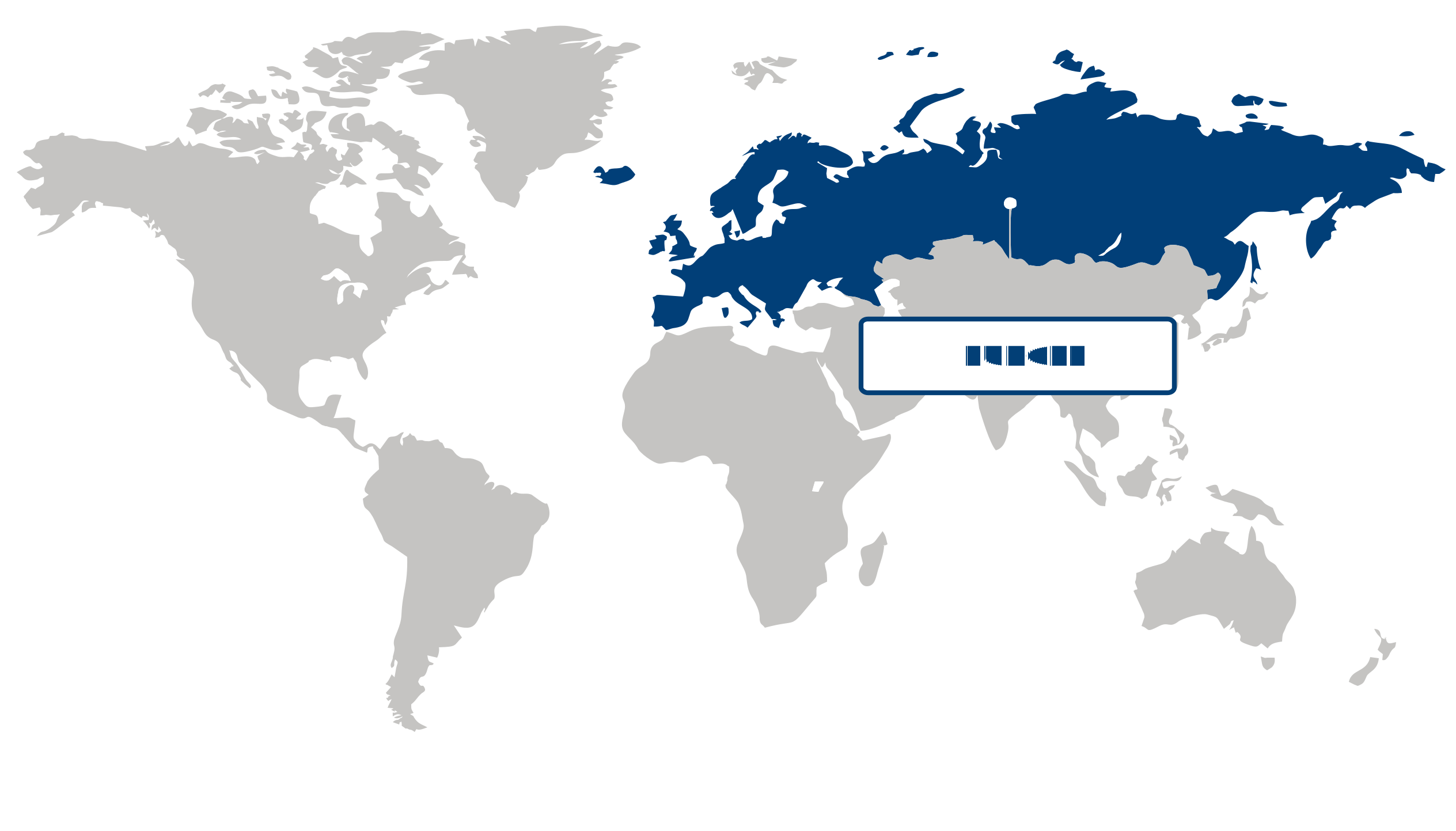
Europe (Largest Region)
Europe held the largest share of the camera straps market in 2026, accounting for 37.63% in 2026, supported by a well-established photography culture, strong tourism activity, and sustained interest in professional and enthusiast-grade camera equipment. Demand is reinforced by consumers seeking durable, comfortable, and ergonomically designed accessories for extended photography use. The region's established retail infrastructure and growing preference for premium, specialized photography accessories also support market development, while outdoor travel and cultural tourism create additional opportunities for camera strap adoption.
Asia Pacific (Fastest-Growing Region)
Asia Pacific is the fastest-growing regional market, driven by expanding consumer interest in photography, rising disposable incomes, and the increasing accessibility of digital cameras and related accessories. Growing tourism, social media-driven visual content creation, and expanding e-commerce platforms are broadening the customer base for camera straps. The region's expanding community of amateur photographers and content creators is also encouraging demand for products that combine functionality, comfort, and contemporary design.
| Parameter | North America | Asia Pacific | Europe | Latin America | MEA |
|---|---|---|---|---|---|
| Innovation HubiScaleNascentDeveloping Advanced | |||||
| Cost-Sensitive RegioniScaleLowMedium High | |||||
| Regulatory EnvironmentiScaleRestrictiveNeutral Supportive | |||||
| Demand DriversiScaleWeakModerate Strong | |||||
| Development StageiScaleEmergingDeveloping Developed | |||||
| Adoption RateiScaleLowMedium High | |||||
| New Entrants / StartupsiScaleSparseModerate Dense | |||||
| Macro IndicatorsiScaleWeakStable Strong |
Key Country Insights
Germany 🇩🇪
Precision outdoor camera gearGermany shows demand for camera straps designed for precision photography and outdoor durability. In Germany, users prioritize robust materials, secure mounting systems, and functional design suited for landscape, wildlife, and technical photography applications across varied environmental conditions.
France 🇫🇷
Artisan photography accessoriesFrance positions camera straps within a premium, design-led photography accessory segment. In France, demand is shaped by artistic and professional photography communities, favoring high-quality materials, handcrafted detailing, and accessories that complement creative and editorial photography workflows.
Italy 🇮🇹
Fashion-integrated camera gearItaly emphasizes camera straps that blend functionality with fashion aesthetics, reflecting the country’s strong design culture. In Italy, demand is driven by travel and lifestyle photography, where users prefer stylish, leather-based, or designer-inspired straps that complement both equipment and personal style.
Japan 🇯🇵
Compact ergonomic design focusJapan emphasizes compact, ergonomically designed camera straps suited for lightweight camera systems and urban photography. In Japan, demand is driven by street photography culture and travel-oriented use, with strong preference for minimalist, space-efficient, and highly functional accessory designs.
South Korea 🇰🇷
Trend-aligned camera accessoriesSouth Korea’s camera straps market is influenced by social media photography and lifestyle content creation. In South Korea, consumers prioritize visually appealing, customizable straps that combine functionality with fashion, reflecting the broader integration of photography into personal branding and digital storytelling.
United States 🇺🇸
Creator-led photography accessoriesIn the United States, camera straps are strongly influenced by professional photographers and content creators requiring ergonomic, durable, and style-conscious accessories. Demand is shaped by the rise of digital content production, with emphasis on comfort, quick-release functionality, and aesthetic customization for field and studio use.
Camera Straps Market Share (%), by Application, 2026
Go beyond the chart, access full insights & data tables
Request Free Sample ReportApplication Segment Analysis: Commercial (Largest Segment) vs Personal (Fastest-Growing Segment)
The commercial segment led the camera straps market with a 60.59% share in 2026, driven by widespread camera use across professional photography, media production, events, commercial content creation, and other business applications. Commercial users generally place greater emphasis on equipment security, durability, comfort, and reliability because cameras may be handled frequently or used for extended periods. Continued demand for professional imaging equipment and the increasing diversity of commercial photography applications are supporting sustained adoption of specialized camera straps.
Personal applications are projected to be the fastest-growing segment as photography becomes increasingly integrated into travel, outdoor recreation, social content creation, and personal documentation. Consumers are seeking camera accessories that provide secure handling while also offering portability, comfort, and aesthetic appeal. Greater accessibility to dedicated photography equipment and rising interest in creating high-quality visual content are encouraging individual users to invest in accessories that enhance the overall camera experience.
Distribution Channel Segment Analysis: Offline (Largest Segment) vs Online (Fastest-Growing Segment)
Offline distribution accounted for a 75.65% share of the camera straps market in 2026, reflecting the continued importance of physical retail in the purchase of photography accessories. Consumers can directly examine strap construction, materials, attachment systems, and comfort before making a purchase, which is particularly valuable for products that are worn or used to secure expensive equipment. Specialist photography retailers also provide product guidance and immediate availability, helping sustain the strong position of offline sales channels.
The online channel is expected to be the fastest-growing distribution segment as digital purchasing becomes increasingly integrated into consumers' photography accessory buying behavior. Online channels offer convenient product discovery, broader assortment, easy comparison of designs and specifications, and access to specialized products that may not be stocked by local retailers. Improvements in e-commerce services and increasing consumer comfort with purchasing photography equipment online are supporting continued expansion of this channel.
| Segment | Sub-Segment | Largest Segment | Fastest Growing |
|---|---|---|---|
| Application | Commercial, Personal | Commercial | Personal |
| Distribution Channel | Online, Offline | Offline | Online |
| Material | Nylon, Polyester, Fabric, Cotton, Others | Nylon | Cotton |
Competitive Landscape and Market Positioning
Major players in the camera straps market:
1. Fujifilm Corporation (Japan)
2. Peak Design Inc. (United States)
3. BlackRapid Inc. (United States)
4. OP/TECH USA Inc. (United States)
5. Altura Photo (United States)
6. COOPH Cooperative of Photography GmbH (Austria)
7. Movo Photo (United States)
8. Gordy’s Camera Straps (United States)
The camera straps market is evolving with a focus on ergonomic design and enhanced user comfort. Growing interest in photography accessories is influencing product customization trends. Innovations in durable and lightweight materials are improving usability. The camera straps market is expanding through personalized accessory development.
| Company | Market Share | Company Revenue | Revenue CAGR (%) | Product Portfolio | Geographic Presence | Innovation / R&D Focus | Strategic Developments |
|---|---|---|---|---|---|---|---|
| Fujifilm Corporation (Japan) | |||||||
| Peak Design Inc. (United States) | |||||||
| BlackRapid Inc. (United States) | |||||||
| OP/TECH USA Inc. (United States) | |||||||
| Altura Photo (United States) | |||||||
| COOPH Cooperative of Photography GmbH (Austria) | |||||||
| Movo Photo (United States) | |||||||
| Gordy’s Camera Straps (United States). |
Industry Development / News
| Company Name | Date | Key Development |
|---|---|---|
| Nikon | Nov-24 | Launched a specialized, limited-edition collection of premium camera straps inspired by New York City aesthetic design, bundling the accessories with matching custom hot shoe covers to expand aesthetic personalization options for mirrorless photographers. |
| Peak Design | Nov-24 | Broadened its tactical everyday ecosystem by introducing ultra-low-profile Mobile Straps, engineered specifically to serve hybrid content creators juggling smartphones and compact point-and-shoot cameras. |
| Peak Design | Nov-24 | Unveiled its premium "Form" product line featuring high-character full-grain leather and climbing-grade rope camera straps, delivering highly aesthetic, artisan-focused configurations that retain seamless backwards-compatibility with its core Anchor Link quick-connect ecosystem. |
| 3 Legged Thing | Oct-24 | Debuted its modular Axis quick-release camera strap lineup (including the Axis 24, 34, and 44 models), leveraging heavy-duty Quick Detach (QD) ball-bearing connector mechanisms derived from aerospace and military hardware to directly challenge premium competitors. |
| Peak Design | Oct-24 | Rolled out its most expansive colorway and aesthetic portfolio refresh to date across its entire core photography accessory line, providing photographers with vastly increased structural customization and product styling choices. |
| Peak Design and Carryology | Oct-24 | Formed a premium cross-brand design alliance to engineer and co-release highly optimized, limited-edition camera-carrying solutions, combining tactical material choices with professional-grade modular strap setups. |
| PGYTECH | Oct-24 | Expanded its modular equipment ecosystem by commercializing the Camera Strap Master—a professional dual-shoulder harness with an automatic-fitting shoulder setup and breathable EPDM foam padding, designed to carry up to three camera bodies concurrently using high-strength quick-mount beads. |
| Peak Design and Fujifilm | Oct-24 | Opened an immersive, collaborative brick-and-mortar flagship retail installation in New York City, creating a dedicated experiential community hub to showcase co-branded workflow solutions and premium mirrorless camera accessories. |
| Peak Design | Jul-23 | Introduced the innovative Micro Clutch hand strap via international distributor Transcontinenta Group, engineering a machined-aluminum baseplate with a concealed adjustment tool and an integrated Arca-Swiss compatible tripod plate optimized explicitly for compact mirrorless camera chassis. |
Customize Your Report
Explore examples of how this report can be tailored to different research needs, including custom segments, additional topics or chapters, and related reports. Click a section of the wheel or its numbered marker to explore the available options.
Camera Straps Market — Custom Segments
| Segment | Sub-Segment |
|---|---|
| Camera Type Compatibility | DSLR Cameras, Mirrorless Cameras, Point-and-Shoot Cameras, Action Cameras |
| Strap Design | Neck & Shoulder Straps, Wrist Straps, Sling Straps, Hand Straps |
| Price Category | Economy, Mid-Range, Premium |
Camera Straps Market — Custom TOC
| Custom Chapter | Chapter Details |
|---|---|
| Premium Camera Accessories Opportunity Assessment |
|
| Material Innovation and Sustainable Strap Design Trends |
|
| Professional Photography Segment Expansion Analysis |
|
Need a different cut of the data?
Request Custom ResearchFrequently Asked Questions
What is the market size of camera straps?
What is the expected industry size of camera straps by 2036?
How is the rise of the creator economy reshaping demand for multifunctional camera straps?
How are customization trends and sustainability influencing premiumization in camera straps?
Why do commercial applications account for the largest share of the camera straps market?
Why is the online channel the fastest-growing distribution segment in the camera straps market?
Why does Europe lead the camera straps market?
What is driving Asia Pacific growth in the camera straps market?
Which organizations are considered leaders in the camera straps landscape?
Our Clients
"The report provided us with a clear direction, and the level of detail was beyond what we expected. I would definitely recommend their services to others."
Haier Appliances
"The collaboration with Fundamental Business Insights has added significant value to our decision-making process, and we look forward to continuing this partnership for our future market research requirements."
Luxottica Group S.p.A.
"The team at FBI delivered an exceptional research report. The insights on industry innovations were particularly impressive and added a lot of value to the overall report."
Nike
Our Research Team & Methodology
Every Fundamental Business Insights report is built by a dedicated vertical research team, validated through a structured primary-and-secondary methodology, and reviewed for accuracy before it reaches you.
Delivery
Published
Available
Support
- Market Size & Forecast
- Market Segmentation
- Regional Analysis
- Growth Drivers & Challenges
- Market Dynamics
- Competitive Landscape
- Company Profiles
- Competitive Benchmarking
- Mergers & Acquisitions
- Market Share Analysis or Key Company Strategies
- Value Chain Analysis
- Porter's Five Forces
- PESTLE Analysis
- Pricing Trends
- Supply-Demand Analysis
- Technology Landscape
- Regulatory Landscape
- Investment & Funding Landscape
- Emerging Opportunities
- Future Market Outlook