Carbon Fiber Reinforced Polymer Cost Market Size & Forecasts 2026-2035, By Segments (Fiber Type, Resin Type, Manufacturing Process, Application, End-Use Industry), Growth Opportunities, Innovation Landscape, Regulatory Shifts, Strategic Regional Insights (U.S., Japan, China, South Korea, UK, Germany, France), and Competitive Dynamics (Toray Industries, Hexcel Corporation, Mitsubishi Chemical Corporation, SGL Carbon, Teijin Limited)
Market Size and Growth Outlook
Carbon Fiber Reinforced Polymer Cost Market size is expected to advance from USD 27.79 billion in 2025 to USD 62.83 billion by 2035, registering a CAGR of more than 8.5% across 2026-2035. By 2026, the industry is anticipated to generate USD 29.87 billion in revenue.
Get more details on this report
Request Free Sample ReportCarbon Fiber Reinforced Polymer Cost Market Intelligence Snapshot
Regional Market Dynamics
Segment Momentum
Market Expansion Drivers
Leading Market Participants
Global Market Forecast Snapshot
Market Outlook
Regional and Segment Outlook
Market Growth Drivers and Industry Trends
The surge in consumer preference for fuel-efficient and electric vehicles has heightened demand for lightweight, durable materials, directly impacting the carbon fiber reinforced polymer cost market. Automakers like BMW and Tesla openly emphasize use of CFRP to reduce vehicle weight and enhance performance while meeting stricter emissions regulations set by agencies such as the U.S. Environmental Protection Agency. This behavior shift drives suppliers to innovate and scale production, lowering costs through economies of scale. Both incumbent CFRP producers and innovative startups can capitalize on increasing automotive component adoption by optimizing designs and supply chains. As regulatory pressure mounts and sustainability goals intensify globally, this trend will deepen, solidifying CFRP’s cost competitiveness in automotive manufacturing ecosystems.
Expansion in Wind Energy and Aerospace Applications
The growing emphasis on renewable energy and advanced aerospace solutions is a critical growth driver in the carbon fiber reinforced polymer cost market. Leading aerospace firms like Airbus and GE Renewable Energy incorporate CFRP to achieve weight reduction and enhanced structural integrity, improving operational efficiency and reducing lifecycle costs. Governments’ climate targets and subsidies for clean energy infrastructure, exemplified by the Department of Energy’s wind technology programs, also incentivize this shift. These developments create strategic openings for CFRP suppliers to penetrate new sectors and form partnerships for specialized, application-specific material blends. The persistent need to meet performance demands alongside carbon reduction mandates ensures the sustained expansion of CFRP use in these dynamic markets.
Technological Advancements Reducing CFRP Manufacturing Costs
Innovations in automation, resin formulations, and additive manufacturing are steadily reducing production costs in the carbon fiber reinforced polymer cost market. Key players like Toray Industries and Hexcel Corporation report breakthroughs in resin transfer molding and continuous fiber technologies that boost throughput and reduce waste. These advancements align with corporate strategies targeting cost efficiency and scalable production, enabling broader CFRP adoption beyond premium sectors. For new entrants, lower capital barriers and faster production timelines foster competitive disruption and niche applications. As manufacturing technologies mature, cost efficiencies will drive wider adoption across multiple industries, reinforcing CFRP’s position as a preferred material in cost-sensitive and performance-driven markets.
Industry Restraints:
High Production and Raw Material Costs
The persistently high costs of precursor materials, particularly polyacrylonitrile (PAN), and energy-intensive manufacturing processes significantly constrain the carbon fiber reinforced polymer (CFRP) cost market. This cost barrier slows adoption by increasing end-product prices, limiting CFRP’s competitiveness against traditional materials such as steel and aluminum. According to the U.S. Department of Energy’s Advanced Manufacturing Office, energy consumption accounts for a substantial proportion of CFRP production expenses, while fluctuations in acrylonitrile prices introduce volatility. For market players, these cost dynamics impose operational pressure to innovate in feedstock alternatives or process efficiencies. New entrants face steep capital investments to achieve scale competitiveness. Going forward, incremental gains in low-cost precursor development and manufacturing automation will be critical to mitigate this restraint, yet high costs are expected to persist as a defining challenge in the short to medium term.
Supply Chain Constraints and Raw Material Availability
Supply chain bottlenecks in securing high-grade carbon fibers and essential resin matrices limit CFRP market expansion by causing production delays and price volatility. Industry sources, such as Hexcel Corporation’s quarterly disclosures, highlight recurrent shortages linked to constrained precursor availability and geopolitical factors disrupting global supply chains. These disruptions reduce manufacturers’ ability to meet rising demand from aerospace, automotive, and wind energy sectors, reinforcing cautious procurement strategies and stalling large-scale adoption. Established providers must diversify supply networks and strengthen inventory buffers, while smaller firms encounter elevated risks of supply intermittency. Looking ahead, ongoing geopolitical tensions and raw material scarcity are likely to maintain tight supply conditions, compelling strategic investments in supply chain resilience and vertical integration approaches for sustained market participation.
| Growth Driver | Impact on CAGR | Regulatory Influence | Geographic Relevance | Adoption Rate | Impact Timeline |
|---|---|---|---|---|---|
| Rising demand for lightweight and high-strength automotive components | 3.20% | Short term (≤ 2 yrs) | Asia Pacific (Primary), North America (Spillover) | Medium | Fast |
| Expansion in wind energy and aerospace applications | 2.00% | Medium term (2–5 yrs) | Europe (Primary), North America (Spillover) | Medium | Moderate |
| Technological advancements reducing CFRP manufacturing costs | 3.30% | Long term (5+ yrs) | North America (Primary), Europe (Spillover) | Medium | Moderate |
Explore Growth Opportunities
Request Free Sample ReportRegional Demand Dynamics
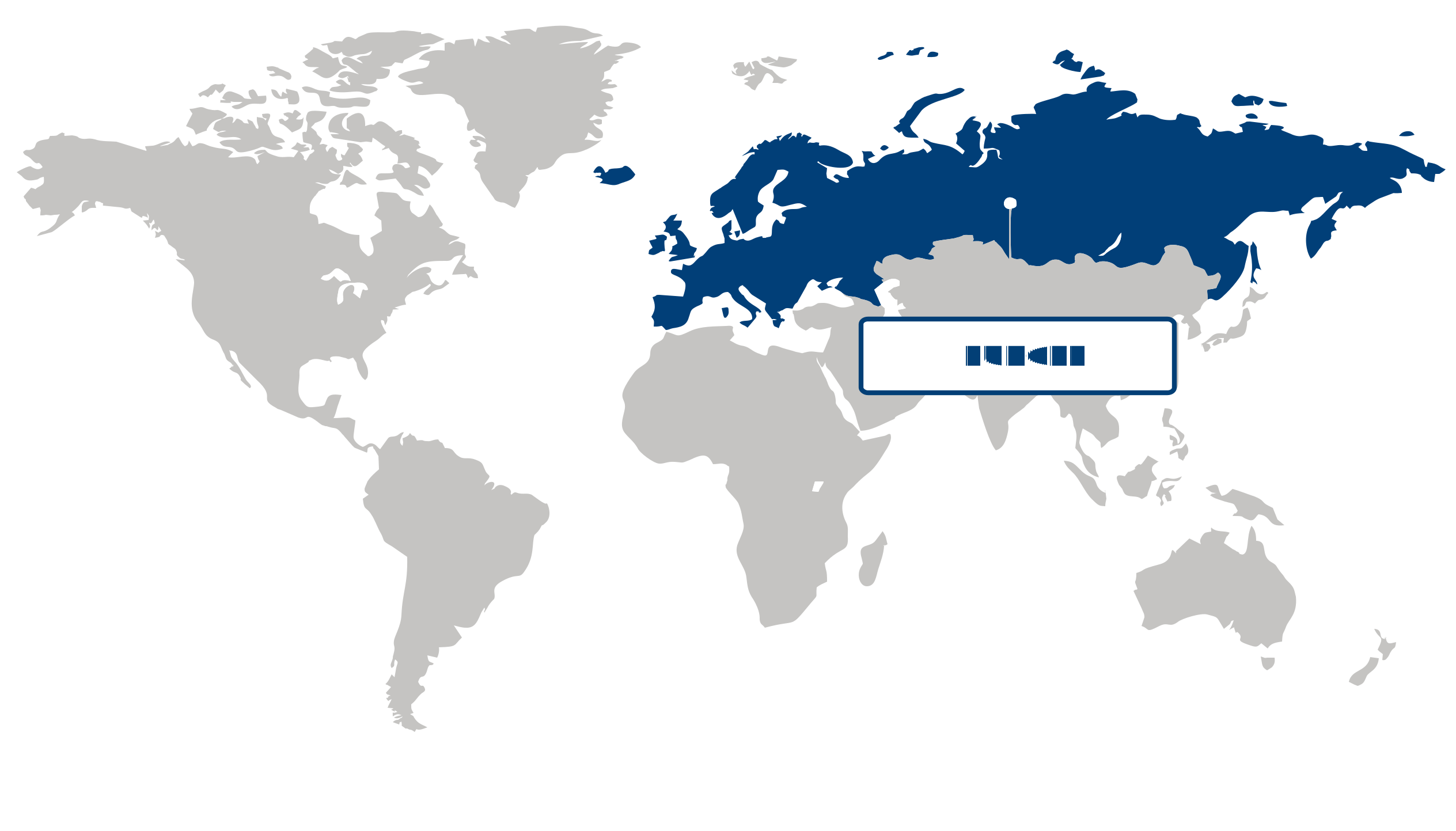
Europe captured over 36.5% of the global carbon fiber reinforced polymer cost market in 2025, establishing itself as the largest regional player. The region’s dominance stems chiefly from aggressive sustainability targets and pioneering deployment of lightweight composites across aerospace and wind energy sectors. For instance, the European Union’s Green Deal and Germany’s Energiewende underscore stringent carbon reduction commitments that drive industry adoption of cost-efficient, high-strength materials like carbon fiber reinforced polymers. Additionally, companies such as Siemens Gamesa demonstrate operational advancements in wind turbine blade manufacturing that leverage these composites, reflecting strategic shifts in demand and supply chain optimization. These dynamics align with evolving regulatory frameworks and substantial investments in renewable infrastructure, positioning Europe as the forefront of innovation in this space. Looking forward, continued policy support and intensified collaboration among aerospace manufacturers, energy firms, and material suppliers offer substantial growth prospects in the carbon fiber reinforced polymer cost market within Europe.
Germany anchors Europe’s carbon fiber reinforced polymer cost market driven by its robust industrial base and leadership in aerospace and renewable energy integration. The country’s economy benefits from coordinated efforts between public agencies like the German Aerospace Center (DLR) and industrial giants such as Airbus, which prioritize lightweight composite adoption to enhance fuel efficiency and reduce emissions. This synergy fosters competitive product development and operational efficiencies in the polymer market. Germany’s advanced manufacturing ecosystems also stimulate innovations in composite cost reduction, underscoring its pivotal role in regional growth. In France, regulatory enforcement by entities like the French Ministry of Ecological Transition encourages accelerated adoption of sustainable materials in wind energy projects, evident in investments by companies such as GE Renewable Energy. These national dynamics reinforce Europe’s strategic advantage, enabling the region to meet increasing demands for carbon fiber reinforced polymer solutions while supporting global sustainability imperatives.
North America Market Analysis:
North America emerged as the fastest-growing region in the carbon fiber reinforced polymer cost market, registering a robust CAGR of 9.4%. This rapid expansion is primarily driven by the surge in commercial aircraft backlogs and the region’s accelerated shift toward electrification in the automotive sector. The increasing demand for lightweight, high-strength materials is reshaping manufacturing preferences in aerospace and automotive industries, where reducing fuel consumption and increasing efficiency are priorities. Government agencies such as the Federal Aviation Administration (FAA) have recently supported the integration of advanced materials to enhance aircraft performance and sustainability. Moreover, automakers including Tesla and General Motors are investing aggressively in electric vehicle platforms that heavily rely on carbon fiber composites to optimize range and structural integrity. These dynamics, combined with sophisticated supply chains and a skilled talent pool, position North America as a critical hub for innovation and scalable adoption in this market, promising sustained opportunities ahead.
The U.S. plays a pivotal role in the North American carbon fiber reinforced polymer cost market with its dominant aerospace and automotive sectors driving regional growth. The country’s manufacturing base is uniquely aligned with the surge in commercial aircraft backlogs, as seen in Boeing’s recent orders backlog reported through corporate disclosures, which necessitates extensive use of advanced composite materials. Simultaneously, the rapid electrification trend is evident in the strategic moves by automakers such as Ford, which has announced plans to integrate lightweight composites to improve the efficiency of its electric vehicles. Regulatory frameworks from agencies like the Environmental Protection Agency (EPA) also promote material innovations that reduce emissions and enhance vehicle performance. The combination of these factors reinforces the U.S. as a critical engine of growth in the North American market, offering significant leverage for investors and industry leaders seeking to capitalize on the evolving material cost dynamics.
Asia Pacific Market Trends:
Asia Pacific held a substantial share in the carbon fiber reinforced polymer cost market, underscoring its pivotal role in global supply and consumption patterns. The region's prominence stems from a robust manufacturing ecosystem, particularly in automotive, aerospace, and renewable energy sectors, which prioritize advanced lightweight materials to enhance efficiency and reduce emissions. Moreover, increasing investments in sustainable technologies and stringent regulatory frameworks by bodies such as the Asia-Pacific Economic Cooperation (APEC) have intensified demand for cost-effective carbon fiber composites. Key regional players leveraging digital supply chain integration and operational upgrades contribute to competitive pricing and reliability. For example, Japan’s Toray Industries has spearheaded innovations reducing production costs while maintaining quality, reinforcing regional leadership. With continuous advancements and a growing consumer shift towards sustainability, Asia Pacific offers significant opportunities for strategic investments and scaling operations in the carbon fiber reinforced polymer cost market.
Japan serves as a critical hub in the carbon fiber reinforced polymer cost market, driven by its leadership in material science innovation and industrial precision. Japanese corporations like Mitsubishi Chemical Holdings Corporation have implemented cost-optimization through novel polymer processing techniques, addressing rising demand from the automotive and aerospace sectors. Regulatory frameworks focused on energy efficiency, supported by the Ministry of Economy, Trade and Industry (METI), encourage adoption of lightweight composites, directly influencing cost dynamics. Additionally, Japan’s skilled workforce and collaborative industrial clusters enhance value creation while maintaining cost discipline. These factors position Japan not only as a cost-conscious market but also as a trendsetter in quality and technological advancement, contributing to the broader Asia Pacific advantages in carbon fiber reinforced polymer cost competitiveness.
China plays an increasingly strategic role in the carbon fiber reinforced polymer cost market, leveraging large-scale manufacturing capabilities and expanding domestic demand. Driven by rapid infrastructure development and a burgeoning electric vehicle sector, Chinese firms such as China Aerospace Science and Technology Corporation have focused on reducing material costs through economies of scale and supply chain efficiencies. Policy support from the National Development and Reform Commission (NDRC) emphasizes innovation and localization of production, prompting competitive pricing and faster market penetration. Moreover, China’s integration of digital manufacturing technologies accelerates cost reductions and production agility. This dynamic not only fuels China’s domestic growth but also enhances the Asia Pacific region’s market resilience and competitive edge in carbon fiber reinforced polymer cost, suggesting ample prospects for investment and expansion.
| Parameter | North America | Asia Pacific | Europe | Latin America | MEA |
|---|---|---|---|---|---|
| Innovation Hub i Scale Nascent Developing Advanced | |||||
| Cost-Sensitive Region i Scale Low Medium High | |||||
| Regulatory Environment i Scale Restrictive Neutral Supportive | |||||
| Demand Drivers i Scale Weak Moderate Strong | |||||
| Development Stage i Scale Emerging Developing Developed | |||||
| Adoption Rate i Scale Low Medium High | |||||
| New Entrants / Startups i Scale Sparse Moderate Dense | |||||
| Macro Indicators i Scale Weak Stable Strong |
Segment Leadership and Growth Trends
Carbon Fiber Reinforced Polymer Cost Market Share (%), by Fiber Type, 2026
Go beyond the chart, access full insights & data tables
Request Free Sample ReportStandard modulus carbon fiber held largest share in the carbon fiber reinforced polymer cost market in 2025, driven by robust demand for cost-effective fibers in automotive and industrial segments. This leadership reflects consumer preference for materials balancing performance and affordability, enabling manufacturers to meet sustainability goals while managing production costs. Innovations by companies such as Toray Industries in optimizing standard modulus fibers have reinforced their competitive edge, responding to tightening emission regulations and lightweighting mandates globally. The segment’s adaptability and widespread supply chain integration create strategic opportunities for both established producers and niche manufacturers targeting cost-sensitive applications. Given continued prioritization of economical yet durable composites, standard modulus carbon fiber is poised to maintain its relevance amid evolving regulatory and market dynamics.
Analysis by Resin Type
Epoxy resins represented the largest share in the carbon fiber reinforced polymer cost market, attributed to their superior strength and excellent thermal stability essential for high-performance composites. Industries ranging from aerospace to wind energy have increasingly relied on epoxy-based systems as evidenced by Hexcel Corporation’s recent expansions addressing rigorous certification standards. The resin’s resilience aligns with sustainability and durability demands, supporting longer service life and reduced environmental footprint, factors fueling customer preference. The dominance of epoxy resins fosters competitive advantages by enabling premium product differentiation and consistent quality. As industries intensify focus on high strength-to-weight solutions and enhanced thermal resistance, the epoxy segment remains a critical foundation for innovation and growth in composite materials.
Analysis by Manufacturing Process
Hand layup dominated the carbon fiber reinforced polymer cost market due to its flexibility and suitability for low-volume, customized composite production. Its prevalence reflects the strategic need for adaptable manufacturing accommodating diverse product geometries and reduced capital requirements, favored by small-to-medium enterprises and prototyping efforts alike. The process is supported by regulatory encouragement for localized production capacities, such as initiatives from the U.S. Department of Energy promoting advanced manufacturing technologies. The low entry barrier and ability to incorporate new resin systems position hand layup as an attractive option in cost-sensitive and specialized markets. With ongoing improvements in process control and material handling, hand layup is expected to sustain its appeal for adaptable, economically feasible composite fabrication in near-term applications.
| Segment | Sub-Segment | Largest Segment | Fastest Growing |
|---|---|---|---|
| Fiber Type | High Modulus Carbon Fiber, Standard Modulus Carbon Fiber, Intermediate Modulus Carbon Fiber, Others | ||
| Resin Type | Epoxy, Phenolic, Polyimide, Polyurethane, Others | ||
| Manufacturing Process | Hand Layup, Autoclave Molding, Pultrusion, Resin Transfer Molding, Others | ||
| Application | Aerospace & Defense, Automotive, Wind Energy, Medical, Others | ||
| End-Use Industry | Automotive, Aerospace & Defense, Industrial, Sports & Leisure, Others |
Unlock insights tailored to your business with our bespoke market research solutions.
Click to get your customized report now.
Competitive Landscape and Market Positioning
The competitive environment is marked by intensified collaboration, technological advancement, and portfolio diversification among these top players. Recent initiatives include deepening joint ventures and aligning with downstream manufacturers to tailor material properties to specific performance demands. Corporate expansions encompass acquiring niche startups and scaling production capabilities to meet evolving aerospace and automotive lightweighting requirements. Innovation efforts focus heavily on next-generation resin systems and continuous fiber reinforcement methods, enhancing structural efficiency while managing cost pressures. These moves fortify market positioning by blending advanced R&D with expanded application scopes, allowing leaders such as SGL Carbon and Cytec Solvay Group to distinguish themselves through eco-conscious approaches, whereas Hexcel and Toray exploit production scale and process expertise to sustain competitive pricing strategies.
Strategic / Actionable Recommendations for Regional Players
North America players should explore collaborative innovation with aerospace and automotive OEMs, channeling resources towards multifunctional composites that integrate sensor or thermal management capabilities. Leveraging digital manufacturing techniques can also optimize production efficiency and cost structures, enabling responsiveness to demand volatility.
In Asia Pacific, regional manufacturers stand to benefit from alliances with upstream fiber producers and end users in emerging sectors like electric vehicles and renewable energy. Investing in scalable, automated composite fabrication technologies will be critical to capturing expanding domestic markets and supporting export competitiveness.
European firms may enhance differentiation by deepening commitments to sustainable raw materials and closed-loop recycling methods. Forming cross-industry consortia focused on circular economy frameworks and regulatory compliance can yield shared innovation platforms, reinforcing resilience amid regulatory and environmental shifts.
| Company | Market Share | Company Revenue | Revenue CAGR (%) | Product Portfolio | Geographic Presence | Innovation / R&D Focus | Strategic Developments |
|---|---|---|---|---|---|---|---|
| No companies available. | |||||||
Customize Your Report
Explore examples of how this report can be tailored to different research needs, including custom segments, additional topics or chapters, and related reports. Click a section of the wheel or its numbered marker to explore the available options.
Carbon Fiber Reinforced Polymer Cost Market — Custom Segments
| Segment | Sub-Segment |
|---|---|
| No segment data available. | |
Carbon Fiber Reinforced Polymer Cost Market — Custom TOC
| Custom Chapter | Chapter Details | ||
|---|---|---|---|
| No custom TOC data available. | |||
Need a different cut of the data?
Request Custom ResearchWhat is the projected value of the carbon fiber reinforced polymer cost industry by 2035?
Which territory dominates the carbon fiber reinforced polymer cost market share rankings?
Which geographical area is witnessing the highest growth rate in the carbon fiber reinforced polymer cost sector?
How does standard modulus carbon fiber segment fare in the carbon fiber reinforced polymer cost industry?
What share does epoxy segment hold in the carbon fiber reinforced polymer cost sector as of 2025?
Where is the hand layup segment seeing the strongest adoption within the carbon fiber reinforced polymer cost industry?
When did aerospace & defense sub-segment emerge as the largest sub-segment in the end-use industry segment of carbon fiber reinforced polymer cost sector?
What are the prominent companies operating in the carbon fiber reinforced polymer cost landscape?
Our Clients
"The report helped us understand emerging consumer trends in our product category. It clarified where to focus innovation for the next product launch."
LyondellBasell
"The regional forecast section was incredibly useful. We were able to identify two new potential partners in Europe thanks to the vendor mapping you included."
SABIC
"We appreciated how actionable the recommendations were. It guided us to improve supply chain resilience."
Olin Corporation
Our Research Team & Methodology
Every Fundamental Business Insights report is built by a dedicated vertical research team, validated through a structured primary-and-secondary methodology, and reviewed for accuracy before it reaches you.
Research Team Overview
Prepared by the Chemicals & Materials Research Team
Delivery
Published
Demand
Available
Support
Trust & Compliance
Research Intelligence
| Source | Reference |
|---|---|
| American Chemistry Council (ACC) | www.americanchemistry.com |
| European Chemical Industry Council (Cefic) | cefic.org |
| International Council of Chemical Associations (ICCA) | icca-chem.org |
| European Chemicals Agency (ECHA) | echa.europa.eu |
| U.S. Environmental Protection Agency (EPA) | www.epa.gov |
| ASTM International | www.astm.org |
| International Organization for Standardization (ISO) | www.iso.org |
| National Institute of Standards and Technology (NIST) | www.nist.gov |
| Plastics Industry Association (PLASTICS) | www.plasticsindustry.org |
| European Biplastics | www.european-bioplastics.org |
| The Adhesive and Sealant Council (ASC) | www.ascouncil.org |
| National Association of Corrosion Engineers (AMPP) | www.ampp.org |
| Society of Plastics Engineers (SPE) | www.4spe.org |
| International Fertilizer Association (IFA) | www.fertilizer.org |
| CropLife International | croplife.org |
| Packaging Europe | packagingeurope.com |
| Flexible Packaging Association (FPA) | www.flexpack.org |
| Battery Council International (BCI) | batterycouncil.org |
| International Copper Association (ICA) | internationalcopper.org |
| World Steel Association | worldsteel.org |
Research Workflow & Quality Assurance
Data Collection
Verified information gathered through primary and secondary research.
Data Triangulation
Cross-validation using multiple independent data sources.
Forecast Modelling
Market estimates developed using historical trends and analytical models.
Analyst Validation
Findings reviewed by domain experts for accuracy and consistency.
Editorial & Quality Review
Final editorial, quality, and compliance checks before publication.
Final Publication
Released after successful completion of the internal review process.
Report Coverage
📊 Market Assessment
- Market Size & Forecast
- Market Segmentation
- Regional Analysis
- Growth Drivers & Challenges
- Market Dynamics
🏢 Competitive Intelligence
- Competitive Landscape
- Company Profiles
- Competitive Benchmarking
- Mergers & Acquisitions
- Market Share Analysis or Key Company Strategies
🔍 Strategic Analysis
- Value Chain Analysis
- Porter's Five Forces
- PESTLE Analysis
- Pricing Trends
- Supply-Demand Analysis
🚀 Future Outlook
- Technology Landscape
- Regulatory Landscape
- Investment & Funding Landscape
- Emerging Opportunities
- Future Market Outlook
Have a question about this report or need a custom scope?
Request Customization