Carbon Neutral Data Center Market Size & Forecasts 2026-2035, By Segments (Solution, Data Center Type, Industry), Growth Opportunities, Innovation Landscape, Regulatory Shifts, Strategic Regional Insights (U.S., Japan, China, South Korea, UK, Germany, France), and Competitive Dynamics (Equinix, Digital Realty, GDS Holdings, CyrusOne, NTT Communications)
Market Size and Growth Outlook
Carbon Neutral Data Center Market size is projected to grow steadily from USD 11.11 billion in 2025 to USD 74.74 billion by 2035, demonstrating a CAGR exceeding 21% through the forecast period (2026-2035). The 2026 revenue is estimated at USD 13.23 billion.
Get more details on this report
Request Free Sample ReportCarbon Neutral Data Center Market Intelligence Snapshot
Regional Market Dynamics
Segment Momentum
Market Expansion Drivers
Leading Market Participants
Global Market Forecast Snapshot
Market Outlook
Regional and Segment Outlook
Market Growth Drivers and Industry Trends
Corporate sustainability commitments are pivotal in accelerating the carbon neutral data center market as businesses intensify efforts to reduce their environmental impact. Major technology firms such as Google and Microsoft have publicly pledged to operate carbon-free data centers within specified timelines, reinforcing consumer and investor demand for greener infrastructure. This shift reshapes competitive dynamics by pressuring providers to integrate renewable energy solutions and adopt circular economy principles. For incumbents, embracing sustainability enhances brand equity and customer loyalty, while new entrants can differentiate through innovation in eco-friendly design. As global corporations increasingly tie environmental responsibility to procurement, the carbon neutral data center market will evolve in tandem with corporate sustainability frameworks, embedding green operations into the fabric of digital transformation strategies.
Government Incentives for Green Data Centers
Government policies and financial incentives are critical in catalyzing investments in the carbon neutral data center market. Programs like the U.S. Department of Energy’s Better Buildings Initiative and the European Union’s Green Deal provide tax credits, subsidies, and technical support, lowering barriers to sustainable infrastructure deployment. These incentives stimulate demand for cleaner technologies by making energy-efficient upgrades economically viable for operators. Additionally, regulatory mandates on emissions are encouraging transparency and accountability, accelerating market adoption. Established players benefit from policy-driven market expansion, while startups can leverage subsidies to introduce disruptive solutions. The interplay between regulatory frameworks and market innovation ensures the carbon neutral data center market remains aligned with broader climate goals and energy transition agendas.
Advanced Cooling & Energy Efficiency Technologies
Innovations in cooling and energy management are shaping the carbon neutral data center market by addressing its primary operational challenge: energy consumption. Technologies such as immersion cooling, AI-driven thermal management, and modular data center design are reducing power usage effectiveness (PUE) significantly, as demonstrated by deployments from companies like Facebook (Meta) and Amazon Web Services. These advancements optimize resource utilization and lower operational costs, creating competitive advantages. For new entrants, pioneering cutting-edge efficiency solutions offers a pathway to capture market share, while legacy operators can retrofit facilities to meet evolving sustainability standards. As energy costs and environmental scrutiny intensify, the adoption of advanced cooling and efficiency technologies will be fundamental to the market’s sustainable scaling.
Industry Restraints:
High Capital Expenditure and Operational Costs
The substantial upfront investment required for carbon-neutral data centers, including expenses for renewable energy sourcing, advanced cooling systems, and energy-efficient infrastructure, significantly impedes market expansion. According to findings by the International Energy Agency (IEA), these costs can be 20-30% higher than conventional data centers, reducing immediate financial returns and creating budgetary strain. This elevated capital burden discourages smaller operators from adopting carbon-neutral technologies, while established firms face pressure to justify long-term value to stakeholders. Consequently, financial risk limits rapid scaling and prolongs transition timelines. Moving forward, until innovations reduce these costs or new financing mechanisms emerge, high capital and operational expenditures will remain a critical barrier, compelling market players to prioritize phased investments and incremental sustainability improvements.
Intermittency and Reliability of Renewable Energy Sources
The dependence on renewable energy, particularly solar and wind power, introduces significant challenges related to energy supply stability and data center uptime. The U.S. Department of Energy’s National Renewable Energy Laboratory (NREL) highlights that variability in renewables necessitates costly energy storage or grid backup solutions, adding complexity and reducing efficiency. This intermittency constraint creates operational risks and elevates energy management costs, especially in geographies with less stable grids. It pressures companies like Google and Microsoft, known for ambitious carbon-neutral targets, to develop hybrid energy models that ensure consistent power availability. Strategically, firms must navigate these reliability issues while balancing carbon goals, slowing the pace of full decarbonization. In the near to medium term, advances in energy storage technology and grid modernization will be crucial to mitigating this restraint’s impact on market evolution.
| Growth Driver | Impact on CAGR | Regulatory Influence | Geographic Relevance | Adoption Rate | Impact Timeline |
|---|---|---|---|---|---|
| Corporate Sustainability Initiatives | 3.50% | Short term (≤ 2 yrs) | North America, Europe; Spillover: Asia Pacific | High | Fast |
| Government Incentives for Green Data Centers | 3.00% | Medium term (2–5 yrs) | Europe, North America; Spillover: MEA | High | Moderate |
| Advanced Cooling & Energy Efficiency Technologies | 3.00% | Long term (5+ yrs) | Asia Pacific, North America; Spillover: Europe | Medium | Moderate |
Explore Growth Opportunities
Request Free Sample ReportRegional Demand Dynamics
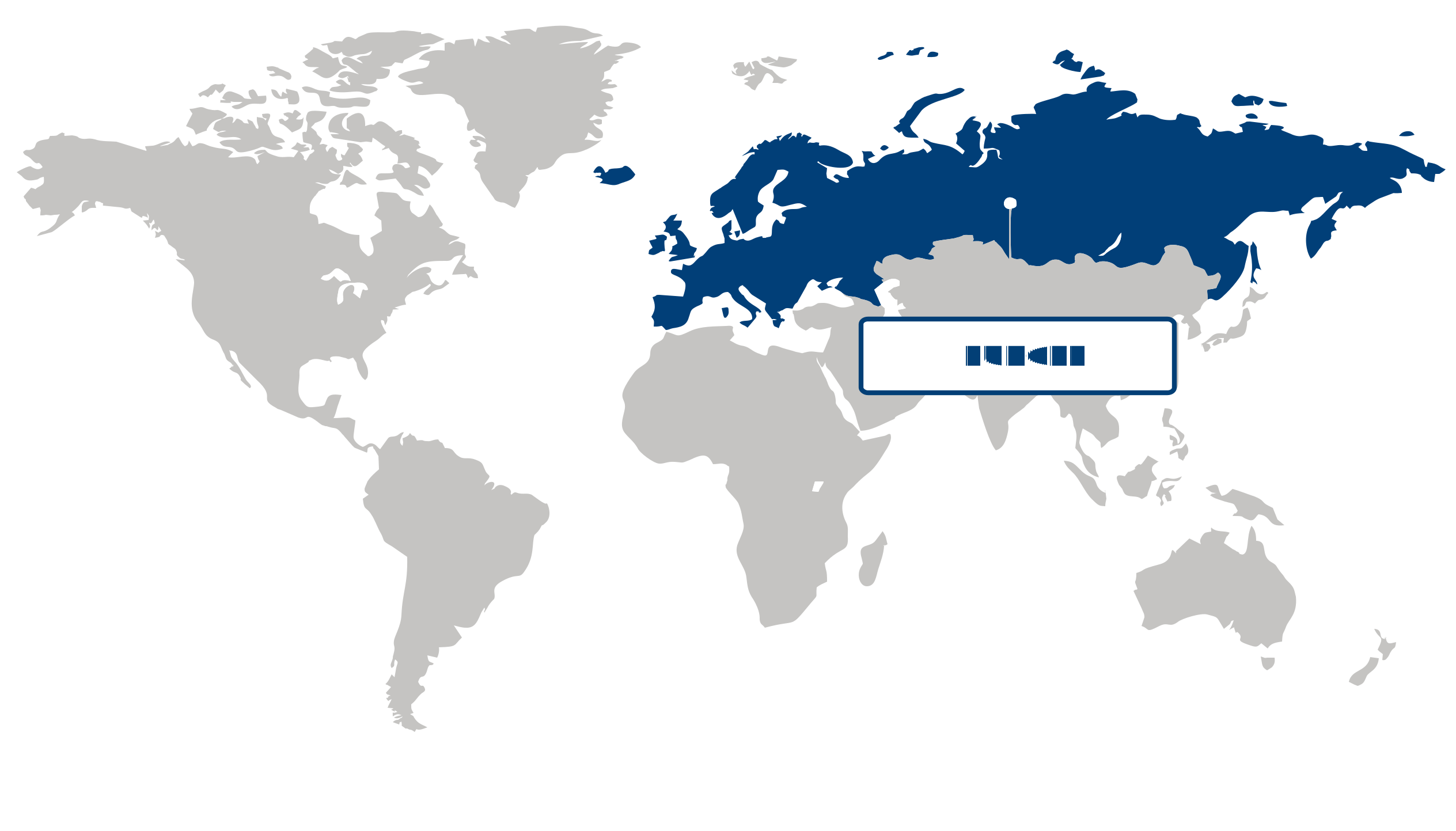
Europe captured over 36% of the global carbon neutral data center market in 2025, establishing itself as the leading region. This dominance is primarily driven by stringent environmental regulations coupled with a rising demand for sustainable data center technologies. Governments across Europe, such as the European Commission, are vigorously enforcing carbon neutrality targets that compel data center operators to adopt renewable energy and energy-efficient solutions. Additionally, major cloud providers like Deutsche Telekom and Orange are heavily investing in green infrastructure, reflecting shifting client preferences towards sustainability. These dynamics, combined with Europe's advanced digital economy and resilient infrastructure, underpin the region’s robust market position. Looking ahead, Europe’s regulatory rigor and technological innovation make it a fertile ground for continued growth and leadership in the carbon neutral data center landscape.
Germany plays a pivotal role in Europe’s carbon neutral data center market, where the convergence of progressive environmental policies and industrial demand fuels expansion. The German Federal Ministry for the Environment promotes ambitious carbon reduction targets that pressure data centers to transition to renewables, encouraging players such as SAP to integrate green technologies within their data operations. Meanwhile, Germany’s strong manufacturing and digital sectors amplify demand for energy-efficient data solutions, reinforcing the country’s strategic importance. France complements this trend with supportive government frameworks, including the French National Low Carbon Strategy, which incentivizes sustainable data infrastructure. Leading firms like OVHcloud emphasize carbon neutrality in their French data centers, aligning with consumer expectations. Together, Germany and France exemplify Europe's regulatory and market-driven push for greener data centers, bolstering the region’s competitive edge and growth prospects in carbon neutrality.
North America Market Analysis:
North America emerged as the fastest-growing region in the carbon neutral data center market, registering a robust CAGR of 25.2%. This rapid growth is primarily driven by the increasing deployment of sustainable data centers and a strong emphasis on ESG-driven investments. The region's technological infrastructure and economic resilience foster a proactive shift towards greener operations, as companies respond to escalating pressure from investors and regulatory bodies to reduce carbon footprints. For instance, Microsoft and Google have announced significant expansions of their zero-carbon data center initiatives, reflecting this strategic shift. Additionally, policy frameworks such as California’s aggressive clean energy mandates support this momentum. The region’s ability to integrate renewable energy sources and advanced cooling technologies further enhances operational sustainability. Looking ahead, North America’s leadership in innovation and capital allocation makes it a pivotal arena for investment and expansion in carbon neutral data centers.
The U.S. plays a central role in North America’s carbon neutral data center market, propelled by heightened consumer demand for sustainable IT infrastructure and progressive regulatory policies promoting clean energy adoption. U.S. companies benefit from frameworks like the Department of Energy’s Better Buildings Initiative, which encourages energy efficiency upgrades. Furthermore, firms such as Amazon Web Services have committed to achieving 100% renewable energy across their data centers by 2025, demonstrating competitive positioning shaped by strong ESG mandates. This translates into increased purchasing of green power and investments in low-carbon technologies, aligning operational strategies with global climate targets. Given this robust ecosystem, the U.S. market will continue to channel substantial investment into sustainable data center solutions, underpinning North America’s overall market growth and technological leadership in carbon neutrality efforts.
Asia Pacific Market Trends:
Asia Pacific maintained notable presence in the carbon neutral data center market, driven by heightened digital transformation and an increasing commitment to sustainability across diverse economies. The region’s emphasis on integrating renewable energy sources with advanced cooling technologies responds to rising operational costs and environmental mandates. Key players such as the Japan Data Center Council and China’s National Energy Administration have advocated for stringent energy efficiency standards, prompting accelerated upgrades. Moreover, consumer preferences are shifting toward environmentally responsible services, reinforcing investments in green infrastructure. The region’s logistical advantages and robust talent pools amplify its competitive edge. As cross-border data flows expand and regulatory frameworks deepen, Asia Pacific is poised to unlock substantial opportunities for market participants embracing innovative and sustainable data center solutions.
Japan occupies a leading role within Asia Pacific’s carbon neutral data center market, motivated by the country’s stringent climate policies and advanced technological ecosystem. Japan’s Ministry of Economy, Trade and Industry (METI) has propelled initiatives emphasizing low-carbon growth in ICT infrastructure, which bolsters demand for energy-efficient data centers. Corporations such as NTT Communications have spearheaded the deployment of cutting-edge cooling and renewable energy systems, aligning with domestic regulatory targets and consumer demands for sustainability. This alignment fosters a competitive environment where innovation thrives, reinforcing Japan’s position as a sustainability pioneer. With its mature market dynamics, Japan serves as a critical blueprint for carbon neutral practices benefitting the region’s broader strategic ambitions.
China plays a pivotal role in the regional carbon neutral data center market, shaped by rapid urbanization and the government’s dual carbon goals targeting peak emissions before 2030 and carbon neutrality by 2060. The National Development and Reform Commission’s stringent data center energy efficiency mandates have catalyzed substantial investments from giants like Alibaba Cloud and Baidu. Additionally, China’s expansion of renewable capacity, particularly solar and wind, supports data centers’ heavy electricity demands while curbing carbon footprints. The confluence of strong regulatory backing and surging digital demand offers strategic leverage for market actors seeking scalable, sustainable infrastructure solutions. China’s aggressive policies and ecosystem maturation underscore critical growth trajectories across Asia Pacific’s carbon neutral data center landscape.
| Parameter | North America | Asia Pacific | Europe | Latin America | MEA |
|---|---|---|---|---|---|
| Innovation Hub i Scale Nascent Developing Advanced | |||||
| Cost-Sensitive Region i Scale Low Medium High | |||||
| Regulatory Environment i Scale Restrictive Neutral Supportive | |||||
| Demand Drivers i Scale Weak Moderate Strong | |||||
| Development Stage i Scale Emerging Developing Developed | |||||
| Adoption Rate i Scale Low Medium High | |||||
| New Entrants / Startups i Scale Sparse Moderate Dense | |||||
| Macro Indicators i Scale Weak Stable Strong |
Segment Leadership and Growth Trends
Carbon Neutral Data Center Market Share (%), by Solution, 2026
Go beyond the chart, access full insights & data tables
Request Free Sample ReportThe software & platforms segment held the largest share in the carbon neutral data center market in 2025, driven by the increasing deployment of energy management systems and AI-based analytics that enhance operational efficiency and reduce emissions. This leadership reflects increasing customer preference for intelligent, data-driven solutions that optimize energy consumption and align with growing corporate sustainability mandates. Industry leaders like Schneider Electric and Siemens have showcased advanced software tools that enable real-time monitoring and predictive maintenance, reinforcing the competitive edge of this segment. The integration of digital transformation initiatives and regulatory emphasis on carbon reporting further bolster demand. For established players and new entrants, this segment offers strategic opportunities to innovate in AI, cloud services, and automation. Given ongoing trends toward smarter infrastructure and deeper analytics adoption, software & platforms are poised to remain pivotal in driving carbon-neutral data center advancements.
Analysis by Data Center Type
Colocation data centers represented the largest share in the carbon neutral data center market in 2025, fueled primarily by rising demand from businesses seeking scalable, sustainable infrastructure without the capital expenditure of building in-house facilities. This segment benefits from a shift toward flexible consumption models driven by digital transformation and increasing carbon footprint regulations. Leading providers such as Equinix and Digital Realty have emphasized green certifications and renewable energy procurement, aligning with customer priorities for environmental responsibility and operational resilience. The ability to consolidate resources also fosters supply chain efficiencies and economies of scale, appealing to firms across multiple industries. For market players, expanding colocation offerings linked to renewable energy sources presents a compelling growth avenue. The segment’s adaptability to evolving sustainability standards and business scalability ensures its continuing relevance in a rapidly digitizing economy.
Analysis by Industry
The IT & telecom segment dominated the carbon neutral data center market in 2025, supported by this sector’s intensive data processing requirements and elevated commitment to sustainability goals. Telecom operators and cloud service providers, including AT&T and Verizon, have embarked on ambitious carbon neutrality roadmaps, driving increased adoption of energy-efficient infrastructure and renewable energy sourcing in data centers. The segment’s leadership is also underpinned by strong regulatory pressures and customer demands for greener digital services, which are increasingly integrated into corporate social responsibility frameworks. As the backbone of digital connectivity and cloud applications, IT & telecom customers prioritize reliable, scalable, and eco-friendly data center solutions, fostering innovation in energy optimization and emissions transparency. Strategic benefits for companies include aligning with global climate targets and gaining competitive differentiation. Given continued digital expansion and environmental accountability, this industry's dominance in the market is expected to persist.
| Segment | Sub-Segment | Largest Segment | Fastest Growing |
|---|---|---|---|
| Solution | Software & Platforms, Hardware, Support Services | ||
| Data Center Type | Colocation Data Centers, Enterprise Data Centers, Hyperscale Data Centers, Others | ||
| Industry | Manufacturing, Healthcare, Government & Public Sector, Banking, Financial Services, & Insurance (BFSI), IT & Telecom, Others |
Unlock insights tailored to your business with our bespoke market research solutions.
Click to get your customized report now.
Competitive Landscape and Market Positioning
The competitive landscape reflects intensified efforts by these leaders to solidify dominance through advanced technological offerings and strategic expansion. Collaborations and enhanced service portfolios underpin many initiatives, while investments in cutting-edge cooling and power management systems fortify operational efficiency. The pursuit of greener certifications and partnerships with renewable energy providers have become pivotal to maintaining competitive differentiation. Notably, global consolidation and regional alliances are fostering scale and enhancing geographic reach, catalyzing innovation pipelines. This dynamic environment emphasizes agility and sustainability, driving continuous evolution in infrastructure resilience and customer value propositions across the sector.
Strategic / Actionable Recommendations for Regional Players
North American stakeholders should cultivate deeper alliances with clean energy suppliers and technology innovators to elevate energy management capabilities. Exploring niche sectors focused on edge computing and hyperscale clients could unlock high-value growth avenues while reinforcing sustainability credentials.
In Asia Pacific, leveraging emerging green technologies adapted to local conditions will be crucial. Collaborations with governmental and industrial bodies to align with regional carbon neutrality goals can create compelling differentiation. Expanding in underpenetrated markets with tailored service offerings supports broader adoption of sustainable data center solutions.
European players can benefit from intensifying integration of advanced digital infrastructure with circular economy principles. Partnering with renewable energy hubs and pioneering use of modular, energy-saving architectures will enhance competitiveness. Focused investment in compliance and ecosystem collaborations can strengthen positions amid stringent environmental regulations.
| Company | Market Share | Company Revenue | Revenue CAGR (%) | Product Portfolio | Geographic Presence | Innovation / R&D Focus | Strategic Developments |
|---|---|---|---|---|---|---|---|
| No companies available. | |||||||
Industry Development/News
| Company Name | Date | Key Development |
|---|
Customize Your Report
Explore examples of how this report can be tailored to different research needs, including custom segments, additional topics or chapters, and related reports. Click a section of the wheel or its numbered marker to explore the available options.
Carbon Neutral Data Center Market — Custom Segments
| Segment | Sub-Segment |
|---|---|
| No segment data available. | |
Carbon Neutral Data Center Market — Custom TOC
| Custom Chapter | Custom Details | ||
|---|---|---|---|
| No custom TOC data available. | |||
Need a different cut of the data?
Request Custom ResearchHow is the carbon neutral data center industry expected to grow over the next 10 years?
In which region is the carbon neutral data center market share the greatest?
Which geography represents the strongest growth trajectory for the carbon neutral data center sector?
Where is the software & platforms segment seeing the strongest adoption within the carbon neutral data center industry?
When did colocation data centers sub-segment emerge as the largest sub-segment in the data center type segment of carbon neutral data center sector?
Why is the IT & telecom segment leading in the carbon neutral data center industry?
What are the key competitors in the carbon neutral data center landscape?
Our Clients
"The information presented in the report was genuinely insightful. The data was clear and easy to understand, which made it much easier to interpret the findings."
Amara Raja Group
"The responsiveness and professionalism exhibited by the team were exemplary. They were readily available to address queries, provide clarifications, and offer additional insights."
ONGC
"The reports offered a comprehensive analysis of various segments within the market. The detailed insights into market trends, and regulatory landscapes were excellent."
TotalEnergies
Our Research Team & Methodology
Every Fundamental Business Insights report is built by a dedicated vertical research team, validated through a structured primary-and-secondary methodology, and reviewed for accuracy before it reaches you.
Research Team Overview
Prepared by the Energy & Power Research Team
Delivery
Published
Demand
Available
Support
Trust & Compliance
Research Intelligence
Research Workflow & Quality Assurance
Data Collection
Verified information gathered through primary and secondary research.
Data Triangulation
Cross-validation using multiple independent data sources.
Forecast Modelling
Market estimates developed using historical trends and analytical models.
Analyst Validation
Findings reviewed by domain experts for accuracy and consistency.
Editorial & Quality Review
Final editorial, quality, and compliance checks before publication.
Final Publication
Released after successful completion of the internal review process.
Report Coverage
📊 Market Assessment
- Market Size & Forecast
- Market Segmentation
- Regional Analysis
- Growth Drivers & Challenges
- Market Dynamics
🏢 Competitive Intelligence
- Competitive Landscape
- Company Profiles
- Competitive Benchmarking
- Mergers & Acquisitions
- Market Share Analysis or Key Company Strategies
🔍 Strategic Analysis
- Value Chain Analysis
- Porter's Five Forces
- PESTLE Analysis
- Pricing Trends
- Supply-Demand Analysis
🚀 Future Outlook
- Technology Landscape
- Regulatory Landscape
- Investment & Funding Landscape
- Emerging Opportunities
- Future Market Outlook
Have a question about this report or need a custom scope?
Request Customization