



Carotenoids Market Size & Growth Forecast 2027–2036, By Segments (Source, Product, Application), Regional Demand Trends (North America, Asia Pacific, Europe), Key Country Insights (U.S., Japan, South Korea, Germany, France, Italy), and Competitive Landscape
Market Size and Growth Outlook
Carotenoids Market size was more than USD 3.6 billion in 2026 and is set to grow at a 5.13% CAGR between 2027 and 2036, reaching USD 5.94 billion by 2036. The industry revenue for 2027 is estimated at USD 3.76 billion.
Base Year Value (2026)
USD 3.6 billion
CAGR (2027-2036)
5.13%
Forecast Year Value (2036)
USD 5.94 billion

Historical Data Period
2022-2026

Largest Region
Europe

Forecast Period
2027-2036
Carotenoids Market Intelligence Snapshot:
-
Regional Market Dynamics:
- Europe leads with 30.46% share due to mature food, feed, and nutraceutical industries, strong formulation practices, and consistent use of natural colorants in industrial production.
- Asia Pacific is expanding at 4.1% CAGR driven by rising food processing activity, feed industry expansion, and increasing adoption of carotenoids in packaged and nutritional products.
-
Segment Momentum:
- Synthetic carotenoids held a 55.44% share in 2026 due to their reliable supply, consistent production quality, and cost efficiency, making them the preferred choice for large-scale commercial formulations.
- Beta-carotene is growing fastest because its broad formulation versatility allows manufacturers to incorporate it across multiple end uses, supporting wider adoption than more specialized carotenoid products.
-
Market Expansion Drivers:
- Rising health consciousness and antioxidant demand driving functional ingredient consumption.
- Expanding use of natural colorants in food, feed, and cosmetics industries.
- Regulatory preference for natural carotenoids over synthetic variants shaping product demand.
-
Leading Market Participants:
Major companies in the carotenoids market include dsm-firmenich AG (Switzerland), BASF SE (Germany), Kemin Industries, Inc. (United States), Allied Biotech Corporation (Taiwan), Cyanotech Corporation (United States), Lycored Ltd. (Israel), Divi's Laboratories Limited (India), Sensient Technologies Corporation (United States), Döhler GmbH (Germany), Zhejiang NHU Co., Ltd. (China).
Global Market Forecast Snapshot:
-
Market Outlook:
- 2026 Market Size: USD 3.6 billion
- 2027 Estimated Market Size: USD 3.76 billion.
- Projected Market Size: USD 5.94 billion by 2036
- Growth Forecasts: 5.13% CAGR (2027-2036)
-
Regional and Segment Outlook:
- Leading Regional Market: Europe
- High-Growth Regional Hub: Asia Pacific
- Core Revenue Segment: Synthetic (Source) | Astaxanthin (Product) | Animal Feed (Application)
- Emerging Opportunity Segment: Natural (Source) | Beta-carotene (Product) | Food & Beverages (Application)
Market Growth Drivers and Industry Trends
Rising health consciousness and antioxidant demand driving functional ingredient consumption
Growing consumer awareness of nutrition, wellness, and the role of antioxidants in maintaining overall health is encouraging manufacturers to incorporate carotenoid-based ingredients into functional foods, beverages, dietary products, and other health-oriented formulations. The carotenoids market is supported by demand for ingredients associated with antioxidant properties and nutritional value, particularly as consumers increasingly examine the functional benefits of products beyond basic nourishment. This shift is also encouraging product developers to explore carotenoid formulations that can be incorporated into convenient consumer products while maintaining their nutritional and functional characteristics.
Expanding use of natural colorants in food, feed, and cosmetics industries
Manufacturers across food, animal feed, and personal care applications are increasingly using naturally derived coloring ingredients to achieve desired product appearance while aligning formulations with consumer preferences for recognizable and naturally sourced ingredients. Carotenoids market demand is strengthened by their ability to provide coloration across a range of formulations while also offering functional attributes that can complement their use as pigments. Their application in foods and beverages, feed formulations, cosmetics, and personal care products broadens the addressable market and encourages ingredient suppliers to develop carotenoid solutions suited to different processing and formulation requirements.
Regulatory preference for natural carotenoids over synthetic variants shaping product demand
Regulatory attention toward ingredient safety, labeling, and permitted additives is encouraging manufacturers to reassess the use of synthetic coloring materials in applications where naturally sourced alternatives are available. Within the carotenoids market, this preference can increase interest in naturally derived carotenoids as formulators seek ingredients that align with regulatory expectations and evolving clean-label positioning. Greater emphasis on transparent ingredient sourcing and acceptable food and cosmetic formulations is prompting manufacturers to evaluate natural pigment options for products where color stability, formulation compatibility, and consumer acceptance are important considerations.
| Growth Driver Assessment Framework | |||||
| Growth Driver | Impact On CAGR | Regulatory Influence | Geographic Relevance | Adoption Rate | Impact Timeline |
|---|---|---|---|---|---|
| Rising health consciousness and antioxidant demand driving functional ingredient consumption | 2.00% | Moderate | Europe, North America | High | Near Term |
| Expanding use of natural colorants in food, feed, and cosmetics industries | 1.80% | Moderate | Asia Pacific, Europe | High | Mid Term |
| Regulatory preference for natural carotenoids over synthetic variants shaping product demand | 1.60% | High | Europe, North America, Asia Pacific | Medium | Mid Term |
Unlock insights tailored to your business with our bespoke market research solutions - Click to get your customized report now!
Regional Demand Dynamics
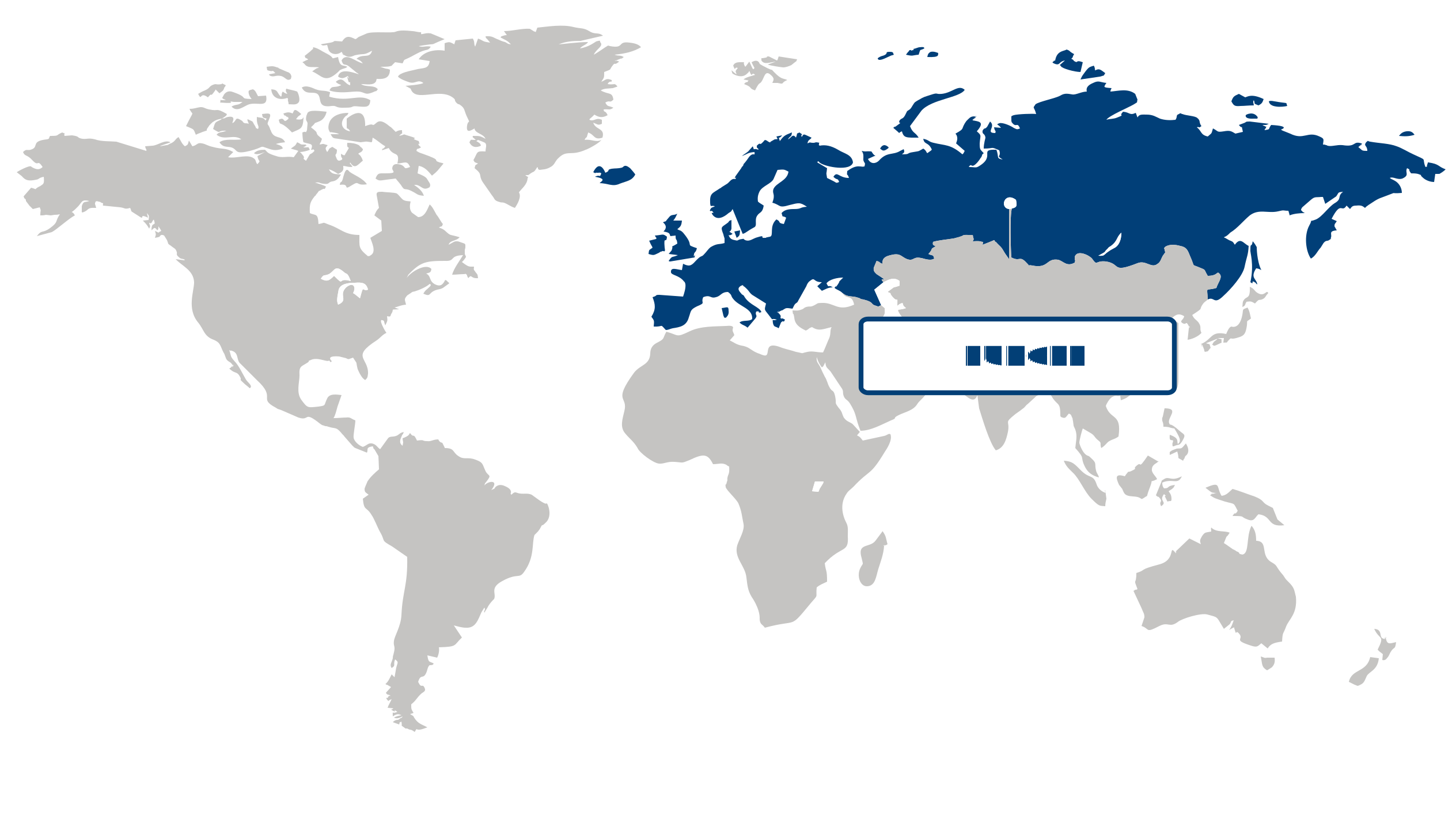
Largest Region
Europe
30.46% Market Share in 2026
Europe (Largest Region) vs Asia Pacific (Fastest-Growing Region)
Europe accounted for the largest share of the carotenoids market at 30.46% in 2026, supported by established demand for natural colorants, nutritional ingredients, and functional food components. Consumer preference for clean-label products and growing interest in health-oriented nutrition are encouraging the use of carotenoids across food, dietary supplements, cosmetics, and animal nutrition applications. A mature food and beverage industry, strong emphasis on product quality, and increasing preference for naturally derived ingredients further reinforce regional demand.
Asia Pacific is witnessing the fastest growth as rising disposable incomes, changing dietary preferences, and expanding functional food and nutraceutical industries create new applications for carotenoid ingredients. Increasing consumer awareness of preventive health and growing demand for products positioned around antioxidant and nutritional benefits are supporting broader adoption. Expanding food processing and dietary supplement manufacturing capabilities, combined with greater use of natural ingredients, are strengthening the region's growth prospects.
Key Country Insights
The U.S. carotenoids market is driven by demand for clean-label dietary supplements, functional foods, and natural colorants. Manufacturers in the U.S. continue to invest in bio-based production methods and clinically supported formulations to address evolving consumer preferences.
Japan prioritizes carotenoids for eye health, healthy aging, and functional nutrition products. Japanese manufacturers increasingly focus on premium formulations, scientific validation, and stable ingredient quality to meet consumer expectations in health-oriented product categories.
South Korea is expanding carotenoid utilization across nutraceuticals, cosmetics, and functional beverages. Product developers increasingly combine carotenoids with other bioactive ingredients to support wellness and beauty-focused formulations while maintaining clean-label positioning.
Germany emphasizes high-quality carotenoids for food, beverage, and nutraceutical applications with strong attention to ingredient traceability and regulatory compliance. Companies are expanding naturally sourced formulations that align with consumer demand for sustainable and recognizable ingredients.
France integrates carotenoids into premium food products, dietary supplements, and natural coloring applications. French manufacturers emphasize botanical sourcing, formulation quality, and consumer transparency as demand grows for naturally derived functional ingredients.
Italy supports carotenoid adoption through functional foods, nutritional supplements, and premium food processing. Italian companies increasingly develop naturally sourced formulations that complement consumer interest in nutrition, product authenticity, and high-quality ingredient profiles.
Segment Leadership and Growth Trends
Source Segment Analysis: Synthetic (Largest Segment) vs Natural (Fastest-Growing Segment)
Synthetic carotenoids held the largest share of the carotenoids market in 2026 at 55.44%, supported by consistent production characteristics, controlled quality, and broad availability for commercial applications. Synthetic production enables manufacturers to obtain standardized carotenoid ingredients for food, feed, nutraceutical, and other formulations while maintaining predictable composition. Established manufacturing processes and the ability to supply carotenoids at scale continue to support their widespread commercial use.
Natural carotenoids are growing at the fastest pace as consumers and manufacturers increasingly favor naturally sourced ingredients. Rising interest in clean-label products, plant-derived nutrition, and recognizable ingredient sources is encouraging greater use of naturally obtained carotenoids across food, dietary supplement, and wellness applications. Growing awareness of antioxidant properties and continued product innovation around natural formulations are also strengthening demand for natural carotenoid ingredients.
Product Segment Analysis: Astaxanthin (Largest Segment) vs Beta-carotene (Fastest-Growing Segment)
Astaxanthin dominated the carotenoids market in 2026, accounting for 44.73% share, supported by its strong positioning in nutraceutical, dietary supplement, aquaculture, and functional food applications. Its antioxidant properties and growing recognition as a high-value carotenoid contribute to broad commercial interest. Demand from health and wellness applications, combined with its functional relevance in animal nutrition and aquaculture, continues to reinforce the product's leading position.
Beta-carotene is the fastest-growing product segment, benefiting from its established use as a natural colorant and nutritional ingredient across food, beverage, dietary supplement, and related applications. Its dual functionality as a pigment and provitamin A source provides manufacturers with flexibility across diverse formulations. Increasing interest in functional ingredients and naturally positioned products is creating additional opportunities for beta-carotene, particularly as manufacturers seek ingredients that combine nutritional and formulation benefits.
| Report Segmentation | |||
| Segment | Sub-Segment | Largest Segment | Fastest Growing Segment |
|---|---|---|---|
| Source | Natural, Synthetic | Synthetic | Natural |
| Product | Beta-carotene, Lutein, Lycopene, Astaxanthin, Others | Astaxanthin | Beta-carotene |
| Application | Food & Beverages, Dietary Supplements, Cosmetics, Animal Feed, Others | Animal Feed | Food & Beverages |
 Read our Research Approach
Competitive Landscape and Market Positioning
Top players in the carotenoids market:
1. dsm-firmenich AG (Switzerland)
2. BASF SE (Germany)
3. Kemin Industries Inc. (United States)
4. Allied Biotech Corporation (Taiwan)
5. Cyanotech Corporation (United States)
6. Lycored Ltd. (Israel)
7. Divi's Laboratories Limited (India)
8. Sensient Technologies Corporation (United States)
9. Döhler GmbH (Germany)
10. Zhejiang NHU Co. Ltd. (China)
The carotenoids market is shaped by growing demand for natural colorants and nutritional additives. Advances in extraction and formulation techniques are improving stability and application range. Strategic collaborations are further supporting innovation and supply chain optimization across the carotenoids market.
Industry Development/News
| Company Name | Date | Key Development |
|---|---|---|
| BASF | Jun-26 | Successfully stabilized supply chains following the 2024 Ludwigshafen plant incident, with the Nutrition & Care segment focusing on scaling production capacity to meet normalized demand for vitamins and carotenoids. |
| DSM-Firmenich | Jun-26 | Advancing the divestment of its Animal Nutrition & Health business to CVC Capital Partners (expected closure by year-end 2026). The "Essential Products" division, housing carotenoids and vitamins, is being transitioned into a standalone entity. |
| Sirio Pharma & OmniActive | Feb-26 | Launched a new line of eye-health soft chews utilizing Lutemax 2020 (lutein and zeaxanthin) to target growing demand for convenient, high-efficacy nutraceuticals. |
| Crystal Tomato & Lucas Meyer Cosmetics | Feb-26 | Executed an exclusive partnership to integrate colorless carotenoid technology into premium skincare formulations, focusing on skin brightening and antioxidant protection. |
| ÄIO & tilk! | Feb-26 | Commercialized the first skincare product containing "RedOil," a sustainable, fermentation-derived carotenoid ingredient, marking a shift toward bio-based cosmetic additives. |
| Kemin Industries | Oct-24 | Supported the L-ZIP trial (University of Utah), which clinically validated that maternal supplementation with FloraGLO Lutein and OPTISHARP Zeaxanthin significantly improves foveal maturity and long-term visual health in newborns. |
| Lycored | Jul-24 | Unveiled "ResilientRed BF," a tomato-derived lycopene colorant engineered for high stability in UHT dairy, plant-based beverages, and meat alternatives, supporting clean-label industry standards. |
Why Choose Us
Specialized Expertise: Our team comprises industry experts with a deep understanding of your market segment. We bring specialized knowledge and experience that ensures our research and consulting services are tailored to your unique needs.
Customized Solutions: We understand that every client is different. That's why we offer customized research and consulting solutions designed specifically to address your challenges and capitalize on opportunities within your industry.
Proven Results: With a track record of successful projects and satisfied clients, we have demonstrated our ability to deliver tangible results. Our case studies and testimonials speak to our effectiveness in helping clients achieve their goals.
Cutting-Edge Methodologies: We leverage the latest methodologies and technologies to gather insights and drive informed decision-making. Our innovative approach ensures that you stay ahead of the curve and gain a competitive edge in your market.
Client-Centric Approach: Your satisfaction is our top priority. We prioritize open communication, responsiveness, and transparency to ensure that we not only meet but exceed your expectations at every stage of the engagement.
Continuous Innovation: We are committed to continuous improvement and staying at the forefront of our industry. Through ongoing learning, professional development, and investment in new technologies, we ensure that our services are always evolving to meet your evolving needs.
Value for Money: Our competitive pricing and flexible engagement models ensure that you get maximum value for your investment. We are committed to delivering high-quality results that help you achieve a strong return on your investment.
Select Licence Type

