



Cashmere Clothing Market Size & Growth Forecast 2027–2036, By Segments (End-user, Distribution Channel, Product), Regional Demand Trends (North America, Asia Pacific, Europe), Key Country Insights (U.S., Japan, South Korea, Germany, France, Italy), and Competitive Landscape
Market Size and Growth Outlook
Cashmere Clothing Market size was around USD 3.3 billion in 2026 and is slated to grow at a 6.46% CAGR from 2027 to 2036, reaching USD 6.17 billion by 2036. The industry revenue for 2027 is assessed at USD 3.48 billion.
Base Year Value (2026)
USD 3.3 billion
CAGR (2027-2036)
6.46%
Forecast Year Value (2036)
USD 6.17 billion

Historical Data Period
2022-2026

Largest Region
Europe

Forecast Period
2027-2036
Cashmere Clothing Market Intelligence Snapshot:
-
Regional Market Dynamics:
- Europe holds 39.01% share due to strong luxury fashion houses, premium retail networks, and established consumer preference for high-end knitwear and craftsmanship-led apparel positioning.
- Asia Pacific is growing at 7.12% CAGR, driven by rising fashion-conscious urban consumers, expanding digital and organized retail access, and stronger adoption of premium apparel.
-
Segment Momentum:
- Women held a 61.74% share in 2026, supported by broad demand across sweaters, cardigans, outerwear, and seasonal apparel. Stronger style rotation and repeat purchasing also help sustain consistent sales volume.
- Online is the fastest-growing channel, driven by wider product access and easier comparison across brands, styles, and prices. Consumers are increasingly comfortable purchasing premium cashmere apparel through digital platforms.
-
Market Expansion Drivers:
- Rising demand for traceable, ethically sourced premium cashmere driving luxury brand differentiation.
- Expansion of e-commerce and D2C luxury platforms improving cashmere accessibility to wider consumers.
- Celebrity influence and social media fashion trends accelerating aspirational luxury apparel demand.
-
Leading Market Participants:
Key players in the cashmere clothing market include Loro Piana S.p.A. (Italy), Ermenegildo Zegna N.V. (Italy), Brunello Cucinelli S.p.A. (Italy), Pringle of Scotland Ltd (United Kingdom), Inner Mongolia Erdos Group Co., Ltd. (China), Naadam Inc. (USA), Eric Bompard SAS (France), Autumn Cashmere LLC (USA), Sofia Cashmere (Italy), Alyki - Felice De Palma & Co. (Italy).
Global Market Forecast Snapshot:
-
Market Outlook:
- 2026 Market Size: USD 3.3 billion
- 2027 Estimated Market Size: USD 3.48 billion.
- Projected Market Size: USD 6.17 billion by 2036
- Growth Forecasts: 6.46% CAGR (2027-2036)
-
Regional and Segment Outlook:
- Leading Regional Market: Europe
- High-Growth Regional Hub: Asia Pacific
- Core Revenue Segment: Women (End-user) | Offline (Distribution Channel) | Sweaters & Coats (Product)
- Emerging Opportunity Segment: Men (End-user) | Online (Distribution Channel) | Tees & Polo (Product)
Market Growth Drivers and Industry Trends
Rising demand for traceable, ethically sourced premium cashmere driving luxury brand differentiation
Consumer scrutiny of sourcing practices is increasing demand for greater transparency across premium apparel supply chains, particularly for products associated with luxury and natural fibers. In this environment, the cashmere clothing market is gaining support from brands and consumers that place greater value on traceable fibers, responsible sourcing, animal welfare considerations, and ethical production practices. Clearer sourcing information allows premium apparel producers to differentiate products beyond softness and craftsmanship, while sustainability-focused purchasing behavior encourages greater attention to the origin and processing of cashmere garments.
Expansion of e-commerce and D2C luxury platforms improving cashmere accessibility to wider consumers
Digital retail channels are reducing geographic barriers to premium apparel purchases by allowing consumers to explore specialized collections without relying solely on physical luxury stores. The cashmere clothing market will benefit from expanding e-commerce and direct-to-consumer platforms that provide detailed product information, styling guidance, customization options, and convenient delivery, making high-end cashmere more accessible to consumers across a broader range of locations. Digital storefronts also enable niche and emerging labels to reach targeted audiences directly, while personalized recommendations and online merchandising can help consumers evaluate premium garments based on quality, design, and sourcing attributes.
Celebrity influence and social media fashion trends accelerating aspirational luxury apparel demand
Visibility of premium apparel through celebrities, influencers, and fashion-focused social platforms is shaping consumer preferences and increasing exposure to luxury clothing styles. Social media trends will boost the cashmere clothing market by turning cashmere garments into aspirational fashion products that can be discovered, styled, and shared digitally, particularly among younger consumers. Frequent exposure to seasonal looks, celebrity styling, and influencer-led fashion content can stimulate interest in premium knitwear while encouraging consumers to incorporate recognizable luxury materials into everyday wardrobes.
| Growth Driver Assessment Framework | |||||
| Growth Driver | Impact On CAGR | Regulatory Influence | Geographic Relevance | Adoption Rate | Impact Timeline |
|---|---|---|---|---|---|
| Rising demand for traceable, ethically sourced premium cashmere driving luxury brand differentiation | 2.00% | Moderate | Europe, North America | High | Near Term |
| Expansion of e-commerce and D2C luxury platforms improving cashmere accessibility to wider consumers | 1.50% | Low | Europe, Asia Pacific | High | Near Term |
| Celebrity influence and social media fashion trends accelerating aspirational luxury apparel demand | 1.30% | Low | North America, Europe | High | Near Term |
Unlock insights tailored to your business with our bespoke market research solutions - Click to get your customized report now!
Regional Demand Dynamics
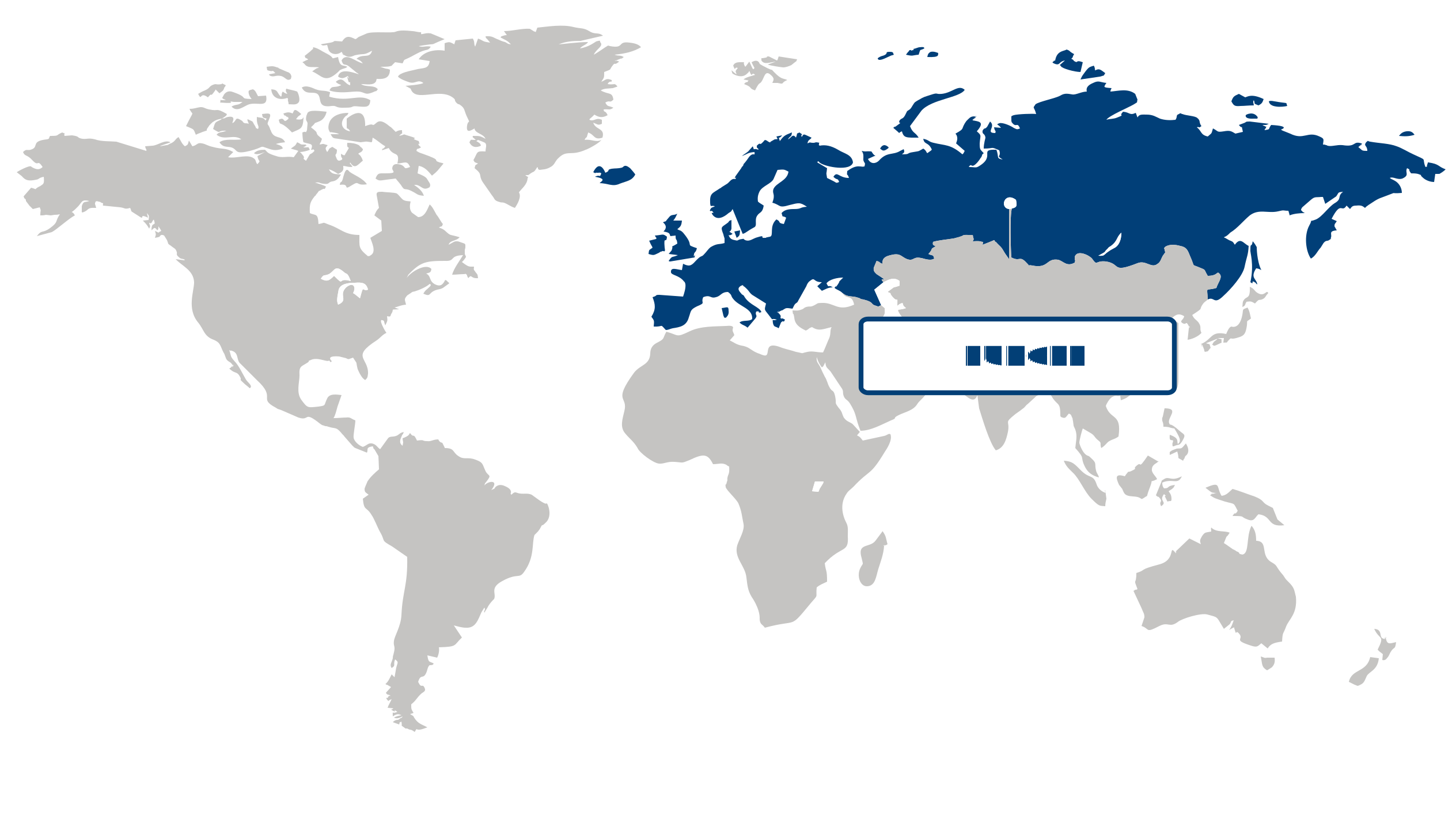
Largest Region
Europe
39.01% Market Share in 2026
Europe (Largest Region) vs Asia Pacific (Fastest-Growing Region)
Europe held the largest share of the cashmere clothing market in 2026, accounting for 39.01% share, supported by the region's established luxury apparel industry, strong consumer preference for premium textiles, and long-standing appreciation for high-quality natural fibers. Cashmere's association with craftsmanship, exclusivity, softness, and sophisticated fashion continues to sustain demand across premium clothing categories. The region's mature luxury retail ecosystem and established fashion culture also provide favorable conditions for cashmere products, while increasing attention to material provenance, durability, and responsible sourcing is shaping purchasing decisions. Demand for refined, versatile garments that combine comfort with premium design further reinforces Europe's established position.
Asia Pacific is emerging as the fastest-growing regional market, driven by rising disposable incomes, expanding affluent and aspirational consumer groups, and growing interest in premium fashion products. Increasing exposure to international luxury trends is encouraging consumers to seek high-quality apparel and natural-fiber garments, while expanding urban populations are creating new demand for sophisticated clothing categories. E-commerce and digitally enabled retail are also broadening access to premium apparel beyond traditional luxury shopping centers. In addition, improving consumer awareness of craftsmanship, fiber quality, and sustainable sourcing is supporting greater interest in premium cashmere garments across key markets in the region.
Key Country Insights
The U.S. cashmere clothing market is supported by growing demand for premium apparel in urban luxury segments and e-commerce channels. Brands in the U.S. focus on blending comfort with contemporary fashion styling and expanding accessible luxury collections.
Japan prioritizes high-quality cashmere apparel with a strong focus on minimalist aesthetics and precision tailoring. Brands in Japan emphasize fabric softness, lightweight layering, and subtle design elements suited to seasonal urban wardrobes.
South Korea integrates cashmere clothing into fast-evolving fashion trends, with strong influence from celebrity styling and digital retail platforms. Manufacturers in South Korea focus on youthful silhouettes and seasonal color-driven collections.
Germany emphasizes ethically sourced and certified cashmere garments with strong attention to sustainability and transparency in textile production. Companies in Germany continue developing durable, minimalist designs aligned with long-term wardrobe investment trends.
France positions cashmere clothing within its broader luxury fashion heritage, emphasizing craftsmanship and refined design. In France, brands focus on high-end boutique distribution and timeless wardrobe pieces that reinforce luxury identity.
Italy leverages its knitwear tradition to produce high-quality cashmere apparel with strong attention to fabric blending and tailoring. Italian manufacturers emphasize artisanal production techniques and export-oriented premium collections.
Segment Leadership and Growth Trends
End-user Segment Analysis: Women (Largest Segment) vs Men (Fastest-Growing Segment)
The women segment dominated the cashmere clothing market in 2026, accounting for a 61.74% share, supported by strong demand for premium apparel that combines warmth, softness, comfort, and refined styling. Cashmere's association with luxury and high-quality clothing makes it particularly relevant across women's sweaters, coats, scarves, and other seasonal garments. Continued consumer interest in premium fabrics, versatile wardrobe pieces, and understated luxury further supports the segment's leading position.
Men represents the fastest-growing end-user segment as greater attention to premium menswear and elevated everyday dressing expands demand for cashmere apparel. Consumers are increasingly seeking garments that provide both functional comfort and sophisticated styling, creating favorable conditions for wider adoption of cashmere in men's wardrobes. The growing acceptance of luxury knitwear across professional, casual, and seasonal settings is also broadening opportunities for men's cashmere clothing.
Distribution Channel Segment Analysis: Offline (Largest Segment) vs Online (Fastest-Growing Segment)
Offline distribution held the largest share of the cashmere clothing market in 2026 at 59.07%, reflecting the importance of tactile evaluation when purchasing premium apparel. Consumers often prefer to assess the softness, weight, texture, fit, and overall quality of cashmere garments before making a purchase. Physical stores also provide personalized assistance and an immersive premium shopping experience, which remains particularly valuable for higher-value clothing products.
Online is the fastest-growing distribution channel as digital shopping increasingly expands access to premium apparel beyond traditional retail locations. Detailed product descriptions, visual merchandising, customer reviews, and convenient home delivery are helping consumers become more comfortable purchasing cashmere without physically examining garments beforehand. The expansion of digital luxury and premium fashion retail is consequently supporting stronger online engagement and purchase activity.
| Report Segmentation | |||
| Segment | Sub-Segment | Largest Segment | Fastest Growing Segment |
|---|---|---|---|
| End-user | Men, Women | Women | Men |
| Distribution Channel | Online, Offline | Offline | Online |
| Product | Sweaters & Coats, Pants & Trousers, Tees & Polo, Others | Sweaters & Coats | Tees & Polo |
 Read our Research Approach
Competitive Landscape and Market Positioning
Top players in the cashmere clothing market:
1. Loro Piana S.p.A. (Italy)
2. Ermenegildo Zegna N.V. (Italy)
3. Brunello Cucinelli S.p.A. (Italy)
4. Pringle of Scotland Ltd (United Kingdom)
5. Inner Mongolia Erdos Group Co. Ltd. (China)
6. Naadam Inc. (USA)
7. Eric Bompard SAS (France)
8. Autumn Cashmere LLC (USA)
9. Sofia Cashmere (Italy)
10. Alyki - Felice De Palma & Co. (Italy)
The cashmere clothing market is evolving through increased focus on premium craftsmanship, sustainable sourcing practices, and luxury product differentiation. Brands are expanding collections that combine comfort, durability, and eco-conscious manufacturing to appeal to changing consumer preferences. Growing demand for high-quality apparel and personalized fashion experiences is also encouraging innovation in design and material refinement within the cashmere clothing market.
Industry Development/News
| Company Name | Date | Key Development |
|---|---|---|
| White + Warren | Jan-26 | White + Warren launched the "Clubhouse Collection," introducing sporty cashmere styles including hoodies, cardigans, and shorts. This expansion marks a strategic shift toward casual, athleisure-inspired knitwear, broadening the brand's product range to accommodate consumer demand for high-end cashmere suitable for daily wear rather than just traditional luxury occasions. |
| Sainsbury’s Tu Clothing | Nov-25 | Sainsbury’s Tu Clothing launched a 100% cashmere collection featuring jumpers and cardigans at accessible price points. This mass-market entry signals a strategic move to democratize luxury fabrics, making premium cashmere more attainable for broad consumer demographics and expanding the material's footprint beyond traditional luxury retail. |
| Kujten | Aug-25 | Kujten opened its first United States flagship store on Madison Avenue in New York City. This strategic expansion into the American luxury market is designed to increase brand visibility and provide a direct-to-consumer retail environment for its comprehensive cashmere collections, supporting the brand’s global growth and strengthening its presence among discerning North American luxury buyers. |
| Elle & Riley | Oct-25 | New Zealand-based brand Elle & Riley expanded into the United States with the opening of its first retail location in Beverly Hills. This move reflects a growing trend of emerging premium brands entering key global luxury hubs to foster direct consumer engagement and establish a physical presence in high-traffic international markets. |
| NakedCashmere | Sep-24 | NakedCashmere reported a 149% increase in international sales following the implementation of Shopify’s Managed Markets solution. By leveraging localized digital commerce infrastructure, the company successfully scaled its cross-border operations and improved market penetration, demonstrating the critical role of e-commerce optimization in driving growth for digitally native premium apparel brands. |
| Kohl’s | Oct-24 | Kohl’s integrated the digitally native brand Naadam into its retail assortment, launching the “Soft Collection” across approximately 100 physical stores and online channels. This partnership reflects a broader retail trend of incorporating direct-to-consumer premium brands into mainstream department store networks to attract younger, luxury-conscious consumers and enhance product diversity. |
| Les 100 Ciels | May-25 | Les 100 Ciels appointed SAMY to oversee its global creative and influencer marketing strategy. The partnership is focused on refining the brand's digital positioning and accelerating its international expansion, utilizing targeted content and influencer outreach to increase engagement and scale the brand's footprint within the highly competitive premium cashmere apparel market. |
Why Choose Us
Specialized Expertise: Our team comprises industry experts with a deep understanding of your market segment. We bring specialized knowledge and experience that ensures our research and consulting services are tailored to your unique needs.
Customized Solutions: We understand that every client is different. That's why we offer customized research and consulting solutions designed specifically to address your challenges and capitalize on opportunities within your industry.
Proven Results: With a track record of successful projects and satisfied clients, we have demonstrated our ability to deliver tangible results. Our case studies and testimonials speak to our effectiveness in helping clients achieve their goals.
Cutting-Edge Methodologies: We leverage the latest methodologies and technologies to gather insights and drive informed decision-making. Our innovative approach ensures that you stay ahead of the curve and gain a competitive edge in your market.
Client-Centric Approach: Your satisfaction is our top priority. We prioritize open communication, responsiveness, and transparency to ensure that we not only meet but exceed your expectations at every stage of the engagement.
Continuous Innovation: We are committed to continuous improvement and staying at the forefront of our industry. Through ongoing learning, professional development, and investment in new technologies, we ensure that our services are always evolving to meet your evolving needs.
Value for Money: Our competitive pricing and flexible engagement models ensure that you get maximum value for your investment. We are committed to delivering high-quality results that help you achieve a strong return on your investment.
Select Licence Type

