



Cellular Glass Market Size & Growth Forecast 2026–2035, By Segments (Product, Application), Regional Demand Trends (North America, Asia Pacific, Europe), Key Country Insights (U.S., Japan, South Korea, Germany, France, Italy), and Competitive Landscape
Market Size and Growth Outlook
Cellular Glass Market size stood at USD 654.5 Million in 2025 and is predicted to grow at a 2.6% CAGR from 2026 to 2035, attaining USD 846.03 Million by 2035. The industry revenue for 2026 is assessed at USD 669.23 million.
Base Year Value (2025)
USD 654.5 Million
CAGR (2026-2035)
2.6%
Forecast Year Value (2035)
USD 846.03 Million

Historical Data Period
2022-2025

Largest Region
Europe

Forecast Period
2026-2035
Cellular Glass Market Intelligence Snapshot:
-
Regional Market Dynamics:
- Europe accounted for 36.89% of the market in 2025, supported by strong industrial and commercial construction demand for durable, fire-resistant, and moisture-resistant insulation materials.
- Asia Pacific is projected to expand at a 2.96% CAGR as construction activity rises and adoption of thermal and moisture-resistant insulation materials increases across infrastructure and building projects.
-
Segment Momentum:
- Blocks & Shells accounted for 65.38% of the market in 2025, supported by dependable thermal performance, moisture resistance, dimensional stability, and compatibility with established insulation installation practices.
- Foam Glass Gravels are expanding rapidly because they combine lightweight fill, insulation, and drainage functions while reducing structural load and improving efficiency in civil and infrastructure projects.
-
Market Expansion Drivers:
- Rising demand for energy-efficient insulation materials in sustainable construction projects.
- Infrastructure investments and construction spending supporting advanced insulation adoption.
- Strengthening building energy efficiency and fire safety standards driving insulation replacement cycles.
-
Leading Market Participants:
Major players in the cellular glass market include Owens Corning (United States), GLAPOR Werk Mitterteich GmbH (Germany), Misapor AG (Switzerland), Earthstone International LLC (United States), Zhejiang Dehe Insulation Technology Co., Ltd. (China), Zhejiang Zhenshen Thermal Technology Co., Ltd. (China), REFAGLASS s.r.o. (Czech Republic), Geocell Schaumglas GmbH (Austria), Uusioaines Oy (Finland), Anhui Huichang New Material Co., Ltd. (China).
Global Market Forecast Snapshot:
-
Market Outlook:
- 2025 Market Size: USD 654.5 Million
- Projected Market Size: USD 846.03 Million by 2035
- Growth Forecasts: 2.6% CAGR (2026-2035)
-
Regional and Segment Outlook:
- Leading Regional Market: Europe
- High-Growth Regional Hub: Asia Pacific
- Core Revenue Segment: Blocks & Shells (Product) | Construction (Application)
- Emerging Opportunity Segment: Foam Glass Gravels (Product) | Industrial (Application)
Market Growth Drivers and Industry Trends
Rising demand for energy-efficient insulation materials in sustainable construction projectsAs developers and architects place greater emphasis on lowering operational energy use, material selection in the cellular glass market is increasingly shaped by insulation performance over long building lifecycles. Cellular glass aligns with sustainable construction priorities because it combines thermal stability with moisture resistance and dimensional durability, reducing the risk of performance loss that can undermine energy-efficiency targets. This is influencing specification decisions in commercial buildings, institutional projects, and technically demanding envelopes where long-term insulation integrity matters more than low upfront material cost, driving demand for the cellular glass market through premium project segments that prioritize lifecycle performance and building certification outcomes.
Infrastructure investments and construction spending supporting advanced insulation adoption
Higher infrastructure spending expands the volume of projects that require durable insulation for transport, industrial, utility, and public-use assets, creating practical demand channels for the cellular glass market beyond conventional building applications. In these environments, project owners and engineering firms often favor materials that can withstand mechanical stress, moisture exposure, and harsh service conditions while maintaining insulating properties over extended operating periods. That procurement behavior supports market expansion by increasing adoption in large-scale civil and industrial construction programs where reliability, maintenance reduction, and asset longevity carry greater weight in material approval and budgeting decisions.
Strengthening building energy efficiency and fire safety standards driving insulation replacement cycles
Tighter building codes and safety requirements are pushing owners, contractors, and facility managers to reassess legacy insulation systems that no longer meet current performance expectations, creating a replacement-driven demand base for the cellular glass market. Fire safety scrutiny is particularly important in applications where combustible or moisture-sensitive materials face growing regulatory and insurance pressure, making non-combustible insulation options more attractive during retrofits and system upgrades. At the same time, stricter energy-efficiency standards are influencing renovation scopes to include higher-performing envelope and technical insulation materials, strengthening market development through compliance-led purchasing rather than discretionary upgrades alone.
| Growth Driver Assessment Framework | |||||
| Growth Driver | Impact On CAGR | Regulatory Influence | Geographic Relevance | Adoption Rate | Impact Timeline |
|---|---|---|---|---|---|
| Rising demand for energy-efficient insulation materials in sustainable construction projects | 2.10% | Moderate | Europe, North America | Medium | Mid Term |
| Infrastructure investments and construction spending supporting advanced insulation adoption | 1.90% | Moderate | North America, Europe | Medium | Mid Term |
| Strengthening building energy efficiency and fire safety standards driving insulation replacement cycles | 1.60% | High | Europe, North America | Medium | Long Term |
Unlock insights tailored to your business with our bespoke market research solutions - Click to get your customized report now!
Regional Demand Dynamics
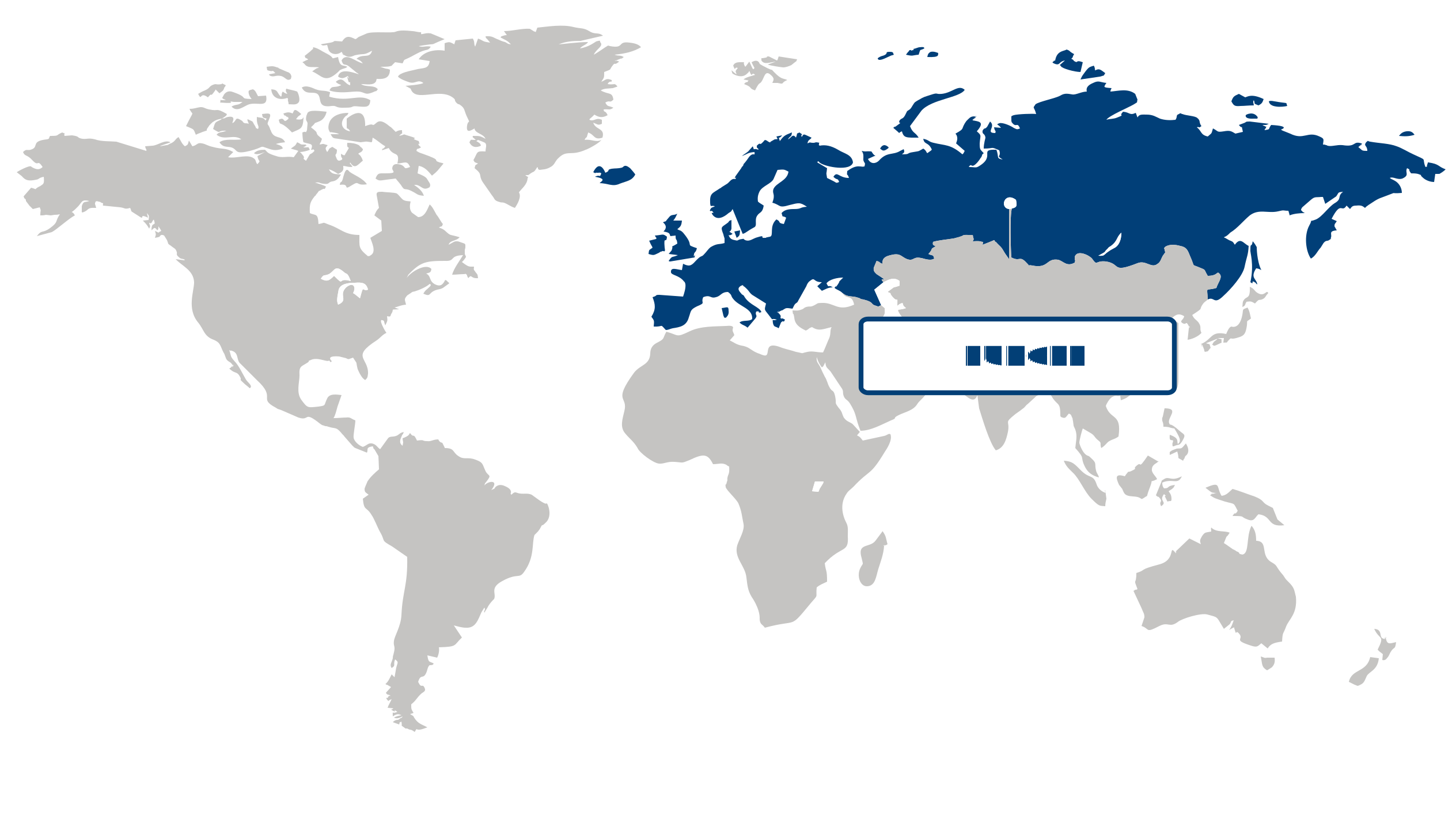
Largest Region
Europe
36.89% Market Share in 2025
Europe held a 36.89% share of the cellular glass market in 2025, supported by its established base of industrial and commercial construction activity where insulation performance, fire resistance, and moisture control are critical in material selection. The region’s leadership is underpinned by steady use of cellular glass in applications that demand long service life and dimensional stability, particularly where building operators and project owners prioritize durable thermal insulation in challenging operating environments. This keeps demand anchored in practical specification patterns rather than short-term substitution.
Asia Pacific is projected to expand at a 2.96% CAGR over the forecast period, with growth in the cellular glass market being propelled by rising construction activity and broader adoption of insulation materials across developing end-use environments. The region’s momentum is tied to increasing incorporation of thermal and moisture-resistant solutions in new infrastructure and building projects, where material upgrades are becoming more common as project requirements evolve. As application awareness deepens and installation volumes increase, regional uptake is advancing through real project-level adoption rather than isolated demand pockets.
Key Country Insights
The U.S. expands the use of cellular glass in industrial facilities, LNG infrastructure, and commercial construction. Project developers prioritize durable insulation materials that offer moisture resistance, long service life, and reduced maintenance requirements.
Japan adopts cellular glass for infrastructure and buildings requiring durable, moisture-resistant insulation. Manufacturers focus on material reliability and performance under demanding environmental and seismic operating conditions.
South Korea increases cellular glass usage in petrochemical plants, energy facilities, and commercial developments. Buyers value insulation systems that improve operational reliability while minimizing lifecycle maintenance costs.
Germany integrates cellular glass into energy-efficient buildings and industrial insulation systems. The country emphasizes thermal performance, recyclability, and compliance with stringent building efficiency requirements across construction projects.
France promotes cellular glass in projects emphasizing sustainable construction and efficient thermal management. Market participants prioritize recyclable insulation materials that support environmental objectives without compromising long-term performance.
Italy applies cellular glass in both modern construction and renovation projects where moisture protection is essential. The market values durable insulation solutions compatible with demanding architectural and infrastructure applications.
Segment Leadership and Growth Trends
Blocks & Shells held the dominant position in the cellular glass market in 2025, accounting for a 65.38% share. This segment’s leadership is maintained through its broad suitability for insulation applications that require dimensional stability, moisture resistance, and dependable thermal performance in standardized formats. In the cellular glass market, blocks and shells remain the preferred choice where established installation practices, predictable product performance, and compatibility with building and industrial insulation systems are critical to project execution.
Foam Glass Gravels are emerging as the fastest-growing product segment in the cellular glass market because they fit applications where lightweight fill, insulation, and drainage functions need to be combined in a single material layer. Their momentum is being reinforced through practical construction requirements that favor easier ground preparation and reduced structural load compared with more conventional fill solutions. Relative to alternative product forms, foam glass gravels are gaining traction where project teams value material efficiency and multifunctional performance in civil and infrastructure-related uses.
Application Segment Analysis: Construction (Largest Segment) vs Industrial (Fastest-Growing Segment)
Construction represented the largest application in the cellular glass market in 2025, with a 49.82% share. Its leading share reflects the steady use of cellular glass insulation in building envelopes, roofs, floors, and related structures where long service life and resistance to moisture are important. The construction segment maintains its position because the cellular glass market serves practical building needs that prioritize durable insulation materials capable of performing reliably under demanding site and environmental conditions.
Industrial is the fastest-growing application segment in the cellular glass market, influenced by rising demand for insulation solutions that can operate reliably in process-driven environments. Growth is being reinforced by the need for materials that handle harsh operating conditions while helping maintain thermal efficiency and system integrity across industrial facilities. Compared with more conventional application areas, industrial use is gaining momentum as operators place greater emphasis on insulation performance in settings where operational reliability and protection against moisture-related issues are central requirements.
| Report Segmentation | |||
| Segment | Sub-Segment | Largest Segment | Fastest Growing Segment |
|---|---|---|---|
| Product | Blocks & Shells, Sheets & Panels, Foam Glass Gravels | Blocks & Shells | Foam Glass Gravels |
| Application | Construction, Industrial, Chemical, Others | Construction | Industrial |
 Read our Research Approach
Competitive Landscape and Market Positioning
Prominent players in the cellular glass market:1. Owens Corning (United States)
2. GLAPOR Werk Mitterteich GmbH (Germany)
3. Misapor AG (Switzerland)
4. Earthstone International LLC (United States)
5. Zhejiang Dehe Insulation Technology Co. Ltd. (China)
6. Zhejiang Zhenshen Thermal Technology Co. Ltd. (China)
7. REFAGLASS s.r.o. (Czech Republic)
8. Geocell Schaumglas GmbH (Austria)
9. Uusioaines Oy (Finland)
10. Anhui Huichang New Material Co. Ltd. (China)
Energy-efficient material innovation is strengthening the cellular glass market landscape. Enhanced insulation properties and sustainability compliance are shaping product development priorities. Continuous innovation is leading to improved thermal performance solutions across construction applications.
Industry Development/News
| Company Name | Date | Key Development |
|---|---|---|
| Schlüsselbauer; Reiling | May-23 | Schlüsselbauer and Reiling merged their German cellular glass operations to form Veriso GmbH & Co. KG, with equal ownership. The consolidation strengthens production and market positioning in cellular glass manufacturing by combining operational capabilities within Germany. |
| Owens Corning | Jan-23 | Owens Corning launched FOAMGLAS Perinsul SIB, a thermal bridging solution designed for high-performance building applications. The product expands its cellular glass portfolio and enhances its offering in energy-efficient building insulation systems. |
| Owens Corning | Nov-22 | Owens Corning ceased operations at its Santa Clara insulation facility and completed its divestment, reallocating resources toward more efficient manufacturing assets. The restructuring reflects a strategic focus on optimizing production footprint within the insulation materials segment. |
| Owens Corning | Nov-17 | Owens Corning acquired Pittsburgh Corning, a leading cellular glass insulation manufacturer for commercial and industrial applications. The acquisition significantly expanded Owens Corning’s insulation portfolio and strengthened its position in cellular glass-based thermal insulation solutions. |
Why Choose Us
Specialized Expertise: Our team comprises industry experts with a deep understanding of your market segment. We bring specialized knowledge and experience that ensures our research and consulting services are tailored to your unique needs.
Customized Solutions: We understand that every client is different. That's why we offer customized research and consulting solutions designed specifically to address your challenges and capitalize on opportunities within your industry.
Proven Results: With a track record of successful projects and satisfied clients, we have demonstrated our ability to deliver tangible results. Our case studies and testimonials speak to our effectiveness in helping clients achieve their goals.
Cutting-Edge Methodologies: We leverage the latest methodologies and technologies to gather insights and drive informed decision-making. Our innovative approach ensures that you stay ahead of the curve and gain a competitive edge in your market.
Client-Centric Approach: Your satisfaction is our top priority. We prioritize open communication, responsiveness, and transparency to ensure that we not only meet but exceed your expectations at every stage of the engagement.
Continuous Innovation: We are committed to continuous improvement and staying at the forefront of our industry. Through ongoing learning, professional development, and investment in new technologies, we ensure that our services are always evolving to meet your evolving needs.
Value for Money: Our competitive pricing and flexible engagement models ensure that you get maximum value for your investment. We are committed to delivering high-quality results that help you achieve a strong return on your investment.
Select Licence Type

