Children's Suits & Ensembles Market Size & Growth Forecast 2027–2036, By Segments (Distribution Channel, End-User, Fiber), Regional Demand Trends (North America, Asia Pacific, Europe), Key Country Insights (U.S., Japan, South Korea, Germany, France, Italy), and Competitive Landscape
Jump to content
Market Size and Growth Outlook
Children's Suits & Ensembles Market size was over USD 4.6 billion in 2026 and is likely to grow at a 3.71% CAGR between 2027 and 2036, attaining USD 6.62 billion by 2036. The industry revenue for 2027 is assessed at USD 4.74 billion.
Get more details on this report
Request Free Sample ReportChildren's Suits & Ensembles Market Intelligence Snapshot
Regional Market Dynamics
- Europe was the leading regional market in 2026, supported by a mature apparel industry, established retail channels, and steady demand for children's formalwear for ceremonies and celebrations.
- Asia Pacific is forecast to grow at a 3.31% CAGR, driven by expanding organized retail, higher spending on occasionwear, and broader access to branded children's apparel through physical and digital channels.
Segment Momentum
- Offline channels captured a 76.8% share in 2026 as parents prefer to assess fit, fabric quality, and coordinated styles in person for occasion-specific children's formalwear.
- The girls segment is expanding fastest as demand rises for more design variety, fashionable formal outfits, and occasion-based wardrobe updates across celebrations and social events.
Market Expansion Drivers
- Rising participation in social events increasing demand for occasion-specific children's formalwear.
- Growing influence of social media driving premium and fashion-forward children's apparel purchases.
- Expansion of online retail platforms improving accessibility to branded children's formal clothing.
Leading Market Participants
- Prominent companies in the children's suits & ensembles market include Inditex, S.A. (Spain), Marks and Spencer Group plc (United Kingdom), Hugo Boss AG (Germany), Calvin Klein Inc. (United States), Giorgio Armani S.p.A. (Italy), Ralph Lauren Corporation (United States), Hennes & Mauritz AB (Sweden), Gap Inc. (United States), Next plc (United Kingdom), PVH Corp. (United States).
Global Market Forecast Snapshot
Market Outlook
- 2026 Market Size: USD 4.6 billion
- 2027 Estimated Market Size: USD 4.74 billion.
- Projected Market Size: USD 6.62 billion by 2036
- Growth Forecast: 3.71% CAGR (2027-2036)
Regional and Segment Outlook
- Leading Regional Market: Europe
- High-Growth Regional Hub: Asia Pacific
- Core Revenue Segment: Offline (Distribution Channel) | Boys (End-User) | Polyester (Fiber)
- Emerging Opportunity Segment: Online (Distribution Channel) | Girls (End-User) | Cellulosic (Fiber)
Market Growth Drivers and Industry Trends
Rising participation in social events increasing demand for occasion-specific children's formalwear
Greater participation in social events will support children's suits & ensembles market growth by increasing the need for clothing designed specifically for formal occasions. Families seeking appropriate attire for children attending celebrations and other social gatherings are creating demand for coordinated suits and ensembles that provide a polished appearance suited to occasion-specific requirements.
Growing influence of social media driving premium and fashion-forward children's apparel purchases
Social media influence is shaping children's suits & ensembles market demand by increasing exposure to premium and fashion-forward children's clothing styles. Greater visibility of apparel trends can encourage parents to seek distinctive formalwear with contemporary designs and premium positioning, particularly when selecting outfits intended for social occasions and visually prominent events.
Expansion of online retail platforms improving accessibility to branded children's formal clothing
The expansion of online retail platforms is improving access to children's suits & ensembles market offerings by giving consumers broader opportunities to find branded formal clothing. Online channels can make a wider selection of children's suits and coordinated outfits available to shoppers, supporting easier product discovery and purchasing across different styles and formalwear requirements.
| Growth Driver | Impact on CAGR | Regulatory Influence | Geographic Relevance | Adoption Rate | Impact Timeline |
|---|---|---|---|---|---|
| Rising participation in social events increasing demand for occasion-specific children's formalwear | 1.50% | Low | North America, Asia Pacific | High | Near Term |
| Growing influence of social media driving premium and fashion-forward children's apparel purchases | 1.30% | Low | Europe, North America | Medium | Mid Term |
| Expansion of online retail platforms improving accessibility to branded children's formal clothing | 1.10% | Low | Asia Pacific, Europe | High | Mid Term |
Unlock insights tailored to your business with our bespoke market research solutions.
Click to get your customized report now.
Regional Demand Dynamics
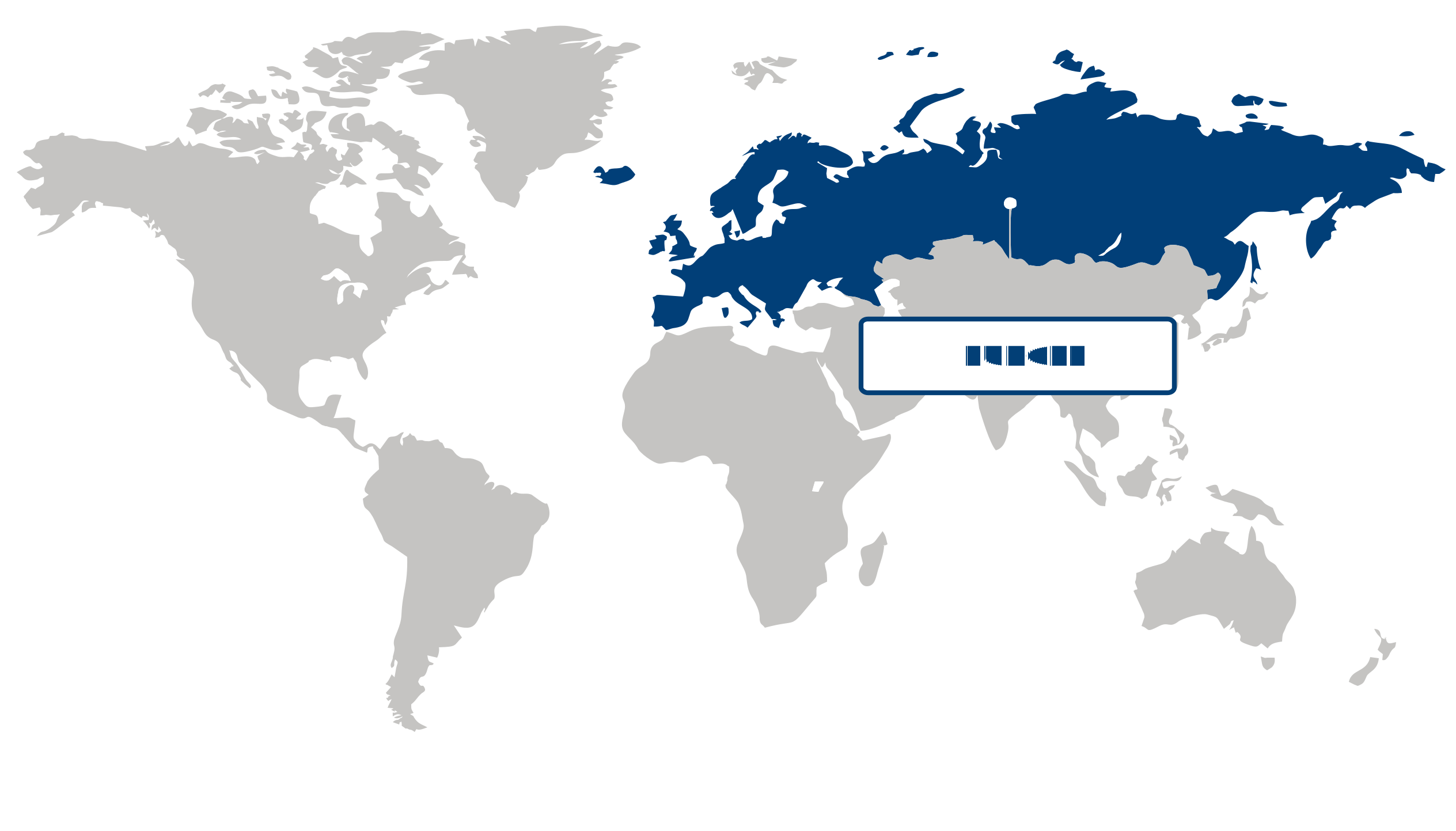
Europe (Largest Region)
The children's suits & ensembles market was led by Europe in 2026, reflecting the region's strong cultural preference for formal children's clothing, established apparel manufacturing expertise, and consistent demand for occasion-specific outfits. Children's suits and coordinated ensembles are widely used for ceremonies, celebrations, family events, school functions, and other formal occasions, creating a stable demand base for tailored apparel. Parents are increasingly seeking garments that combine polished styling with comfort, durability, and age-appropriate design, encouraging manufacturers to develop more versatile collections. Europe's mature fashion and retail infrastructure also provides consumers with broad access to premium and contemporary children's clothing. Growing attention to fabric quality, responsible sourcing, and sustainable apparel production is further influencing purchasing decisions, while established design capabilities allow regional manufacturers to respond effectively to evolving preferences in children's formalwear.
Asia Pacific (Fastest-Growing Region)
Asia Pacific is expected to register the fastest growth in the children's suits & ensembles market, supported by rising household incomes, expanding urban populations, and increasing expenditure on children's apparel for social and ceremonial occasions. Cultural celebrations and formal family events create recurring demand for coordinated and traditional as well as contemporary clothing styles. At the same time, growing exposure to global fashion trends is encouraging parents to consider modern suit designs and versatile ensembles for children. Expansion of organized retail and online shopping is improving access to a wider variety of products across price and style categories, particularly in developing urban markets. Rising consumer awareness of apparel quality, increasing participation in formal events, and greater willingness to spend on children's occasionwear are further strengthening the regional demand environment.
| Parameter | North America | Asia Pacific | Europe | Latin America | MEA |
|---|---|---|---|---|---|
| Innovation HubiScaleNascentDeveloping Advanced | |||||
| Cost-Sensitive RegioniScaleLowMedium High | |||||
| Regulatory EnvironmentiScaleRestrictiveNeutral Supportive | |||||
| Demand DriversiScaleWeakModerate Strong | |||||
| Development StageiScaleEmergingDeveloping Developed | |||||
| Adoption RateiScaleLowMedium High | |||||
| New Entrants / StartupsiScaleSparseModerate Dense | |||||
| Macro IndicatorsiScaleWeakStable Strong |
Key Country Insights
Germany 🇩🇪
Precision Apparel StandardsGermany emphasizes durable construction, quality tailoring, and sustainable materials in children's suits and ensembles. German retailers increasingly expand collections that balance formal appearance with comfort for extended wear during special occasions.
France 🇫🇷
Premium Fashion HeritageFrance prioritizes elegant children's suits and ensembles that reflect refined tailoring and premium fabric selection. French brands continue introducing sophisticated collections designed for ceremonies while incorporating practical features valued by parents.
Italy 🇮🇹
Tailoring Craftsmanship FocusItaly emphasizes high-quality tailoring and fashionable children's formalwear inspired by established apparel craftsmanship. Italian manufacturers develop collections that balance traditional styling with modern fabrics to improve comfort and durability for formal occasions.
Japan 🇯🇵
Refined Formal StylingJapan values children's suits and ensembles featuring premium craftsmanship, lightweight fabrics, and minimalist aesthetics. Japanese brands continue developing formal collections that offer improved comfort while maintaining polished presentation for ceremonial occasions.
South Korea 🇰🇷
Trend-Led Occasion FashionSouth Korea integrates contemporary fashion influences into children's formalwear collections with attention to fit and coordinated styling. Local brands respond to demand for stylish ensembles that combine comfort with premium visual appeal.
United States 🇺🇸
Occasion Wear EvolutionThe U.S. children's suits & ensembles market is adapting to demand for comfortable, versatile formalwear suitable for celebrations and family events. Brands increasingly combine durable fabrics with modern styling to appeal to both parents and young consumers.
Children's Suits & Ensembles Market Share (%), by Distribution Channel, 2026
Go beyond the chart, access full insights & data tables
Request Free Sample ReportDistribution Channel Segment Analysis: Offline (Largest Segment) vs Online (Fastest-Growing Segment)
The offline segment led the children's suits & ensembles market, accounting for a 76.8% share in 2026, supported by consumers' preference for physically examining children's clothing before purchase. Brick-and-mortar stores allow parents to assess fabric quality, fit, stitching, colors, and overall appearance directly, which is particularly important when selecting formal and occasion-oriented apparel for children. In-store assistance and the ability to try garments on also help reduce concerns related to sizing and comfort. Established retail networks and the availability of children's apparel across department stores, specialty outlets, and other physical locations further reinforce the segment's strong position.
Online is the fastest-growing distribution channel as digital shopping offers parents greater convenience, broader product selection, and access to children's suits and ensembles without requiring a store visit. E-commerce platforms enable consumers to compare styles, sizes, designs, and prices efficiently while providing access to products beyond their immediate geographic area. Improvements in digital product presentation, customer reviews, delivery services, and convenient return options are also reducing barriers to purchasing children's apparel online. Increasing familiarity with digital shopping is therefore supporting a gradual shift toward online purchasing.
End-User Segment Analysis: Boys (Largest Segment) vs Girls (Fastest-Growing Segment)
Within the children's suits & ensembles market, the boys segment held the largest share of 57.75% in 2026, reflecting strong demand for coordinated formalwear for school events, celebrations, ceremonies, and other occasions. Suits and matching ensembles are widely used for boys because coordinated jackets, trousers, shirts, and accessories provide a complete formal appearance. Demand is further supported by parents seeking versatile outfits that can be used across multiple social and family occasions, while the availability of varied styles, fabrics, and designs strengthens purchasing options.
The girls segment is experiencing faster growth as demand expands for coordinated formal and occasion wear designed specifically around changing preferences in children's fashion. Parents are increasingly seeking polished outfits for celebrations, ceremonies, parties, and other events, creating opportunities for a wider range of suits and ensemble styles for girls. Greater emphasis on fashionable designs, coordinated separates, decorative elements, and comfortable fabrics is broadening product appeal. The increasing diversification of children's occasionwear is consequently supporting stronger adoption within the girls segment.
| Segment | Sub-Segment | Largest Segment | Fastest Growing |
|---|---|---|---|
| Distribution Channel | Offline, Online | Offline | Online |
| End-User | Girls, Boys | Boys | Girls |
| Fiber | Cotton, Polyester, Cellulosic, Others | Polyester | Cellulosic |
Competitive Landscape and Market Positioning
Prominent players in the children's suits & ensembles market:
1. Inditex S.A. (Spain)
2. Marks and Spencer Group plc (United Kingdom)
3. Hugo Boss AG (Germany)
4. Calvin Klein Inc. (United States)
5. Giorgio Armani S.p.A. (Italy)
6. Ralph Lauren Corporation (United States)
7. Hennes & Mauritz AB (Sweden)
8. Gap Inc. (United States)
9. Next plc (United Kingdom)
10. PVH Corp. (United States)
Rising consumer preference for stylish and comfortable children's apparel is strengthening the children's suits & ensembles market. Product innovation centered on durable fabrics, seasonal collections, and personalized designs is helping manufacturers differentiate their offerings in a competitive marketplace.
| Company | Market Share | Company Revenue | Revenue CAGR (%) | Product Portfolio | Geographic Presence | Innovation / R&D Focus | Strategic Developments |
|---|---|---|---|---|---|---|---|
| Inditex S.A. (Spain) | |||||||
| Marks and Spencer Group plc (United Kingdom) | |||||||
| Hugo Boss AG (Germany) | |||||||
| Calvin Klein Inc. (United States) | |||||||
| Giorgio Armani S.p.A. (Italy) | |||||||
| Ralph Lauren Corporation (United States) | |||||||
| Hennes & Mauritz AB (Sweden) | |||||||
| Gap Inc. (United States) | |||||||
| Next plc (United Kingdom) | |||||||
| PVH Corp. (United States). |
Customize Your Report
Explore examples of how this report can be tailored to different research needs, including custom segments, additional topics or chapters, and related reports. Click a section of the wheel or its numbered marker to explore the available options.
Children's Suits & Ensembles Market — Custom Segments
| Segment | Sub-Segment |
|---|---|
| Age Group | Infants & Toddlers, Preschool Children, School-Age Children, Preteens |
| Occasion | Formal & Ceremonial Wear, Party & Special Occasion Wear, School & Institutional Wear, Casual & Everyday Wear |
| Price Segment | Economy, Mid-Range, Premium, Luxury |
Children's Suits & Ensembles Market — Custom TOC
| Custom Chapter | Chapter Details |
|---|---|
| Occasion-Based Demand and Seasonal Buying Opportunity Assessment |
|
| Parent Purchase Decision and Brand Engagement Analysis |
|
| Licensing and Character Brand Partnership Opportunities |
|
Need a different cut of the data?
Request Custom ResearchFrequently Asked Questions
What is the market size of children's suits & ensembles?
How is the children's suits & ensembles industry projected to perform over the next decade?
How is rising participation in social and ceremonial events shaping demand for children’s formalwear?
What is accelerating the shift toward online channels in the children’s suits and ensembles market?
Why is offline retail the leading distribution channel in the children's suits & ensembles market?
Why are girls the fastest-growing end-user segment in the children's suits & ensembles market?
Why does Europe lead the children's suits & ensembles market?
What is supporting growth in the children's suits & ensembles market across Asia Pacific?
Which organizations are considered leaders in the children's suits & ensembles landscape?
Our Clients
"The report provided us with a clear direction, and the level of detail was beyond what we expected. I would definitely recommend their services to others."
Haier Appliances
"The collaboration with Fundamental Business Insights has added significant value to our decision-making process, and we look forward to continuing this partnership for our future market research requirements."
Luxottica Group S.p.A.
"The team at FBI delivered an exceptional research report. The insights on industry innovations were particularly impressive and added a lot of value to the overall report."
Nike
Our Research Team & Methodology
Every Fundamental Business Insights report is built by a dedicated vertical research team, validated through a structured primary-and-secondary methodology, and reviewed for accuracy before it reaches you.
Delivery
Published
Available
Support
- Market Size & Forecast
- Market Segmentation
- Regional Analysis
- Growth Drivers & Challenges
- Market Dynamics
- Competitive Landscape
- Company Profiles
- Competitive Benchmarking
- Mergers & Acquisitions
- Market Share Analysis or Key Company Strategies
- Value Chain Analysis
- Porter's Five Forces
- PESTLE Analysis
- Pricing Trends
- Supply-Demand Analysis
- Technology Landscape
- Regulatory Landscape
- Investment & Funding Landscape
- Emerging Opportunities
- Future Market Outlook