Circular Economy Solutions Market Size & Growth Forecast 2027–2036, By Segments (Solution Type, Application, Platforms Type), Regional Demand Trends (North America, Asia Pacific, Europe), Key Country Insights (U.S., Japan, South Korea, Germany, France, Italy), and Competitive Landscape
Jump to Content
Market Size and Growth Outlook
Circular Economy Solutions Market size stood at USD 3.09 trillion in 2026 and is predicted to grow at a 8.69% CAGR from 2027 to 2036, surpassing USD 7.11 trillion by 2036. The industry revenue for 2027 is assessed at USD 3.32 trillion.
Get more details on this report
Request Free Sample ReportCircular Economy Solutions Market Intelligence Snapshot
Regional Market Dynamics
- Europe leads through strong sustainability policies, established recycling infrastructure, and investment in waste management, resource recovery, and circular business models across multiple industries.
- Asia Pacific is expanding rapidly as industrialization, urbanization, and rising waste generation increase demand for recycling, material recovery, resource efficiency, and sustainable production practices.
Segment Momentum
- Waste management and recycling held a 39.96% market share in 2026, driven by demand for material recovery, waste reduction, and resource reuse. These solutions help organizations improve material efficiency and reduce reliance on virgin resources.
- Circular supply chain networks are emerging as the fastest-growing platform type by connecting suppliers, manufacturers, distributors, and recyclers. They improve visibility into material flows and coordinate recovery, reuse, redistribution, and recycling activities.
Market Expansion Drivers
- Corporate sustainability mandates & investments.
- Adoption of circular solutions in manufacturing sectors.
- Development of recycling & reuse infrastructure.
Leading Market Participants
- Top players in the circular economy solutions market include Veolia (France), SUEZ (France), Waste Management (USA), BASF (Germany), Dow (USA), Covestro (Germany), Umicore (Belgium), Tomra (Norway), Schneider Electric (France), Accenture (Ireland).
Global Market Forecast Snapshot
Market Outlook
- 2026 Market Size: USD 3.09 trillion
- 2027 Estimated Market Size: USD 3.32 trillion
- Projected Market Size: USD 7.11 trillion by 2036
- Growth Forecast: 8.69% CAGR (2027-2036)
Regional and Segment Outlook
- Leading Regional Market: Europe
- High-Growth Regional Hub: Asia Pacific
- Core Revenue Segment: Solution Type (Waste Management & Recycling) | Application (Construction & Built Environment) | Platforms Type (Circular Supply Chain Networks)
- Emerging Opportunity Segment: Solution Type (Waste Management & Recycling) | Application (Construction & Built Environment) | Platforms Type (Circular Supply Chain Networks)
Market Growth Drivers and Industry Trends
Corporate sustainability mandates & investments
The increasing adoption of corporate sustainability mandates is encouraging businesses to integrate circular economy principles into procurement, production, resource management, and waste reduction strategies. Companies are placing greater emphasis on reducing material consumption, extending product lifecycles, and improving resource efficiency as environmental responsibilities become more closely integrated with business operations. Investments in circular solutions can also support operational resilience by reducing dependence on virgin resources and creating opportunities to recover value from discarded materials. The growing alignment between sustainability objectives and long-term business strategies is therefore strengthening demand for circular economy solutions across industries.
Adoption of circular solutions in manufacturing sectors
The adoption of circular solutions across manufacturing sectors is increasing as producers seek to reduce waste, improve material efficiency, and create more sustainable production systems. Manufacturers are incorporating practices such as material recovery, remanufacturing, refurbishment, product redesign, and closed-loop production to retain resources within industrial processes for longer periods. Advances in digital tracking, material sorting, and process optimization are making it easier to monitor resource flows and identify opportunities for reuse. The shift toward resource-efficient manufacturing is further supported by growing demand for products with lower environmental impacts and more sustainable lifecycle characteristics.
Development of recycling & reuse infrastructure
The development of recycling and reuse infrastructure is creating the operational foundation required to support broader adoption of circular economy models. Improved collection networks, sorting capabilities, processing facilities, repair systems, and reverse logistics are enabling materials and products to remain in circulation rather than being discarded after initial use. Infrastructure development is particularly important for handling complex waste streams and recovering materials that require specialized processing. As recycling and reuse systems become more integrated with manufacturing and distribution networks, businesses can establish more efficient resource recovery pathways and strengthen the viability of circular production models.
| Growth Driver | Impact on CAGR | Regulatory Influence | Geographic Relevance | Adoption Rate | Impact Timeline |
|---|---|---|---|---|---|
| Corporate sustainability mandates & investments | 1.8% | Short term (≤ 2 yrs) | Europe; North America; Spillover Asia Pacific | High | Moderate |
| Adoption of circular solutions in manufacturing sectors | 1.5% | Medium term (2–5 yrs) | Europe; Asia Pacific; Spillover North America | Medium | Moderate |
| Development of recycling & reuse infrastructure | 1% | Long term (5+ yrs) | Asia Pacific; Latin America; Spillover MEA | Low | Slow |
Explore Growth Opportunities
Request Free Sample ReportRegional Demand Dynamics
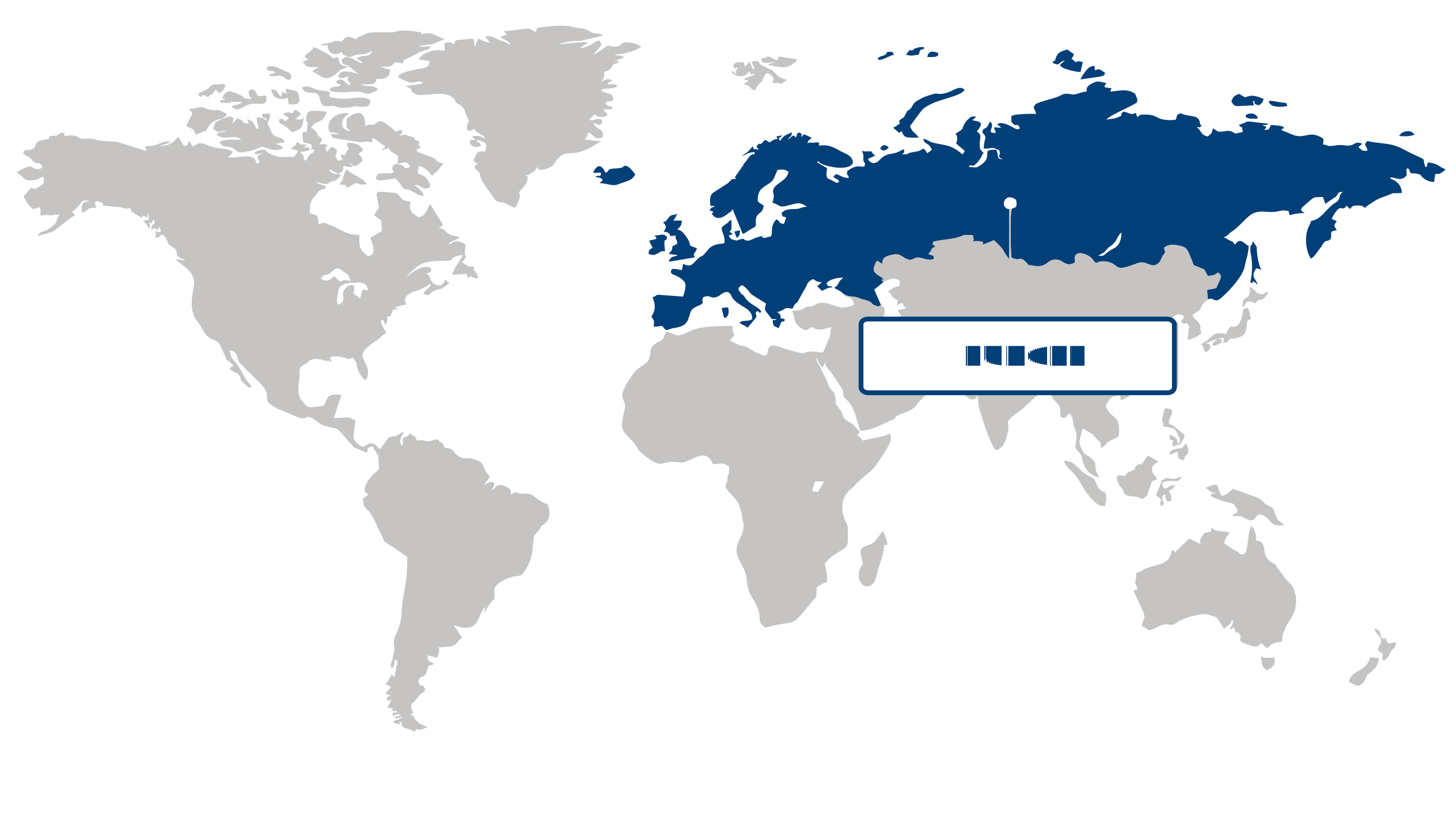
Europe (Largest Region)
Europe held the largest share of the circular economy solutions market in 2026, impelled by strong sustainability policies, established recycling infrastructure, and growing emphasis on resource efficiency across industries. Businesses and governments are increasingly adopting circular economy practices to reduce material waste, improve resource utilization, and promote more sustainable production and consumption models. The region’s focus on environmental protection and transition toward sustainable industrial systems is encouraging investments in waste management, recycling, product life-cycle optimization, and resource recovery solutions. In addition, increasing adoption of circular business models across manufacturing, retail, packaging, and other sectors is expected to reinforce the region’s position in the market.
Asia Pacific (Fastest-Growing Region)
Asia Pacific is expected to be the fastest-growing region in the circular economy solutions market over the forecast period, supported by rapid industrialization, urbanization, increasing waste generation, and growing environmental concerns. Governments and businesses across the region are placing greater emphasis on efficient resource utilization, waste reduction, recycling, and sustainable production practices. The expansion of manufacturing and consumer industries is creating a strong need for solutions that can improve material recovery and reduce dependence on finite resources. Furthermore, increasing awareness of sustainable development and the adoption of policies supporting resource efficiency are encouraging businesses to integrate circular principles into their operations, supporting continued market growth across Asia Pacific.
| Parameter | North America | Asia Pacific | Europe | Latin America | MEA |
|---|---|---|---|---|---|
| Innovation HubiScaleNascentDeveloping Advanced | |||||
| Cost-Sensitive RegioniScaleLowMedium High | |||||
| Regulatory EnvironmentiScaleRestrictiveNeutral Supportive | |||||
| Demand DriversiScaleWeakModerate Strong | |||||
| Development StageiScaleEmergingDeveloping Developed | |||||
| Adoption RateiScaleLowMedium High | |||||
| New Entrants / StartupsiScaleSparseModerate Dense | |||||
| Macro IndicatorsiScaleWeakStable Strong |
Key Country Insights
United States 🇺🇸
Industrial Resource RecoveryThe U.S. market is prioritizing circular solutions that improve material recovery, waste reduction, and resource efficiency across manufacturing and consumer industries. Companies are investing in recycling technologies, product redesign, secondary material use, and digital tracking systems to strengthen supply resilience while meeting evolving sustainability requirements.
Germany 🇩🇪
Closed-Loop ManufacturingGermany is emphasizing circularity within industrial production through material efficiency, remanufacturing, recycling, and durable product design. Manufacturers are integrating resource recovery into established production systems, while traceability and secondary-material sourcing are becoming increasingly important for managing costs and supporting more resilient industrial value chains.
Japan 🇯🇵
Advanced Resource EfficiencyJapan’s circular economy priorities center on efficient material use, product longevity, reuse, and sophisticated recycling processes. Businesses are developing solutions that extend product lifecycles and recover valuable materials, particularly across electronics, automotive, and manufacturing applications where resource optimization can directly support operational efficiency.
South Korea 🇰🇷
Electronics CircularitySouth Korea is focusing circular economy activity on electronics, batteries, manufacturing materials, and recovery infrastructure. Companies are strengthening collection, recycling, component reuse, and material recovery capabilities, with particular attention to extracting value from complex waste streams and integrating recovered materials into new production cycles.
France 🇫🇷
Sustainable Product SystemsFrance is advancing circular economy adoption through product durability, repair, reuse, recycling, and waste reduction across consumer and industrial sectors. Market participants are adapting product and supply-chain models to support longer lifecycles, greater material recovery, and more transparent management of environmental performance.
Italy 🇮🇹
Industrial Reuse NetworksItaly’s circular economy activity is strongly connected to manufacturing, industrial districts, reuse, and material recovery. Businesses are seeking practical ways to convert production residues and end-of-life materials into usable inputs, while repair, refurbishment, and resource-efficient production models support circularity across established industrial value chains.
Circular Economy Solutions Market Share (%), by Solution Type, 2026
Go beyond the chart, access full insights & data tables
Request Free Sample ReportSolution Type Segment Analysis: Waste Management & Recycling (Largest & Fastest-Growing Segment)
The waste management & recycling segment accounted for the largest 2026 market share of 39.96% in the solution type segment and is also projected to remain the fastest-growing solution type. Its strong position is supported by the increasing emphasis on diverting waste from disposal pathways and recovering valuable materials for reuse, refurbishment, and recycling. As organizations and governments place greater focus on resource efficiency and waste reduction, solutions that enable collection, sorting, processing, material recovery, and reintegration into productive use are becoming increasingly important. The segment also benefits from the growing need to address rising waste volumes while reducing dependence on virgin resources. Advancements in waste processing technologies, improved recycling infrastructure, and greater adoption of circular resource management practices are further strengthening demand. As businesses seek to improve material efficiency and align operations with circular economy principles, waste management & recycling solutions are positioned as a central component of broader efforts to close material loops and minimize resource loss.
Application Segment Analysis: Construction & Built Environment (Largest & Fastest-Growing Segment)
The construction & built environment segment represented the largest market share of 28.51% in 2026 among applications and is also expected to register the fastest growth. The segment is benefiting from the substantial material requirements of construction activities and the growing focus on reducing material waste throughout the building lifecycle. Circular economy solutions are increasingly being applied to support material reuse, recycling, refurbishment, resource-efficient design, and improved management of construction and demolition waste. The ability to recover and reuse materials such as concrete, metals, timber, and other building components can help reduce resource consumption while supporting more sustainable construction practices. Growing attention to lifecycle management and the integration of circular principles into building design are also encouraging adoption. As the built environment increasingly incorporates resource efficiency, adaptive reuse, and material recovery strategies, circular economy solutions are becoming more relevant across construction, renovation, and infrastructure activities.
Platforms Type Segment Analysis: Circular Supply Chain Networks (Largest & Fastest-Growing Segment)
The circular supply chain networks segment accounted for the largest share of the platforms type segment in 2026 and is also emerging as the fastest-growing platform type. Its strong growth is driven by the need to connect participants across increasingly complex circular value chains and facilitate the movement of materials, products, components, and information between different stages of their lifecycle. Circular supply chain networks can help businesses coordinate sourcing, recovery, reuse, redistribution, and recycling activities while improving visibility into material flows. Their importance is further increasing as organizations move beyond traditional linear supply chains and seek more collaborative models that support resource recovery and closed-loop operations. By enabling greater coordination among suppliers, manufacturers, distributors, recyclers, and other ecosystem participants, these networks can support more efficient utilization of existing resources. The growing integration of digital capabilities, data sharing, and supply chain collaboration is expected to further reinforce the role of circular supply chain networks in scaling circular economy practices.
| Segment | Sub-Segment | Largest Segment | Fastest Growing |
|---|---|---|---|
| Solution Type | Waste Management & Recycling, Remanufacturing & Refurbishment Services, Product-as-a-service (PaaS) Models, Industrial Symbiosis & Resource Exchange, Others | Waste Management & Recycling | Waste Management & Recycling |
| Application | Construction & Built Environment, Plastics & Packaging, Electronics & Electrical Equipment, Textiles & Apparel, Food & Agriculture, Automotive & Transportation, Others | Construction & Built Environment | Construction & Built Environment |
| Platforms Type | Product & Material Exchanges, Reuse & Resale Marketplaces, Sharing Platforms, Circular Supply Chain Networks, Others | Circular Supply Chain Networks | Circular Supply Chain Networks |
Unlock insights tailored to your business with our bespoke market research solutions.
Click to get your customized report now.
Competitive Landscape and Market Positioning
Analyst Perspective:
The competitive landscape for circular economy solutions is shaped by the ability to convert recovered materials into dependable, commercially valuable resources while demonstrating measurable environmental benefits. Waste valorization technologies must accommodate variations in feedstock composition and contamination while producing outputs that meet downstream demand at sustainable costs. Consistent recycled material quality is equally critical, as manufacturers require reliable specifications and competitive pricing before recovered resources can substitute effectively for virgin inputs. Traceability strengthens this proposition by providing auditable evidence of material flows, recycled content, and end-use outcomes across complex supply chains. Environmental differentiation, meanwhile, depends on lifecycle assessments that account for transportation, processing energy, and displacement of conventional materials. Providers that integrate recovery efficiency, quality assurance, credible tracking, and defensible carbon reductions are better positioned to establish lasting commercial value.
Prominent players in the circular economy solutions market:
- Veolia (France)
- SUEZ (France)
- Waste Management (USA)
- BASF (Germany)
- Dow (USA)
- Covestro (Germany)
- Umicore (Belgium)
- Tomra (Norway)
- Schneider Electric (France)
- Accenture (Ireland)
| Company | Market Share | Company Revenue | Revenue CAGR (%) | Product Portfolio | Geographic Presence | Innovation / R&D Focus | Strategic Developments |
|---|---|---|---|---|---|---|---|
| Veolia (France) | |||||||
| SUEZ (France) | |||||||
| Waste Management (USA) | |||||||
| BASF (Germany) | |||||||
| Dow (USA) | |||||||
| Covestro (Germany) | |||||||
| Umicore (Belgium) | |||||||
| Tomra (Norway) | |||||||
| Schneider Electric (France) | |||||||
| Accenture (Ireland) |
Industry Development/News
| Company Name | Date | Key Development |
|---|---|---|
| Encina | June 2026 | Encina signed a strategic collaboration agreement with BASF to support development of its planned circular chemicals manufacturing facility on the U.S. Gulf Coast. The agreement represents a major commercial step toward expanding circular chemical production and establishes collaboration with a global chemicals industry participant. |
| Cylib | September 2025 | Cylib secured a major grant to expand its lithium-ion battery recycling facility in Dormagen, Germany. The development aligns with Europe's commitment to sustainability by advancing battery material recovery and promoting circular supply chains in the e-mobility market, underscoring the company's role in supporting greener energy solutions. |
| Inteplast | August 2025 | Inteplast expanded its global footprint through a strategic acquisition of con-pearl, adding twin-wall board technology to its portfolio of recycled-content solutions. The transaction strengthens Inteplast's sustainable packaging offering while expanding its capabilities in products incorporating recycled materials. |
| Circulate Capital | July 2025 | Circulate Capital closed a Latin America and Caribbean fund exceeding 75.8 million US dollars to help combat plastic pollution across the region. The fund provides capital directed toward addressing plastic waste, supporting investment activity linked to circular-economy development and waste-management solutions. |
| ENEOS | June 2025 | ENEOS and Mitsubishi Chemical completed a cutting-edge chemical recycling plant in Ibaraki, Japan. The facility employs Hydro-PRT technology to convert plastic waste into oil, contributing to the production of certified circular feedstock and reflecting their commitment to advancing sustainable recycling technologies. |
| Carbios | February 2025 | Carbios received funding to establish the world's first industrial-scale PET bio recycling plant in France. The facility will utilize enzyme-based technology to break down PET waste into reusable monomers, enabling circularity in plastic packaging and textiles and highlighting the company's innovative approach to waste challenges. |
| Kanadevia Inova | January 2025 | Kanadevia Inova acquired Iona Capital and its UK biogas portfolio, strengthening its commitment to accelerating decarbonisation. The acquisition expands Kanadevia Inova's involvement in biogas assets and supports broader development of waste-derived energy solutions within the circular economy. |
| SUEZ | October 2024 | SUEZ acquired a 20% stake in Renault Group's circular economy platform, The Future Is NEUTRAL. This strategic investment aims to scale automotive recycling and strengthen closed-loop systems across Europe, underscoring the company's commitment to fostering sustainability in the automotive industry. |
| RE&UP Recycling Technologies | July 2024 | RE&UP Recycling Technologies secured a 70 million euro senior loan from Proparco to advance textile recycling and support the fashion and textile industry's transition toward circularity. The financing provides additional capital for the company's circular textile-recycling activities and strengthens its infrastructure development. |
| Pernod Ricard | May 2024 | Pernod Ricard signed a five-year global licensing agreement with circular packaging provider ecoSPIRITS to distribute its spirits brands using ecoSPIRITS' circular packaging technology. The agreement targets reduced waste and carbon emissions associated with bottle production and transportation while expanding reusable packaging across venues worldwide. |
Customize Your Report
Explore examples of how this report can be tailored to different research needs, including custom segments, additional topics or chapters, and related reports. Click a section of the wheel or its numbered marker to explore the available options.
Circular Economy Solutions Market — Custom Segments
| Segment | Sub-Segment |
|---|---|
| Revenue Model | Transaction-based models, Subscription-based models, Usage-based models, Performance-based models, Licensing & platform fees |
| Value Chain Position | Raw material sourcing & input optimization, Manufacturing & production, Distribution & logistics, Use & consumption, Collection & recovery |
| Customer Ownership Model | Product ownership, Leasing & rental, Product-as-a-service, Shared-use models |
Circular Economy Solutions Market — Custom TOC
| Custom Chapter | Chapter Details |
|---|---|
| Circular Business Model Transformation |
|
| Circular Supply Chain Redesign |
|
| Secondary Materials Market Development |
|
Need a different cut of the data?
Request Custom ResearchFrequently Asked Questions
What is the overall size of the circular economy solutions market?
What is the forecasted size of the circular economy solutions industry?
How are corporate sustainability strategies driving investment in circular economy solutions?
Why is recycling and reuse infrastructure strategically important for scaling circular economy solutions?
Why do waste management and recycling solutions dominate the circular economy market?
How are circular supply chain networks improving resource recovery across industries?
How does Europe maintain its leadership in the circular economy solutions market?
What is driving the rapid growth of circular economy solutions in Asia Pacific?
Which companies are driving growth in the circular economy solutions landscape?
Our Clients
"The team demonstrated a great understanding of our business needs, and the reports were tailored to address our specific concerns and objectives."
Infosys
"The report was up-to-date with the latest industry trends and technological advancements. The detailed competitive landscape analysis was quite helpful."
Zebra Technologies
"The data presented in the report was accurate and well-researched. I also found the market dynamics section particularly useful."
Arlo Technologies
Our Research Team & Methodology
Every Fundamental Business Insights report is built by a dedicated vertical research team, validated through a structured primary-and-secondary methodology, and reviewed for accuracy before it reaches you.
This report was prepared by the Smart Technologies Research Team at Fundamental Business Insights, a dedicated research group specializing in emerging digital technologies and intelligent connected systems. Our analysts continuously monitor advancements in artificial intelligence, Internet of Things (IoT), cloud computing, edge computing, cybersecurity, automation, digital transformation strategies, and evolving enterprise adoption trends to deliver timely and reliable market intelligence. The research is developed using a structured methodology that combines primary discussions with technology providers, software vendors, system integrators, enterprise users, and industry experts, along with company annual reports, investor presentations, regulatory publications, technology standards, industry associations, technical white papers, and other authoritative secondary sources. Market estimates are validated through multiple research techniques, including top-down and bottom-up analysis, before undergoing an internal quality review to ensure accuracy, consistency, and methodological integrity prior to publication.
Delivery
Published
Available
Support
- Market Size & Forecast
- Market Segmentation
- Regional Analysis
- Growth Drivers & Challenges
- Market Dynamics
- Competitive Landscape
- Company Profiles
- Competitive Benchmarking
- Mergers & Acquisitions
- Market Share Analysis or Key Company Strategies
- Value Chain Analysis
- Porter's Five Forces
- PESTLE Analysis
- Pricing Trends
- Supply-Demand Analysis
- Technology Landscape
- Regulatory Landscape
- Investment & Funding Landscape
- Emerging Opportunities
- Future Market Outlook