



Citrus Extracts Market Size & Growth Forecast 2027–2036, By Segments (Type, Application), Regional Demand Trends (North America, Asia Pacific, Europe), Key Country Insights (U.S., Japan, South Korea, Germany, France, Italy), and Competitive Landscape
Market Size and Growth Outlook
Citrus Extracts Market size stood at USD 8.72 billion in 2026 and is predicted to grow at a 3.9% CAGR from 2027 to 2036, crossing USD 12.78 billion by 2036. The industry revenue for 2027 is estimated at USD 9.01 billion.
Base Year Value (2026)
USD 8.72 billion
CAGR (2027-2036)
3.90%
Forecast Year Value (2036)
USD 12.78 billion

Historical Data Period
2022-2026

Largest Region
Europe

Forecast Period
2027-2036
Citrus Extracts Market Intelligence Snapshot:
-
Regional Market Dynamics:
- Europe held a 35.85% market share in 2026, supported by a mature processing industry and steady demand across food, beverage, nutraceutical, and personal care applications.
- Asia Pacific is projected to expand at a 4.79% CAGR as manufacturers increase citrus extract use in packaged foods, beverages, and wellness products while expanding processing activity.
-
Segment Momentum:
- Orange extracts held a 59.95% share in 2026 due to their broad use across food, beverages, and flavor applications, supported by familiar taste and consistent formulation demand.
- Sports and energy drinks are growing fastest because citrus extracts provide refreshing flavor profiles that improve drinkability while supporting innovation in performance-focused beverage formulations.
-
Market Expansion Drivers:
- Rising consumer preference for natural flavoring agents over synthetic additives in beverages.
- Expanding usage in functional beverages and confectionery boosting citrus ingredient demand.
- Increasing innovation in natural extract formulations for clean-label food products.
-
Leading Market Participants:
Prominent players in the citrus extracts market include Kerry Group plc (Ireland), International Flavors & Fragrances Inc. (United States), Givaudan SA (Switzerland), Symrise AG (Germany), Botanic Healthcare Pvt. Ltd. (India), Global Essence Inc. (United States), Citrus Extracts LLC (United States), Henry Lamotte Oils GmbH (Germany), Cargill, Incorporated (United States), Qingdao Vital Nutraceutical Ingredients BioScience Co., Ltd. (China).
Global Market Forecast Snapshot:
-
Market Outlook:
- 2026 Market Size: USD 8.72 billion
- 2027 Estimated Market Size: USD 9.01 billion.
- Projected Market Size: USD 12.78 billion by 2036
- Growth Forecasts: 3.9% CAGR (2027-2036)
-
Regional and Segment Outlook:
- Leading Regional Market: Europe
- High-Growth Regional Hub: Asia Pacific
- Core Revenue Segment: Orange (Type) | Carbonated Soft Drinks (CSDs) (Application)
- Emerging Opportunity Segment: Lemon (Type) | Sports & Energy Drinks (Application)
Market Growth Drivers and Industry Trends
Rising consumer preference for natural flavoring agents over synthetic additives in beverages
Consumer preference for natural ingredients is strengthening the citrus extracts market as beverage manufacturers respond to demand for flavoring agents perceived as more natural alternatives to synthetic additives. This shift is encouraging greater incorporation of citrus-derived flavors into beverage formulations, while manufacturers seek ingredients that align with changing preferences for naturally positioned food and drink products.
Expanding usage in functional beverages and confectionery boosting citrus ingredient demand
Expanding applications across functional beverages and confectionery are creating additional demand within the citrus extracts market as manufacturers use citrus ingredients to provide appealing flavor profiles across diverse products. The integration of citrus extracts into these categories allows producers to enhance beverage and confectionery formulations while responding to consumer interest in varied and flavorful food and drink options.
Increasing innovation in natural extract formulations for clean-label food products
Innovation in natural extract formulations is supporting the citrus extracts market by enabling manufacturers to incorporate citrus-based ingredients into clean-label food products more effectively. Continued development of natural formulations can provide food producers with flexible ingredient options for products positioned around simpler and more naturally oriented compositions, strengthening the use of citrus extracts in food applications.
| Growth Driver Assessment Framework | |||||
| Growth Driver | Impact On CAGR | Regulatory Influence | Geographic Relevance | Adoption Rate | Impact Timeline |
|---|---|---|---|---|---|
| Rising consumer preference for natural flavoring agents over synthetic additives in beverages | 2.20% | Moderate | North America, Europe | High | Near Term |
| Expanding usage in functional beverages and confectionery boosting citrus ingredient demand | 1.90% | Moderate | North America, Asia Pacific | High | Near Term |
| Increasing innovation in natural extract formulations for clean-label food products | 1.40% | Moderate | Europe, North America | Emerging | Mid Term |
Unlock insights tailored to your business with our bespoke market research solutions - Click to get your customized report now!
Regional Demand Dynamics
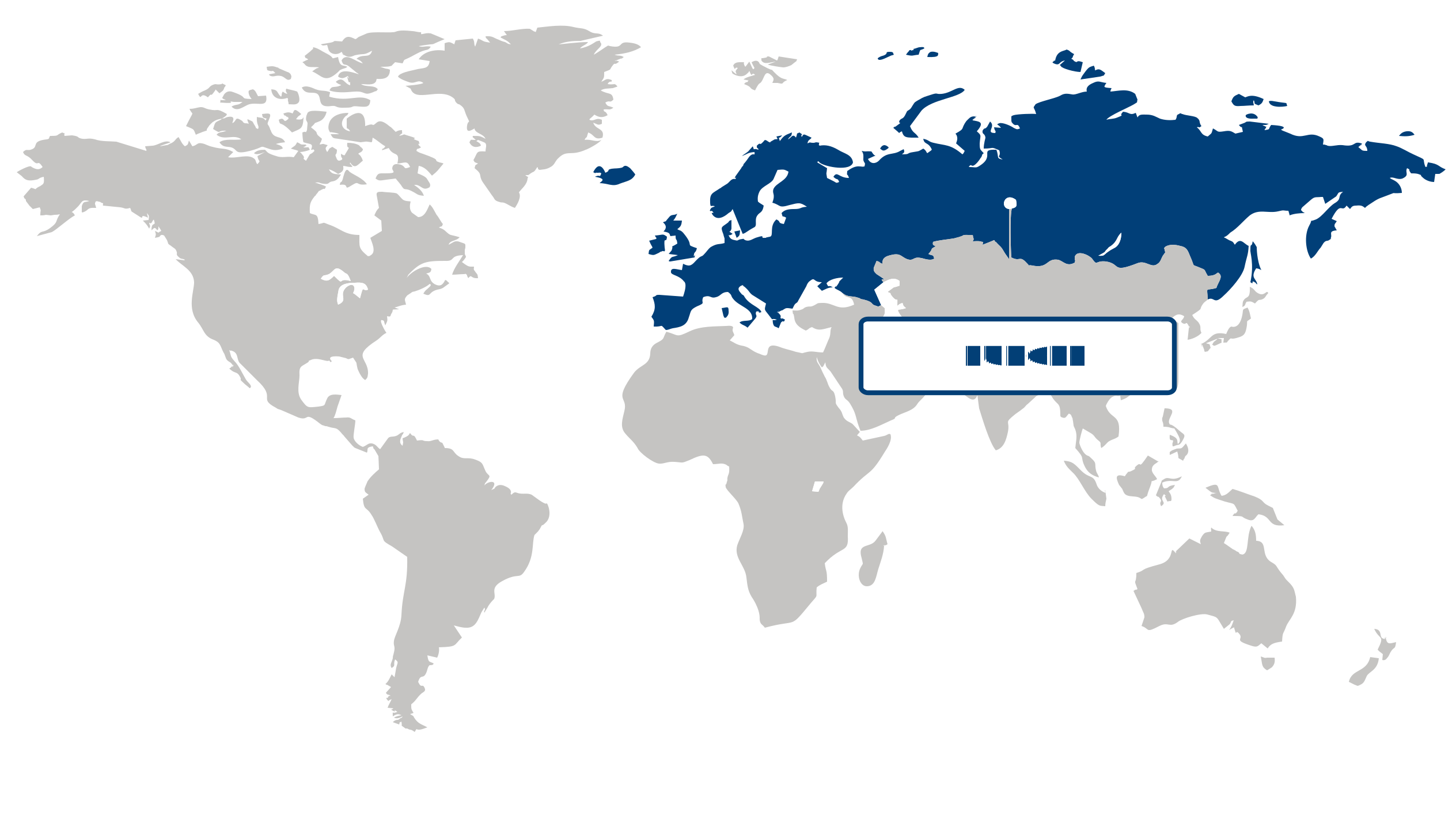
Largest Region
Europe
35.85% Market Share in 2026
Europe (Largest Region) vs Asia Pacific (Fastest-Growing Region)
In the citrus extracts market, Europe held the largest share of 35.85% in 2026, supported by strong demand for natural flavoring ingredients, established food and beverage processing industries, and growing consumer preference for clean-label formulations. Citrus extracts are widely valued for their flavor, aroma, and functional properties, making them suitable for beverages, confectionery, bakery products, dairy applications, cosmetics, and nutritional formulations. European manufacturers are increasingly focused on natural and recognizable ingredients as consumers seek products perceived as healthier and less processed. Regulatory attention toward ingredient quality and food safety also encourages manufacturers to maintain high standards in extract sourcing and processing. In addition, the region's developed food and beverage sector and established ingredient supply networks support consistent demand, while innovation in natural formulations and premium product development is broadening applications for citrus-derived ingredients.
Asia Pacific represents the fastest-growing regional market for citrus extracts, benefiting from expanding processed food and beverage industries, changing dietary preferences, and rising consumer interest in natural ingredients. Urbanization and increasing demand for convenient foods and beverages are creating opportunities for citrus extracts in flavored drinks, snacks, confectionery, bakery products, and other packaged food categories. The region's growing middle-class population is also becoming more receptive to premium products featuring natural flavors and recognizable ingredients. Expanding personal care and cosmetic industries are creating additional applications for citrus-derived extracts because of their aromatic and functional characteristics. Furthermore, improving food processing infrastructure, wider availability of specialty ingredients, and the development of innovative formulations are supporting greater incorporation of citrus extracts across regional manufacturing sectors.
Key Country Insights
The U.S. citrus extracts market emphasizes clean-label formulations, natural flavor enhancement, and functional food applications. Manufacturers in the U.S. continue to expand the use of citrus extracts across beverages, dietary supplements, and personal care products to address evolving consumer preferences.
Japan focuses on refined citrus extracts that enhance premium beverages, confectionery, and health-oriented products. Japanese manufacturers value consistent sensory performance and ingredient quality while introducing distinctive citrus-based formulations for sophisticated consumer preferences.
South Korea increasingly incorporates citrus extracts into cosmetics, functional beverages, and wellness products. Local manufacturers emphasize multifunctional botanical ingredients that combine natural positioning with antioxidant and skin-supporting properties across consumer applications.
Germany prioritizes high-purity citrus extracts for food, beverage, and nutraceutical applications where traceability and formulation consistency are essential. German manufacturers increasingly integrate sustainably sourced citrus ingredients to support premium product development.
France emphasizes citrus extracts for premium food, fragrance, and cosmetic formulations where authentic aroma profiles are valued. French producers continue refining extraction methods to preserve natural characteristics while meeting evolving clean-label expectations.
Italy leverages its strong food and beverage heritage by incorporating citrus extracts into specialty foods, beverages, and natural ingredients. Italian manufacturers prioritize regional citrus varieties and value-added processing to strengthen premium product differentiation.
Segment Leadership and Growth Trends
Type Segment Analysis: Orange (Largest Segment) vs Lemon (Fastest-Growing Segment)
The orange segment held the largest share of 59.95% in 2026 in the citrus extracts market, supported by the widespread use and familiar flavor profile of orange-derived ingredients. Orange extracts are extensively suited to beverages, food formulations, flavoring applications, and other consumer products, providing manufacturers with broad formulation flexibility. Strong consumer recognition of orange flavors and their compatibility with diverse product categories further reinforce demand for orange extracts.
Lemon extracts represent the fastest-growing type segment, benefiting from increasing preference for fresh, tangy, and refreshing flavor profiles across food and beverage applications. Lemon extracts can provide distinctive acidity and citrus character while supporting flavor enhancement in beverages, confectionery, sauces, and other formulations. Their versatility and compatibility with products positioned around refreshing or natural flavor experiences are creating additional opportunities for market expansion.
Application Segment Analysis: Carbonated Soft Drinks (CSDs) (Largest Segment) vs Sports & Energy Drinks (Fastest-Growing Segment)
Carbonated soft drinks (CSDs) represented the largest application segment in the citrus extracts market, accounting for 38.27% in 2026. Citrus extracts are widely suited to carbonated beverages because they provide recognizable flavors and help create refreshing sensory profiles. Their compatibility with a broad range of beverage formulations, along with continued consumer demand for citrus-flavored drinks, supports sustained utilization by beverage manufacturers.
Sports and energy drinks are positioned as the fastest-growing application segment, supported by expanding consumer interest in beverages associated with active lifestyles and convenient refreshment. Citrus extracts can contribute bright, refreshing flavor profiles that complement functional beverage formulations and improve sensory appeal. The diversification of sports and energy drink products is creating additional opportunities for citrus-based flavors, particularly as manufacturers seek distinctive taste profiles for performance-oriented beverages.
| Report Segmentation | |||
| Segment | Sub-Segment | Largest Segment | Fastest Growing Segment |
|---|---|---|---|
| Type | Orange, Lemon, Lime, Grapefruit, Others | Orange | Lemon |
| Application | Carbonated Soft Drinks (CSDs), Fruit Beverages, Food, Sports & Energy Drinks, Others | Carbonated Soft Drinks (CSDs) | Sports & Energy Drinks |
 Read our Research Approach
Competitive Landscape and Market Positioning
Leading companies in the citrus extracts market:
1. Kerry Group plc (Ireland)
2. International Flavors & Fragrances Inc. (United States)
3. Givaudan SA (Switzerland)
4. Symrise AG (Germany)
5. Botanic Healthcare Pvt. Ltd. (India)
6. Global Essence Inc. (United States)
7. Citrus Extracts LLC (United States)
8. Henry Lamotte Oils GmbH (Germany)
9. Cargill Incorporated (United States)
10. Qingdao Vital Nutraceutical Ingredients BioScience Co. Ltd. (China)
Expanding demand for natural ingredients is accelerating innovation in the citrus extracts market, with research focused on improving extraction efficiency, purity, and functional properties. Growing applications across food, beverages, cosmetics, and nutraceuticals continue to support market development.
Why Choose Us
Specialized Expertise: Our team comprises industry experts with a deep understanding of your market segment. We bring specialized knowledge and experience that ensures our research and consulting services are tailored to your unique needs.
Customized Solutions: We understand that every client is different. That's why we offer customized research and consulting solutions designed specifically to address your challenges and capitalize on opportunities within your industry.
Proven Results: With a track record of successful projects and satisfied clients, we have demonstrated our ability to deliver tangible results. Our case studies and testimonials speak to our effectiveness in helping clients achieve their goals.
Cutting-Edge Methodologies: We leverage the latest methodologies and technologies to gather insights and drive informed decision-making. Our innovative approach ensures that you stay ahead of the curve and gain a competitive edge in your market.
Client-Centric Approach: Your satisfaction is our top priority. We prioritize open communication, responsiveness, and transparency to ensure that we not only meet but exceed your expectations at every stage of the engagement.
Continuous Innovation: We are committed to continuous improvement and staying at the forefront of our industry. Through ongoing learning, professional development, and investment in new technologies, we ensure that our services are always evolving to meet your evolving needs.
Value for Money: Our competitive pricing and flexible engagement models ensure that you get maximum value for your investment. We are committed to delivering high-quality results that help you achieve a strong return on your investment.
Select Licence Type

