



Coffee Machine Market Size & Growth Forecast 2027–2036, By Segments (Application, Product Type), Regional Demand Trends (North America, Asia Pacific, Europe), Key Country Insights (U.S., Japan, South Korea, Germany, France, Italy), and Competitive Landscape
Market Size and Growth Outlook
Coffee Machine Market size was worth USD 7.5 billion in 2026 and is expected to grow at a 5.7% CAGR between 2027 and 2036, attaining USD 13.06 billion by 2036. The industry revenue for 2027 is assessed at USD 7.86 billion.
Base Year Value (2026)
USD 7.5 billion
CAGR (2027-2036)
5.70%
Forecast Year Value (2036)
USD 13.06 billion

Historical Data Period
2022-2026

Largest Region
Europe

Forecast Period
2027-2036
Coffee Machine Market Intelligence Snapshot:
-
Regional Market Dynamics:
- Europe holds 34.56% share, supported by strong coffee culture, high household penetration, and consistent demand from cafés, hotels, and workplaces upgrading to premium machines.
- Asia Pacific is growing at a 5.59% CAGR, driven by urban coffee consumption, rising middle-class demand, café expansion, and increasing home adoption of convenient brewing appliances.
-
Segment Momentum:
- Commercial applications lead the market due to consistent demand from cafés, restaurants, offices, and hotels that require durable machines capable of handling frequent use and high-volume beverage preparation.
- Pod/Capsule machines are growing fastest because they offer convenient, low-effort brewing with consistent results, appealing to consumers seeking speed and simplicity in everyday coffee preparation.
-
Market Expansion Drivers:
- Rising coffee consumption in Asia Pacific accelerating household machine adoption.
- Smart coffee machines with IoT connectivity enhancing consumer convenience experience.
- Expansion of pod and capsule-based systems driving at-home brewing convenience.
-
Leading Market Participants:
Prominent companies in the coffee machine market include Nestlé Nespresso S.A. (Switzerland), De’Longhi S.p.A. (Italy), Keurig Dr Pepper Inc. (United States), Koninklijke Philips N.V. (Netherlands), Panasonic Holdings Corporation (Japan), Robert Bosch GmbH (Germany), Electrolux AB (Sweden), Hamilton Beach Brands Holding Company (United States), Melitta Group (Germany), Jura Elektroapparate AG (Switzerland).
Global Market Forecast Snapshot:
-
Market Outlook:
- 2026 Market Size: USD 7.5 billion
- 2027 Estimated Market Size: USD 7.86 billion.
- Projected Market Size: USD 13.06 billion by 2036
- Growth Forecasts: 5.7% CAGR (2027-2036)
-
Regional and Segment Outlook:
- Leading Regional Market: Europe
- High-Growth Regional Hub: Asia Pacific
- Core Revenue Segment: Commercial (Application) | Espresso (Product Type)
- Emerging Opportunity Segment: Residential (Application) | Pod/Capsule (Product Type)
Market Growth Drivers and Industry Trends
Rising coffee consumption in Asia Pacific accelerating household machine adoption
Increasing coffee consumption across asia pacific is encouraging households to bring more of the beverage preparation process into the home, creating opportunities for convenient brewing equipment. The coffee machine market will gain from this shift as consumers increasingly seek consistent preparation, greater beverage variety, and café-style experiences without relying exclusively on commercial outlets. Changing lifestyles, urbanization, and growing familiarity with different coffee formats are supporting greater interest in machines suited to home kitchens. As coffee becomes more integrated into daily routines, consumers are also showing greater willingness to invest in equipment that allows them to prepare customized beverages according to individual preferences.
Smart coffee machines with IoT connectivity enhancing consumer convenience experience
The integration of IoT connectivity into coffee machines is transforming conventional brewing equipment into more automated and interactive household appliances. Smart functionality will boost the coffee machine market by allowing users to manage brewing settings, customize preparation preferences, and interact with machines through connected devices. Automated controls can simplify repetitive preparation tasks while enabling consumers to adjust parameters such as brewing schedules and beverage preferences according to their routines. Connectivity also creates opportunities for manufacturers to incorporate remote operation, personalized settings, and appliance monitoring into coffee preparation, increasing the perceived value of technologically advanced machines.
Expansion of pod and capsule-based systems driving at-home brewing convenience
The growing availability of pod and capsule-based brewing systems is making home coffee preparation faster, simpler, and more consistent for consumers with limited time. Expansion of these systems will support the coffee machine market as households increasingly value convenient formats that reduce preparation complexity and provide repeatable beverage quality. Pod and capsule machines can accommodate different beverage preferences while minimizing the need for extensive measuring, grinding, and cleaning, making them suitable for busy households and occasional users. The convenience associated with portioned coffee formats is also supporting broader adoption among consumers seeking an accessible alternative to more elaborate brewing equipment.
| Growth Driver Assessment Framework | |||||
| Growth Driver | Impact On CAGR | Regulatory Influence | Geographic Relevance | Adoption Rate | Impact Timeline |
|---|---|---|---|---|---|
| Rising coffee consumption in Asia Pacific accelerating household machine adoption | 2.20% | Low | Asia Pacific | High | Near Term |
| Smart coffee machines with IoT connectivity enhancing consumer convenience experience | 1.80% | Low | North America, Europe | High | Near Term |
| Expansion of pod and capsule-based systems driving at-home brewing convenience | 1.60% | Low | Europe, Asia Pacific | High | Mid Term |
Unlock insights tailored to your business with our bespoke market research solutions - Click to get your customized report now!
Regional Demand Dynamics
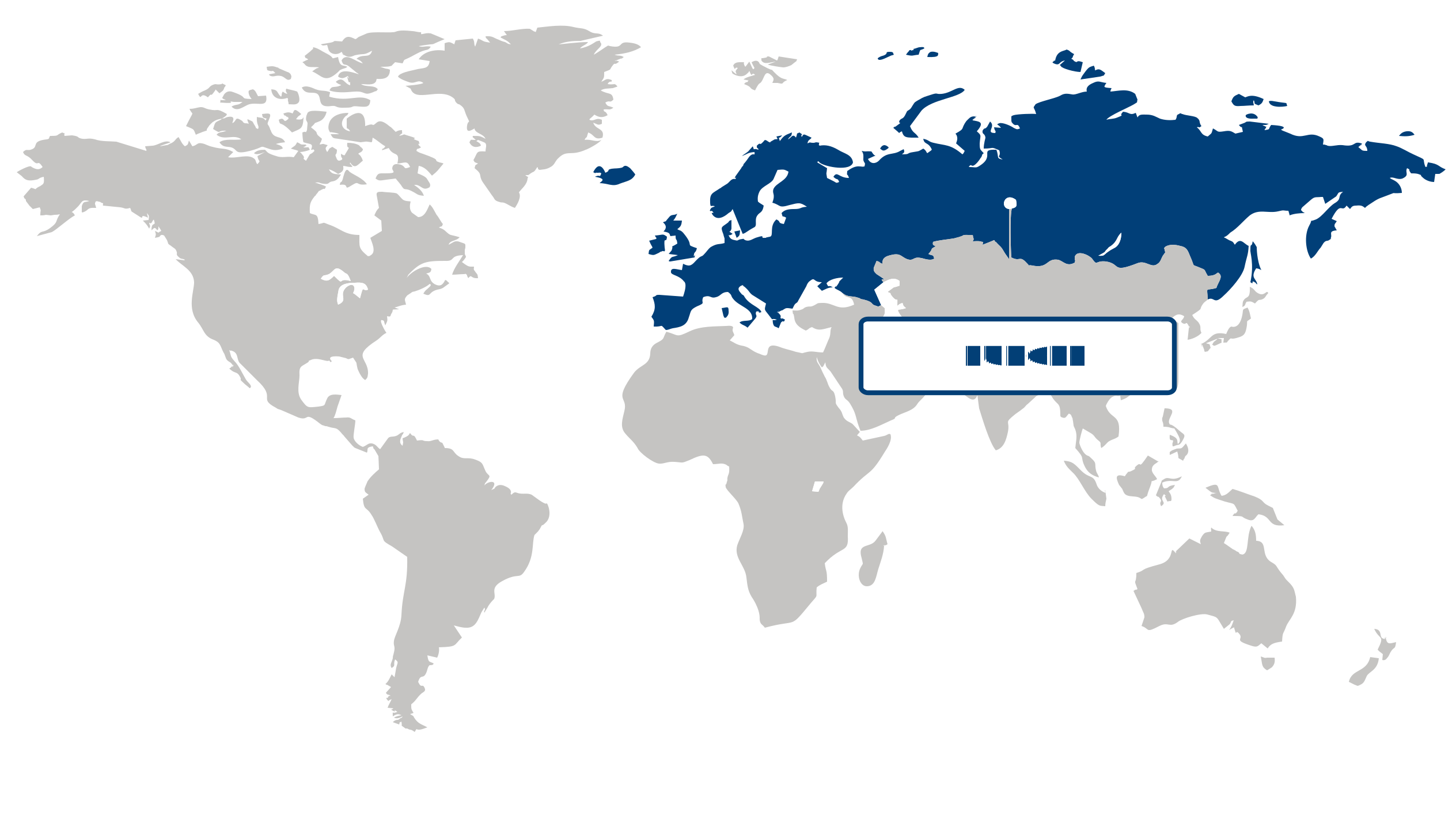
Largest Region
Europe
34.56% Market Share in 2026
Europe (Largest Region) vs Asia Pacific (Fastest-Growing Region)
Holding the largest share of the coffee machine market in 2026, Europe benefits from a deeply established coffee culture, high household consumption, and strong demand for convenient at-home brewing solutions. Consumers across the region increasingly value product quality, brewing customization, energy efficiency, and sophisticated features, supporting demand for advanced coffee machines. The established hospitality sector and widespread presence of cafés and foodservice establishments further reinforce regional demand. In addition, growing interest in premium coffee experiences at home is encouraging consumers to upgrade from conventional brewing methods to automated and specialty machines.
In Asia Pacific, the coffee machine market is expanding rapidly as coffee consumption becomes more established across urban populations and younger consumers increasingly adopt café-style beverages. Rising disposable incomes, changing lifestyles, and the expansion of modern retail and e-commerce channels are improving access to a broader range of coffee equipment. Growing exposure to specialty coffee culture is also increasing interest in convenient brewing technologies and premium home appliances. Furthermore, urban households are placing greater emphasis on convenience and personalized beverage preparation, creating favorable conditions for continued regional growth.
Key Country Insights
The U.S. coffee machine market increasingly favors connected appliances that deliver convenience, customization, and premium home brewing experiences. Manufacturers in the U.S. integrate smart features and versatile brewing technologies to meet evolving consumer preferences.
Japan emphasizes space-efficient coffee machines that combine advanced functionality with compact household design. Brands in Japan continue refining automated brewing systems that align with urban living environments and premium coffee consumption habits.
South Korea integrates coffee machines into digitally connected households with an emphasis on convenience and premium beverage preparation. Manufacturers in South Korea increasingly introduce smart controls and stylish appliance designs to attract technology-oriented consumers.
Germany prioritizes durable coffee machines with consistent brewing performance and energy-efficient operation. Manufacturers in Germany focus on engineering quality, automatic brewing technologies, and long-term product reliability across residential and commercial applications.
France values coffee machines that replicate café-quality beverages while supporting premium coffee consumption at home. Companies in France continue enhancing brewing precision, milk preparation features, and user-friendly operation to strengthen consumer appeal.
Italy combines traditional espresso culture with modern coffee machine technologies that improve convenience and brewing consistency. Manufacturers in Italy continue refining premium espresso equipment while responding to demand for automated home coffee preparation.
Segment Leadership and Growth Trends
Application Segment Analysis: Commercial (Largest Segment) vs Residential (Fastest-Growing Segment)
The commercial segment led the coffee machine market in 2026, supported by sustained demand for efficient and consistent beverage preparation across workplaces, hospitality venues, restaurants, and other foodservice environments. Commercial users typically require machines capable of handling frequent brewing cycles while maintaining consistent coffee quality and operational reliability. The growing emphasis on service efficiency, menu variety, and streamlined beverage preparation further reinforces adoption of commercial coffee machines, particularly where coffee service forms an important part of the customer or employee experience.
Residential applications are expected to register the fastest growth, driven by rising consumer interest in preparing café-style beverages at home with greater convenience and control. Increasing preference for personalized coffee experiences, combined with improvements in machine usability and automation, is encouraging households to adopt dedicated coffee equipment. The broader shift toward premium at-home consumption is also supporting demand for machines that offer convenient preparation of a wider range of beverages without requiring professional-level operating skills.
Product Type Segment Analysis: Espresso (Largest Segment) vs Pod/Capsule (Fastest-Growing Segment)
Espresso machines accounted for the largest share of the coffee machine market in 2026, reflecting the strong and established demand for concentrated coffee beverages across both commercial and household settings. Espresso-based preparation serves as the foundation for numerous popular beverages, including cappuccinos, lattes, and americanos, giving these machines broad functional relevance. Continued consumer interest in higher-quality coffee, customization of brewing parameters, and café-style preparation at home further supports the sustained prominence of espresso machines.
Pod/capsule coffee machines are gaining momentum as consumers prioritize convenience, consistency, and simplified preparation. Their pre-portioned format reduces the effort associated with grinding, dosing, and brewing while enabling users to prepare beverages with minimal operational complexity. The growing appeal of quick preparation and easy cleanup, particularly among time-conscious households and workplaces, is strengthening the adoption of pod and capsule systems and supporting their position as the fastest-growing product type.
| Report Segmentation | |||
| Segment | Sub-Segment | Largest Segment | Fastest Growing Segment |
|---|---|---|---|
| Application | Commercial, Residential | Commercial | Residential |
| Product Type | Drip/Filter, Pod/Capsule, Espresso, Bean-to-Cup | Espresso | Pod/Capsule |
 Read our Research Approach
Competitive Landscape and Market Positioning
Prominent players in the coffee machine market:
1. Nestlé Nespresso S.A. (Switzerland)
2. De’Longhi S.p.A. (Italy)
3. Keurig Dr Pepper Inc. (United States)
4. Koninklijke Philips N.V. (Netherlands)
5. Panasonic Holdings Corporation (Japan)
6. Robert Bosch GmbH (Germany)
7. Electrolux AB (Sweden)
8. Hamilton Beach Brands Holding Company (United States)
9. Melitta Group (Germany)
10. Jura Elektroapparate AG (Switzerland)
The competitive environment in the coffee machine market is evolving through the adoption of smart brewing technologies, touchscreen interfaces, and connected appliance features designed to improve convenience and personalization. Market participants are also emphasizing sustainable designs, including energy-efficient systems and recyclable components, while frequent product introductions targeting premium and specialty coffee preferences continue to reshape competitive differentiation across consumer and commercial segments.
Industry Development/News
| Company Name | Date | Key Development |
|---|---|---|
| Lavazza | Jun-26 | Lavazza introduced the Tablì single-serve system in the U.S., utilizing proprietary tabs composed entirely of coffee to eliminate traditional capsule materials. This development represents a material advancement in sustainable coffee preparation technology, challenging established single-serve waste paradigms and reflecting a shift toward circular innovation in the coffee machine category. |
| De' Longhi | May-26 | De' Longhi partnered with Sirmax to integrate post-consumer recycled plastics into its coffee machine manufacturing processes. This initiative demonstrates the application of circular economy principles within high-volume appliance production, signaling a shift toward sustainable material sourcing and manufacturing practices across the premium home coffee equipment value chain. |
| De' Longhi | Jan-24 | De' Longhi acquired a 41% equity stake in La Marzocco, a strategic move to consolidate its presence in the premium espresso segment. The investment aligns the company with high-end professional-grade brewing technology and strengthens its competitive positioning within the global market for specialty coffee equipment. |
| Groupe SEB | Jan-24 | Groupe SEB announced a USD 65 million investment to establish a professional coffee machine R&D and manufacturing hub in China. The project is designed to enhance local development and production scalability, supporting the company's long-term growth strategy and footprint expansion across key Asian coffee markets. |
| Simonelli Group | Dec-24 | Simonelli Group acquired a stake in Swedish filter coffee machine manufacturer 3TEMP. This strategic investment broadens the company’s equipment portfolio and enhances its technical capabilities, marking a targeted effort to diversify its product offerings within the professional coffee equipment landscape. |
| Fellow | May-25 | Fellow entered the specialty home espresso segment with the launch of its Espresso Series 1 machine. This product introduction marks a significant expansion of the company’s existing coffee equipment portfolio, leveraging its brand presence in specialty brewing to target the high-end, design-conscious residential consumer market. |
| Maxim's de Paris | Jun-25 | Maxim's de Paris entered the U.S. home coffee equipment market with the Seine X machine. This geographic expansion introduces a new, technology-driven competitor into the residential segment, indicating increasing international interest in the North American market for premium, stylized coffee preparation appliances. |
| Nestlé | Apr-25 | Nestlé launched the Nespresso system in India, including a range of machines and dedicated boutiques. This strategic market entry targets the rising demand for premium, capsule-based home coffee experiences in the region, establishing new infrastructure for high-end coffee preparation and consumption in the Indian market. |
| SharkNinja | Jul-24 | SharkNinja introduced the Ninja Luxe Café, a 3-in-1 hybrid system capable of espresso, drip, and cold brew preparation. The product launch represents a significant effort to capture market share through versatile, multi-functional home coffee technology, aimed at streamlining the appliance footprint for mainstream residential consumers. |
| Cimbali Group | Mar-26 | Cimbali Group formed a strategic partnership with Mazzer and debuted a joint grinder prototype. This collaboration integrates advanced grinding technology with professional coffee machine systems, signaling an industry trend toward holistic equipment ecosystems to improve extraction consistency and operational efficiency in professional commercial settings. |
Why Choose Us
Specialized Expertise: Our team comprises industry experts with a deep understanding of your market segment. We bring specialized knowledge and experience that ensures our research and consulting services are tailored to your unique needs.
Customized Solutions: We understand that every client is different. That's why we offer customized research and consulting solutions designed specifically to address your challenges and capitalize on opportunities within your industry.
Proven Results: With a track record of successful projects and satisfied clients, we have demonstrated our ability to deliver tangible results. Our case studies and testimonials speak to our effectiveness in helping clients achieve their goals.
Cutting-Edge Methodologies: We leverage the latest methodologies and technologies to gather insights and drive informed decision-making. Our innovative approach ensures that you stay ahead of the curve and gain a competitive edge in your market.
Client-Centric Approach: Your satisfaction is our top priority. We prioritize open communication, responsiveness, and transparency to ensure that we not only meet but exceed your expectations at every stage of the engagement.
Continuous Innovation: We are committed to continuous improvement and staying at the forefront of our industry. Through ongoing learning, professional development, and investment in new technologies, we ensure that our services are always evolving to meet your evolving needs.
Value for Money: Our competitive pricing and flexible engagement models ensure that you get maximum value for your investment. We are committed to delivering high-quality results that help you achieve a strong return on your investment.
Select Licence Type

